
Journalist

Huan Xiang
swatchsjp@ajunews.com
-
 South Korea to allow pets in restaurants as ownership rates surge SEOUL, February 25 (AJP) - South Korea will lift its long-standing ban on pets in dining establishments starting March 1, a regulatory overhaul aimed at accommodating the nearly 30 percent of households that now own companion animals. The Ministry of Food and Drug Safety announced the policy shift following a successful pilot program, though the transition has met with mixed reactions from small business owners concerned about the administrative and financial costs of compliance. The country’s pet population has grown steadily in recent years, with approximately 15.46 million people in the nation of 52 million now living with dogs or cats. This surge was largely driven by the COVID-19 pandemic, as prolonged social isolation and a rise in single-person households accelerated the trend of "pet humanization," where animals are treated as family members. The new rules under the Food Sanitation Act effectively move pet-friendly dining from a limited "regulatory sandbox" experiment into a formal legal framework. Under the updated guidelines, restaurants and cafes must meet rigorous hygiene standards to permit pets indoors. Entry is restricted to dogs and cats that have completed mandatory vaccinations, and staff are expected to verify these records via certificates or mobile applications. Establishments are required to install physical barriers, such as fences or partitions, to prevent animals from entering kitchens or ingredient storage areas. Plus, operators must provide specialized equipment, including pet-only chairs, cages, or fixed leash hooks, to ensure animals do not roam freely among other diners. The regulations also include specific sanitation protocols, such as requiring food and beverages to be served with covers to prevent contamination from fur. Businesses must maintain sufficient distance between tables and provide dedicated waste bins for pet disposal. Operators who fail to meet these facility standards or allow pets into food preparation zones face administrative penalties, including business suspensions ranging from five to 20 days. The reaction from the service industry is divided. Major franchises such as Starbucks Korea and the Italian restaurant chain Mad for Garlic have already begun integrating pet-friendly zones at select branches. However, independent operators on an online community platform operated by South Korea's web service giant Naver, which has 1.9 million members, voiced concerns over the cost of required renovations. Many owners expressed worry that the burden of policing vaccination records and managing pet noise would be unmanageable for small-scale shops with limited staff. The new regulatory landscape brings South Korea closer to the standards of other major economies. In Britain, dogs are frequently welcomed inside pubs and cafes as a matter of cultural tradition. In the United States, pets are generally restricted to outdoor patios and sidewalk seating, with indoor access largely reserved for service animals. Japan maintains a high degree of pet accessibility in urban centers like Tokyo, provided owners adhere to strict leashing and etiquette protocols enforced by private businesses. Ministry officials stated the framework is intended to bring thousands of businesses that previously allowed pets unofficially into legal compliance. By standardizing hygiene requirements, the government aims to ensure a consistent level of public health and safety for both pet owners and the general public. 2026-02-25 13:53:41
 -
 Coupang confirms data breach affected 200,000 accounts in Taiwan SEOUL, February 25 (AJP) - Coupang Inc., the American operator of the biggest ecommerce platform in South Korea, disclosed on Wednesday that a massive data breach involving 33.7 million accounts included approximately 200,000 users located in Taiwan. The e-commerce giant cited a forensic analysis by cybersecurity firm Mandiant, which linked the Taiwanese breach to the same former employee responsible for the unauthorized access of South Korean user data in November 2025. While the perpetrator accessed 200,000 accounts in Taiwan, investigators found that data from only one of those accounts was actually saved by the individual. The update follows a series of forensic audits aimed at determining the full scope of the security failure. Mandiant and other third-party experts confirmed that "highly sensitive information" was not leaked in any region, including Taiwan. The compromised data was reportedly limited to basic contact information and order histories rather than passwords, financial records, or government-issued identification numbers. The breach originally came to light on November 29, 2025, after a former software developer, identified as a Chinese national, allegedly used an internal signing key to bypass security protocols. South Korean authorities previously noted that the incident stemmed from a failure to revoke authentication credentials after the employee left the company. Coupang Inc. had initially stated in December 2025 that there was no evidence of Taiwanese customers being affected. The company has since clarified that the former employee saved data from a total of approximately 3,000 accounts globally, including the single account in Taiwan. The disclosure arrives as Coupang Inc. aggressively expands its logistics footprint in Taiwan. The company stated it has been coordinating with the Ministry of Digital Affairs in Taiwan and South Korean regulators throughout the investigation. No instances of secondary harm or identity theft related to the breach have been detected. 2026-02-25 10:43:56
 -
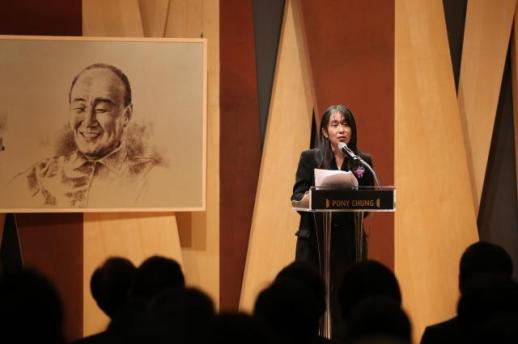 K-literature takes center stage in Africa after Han Kang's Nobel win SEOUL, February 25 (AJP) - Korean literature has officially overtaken K-pop music and K-drama as the most documented aspect of South Korean culture in Africa, a report released by the Ministry of Culture, Sports and Tourism showed Wednesday. The 2025 Global Hallyu Trend Analysis Report, released by the culture ministry and the Korea Culture Information Service Agency (KCISA), indicates that Korean literature now accounts for 32.8 percent of all media coverage related to Hallyu (the Korean cultural wave) in Africa. This surge in interest was primarily sparked by Han Kang, who became the first South Korean and the first Asian woman to win the Nobel Prize in Literature in October 2024. Born in 1970 in Gwangju, South Korea, Han is a celebrated novelist and poet whose works, such as "The Vegetarian" and "Human Acts," frequently explore historical trauma and the fragility of human existence. The Swedish Academy recognized her "intense poetic prose" that confronts these universal struggles, triggering a global re-evaluation of South Korean written works. While K-pop remains the dominant cultural export in Asia, Europe, and the Americas, Africa has emerged as a unique market where literary news and events outpace other entertainment categories. Following the prize announcement, global media coverage of Korean literature spiked to 32.4 percent of all foreign news reports during the final quarter of 2024, a dramatic jump from just 1.2 percent in the preceding quarter. The popularity of South Korean novels in Africa is particularly evident in Nigeria, which ranked second globally, surpassing both the United States and Sweden, in digital documentation and media mentions regarding Han Kang's achievement. Official sources from the Korean Cultural Centre Nigeria (KCCN) noted that dedicated literary gatherings were held in Abuja to celebrate the win and introduce works such as The Vegetarian and Human Acts to local audiences. The KCCN highlighted that the resonance of South Korean literature in Africa stems from "cultural compatibility." Readers in the region find that K-novels frequently address universal themes of patriarchy, generational trauma, and social justice, which mirror contemporary issues in many African countries. Notably, these readers engage with South Korean works despite a challenging local reading environment; official statistics indicate that the average Nigerian reads less than one book per year, though literary interest remains concentrated among highly engaged academic and cultural communities. Japan and the West see parallel literary interest The report also identifies Japan as a major hub for Korean literature. Japan recorded the highest volume of documentation for the category at 37.5 percent of its total Hallyu coverage, marking the only Asian country where literature is the primary point of interest over K-pop or K-drama. Japanese media emphasized the significance of the "first Asian woman" to win the prize and highlighted her works' delicate worldviews. This interest persists even as Japan sees a shift in reading habits. Data suggests that while 62.6 percent of Japanese adults do not read a book monthly, those who do engage with high-profile literary awards and translated works read an average of 6.2 books per year. Western nations have also shown significant engagement following the Nobel Prize announcement. In the U.S. and Germany, South Korean novels have moved beyond niche academic interests to mainstream media, with The Vegetarian remaining the most discussed work. In the U.S. where the average citizen reads approximately 8 books per year, Korean literature has benefited from a robust infrastructure of translation and literary discussion. Similarly, in Germany, readers average roughly 6.25 books per year, providing a fertile market for the philosophical and social depth associated with modern South Korean novels. The growth of Korean literature is supported by increased institutional translation efforts and the "Netflix effect," where series like "When Life Gives You Tangerines" and the animated film "K-Pop Demon Hunters" have sparked secondary interest in original stories and broader South Korean heritage. In South Korea, where this cultural wave originates, adults read an average of 5.4 books per year, though this figure rises significantly when digital formats such as web novels are included. 2026-02-25 10:06:08
 -
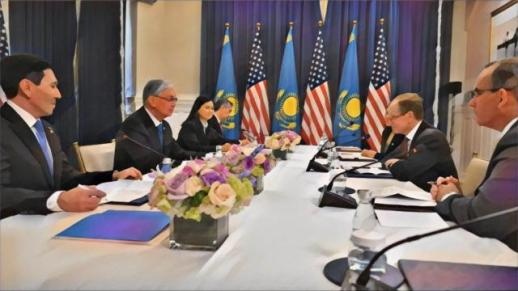 President Tokayev visits US to secure investment and aviation deals SEOUL, February 24 (AJP) - Kazakhstan's President Kassym-Jomart Tokayev recently wrapped up a trip to the United States, focusing on high-level negotiations with global corporations and financial institutions, the Embassy of Kazakhstan in the Republic of Korea said Tuesday. The visit was designed to bring in long-term investment and move Kazakhstan further into international production chains. A major result of the trip was a 180 million dollar investment deal signed between Kazakhstan's Ministry of Agriculture and Mars, Incorporated. The company intends to build a pet food manufacturing plant in Alatau. Mars CEO Poul Weihrauch noted that the new facility will serve as a hub for the company's growth across Central Asia and nearby regions. In the healthcare sector, the President held talks with Ashmore Group regarding a plan to build an international clinic. This project is a joint effort between Ashmore Healthcare International and Samruk-Kazyna Invest, with the U.S.-based Mount Sinai Health System expected to manage the facility. This move is part of a larger plan to boost Kazakhstan's medical infrastructure and attract medical tourism. Aviation also took center stage during the visit. President Tokayev met with Boeing executives to discuss expanding the fleets of Air Astana, SCAT Airlines, and VietJet Qazaqstan. Air Astana is on track to receive Boeing 787 Dreamliner aircraft in the second half of 2026, which would make direct flights between Kazakhstan and the U.S. possible. Meanwhile, SCAT is looking into opening a maintenance and repair center at Shymkent Airport with help from an American partner. The President also met with Ben Black, CEO of the U.S. International Development Finance Corporation (DFC), who described Kazakhstan as a critical partner in Eurasia. Their talks focused on mining projects and improving the transit infrastructure used for regional trade. According to the World Investment Report 2025 by UNCTAD, Kazakhstan currently leads Central Asia in attracting foreign direct investment. In 2024, the country's total inward investment reached 151 billion dollars, far ahead of neighbors like Turkmenistan at 45 billion dollars and Uzbekistan at 17 billion dollars. President Tokayev also attended the first meeting of the Board of Peace in Washington. During the event, he indicated that Kazakhstan is ready to assist with reconstruction and stabilization in Gaza, potentially through financial support or participation in peacekeeping missions. 2026-02-24 15:54:52
 -
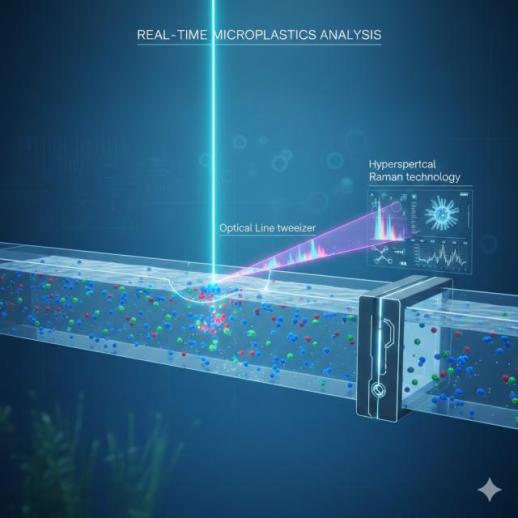 Kookmin University researchers develop real-time capture and analysis technique for aquatic microplastics SEOUL, February 24 (AJP) - A research team led by Professor Kim Hyung-min at Kookmin University has developed an innovative technology capable of capturing and analyzing micro- and nano-sized plastics in water in real time. The breakthrough addresses a major technical challenge in environmental science by allowing for the continuous monitoring of tiny plastic particles that are otherwise difficult to isolate from their surroundings. Microplastics, defined as particles smaller than 5 millimeters, originate from industrial processes and daily consumer activities. These particles eventually accumulate in marine ecosystems, where they pose significant risks to both the environment and human health. Despite these dangers, accurately mapping the distribution and weathering process of these particles in vast water bodies has remained difficult for the scientific community. To overcome these limitations, the researchers created a specialized inspection device that combines optical line tweezer technology with hyperspectral Raman spectroscopy. The system uses a laser to trap flowing microplastic particles along a linear path. By doing so, the device can effectively filter out interference signals from the surrounding water to precisely identify the size, shape, and specific type of each plastic particle. The equipment is sensitive enough to measure ultrafast, nano-sized particles continuously. This capability significantly improves the accuracy of underwater plastic analysis compared to existing methods, which often struggle to distinguish between organic matter and synthetic pollutants in moving water. Professor Kim Hyung-min stated that the significance of this technology lies in providing a foundation for the full-scale analysis and real-time monitoring of various chemical and biological substances beyond just aquatic microplastics. The study was conducted as a joint project with a research team led by Dr. Kim Jae-hun from the Nanophotonics Research Center at the Korea Institute of Science and Technology (KIST). The project received support from the National Research Foundation of Korea through its Nano and Materials Technology Development Program and Mid-career Researcher Support Program. The findings were published as a cover article in ACS Sensors, a leading journal in the field of analytical science, which ranks in the top 3.6 percent of the Journal Citation Reports (JCR). Lee Ji-yeon, currently a researcher at Dongwoo Fine-Chem, and Dr. Park Su-bin, a postdoctoral researcher at KIST, served as the lead authors. 2026-02-24 15:28:32
 -
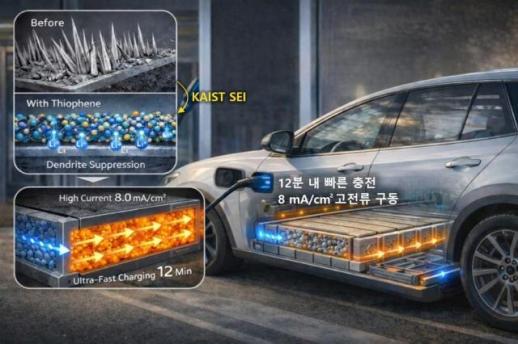 S. Korean researchers develop protective layer to enable fast charging for lithium batteries SEOUL, February 24 (AJP) - A joint research team from the Korea Advanced Institute of Science and Technology and Korea University has developed a technology to overcome stability issues that have hindered the commercialization of lithium metal batteries. The team created an intelligent protective layer that allows for rapid charging within 12 minutes while preventing the internal damage that typically shortens battery life. Lithium metal batteries are considered the next generation of energy storage because they can hold much more energy than current lithium-ion batteries. This could allow electric vehicles to travel much further on a single charge. However, during charging, lithium often forms needle-like structures called dendrites. These structures can pierce internal components, causing the battery to fail or catch fire. To solve this, the researchers added a substance called thiophene to the battery electrolyte. This additive creates a smart protective film on the electrode surface that acts like a flexible traffic management system for ions. Using a chemical structure known as a pi-conjugated system, the film rearranges its internal electrical charge in real time to create the easiest path for lithium ions to move through. By guiding the ions smoothly, the technology ensures that lithium builds up evenly on the surface rather than forming dangerous needles. The researchers confirmed this process at the molecular level using specialized microscopes that allowed them to watch the battery charging in real time. The study demonstrated that the battery could operate at high currents exceeding 8 milliamperes per square centimeter, which is double the level usually considered high in battery research. This performance level is close to what is required for the rapid acceleration and fast charging of real-world electric vehicles in South Korea and abroad. Professor Choi Nam-soon of the Korea Advanced Institute of Science and Technology (KAIST) Department of Chemical and Biomolecular Engineering stated that the research solves fundamental battery problems by designing the electronic structure of the materials. He noted that the technology could become a core foundation for next-generation electric vehicle batteries that require both fast charging and long lifespans. The technology is compatible with various existing battery materials, including lithium iron phosphate and nickel-cobalt-manganese oxides. This versatility suggests it could be applied to a wide range of future industries, including long-range electric vehicles and urban air mobility such as flying taxis. The research involved Professor Choi Nam-soon and Professor Hong Seung-bum from KAIST, alongside Professor Kwak Sang-kyu from Korea University. The findings were published in the academic journal InfoMat on February 2. (Paper information) Journal: InfoMat Title: Conjugation-mediated and polarity-switchable interfacial layers for fast cycling of lithium-metal batteries DOI: http://doi.org/10.1002/inf2.70126 2026-02-24 15:22:55
 -
 OPINION: Another year of Russian aggression against Ukraine SEOUL, February 24 (AJP) - Today, the world marks the fourth year since the start of Russia's large-scale invasion of Ukraine. After four years of war, 2026 must be the year the war comes to an end. The European Union’s view is crystal clear. We want peace in Ukraine, and we want this peace to last. Peace must be just, durable, credible and consistent with international law. Whether aggression is rewarded or rebuffed will either encourage or discourage aggressors in other regions, including the Indo-Pacific. But still today, Russia is intensifying its attacks and targeting and killing civilians every day. Last year was the deadliest for Ukrainian civilians since the full-scale invasion. Russia’s bombing of Ukraine's energy infrastructure has left millions of people facing darkness, cold, and water shortages during the coldest winter since 2022. This must end. Ukrainians continue to demonstrate incredible resilience, and they deserve peace. Since the beginning of the war, the Republic of Korea has been an ally and friend. Last year, at the high-level meeting of the United Nations Security Council on the maintenance of international peace and security on Ukraine, Foreign Minister Cho reaffirmed Korea’s “unwavering commitment to respect for internationally recognized borders, and in particular, to upholding the sovereignty, independence, and territorial integrity of Ukraine”. All UN member states must uphold the UN Charter, as the cornerstone of the international order. How this war ends will further shape the future standing of these principles, already under immense test elsewhere. To compound its disregard for international law and commitments, Russia has engaged also in wide-ranging military cooperation with North Korea. The transfer of ballistic missiles, ammunition, and even troops constitutes a flagrant violation of multiple UN Security Council resolutions, that Russia itself had supported. These transfers not only prolong the war in Ukraine; they also provide North Korea with funds, military experience, and technical insights that contribute to advance its illegal nuclear and ballistic missile programmes and lead to escalatory behaviour. This cooperation undermines the global non-proliferation regime and raises serious security concerns on the Korean Peninsula. At the UN, European countries and other like-minded partners have joined Seoul in condemning these violations of the UN Charter. Just like the Republic of Korea, we, members of the European Union, want peace in Ukraine, and we want this peace to last. Peace must be durable, credible, and consistent with international law, which protects countries large and small — both in Europe and in the Indo-Pacific. The European Union stands fully behind Ukraine and is actively contributing to the US-led peace efforts, in coordination with partners. As discussions continue, the EU’s priorities remain clear. First, any agreement should deliver a just, stable and lasting peace. And it should ensure real security. Second, we must uphold Ukraine's sovereignty. There cannot be a unilateral carving up of a sovereign nation state. Borders cannot be changed by force anywhere in the world. Third, we must secure Ukraine's financial needs, so that it can continue defending itself, be in a position of strength at the negotiation table and rebuild what Russia has destroyed. Since February 2022, the EU has stood united in its unwavering support for Ukraine. We are providing substantial political, economic and military support to Ukraine, while isolating Russia and implementing an ever-widening net of sanctions directed against Russia’s war machine. Most recently, in December 2025, The EU has decided on a loan of €90 billion for 2026 and 2027 for Ukraine. With this support, we want to make sure that Ukraine can bolster its defence on the battlefield; strengthen its defence capabilities for a peace agreement; and keep running basic services, including water, heating and electricity. We have reaffirmed Europe's commitment to the security, defence, and European future of Ukraine. This should serve as a stark reminder to Russia and a message to the world: Europe will always stand with Ukraine. The EU is very grateful to the Republic of Korea for its humanitarian aid for Ukraine. During this extremely difficult winter, Ukraine urgently needs more equipment for the rapid restoration of power, heating, and water supply, as well as air defence. We call on all our partners, including the Republic of Korea, to strengthen their support to Ukraine and contribute to easing the suffering of its people. The implementation of sanctions is also a very important part of what the international community can do for Ukraine. In 2024, the Republic of Korea announced a significant expansion of its export controls against Russia and Belarus. These restrictions are not merely symbolic. They prevent the transfer of many advanced technology items, helping to weaken Russia’s military capabilities, including those that are criminally used to destroy apartment buildings, energy and other civilian infrastructure The principles at stake in Ukraine — sovereignty, territorial integrity, respect for international law — matter to all of us, whether in Europe or the Indo-Pacific. As in the days of the Korean war, the international community must come together to stop the aggression and the suffering. Let us work together so that 2026 is the year Russia abandons its imperialistic goals, ends its unprovoked aggression and engages in a lasting peace in Ukraine. 2026-02-24 13:55:27
 -
 Moviegoers review-bomb 15th-century royal tomb following blockbuster historical film hit SEOUL, February 24 (AJP) - A digital revolt has targeted the royal tomb of King Sejo after the release of the film King's Warden, directed by Jang Hang-jun, sparked public anger over the 15th-century monarch's rise to power. Since the movie opened on February 4, the UNESCO World Heritage site, known as Gwangneung, has been review-bombed with one-star ratings on major South Korean map applications. King's Warden reached the 6 million mark on Monday, just 20 days after its release, and is currently expected to surpass 10 million viewers in the country with a population of about 52 million. The film explores the domestic life and psychological isolation of King Danjong during his exile. The public anger is rooted in a pivotal and violent era of the Joseon Dynasty. In 1453, Grand Prince Suyang, who later became King Sejo, orchestrated a coup d'état to seize power from his 12-year-old nephew, King Danjong. After forcing the boy to abdicate in 1455, Sejo eventually ordered his execution in 1457 while the former king was in exile in Yeongwol, some 140 kilometers (87 miles) southeast of Seoul. Even in modern South Korea, Yeongwol is part of the "BYC" region, an acronym for Bonghwa, Yeongyang, and Yeongwol, collectively regarded as the most remote, mountainous, and difficult-to-reach inland area of the country. Historical accounts of the death vary between poisoning and strangulation, but the ruthless nature of the usurpation has long made it one of the most tragic chapters in South Korean history. The film focuses on the final days of the deposed boy-king during his confinement in this isolated mountainous region. Rather than a political thriller, the narrative emphasizes the tender bond formed between the lonely Danjong and the local villagers who cared for him. By highlighting the human vulnerability of the 16-year-old king and the sympathy of the common people, the movie frames his uncle, the invisible yet looming King Sejo, as a visceral villain responsible for destroying a young life. The emotional impact of the film has led social media users to digitally terrorize King Sejo's tomb on popular map platforms. Users have labeled the burial ground a "gathering place for psychopathic DNA" and described Sejo as the "worst cowardly murderer uncle in history." One user, identified as "Gae84", suggested the site should be demolished to build an apartment complex. In contrast, the sites associated with King Danjong have seen a massive surge in physical and digital support. According to the Yeongwol Cultural and Tourism Foundation, 10,641 people visited Cheongnyeongpo, the island where the king was exiled, during the Lunar New Year holiday, a fivefold increase from the 2,006 visitors recorded last year. Over 10,000 tourists also visited Jangneung, Danjong's tomb, between Feb. 14 and 16. Online, the tomb has received a wave of five-star comfort reviews from users promising the historical figure the warmth he was denied in life. The scale of the online activity has prompted South Korea's dominant tech companies to take restrictive measures. Kakao Map placed the Gwangneung entry under "Safe Mode" to block new submissions. Naver is speculated to be utilizing its AI-driven "Clean System" to monitor and filter out review patterns that do not reflect genuine user experiences, effectively hiding posts unrelated to actual visits to the tomb. 2026-02-24 11:09:36
 -
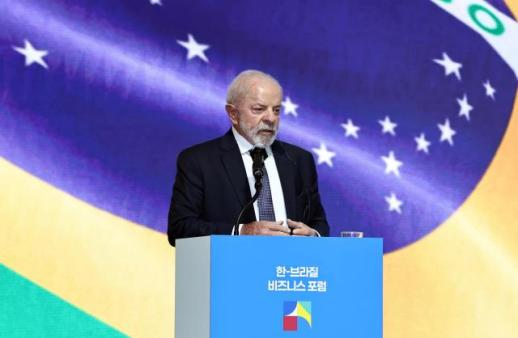 Brazilian president pitches supply chain ties to S. Korean conglomerate heads SEOUL, February 24 (AJP) - Anchoring his first state visit to South Korea in two decades, Brazilian President Luiz Inacio Lula da Silva met with the leaders of the country's largest conglomerates on Monday to secure supply chain partnerships in advanced industries like artificial intelligence and clean energy. The private gathering in Seoul followed a summit earlier in the day between Lula and South Korean President Lee Jae Myung at the presidential Blue House. During the morning summit, the two leaders agreed to elevate bilateral ties to a strategic partnership, signing 10 memorandums of understanding (MoUs) and adopting a four-year action plan. The diplomatic agreements are designed to move the countries beyond simple import-export transactions toward "productive integration," focusing on joint value creation and linked supply chains. To put that broader diplomatic strategy into practice, Lula sat down with Samsung Electronics Chairman Jay Y. Lee, Hyundai Motor Group Chairman Chung Eui-sun, LG Group Chairman Koo Kwang-mo and HD Hyundai Chairman Chung Ki-sun. The meeting was requested by the Brazilian Trade and Investment Promotion Agency, or ApexBrasil, as the Latin American nation seeks to leverage its massive consumer market and mineral wealth to attract high-tech manufacturing. All four South Korean conglomerates already operate major production bases in Brazil. Hyundai Motor Group is investing $1.1 billion to expand the capacity of its Sao Paulo plant by 2032. Samsung Electronics produces smartphones and home appliances in Sao Paulo and Manaus, while LG Electronics is building new facilities in Parana to complement its existing Manaus plant. HD Hyundai Construction Equipment runs a manufacturing facility in Rio de Janeiro. Following the closed-door talks, Lula delivered a keynote address to some 400 government and corporate officials at a bilateral business forum. The Brazilian leader arrived for his trip with a 300-member economic delegation, which is double the size of the group from his previous state visit in 2005. The delegation included top executives from aerospace manufacturer Embraer and state energy firm Petrobras. "South Korea, with its strong competitiveness in advanced technology and manufacturing, and Brazil, the largest economy in South America and home to 23 percent of the world's rare earth reserves, can have a complementary relationship," ApexBrasil President Jorge Viana said at the forum. "We can also contribute to building global value chains." Federation of Korean Industries Chairman Ryu Jin echoed the call for deeper integration. "Brazil is a resource powerhouse with competitiveness in food, energy and aviation, and a country of great strategic importance in the global supply chain," Ryu said. "The two countries must move beyond trade-centric cooperation and advance toward an era of co-prosperity centered on investment and industrial collaboration." Brazil represents Latin America's largest market, with a population exceeding 200 million. South Korean companies exported $5.3 billion in goods to Brazil last year, primarily electronics, automotive parts and pharmaceuticals. In return, South Korea imported $5.47 billion in Brazilian oil, iron ore, meat and coffee beans. Following the business forum, the corporate leaders joined a state dinner hosted by Lee at the Cheong Wa Dae guest house. The banquet drew a wide range of attendees, including government officials, conglomerate heads and prominent cultural figures such as Theborn Korea Chief Executive Officer Paik Jong-won. During the event, the two heads of state highlighted their shared working-class roots. Both leaders experienced poverty and sustained injuries as young factory workers before entering politics. Lee referred to his counterpart as an "amigo," while Lula noted their similar life trajectories made them feel like brothers. The two presidents also exchanged toasts using the Korean word "geonbae" and the Portuguese word "saude." The dinner featured cultural exchanges, with South Korean First Lady Kim Hye-kyung and Brazilian First Lady Rosangela da Silva wearing matching traditional hanbok garments. The dresses were crafted from fabric that the two first ladies purchased together at Seoul's Gwangjang Market earlier in the week. Lula is scheduled to conclude his three-day state visit to South Korea on Feb. 24. 2026-02-24 09:57:20
 -
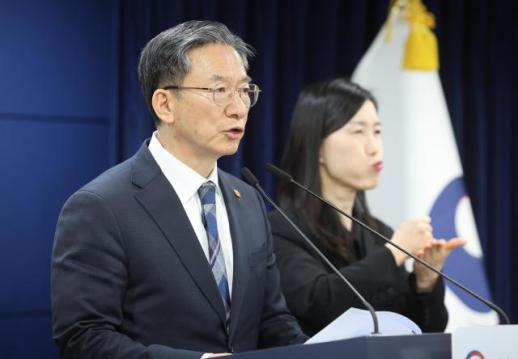 South Korea wins UK court bid to void Elliott ISDS award SEOUL, February 24 (AJP) -South Korea has won a decisive legal battle in a UK court to overturn an international arbitration ruling that had ordered the government to pay roughly 160 billion won ($110 million) to U.S. hedge fund Elliott Management, the Justice Ministry said in a release issued late Monday. The British High Court set aside the 2023 investor-state dispute settlement (ISDS) award, meaning the arbitration decision can no longer stand. The case will now return to arbitration proceedings. The dispute stems from the controversial 2015 merger of Samsung C&T and Cheil Industries. Elliott, then a shareholder of Samsung C&T, filed the ISDS claim in 2018 under the Korea-U.S. Free Trade Agreement (FTA), arguing that it suffered losses after the National Pension Service (NPS) backed the merger. In June 2023, the Netherlands-based Permanent Court of Arbitration (PCA) ordered Seoul to pay $107.8 million in damages and interest. With accrued interest, the compensation had risen to about 160 billion won as of this month — roughly 7 percent of Elliott’s original claim of more than 1 trillion won. Seoul immediately sought to annul the award in the UK, the seat of arbitration, arguing that the tribunal had exceeded its jurisdiction. A first-instance court dismissed the challenge in August 2024, ruling that the relevant FTA provisions were outside the scope of review under the UK Arbitration Act. But the UK Court of Appeal reversed that decision in July last year and sent the case back to the High Court. In the remanded proceedings, the High Court sided with the Korean government and formally set aside the award. NPS not a “state organ” At the heart of the case was whether the National Pension Service qualifies as a state organ under international law — a key “gateway” requirement for ISDS claims under Article 11.1 of the Korea-U.S. FTA. The UK court accepted Seoul’s argument that the NPS has a separate legal personality from the government, that pension fund management is not a core sovereign function such as defense or public security, and that its day-to-day investment decisions are not fully subordinate to the state. The ruling marks the first time an overseas court has recognized that the NPS’ exercise of shareholder voting rights cannot automatically be treated as state action for ISDS purposes, a precedent the Justice Ministry said would help shield Korea from future treaty-based claims by activist funds. However, the court noted that actions by the Blue House and the Ministry of Health and Welfare related to the merger could still qualify as “relevant measures” under the FTA, meaning those issues may be revisited in renewed arbitration. Justice Minister Jeong Seong-ho called the decision a significant victory, noting that UK courts overturn arbitration awards in only about 3 percent of cases. “We pierced the narrow needle’s eye,” Jeong said at a briefing, adding that the government spent only about one-sixth of Elliott’s legal costs in pursuing the challenge. The win follows another high-profile ISDS outcome last year in which Seoul avoided roughly 400 billion won in damages in a dispute with Lone Star over the sale of Korea Exchange Bank. Elliott is expected to appeal the UK ruling. If it does not, the arbitration tribunal will reconsider the matter, this time excluding the NPS from the scope of state liability. 2026-02-24 07:53:11