
Journalist

Park Sae-jin, Han Jun-gu
swatchsjp@ajunews.com
-
 OPINION: Another year of Russian aggression against Ukraine SEOUL, February 24 (AJP) - Today, the world marks the fourth year since the start of Russia's large-scale invasion of Ukraine. After four years of war, 2026 must be the year the war comes to an end. The European Union’s view is crystal clear. We want peace in Ukraine, and we want this peace to last. Peace must be just, durable, credible and consistent with international law. Whether aggression is rewarded or rebuffed will either encourage or discourage aggressors in other regions, including the Indo-Pacific. But still today, Russia is intensifying its attacks and targeting and killing civilians every day. Last year was the deadliest for Ukrainian civilians since the full-scale invasion. Russia’s bombing of Ukraine's energy infrastructure has left millions of people facing darkness, cold, and water shortages during the coldest winter since 2022. This must end. Ukrainians continue to demonstrate incredible resilience, and they deserve peace. Since the beginning of the war, the Republic of Korea has been an ally and friend. Last year, at the high-level meeting of the United Nations Security Council on the maintenance of international peace and security on Ukraine, Foreign Minister Cho reaffirmed Korea’s “unwavering commitment to respect for internationally recognized borders, and in particular, to upholding the sovereignty, independence, and territorial integrity of Ukraine”. All UN member states must uphold the UN Charter, as the cornerstone of the international order. How this war ends will further shape the future standing of these principles, already under immense test elsewhere. To compound its disregard for international law and commitments, Russia has engaged also in wide-ranging military cooperation with North Korea. The transfer of ballistic missiles, ammunition, and even troops constitutes a flagrant violation of multiple UN Security Council resolutions, that Russia itself had supported. These transfers not only prolong the war in Ukraine; they also provide North Korea with funds, military experience, and technical insights that contribute to advance its illegal nuclear and ballistic missile programmes and lead to escalatory behaviour. This cooperation undermines the global non-proliferation regime and raises serious security concerns on the Korean Peninsula. At the UN, European countries and other like-minded partners have joined Seoul in condemning these violations of the UN Charter. Just like the Republic of Korea, we, members of the European Union, want peace in Ukraine, and we want this peace to last. Peace must be durable, credible, and consistent with international law, which protects countries large and small — both in Europe and in the Indo-Pacific. The European Union stands fully behind Ukraine and is actively contributing to the US-led peace efforts, in coordination with partners. As discussions continue, the EU’s priorities remain clear. First, any agreement should deliver a just, stable and lasting peace. And it should ensure real security. Second, we must uphold Ukraine's sovereignty. There cannot be a unilateral carving up of a sovereign nation state. Borders cannot be changed by force anywhere in the world. Third, we must secure Ukraine's financial needs, so that it can continue defending itself, be in a position of strength at the negotiation table and rebuild what Russia has destroyed. Since February 2022, the EU has stood united in its unwavering support for Ukraine. We are providing substantial political, economic and military support to Ukraine, while isolating Russia and implementing an ever-widening net of sanctions directed against Russia’s war machine. Most recently, in December 2025, The EU has decided on a loan of €90 billion for 2026 and 2027 for Ukraine. With this support, we want to make sure that Ukraine can bolster its defence on the battlefield; strengthen its defence capabilities for a peace agreement; and keep running basic services, including water, heating and electricity. We have reaffirmed Europe's commitment to the security, defence, and European future of Ukraine. This should serve as a stark reminder to Russia and a message to the world: Europe will always stand with Ukraine. The EU is very grateful to the Republic of Korea for its humanitarian aid for Ukraine. During this extremely difficult winter, Ukraine urgently needs more equipment for the rapid restoration of power, heating, and water supply, as well as air defence. We call on all our partners, including the Republic of Korea, to strengthen their support to Ukraine and contribute to easing the suffering of its people. The implementation of sanctions is also a very important part of what the international community can do for Ukraine. In 2024, the Republic of Korea announced a significant expansion of its export controls against Russia and Belarus. These restrictions are not merely symbolic. They prevent the transfer of many advanced technology items, helping to weaken Russia’s military capabilities, including those that are criminally used to destroy apartment buildings, energy and other civilian infrastructure The principles at stake in Ukraine — sovereignty, territorial integrity, respect for international law — matter to all of us, whether in Europe or the Indo-Pacific. As in the days of the Korean war, the international community must come together to stop the aggression and the suffering. Let us work together so that 2026 is the year Russia abandons its imperialistic goals, ends its unprovoked aggression and engages in a lasting peace in Ukraine. 2026-02-24 13:55:27
 -
 Moviegoers review-bomb 15th-century royal tomb following blockbuster historical film hit SEOUL, February 24 (AJP) - A digital revolt has targeted the royal tomb of King Sejo after the release of the film King's Warden, directed by Jang Hang-jun, sparked public anger over the 15th-century monarch's rise to power. Since the movie opened on February 4, the UNESCO World Heritage site, known as Gwangneung, has been review-bombed with one-star ratings on major South Korean map applications. King's Warden reached the 6 million mark on Monday, just 20 days after its release, and is currently expected to surpass 10 million viewers in the country with a population of about 52 million. The film explores the domestic life and psychological isolation of King Danjong during his exile. The public anger is rooted in a pivotal and violent era of the Joseon Dynasty. In 1453, Grand Prince Suyang, who later became King Sejo, orchestrated a coup d'état to seize power from his 12-year-old nephew, King Danjong. After forcing the boy to abdicate in 1455, Sejo eventually ordered his execution in 1457 while the former king was in exile in Yeongwol, some 140 kilometers (87 miles) southeast of Seoul. Even in modern South Korea, Yeongwol is part of the "BYC" region, an acronym for Bonghwa, Yeongyang, and Yeongwol, collectively regarded as the most remote, mountainous, and difficult-to-reach inland area of the country. Historical accounts of the death vary between poisoning and strangulation, but the ruthless nature of the usurpation has long made it one of the most tragic chapters in South Korean history. The film focuses on the final days of the deposed boy-king during his confinement in this isolated mountainous region. Rather than a political thriller, the narrative emphasizes the tender bond formed between the lonely Danjong and the local villagers who cared for him. By highlighting the human vulnerability of the 16-year-old king and the sympathy of the common people, the movie frames his uncle, the invisible yet looming King Sejo, as a visceral villain responsible for destroying a young life. The emotional impact of the film has led social media users to digitally terrorize King Sejo's tomb on popular map platforms. Users have labeled the burial ground a "gathering place for psychopathic DNA" and described Sejo as the "worst cowardly murderer uncle in history." One user, identified as "Gae84", suggested the site should be demolished to build an apartment complex. In contrast, the sites associated with King Danjong have seen a massive surge in physical and digital support. According to the Yeongwol Cultural and Tourism Foundation, 10,641 people visited Cheongnyeongpo, the island where the king was exiled, during the Lunar New Year holiday, a fivefold increase from the 2,006 visitors recorded last year. Over 10,000 tourists also visited Jangneung, Danjong's tomb, between Feb. 14 and 16. Online, the tomb has received a wave of five-star comfort reviews from users promising the historical figure the warmth he was denied in life. The scale of the online activity has prompted South Korea's dominant tech companies to take restrictive measures. Kakao Map placed the Gwangneung entry under "Safe Mode" to block new submissions. Naver is speculated to be utilizing its AI-driven "Clean System" to monitor and filter out review patterns that do not reflect genuine user experiences, effectively hiding posts unrelated to actual visits to the tomb. 2026-02-24 11:09:36
 -
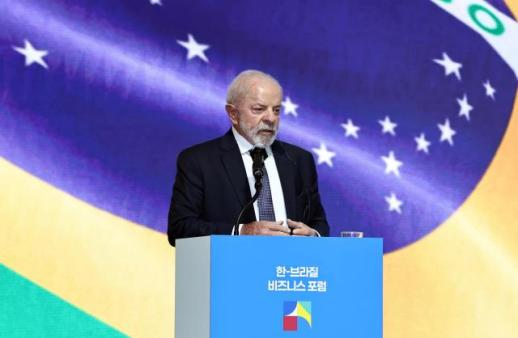 Brazilian president pitches supply chain ties to S. Korean conglomerate heads SEOUL, February 24 (AJP) - Anchoring his first state visit to South Korea in two decades, Brazilian President Luiz Inacio Lula da Silva met with the leaders of the country's largest conglomerates on Monday to secure supply chain partnerships in advanced industries like artificial intelligence and clean energy. The private gathering in Seoul followed a summit earlier in the day between Lula and South Korean President Lee Jae Myung at the presidential Blue House. During the morning summit, the two leaders agreed to elevate bilateral ties to a strategic partnership, signing 10 memorandums of understanding (MoUs) and adopting a four-year action plan. The diplomatic agreements are designed to move the countries beyond simple import-export transactions toward "productive integration," focusing on joint value creation and linked supply chains. To put that broader diplomatic strategy into practice, Lula sat down with Samsung Electronics Chairman Jay Y. Lee, Hyundai Motor Group Chairman Chung Eui-sun, LG Group Chairman Koo Kwang-mo and HD Hyundai Chairman Chung Ki-sun. The meeting was requested by the Brazilian Trade and Investment Promotion Agency, or ApexBrasil, as the Latin American nation seeks to leverage its massive consumer market and mineral wealth to attract high-tech manufacturing. All four South Korean conglomerates already operate major production bases in Brazil. Hyundai Motor Group is investing $1.1 billion to expand the capacity of its Sao Paulo plant by 2032. Samsung Electronics produces smartphones and home appliances in Sao Paulo and Manaus, while LG Electronics is building new facilities in Parana to complement its existing Manaus plant. HD Hyundai Construction Equipment runs a manufacturing facility in Rio de Janeiro. Following the closed-door talks, Lula delivered a keynote address to some 400 government and corporate officials at a bilateral business forum. The Brazilian leader arrived for his trip with a 300-member economic delegation, which is double the size of the group from his previous state visit in 2005. The delegation included top executives from aerospace manufacturer Embraer and state energy firm Petrobras. "South Korea, with its strong competitiveness in advanced technology and manufacturing, and Brazil, the largest economy in South America and home to 23 percent of the world's rare earth reserves, can have a complementary relationship," ApexBrasil President Jorge Viana said at the forum. "We can also contribute to building global value chains." Federation of Korean Industries Chairman Ryu Jin echoed the call for deeper integration. "Brazil is a resource powerhouse with competitiveness in food, energy and aviation, and a country of great strategic importance in the global supply chain," Ryu said. "The two countries must move beyond trade-centric cooperation and advance toward an era of co-prosperity centered on investment and industrial collaboration." Brazil represents Latin America's largest market, with a population exceeding 200 million. South Korean companies exported $5.3 billion in goods to Brazil last year, primarily electronics, automotive parts and pharmaceuticals. In return, South Korea imported $5.47 billion in Brazilian oil, iron ore, meat and coffee beans. Following the business forum, the corporate leaders joined a state dinner hosted by Lee at the Cheong Wa Dae guest house. The banquet drew a wide range of attendees, including government officials, conglomerate heads and prominent cultural figures such as Theborn Korea Chief Executive Officer Paik Jong-won. During the event, the two heads of state highlighted their shared working-class roots. Both leaders experienced poverty and sustained injuries as young factory workers before entering politics. Lee referred to his counterpart as an "amigo," while Lula noted their similar life trajectories made them feel like brothers. The two presidents also exchanged toasts using the Korean word "geonbae" and the Portuguese word "saude." The dinner featured cultural exchanges, with South Korean First Lady Kim Hye-kyung and Brazilian First Lady Rosangela da Silva wearing matching traditional hanbok garments. The dresses were crafted from fabric that the two first ladies purchased together at Seoul's Gwangjang Market earlier in the week. Lula is scheduled to conclude his three-day state visit to South Korea on Feb. 24. 2026-02-24 09:57:20
 -
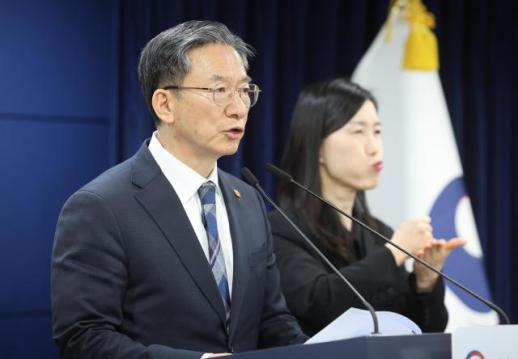 South Korea wins UK court bid to void Elliott ISDS award SEOUL, February 24 (AJP) -South Korea has won a decisive legal battle in a UK court to overturn an international arbitration ruling that had ordered the government to pay roughly 160 billion won ($110 million) to U.S. hedge fund Elliott Management, the Justice Ministry said in a release issued late Monday. The British High Court set aside the 2023 investor-state dispute settlement (ISDS) award, meaning the arbitration decision can no longer stand. The case will now return to arbitration proceedings. The dispute stems from the controversial 2015 merger of Samsung C&T and Cheil Industries. Elliott, then a shareholder of Samsung C&T, filed the ISDS claim in 2018 under the Korea-U.S. Free Trade Agreement (FTA), arguing that it suffered losses after the National Pension Service (NPS) backed the merger. In June 2023, the Netherlands-based Permanent Court of Arbitration (PCA) ordered Seoul to pay $107.8 million in damages and interest. With accrued interest, the compensation had risen to about 160 billion won as of this month — roughly 7 percent of Elliott’s original claim of more than 1 trillion won. Seoul immediately sought to annul the award in the UK, the seat of arbitration, arguing that the tribunal had exceeded its jurisdiction. A first-instance court dismissed the challenge in August 2024, ruling that the relevant FTA provisions were outside the scope of review under the UK Arbitration Act. But the UK Court of Appeal reversed that decision in July last year and sent the case back to the High Court. In the remanded proceedings, the High Court sided with the Korean government and formally set aside the award. NPS not a “state organ” At the heart of the case was whether the National Pension Service qualifies as a state organ under international law — a key “gateway” requirement for ISDS claims under Article 11.1 of the Korea-U.S. FTA. The UK court accepted Seoul’s argument that the NPS has a separate legal personality from the government, that pension fund management is not a core sovereign function such as defense or public security, and that its day-to-day investment decisions are not fully subordinate to the state. The ruling marks the first time an overseas court has recognized that the NPS’ exercise of shareholder voting rights cannot automatically be treated as state action for ISDS purposes, a precedent the Justice Ministry said would help shield Korea from future treaty-based claims by activist funds. However, the court noted that actions by the Blue House and the Ministry of Health and Welfare related to the merger could still qualify as “relevant measures” under the FTA, meaning those issues may be revisited in renewed arbitration. Justice Minister Jeong Seong-ho called the decision a significant victory, noting that UK courts overturn arbitration awards in only about 3 percent of cases. “We pierced the narrow needle’s eye,” Jeong said at a briefing, adding that the government spent only about one-sixth of Elliott’s legal costs in pursuing the challenge. The win follows another high-profile ISDS outcome last year in which Seoul avoided roughly 400 billion won in damages in a dispute with Lone Star over the sale of Korea Exchange Bank. Elliott is expected to appeal the UK ruling. If it does not, the arbitration tribunal will reconsider the matter, this time excluding the NPS from the scope of state liability. 2026-02-24 07:53:11
 -
 South Korean researchers identify brain circuit that senses salt levels to control intake SEOUL, February 23 (AJP) - A research team at Kookmin University has identified a neuroendocrine circuit in the brain that allows animals to dynamically adjust their salt intake based on internal sodium levels. The study, led by Professor Lee Young-seok of the Department of Bio and Fermentation Convergence, reveals how specific brain cells act as internal sensors to maintain salt balance. The findings are scheduled for publication in the weekly issue of the Proceedings of the National Academy of Sciences (PNAS) on February 24, 2026, following an online release on February 21. While taste is typically associated with receptors on the tongue, the body also possesses internal mechanisms to maintain homeostasis. When internal sodium levels are already high, the body instinctively limits further salt intake to prevent damage. The research team used Drosophila (fruit fly) models to demonstrate that certain neurons in the brain directly monitor the salt concentration of internal fluids to regulate this rejection response. The study highlights two key components: insulin-producing cells (MNCs) and Leucokinin (Lk) neurons, which are the insect equivalent of human Tachykinin. When internal salt levels are high, these neurons remain active to sustain a dislike for high-salt foods, preventing overconsumption. Conversely, when the body lacks salt, the Leucokinin signal stimulates the insulin-producing cells to shift the animal's preference, making it consume high-concentration salt that it would normally avoid. Significantly, the research proves that these neurons function as a central sodium sensor that operates independently of external signals from the tongue or esophagus. This means the brain itself tastes the salt levels within the body's internal environment to dictate behavior. Professor Lee Young-seok stated that the study identifies the endocrine mechanism by which the brain monitors internal salt concentrations and modifies behavior accordingly. He noted that because this principle is similar to how mammals maintain salt balance, the research provides a basis for understanding why patients with hypertension or diabetes might consume high amounts of salt and could point toward new therapeutic targets. The study was supported by the Basic Research Program in Science and Engineering through the National Research Foundation of South Korea. The research team was led by Professor Lee Young-seok, with Puri Sonali and Sang Ji-woon serving as co-first authors. (Paper information) Journal: Proceedings of the National Academy of Sciences (PNAS) Title: Insulin and leucokinin pathways coordinate adaptive salt appetite in Drosophila DOI: https://bit.ly/4sakqHg 2026-02-23 15:47:55
 -
 S. Korean researchers develop AI that transforms single observer video into first-person perspective SEOUL, February 23 (AJP) - Researchers at the Korea Advanced Institute of Science and Technology have developed an artificial intelligence model capable of converting a standard video of a person into a high-quality video showing exactly what that person was seeing. The technology, named EgoX, reconstructs a first-person perspective using only a single third-party video as a source. This development addresses a significant hurdle in the fields of augmented reality, virtual reality, and robotics. While first-person data is essential for training AI and creating immersive content, it typically requires subjects to wear expensive action cameras or smart glasses. By eliminating the need for wearable hardware, the new model allows researchers to generate first-person data from the vast amount of existing video footage already recorded by outside observers. The EgoX system works by analyzing the three-dimensional structure of the environment and the specific movements of the person in the video. Rather than simply rotating the camera angle, the AI calculates the person's exact position and posture to recreate the scene from their eyes. It specifically models the relationship between head movement and visual field, ensuring that when a person in a video turns their head, the generated first-person view shifts naturally. In testing across various daily activities such as cooking and exercising, the model maintained high visual quality without the glitches often found in earlier conversion attempts. Because it understands the geometry of the space, the AI can accurately estimate depth and surroundings even when the lighting or movement in the original video is complex. The technology is expected to have an immediate impact on immersive media and robotics. In the metaverse and VR industries, it can turn standard broadcasts into experiences where users feel as if they are the protagonist. For robotics, it provides a way for machines to practice imitation learning by seeing human tasks from the correct physical perspective. Professor Ju Jae-geul, who led the research, stated that the significance of the work lies in the AI learning to reconstruct human vision and spatial understanding. He noted that the environment is now being created where anyone can produce immersive content using previously filmed videos. The research was a collaborative effort involving Kang Tae-woong and Kim Ki-nam, doctoral students at KAIST, and Kim Do-hyun, an undergraduate researcher at Seoul National University. The findings were first shared on the preprint server arXiv on December 9, 2025, and will be officially presented at the IEEE/CVF Conference on Computer Vision and Pattern Recognition in Colorado on June 3, 2026. The project was supported by the Ministry of Science and ICT through the National Research Foundation of South Korea and the Korea Institute of Science and Technology Information. (Paper information) Journal: The IEEE/CVF Conference on Computer Vision and Pattern Recognition (CVPR) Title: EgoX: Egocentric Video Generation from a Single Exocentric Video DOI: https://keh0t0.github.io/EgoX/ 2026-02-23 15:31:57
 -
 South Korea and Brazil upgrade ties to strategic partnership SEOUL, February 23 (AJP) - South Korean President Lee Jae Myung and Brazilian President Luiz Inacio Lula da Silva agreed to elevate bilateral relations to a strategic partnership following a summit at the presidential Blue House on Monday. During a joint press briefing in the afternoon, Lee announced the adoption of a four-year action plan designed to foster a new leap forward in the bilateral relationship. The leaders oversaw the signing of 10 memorandums of understanding covering sectors such as small businesses, health regulations and agriculture. The talks highlighted several main areas of cooperation, prioritizing artificial intelligence, aerospace, defense, biopharmaceuticals and critical minerals. Both countries also plan to expand collaboration across the digital and green economies. Addressing international trade, Lee said he emphasized the need to quickly resume negotiations for a trade agreement between South Korea and the South American trade bloc Mercosur. Lee noted that Lula agreed the pact is a crucial task, and both leaders committed to seeking a breakthrough based on mutual trust. Brazil is currently unable to negotiate a conventional bilateral free trade agreement with South Korea due to institutional rules within Mercosur, which requires the bloc to negotiate trade deals collectively. Regarding the newly signed memorandums, Lee stated that the agreement focusing on small and medium-sized enterprises will help diversify bilateral trade and investment, which has historically been dominated by large conglomerates. Another key agreement addresses health and regulatory cooperation, which Lee said will further boost the popularity of South Korean cosmetics in Brazil. The arrangement facilitates the exchange of regulatory information for cosmetics, food and pharmaceuticals, alongside technical cooperation to streamline market access. South Korean cosmetics have seen significant growth in the region. According to the Korea International Trade Association, cosmetic exports to Latin America grew by more than 40 percent annually over the past four years, reaching roughly $400 million in 2024. The two governments also signed three memorandums focused on agriculture, food security and supply chains. Lee described Brazil as an agricultural powerhouse with advanced technology, calling the partnerships vital for South Korea's food security and the sustainable development of rural economies in both nations. 2026-02-23 14:43:37
 -
 Brazilian president receives warm welcome from Lee on first state visit in 21 years SEOUL, February 23 (AJP) -Brazilian President Luiz Inacio Lula da Silva was welcomed with a warm embrace by President Lee Jae Myung on Monday, marking his return to South Korea for a state visit — his first in 21 years and the first by a foreign leader since the presidential office returned to Cheong Wa Dae. Lee greeted Lula in the main garden of the presidential compound with open arms as the Brazilian leader stepped out of his vehicle, before the two shared a brief embrace and proceeded to an official welcome ceremony featuring traditional honor guards and a children’s welcoming group. The visit includes bilateral talks, a memorandum of understanding signing ceremony, a joint press announcement, and a state dinner at the Yeongbingwan guest house, with discussions set to focus on deepening cooperation in high-value and emerging industries. The summit agenda covers trade, investment, climate change, energy, defense, science and technology, agriculture and cultural exchanges. Instead of focusing solely on traditional commerce, the talks will prioritize what Brazilian Ambassador to South Korea Marcia Donner Abreu recently described as "productive integration" during an interview with AJP on Feb. 19. The approach is designed to move bilateral ties beyond simple buying and selling, focusing instead on joint value creation through linked supply chains and investments. he two countries plan to collaborate on local downstream processing and refining, moving beyond trade beyond raw materials. The governments also aim to build joint production lines for the C-390 transport aircraft and deepen partnerships in high-growth industries such as biopharmaceuticals, digital technologies and K-beauty. The talks are supported by a personal rapport between the two leaders, who both experienced poverty and sustained work-related injuries as young factory workers. Lee and Lula previously bonded over their shared backgrounds during the Group of Seven summit in Canada last June and the G20 meeting in South Africa in November. Lula will conclude his state visit to South Korea on Feb. 24. 2026-02-23 09:37:20
 -
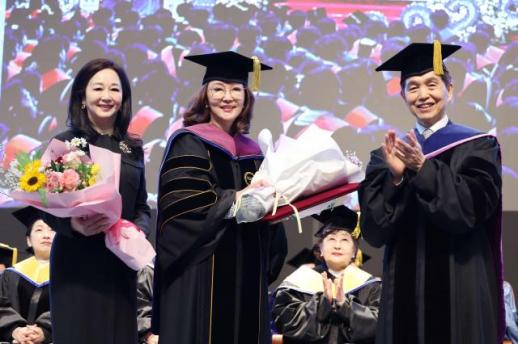 INTERVIEW: Formosa Chairman Sandy Wang emphasizes long-term research partnership with KAIST SEOUL, February 22 (AJP) - Wang Ruey-yu, known by her English name Sandy Wang, described the establishment of the KAIST-Formosa Biomedical Research Center as a foundational step in a rare cross-border collaboration between Taiwanese industry and South Korean academia. Speaking in an interview with AJP on February 22, Wang, an executive member of the Formosa Group and chairperson of Formosa Bio, characterized the partnership as a "first seed" for future cooperation. "This first button is the establishment of the KAIST-Formosa Biomedical Research Center," Sandy Wang said. "Since we have fastened the first button, should we not continue with the second and third?" The collaboration marks the first time the Taiwan-based conglomerate has entered into such a support and research agreement with a South Korean university. While Formosa Group operates across diverse industrial sectors, Sandy Wang noted that the initial focus on life sciences was driven by a shared mission to solve critical health challenges. She explained that her decision to support KAIST was finalized after meeting with Department of Brain and Cognitive Sciences Head Kim Dae-soo and Professor Choi Min-yi. "When I asked what they could do best, I heard the answer, 'I can save people,'" Sandy Wang said. "I was able to make a decision easily at the word that I could save people suffering from diseases. I felt there could be no more important plan for social contribution than this." Sandy Wang identified the leadership of KAIST President Lee Kwang-hyung and the university's research infrastructure as decisive factors in selecting the institution as a strategic partner. She noted that the partnership combines the research capabilities of KAIST with the clinical experience of Formosa’s 12,000-bed Chang Gung Memorial Hospital and Chang Gung University College of Medicine. "The cooperation with KAIST and the support for KAIST were considered significant just by the fact that one more research center was added that could give hope to people suffering from incurable or intractable diseases," Sandy Wang stated. The partnership is structured as an open research platform designed to link laboratory discoveries with industrial commercialization. To facilitate this, researchers participating in the joint center have been appointed as specially appointed professors at Chang Gung University and Ming Chi University of Technology in Taiwan. Sandy Wang emphasized a patient approach to results, stating that she does not intend to be "impatient" about producing immediate research outcomes. "I plan to provide support calmly without being impatient about producing research results," Wang said. "How to realize that value can be considered after the groundwork is laid." Beyond biotechnology, the collaboration is expected to expand into other industrial fields, including energy transition and resource circulation. Chief executives from Formosa Group affiliates have already visited KAIST to identify potential cooperation areas. Sandy Wang expressed confidence that these exchanges will assist Formosa Group in its strategic shift toward carbon-neutral industries. "I am confident that if industry-academic cooperation with KAIST is achieved and exchanges are expanded, it will be of great help in finding new paths for the Formosa Group to move forward," Sandy Wang said. The executive also reflected on the broader implications of the partnership for South Korea and Taiwan, noting that it is very rare for a Taiwanese company to engage in industry-academic cooperation with a South Korean university. Wang reiterated her commitment to her father’s philosophy that a company must return its profits to the society where it took root. "They say a journey of a thousand miles begins with a single step, and you cannot be full with the first spoonful," Wang said. "We have already made an important start together, and I will do my best to cooperate and support this start so it can produce good results." 2026-02-22 13:28:40
 -
 South Korean presidential office to monitor US trade measures after court ruling SEOUL, February 21 (AJP) - The South Korean presidential office said Saturday it will closely monitor follow-up trade actions by the United States and global trends after the US Supreme Court invalidated broad tariffs on South Korean goods. National Security Adviser Wi Sung-lac and Kim Yong-beom, the presidential chief of staff for policy, co-chaired a joint meeting of relevant ministries to discuss the fallout. The session followed a 6-3 US Supreme Court decision on Friday that ruled President Donald Trump lacked the authority to impose tariffs under the International Emergency Economic Powers Act (IEEPA). Presidential spokesperson Kang Yu-jung said in a written briefing that the 15 percent reciprocal tariff currently applied to South Korean exports is now void under the ruling. However, she noted that the US administration has since announced a new 10 percent global tariff based on Section 122 of the Trade Act of 1974. Kang said the government plans to continue friendly consultations based on the special alliance between South Korea and the United States. She added that officials aim to ensure the balance of benefits and export conditions secured in previous agreements are not damaged by the increased uncertainty in the international trade environment. Regarding the recovery of tariffs already paid by South Korean companies, the presidential office decided to work closely with economic organizations and trade associations. This collaboration aims to provide businesses with timely and accurate information on potential refund processes. The meeting participants also reviewed the progress of the Special Act on Investment in the United States. They agreed to proceed with necessary legislative steps, including public hearings, to ensure the process remains on schedule. Attendees included Koo Yun-cheol, the deputy prime minister at the Ministry of Finance and Economy; Cho Hyun, the foreign minister; Kim Jeong-gwan, the minister at the Ministry of Trade, Industry and Energy; and Yeo Han-koo, the minister for trade. Ha Jun-kyung, the senior secretary for economic growth, and Oh Hyun-joo, the third deputy director of national security, also participated. Trump signed an executive order on Friday to formally end the duties imposed under IEEPA in response to the court decision. He immediately invoked Section 122 of the Trade Act of 1974 to impose a 10 percent surcharge on all imports to address international payment imbalances. 2026-02-21 17:37:26