
Journalist

Park Sae-jin, Han Jun-gu
swatchsjp@ajunews.com
-
 Kazakhstan to hold national referendum on new constitution in March SEOUL, February 20 (AJP) - Kazakhstan's President Kassym-Jomart Tokayev signed a decree on February 11 to hold a national referendum on March 15 to decide on the adoption of a new constitution for the Republic of Kazakhstan. If approved by voters, the document will trigger a comprehensive political transition beginning July 1, including the end of the current parliament’s mandate and a fundamental shift in the country’s governance model. The proposed reform marks a transition from targeted amendments to a total constitutional overhaul. The Embassy of Kazakhstan in South Korea noted that the changes reflect a move away from the current super-presidential system toward a presidential republic with a more authoritative parliament. A central feature of the draft constitution is the establishment of a unicameral parliament, to be called the Kurultai. This body would consist of 145 deputies elected through a proportional electoral system for five-year terms. The Kurultai would be granted expanded powers, including the right to issue a vote of no confidence in the government and enhanced oversight of individual ministers. By a two-thirds supermajority, the parliament could also request that the president dismiss a minister for failing to implement laws. The draft introduces several new political roles and bodies to balance the executive branch. A vice president position will be established, with the appointee requiring consent from the Kurultai. Additionally, the People’s Council of Kazakhstan will be created as the highest nationwide consultative body to represent the interests of the public. A clear succession order is also defined, moving from the vice president to the chair of the Kurultai, and then to the prime minister. Legal safeguards and procedural rights are expanded in the 96-article document. The draft includes the constitutional recognition of the legal profession and reinforces the prohibition of retroactive laws. It also enshrines fair-trial safeguards, such as the presumption of innocence and the right to a lawyer from the moment of detention. Furthermore, the draft provides explicit protections for personal data and the confidentiality of communications in a digital environment. The text was finalized by a 130-member Constitutional Commission following a six-month review process. During a nationwide public discussion, approximately 10,000 proposals were submitted by citizens and experts through electronic government portals. The commission reported that the review affected 77 articles, or approximately 84 percent of the existing constitution, leading to the decision to draft an entirely new text. In the social sphere, the document reinforces the secular nature of the state while defining marriage as a voluntary and equal union between a man and a woman. It also identifies education, science, and innovation as central priorities for national development, signaling a strategic shift toward human capital rather than a reliance on natural resources. If the reforms are endorsed in the March 15 referendum, the new constitution will replace the existing framework. Within one month of the new constitution taking effect, the president must announce elections for the new Kurultai, which are to be held within two months of that announcement. 2026-02-20 14:50:21
 -
 Kookmin University completes global leadership camp with United Nations University in Tokyo SEOUL, February 20 (AJP) - The HUSS Global Symbiosis Project Group at Kookmin University successfully conducted the KMU x UNU Sustainable Global Leader Training Camp in Tokyo from January 26 to February 1, the prominent university located in Seoul said on Thursday. The program was developed in collaboration with the United Nations University (UNU) to provide a field-based educational model focused on international organizations. It featured the UNU Future Leaders Bootcamp, expert lectures, a mock UN Security Council negotiation simulation, a visit to Tokyo City University, and various social contribution activities based on environmental, social, and governance (ESG) principles. The initiative was designed to move beyond theoretical classroom learning by immersing students in the operational environments of global institutions. By partnering with UNU, the university aimed to provide undergraduate students with direct exposure to international diplomacy and sustainable development strategies. During the Future Leaders Bootcamp held at UNU, participants studied the structure of the United Nations system and the implementation strategies for Sustainable Development Goals (SDGs). A central component of the camp was a simulation of a UN Security Council session held at Elizabeth Rose Hall. Students engaged in a mock negotiation regarding the crisis in Venezuela, practicing country-specific strategy formulation, informal consultations, and the voting process for resolutions. The curriculum also included a lecture by Professor Lim Hwa-jin of Tokyo City University on urban planning and smart city cases in Japan. This was followed by a field trip to the Shinjuku district, where Kookmin University students worked alongside local Japanese students to observe urban infrastructure and public space design. Participants engaged in practical ESG activities, including a project to improve language accessibility for Korean history exhibits at the Koryo Museum of Art in Tokyo. They also conducted benchmarking studies of the Japanese environmental non-profit organization Greenbird and took part in the Green Store Observer Program. Following the completion of the field activities, the university held a contest for posters and short-form videos to allow students to document and share their findings. According to internal university data, all 30 participants reported a maximum satisfaction score of five out of five, stating they would recommend the program to others. Professor Lim Young-bin of the Department of Public Administration, who led the program, stated that the university has established an integrated global education model where students learn at international organizations, verify concepts in urban settings, and practice social responsibility. He noted that the university plans to further develop this into a flagship global exchange program. The HUSS Global Symbiosis Consortium is a three-year initiative supported by 9 billion won in funding from the Ministry of Education and the National Research Foundation of Korea. Since 2024, Kookmin University has collaborated with Kwangwoon University, Sun Moon University, Yeungnam University, and Honam University under this consortium. The group aims to train 2,500 experts capable of addressing global resource challenges, industrial sustainability, and international social inclusion. 2026-02-20 13:59:44
 -
 EXCLUSIVE: Brazil looks beyond 'traditional trade' from K-beauty to AI in state visit SEOUL, February 20 (AJP) - Brazil is looking beyond "traditional trade" through the Feb. 22–24 visit to South Korea, tapping fields from K-beauty to biosimilars, artificial intelligence and space cooperation in pursuit of "productive integration," its ambassador to Seoul said. "The main issue is reinvigorating a relationship that has evolved on just 'okay' in the past several years and is in need of a big jump," Ambassador Marcia Donner Abreu told AJP in an exclusive interview Thursday, ahead of President Luiz Inácio Lula da Silva's first state visit to Korea in 21 years. Mononymously known as Lula, the 80-year-old statesman returned to office in 2023 for a third, nonconsecutive term after governing Brazil from 2003 to 2010. His last exclusive bilateral visit to Seoul was in 2005 at the invitation of the late President Roh Moo-hyun. South Korean President Lee Jae Myung and Lula met for the first time on Jun. 17 last year, in Kananaskis, Canada, on the sidelines of the Group of Seven (G7) summit. What could have been a routine diplomatic meeting created an instant rapport between the two men who had walked strikingly similar paths as underage factory boys with permanent work injuries, and as politicians who were continuously put under a barrage of investigations and legal battles, according to the envoy in Seoul. "Chemistry exists; it is excellent," she said. "Both come from very poor families. Both had work-related injuries that marked them. President Lee as a lawyer, President Lula as a union leader — both are presidents." Such shared experiences, she emphasized, are expected to help turn political dialogue into tangible outcomes in the upcoming visit. "The personal relationship always helps. It helps the dialogue evolve into positive terrain." From trade to "productive integration" For Abreu, the upcoming visit marks an attempt to move bilateral ties beyond transactions toward joint value creation. "My president has just been in India, and we see significant potential in Asia," she said. "The same applies to Korea. There is strong potential to increase trade — but not only trade. Trade and productive integration. This includes value chains, investments, a number of things." While automobiles and electronics remain the backbone of bilateral commerce, a new three-year plan of action focuses on complex, high-growth industries. Roughly 15 agreements are expected in biopharmaceuticals, centering on biosimilars and industrial engagement. In defense and aviation, Brazil hopes to build on the C-390 transport aircraft deal through structured partnerships for sourcing components and establishing joint production lines. "In space, we have a very good chance to make something between your space agenda and the Brazilian aerospace agency," Abreu said. Digital industries and artificial intelligence will also feature prominently, with plans for a structured bilateral dialogue. K-beauty and the Amazon connection Cosmetics is emerging as one of the most dynamic areas of cooperation. According to the Korea International Trade Association, Korean cosmetics exports to Latin America expanded from about $100 million in 2020 to roughly $400 million in 2024, growing more than 40 percent annually. Brazil, the region's largest cosmetics market, has become a major battleground for global brands, with Korean exports there more than doubling in the past three years. Demand has surged for skincare and haircare products, while Korean brands have expanded their presence in pharmacy-based derma-cosmetic channels. "The extraordinary success of Korean cosmetics is based on a formula that combines high technology," Abreu said. "But we also have this treasury of Amazonia with many ingredients. Using natural ingredients from different parts of the world could be very valuable." She sees scope for joint development linking Korean formulation expertise with Brazil's biodiversity. Beyond a resource supplier Brazil is also seeking to reposition itself in global supply chains, particularly in critical minerals. Rather than remaining a provider of lithium, niobium and other raw materials, Brasília wants to cooperate with Korean firms on downstream processing and manufacturing. "We don't want to just buy things and sell them," Abreu said. "We want local processing and refining, leveraging Korean competitiveness and technology." She described advanced materials and "creative minerals" as key to future cooperation in batteries, semiconductors and renewable energy. No FTA, but a flexible framework Despite deepening ties, Brazil is not pursuing a conventional bilateral free trade agreement with Korea, citing institutional constraints within Mercosur. "The FTA is not a bilateral negotiation — it's a Mercosur negotiation," she said. "It's not something Brazilian authorities can simply decide." Instead, both sides are working on a "trade and productive integration arrangement," designed to enable faster industrial cooperation without lengthy ratification procedures. "We believe this arrangement can pave the way for further integration, including future regional negotiations," she said. A turning point after two decades Lula's return to Seoul after more than two decades reflects Brazil's broader push to strengthen ties with Asian partners and diversify its economic diplomacy. During the Feb. 22–24 visit, the two leaders are expected to discuss trade and investment, supply chains, energy, technology, space cooperation, and cultural exchange. For Brasília, the objective is to transform a largely transactional relationship into a long-term strategic partnership based on joint production and innovation. "This is about building something together," Abreu said. "Not just exchanging goods, but creating value." 2026-02-20 10:16:05
 -
 Iran and US reach preliminary agreement on negotiation principles in Geneva SEOUL, February 19 (AJP) - Iran and the United States have reached a comprehensive agreement on the basic principles for future negotiations following indirect talks held at the Omani Embassy in Geneva, the Embassy of the Islamic Republic of Iran in South Korea said Thursday. Seyed Abbas Araghchi, the Iranian Foreign Minister, described this second round of discussions as more serious than previous sessions, noting they took place within a constructive and practical atmosphere. The meetings serve as a critical step in addressing long-standing friction between the two nations regarding nuclear and diplomatic issues. The talks were facilitated by Omani mediation to provide a neutral ground for the two delegations to communicate. Both parties have started drafting a transition agreement and agreed to coordinate the schedule for the next round of meetings following a formal exchange of texts. Despite the progress, officials emphasized that additional efforts are required to resolve remaining points of contention. The diplomatic track was further detailed in a telephone conversation between Professor Seyed Abbas Araghchi and Rafael Grossi, the Director General of the International Atomic Energy Agency (IAEA). The two officials reviewed the status of the indirect negotiations and exchanged views on the essential requirements for establishing a consistent negotiating framework. Director General Grossi provided a positive assessment of the Geneva talks and affirmed the agency's readiness to support ongoing diplomatic initiatives. During a keynote speech at the United Nations Conference on Disarmament in Geneva, Professor Seyed Abbas Araghchi reaffirmed that nuclear weapons represent the most significant threat to humanity. He clarified that the nuclear program of Iran is based entirely on peaceful objectives and stated that nuclear weapons hold no place in the national security doctrine of the country. The foreign minister further stressed the importance of maintaining the technical and neutral character of the IAEA. He committed to continued constructive cooperation with the agency within the framework of legal obligations to ensure a sustainable and balanced agreement that secures the rights of the Iranian people. Iran maintains that it will pursue goal-oriented and result-driven diplomacy to achieve practical outcomes through these sustained diplomatic efforts. 2026-02-19 19:38:31
 -
 EU open to mediate if North Korean POWs in Ukraine seek defection SEOUL, February 19 (AJP) -The European Union expressed readiness to help facilitate the return of North Korean prisoners of war captured in Ukraine and called for closer cooperation with South Korea on security and sanctions, according to a senior EU diplomat Thursday. Olof Skoog, Deputy Secretary General for Political Affairs at the European External Action Service, said the EU was willing to assist if requested on the issue of North Korean soldiers captured by Ukrainian forces while fighting alongside Russia. “Of course, they should not have been there in the first place, because this is an illegal war,” he said, referring to North Korean troops deployed to support Russia. “But I understand the humanitarian concern.” "We'll see how we can be helpful," he said, during a press briefing at the EU delegation office in central Seoul, as he expects the issue to be raised during his meetings in Seoul. Two North Korean soldiers captured in the Kursk region have previously expressed their intention to defect to South Korea through handwritten letters delivered to civic groups. Skoog also criticized Russia’s continued attacks on civilian infrastructure in Ukraine, particularly energy facilities, saying Moscow was attempting to undermine public morale. “Unfortunately, Russia does not seem willing to seriously engage in peace efforts,” he said, adding that the EU, the United States and Ukraine had presented proposals aimed at ending the war. He stressed that the EU would continue pressing Russia through sanctions and diplomatic pressure while increasing support for Ukraine. “This is a peace effort, not a war effort,” he said. “We are asking partners to keep up the pressure on Russia and maintain support for Ukraine.” Skoog said Europe was being forced to take greater responsibility for its own security, partly due to what he described as reduced U.S. commitment to defending the continent. “We are stepping up the defense of our own countries and Europe,” he said, adding that this shift was reshaping EU foreign and security policy. He described the world as entering a period of “geopolitical disorder,” four years into Russia’s full-scale invasion of Ukraine, and said that strengthening partnerships with like-minded countries was now central to Europe’s strategy. Korea, he said, is among the EU’s closest strategic partners in this effort. “We consider Korea one of our most important partners in defending the multilateral system and the rules-based order,” Skoog said. He said discussions in Seoul would cover cooperation in cybersecurity, hybrid threats, maritime security, supply chain resilience and energy security. Europe, he added, is seeking to reduce dependence on external powers for critical resources and infrastructure. “We have seen how energy and raw materials can be weaponized,” he said, citing China and Russia. “We are trying to make ourselves less dependent on such practices.” Skoog also pointed to growing European interest in South Korean defense products as EU member states sharply expand military spending. “Many European countries believe Korea has very impressive capabilities,” he said. “There is strong interest in purchasing arms and defense systems from Korea.” He said the defense market in Europe was “huge” as governments raise budgets and seek advanced technologies not readily available within the continent. While emphasizing that the EU is not a military alliance like NATO, Skoog said Brussels is encouraging member states to “spend more and better” on security. He also rejected concerns that Europe is turning inward economically. “Europe is not protectionist,” he said. “We are negotiating free trade agreements like never before, and most products enter our market with no tariffs.” Skoog said Western sanctions were having a growing impact on Russia’s economy, noting that Moscow was depleting financial reserves. However, he acknowledged that the measures had not yet altered the Kremlin’s strategic calculations. “Sanctions are working, but they are still not enough,” he said. “We need to do more.” He called on partner countries, including South Korea, to help monitor and enforce sanctions more effectively, particularly against Russia’s so-called “shadow fleet” used to evade restrictions on oil and trade. He also urged closer cooperation on implementing United Nations sanctions against North Korea. “We have learned a lot about monitoring and stopping Russia’s shadow fleet,” he said. “There is more we can do together to ensure that North Korea is not helping to feed the Russian war machine.” During his visit, Skoog is scheduled to hold a Korea-EU high-level political dialogue with Vice Foreign Minister Chung Eui-hye and meet with Foreign Minister Cho Hyun and Unification Minister Chung Dong-young to discuss regional security and bilateral cooperation. 2026-02-19 14:44:47
 -
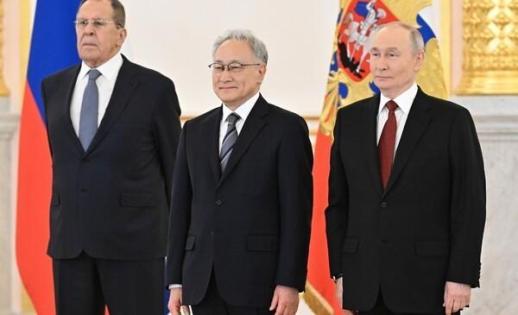 Ukraine War in 5th Year: Seoul urged to take "pragmatic" postwar posture *Editor's Note: As Russia's invasion of Ukraine nears its fifth year, AJP reviews how the war began, how it has evolved, and where it is heading — and asks the most urgent question of all: will it end? The third installment examines a practical post-war strategy for Seoul. SEOUL, February 11 (AJP) - When Vladimir Putin recently spoke of "positive capital" in ties with Seoul while receiving the credentials of South Korea's new ambassador, Lee Seok-bae, last month the phrase carried more strategic weight than diplomatic courtesy. It was, according to Park Byong-hwan, director of the Eurasian Strategic Studies Institute and a former senior diplomat in Moscow, a signal Seoul should not ignore as the war in Ukraine enters its fifth year. "Putin's language was cold and realist," Park said in an interview. "He was reminding Seoul that the window for pragmatic re-engagement is slowly opening. But our bureaucracy remains trapped in a defensive crouch." Since Russia's invasion in 2022, South Korea has aligned closely with U.S.-led sanctions, a stance that has coincided with Moscow's growing reliance on North Korea for arms and manpower. Relations further deteriorated after Seoul became an indirect supplier of artillery shells to Kyiv via the United States, prompting Russia to designate South Korea an "unfriendly nation." Park argued that Seoul has gone beyond what its alliance obligations require. "We failed to distinguish between necessary sanctions and unnecessary hostility," he said. "The result has been little security gain and substantial economic damage." Russian ambassador to Seoul Georgy Zinoviev echoed Putin's earlier narrative in a separate meeting with reporters in Seoul on Wednesday. "We have a lot of positive capital in our interaction with the Republic of Korea that has been wasted in many ways, but we count on the restoration of relations with the Republic of Korea." Trade losses and corporate retreat The economic cost has been tangible. According to the Korea Customs Service, South Korean exports to Russia more than halved, falling from nearly $10 billion in 2021 to $4.52 billion in 2024. New vehicle exports plunged from $2.5 billion to $589 million. Against this backdrop, Hyundai Motor and its affiliate Kia which used to be the largest foreign car brand in Russia allowed a buyback option on their former Russian manufacturing plant to expire in January, effectively ending hopes of an early return. Operations at the facility were suspended in March 2022 following sweeping Western sanctions that disrupted logistics and payments. Hyundai sold the plant in 2024 at a symbolic price, retaining a repurchase option that was quietly abandoned as political risks mounted. "Major corporations can absorb such losses," Park said. "Small and mid-sized exporters cannot." Zinoviev pointed out: "Major Korean producers were forced to leave because the government of the Republic of Korea introduced sanction restrictions against Russia on exports. Now the list of these restrictions has reached 1,402 positions, including semiconductors, cars, components, and electronics." "The glass can be half empty or half full. I would like to see practical steps that would make exchanges between our citizens more convenient, as I believe this would meet the interests of both Russians and Koreans," he added. The cost of over-compliance Park also was critical of Seoul's expansive export controls, which now cover consumer goods such as used vehicles and home appliances. "These measures have no military impact," he said. "Russia sources substitutes elsewhere, mainly from China and India. We are not weakening Moscow's war effort. We are strangling our own businesses." He argued that South Korea's approach has been more restrictive than that of several G7 peers, leaving it with little strategic flexibility as the conflict drags on. Japan, for example, has maintained energy interests in Russia while publicly condemning the war. Seoul, by contrast, has largely withdrawn. A shifting geopolitical landscape Park saw the emerging postwar order as increasingly multipolar. "Unlike China, Russia has no territorial ambitions on the Korean Peninsula," he said. "Historically, Moscow has been receptive to peaceful unification led by Seoul because of the economic benefits." He contended that Washington's growing interest in managing down the Ukraine conflict could eventually open space for recalibrated relations. "As the U.S. explores diplomatic exits, South Korea should position itself as a constructive partner, not a passive follower," Park said. Complementary strengths At a structural level, Park described the Korea-Russia relationship as fundamentally complementary: Russia's strength in basic science and resources paired with South Korea's manufacturing and commercialization capacity. "Much of this cooperation already exists quietly in the private sector," he noted. "Korean firms continue to rely on Russian scientific talent in advanced research." He also pointed to Russia's role as a nearby supplier of energy and food resources—an increasingly valuable asset amid global supply-chain fragmentation. "Geographically, Russia is at our doorstep," he said. "Strategically, that matters." The Arctic connection This logic extends to logistics. The Ministry of Oceans and Fisheries plans to dispatch a trial container vessel from Busan to Rotterdam via the Arctic this September, testing the commercial viability of the Northern Sea Route. But Park warned that such ambitions depend on workable ties with Moscow. "You cannot use the Northern Sea Route without Russia," he said. "They control permits, icebreakers and safety systems. That is geographic reality." The Russian ambassador agreed; "To any person who glances at the map, it is perfectly clear that one needs to interact with Russia. If the Korean side wants to use the Northern Sea Route, it probably can start a corresponding dialogue with Russia." 2026-02-12 07:35:10
 -
 Uzbekistan and Türkiye align youth policies to boost technological and regional cooperation SEOUL, February 11 (AJP) - Bilateral relations between Uzbekistan and Turkey have expanded significantly in recent years, with youth policy emerging as a primary focus of the diplomatic agenda. This cooperation, initiated by the leaders of both nations, has moved beyond domestic social measures to become a formal component of interstate relations involving trade, education, and innovation. The shift toward a systematic approach was highlighted during the fifth meeting of the Ministers of Youth and Sports of the member countries of the Organization of Turkic States, held on September 20, 2021, in Tashkent. During this summit, officials reached agreements to coordinate youth exchange programs and joint platforms, leading to a practical exchange in August 2022 where Uzbek youth visited Istanbul and Konya to establish social and professional ties. Technological cooperation has also become a cornerstone of the partnership. A delegation from the Youth Affairs Agency of the Republic of Uzbekistan participated in the Teknofest Azerbaijan festival in May 2022. This was followed by Uzbekistan's first national pavilion at the Teknofest aerospace and technology festival in Samsun later that year. The pavilion featured 20 innovative projects developed by young Uzbek inventors and engineers. Further economic integration occurred during the Uzbekistan – Turkey Youth Business Forum held in Istanbul in December 2022. The event brought together more than 200 entrepreneurs and resulted in the signing of cooperation agreements worth 351,000 US dollars. To sustain this momentum, a memorandum was signed in 2025 to establish the Bilim Tashkent center, a facility dedicated to developing technological skills among youth in the Uzbek capital. The partnership also includes a strong humanitarian and volunteer component. In 2020, during the COVID-19 pandemic, the Turkish Cooperation and Coordination Agency (TIKA) worked with Uzbek youth to distribute food aid across the country. This volunteer cooperation continued during the recovery efforts following the 2023 earthquake in southeastern Turkey, where youth structures from both nations coordinated on-the-ground support. Institutional ties are set to strengthen further as the city of Khiva takes on the status of Youth Capital of the Turkic World in 2026. The project will include a young leaders and entrepreneurs forum and an international youth festival. Additionally, Samarkand and Bukhara are slated to become sister youth cities with the Turkish cities of Antalya and Ordu to foster regional connections. This evolving cooperation system integrates youth exchange, technological innovation, and humanitarian activity into a long-term strategy aimed at developing human capital and strengthening ties between the two societies. 2026-02-11 21:54:42
 -
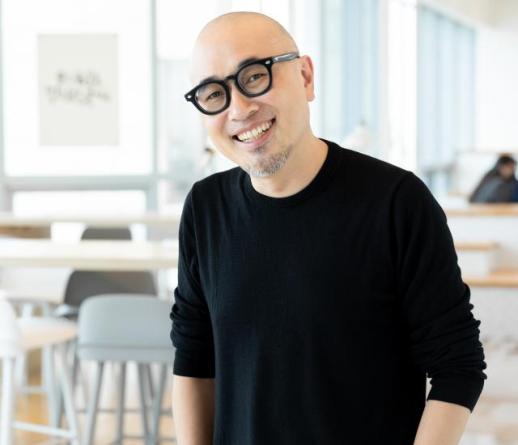 Bamin founder Kim Bong-jin delivers commencement address at Kookmin University graduation SEOUL, February 11 (AJP) - Kookmin University held its Spring 2026 commencement ceremony on February 11, where Kim Bong-jin, the founder of the food delivery platform Bamin and current CEO of Grande Clip, delivered the congratulatory address to graduating students. Kim Bong-jin, an alumnus of the Kookmin University Graduate School of Design, is recognized as a pioneering entrepreneur who combined design sensibilities with business strategy. He founded Woowa Brothers in 2010 and launched Bamin, which transformed the South Korean delivery market. The platform has recorded 6.5 billion cumulative orders and 153 trillion won in total transaction value, becoming a primary service in daily South Korean life. University officials stated that Kim Bong-jin was selected as the speaker because of his track record in identifying market problems and executing solutions through rapid experimentation. The university also cited his ongoing commitment to social contribution and support for the cultural and design sectors as an exemplary model of entrepreneurship for the graduates. Kookmin University President Jeong Seung-ryeol said the address aligned with the school's 80th anniversary slogan, "Make the Rule, Break the Rule." He noted that the experiences of an alumnus who created new standards and opened new paths would provide graduates with a broader perspective as they enter society. During the ceremony, Kookmin University awarded degrees to 2,225 undergraduate students, 801 master's degree recipients, and 147 doctoral graduates. While the university focuses on internal development and alumni success, it continues to maintain strong ties with other major institutions and industrial partners in South Korea to bolster its design and engineering programs. The event concluded with the formal conferral of degrees to the graduating class of 2025. 2026-02-11 10:12:56
 -
 Iranian envoy highlights longstanding friendship, shared future between Tehran and Seoul SEOUL, February 11 (AJP) - Iran's ambassador to South Korea emphasized the enduring friendship between Tehran and Seoul and expressed hopes for deeper cooperation as the two countries look ahead, speaking at a reception marking the 47th anniversary of Iran's Islamic Revolution in Seoul on Tuesday. The Embassy of the Islamic Republic of Iran in South Korea hosted the event at the Shilla Hotel in central Seoul, attended by about 300 guests from diplomatic, academic and business circles. "In the field of bilateral relations, Iran and Korea share deep ties grounded in a long history and longstanding friendship, which provide an important foundation for the two countries to envision a brighter future together," Ambassador Saeed Koozechi said in commemorative remarks. Marking the 63rd anniversary of diplomatic relations this year, Koozechi acknowledged challenges affecting economic engagement while pointing to continued diplomatic dialogue. "Although the unjust and unilateral sanctions imposed by the United States have placed a heavy burden on our economic cooperation, the two rounds of policy consultations held between our Foreign Ministries in 2025 clearly demonstrate both sides' commitment to preserving and further strengthening our bilateral ties," he said. The ambassador also pointed to Iran's development trajectory in science and industry. "In the field of science and technology, Iran's capacity for knowledge production has continued to grow, marked by significant achievements in advanced technologies and healthcare, as well as the expansion of knowledge-based enterprises," he said, adding that progress has continued "despite unjust sanctions and a challenging international environment." On foreign policy, he described Iran as pursuing "dynamic diplomatic engagement and strategic cooperation based on a balanced approach," supporting dialogue and multilateral cooperation. Iran and South Korea have maintained diplomatic engagement across political and economic constraints, including periods shaped by Western sanctions on Tehran. During the COVID-19 pandemic, Seoul moved to facilitate humanitarian trade channels and medical support mechanisms, including medicine shipments, medical equipment exports and vaccine-related cooperation conducted under sanctions-exempt frameworks. 2026-02-11 09:50:50
 -
 18-year-old wins S. Korea's first female snowboard Olympic bronze SEOUL, February 10 (AJP) - High school student Yu Seung-eun has made history on Monday (local time) as the first South Korean woman to stand on an Olympic snowboarding podium, capturing a bronze medal in the big air event during her debut at the Milano Cortina 2026 Winter Olympics. The 18-year-old recorded a combined score of 171.00 points at Livigno Snow Park, finishing behind gold medalist Japan's Murase Kokomo and silver medalist Zoi Sadowski-Synnott from New Zealand. Her performance secured South Korea's second snowboarding medal of these Games, following a silver by Kim Sang-kyum in the men's parallel giant slalom on Sunday. South Korea is a relative newcomer to the international snowboarding scene compared to traditional winter sports powers in North America and Europe. While snowboarding made its Olympic debut in 1998, South Korea did not win its first medal in the sport until Lee Sang-ho took silver in the parallel giant slalom at the 2018 PyeongChang Games. Yu's bronze represents the nation's first-ever Olympic medal in a freestyle snowboarding discipline. During the February 10 final, which aggregates the two highest scores from three attempts, Yu executed a backside triple cork 1440 mute grab on her opening run for 87.75 points. She moved into a temporary lead during the second round by landing a frontside triple cork 1440 Indy grab, which earned 83.25 points. Despite a fall on her final attempt that resulted in a score of 20.75 points, the strength of her first two runs kept her in third place. "My coach told me not to worry about the other athletes and just focus on my own performance, so I didn't even know I was in medal contention," Yu said. "It's an honor just to compete under the South Korean flag." Seongbok High School student Yu Seung-eun arrived in Italy as a medal prospect after becoming the first South Korean to earn a silver medal at a Big Air World Cup in Colorado last December. The women's big air final featured 12 athletes, with Yu's technical consistency marking a milestone for South Korea's winter sports program. 2026-02-10 08:28:14