

*Editor's Note: As Russia's invasion of Ukraine nears its fifth year, AJP reviews how the war began, how it has evolved, and where it is heading — and asks the most urgent question of all: will it end? The third installment examines a practical post-war strategy for Seoul.
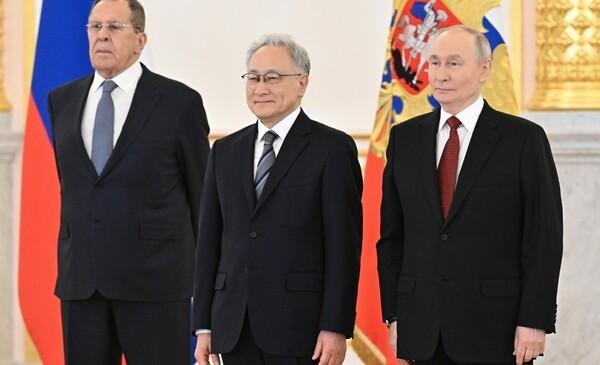
SEOUL, February 11 (AJP) - When Vladimir Putin recently spoke of "positive capital" in ties with Seoul while receiving the credentials of South Korea's new ambassador, Lee Seok-bae, last month the phrase carried more strategic weight than diplomatic courtesy.
It was, according to Park Byong-hwan, director of the Eurasian Strategic Studies Institute and a former senior diplomat in Moscow, a signal Seoul should not ignore as the war in Ukraine enters its fifth year.
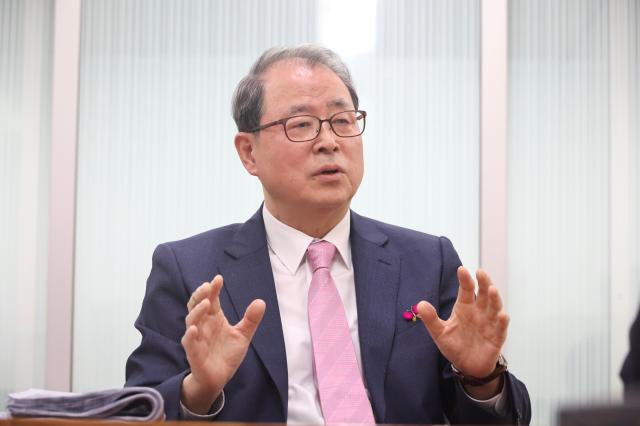
"Putin's language was cold and realist," Park said in an interview. "He was reminding Seoul that the window for pragmatic re-engagement is slowly opening. But our bureaucracy remains trapped in a defensive crouch."
Since Russia's invasion in 2022, South Korea has aligned closely with U.S.-led sanctions, a stance that has coincided with Moscow's growing reliance on North Korea for arms and manpower. Relations further deteriorated after Seoul became an indirect supplier of artillery shells to Kyiv via the United States, prompting Russia to designate South Korea an "unfriendly nation."
Park argued that Seoul has gone beyond what its alliance obligations require.
"We failed to distinguish between necessary sanctions and unnecessary hostility," he said. "The result has been little security gain and substantial economic damage."
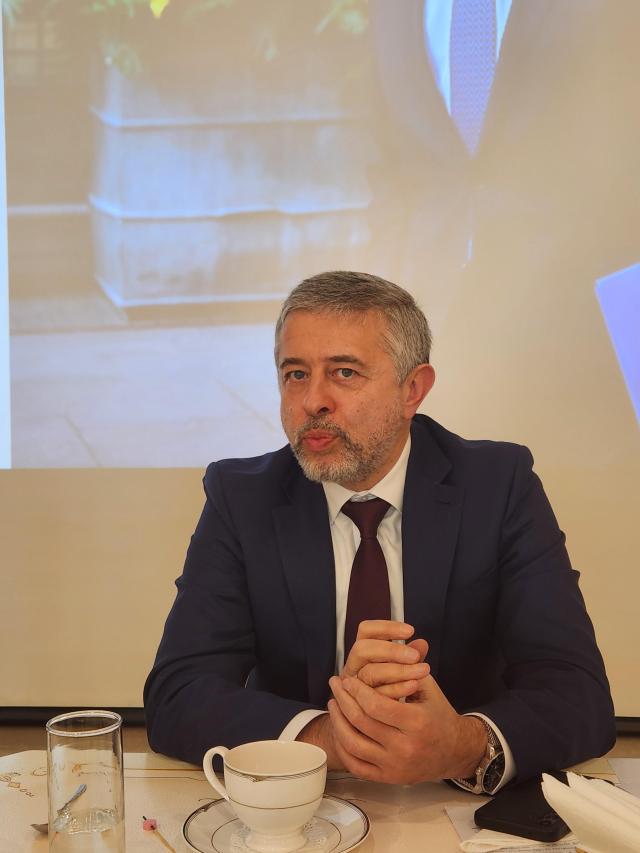
Russian ambassador to Seoul Georgy Zinoviev echoed Putin's earlier narrative in a separate meeting with reporters in Seoul on Wednesday.
"We have a lot of positive capital in our interaction with the Republic of Korea that has been wasted in many ways, but we count on the restoration of relations with the Republic of Korea."
Trade losses and corporate retreat
The economic cost has been tangible. According to the Korea Customs Service, South Korean exports to Russia more than halved, falling from nearly $10 billion in 2021 to $4.52 billion in 2024. New vehicle exports plunged from $2.5 billion to $589 million.
Against this backdrop, Hyundai Motor and its affiliate Kia which used to be the largest foreign car brand in Russia allowed a buyback option on their former Russian manufacturing plant to expire in January, effectively ending hopes of an early return.
Operations at the facility were suspended in March 2022 following sweeping Western sanctions that disrupted logistics and payments. Hyundai sold the plant in 2024 at a symbolic price, retaining a repurchase option that was quietly abandoned as political risks mounted.
"Major corporations can absorb such losses," Park said. "Small and mid-sized exporters cannot."
Zinoviev pointed out: "Major Korean producers were forced to leave because the government of the Republic of Korea introduced sanction restrictions against Russia on exports. Now the list of these restrictions has reached 1,402 positions, including semiconductors, cars, components, and electronics."
The cost of over-compliance
Park also was critical of Seoul's expansive export controls, which now cover consumer goods such as used vehicles and home appliances.
"These measures have no military impact," he said. "Russia sources substitutes elsewhere, mainly from China and India. We are not weakening Moscow's war effort. We are strangling our own businesses."
He argued that South Korea's approach has been more restrictive than that of several G7 peers, leaving it with little strategic flexibility as the conflict drags on.
Japan, for example, has maintained energy interests in Russia while publicly condemning the war. Seoul, by contrast, has largely withdrawn.
A shifting geopolitical landscape
Park saw the emerging postwar order as increasingly multipolar. "Unlike China, Russia has no territorial ambitions on the Korean Peninsula," he said. "Historically, Moscow has been receptive to peaceful unification led by Seoul because of the economic benefits."
He contended that Washington's growing interest in managing down the Ukraine conflict could eventually open space for recalibrated relations.
"As the U.S. explores diplomatic exits, South Korea should position itself as a constructive partner, not a passive follower," Park said.
Complementary strengths
At a structural level, Park described the Korea-Russia relationship as fundamentally complementary: Russia's strength in basic science and resources paired with South Korea's manufacturing and commercialization capacity.
"Much of this cooperation already exists quietly in the private sector," he noted. "Korean firms continue to rely on Russian scientific talent in advanced research."
He also pointed to Russia's role as a nearby supplier of energy and food resources—an increasingly valuable asset amid global supply-chain fragmentation.
"Geographically, Russia is at our doorstep," he said. "Strategically, that matters."
The Arctic connection
This logic extends to logistics. The Ministry of Oceans and Fisheries plans to dispatch a trial container vessel from Busan to Rotterdam via the Arctic this September, testing the commercial viability of the Northern Sea Route.
But Park warned that such ambitions depend on workable ties with Moscow.
"You cannot use the Northern Sea Route without Russia," he said. "They control permits, icebreakers and safety systems. That is geographic reality."
The Russian ambassador agreed; "To any person who glances at the map, it is perfectly clear that one needs to interact with Russia. If the Korean side wants to use the Northern Sea Route, it probably can start a corresponding dialogue with Russia."
Copyright ⓒ Aju Press All rights reserved.
