

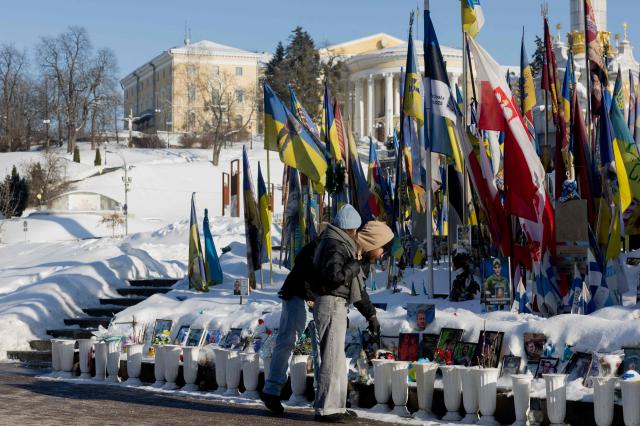
*Editor’s Note: As Russia’s invasion of Ukraine nears its fifth year, AJP reviews how the war began, how it has evolved, and where it is heading — and asks the most urgent question of all: will it end? This second installment examines the delayed peace negotiations.
SEOUL, Feb. — (AJP)-“I will end that war within 24 hours.”
Since his campaign days, US President Donald Trump repeatedly portrayed himself as a “peacemaker,” confidently claiming he could bring the Russia-Ukraine war to a swift end.
Emphasizing his personal ties with both Russian President Vladimir Putin and Ukrainian President Volodymyr Zelensky, Trump insisted that his unique relationships would allow him to broker peace where others had failed.
While the international community remained skeptical of the “24-hour” timetable, some observers expressed cautious hope that a strongman-style leader like Trump might succeed in forcing a settlement.
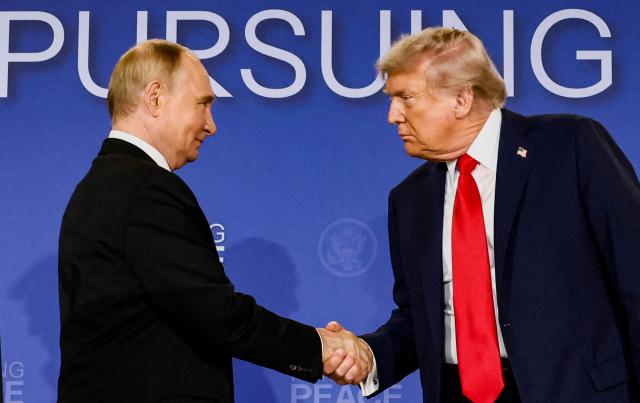
Shortly after taking office in January last year, Trump appointed a special envoy and began preliminary efforts toward a ceasefire, raising expectations of rapid progress.
More than a year later, however, the war remains unresolved.
Despite mobilizing sanctions, pressure tactics, and diplomatic persuasion — particularly toward Russia, which has shown limited enthusiasm for a ceasefire — Trump has struggled to produce results.
Critics argue that he has been drawn into Putin’s delaying tactics and “false hopes,” rather than shaping the process himself.
Meanwhile, the conflict, which Russia initially described as a “special military operation” that would end within weeks, is approaching its fourth anniversary — longer than the Soviet Union’s fight against Nazi Germany during World War II.
Limited Gains
Trump’s mediation has not been entirely fruitless.
Under U.S. auspices, Russia and Ukraine returned to the negotiating table, achieving temporary local ceasefires and limited prisoner exchanges. Zelensky also signaled flexibility on Ukraine’s long-held demand to join North Atlantic Treaty Organization, briefly raising hopes for momentum.
Yet fundamental disagreements remain.
Russia continues to demand permanent control over occupied territories in eastern Ukraine, including Donetsk and Luhansk, while insisting that Western forces be barred from the country. Ukraine, for its part, refuses to compromise on sovereignty.
Kyiv also fears that without firm Western security guarantees, any pause in fighting would allow Moscow to regroup and attack again.
A Military and Political Deadlock
Russia has steadily expanded its control in occupied areas, signaling its intent to force Ukraine into submission through military pressure.
At the same time, Western support — particularly from Europe and the United States — continues to sustain Ukraine’s defense. Russia itself has suffered heavy material and human losses.
As a result, neither side appears capable of imposing a decisive outcome.
“None of the conditions for ending the war have been met,” said Ruth Deyermond, a professor at King’s College London, in an interview with Radio Free Europe/Radio Liberty.
“Neither side is in a position to secure a decisive victory, and while both face pressure, neither looks close to collapse,” she said.
Economic Pressure Builds
Some analysts believe economic factors could eventually accelerate negotiations.
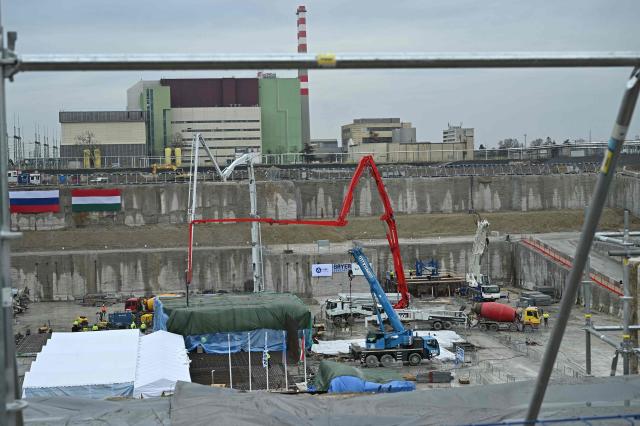
Russia’s economy, heavily dependent on oil and gas exports, has been hit by sanctions and weak prices. According to a report by The Washington Post, Russian officials have warned Putin that financial stress could intensify by summer.
Oleg Ignatov, a Russia expert at the International Crisis Group, said both sides may prefer to seek the best possible terms now rather than prolong the war for years.
“Under growing internal and external pressure, Russia and Ukraine are likely to explore ways to end the war on favorable terms,” he said.
Missed Deadlines
Trump’s credibility as a mediator has been weakened by repeated deadline failures.
During his 2023 campaign, he vowed to end the war “within 24 hours.” After taking office, he extended the timeframe to six months, then two weeks, then 50 days, and later just 10 to 12 days.
Each deadline passed without a breakthrough.
Zelensky recently revealed that Trump is now targeting a summer resolution, but many Ukrainians view the pledge with skepticism.
Recent US-led peace talks ended without agreement, while Russian strikes on major Ukrainian cities have continued.
Ukraine’s foreign minister Andrii Sybiha said the attacks showed that “Putin’s place is not at the table of peace, but at the dock of a tribunal.”
Despite renewed diplomatic efforts and plans for further negotiations, analysts say a swift end remains unlikely without a major shift in military or political conditions.
Trump’s central campaign narrative — that personal relationships and political will could quickly resolve the conflict — has collided with the realities of geopolitics.
For now, slogans and timetables have proved no match for one of Europe’s most entrenched wars.
Copyright ⓒ Aju Press All rights reserved.
