
Journalist

Park Sae-jin, Han Jun-gu
swatchsjp@ajunews.com
-
 KAIST researchers create faster AI chip to speed up YouTube-style recommendations SEOUL, February 05 (AJP) - Researchers at the Korea Advanced Institute of Science and Technology have developed a new AI chip called AutoGNN that makes digital recommendation systems significantly faster and more energy-efficient. The technology speeds up the way computers analyze complex connections, such as those used to suggest videos on YouTube or detect credit card fraud. Professor Jung Myoung-soo and his team at the Korea Advanced Institute of Science and Technology (KAIST) School of Electrical Engineering solved a major technical problem that usually slows down artificial intelligence. Before an AI can make a recommendation, it has to organize a massive pile of messy data—a step called preprocessing. This preparation phase is so slow that it takes up nearly 90 percent of the total processing time, creating a digital bottleneck that even powerful Nvidia chips struggle to clear. The team created a semiconductor that acts like a shape-shifter. Unlike standard chips that have a fixed internal layout, AutoGNN changes its own internal circuitry in real time to match the specific shape of the data it is analyzing. It uses two specialized parts: one to pick out the right data and another to count and organize it instantly. In testing, this new technology was 2.1 times faster than high-end Nvidia graphics chips and 9 times faster than a standard computer processor. It also used 3.3 times less electricity, making it both faster and greener for large data centers. Because the chip adjusts itself automatically, it can handle different types of information without slowing down. This could lead to more accurate real-time results for social media apps, banking security systems, and even the development of new medicines. The research was presented on February 4 at the IEEE International Symposium on High-Performance Computer Architecture in Sydney, Australia. (Paper information) Journal: IEEE International Symposium on High-Performance Computer Architecture (HPCA 2026) Title: AutoGNN: End-to-End Hardware-Driven Graph Preprocessing for Enhanced GNN Performance DOI: https://bit.ly/4avvoRj 2026-02-05 09:24:54
 -
 UAE push into digital finance signals shift to nation-level blockchain adoption SEOUL, February 04 (AJP) - The United Arab Emirates is signaling a fundamental shift in the global cryptocurrency market as digital assets enter a "nation-level phase" of adoption, according to Xin Yan, the CEO of blockchain technology company Sign. Yan, whose firm has supported government blockchain initiatives in multiple countries including the UAE, said the transition is marked by a move from experimental pilot programs to systematic execution. This shift is expected to accelerate the use of stablecoins and central bank digital currencies, or CBDCs, while integrating real-world assets into the traditional financial system. "It is a strong signal that crypto has entered a nation-level phase," Yan said. "Systematic adoption by governments will accelerate stablecoin and CBDC payments." According to Yan, the UAE has adopted a strategy similar to Singapore, leveraging its status as a smaller territory with significant regional influence. By prioritizing digital infrastructure over restrictive regulation, the country aims to export its standards to the broader region. Yan noted that while many countries announce blockchain pilots, few successfully transition to real-world infrastructure. He attributed this gap to the challenge of balancing government oversight with user privacy. The executive argued that successful implementation requires systems where regulation is enforced through code, using encryption techniques like zero-knowledge proofs to protect data privacy. The CEO also highlighted a practical distinction between private stablecoins and government-backed currencies. He described private stablecoins on public blockchains as operating under "jungle rules" where asset recovery is often impossible. In contrast, he noted that CBDCs function as legal tender on permissioned networks, offering clear legal protections and eliminating the risk of de-pegging. Despite the momentum, Yan warned of significant execution risks for governments engaging with blockchain technology. He cited the lack of a mature user base in the industry's early years, which led to many systems being untested under real-world conditions. "Choosing the wrong partner can be fatal," Yan said. "I have seen projects run for three years, spend tens of millions of dollars, and still fail to launch." Looking forward, Yan suggested that the focus for national governments will shift from establishing sovereignty to ensuring connectivity. He predicts that once countries develop their own domestic digital infrastructures, they will move to link these local networks to global liquidity and cross-border payment systems. 2026-02-04 12:56:17
 -
 Uzbekistan and Türkiye partner to modernize workforce and combat poverty SEOUL, February 02 (AJP) - Uzbekistan and Türkiye have established a new model of institutional cooperation to enhance human capital and improve public administration in the labor market. The partnership focuses on professional development for government officials to accelerate poverty reduction and ensure sustainable employment in both nations. The Embassy of Uzbekistan in the Republic of Korea said Monday that a Memorandum of Understanding (MoU) was signed by A.X. Rakhmonov, Director of the Center for the Professional Development of Employees under the Uzbek Ministry of Poverty Reduction and Employment, and Dr. Elif Gökçearslan, President of the Center for Labour and Social Security Training and Research (ÇASGEM) under the Turkish Ministry of Labour and Social Security. The agreement serves as a strategic framework for sharing expertise in occupational safety, human resource management, and labor market regulation. Under the document, the two countries will jointly design training programs, methodological materials, and master classes to build professional competencies. The cooperation also includes the involvement of specialists in scientific research and the preparation of expert evaluations for sectoral policies. This initiative follows the Fourth Meeting of the Türkiye-Uzbekistan High-Level Strategic Cooperation Council held in Ankara on January 29, where President Shavkat Mirziyoyev and President Recep Tayyip Erdoğan pledged to deepen bilateral ties. During that summit, the two leaders set a target to increase trade volume to 5 billion dollars and signed multiple agreements covering healthcare, education, and social protection. The labor partnership is specifically designed to align Uzbekistan’s professional qualification system with international benchmarks. Practical efforts are already underway to translate Turkish professional standards for 22 high-demand occupations into the Uzbek language. This alignment is expected to eventually lead to the mutual recognition of qualification certificates, expanding opportunities for citizens to work legally and safely in both countries. Officials stated that the cooperation will be conducted with full transparency, with project updates regularly published on official platforms. While the MoU establishes general principles and does not impose immediate financial obligations, it allows for the future involvement of international funds and third-party institutions to scale up joint workforce projects. 2026-02-02 14:23:21
 -
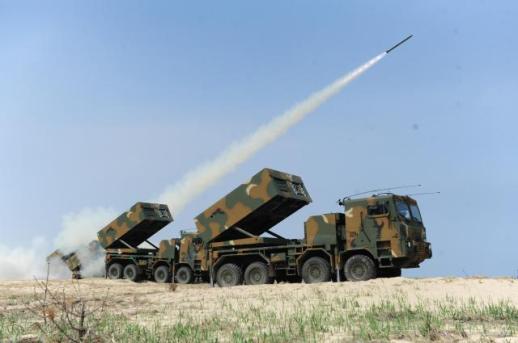 Hanwha Aerospace signs $922mln deal to supply Chunmoo rocket systems to Norway SEOUL, February 02 (AJP) - A joint effort to bolster Nordic defense reached a major milestone as Hanwha Aerospace secured a contract to supply the Chunmoo Multiple Rocket Launcher System (MRLS) to the Norwegian Armed Forces. The agreement, valued at approximately 922 million dollars, marks the first major defense contract for the South Korean company in 2026. The Chunmoo system is a multi-caliber rocket artillery platform capable of firing different munitions from two separate launch pods. It can launch twelve 239mm guided rockets at targets up to 80 kilometers away or deploy 600mm tactical ballistic missiles with a range of approximately 290 kilometers. Designed for high mobility, the system is mounted on an 8x8 armored truck and can fire its first rounds within minutes of arriving at a position. This modular design allows it to deliver double the firepower of similar single-pod systems, providing a versatile solution for both precision strikes and wide-area saturation. According to the South Korean defense contractor, the contract was signed in Oslo on January 30 by Jae-il Son, President and CEO of Hanwha Aerospace, and Gro Jære, Director General of the Norwegian Defence Material Agency (NDMA). The ceremony was attended by high-ranking officials from both nations, including Kang Hoon-sik, Chief of Staff to the President of the Republic of Korea, and Marte Gerhardsen, State Secretary of Norway. Under the terms of the deal, Hanwha Aerospace will provide 16 Chunmoo launch vehicles along with a package of precision-guided missiles and integrated logistics support. This procurement is part of a larger 2-billion-dollar defense project by Norway to modernize its long-range strike capabilities. The selection of the Chunmoo follows nearly ten years of cooperation between the Norwegian military and Hanwha Aerospace. Norway previously purchased 52 K9 VIDAR self-propelled howitzers and 14 K10 ammunition resupply vehicles in 2017. The company's ability to deliver that equipment on time and provide reliable maintenance support served as a key factor in the Norwegian government’s decision to adopt the Chunmoo system. To meet the specific needs of the Norwegian Army, the Chunmoo system has been optimized for the Arctic environment. The hardware is designed to remain reliable in extreme low temperatures and heavy snow, ensuring it can operate across the difficult terrain of the Nordic region. It is also built to be fully compatible with Norway's existing defense infrastructure and fire control networks. "I believe Norway's selection of the Chunmoo system is a result of the trust built up through the supply of K9 self-propelled howitzers," said Jae-il Son. "We remain committed to contributing to the long-term security of the Nordic region through close cooperation with Norway." With this latest agreement, Norway joins a growing list of nations operating the Chunmoo MRLS, which currently includes South Korea, Poland, Estonia, and several countries in the Middle East. Hanwha Aerospace stated it intends to expand its partnership with local Norwegian industries through joint development projects and local testing programs. 2026-02-02 11:16:35
 -
 Joint research team develops wearable OLED hat to combat hair loss SEOUL, February 02 (AJP) - A joint team of researchers from South Korea and Hong Kong has developed a wearable light therapy platform designed like a hat to treat hair loss. By using flexible organic light-emitting diodes (OLEDs), the device suppresses the aging of hair follicle cells by approximately 92 percent. The project was led by Professor Choi Kyung-cheol from the Korea Advanced Institute of Science and Technology (KAIST) in collaboration with Professor Yun Chi from the Hong Kong University of Science and Technology (HKUST). Light therapy has emerged as a safe alternative to pharmaceutical hair loss treatments, which can cause side effects during long-term use. However, existing light therapy devices are typically heavy, rigid helmets that use point-source light like LEDs or lasers. These structures are often uncomfortable to wear and fail to distribute light evenly across the curved surface of the human scalp. The researchers addressed these limitations by using OLEDs, which emit light from a flat surface rather than a single point. By integrating near-infrared (NIR) OLEDs into a flexible, fabric-like material, they created a light source that fits naturally inside a hat. This design allows the light to stay in close contact with the scalp, ensuring that stimulations are delivered uniformly to all affected areas. The technology works by targeting dermal papilla cells, which are located at the base of hair follicles and control hair growth. While different colors of light cause different cellular reactions, the team used wavelength control technology to emit near-infrared light specifically between 730 and 740 nanometers. This specific range was found to be the most effective for activating hair follicle cells and preventing them from aging. In laboratory tests using human dermal papilla cells, the near-infrared OLEDs reduced cell aging by 92 percent compared to a control group. This result outperformed traditional red light therapy. The flexible nature of the platform allows users to receive treatment during daily activities rather than being restricted to indoor use with heavy equipment. "By implementing fabric-based OLEDs that are as soft as cloth, we have proposed a wearable light therapy platform that can be used in everyday life," said Cho Eun-hae, the lead author of the study. Professor Choi Kyung-cheol noted that the thin and flexible nature of OLEDs is ideal for ensuring uniform light delivery to the scalp. The research team plans to conduct further pre-clinical studies to verify the safety and long-term effectiveness of the device for commercial medical use. The study was supported by the Ministry of Science and ICT and the Ministry of Trade, Industry and Energy of Korea. The findings were published online in the journal Nature Communications on January 10. (Paper information) Journal: Nature Communications Title: Wearable textile-based phototherapy platform with customized NIR OLEDs toward non-invasive hair loss treatment 2026-02-02 09:40:56
 -
 From security to Artic exploration, EU and Korea have a lot to work on - EU envoy to Seoul SEOUL, January 30 (AJP)-The European Union seeks to deepen cooperation on Arctic security and maritime logistics with South Korea, readying itself for the Artic shipping era by sailing a 3,000-TEU container ship from Busan to Rotterdam this July, said European Union Ambassador Ugo Astuto Friday. Speaking to press for the first time at the Seoul Press Center, Astuto noted that the strategic importance of the Arctic is being redefined by both climate change and shifting geopolitical alliances. He observed that while the region offers new economic possibilities, it is also facing increased militarization from Russia, now in its fourth year of aggression against Ukraine. The push for closer ties follows a period of diplomatic friction between the EU and the United States regarding the Arctic. European officials have expressed concern over renewed American interest in Greenland, an autonomous territory of Denmark. While some in Washington have framed the territory as a strategic necessity for American security, the EU has remained firm on Danish sovereignty and the rights of the local population. "It is for the Greenlanders to decide," Astuto said regarding the recent diplomatic standoff. "They are a sovereign people and they will take their own decisions as to their future." He noted that Denmark is an EU member and that the EU will act as a "catalyst" for support in increasing security in the Arctic, particularly as Russia seeks to strengthen its military footprint in the region. This backdrop of transatlantic tension makes South Korea's upcoming maritime project particularly significant. The South Korean government has announced plans to conduct a pilot operation of a 3,000 TEU container ship from Busan to Rotterdam between July and August to prepare for the opening of the Arctic shipping era. Astuto said the EU is currently drafting a new Arctic policy paper to reflect these changed circumstances. He suggested that South Korea’s expertise in shipbuilding and polar navigation provides a natural opening for dialogue. "There is a possibility for a conversation to be engaged within this framework," he said, provided that such cooperation respects the fragile environment and the peace of the region. The ambassador also linked the security of the Indo-Pacific directly to that of Europe, pointing to the nexus between Moscow and Pyongyang. "Security in Europe and security in the Indo-Pacific are interconnected," Astuto said. "We see graphic evidence of this in the deployment of North Korean troops in support of Russia against Ukraine." He noted that in exchange for manpower, North Korea is receiving military technology and battlefield experience, particularly regarding the use of drones. This has led the EU to seek record-high defense budgets and closer industrial ties with South Korea. Astuto observed that South Korean defense companies have already become "major suppliers" to several EU member states, a trend he expects to grow as the Russian threat persists. On the economic front, the ambassador addressed the rise of protectionism and the unpredictability of global trade. He described South Korea as an "outstanding example" of a like-minded democracy that shares the EU’s commitment to rules-based multilateralism. Regarding the Carbon Border Adjustment Mechanism (CBAM), which has caused concern among South Korean exporters, Astuto clarified that the policy is an environmental measure rather than a trade barrier. "CBAM is not a trade measure; CBAM is an environmental measure," he said. "The purpose is to make some of the most polluting industries, such as steel or cement, green." He said a two-year transitional period was designed to allow for "intense conversation" with partners like South Korea to ensure that heavily polluting industries can transition to green energy without facing double taxation. The ambassador reiterated the need for reliable supply chains in an era of economic coercion as he ended the conference. "As an advanced democracy, we must have reliable supply chains in place and this means that we can work together at de-risking," Astuto said. He confirmed that a dedicated dialogue channel between the EU and South Korea is being established to address these vulnerabilities, with a first meeting expected to take place soon to discuss ways to "reduce dependencies and increase diversification." 2026-01-30 17:35:50
 -
 Uzbekistan and Türkiye expand strategic partnership through trade and transport links SEOUL, January 30 (AJP) - The diplomatic relationship between Uzbekistan and Türkiye has evolved into a substantive, comprehensive strategic partnership, moving beyond formal definitions to include deep economic and regional cooperation. Recent high-level meetings in January 2026 confirmed that both nations have established a permanent institutional framework to manage their bilateral ties. The primary vehicle for this cooperation is the High-Level Strategic Cooperation Council, led by the presidents of both countries. A fourth meeting of the council is set for later in 2026. This structure is supported by direct dialogue between President Shavkat Mirziyoyev and President Recep Tayyip Erdoğan, who maintain regular contact to coordinate government and business activities. Regional security and international policy also feature prominently in the relationship. During a 4+4 format meeting in January 2026, officials from both sides discussed the situations in Afghanistan, Gaza, Ukraine, and Syria. The two countries also work together within the Organization of Turkic States (OTS) to align their approaches to digital development, transport, and the economy across the Turkic world. Economic engagement has become a major driver of the relationship. Bilateral trade exceeded 3 billion USD in 2025, with a medium-term goal of 5 billion USD and a long-term target of 10 billion USD. Turkish investment in Uzbekistan reached 2.2 billion USD in 2024 and grew to 2.9 billion USD during the first ten months of 2025. By the end of last year, more than 2,100 companies with Turkish capital were operating in Uzbekistan. On January 21, 2026, the Joint Strategic Planning Group met for the fourth time to review the Action Plan from the Joint Economic Commission (JEC). This commission oversees practical trade initiatives and industrial cooperation. For Uzbekistan, these ties bring in Turkish technical expertise and capital, while Turkish businesses gain access to a growing market of 38 million people. Transport links also expanded significantly in 2025, particularly in the aviation sector. There are now 97 weekly flights connecting eight different destinations, including Tashkent, Samarkand, Ankara, Istanbul, and Izmir. This increase in flight frequency is designed to improve business mobility, tourism, and the potential for air cargo growth. Energy and education remain key areas of focus. Turkish companies are currently helping to modernize Uzbekistan's energy grid and develop renewable energy projects. Additionally, branches of several Turkish universities have opened in Uzbekistan to facilitate student and faculty exchanges. Tourism has also grown, with Türkiye now among the top five sources of visitors to Uzbekistan. Alisher Kadirov, a department head at the Institute of Strategic and Regional Studies under the President of Uzbekistan, noted that future efforts will likely focus on industrial projects aimed at third-country exports and the expansion of multimodal logistics. 2026-01-30 17:33:18
 -
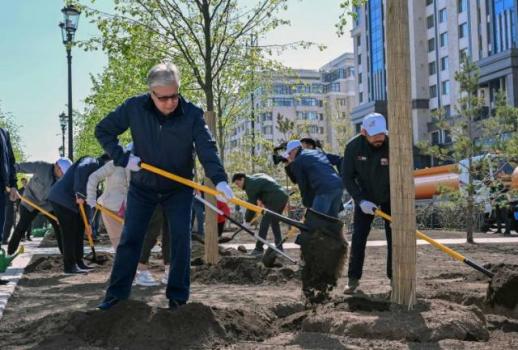 Kazakhstan launches nationwide environmental movement to promote ecological culture SEOUL, January 30 (AJP) - The government of Kazakhstan has implemented a large-scale national environmental campaign titled Taza Kazakhstan, or Clean Kazakhstan, following an initiative by President Kassym-Jomart Tokayev. The movement aims to improve the environmental state of the country while fostering a culture of nature conservation and civic responsibility among its population. The campaign serves as a central pillar of the country's social policy, focusing on both immediate physical cleanup and long-term behavioral change. It operates as part of a broader strategic framework, the Taza Kazakhstan Concept for the Development of Environmental Culture for 2024 to 2029, which was approved by the government in October 2024 to define state priorities in sustainable development. During 2025, the campaign resulted in 1,250 environmental events held across the nation. Participants planted more than 18 million trees and cleaned over 1 million hectares of land. According to official data, the initiative successfully collected more than 800,000 tons of waste with the participation of approximately 6.5 million people. A significant portion of the program focuses on the removal of illegal dumping sites. Authorities used satellite monitoring and 1,300 mobile groups to identify 3,833 illegal landfills, approximately 80 percent of which have been cleared. To facilitate public involvement, the government launched a Telegram chatbot that has processed more than 24,000 requests regarding waste removal and urban improvement. The initiative also includes infrastructure development for waste management. Eight new solid waste landfills have been commissioned, and 22 projects for waste sorting and recycling are currently underway. these projects represent a total value of 89.4 billion tenge, or approximately 180 million USD, with an additional 40 projects currently in the development phase. Educational programs have been integrated to support these environmental goals. Under the Adal Azamat program, which translates to Honest and Responsible Citizen, environmental education now reaches 87.2 percent of schoolchildren. Furthermore, 35 universities in Kazakhstan are training environmental specialists, supported by 2,358 state grants allocated for the 2025 to 2026 academic year. The campaign aligns with the goals set in the 2024 Presidential State-of-the-Nation Address. Moving forward, the Kazakh government identified waste management, energy efficiency, and resource-saving technologies as potential areas for bilateral cooperation between Kazakhstan and the Republic of Korea. 2026-01-30 14:56:07
 -
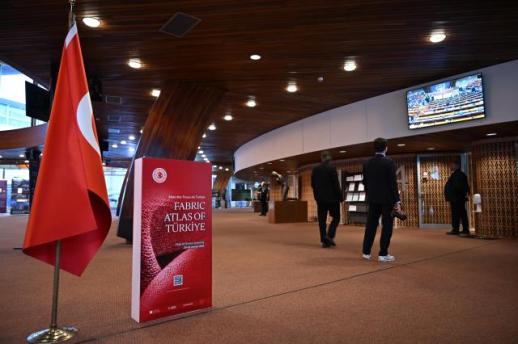 Turkish textile heritage exhibition opens at the Council of Europe SEOUL, January 29 (AJP) - The exhibition titled Fabrics Atlas of Türkiye, The Memory of Fabric officially opened yesterday at the Council of Europe in Strasbourg, France. Hosted by the Turkish Delegation to the Parliamentary Assembly of the Council of Europe (PACE), the event is scheduled to run through January 30 to coincide with the assembly’s winter session. The exhibition is designed to introduce the international community to the long-standing weaving traditions of Türkiye. It features a collection of textiles created using natural fibers and local raw materials, emphasizing production methods that prioritize environmental sustainability. In addition to finished fabrics, the display includes traditional weaving tools and miniature looms. Organized as part of the broader Fabrics Atlas of Türkiye project, the initiative operates under the auspices of First Lady Emine Erdoğan. During the opening, a message from the First Lady was shared, noting that the exhibition serves as a bridge to share the artistic and historical depth of Anatolian weaving heritage. She noted that such projects are essential for the preservation of shared cultural values and the promotion of dialogue between different societies. The event highlights traditional weaving as a sustainable, zero-waste practice that avoids industrial chemical processes. The items on display represent regional techniques from across the country, serving as a record of cultural identity and historical craftsmanship. Bjorn Berge, Deputy Secretary General of the Council of Europe, attended the opening and remarked on the significance of the traditional patterns and cultural diversity represented in the collection. Fatih Dönmez, Head of the Turkish Delegation to the Parliamentary Assembly of the Black Sea Economic Cooperation (PABSEC), stated that the exhibition reflects the country’s commitment to protecting cultural heritage while maintaining environmental responsibility. Zeynep Yıldız, a member of the Turkish Delegation to the Council of Europe and a member of parliament for Ankara, described the exhibition as a synthesis of centuries of cultural interaction that aligns with the founding principles of the Council of Europe. The opening ceremony was attended by members of parliament and international guests, marking the first time these diverse regional weavings have been brought together for an international showcase of this scale. The exhibition remains open to visitors at the Council of Europe building through the end of the week. 2026-01-29 11:21:21
 -
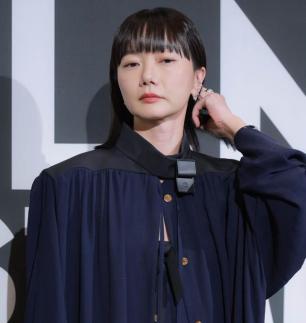 S. Korean actress Bae Doona appointed to Berlin International Film Festival competition jury SEOUL, January 29 (AJP) - South Korean actress Bae Doona has been appointed as a member of the international jury for the 76th Berlin International Film Festival. The festival organizers announced on Wednesday that Bae will join a panel of six other cinema professionals to determine the winners of the Golden and Silver Bears in the main competition category. The jury is led by German director Wim Wenders, who was previously named jury president. Bae will serve alongside a diverse group of international filmmakers, including Nepali director Min Bahadur Bham, Indian documentarian Shivendra Singh Dungarpur, American filmmaker Reinaldo Marcus Green, Japanese director HIKARI, and Polish producer Ewa Puszczynska. Together, they will evaluate 22 films selected for this year's competition. The appointment solidifies Bae's standing as a prominent figure in global cinema. Since her early roles in Bong Joon-ho's "Barking Dogs Never Bite" in 2000 and Park Chan-wook's "Sympathy for Mr. Vengeance" in 2002, she has maintained a prolific career in both South Korean and international productions. Her recent work includes the 2022 film "Broker," directed by Hirokazu Kore-eda, which also competed at major international festivals. Bae is expected to expand her international presence further with the upcoming sci-fi comedy "Alpha Gang," directed by David and Nathan Zellner, which is scheduled for a 2026 release. According to the Berlin International Film Festival's official website, the jury will be responsible for awarding the Golden Bear for Best Film to the winning producers. They also select recipients for several Silver Bears, including the Grand Jury Prize, Jury Prize, Best Director, Best Leading Performance, Best Supporting Performance, Best Screenplay, and Outstanding Artistic Contribution. The 76th edition of the Berlin International Film Festival is scheduled to take place from February 12 to February 22. 2026-01-29 09:58:13