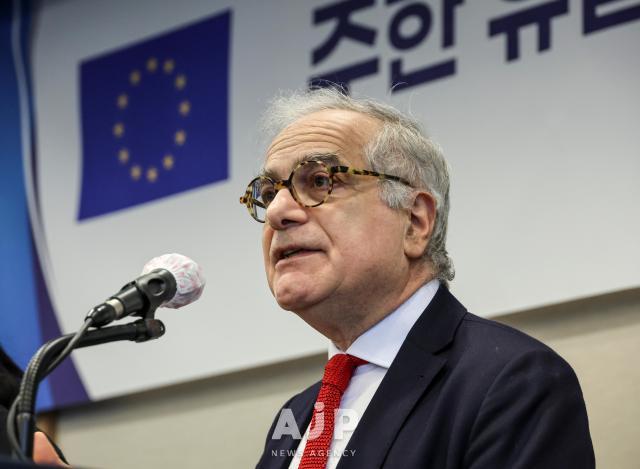
SEOUL, January 30 (AJP)-The European Union seeks to deepen cooperation on Arctic security and maritime logistics with South Korea, readying itself for the Artic shipping era by sailing a 3,000-TEU container ship from Busan to Rotterdam this July, said European Union Ambassador Ugo Astuto Friday.
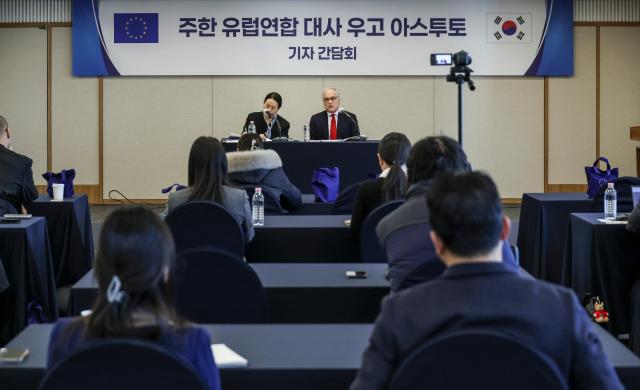
Speaking to press for the first time at the Seoul Press Center, Astuto noted that the strategic importance of the Arctic is being redefined by both climate change and shifting geopolitical alliances. He observed that while the region offers new economic possibilities, it is also facing increased militarization from Russia, now in its fourth year of aggression against Ukraine.
The push for closer ties follows a period of diplomatic friction between the EU and the United States regarding the Arctic. European officials have expressed concern over renewed American interest in Greenland, an autonomous territory of Denmark.
While some in Washington have framed the territory as a strategic necessity for American security, the EU has remained firm on Danish sovereignty and the rights of the local population.
"It is for the Greenlanders to decide," Astuto said regarding the recent diplomatic standoff. "They are a sovereign people and they will take their own decisions as to their future."
He noted that Denmark is an EU member and that the EU will act as a "catalyst" for support in increasing security in the Arctic, particularly as Russia seeks to strengthen its military footprint in the region.
This backdrop of transatlantic tension makes South Korea's upcoming maritime project particularly significant. The South Korean government has announced plans to conduct a pilot operation of a 3,000 TEU container ship from Busan to Rotterdam between July and August to prepare for the opening of the Arctic shipping era.
Astuto said the EU is currently drafting a new Arctic policy paper to reflect these changed circumstances. He suggested that South Korea’s expertise in shipbuilding and polar navigation provides a natural opening for dialogue.
"There is a possibility for a conversation to be engaged within this framework," he said, provided that such cooperation respects the fragile environment and the peace of the region.
The ambassador also linked the security of the Indo-Pacific directly to that of Europe, pointing to the nexus between Moscow and Pyongyang.
"Security in Europe and security in the Indo-Pacific are interconnected," Astuto said. "We see graphic evidence of this in the deployment of North Korean troops in support of Russia against Ukraine."
He noted that in exchange for manpower, North Korea is receiving military technology and battlefield experience, particularly regarding the use of drones.
This has led the EU to seek record-high defense budgets and closer industrial ties with South Korea. Astuto observed that South Korean defense companies have already become "major suppliers" to several EU member states, a trend he expects to grow as the Russian threat persists.
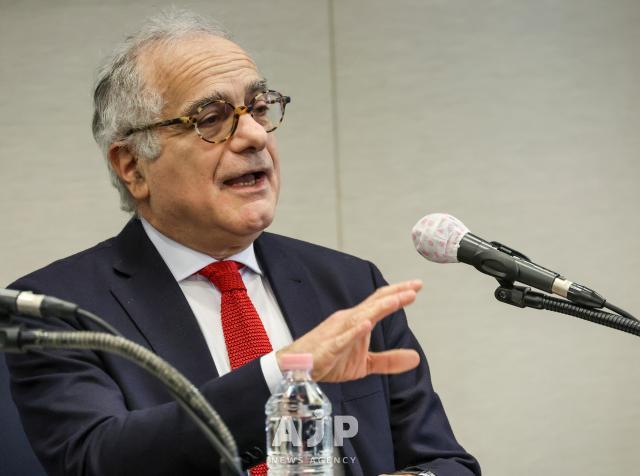
On the economic front, the ambassador addressed the rise of protectionism and the unpredictability of global trade. He described South Korea as an "outstanding example" of a like-minded democracy that shares the EU’s commitment to rules-based multilateralism.
Regarding the Carbon Border Adjustment Mechanism (CBAM), which has caused concern among South Korean exporters, Astuto clarified that the policy is an environmental measure rather than a trade barrier.
"CBAM is not a trade measure; CBAM is an environmental measure," he said. "The purpose is to make some of the most polluting industries, such as steel or cement, green."
He said a two-year transitional period was designed to allow for "intense conversation" with partners like South Korea to ensure that heavily polluting industries can transition to green energy without facing double taxation.
The ambassador reiterated the need for reliable supply chains in an era of economic coercion as he ended the conference.
"As an advanced democracy, we must have reliable supply chains in place and this means that we can work together at de-risking," Astuto said. He confirmed that a dedicated dialogue channel between the EU and South Korea is being established to address these vulnerabilities, with a first meeting expected to take place soon to discuss ways to "reduce dependencies and increase diversification."
Copyright ⓒ Aju Press All rights reserved.