
Journalist

Saijino
swatchsjp@ajunews.com
-
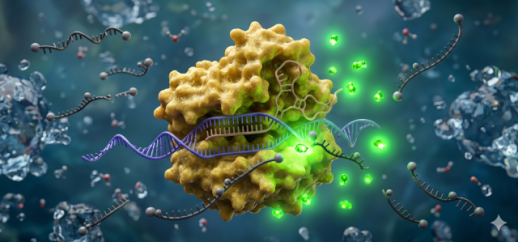 Joint research team develops gene scissors speed-based method to identify multiple viruses SEOUL, April 27 (AJP) - Researchers from South Korea and the United States have developed a diagnostic technology that simultaneously identifies various viruses and variants by measuring the reaction speed of gene scissors, the Korea Advanced Institute of Science and Technology said Sunday. The method allows for the identification of different pathogens in a single test without the need for complex laboratory procedures or multiple chemical markers. The study was led by Professor Son Sung-min from the KAIST Department of Bio and Brain Engineering in collaboration with teams from the University of California, Berkeley (UC Berkeley) and the Gladstone Institutes. The researchers utilized a protein called Cas13, a type of gene scissors that targets ribonucleic acid (RNA). When Cas13 identifies a specific viral target, it activates and produces a fluorescent signal by cutting surrounding molecules. While conventional diagnostic methods often require different enzymes or multiple fluorescent colors to detect several viruses at once, this team focused on the speed of the reaction. By observing the process at a single-molecule level within microscopic droplets, they found that the gene scissors operate at distinct speeds depending on the specific virus or mutation they encounter. The team established a technique called kinetic barcoding, which treats these varying reaction speeds as unique signal patterns. By adjusting the design of the guide RNA, which directs the scissors to their target, the researchers can program the speed of the enzyme. This allows a single type of gene scissors to distinguish between a wide range of respiratory viruses and variants. The new approach also simplifies the testing process by detecting RNA directly. Most current tests for RNA viruses require a step called reverse transcription to convert the genetic material into DNA, which adds time and technical complexity. This platform eliminates that requirement, potentially allowing for faster results in clinical or field settings. In clinical trials, the system accurately identified various respiratory viruses and variants of SARS-CoV-2 in a single reaction. "This study is the first instance of using the reaction speed of gene scissors as a new type of information for diagnostics, moving beyond simply checking for the presence of a virus," Professor Son Sung-min said. "It will serve as a next-generation platform capable of diagnosing various infectious diseases simultaneously in the field." Journal/Source: Nature Biomedical Engineering Title: Programmable kinetic barcoding for multiplexed RNA detection with Cas13a Link/DOI: https://bit.ly/4sTo8on 2026-04-27 09:33:22
 -
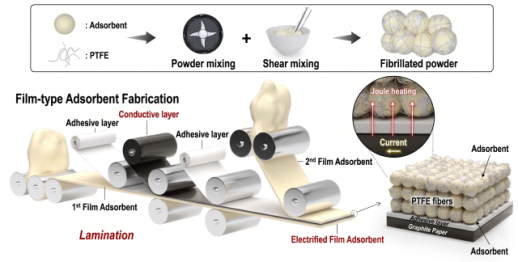 KAIST researchers develop high-efficiency carbon capture technology SEOUL, April 24 (AJP) - A research team at the Korea Advanced Institute of Science and Technology has developed a high-efficiency Direct Air Capture (DAC) technology inspired by electric vehicle battery manufacturing processes, placing them among the top four finalists in a global carbon removal competition. The development addresses the high costs and low efficiency currently hindering the commercialization of technologies that remove carbon dioxide directly from the atmosphere, the research institute said Friday. The research team, led by Professor Koh Dong-yeon of the Department of Chemical and Biomolecular Engineering, was selected as one of four finalists in the 2026 Carbon Removal Challenge. The competition is hosted by OpenAir, a global non-profit organization dedicated to advancing carbon removal solutions. Out of approximately 40 teams from 30 universities worldwide, KAIST was chosen alongside the University of Michigan, Rutgers University, and a joint team from Cornell, Princeton, and Columbia. To overcome the limitations of existing DAC methods, the researchers applied a dry fabrication process typically used for battery electrodes. This solvent-free method involves pressing powders into solid films, allowing carbon-absorbing materials to be packed more densely. The process increased the adsorbent content to 97 weight percent, significantly improving the volume of carbon dioxide captured compared to traditional methods that use liquid-based coatings. The team also improved the regeneration process, which involves releasing the captured carbon for storage or use. By implementing Joule heating—a method that generates heat instantly by passing electricity through a conductor—the system can reach required temperatures within one minute. Additionally, by integrating a water-cooling system inspired by electric vehicle thermal management, the team reduced cooling times by approximately 60 percent, increasing overall productivity. "This achievement recognizes both the innovativeness and the practical applicability of our carbon capture technology," Professor Koh Dong-yeon said. "We plan to actively pursue the commercialization and expansion of this technology through global cooperation in the future." The South Korean team has been invited to present their technology to experts and investors at the Carbon Unbound 2026 conference in New York on May 20, 2026. The research was led by doctoral student Park In-jun, with contributions from a team of students and researchers, including Park In-hwan, Lee Min-hyung, and Karoline L. Hebisch. 2026-04-24 08:29:23
 -
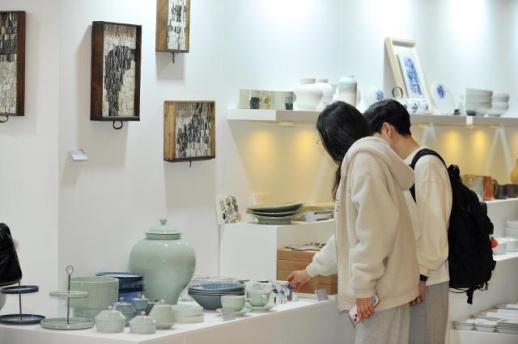 Kookmin University to hold third ceramic craft exhibition and sale SEOUL, April 23 (AJP) - Kookmin University will host the 2026 3rd Ceramic Craft Fair from May 14 to May 17 to showcase the work of emerging artists and facilitate the sale of student and alumni projects, the university said Thursday. The four-day event will take place in the lobby of the Kookmin University (KMU) Administration Hall in Seoul, South Korea. Students and alumni from the Department of Ceramic Craft within the College of Design are set to participate in the exhibition, which functions as an art platform where visitors can view and purchase various ceramic works. The fair is organized to provide students with practical market experience and help identify new talent in the field of ceramic arts. Revenue generated from the sales will be shared between the artists and the university to support a creative environment for local artists. Graduate students and alumni will serve as docents throughout the event to provide explanations of the production processes and the meaning behind specific works. The university will also utilize campus cafe spaces to integrate the exhibition into the daily environment of the campus. A hands-on workshop for children and families is scheduled for May 16 and May 17. Participants can design custom mugs using ceramic transfer techniques in sessions limited to 16 people, held five times per day. The exhibition has increased in size and participation since its launch. During the second annual fair held last year, singer and KMU alumna Lee Hyo-ri visited the campus to view the student projects. KMU President Jeong Seung-ryul said design and content are among the eight core specialized fields the university is prioritizing for its future development. "This fair will provide practical market experience for students and alumni while offering visitors the pleasure of owning art," President Jeong said. "KMU will continue to take the lead in expanding its role as a platform that connects art and industry." 2026-04-23 16:59:37
 -
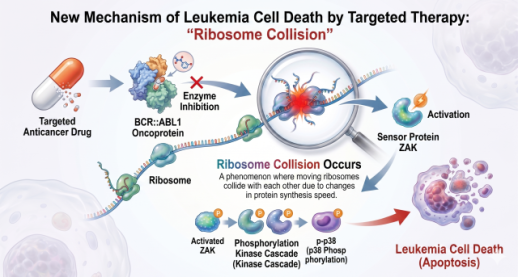 S. Korean researchers identify protein mechanism to overcome leukemia drug resistance SEOUL, April 23 (AJP) - A joint research team from the Korea Advanced Institute of Science and Technology, Uijeongbu Eulji University Hospital, and Ulsan National Institute of Science and Technology has identified a new molecular mechanism that controls how chronic myeloid leukemia responds to anticancer drugs, the state-operated research institute located in the central city of Daejeon said Thursday, April 23, 2026. Chronic myeloid leukemia is caused by an abnormal protein called BCR::ABL1 that sends continuous growth signals to cells, causing them to multiply. While targeted drugs are the standard treatment to block this protein, some patients develop resistance or show a low response to the medication. The researchers focused on how these drugs affect the internal "protein factories" of cancer cells, known as ribosomes. They found that the treatment causes these ribosomes to jam and crash into each other, a process called ribosome collision. This creates intense internal stress that leads the cancer cell to destroy itself. A protein named ZAK was identified as the key sensor for these collisions. The study found that ZAK plays two opposing roles depending on the environment. Under normal conditions, it assists cancer growth by connecting with certain signals. However, once drug treatment begins, it switches to a monitoring role that triggers cell death. The team verified this mechanism by analyzing cancer cells from leukemia patients. They found that using additional drugs to increase ribosome collisions significantly improved the effectiveness of the treatment. In contrast, cells with low ZAK function were more likely to resist the anticancer drugs. These findings suggest that a patient's ZAK activity levels could be used to predict how they will respond to treatment. It also opens the door for new combination therapies that could help patients who have built up a resistance to current drugs. "This research shows how important the process of a cell detecting abnormal protein synthesis and converting it into a death signal is for treatment," Professor Lim Jung-hoon said. "Since we have confirmed that ribosome collisions are the key switch that determines the death of cancer cells, we plan to expand our research to various types of cancer," Dr. Park Ju-min said. (Reference Information) Journal/Source: Leukemia Title: BCR::ABL1 tyrosine kinase inhibitors induce ribosome collisions to activate ZAK-dependent ribotoxic stress and apoptosis in chronic myeloid leukemia Link/DOI: https://bit.ly/4vIofWw 2026-04-23 15:56:37
 -
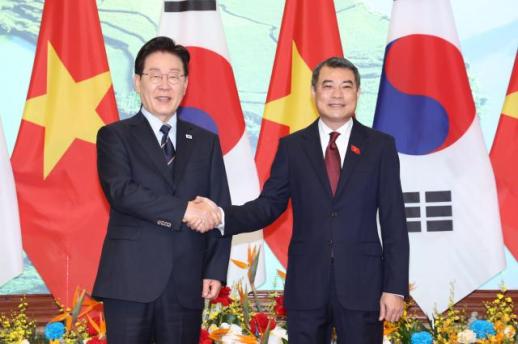 President Lee pitches S. Korean growth model as Viet Nam pursues infrastructure surge SEOUL, April 23 (AJP) - South Korean President Lee Jae Myung committed to deepening strategic cooperation in nuclear energy, transportation, and finance during a meeting with Vietnamese Prime Minister Le Minh Hung in Hanoi on Thursday. Lee framed the partnership as a catalyst for a new "Red River Miracle," drawing direct parallels between South Korea's rapid post-war industrialization and the current development trajectory of Viet Nam. The diplomatic push comes as Seoul seeks to export its foundational economic model to one of the world's fastest-growing economies, positioning South Korean infrastructure and technology as the primary drivers for Viet Nam to become a high-income nation by 2045. For the Lee administration, securing these high-stakes projects is essential for maintaining South Korea's regional influence and finding new growth engines for its own domestic industry. During the meeting at the Prime Minister's Office, the president said the South Korean government will strengthen strategic cooperation with Viet Nam in nuclear power, transport infrastructure, and energy to create a new "Red River Miracle" together. He detailed how South Korea previously invested intensively in three core infrastructures: energy independence through nuclear power, logistics innovation through highways and railroads, and transparent payment systems. Lee noted that "the combination of these physical and institutional foundations was the decisive engine" that allowed his country to achieve an economic leap in a short period of time. The president further emphasized that stable energy and logistics flows sustain industry, while efficient financial infrastructure accelerates capital movement. He suggested that Hung, a former central bank governor, is uniquely positioned to lead this economic transition. "The success of Viet Nam, the driver of regional economic growth, is the success of us all," Lee said, according to officials present at the meeting. Hung responded by expressing confidence that the state visit would provide "new momentum" for the development of bilateral relations. He noted that Viet Nam is currently focused on strategic tasks to become a modernized, high-income developing nation by 2030 and a high-income advanced nation by 2045. The Vietnamese leader requested South Korea's continued support and technical cooperation to meet these milestones. In a move to further solidify executive ties, Hung extended an official invitation for South Korean Prime Minister Kim Min-seok to visit Viet Nam. Lee accepted the invitation on behalf of the prime minister, stating he would relay the message immediately upon his return to Seoul to ensure the visit takes place at the earliest possible date. The two leaders concluded their discussion with a commitment to maintaining open channels for ministerial-level coordination on upcoming infrastructure projects. 2026-04-23 14:29:33
 -
 Pyongyang labels Japanese drone units a threat as military tensions rise SEOUL, April 23 (AJP) - Pyongyang slammed on Thursday Japan’s move to establish dedicated drone units within its Ground Self-Defense Force, calling the restructuring a "reckless" step toward reviving the country’s past imperial ambitions. State media reported that the modernization of Tokyo’s unmanned capabilities, paired with its recent acquisition of long-range strike weapons, has pushed the region into a dangerous new phase of military escalation. The criticism comes as the Japanese Ministry of Defense prepares to launch specialized departments this month focused on the research and deployment of combat drones, according to reporting by the Yomiuri Shimbun. For Pyongyang, these technical upgrades are not merely defensive adjustments but are evidence that Japan is abandoning its post-war pacifist stance in favor of a "pre-emptive strike" doctrine aimed at its neighbors, including South Korea and the broader region. The commentary released by the Korean Central News Agency pointed to a string of recent Japanese military expansions, including the procurement of American Tomahawk cruise missiles. It specifically highlighted the deployment of Type 12 surface-to-ship missiles in Kumamoto and high-speed glide weapons in Shizuoka. These systems, which allow Japan to strike targets from outside an enemy’s firing range, are being characterized by North Korean officials as the tools of a "war chariot" accelerating toward overseas aggression. While Tokyo has maintained that its military buildup is a necessary response to the shifting security landscape in East Asia, North Korea argued that the 1,000-kilometer range of Japan’s new missile variants far exceeds what is required for "minimum necessary" self-defense. The state media report urged the international community to stay alert, claiming that the integration of these high-tech offensive assets is stoking the "war fever" of Japanese militarism. Japanese Defense Minister Shinjiro Koizumi has stated that the lessons from the war in Ukraine, where drone technology has rapidly evolved, make it essential for Japan to adopt new methods of combat. Japan currently plans to spend roughly 5 trillion yen (approximately 33 billion dollars) on standoff defense capabilities through 2027, according to the Japanese government’s 2022 Defense Buildup Program. 2026-04-23 11:05:42
 -
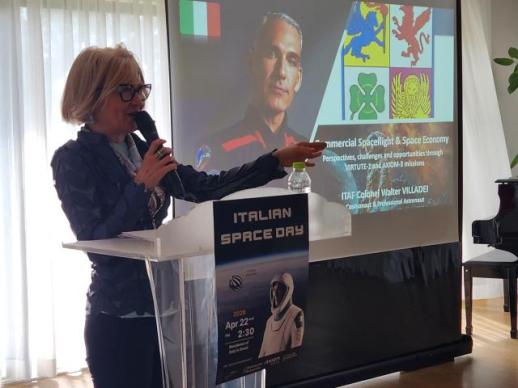 Rome pivots to Seoul as lunar race demands global alliance SEOUL, April 22 (AJP) - Italy and South Korea are formalizing a strategic aerospace corridor as the technical and economic pressures of the second lunar age render national isolation obsolete. During the 2026 Italian Space Day in the South Korean capital on Wednesday, Teodoro Valente, the president of the Italian Space Agency, told a delegation of industry leaders that the era of the solo spacefaring nation has ended. As the global community readies for a permanent human presence on the lunar surface, the alignment between industrial powers Italy and South Korea signals a shift away from regional competition toward a system of integrated diplomatic and scientific risk. The gathering at the Residence of Italy commemorated the sixty-second anniversary of the 1964 San Marco satellite launch, a milestone that established Italy as the third nation to reach space. However, the proceedings on April 22 suggested that historical prestige is now secondary to the immediate necessity of shared supply chains and a common defensive posture. Diplomatic momentum drives industrial ties Ambassador Emilia Gatto framed the event as a pivot point in a high-stakes year for bilateral relations. Gatto noted that Prime Minister Giorgia Meloni visited Seoul in January, and South Korean President Lee Jae Myung is scheduled to visit Italy in June. Gatto characterized the current environment as a very good time for the relations between Italy and South Korea. "Welcome in your house," Gatto told the assembly. "It is not mine. It's just for you all to meet." The ambassador's remarks set the stage for an all-day program involving leadership from the Korea Aerospace Administration, or KASA, and the Italian Space Agency, known as ASI. Strategic alignment in the New Space era The industrial roadmap is anchored by the institutional synchronization between KASA and ASI. Valente characterized the creation of the South Korean agency as a unique opportunity to build a structured and long-term partnership. This alignment follows a 2023 memorandum of understanding (MoU) signed during the state visit of President Sergio Mattarella. Valente revealed that the Italian Space Agency is planning a dedicated industrial mission to South Korea between the end of 2026 and early 2027 to bring together large system integrators with small and medium enterprises. The mission aims to move the relationship beyond a traditional client-supplier model toward a harmonized system. "Space remains to us the greatest achievement never reached alone, and this is not only for economic reasons," Valente said. "International cooperation and space diplomacy are not simply an added value. They are essential." Technical collaboration and the human frontier The afternoon focused on bridging specific technical capabilities between the two nations. Following introductory remarks from CEOs Giampiero Di Paolo from Thales Alenia Space Italia and Jay Kim from South Korea's Boryung, an international collaboration session brought together institutional and academic leaders. These discussions featured policy director Kim Eun-jeong from the Korea Aerospace Research Institute and Sean Yim from Hanwha Systems, alongside researchers from KAIST, Seoul National University, and the University of Padova. A keynote by Colonel Walter Villadei, an astronaut and Italian Air Force officer, moved the conversation from industrial logistics to the existential requirements of the human species. Villadei highlighted the transition of space from a scientific frontier to a daily human environment, emphasizing that the focus has shifted toward building the infrastructure required for humanity to inhabit the lunar surface permanently. "Space is no longer science fiction," Villadei said. "It is not something belonging just to a few lucky people flying to space. It is now this kind of daily environment from which all of us already depend very much for our Earth applications, but it is our future. So we are expanding and to make our human species able to live permanently in space, both in LEO (low-Earth-orbit) and on the Moon." 2026-04-22 18:10:09
 -
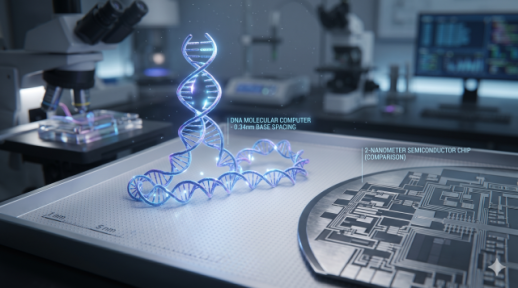 S. Korean researchers develop DNA molecular computer smaller than two nanometer semiconductors SEOUL, April 22 (AJP) - A research team in South Korea has developed a molecular computer using DNA that is smaller than current two-nanometer semiconductors and can perform calculations while simultaneously storing information. Professor Choi Young-jae and his team at the Korea Advanced Institute of Science and Technology created a bio-transistor that operates at a scale of 0.34 nanometers, which corresponds to the distance between DNA bases, the research institute said Wednesday. Existing molecular DNA circuits have previously been used for simple tasks such as detecting the presence of cancer-related substances. However, these circuits were limited because they were consumable and could not be used again after a single reaction. The new bio-memory circuit overcomes this limitation by allowing for continuous information processing. The researchers designed the DNA molecules to change their arrangement by binding or separating based on input signals, and the molecules maintain that state to store the result. As semiconductor manufacturing reaches the two-nanometer level, the industry is approaching the physical limits of silicon-based technology. This has led to increased interest in molecular computing, which uses the natural properties of DNA to process information at a much smaller scale. DNA is a candidate for high-density information processing because its bases are spaced only 0.34 nanometers apart. By using complementary base pairing, researchers can design specific reactions to occur with high precision. The bio-transistor developed by the team allows for real-time calculation without the need for a separate reset process. This mimics the function of traditional silicon transistors, which control and amplify electrical signals to process and store data in modern electronics. Professor Choi Young-jae said, "This research marks a significant step forward in the realization of molecular computers using DNA." He noted that the development could suggest new directions for the fields of bio-computing and medical technology as a whole. The study included Professor Lim Seong-sun and researchers Kim Tae-hun, Jeong Sang-eun, and Kim Si-on from the KAIST Graduate School of Engineering Biology. They collaborated with Kim Woo-jin and Shim Jun-ho from the Gwangju Institute of Science and Technology (GIST). The research findings were published in the international journal Science Advances on April 1, 2026. (Reference Information) Journal/Source: Science Advances Title: Reset-free DNA logic circuits for real-time input processing and memory Link/DOI: https://science.org/doi/10.1126/sciadv.aeb1699 2026-04-22 11:19:52
 -
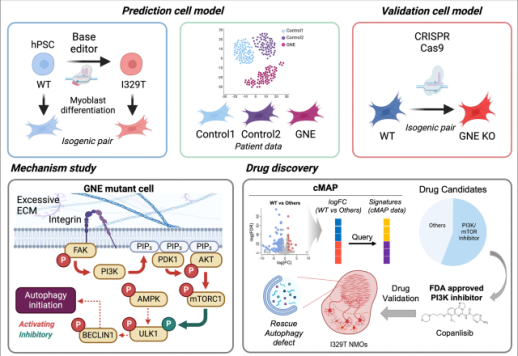 Sookmyung Women's University researchers identify potential treatment for rare muscle disease SEOUL, April 22 (AJP) - A research team led by Professor Kim Ju-mee at Sookmyung Women's University's Division of Pharmacy has identified a new pathological mechanism for GNE myopathy, a rare muscle disorder, and proposed a potential treatment strategy. By analyzing the genetic pathways of the disease, the team discovered that an existing drug approved by the U.S. Food and Drug Administration could be repurposed to restore cellular functions that are impaired by the condition, the university said Wednesday. UDP-GlcNAc 2-epimerase/N-acetylmannosamine kinase (GNE) myopathy is a rare genetic disease caused by mutations in the GNE gene, which leads to a decrease in the synthesis of sialic acid. This deficiency results in progressive muscle weakness throughout the body, and the condition currently lacks a fundamental cure. The research team used human pluripotent stem cell-derived muscle models to conduct a transcriptome analysis. Through this process, they confirmed that dysfunction in autophagy—the body's natural process of cleaning out damaged cells—is a primary driver of the disease's progression. Specifically, the study revealed that an excessive production of the extracellular matrix abnormally activates the PI3K-AKT-mTORC1 signaling pathway. This activation inhibits ULK1, a factor necessary for initiating autophagy, effectively blocking the cell's ability to maintain itself. Using a drug screening technique based on these genetic findings, the researchers identified Copanlisib as a strong candidate for treatment. Copanlisib, which is already an FDA-approved PI3K inhibitor, was found to suppress the abnormal signaling and restore ULK1 activity, thereby normalizing the autophagy process in the diseased cells. These results were further validated using human stem cell-derived neuromuscular organoid models. The study was conducted as a joint effort with a research team led by Professor Cha Hyuk-jin from Seoul National University (SNU). "This research is significant because it goes beyond identifying the fundamental molecular mechanism of the disease to suggest a treatment strategy using an already approved drug," Professor Kim Ju-mee said. "In particular, the use of drug repositioning for rare diseases greatly increases the possibility of clinical application." The findings were published in the April 2026 issue of Experimental & Molecular Medicine, a leading international journal in the field of molecular medicine. ◆Experimental & Molecular Medicine (Impact Factor 12.9, JCR top 4.1%) ◆Title: Defective autophagy in GNE myopathy is rescued by inhibition of noncanonical Akt–mTORC1 activation across multiple isogenic models ◆Link/DOI: https://bit.ly/4cXXoOP 2026-04-22 11:06:03
 -
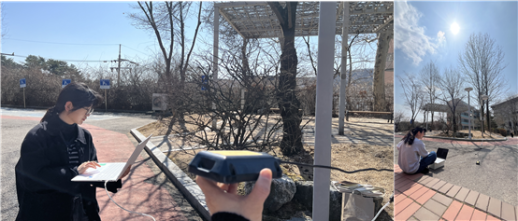 Kookmin University team demonstrates quantum-secured satellite communication system SEOUL, April 22 (AJP) - A research team led by Professor Lee Ok-yeon at Kookmin University in South Korea has successfully implemented and verified a next-generation security system that combines low Earth orbit satellite communication with quantum-resistant cryptography. Working alongside Arion Communication, the team developed a hybrid structure designed to protect data across both wired and wireless connections. The technology integrates Quantum Key Distribution (QKD) for ground-based networks and Post-Quantum Cryptography (PQC) for wireless satellite links. This hybrid approach is designed to counter security threats posed by future quantum computers. It specifically addresses the risk of hackers collecting encrypted data today to unlock it later, a threat known as harvest-now-decrypt-later. During the demonstration, Kookmin University (KMU) researchers verified end-to-end encryption across a satellite link using the Iridium constellation. The team successfully ensured that KMU cryptographic modules were fully compatible with the TYTO series equipment from Arion. This verification moves the technology beyond a basic proof of concept and into a pilot stage for broader use. Beyond technical validation, the demonstration shows the potential for creating a sovereign security infrastructure that remains stable during disasters or military conflicts. KMU plans to expand the use of these systems to national defense networks, satellite-based battlefield communications, and unmanned vehicle operations. The university is now focusing on building a cooperation hub to bridge the gap between research and commercial markets. This initiative will provide a platform for private companies to test and certify their security technologies while helping to build a domestic industrial ecosystem. "Quantum security technology is not just about individual functions or performance; the core lies in demonstration and ensuring interoperability based on hybrid implementation technology," Professor Lee Ok-yeon said, adding: "I will accelerate the establishment of a Quantum Campus that covers water, land, air, and space by converging quantum security technologies such as PQC, QKD, and QRNG with satellite communications." 2026-04-22 10:50:15