
Journalist

Saijino
swatchsjp@ajunews.com
-
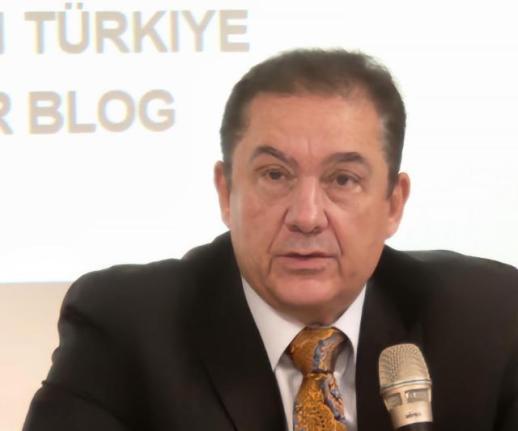 Turkey Pitches Overland Energy Route for South Korea as Hormuz Strait Is Blocked South Korea’s industrial base, including production lines in Ulsan and semiconductor hubs in Gyeonggi Province, is facing an existential threat after the Strait of Hormuz was paralyzed by an all-out war involving Iran, the United States and Israel, cutting off crude oil supplies bound for South Korea. Turkey’s Embassy in Seoul held an emergency briefing on April 21 at its compound in central Seoul, presenting what it called an essential overland energy bypass route for the survival of the South Korean economy. The session, led by Turkish Ambassador Murat Tamer, Commercial Counselor Ozlem Untez and Press Counselor Sercan Dogan, focused on positioning a “middle corridor” as a key lifeline for South Korea to circumvent the maritime blockade. Tamer described the crisis as a decisive fracture point in the international order and said turmoil in the Persian Gulf had exposed severe vulnerabilities in the global economy. “The international environment we face today is taking on a form that goes beyond the existing concept of crisis,” Tamer said. Citing price pressures and supply-chain disruptions since hostilities began, he said South Korea’s industrial model — built on full reliance on sea access — should pivot immediately to Turkey’s established energy and logistics networks. Ankara is offering to serve as a security anchor for South Korea through its pipeline infrastructure. Tamer cited the TANAP and TurkStream networks, which he said transport 30 billion cubic meters and 31.5 billion cubic meters of gas, respectively, and described them as stable gateways linking the Mediterranean and European markets. Tamer warned that any disruption in the flow of goods would be devastating for both countries. “Korea’s miracle lies in finding technology, inventing it, refining it to make it attractive, and inserting it into production lines,” he said. “Any disruption in this supply chain will hurt Korea, hurt Turkey, and hurt the whole world,” he added. Turkish officials urged South Korean companies to use Turkey not only as a market but as a strategic base for production and logistics. Untez highlighted Turkey’s economic scale and workforce of more than 86 million, noting 2025 GDP growth of 3.6%. She pointed to global connectivity through Turkey’s customs union with the European Union as a key advantage. “Thanks to the customs union with the EU, we can sell products to EU countries without any restrictions, tariffs or barriers,” she said. She said Turkey is seeking to promote foreign direct investment as part of efforts to rebalance trade ties in which Seoul currently posts a sizable surplus. In 2025, South Korea exported $9.11 billion to Turkey, while imports totaled $2.0 billion. Untez also cited Turkey’s rise as a major exporter of unmanned aerial vehicles and pointed to potential cooperation in defense and green energy. At the center of strategic cooperation is the Sinop nuclear power plant project. Tamer described it as a “100-year partnership” involving Korea Electric Power Corp. Negotiations on the plant — including 15 years of construction and 80 years of operation — have continued since President Lee Jae-myung’s visit to Ankara in November 2025. Tamer said such projects are essential to repairing damage from the war. “This Middle East war will wound us and cause pain, but we must stitch up the wound so it does not remain a permanent scar,” he said. Dogan said the embassy was pursuing a proactive communications strategy. “The Turkish Embassy in South Korea is the most media-friendly embassy in Korea,” he said, adding it was ready to communicate on any Turkey-related issue. “Our door is always open. I, too, am personally always ready for anything related to Turkey,” he said. Turkey also pointed to the potential operation of the port of Ceyhan as an alternative route for Iraqi crude. The 960-kilometer Kirkuk-Ceyhan pipeline, used to transport energy to a Mediterranean terminal, resumed operations on March 18, 2026. The embassy said technical teams from both countries would continue coordinating how to scale up the route to bypass the unstable Persian Gulf. The teams aim to increase integrated transport capacity to 350,000 barrels a day in the coming months.* This article has been translated by AI. 2026-04-21 18:11:42
 -
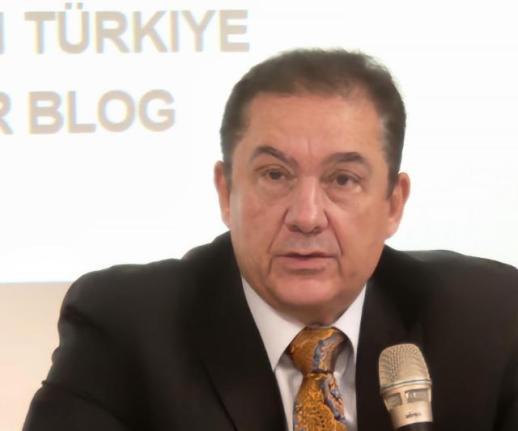 Ankara anchors S. Korean industrial future as Middle East war chokes global supply SEOUL, April 21 (AJP) - The assembly lines in South Korea's southern industrial city of Ulsan and the semiconductor hubs of Gyeonggi, south of Seoul, are facing a systemic threat as a full-scale conflict between Iran, the United States, and Israel has effectively paralyzed the primary energy lanes of the world since the end of February. With the Strait of Hormuz blocked and the flow of Middle Eastern crude to South Korea curtailed, the Embassy of Türkiye in the Republic of Korea convened a strategic press briefing on Tuesday to present a mandatory land-based alternative. The session, led by Ambassador Murat Tamer, Commercial Counsellor Özlem Üntez, and Communications Counsellor Sercan Doğan, detailed a shift toward the "Middle Corridor" as a vital path for Seoul to bypass the current maritime chokehold. Ambassador Tamer framed the crisis as a definitive breaking point for the global order, noting that the disruption in the Persian Gulf has exposed the extreme fragility of the world economy. "Today, the international environment we face is manifesting in ways that transcend traditional concepts of crisis," Tamer said, pointing to the price pressures and supply chain failures that have followed the outbreak of hostilities. He argued that the industrial model of South Korea, which relies on secured maritime access, requires an immediate pivot toward the established energy and logistics network of Türkiye. The briefing focused on the capacity of Ankara to serve as a "security reference point" through its vast pipeline infrastructure. Tamer highlighted the TANAP and TurkStream networks, which handle 30 billion and 31.5 billion cubic meters of gas respectively, as stabilized gateways to Mediterranean and European markets. During a subsequent discussion on the interdependence of the two nations, Tamer observed that any break in the flow of goods would be devastating for both parties. "The miracle of Korea is to find the technology, invent technology, tantalize that technology, and insert that technology in the production line," Tamer said. He warned that "any interruption in this supply chain will hurt Korea, will hurt Turkiye, will hurt world." Commercial Counsellor Özlem Üntez provided the economic architecture for this industrial realignment. "Türkiye has a large and dynamic economy in the region and the global world," Üntez said, noting that GDP growth reached 3.6 percent in 2025. She emphasized that the young population of 86 million and the Customs Union with the European Union provide South Korean firms a duty-free entry point into a market of 450 million consumers. "Thanks to the Customs Union with the EU, we can sell our products without any limitation, any tariff, any barrier to the EU countries," she added. The structural shift includes a push for South Korean foreign direct investment to balance a trade relationship where Seoul holds a significant surplus. In 2025, South Korea exported 9.11 billion dollars to Turkiye while importing only 2 billion dollars in return. Üntez highlighted the potential for deeper cooperation in defense and green energy, noting that the nation is a major "exporter country in terms of unmanned aerial vehicles". A centerpiece of this long-term strategy remains the Sinop nuclear power plant project, which Tamer described as a "100-year partnership" involving KEPCO. Negotiations for the plant, involving 15 years of construction and 80 years of operation, have continued following the visit of President Lee Jae Myung to Ankara in November 2025. Tamer maintained that such projects are essential to "patch our wounds" inflicted by the current war. "This war in the Middle East is going to wound us, it's going to hurt us, but we have to patch our wounds so that those wounds will not leave a permanent scar on ourselves," he said. 2026-04-21 17:04:37
 -
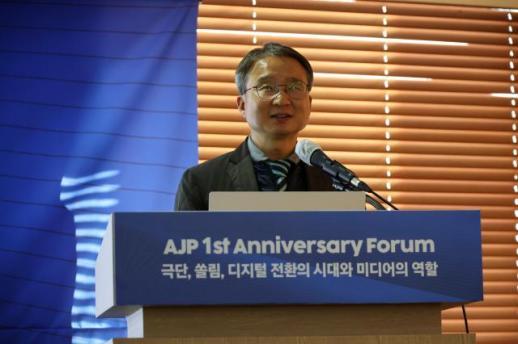 S. Korean scholar pitches trust operating system as algorithms absorb human workflows SEOUL, April 21 (AJP) - Artificial intelligence generated nearly 29 percent of new Python scripts in the United States by early 2025. That metric triggered a silent panic across enterprise software sectors, marking the onset of what industry insiders call the SaaS (software-as-a-service)-pocalypse. Software is no longer just a functional tool waiting for a human click. Machine intelligence is actively moving to absorb complete cognitive workflows, seizing the power of judgment from human operators and fundamentally transferring authority. Park Han-woo, a media and digital business professor at Yeungnam University in South Korea, argues that the global economy is entirely unprepared for this structural disruption. In his latest book, "Digital Assets and Trust Operating Systems in the Era of AI," published on Tuesday, the author outlines how generative algorithms are evolving from passive assistants into autonomous agents capable of making financial and governance decisions on behalf of humans. "Judgment is power," the professor told AJP, noting that delegating these decisions to AI poses severe risks if left unchecked by robust institutional frameworks. "AI can create information, but it cannot take responsibility," the academic added. "The usefulness of a tool is determined by humans. To a thief, a knife can be a weapon to threaten people, but to a chef, a knife is necessary equipment to make delicious food. Delegate, but verify. AI is fast. But it can be wrong." Data as a mirror of social fracture The delegation of authority to machines frequently exposes deep-seated societal flaws. In his book, he highlighted a specific incident where an image-generating algorithm was prompted to draw a street sock seller and a corporate stockbroker. The resulting image depicted the sock vendor as an overweight Black man and the stockbroker as a well-groomed, physically fit White man holding an elegant bag. Algorithms learn from historical data sets inherently laced with human prejudice. An unchecked AI will inevitably reproduce and amplify past inequalities, ultimately reinforcing social disparities rather than eliminating them. "AI is a mirror. It reflects us," the author said. To prevent these biases from manifesting into automated discriminatory actions, the scholar insists that human intervention remains mandatory. He proposes a multi-layered approach: refining data to correct prejudice before training, enforcing transparent judgment processes that explain how a conclusion was reached, and demanding human oversight for critical decisions. "Content is overflowing, and trust is lacking," he noted, referring to the infinite generation of long-tail media. "Content verification comes from structure." The algorithmic challenge to sovereignty To formalize this oversight structure, the Yeungnam University academic advocates for the implementation of an AI-enhanced Decentralized Autonomous Organization, or AIDAO. This theoretical model combines the flexible, probabilistic reasoning of AI with the immutable, cryptographic execution of blockchain technology. "To explain AIDAO in one sentence: An organization operated together by AI and humans, or a decentralized autonomous organization where AI can be the CEO," the professor said. In an AIDAO, an agent might propose a strategy, such as shifting 20 percent of a portfolio during volatile market conditions. That proposal is not executed instantly. Instead, it must pass through smart contracts, specifically Ethereum protocols like ERC-8004 for identity verification and ERC-8001 for execution consensus, and require human approval. "The reason this is important is because it separates judgment, execution, and responsibility," the scholar said. Washington and other Western powers are already grappling with the implications of algorithmic governance. Seoul must also pivot toward shared global architectures rather than relying on isolated corporate platforms. The ultimate safeguard against the SaaS-pocalypse is a Trust Operating System that demands verifiable proof over blind faith. "AI calculates based on rules," he said, emphasizing, "AI generates based on probabilities. AI infers based on data. But humans are incomplete beings accompanied by mistakes. An AI with errors is discarded. However, even if imperfect, humans are chosen. Because humans are noble beings in and of themselves." While algorithms excel at optimizing workflows, the author maintains that humanity will retain its monopoly on meaning and purpose. "AI is good at 'how,' but it cannot do 'why,'" the academic said. "AI gives answers. But humans ask questions." That philosophical boundary forms the foundation of his proposed trust operating system. As algorithms steadily absorb the functional tasks of daily commerce and governance, the defining challenge of the AI era is no longer technological capability, but the architectural design of trust. The authority to build that architecture, the scholar argues, must remain firmly in human hands. While theoretical frameworks like AIDAO are still being debated in academic and financial circles, initial regulatory steps are already materializing. The South Korean government mandated the use of watermarks on AI-generated content starting in January this year. 2026-04-21 10:30:04
 -
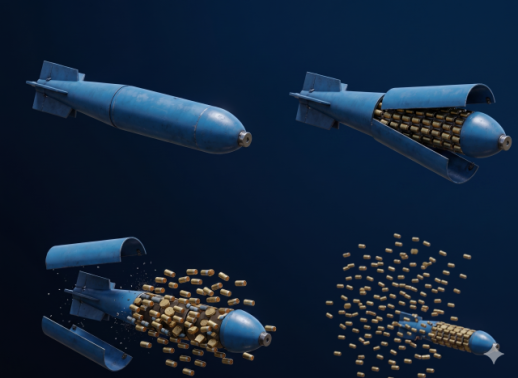 Pyongyang tests banned cluster missiles as Kim Jong-un asserts saturation capability SEOUL, April 20 (AJP) - In a bid to assert its ground-to-ground wide-area suppression capability, Pyongyang test-fired tactical ballistic missiles carrying cluster warheads on Sunday. The drill, reported by the Korean Central News Agency on Monday, involved weaponry banned by most of the international community due to its indiscriminate nature and lasting humanitarian risk. According to Pyongyang's state media, the Missile Administration of the Democratic People's Republic of Korea (DPRK) conducted the test to evaluate the lethality of the Hwasongpho-11 Ra, a surface-to-surface projectile designed to saturate targets with submunitions rather than a single explosion. North Korean leader Kim Jong-un oversaw the launches alongside senior officials. During the exercise, five missiles were fired toward an island target 136 kilometers (84.5 miles) away. The projectiles struck an area measuring between 12.5 to 13 hectares with high density, a footprint roughly equivalent to 18 soccer fields. The focus on cluster munitions follows recent developments in the Middle East, where Iranian cluster ballistic missiles successfully penetrated Israel's layered air defense network. According to reports from human rights groups and defense analysts, these missiles challenge even sophisticated systems like the Arrow-3 by releasing their payloads at altitudes between 7 and 10 kilometers. The timing of this disclosure suggests a deliberate effort to demonstrate tactical parity with modern battlefield trends. This transparency likely reflects a growing confidence in the weapon's ability to bypass regional defenses, mirroring recent tactical successes seen in the Middle East. By publicizing the results of a five-year development cycle, Pyongyang could be notifying South Korea that its existing interceptor systems may no longer guarantee protection against a saturated missile volley. This development marks a shift toward operational, battlefield-ready tactics, signaling that the regime has moved beyond strategic posturing to focus on high-density suppression of specific target areas. These munitions have been largely outlawed by international consensus because they disperse hundreds of small bomblets over vast areas, frequently failing to detonate upon impact. These unexploded submunitions effectively become landmines that kill and maim civilians, even decades after a conflict has concluded. This persistent threat led a majority of the world's nations to renounce their use under an international treaty established in 2007, though several major military powers such as the United States, Russia, China, South Korea, and North Korea remain outside the agreement. Despite the international outcry over such weaponry, the Korean Peninsula remains one of the world's primary hubs for cluster munition production and storage. South Korea is a major manufacturer of these weapons and maintains a stockpile that ranks among the largest in the world, trailing only the U.S., China, and Russia, according to data from the Landmine and Cluster Munition Monitor. South Korea has consistently declined to join international bans, maintaining that the munitions are a critical defensive necessity to counter the massive conventional forces and artillery that the North has concentrated along the border. A cluster bomb functions as a parent munition that opens in mid-air to scatter dozens or hundreds of smaller submunitions over a target zone. This mechanism is designed to destroy multiple targets simultaneously, such as infantry formations, unarmored vehicle convoys, or aircraft on a runway. Chang Do-young, the spokesperson for the South Korean Joint Chiefs of Staff, stated during a briefing that "related content was being closely monitored and detailed specifications are being analyzed in depth" and added that "North Korea's ballistic missile launch is a clear violation of UN Security Council resolutions, and it must immediately stop the continuous missile provocation acts that heighten tensions on the Korean Peninsula and actively participate in our government's efforts to establish peace." 2026-04-20 16:15:53
 -
 K-pop identity and global expansion take center stage at Kookmin University special lecture SEOUL, April 20 (AJP) - Professor Lee Gyu-tag from George Mason University Korea examined the cultural evolution and future trajectory of K-pop during a guest lecture at Kookmin University on April 16. Speaking as the featured guest for the 663rd Thursday Special Lecture, Lee explored how the genre's identity has shifted from a local South Korean product to a global phenomenon, the prominent university said Monday. The lecture defined K-pop not merely as a broad term for all South Korean popular music, but as a specific cultural genre built upon a distinct production method and industrial structure. Professor Lee identified the "total management system"—integrating planning, production, and distribution alongside music, performance, and digital content—as a core element that evolved independently while being influenced by the division of labor models found in overseas music industries. The meaning of the "K" in K-pop is undergoing a transformation as the genre expands globally. While early efforts emphasized South Korean identity, Professor Lee analyzed how recent strategies have shifted toward the global market, citing the release of English-language songs and the inclusion of members from diverse nationalities, such as the trajectory seen with BTS. Professor Lee also noted that the term "K-pop" was first adopted abroad before being reintroduced to South Korea, helping to shape its current identity. He explained that the genre is unique because it is defined not only by its producers but also by the perceptions and evaluations of its international audience. The competitive strength of the genre lies in its business model, the way it builds relationships with fans, and the "maximalist" characteristics found in its performance and style. While citing experimental cases where the "K" is removed or groups consist of various nationalities, Professor Lee maintained that the South Korean production system and cultural context remain the central foundation. The lecture concluded with an assessment that the inherent ambiguity of K-pop could serve as a bridge for further expansion. Professor Lee emphasized the importance of understanding cultural context and pursuing balanced development for the industry moving forward. KMU has operated its Thursday Special Lecture as a regular course featuring external speakers for 30 years, marking the first and longest-running program of its kind among South Korean universities. Approximately 670 speakers from various fields have participated, including former President Roh Moo-hyun, Cardinal Stephen Kim Sou-hwan, author Rhyu Si-min, and film director Park Chan-wook. 2026-04-20 15:03:35
 -
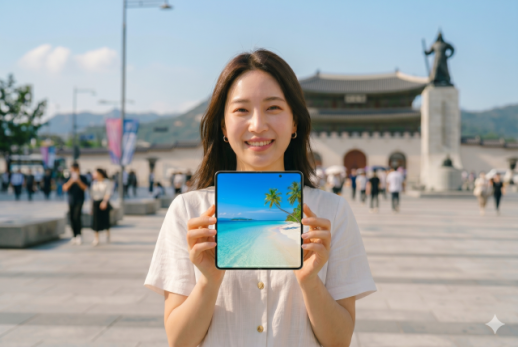 South Korean researchers develop wrinkle-free technology for foldable displays SEOUL, April 20 (AJP) - A research team at the Korea Advanced Institute of Science and Technology has developed a core technology that fundamentally eliminates the wrinkle problem in foldable smartphone displays by redesigning the adhesive areas between the screen and its support plate, the prominent science institute said Monday. According to the Korea Advanced Institute of Science and Technology (KAIST), the new technique ensures that folding stress is distributed across the device rather than concentrating on a single point, allowing for a smooth surface even after tens of thousands of uses. This breakthrough is expected to serve as a turning point for the foldable market as the industry looks to expand the technology to tablets and laptops. The persistent crease on foldable screens has long been a major drawback, causing visual distortion and reduced durability. While global smartphone manufacturers have invested heavily in research and development to address this issue, they have yet to completely remove the visible line where the device folds. Industry experts have often identified this physical flaw as the primary barrier to the wider adoption of foldable devices. Professor Lee Phil-seung and his team at the KAIST Department of Mechanical Engineering began their research to address common frustrations experienced by mobile users. After disassembling dozens of used foldable phones and conducting numerous experiments, the team discovered that the key lay in how the display is bonded to the internal support structure. By redesigning the adhesive zones, the researchers ensured that the mechanical strain of folding is spread out rather than pinching the screen at a specific point. To verify the performance of the prototype, the researchers used straight LED lights to test for surface irregularities. Unlike commercial products, where the reflected light appears bent or distorted at the fold, the KAIST prototype maintained a perfectly straight reflection. The team confirmed that no visual distortion occurred even under testing conditions sensitive enough to detect surface curves smaller than 0.1mm. The technology is designed to be durable enough to withstand tens of thousands of folding cycles with minimal deformation. Because the structural changes are straightforward, the researchers believe the method can be easily integrated into existing manufacturing processes for various devices beyond smartphones, including tablets and notebooks. "We have solved a difficult challenge that global companies could not resolve using a relatively simple and clear method," Professor Lee said. "We expect this technology to spread across the next generation of displays, including laptops and tablets, further strengthening the technical competitiveness of South Korea." KAIST has registered a patent for the technology in South Korea and has filed additional patent applications in the United States, China, and the European Union. According to the university, the simplicity of the design makes it highly viable for mass production. 2026-04-20 11:18:32
 -
 Kookmin University professor develops framework to make image generation AI safer SEOUL, April 17 (AJP) - Professor Kim Min-gyu at Kookmin University (KMU) has developed a unified framework to ensure the safety of artificial intelligence models that generate images and videos. The research, which addresses issues like copyright protection and harmful content, has been selected for an oral presentation at the International Conference on Learning Representations (ICLR) 2026. Kookmin University (KMU) said Friday. Professor Kim Min-gyu worked as the lead author on the study alongside Professor Kim Young-heon and Professor Park Mi-jeong from the University of British Columbia (UBC). The project received support from the Institute for Information and Communications Technology Planning and Evaluation (IITP) and the Canadian Institute for Advanced Research (CIFAR). The research introduces a system called Safety-Guided Flow (SGF) to improve how AI models handle sensitive data and requests. This framework unifies existing safety techniques, proving that previous methods were specific cases of a broader mathematical concept known as maximum mean discrepancy potential. The team also identified what they call a critical time window in the AI generation process. Using control barrier function theory, they demonstrated that safety controls must be applied most strictly during the initial stages of image creation before being gradually phased out. Tests of the SGF system showed improved performance in defending against harmful content and preventing the AI from accidentally memorizing its training data. These improvements are seen as a foundation for making generative AI safer for commercial and public use in South Korea and abroad. "This research provides a new analytical framework that allows us to understand scattered safety research from a single, unified perspective," Professor Kim Min-gyu said. "In the future, it can be used as a core technology to ensure safety as diffusion and flow matching models are put into practical use in high-risk areas such as autonomous driving, medicine, and content creation." 2026-04-17 19:10:58
 -
 Sookmyung Women's University and Korea University Guro Hospital partner for medical research SEOUL, April 17 (AJP) - Sookmyung Women's University Research & Business Development Foundation and the Research Institute of Women's Health signed an agreement with Korea University Guro Hospital to collaborate on the research and treatment of incurable diseases. The partnership aims to build a cooperative ecosystem involving universities, research institutes, and hospitals to accelerate the development of new drugs and medical technologies. Sookmyung Women's University said Tuesday. Representatives from the institutions met at the Sookmyung Women's University (SMU) AI Center in Yongsan-gu, Seoul, on April 14, 2026. The ceremony was attended by Research & Business Development Foundation (RBDF) Director Shin Jee-young, Research Institute of Women's Health (RIWH) Director Yang Young, and Korea University Guro Hospital (KUGH) Research Vice President Cho Gum-jun. Under the new agreement, RIWH will serve as a primary research body to conduct basic and translational studies using clinical data provided by KUGH. Since its launch in 2005, RIWH has specialized in deep research into incurable conditions affecting women through science-based health studies. The SMU RBDF plans to support the initiative by identifying promising technology companies and facilitating the transfer of intellectual property. This cooperation is designed to bridge the gap between academic research and the commercial healthcare market in South Korea. Both organizations also intend to focus on training specialized medical personnel to contribute to the improvement of public health. "The collaboration with Korea University Guro Hospital, which has advanced medical systems and rich clinical infrastructure, will be an important foundation for the university's research results to lead to actual medical sites," Shin Jee-young said. 2026-04-17 18:57:53
 -
 Viet Nam courts South Korean chip giants as Hanoi ratifies landmark incentive package SEOUL, April 17 (AJP) - Hanoi is formalizing a massive state-led effort to corner the semiconductor supply chain, offering South Korean conglomerates a sweeping array of tax holidays and land-use exemptions. The newly passed Law on Digital Technology Industry marks a strategic pivot for Viet Nam, moving beyond its traditional role as a low-cost assembly hub toward becoming a core strategic node for high-end silicon fabrication. This legislative overhaul disrupts the regional status quo by targeting the specific operational hurdles that have previously deterred high-stakes capital investment in Southeast Asia. The policy framework centers on a corporate income tax holiday that lasts for four years, followed by a 50 percent tax reduction for the subsequent nine years. To encourage deep-tech integration, Hanoi is allowing a 200 percent tax deduction for research and development expenditures, a move designed to lure R&D centers away from traditional hubs in East Asia. According to the South Korean Chamber of Commerce in Viet Nam, these concessions are currently the primary focus for Seoul-based executives evaluating long-term infrastructure plays in the region. Logistical velocity is a critical component of the new law, acknowledging the hyper-sensitive turnaround times inherent in semiconductor assembly and packaging. Hanoi has established a "green lane" for customs clearance to accommodate the "Pali Pali" culture of South Korean business, which prioritizes rapid execution. Furthermore, the Vietnamese government has eliminated import duties on project-related machinery and equipment, while granting complete exemptions from land lease fees for the entire lifecycle of a project. This allows firms like Samsung and SK Hynix to channel their capital expenditures directly into core technology rather than real estate overhead. The strategy seeks to build a self-sustaining ecosystem by extending these same incentives to Tier-1 and Tier-2 suppliers. Under the new mandate, any ancillary manufacturing firm integrated into the semiconductor supply chain receives state subsidies for infrastructure and equipment commensurate with those given to the lead developer. This synchronization ensures that when a major anchor tenant moves into a province like Bac Ninh or Bac Giang, its entire constellation of South Korean satellite suppliers can transition under a unified regulatory framework. To address the regional shortage of high-skilled labor, the law introduces radical shifts in immigration and personal taxation. South Korean experts and high-tech personnel are now eligible for immediate work permit exemptions and five-year extended visas that include full family sponsorship. Hanoi is also offering a five-year personal income tax exemption for high-caliber digital technology personnel, alongside state-funded stipends intended to maintain a standard of living comparable to Gyeonggi Province. This legislative push arrives as global firms increasingly adopt "China Plus One" strategies to mitigate geopolitical risks—a term originally popularized by Japanese business circles in the mid-2000s to describe diversifying manufacturing away from China (Source: Nikkei Asia). Amkor Technology has already inaugurated a 1.6 billion dollar facility in Bac Ninh, while Samsung continues to scale its chip substrate production in Thai Nguyen. Hana Micron has also committed billions of dollars toward expanded operations in Bac Giang. 2026-04-17 18:45:47
 -
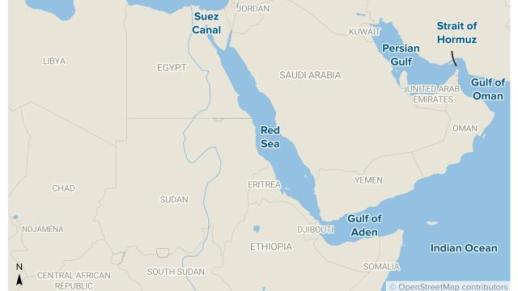 OPINION: Seoul navigates strategic reckoning as West Asia conflict rewrites energy calculus SEOUL, April 17 (AJP) -The West Asia conflict is forcing South Korea to confront a fundamental shift: energy security is no longer about efficiency, but resilience. For decades, Seoul optimized its energy system for cost and scale — routing roughly 70 percent of its crude imports through the Strait of Hormuz, refining heavier Middle Eastern oil into high-value fuels, and exporting them across global markets. It was a model built on efficiency. That model is now under strain. With the Hormuz corridor constrained and maritime risks spilling into the Red Sea, shipping costs are no longer just a function of distance. They now reflect geopolitical risk. Routes once considered optimal are vulnerable, while alternatives once dismissed as uneconomical are being reassessed through a different lens: safety. The recent transit of a South Korea-linked crude carrier through the Red Sea — the first confirmed Hormuz bypass shipment — captures this shift. It is not simply a logistical workaround, but a signal that Seoul is recalibrating priorities under pressure. Yet the challenge runs deeper than import diversification. South Korea is not just a major crude importer. It is also a critical exporter in the global energy system — a dual role that amplifies the stakes of disruption. Petrochemicals and refined oil products ranked as the country’s third- and fourth-largest export items last year, generating a combined $88.5 billion and accounting for 14 percent of total shipments. The country’s four major refiners — SK Energy, GS Caltex, S-Oil and HD Hyundai Oilbank — exported 86 million barrels of jet fuel in 2025, representing roughly 4 percent of global supply, the largest share worldwide. Despite being the world’s largest crude producer, the United States remains structurally dependent on Korean refining output. Korean shipments accounted for 71 percent of U.S. jet fuel imports last year — equivalent to about 7 percent of total supply. In western regions such as Washington and California, dependence rises to as high as 85 percent of imports. This reflects a structural imbalance. The U.S., buoyed by the shale revolution, produces predominantly light crude, which yields lower refining margins and is less suited for certain high-value fuels. South Korea, by contrast, has built its system around heavier Middle Eastern crude, particularly from Saudi Arabia, enabling it to produce premium products at scale. Washington has urged Seoul to pivot toward U.S. crude, framing it as both a commercial and strategic adjustment. But such a shift is not straightforward. It would require reconfiguring refining systems and could erode Korea’s competitiveness in high-value exports — a sector that has become a pillar of its trade balance. And here lies the contradiction. South Korea’s energy model is built on global integration — importing crude, refining it, and exporting higher-value products. But geopolitical fragmentation is beginning to challenge that model. Supply chains are no longer neutral. They are increasingly shaped by strategic alignments and conflict zones. The immediate risks are already visible. Some 26 South Korea-linked vessels remain stranded or delayed near the Persian Gulf. Shipping through Hormuz has dropped sharply, while insurance costs and security risks are rising. These pressures are feeding directly into domestic fuel prices and industrial margins. The government has responded with short-term stabilizers — emergency crude purchases and fiscal support — but these are stopgaps. The more consequential shift is strategic. Seoul is moving beyond simple diversification toward a broader rethinking of its energy architecture. This includes exploring new sourcing corridors and strengthening ties with alternative partners such as India, whose refining capacity and geographic position offer a potential buffer against Middle Eastern volatility. President Lee Jae Myung’s state visit to New Delhi, accompanied by a large business delegation, reflects this recalibration. Even if tensions ease, the old equilibrium is unlikely to return. U.S.-Iran negotiations may reopen parts of the Hormuz corridor, but under tighter controls and new conditions. The waterway may function again, but it will no longer be a frictionless artery of global trade. For South Korea, that changes the equation. Energy security can no longer be measured solely in cost per barrel. It must now account for route stability, geopolitical exposure and systemic resilience. In that sense, higher shipping costs are not an anomaly — they are the new premium for security. The shift from efficiency to safety will not be painless. It implies higher costs, more complex logistics and potential trade-offs in competitiveness. But the alternative — continued dependence on a single, volatile chokepoint — carries far greater risk. The West Asia conflict is not just disrupting supply. It is rewriting the logic of energy strategy. For Seoul, the task now is to adapt — not incrementally, but structurally — to a world where the cheapest route is no longer the safest one. *The author is the assistant editor of AJP 2026-04-17 15:29:05