

Journalist

Yujin Kim and Seo Hye Seung
ujeans@ajunews.com
-
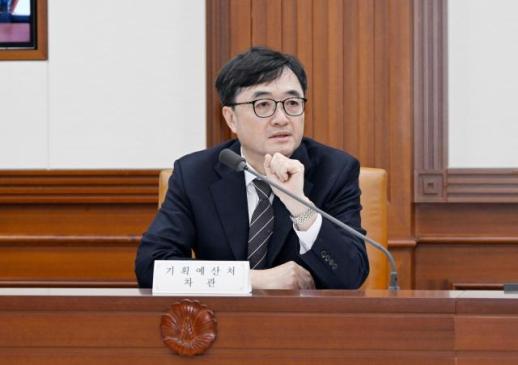 South Korea Budget Vice Minister Lim Ki-geun Meets Gates Foundation to Expand ODA Cooperation The Ministry of Planning and Budget and the Bill & Melinda Gates Foundation are moving to broaden cooperation in official development assistance, agreeing that faster digital change requires tapping private-sector capacity to create new value. Vice Minister Lim Ki-geun met on the 6th with Joe Cerrell, the foundation’s managing director for external relations, to discuss ways to improve the effectiveness of international development cooperation. The meeting followed Bill Gates’ visit to South Korea in August last year. During that trip, Gates met with President Lee Jae-myung to discuss global health and ODA cooperation. Gates said South Korea is among the few countries to have transitioned from an aid recipient to a donor, and urged it to continue supporting efforts to improve the global health environment. Lim praised the foundation’s results in global health and sustainable development. He said its approach of using its funding to draw in private capital and technology helps boost the effectiveness of development assistance. Cerrell said he highly values South Korea’s rise from an ODA recipient to a donor and expressed hope that the government will increase ODA support to show stronger leadership. Lim responded that the focus should be on strategic use of resources and spreading measurable results. “Through cooperation among diverse development partners, including the public and private sectors, we can create new added value,” he said, adding that in the digital and artificial intelligence era, private innovation in technology and networks should be used to the fullest. Lim and Cerrell also reviewed the outcomes and significance of global cooperation projects between South Korea and the foundation, including the International Health Technology Research Fund (RIGHT Foundation). They agreed on the need to identify promising cooperation projects in other areas as well. The ministry said it will work with ODA lead agencies, including the Foreign Ministry, to review the full process from budget execution to performance management and reflect the results in drafting the next budget proposal. * This article has been translated by AI. 2026-05-06 17:34:01
 -
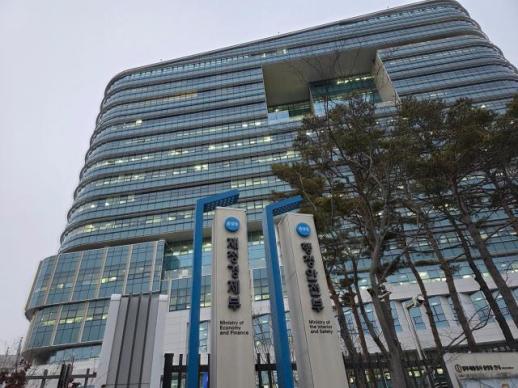 South Korea Tightens State Contract Rules After Serious Accidents, Raises Bond Requirements Contractors sanctioned after a serious industrial accident will have to post a higher contract bond if they sign a state contract after a court grants a temporary suspension of the sanction. The government will also tighten safety requirements at the bidding stage, allowing only companies with safety-related certification to bid on some contracts. The Cabinet on the 5th reviewed and approved a partial revision to the Enforcement Decree of the State Contract Act reflecting those measures. The revision focuses on easing management burdens through more rational payment procedures, strengthening safety management to ensure stable performance of state contracts, and improving fairness by supplementing contract rules. Earlier, the Ministry of Economy and Finance submitted to the National Assembly a report on follow-up actions to the 2024 National Assembly audit and said it planned to revise the enforcement decree. The move is seen as raising bond requirements for sanctioned firms while reducing burdens on contracting agencies. To strengthen safety from the outset, the revision creates a legal basis to limit eligibility for contracts requiring specialized safety standards to companies with safety certification and the necessary professional staff and technology. Firms sanctioned for serious violations — including serious accidents and bid rigging — will face higher bond requirements. If a sanctioned company signs a contract after a court accepts an injunction suspending the sanction’s effect, the contract bond rate will rise to 20% from 10%. The payment process will also be adjusted. Previously, when a competitive bid failed and a contract was then awarded through a private contract, only turnkey projects could reflect price changes by adjusting the total project cost and then revising the contract amount. Under the revision, contract amounts may also be changed when a private contract is signed after a basic-design technical proposal bid. To reduce companies’ burdens, the contract bond rate for construction contracts will be lowered to 10% from 15%. A new provision will also allow the bond for long-term construction contracts to be eased to 5% from 10% in an economic crisis such as a disaster or recession. The government also added measures to improve fairness. In cases where it was not possible to determine provisional prices for some cost items that make up the estimated price before bidding, agencies could sign contracts subject to a post-contract cost review. Citing concerns that oversight could be insufficient, the revision requires a resolution by the contract review committee when the combined share of such items is 20% or more, and requires both a contract review and notification to the Board of Audit and Inspection when the share is 50% or more. A ministry official said the government will continue working to reduce companies’ management burdens while strengthening safety management in the performance of public contracts, adding that it will keep improving the contract system by reflecting difficulties in the field. * This article has been translated by AI. 2026-05-06 16:48:17
 -
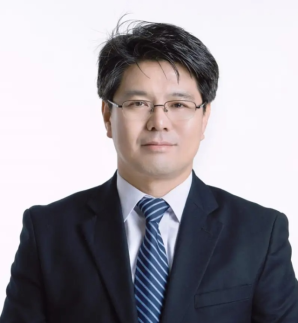 Ahn Young-cheol Appointed Head of Korea Maritime Transportation Safety Authority The leadership vacancy at the Korea Maritime Transportation Safety Authority (KOMSA) has been filled after about six months, following the end of Kim Jun-seok’s term. The Ministry of Oceans and Fisheries said Tuesday it appointed Ahn Young-cheol, a professor at Busan University of Foreign Studies, as KOMSA’s fourth chairman. His three-year term runs from Tuesday through May 5, 2029. Kim’s term ended Nov. 30 last year, but no successor was named, leaving the agency without a permanent chairman for months. Ahn earned a doctorate in public finance and economics from the University of Wuerzburg in Germany. He has served as an adviser to the Presidential Committee on Balanced National Development and as chairman of the Korea Climate Economy and Social Research Institute, building expertise in public policy. He is known for work on climate economics, environmental, social and governance management, and balanced regional development. The ministry and the authority said they expect Ahn to help stabilize the organization and respond proactively to changes in the policy environment, drawing on his public policy background. Ahn said he would “carefully assess the policy conditions the authority faces” and strengthen its policy response and execution so its evolving roles and functions match current needs. He also pledged to “build leadership that unites the organization based on expertise and communication.” * This article has been translated by AI. 2026-05-06 14:12:13
 -
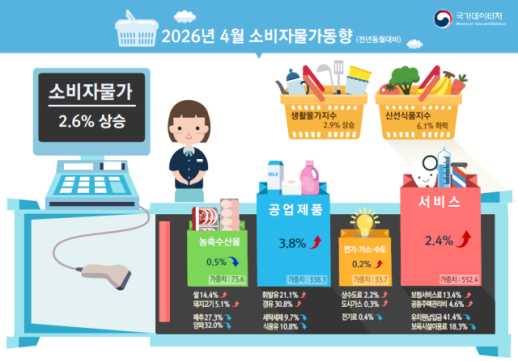 South Korea’s April Consumer Inflation Hits 2.6%, Highest in 21 Months on Fuel Surge Global oil prices kept climbing, driving a sharp jump in fuel costs and pushing consumer inflation to its fastest pace in 21 months. A government cap on fuel prices, in place since March, helped cushion the rise but did not prevent inflation from staying in the 2% range. Officials also warned that price pressures that have been concentrated in energy could spread to non-energy items starting in May. According to the National Data Center’s “April 2026 Consumer Price Trends” released Tuesday, the consumer price index stood at 119.37 (2020=100) in April, up 2.6% from a year earlier. Prices for agricultural, livestock and fisheries products fell, but the steep rise in petroleum products lifted overall inflation to its biggest increase in 21 months. Processed food prices, which had posted high gains since last year, rose 1.0% in April. The slower increase appeared to reflect cuts in factory-gate prices, the agency said. Petroleum product prices jumped 21.9% from a year earlier, the biggest increase since July 2022 during the Russia-Ukraine war, when the rise reached 35.25, marking the largest gain in three years and nine months. Over the same period, gasoline rose 21.1% and diesel climbed 30.8%. Kerosene increased 18.7%, the strongest rise in three years and two months since February 2023, when it gained 27.1%. The agency said the fuel price cap introduced in March acted as a buffer against inflation. The Korea Development Institute has also reported that the cap lowered March consumer inflation by 0.8%, according to its research findings. “Rising global oil prices pushed up petroleum products and international airfares in particular,” said Lee Du-won, the agency’s director for economic trends and statistical review. “However, compared with the OECD, the increase in petroleum products is smaller. The fuel price cap had some effect in easing the overall rise in consumer prices,” he said. Price pressures also extended into services. Public service prices rose 1.4% from a year earlier and personal services increased 3.2%. International airfares jumped 15.9% as fuel surcharges rose, leading the increase in public service prices, the agency said. Domestic airfares have not shown a marked rise so far, but increases are expected from May. The April fuel surcharge for domestic flights was calculated based on February levels, while May pricing is expected to reflect the impact of the Middle East war in late February, the agency said. Prices for rice and livestock products also continued to rise. Rice, including glutinous rice, posted larger increases due to reduced cultivation area. Livestock prices rose sharply for items such as imported beef and chicken, driven by higher import prices and avian influenza, the agency said. Still, the agency said higher oil prices had not yet spread broadly into non-energy categories. “So far, we are not seeing an overall rise in dining out or processed foods,” Lee said. He added that prices for paper diapers and sanitary pads have not fluctuated much, and that garbage bags fell 0.3% due to price adjustments by some local governments. The core inflation index excluding food and energy rose 2.2% from a year earlier. The index excluding agricultural products and petroleum products also increased 2.2% over the year. Among 458 items, the cost-of-living index covering 144 frequently purchased goods rose 2.9% from April last year. The fresh food index, however, fell 6.1% from a year earlier. An index excluding owners’ equivalent rent, which reflects the cost of housing services consumed by homeowners, rose 2.3% from a year earlier. * This article has been translated by AI. 2026-05-06 09:28:39
 -
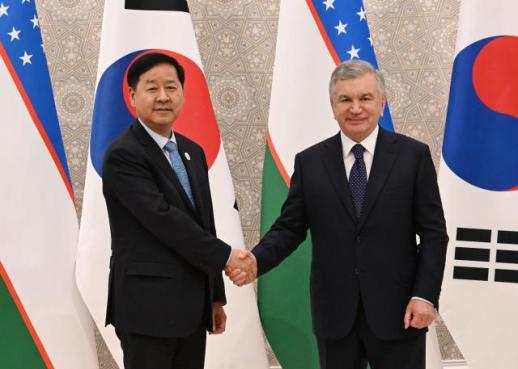 South Korea’s Koo Yun-cheol Meets Uzbek President, Seeks More Openings for Korean Firms Koo Yun-cheol, South Korea’s deputy prime minister and minister of economy and finance, met with Uzbekistan’s president and agreed to strengthen cooperation in emerging industries, including biotech, as Seoul seeks to broaden opportunities for Korean companies in Central Asia. South Korea’s Ministry of Economy and Finance said Tuesday that Koo met President Shavkat Mirziyoyev on May 3 (local time) in Samarkand to discuss the planned Korea-Central Asia summit in September and the direction of bilateral economic cooperation. According to the Korea Trade-Investment Promotion Agency, Uzbekistan imports $1.79 billion worth of Korean products. Exports are led by manufactured goods such as auto parts, passenger cars, engines and synthetic resins, while demand continues to rise for consumer goods and higher value-added items including cosmetics and medical electronic devices. Mirziyoyev cited the Afrasiyab murals in Samarkand as an example of long-standing friendly exchanges between the two countries. “Based on this, I hope trade and investment cooperation between Korea and Uzbekistan will expand further,” he said, adding that he hoped for broad discussions to identify cooperation projects and produce tangible results. Koo praised Uzbekistan’s recent reform and opening policies and the economic gains that followed. He said the two sides should strengthen cooperation in biotech, infrastructure such as railways and airports, supply chains and regional cooperation. Koo said he understood Uzbekistan is prioritizing industrial diversification and infrastructure modernization under its 2030 development strategy, and asked that opportunities be opened for Korean companies “given their strong capabilities.” Before meeting the president, Koo held talks with Uzbek officials overseeing economic cooperation with South Korea, including Deputy Prime Minister Jamshid Khodjaev and Deputy Prime Minister and Minister of Economy and Finance Jamshid Kuchkarov, as well as vice ministers from the ministries of investment, industry and trade; economy and finance; transport; and health, to review the status of bilateral cooperation. The deputy prime ministers agreed that cooperation should shift from a focus on infrastructure to more forward-looking areas such as biotech and critical minerals. Khodjaev said he hoped cooperation with South Korea would deepen in projects Uzbekistan is pushing, including the creation of medical and pharmaceutical clusters and the construction and operation of a new airport. The Export-Import Bank of Korea and Uzbekistan’s Ministry of Investment, Industry and Trade signed a strategic cooperation memorandum of understanding to expand exchanges in areas such as supply chains and digital and green cooperation. The ministry said the bank will support companies in both countries through policy financing to help broaden cooperation outcomes. Earlier, on May 2 (local time), Koo visited a medical cluster site in Tashkent with Khodjaev and Health Minister Khudayarov Anvarovich. The cluster, which is to include a national children’s hospital and a Tashkent general hospital, is being developed with support from South Korea’s Economic Development Cooperation Fund. Koo said the cluster could help Uzbekistan position itself as a medical hub in Central Asia. Khodjaev said, “With Korea’s EDCF support, we have been able to provide high-quality medical services to the people of Uzbekistan,” and expressed gratitude. Koo visited Uzbekistan on the sidelines of the Asian Development Bank’s annual meeting and met senior officials, including the president and two deputy prime ministers, the ministry said.* This article has been translated by AI. 2026-05-05 17:04:29
 -
 Incheon Port Authority to Subsidize K-Beauty SMEs’ Costs for 2026 Beauty & Healthcare Show Incheon Port Authority is offering support to help small and midsize K-beauty companies expand overseas, including subsidies to participate in a major local beauty and health expo and opportunities to meet foreign buyers. The authority, known as IPA, said on May 5 it is recruiting companies for its support program tied to the 2026 Beauty & Healthcare Show expo. Demand for K-beauty products has been rising. The Ministry of Food and Drug Safety said Korea’s cosmetics exports totaled $3.1 billion in the first quarter of this year. IPA said it will select 20 small and midsize companies and cover 50% of their booth costs, while setting up a joint IPA exhibition hall. The program is designed to promote products from smaller firms that have struggled to enter overseas markets and to support market development through activities such as one-on-one export consultations with foreign buyers. Companies seeking to participate can apply through the Win-Win Nuri website from May 6 to 19. Final selections will be announced after a document review. Now in its 11th year, the Beauty & Healthcare Show is Incheon’s flagship beauty and health exhibition. It will be held July 23-25 at Songdo Convensia in Incheon. IPA said it has supported small and midsize K-beauty companies’ participation in the show for four years to strengthen their global competitiveness. Shin Jae-wan, head of IPA’s ESG Management Office, said the project is a signature shared-growth program aimed at boosting exports by small and midsize companies and revitalizing the local economy. He said IPA will continue to support their entry into global markets based around Incheon Port. 2026-05-05 14:36:26
 -
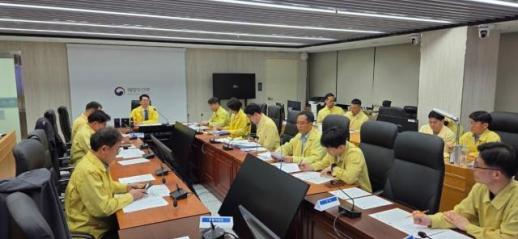 South Korea vows full response after fire on HMM NAMU cargo ship in Strait of Hormuz A blast and fire broke out on May 4 (local time) aboard the HMM NAMU, a cargo ship operated by a South Korean shipping company, while it was anchored in the Strait of Hormuz, prompting a government response. Maritime authorities said they are working to determine the cause and ensure the safety of the crew. The Ministry of Oceans and Fisheries said May 5 that it notified relevant agencies immediately after receiving the report and began an emergency situation review meeting chaired by the minister at about 10 p.m. Hwang Jong-woo instructed officials to “do their utmost to take necessary measures to protect the safety of our seafarers and vessels,” and ordered nearby South Korean ships to move to safer waters. Hwang chaired another situation review meeting at 9 a.m. May 5 to check developments. A ministry official said the government is in close contact with the shipping company and the vessel, and is working with related agencies, including the Foreign Ministry, to secure the safety of the ship and South Korean seafarers. As of May 5, a total of 160 South Korean seafarers were confirmed to be in the inner area of the Strait of Hormuz: 123 aboard South Korean vessels and 37 aboard foreign vessels. The ministry official said the government is communicating frequently with shipping companies to protect seafarers, adding that it will respect their wishes but will safely bring to South Korea those who choose to exercise their right to request disembarkation. 2026-05-05 13:27:13
 -
 South Korea, China and Japan Finance Chiefs Pledge Closer Coordination, Boost Regional Safety Net South Korea, China and Japan brought their finance ministers together to coordinate responses to global uncertainty and other medium- to long-term challenges, including steps to strengthen the region’s financial safety net. South Korean Deputy Prime Minister and Minister of Economy and Finance Koo Yun-cheol chaired the 26th trilateral meeting of finance ministers and central bank governors on May 3 in Samarkand, Uzbekistan. The three countries hold the meeting annually to share economic and financial cooperation plans and to discuss key agenda items in advance of the ASEAN+3 finance ministers and central bank governors meeting. The chair rotates among the three finance ministries, and South Korea is this year’s chair. The countries shared views on the macroeconomic impact of the recent war in the Middle East and their respective policy responses. They said their economies remained steady despite external uncertainty last year, a trend that continued through the first quarter, but agreed that downside risks have increased due to the Middle East conflict. Koo said the three countries face common medium- and long-term structural challenges, including low birthrates and aging populations, weakening growth potential and the need to stabilize supply chains. He proposed that they share information and work together on solutions. On ASEAN+3 financial cooperation, Koo said, “To respond to heightened uncertainty, we need to improve the effectiveness of the CMIM, the regional financial safety net,” and urged joint efforts to strengthen the capacity of AMRO, the region’s surveillance body. The finance ministers and central bank governors agreed that close communication can help support regional financial stability. They also decided to hold their next meeting in Nagoya, Japan, where the 30th ASEAN+ finance ministers and central bank governors meeting is scheduled to be held in 2027. * This article has been translated by AI. 2026-05-03 17:07:26
 -
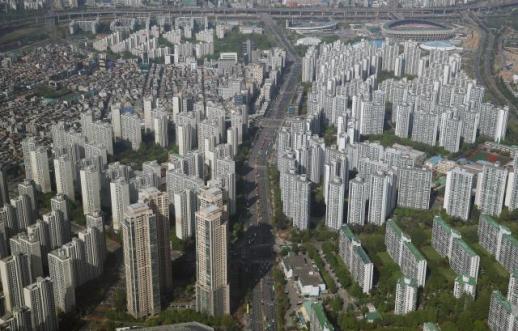 South Korea’s Higher Capital Gains Tax on Multi-Home Sellers Returns May 10; Long-Hold Deduction in Focus A one-year temporary suspension of heavier capital gains taxes on home sales by multiple-home owners will end on May 9. Starting May 10, owners who sell homes in regulated areas are expected to face a sharply higher tax burden on gains. An exception remains. In some areas, sellers can keep the tax break through November if they complete an application for land transaction approval by May 9. According to the Ministry of Finance and Economy and other officials on May 3, once the suspension ends, multiple-home owners selling in regulated areas could face an effective tax rate of up to 82.5%. Under current rules, the basic capital gains tax rate ranges from 6% to 45%. From May 10, an additional surcharge applies in regulated areas: 20 percentage points for owners of two homes and up to 30 percentage points for those with three or more. Adding local income tax of 10% brings the effective top rate to about 82.5%. With concerns rising over a sudden jump in tax bills, the government set out an exception: If a seller files the land transaction approval application by May 9, the basic rate applies even if the approval and final payment are delayed as late as November. For Seoul’s Gangnam 3 districts (Seocho, Gangnam and Songpa) and Yongsan-gu, which were regulated areas before the 10·15 measures, the sale process must be completed by Sept. 9 to avoid the surcharge. For other Seoul districts and 12 areas in Gyeonggi Province designated later, the deadline is Nov. 9. As the end of the suspension nears, attention is also turning to possible changes in real estate taxation, including the long-term holding special deduction for capital gains. The deduction was introduced to ease the tax burden on nominal gains driven by inflation and to encourage long-term ownership. Under the current Income Tax Act, owners of general real estate held for at least three years can deduct 2% per year, up to 30% for 15 years. For one-home households, the deduction can reach 80% by combining holding and residency periods. For example, if a person has owned and lived in a single home for at least 10 years, a 40% holding-period deduction and a 40% residency deduction can apply, excluding up to 80% of the gain from taxation. Critics say a deduction as high as 80% can amount to an excessive tax benefit for owners of expensive homes. President Lee Jae-myung previously raised concerns about the structure of the deduction on X. Moves toward tax changes are also gaining traction in politics. Independent lawmaker Choi Hyuk-jin introduced an amendment to the Income Tax Act that would, among other items, remove deductions for nonresidents and apply a 16% to 80% deduction rate to one-home households that have held a home for at least three years and lived in it for at least two. Another bill, introduced by Jinbo Party lawmaker Yoon Jong-oh, calls for abolishing the long-term holding special deduction. However, the bills have not been coordinated with the government, leaving their prospects unclear. Some observers expect real estate-related measures could be included in a tax package scheduled for July. A government official said, “Nothing has been decided yet,” adding that authorities are “reviewing the timing and methods comprehensively.” 2026-05-03 15:35:01
 -
 South Korea Revives Long-Stalled Services Industry Bill, Health Care Dispute Persists South Korea’s long-delayed Framework Act on the Development of the Service Industry has again been pushed for passage, but lawmakers remain deadlocked over whether to include the health and medical sector. On May 3, the Ministry of Economy and Finance and other agencies said the government has resumed efforts to pass the bill, known as the “service industry development act,” including by commissioning research projects. The bill has been stuck in the National Assembly for 15 years largely because no agreement has been reached on the scope of health and medical services. Since it was first introduced in 2011, the government, the medical community and civic groups have failed to narrow sharp differences. Opponents say including health and medical services could open the door to privatization. The government argues inclusion is needed to reduce gaps between industries and foster high value-added sectors. Medical groups and civic organizations have warned that bringing health care under a broad service-industry promotion law could lead to commercialization and conflict with the Medical Service Act, which is grounded in public interest principles and bans profit-seeking as a basic ideal. They also argue that greater inflows of private capital and changes to hospitals’ revenue structures could weaken the public health care system. Concerns have also been raised about expanded telemedicine, allowing nonprofessionals to establish medical institutions, and broader health management services, which critics say could undermine public health care and patient safety. The government and industry, however, view health and medical services as central to making the bill effective. They say South Korea needs a systematic approach to developing high value-added service industries such as tourism and health care to better balance manufacturing and services. The government has consistently said the bill is intended to promote the service sector overall and that health and medical services, as a major pillar of that sector, should be included. It has also stressed the need for a legal basis to support exports of medical technology and development of digital therapeutics. In recent discussions, a third option has been floated, such as separating health and medical services or limiting the law’s scope, but it has not unified the two sides. Four key health-related laws now being discussed as possible exclusions from the bill’s application are the Medical Service Act, the Pharmaceutical Affairs Act, the National Health Insurance Act and the Framework Act on Health and Medical Services. Under that approach, the bill would be enacted while carving out core statutes seen as posing risks to health care’s public nature. Supporters of exclusions say explicit carve-outs could block privatization disputes in the text of the law, reduce prolonged political battles, and speed regulatory reforms in areas such as tourism and content that have been delayed by health care-related conflict. They also acknowledge that limits would likely remain in some areas, including digital health care and medical technology exports. Some, however, argue the government should move cautiously rather than rush the bill, warning that legislation could hinder, rather than promote, industry growth. Seo Yong-gu, a professor of economics at Sookmyung Women’s University, said, “AI-based service industries and the software industry are areas that grow by market logic,” adding, “It is true that productivity in Korea’s service industry is low, but it is preferable to leave it to the market’s autonomy rather than enact a law.”* This article has been translated by AI. 2026-05-03 15:32:21