

Journalist

Woo Joo-seong
wjs89@ajunews.com
-
 Seoul's Housing Market Faces Supply Crunch Amid Increased Capital Gains Tax With the reintroduction of higher capital gains tax rates for multiple homeowners, the Seoul apartment market is expected to enter a significant supply crunch phase. Following the tax's reinstatement, homeowners in the Gangnam area are opting to hold onto their properties, driven by expectations of future redevelopment, while lower-priced areas are experiencing rental market pressures that could further drive up prices. Although regional trends may vary, the overall market sentiment remains consistent. According to industry sources, after the sale of tax-advantaged properties in Gangnam, homeowner expectations have surged. A representative from a real estate agency near Eunma Apartment in Daechi-dong stated, "Only listings with higher asking prices remain now," adding that in redevelopment zones, sellers are eager to increase prices by millions of won depending on the permitting stage. The representative noted, "Once the business implementation permit is granted for Eunma, prices are expected to rise further," and warned of a potential inventory shortage in the future as the tax exemption period has ended. The speed of the supply crunch in Gangnam has already begun to reflect in prices. As of the first week of May, Songpa-gu (0.17%) and Seocho-gu (0.04%) saw price rebounds following the absorption of tax-advantaged listings. As multiple homeowners who missed the opportunity to sell during the tax exemption period shift towards holding or gifting their properties, the influx of new listings is expected to be further restricted. Under the new tax rates effective from May 10, the effective tax rate for homeowners with three or more properties could reach as high as 82.5%, including local income taxes. Industry analysts suggest that this tax burden paradoxically discourages multiple homeowners from listing their properties. A representative from a real estate agency in Daechi-dong remarked, "Homeowners who did not sell during the exemption period have already shifted towards gifting or long-term holding," predicting that this trend will solidify after May 10. Currently, there are no clear variables to reverse the supply crunch, while the government's review of long-term holding tax exemptions is being watched as a potential factor for new listings. A broker in Daechi-dong stated, "If the requirements for long-term holding tax exemptions are tightened, homeowners in the 5-10 year holding period may consider selling," but cautioned that uncertainties remain, including the need for cabinet approval. In the outer areas of Seoul, a different dynamic of supply reduction and price increases is at play. Following the depletion of tax-advantaged listings, a shortage of rental properties is intensifying, leading to increased demand from newlyweds and those seeking to separate households. A representative from a real estate agency in Dongdaemun-gu noted, "With no rental listings available, clients are inevitably turning to the purchase market," and added that the absence of urgent sales and rental options is likely to persist until the second half of the year. Experts warn that the reintroduction of the capital gains tax will likely increase upward pressure on prices in outer Seoul as well. Despite indications of further government regulations, it is anticipated that rental prices, particularly in mid- to low-tier areas, will continue to rise, with sales prices following suit for the foreseeable future. Kim In-man, head of the Kim In-man Real Estate Research Institute, stated, "The price adjustments seen in the Han River belt area in February and March were not indicative of a trend but rather a temporary phenomenon driven by sellers looking to avoid the capital gains tax," adding that the Gangnam area and the Han River belt are already showing signs of recovery, with prices in areas below 1.5 billion won expected to maintain an upward trend. Lee Eun-hyung, a researcher at the Korea Construction Policy Institute, also noted, "The price trend is likely to continue rising in key areas," and emphasized that considering domestic and international variables, it will be challenging for prices in outer Seoul to decline significantly.* This article has been translated by AI. 2026-05-10 13:03:23
 -
 Demand Shifts to Non-Regulated Areas in Seoul's Housing Market The apartment market in the Seoul metropolitan area is showing stark contrasts based on regulatory status. While transactions in key regulated areas of Seoul and Gwacheon have sharply declined, non-regulated regions like Guri, Hanam, and Anyang’s Manan district are experiencing a surge in purchases from outside buyers, leading to a series of record-high sales. Analysts attribute this trend to relatively lenient loan conditions and the absence of mandatory residency requirements, attracting both genuine buyers and investors. Gyeonggi Province Apartment Prices Rise 0.08%...Regional Disparities Widen According to KB Real Estate's weekly statistics released on May 8, apartment prices in Gyeonggi Province rose by 0.08% in the first week of May, maintaining the same growth rate as the previous week. The growth rate, which peaked at 0.12% in mid-March, showed slight moderation in April but rebounded to 0.11% in the third week of April, followed by two consecutive weeks at 0.08%. Regionally, Seongnam's Jungwon district (0.51%), Gwangmyeong (0.39%), Guri (0.36%), Anyang’s Manan district (0.28%), Seongnam's Bundang district (0.27%), and Hanam (0.25%) led the price increases. In contrast, Icheon (-0.13%), Gwacheon (-0.08%), and Hwaseong's Manseong district (-0.06%) experienced declines. The disparity between rising and falling regions has reached as much as 0.64 percentage points, indicating a growing divide within the market. In Seongnam's Jungwon district, which recorded the highest growth rate, the depletion of affordable listings has led to a decrease in buyer inquiries, causing transactions to slow down somewhat. This week's price increases were concentrated around large complexes in Geumgwang-dong. In Incheon, apartment prices fell by 0.01%, marking a downturn this week. Only Bupyeong (0.02%) saw an increase, while Yeonsu, Seo, Michuhol, and Namdong districts remained stable, with Jung-gu (-0.15%), Gyeyang (-0.03%), and Dong-gu (-0.01%) experiencing greater declines. Guri's Transaction Volume Surges 314% vs. Gwacheon's 85% Decline The disparity in transaction volumes based on regulatory status is becoming increasingly pronounced. According to an analysis by real estate research firm RealToday of actual transaction data from the Ministry of Land, Infrastructure and Transport, the volume of apartment transactions in Guri, Gyeonggi Province, surged by 314% in the first quarter of this year compared to the same period last year. In stark contrast, the regulated area of Gwacheon saw an 85% decline during the same timeframe. The concentration of demand in non-regulated areas can be attributed to differences in loan and resale conditions. Regulated areas face lower loan-to-value (LTV) limits and are subject to mandatory residency requirements and land transaction permit regulations, effectively blocking investment entry. In contrast, non-regulated areas offer relatively flexible loan limits and conditions, with looser resale restrictions, allowing both genuine buyers and investors to enter the market. This trend is also evident in the new housing market. In February, the 'Syangyong The Platinum Onsu Station' project in Bucheon, Gyeonggi Province, attracted 1,317 applicants for 109 units, resulting in an average competition ratio of 12.08 to 1. Similarly, the 'Anyang Station Central I-Park Sujin' project in Anyang’s Manan district recorded an average competition ratio of 11.93 to 1. Both developments are located in non-regulated areas and are priced below 1.5 billion won. Guri and Hanam See Continuous Record-High Prices Driven by Transportation Benefits According to the Ministry of Land, Infrastructure and Transport's actual transaction disclosure system, Guri and Hanam, adjacent to Seoul, are witnessing a continuous influx of outside buyers, leading to a series of record-high prices. Guri is particularly notable. The 'e-Pyeonhansesang Inchang Urban Forest' apartment, with a dedicated area of 84 square meters, was sold for 1.315 billion won in March, setting a new record. The opening of the extension of Line 8 (Byeollae Line) has improved accessibility to Gangnam, rapidly attracting demand from northern and southeastern Seoul. A real estate agent in Inchang-dong, Guri, stated, "While Seoul is constrained by residency requirements and land transaction permits, Guri allows entry with 200 to 300 million won in cash alongside a jeonse. With the opening of Line 8, the demand for jeonse has solidified, reducing investment risks, prompting investors to quickly acquire lower-priced listings from Gangnam." Hanam's Misa River City is also experiencing steep price increases. The 'Lunarrium' apartment, with a dedicated area of 84 square meters, was sold for 1.295 billion won last month, while the Misa River City Complex 8 Star Hills, with a dedicated area of 51 square meters, also set a record at 900 million won. The trend of record-high prices continues in the Gwangmyeong and Anyang areas as well. Anyang's 'Raemian Anyang Mega Tria' apartment, with a dedicated area of 59 square meters, sold for 930 million won, and the 'Lotte Castle Signature' apartment near Gimpo's Pungmu Station, with a dedicated area of 75 square meters, changed hands for 738.5 million won, also reaching a new high. In contrast, key areas in Seoul are facing challenges due to land transaction permits and high prices, making it difficult to leverage jeonse. Meanwhile, regions like Guri, Hanam, and Anyang's Manan district still have relatively high jeonse rates and lower upper price limits, allowing for ownership transfer with smaller capital investments. In fact, some non-regulated areas like Anyang's Manan district have dominated transaction volumes in Gyeonggi Province this year, emerging as key investment destinations in the metropolitan area. The concentration of demand for properties priced below 1.5 billion won aligns with the high-end apartment loan regulations (prohibiting mortgage loans for properties over 1.5 billion won). Ultimately, the influx of investment demand exploiting regulatory gaps is driving price increases in non-regulated areas. However, market participants are cautious about the sustainability of this trend in the long term. A representative from a real estate agency in Guri noted, "Demand for gap investments is sensitive to interest rates and the stability of the jeonse market. If adjustments in jeonse prices become evident, the risk of reverse jeonse could materialize, necessitating careful consideration when investing funds."* This article has been translated by AI. 2026-05-08 18:06:00
 -
 Chairman Lee Joong-geun: Today's Prosperity is Thanks to the Sacrifices of Parents Buyeong Group announced that the 54th Parents' Day ceremony, hosted by the Ministry of Health and Welfare and organized by the Korean Senior Citizens Association, was successfully held on May 8 at the International Conference Hall of the Korea Chamber of Commerce and Industry in Seoul. The ceremony, themed "Parents! With the Wings of Love, We Bloom as Flowers," was attended by over 230 participants, including honorees for filial piety and their families, as well as elderly individuals living alone. Notably, President Yoon Suk-yeol and First Lady Kim Hye-kyung attended the event, expressing deep respect and gratitude towards the older generation, enhancing the significance of the occasion. In his speech, President Yoon stated, "The prosperity that South Korea enjoys today is possible because of the sacrifices made by our parents, who dedicated themselves to their families and society." The event also drew attention with the invitation of parents of firefighters and police officers who lost their lives while responding to incidents in Mungyeong and Gimje. The presidential couple personally presented carnations to these parents, offering comfort and stating, "The nation will fulfill its duty to remember their sacrifices forever." During the ceremony, 22 individuals who contributed to the practice of filial piety and the promotion of filial culture were honored. President Yoon personally awarded medals to six recipients, including Park Jae-du, who has cared for his disabled mother for over 40 years and established a Confucian university in Donghae that provides filial education to around 5,000 students annually. In his opening remarks, Chairman Lee Joong-geun emphasized, "South Korea was built on the sacrifices of the parent generation, who overcame difficult times and led the country’s industrialization and development." He added, "Parents' Day should not only be a day to express gratitude but also a 'day for everyone' to understand and care for each other across generations, continuing the values of community." He expressed hope that this ceremony would help foster a warmer society. The government plans to significantly enhance policy support to ensure that elderly individuals can live comfortably in their communities as the country faces an aging population. The Ministry of Health and Welfare is also providing tailored medical and caregiving services through the 'Community Integrated Care' system, which has been implemented nationwide since March of this year. Chairman Lee has proposed several initiatives to enhance the rights and welfare of the elderly, including raising the elderly age threshold, promoting home hospice care, establishing a population department, and supporting the construction of a central headquarters for the Korean Senior Citizens Association. He specifically suggested gradually raising the elderly age from the current 65 to 75, one year at a time, to manage the elderly population appropriately. Additionally, he has advocated for the activation of home hospice care to allow families to choose a dignified death at home.* This article has been translated by AI. 2026-05-08 18:00:36
 -
 South Korea to Accept Land-Deal Permit Applications on Saturday, May 9 South Korea’s Ministry of Land, Infrastructure and Transport said Wednesday it will accept applications for land-transaction permits on Saturday, May 9, at district offices in Seoul and at relevant city and district offices in Gyeonggi province where the properties are located. The ministry said the Saturday intake applies only to permit applications tied to the temporary suspension of heavier capital gains taxes for multi-homeowners. Applications will not be accepted at Seoul City Hall, the Gyeonggi provincial government office, or at the city halls of Suwon, Seongnam, Yongin and Anyang. The ministry said the move was agreed upon by the ministry, Seoul, Gyeonggi province and local permitting authorities to improve public convenience. Parties to a transaction can submit required documents in person from 9 a.m. to 6 p.m. on May 9. Officials expect a late surge in applications because May 9 is the final day the tax-relief measure officially remains in effect and it falls on a nonbusiness day. Seoul city statistics show 7,653 new apartment-related land-transaction permit applications were filed in March, up 69.7% from 4,509 in February. It was the highest monthly total since Seoul introduced the land-transaction permit system citywide in October last year. The city attributed the record pace to the approaching end of the tax-relief period for multi-homeowners. A Seoul official said the Saturday intake is intended to prevent unnecessary disputes over the filing deadline and to minimize inconvenience or disadvantage to applicants by administratively reflecting the fact that the deadline falls on a holiday. * This article has been translated by AI. 2026-05-07 14:45:19
 -
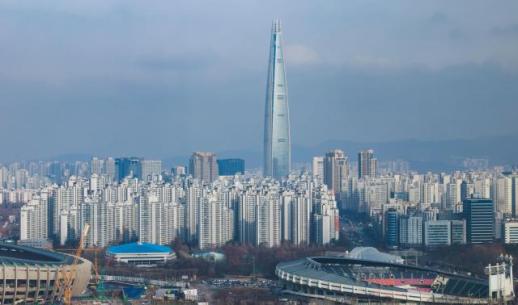 South Korea Weighs Capital Gains Tax Break Shift to Favor Owner-Occupiers The government has repeatedly signaled a tax overhaul that would shift the long-term holding special deduction on capital gains tax from rewarding simple ownership to prioritizing owner-occupancy. The move increasingly targets single-home owners who do not live in the property, aiming to curb speculative demand and encourage more homes to come onto the market. Critics, however, say it will be difficult to design rules precise enough to ensure the policy works as intended. According to government officials on Wednesday, the government and the ruling party are reviewing options including scrapping the current deduction based on holding period (up to 40%) and recognizing only a deduction tied to the period of residence. The review reflects criticism that the benefit is concentrated among owners of high-priced homes. Kim Yong-beom, policy chief at the presidential office, recently reiterated the need for changes, saying it is worth reconsidering whether applying the same 40% to both holding and residence fits a housing market centered on actual residents. Separately, Choi Hyuk-jin, an independent lawmaker, last month introduced an amendment to the Income Tax Act aimed at restructuring the deduction around owner-occupiers, accelerating efforts to legislate the change. Under the current law, a one-household, one-home owner with a sale price exceeding 1.2 billion won can receive a 40% deduction for holding the home for at least 10 years and another 40% for living in it for at least 10 years, for a maximum 80% capital gains tax deduction. If the overhaul is implemented, the tax burden for single-home owners who do not live in the property is expected to rise sharply. In a simulation by Woo Byung-tak, a specialist adviser at Shinhan Bank’s Premier Pathfinder, a homeowner who held a home for 10 years and lived in it for two years would see capital gains tax on a 3 billion won profit rise about 70%, to 799.40 million won from 466.76 million won. A key challenge is enforcement. The enforcement decree and rules for the Income Tax Act list “unavoidable reasons” such as job transfers and schooling for meeting capital gains tax exemption requirements for one-household, one-home sales. Practitioners say real-life living arrangements are far more complex, making it hard to set detailed standards that distinguish speculative buyers from a broad range of “separated households” who live apart for work or education reasons. Limits on administrative capacity are also cited. While the National Tax Service uses indicators such as utility usage and credit card spending, critics say it cannot fully screen out evasive cases such as partial household occupancy or partial leasing. As rules become more complex, concerns are growing that administrative costs will rise while loopholes multiply. In an analysis based on 2020 Population and Housing Census data, Lee Chang-moo, a professor at Hanyang University, found that in Seoul, 6.4% of all households fell into the category of separated households. Experts also warn that overly strict rules could restrict housing moves by end-users and accelerate a shift in the rental market toward monthly rent. If exceptions are narrowly defined, nonresident single-home owners may move into their homes to qualify for the deduction, potentially pushing existing tenants into the monthly rental market. Lee, a professor of urban engineering at Hanyang University, said it is difficult to draw a uniform line on residency and that long-term holding itself is not generally treated as speculative behavior in major countries such as Germany. He warned that tougher taxation on nonresident single-home owners could increase social costs and induce unnecessary moves, ultimately reducing the share of rental housing in city centers. * This article has been translated by AI. 2026-05-07 14:33:44
 -
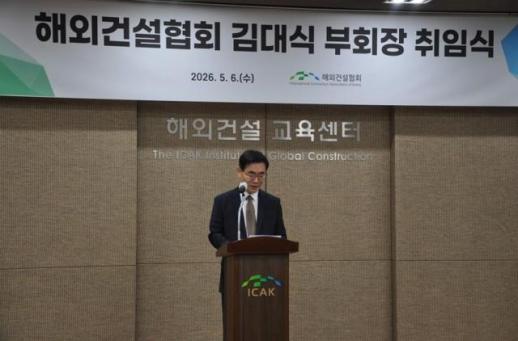 International Contractors Association Names Kim Dae-sik Executive Vice Chairman The International Contractors Association of Korea said Tuesday it appointed Kim Dae-sik, who has served as South Korea’s ambassador to Oman, as its new full-time executive vice chairman and held an inauguration ceremony. In his inaugural remarks, Kim said he would use his diplomatic experience and network to become a “field-oriented vice chairman” who supports Korean companies in expanding overseas orders. He also said he would focus all efforts on widening the construction industry’s reach in overseas markets. Kim entered public service in 1983 after passing the 17th foreign service exam. He has served as ambassador to Oman and ambassador to Kazakhstan, and as head of the Jeonbuk International Cooperation Promotion Agency. The association said he is regarded as an expert in external cooperation and international relations. Kim’s term is set for two years and will expire on April 30, 2029. The association is a specialized institution established under the Overseas Construction Promotion Act to support overseas construction. It assists the construction and engineering industries with overseas expansion, information collection and analysis, policy proposals, order support through consultations and consulting, and training of specialized personnel. An association official said Kim’s broad diplomatic expertise, built through ambassadorial posts in multiple countries, is expected to help external cooperation related to overseas construction and improve international relations. * This article has been translated by AI. 2026-05-06 15:08:55
 -
 U.S. Defense Secretary urges South Korea to step up in Hormuz 'Liberation Project' U.S. Defense Secretary Pete Hegseth on Monday urged South Korea to do more to help ease tensions in the Strait of Hormuz, including by joining the U.S. military’s “Liberation Project.” According to Yonhap News Agency, Hegseth made the remarks at a Pentagon news conference when asked whether South Korea showed signs of accepting President Donald Trump’s social media request to take part in the project. “I hope so,” he said, adding that he wants South Korea to “step up.” Hegseth said he also wants Japan, Australia and Europe to do more. “We’re not just waiting for them to do it,” he said, stressing that the United States aims to create conditions that allow responsibilities to be handed over. He added that Trump has made clear: “This is your ship. You have to play a role in defense.” “We very much want them to do that,” Hegseth said. Asked whether South Korea and the U.S. military were in contact regarding a South Korean vessel reported to have been struck by Iran, Hegseth said U.S. Central Command was communicating with the ship. He said such targeted attacks reflect what he described as Iran’s indiscriminate behavior. Hegseth said a ceasefire with Iran remains in place, warning that if Iran attacks U.S. forces or commercial ships, it would face “overwhelming and devastating” U.S. firepower. The United States launched the Liberation Project on the 4th, Middle East time, to help guide commercial ships trapped in the Strait of Hormuz out of the area. * This article has been translated by AI. 2026-05-05 22:03:18
 -
 South Korea Weighs U.S. Call for Hormuz Mission as Trump Signals More Tariffs Blue House: Reviewing U.S. Hormuz proposal, weighing legal steps and readiness The government said May 5 it is reviewing President Donald Trump’s call for South Korea to join a military operation following an explosion and fire involving a South Korean vessel in the Strait of Hormuz. It said it is considering South Korea’s readiness posture for the Korean Peninsula and domestic legal procedures. The government also stressed it will quickly and accurately determine the cause of the incident and share the findings transparently with the public. The Blue House said it views the safety of international sea lanes and freedom of navigation as a shared interest of all countries and a principle protected under international law. It added that South Korea is actively participating in international efforts to stabilize, restore and normalize global maritime logistics. “In this context, we are also paying attention to President Trump’s remarks,” it said. Trump says tariffs are “not high enough,” signals push for additional duties President Donald Trump said current tariff levels are not high enough, openly signaling his intent to introduce additional duties. With large-scale tariff refunds set to begin next week following a U.S. Supreme Court ruling invalidating reciprocal tariffs, the Trump administration is expected to focus on crafting “alternative tariffs” starting with a Section 301 trade-law hearing this week. According to CBS and other foreign media, Trump made the remarks during a White House Small Business Summit held as part of U.S. Small Business Week on May 4 local time. “You actually said thank you for the tariffs, but I think those tariffs are actually not high enough,” Trump said. He added that the administration is reviewing alternative tariffs and said, “Refunding tariffs is really terrible.” Iran foreign minister heads to China amid Hormuz tensions, plans talks with Wang Yi As the United States and Iran entered a military standoff over the Strait of Hormuz, Iranian Foreign Minister Abbas Araghchi traveled to China on May 5 local time. Yonhap News Agency reported that Iran’s Foreign Ministry said on its Telegram channel that Araghchi would visit Beijing. The ministry said Araghchi plans to meet China’s foreign minister to discuss ways to develop bilateral relations and to exchange views on rapidly changing regional and international developments. South Koreans’ virtual-asset holdings halve in a year; stablecoin holdings more than double South Korean investors’ virtual-asset holdings and trading value fell by more than 60 trillion won over about a year, while stablecoin holdings more than doubled, data showed. Virtual assets appeared to lose demand as interest spread to a strong stock market, while stablecoins rose amid a preference for dollar-based assets tied to a weak won, the report said. According to 자료 submitted May 5 by the Bank of Korea to Rep. Cha Gyu-geun of the Rebuilding Korea Party, a member of the National Assembly’s Finance and Economy Planning Committee, domestic virtual-asset holdings totaled 60.6 trillion won as of the end of February. The figure is the combined end-of-month market value of assets held by investors at South Korea’s five major virtual-asset exchanges: Upbit, Bithumb, Korbit, Coinone and Gopax. Cease-fire between U.S. and Iran shows strain after a month; Trump urges South Korea to join maritime operation Signs of strain emerged in a cease-fire that has held for nearly a month as the United States and Iran failed to narrow differences despite behind-the-scenes talks on ending the conflict, the report said. Amid reports that a South Korean vessel in the Strait of Hormuz was hit in an Iranian attack, Trump publicly urged South Korea to join an operation in the waterway. According to Britain’s The Guardian and other outlets, Trump said in a May 4 local time interview with Fox News, referring to an operation dubbed “Project Freedom” to help merchant ships escape being trapped in the Strait of Hormuz: “If they try to target American ships, Iran’s military will disappear from the face of the Earth,” he warned.* This article has been translated by AI. 2026-05-05 21:48:17
 -
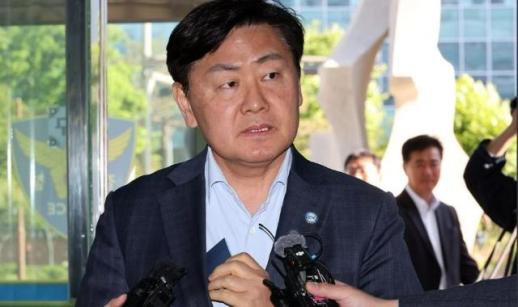 Jeonbuk Gov. Kim Kwan-young to Run as Independent, Plans Preliminary Filing Jeonbuk Special Self-Governing Province Gov. Kim Kwan-young, who was expelled from the Democratic Party over allegations of handing out cash labeled as chauffeur fees, has decided to run as an independent. According to Yonhap News Agency, Kim’s aides told reporters on May 5 that he will hold a news conference at 10 a.m. on May 7 at the Jeonbuk Provincial Council to announce his independent bid. The event was initially planned for a lawn in front of the provincial government building but was moved after internal discussions, they said. Kim is expected to explain his decision and release campaign pledges at the news conference. At a briefing with reporters at the provincial government building on May 4, Kim said, “There is clearly anger among residents over Representative Jung Cheong-rae’s high-handedness and disregard for the people of the province, and there is a demand in this voting process to choose the governor with our own hands,” signaling he was leaning toward an independent run. He plans to visit the Jeonbuk election commission on May 6 to register as a preliminary candidate. As the incumbent governor, Kim would have his duties suspended under the Local Autonomy Act upon registering as a preliminary candidate, but he would not lose his post. Kim was expelled from the Democratic Party on April 1 after controversy over a dinner last November attended by about 20 people, including members of the party’s Jeonbuk youth committee, where he allegedly distributed 20,000 to 100,000 won per person as chauffeur fees. After investigating, the Jeonbuk election commission filed a complaint against Kim for alleged violations of the Public Official Election Act. Police have also questioned him as the investigation accelerates. * This article has been translated by AI. 2026-05-05 21:30:16
 -
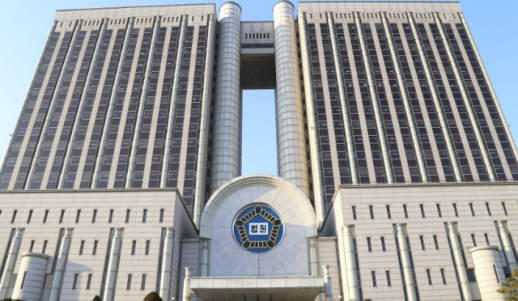 Court Upholds Order to Disclose Yeongpoong-MBK Deal Papers in Korea Zinc Fight MBK Partners and Yeongpoong remain locked in a legal dispute over whether contract documents tied to their bid to take control of Korea Zinc must be disclosed. According to Yonhap News Agency on May 5, the Seoul High Court’s Civil Division 25-2 rejected an immediate appeal filed by Jang Hyeong-jin, an adviser at Yeongpoong, challenging a court order to submit documents related to a management cooperation agreement. Korea Zinc, through its affiliate KZ Precision, had asked the court to order disclosure of contracts, including a call option agreement, that Yeongpoong and MBK Partners signed while pursuing what Korea Zinc describes as a hostile merger-and-acquisition attempt. After a lower court granted the request in December, the appeals court also concluded that all contract documents between MBK Partners and Yeongpoong must be disclosed. KZ Precision said the court recognized the request as a legitimate exercise of shareholder oversight and noted that Yeongpoong’s potential damages could vary depending on parts of the contracts that have not yet been publicly disclosed. MBK Partners said it signed a shareholder agreement in September 2024 with Yeongpoong and members of Jang’s family to jointly exercise voting rights, and that it would be granted call options on some shares owned by Yeongpoong and related parties. Korea Zinc has alleged that Yeongpoong entered into the call option deal to allow MBK to buy Yeongpoong’s Korea Zinc shares at a low price, raising suspicions including breach of trust. Korea Zinc has filed a shareholder derivative lawsuit seeking about 930 billion won against Jang and Yeongpoong directors. Separately, Yeongpoong said an immediate appeal filed by KZ Precision in another case over a document submission order for a management cooperation agreement was also rejected on April 29, following a lower-court decision. In that case, KZ Precision filed a lawsuit seeking to stop what it calls illegal conduct, arguing the management cooperation agreement amounts to breaches of Yeongpoong directors’ duties of care and loyalty and constitutes breach-of-trust conduct. It also sought a court order requiring submission of related contract documents during the proceedings.* This article has been translated by AI. 2026-05-05 21:03:15