
Journalist

Kang Il-yong
zero@ajunews.com
-
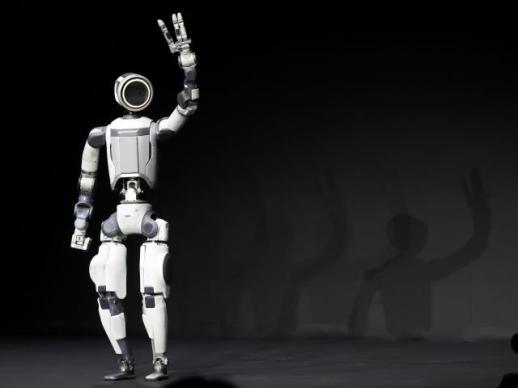 Korea Leverages Manufacturing Strengths in Physical AI Development As the United States and China advance in physical artificial intelligence (AI), experts agree that South Korea must actively leverage its existing industrial assets to develop physical AI technologies and utilize competitive manufacturing test beds to lead in validation and commercialization. According to industry sources on May 17, both the U.S. and China are focusing on the potential of physical AI to counteract declining manufacturing competitiveness due to high labor costs and low birth rates, consolidating national resources for technology development and commercialization. Reports from Japan's Nikkei Business and the U.S. Nexis Lexis estimate that South Korea ranks third in physical AI competitiveness, significantly behind the U.S. and China. While it possesses independent humanoid robot technology that is commercially viable and maintains strong competitiveness in industrial robotics, it lacks the extensive physical AI platforms of the U.S. and China and faces fierce competition from Japan, which has overwhelming industrial robot capabilities. The U.S. leads the market with major tech companies like NVIDIA, Tesla, Figure AI, and Amazon, while firms like Google and Microsoft, which previously focused on language model-based AI, have accelerated their research and development in physical AI and robotics since last year. In China, companies such as Baidu, Huawei, and Tencent ranked first to third in global physical AI patent applications last year, while startups like Unitree, Agibot, and Ubitech are commercializing various forms of robots, including humanoids, supporting the industrial ecosystem. In South Korea, companies like Boston Dynamics (Hyundai Motor), Rainbow Robotics (Samsung Electronics), LG Electronics (LG AI Research), HD Hyundai Robotics, Hanwha Robotics, and Doosan Robotics are investing heavily in physical AI development to enhance global competitiveness. The Software Policy Research Institute (SPRi) classifies physical AI into four categories: humanoids, autonomous vehicles, drones, and AGVs & AMRs (collaborative and mobile robots). Among these, humanoids have the advantage of being able to work alongside humans or replace them directly in labor settings, unlike other physical AI that requires dedicated robotic spaces. Morgan Stanley predicts that humanoids based on physical AI will expand beyond manufacturing and logistics into services and homes, forecasting that the related market will grow at an annual rate of 63%, reaching $38 billion (approximately 57 trillion won) by 2035. SPRi and the Korea Intelligent Information Society Agency view South Korea as having the potential to stand shoulder to shoulder with leading countries like the U.S. and China in the physical AI industry. The country boasts world-class manufacturing facilities in sectors like semiconductors, automotive, and shipbuilding, enabling the real-time collection and refinement of vast and precise data for robotic learning. Hyundai and Kia are accelerating the commercialization of unmanned factories utilizing Boston Dynamics' humanoid Atlas, a level of advancement achieved only by Hyundai and Tesla. Unlike generative AI, which requires high intelligence for white-collar job replacement, physical AI relies on cognitive AI technologies to accurately assess and respond to on-site conditions. Advanced sensor technology is crucial for this purpose. The LG Group is consolidating its capabilities in sensor technology for physical AI through collaboration among LG Electronics, LG Innotek, and LG CNS. The focus is on equipping robots with cameras and LiDAR sensors to analyze data, enabling AI to make optimal decisions. To achieve precise movements similar to humans, humanoids require a large number of servo motors. Servo motors are ultra-precise motors capable of controlling position, speed, and acceleration according to AI commands. While this field is primarily led by Japanese materials, components, and equipment manufacturers, many South Korean companies, led by LS Electronics, are also accelerating their efforts to secure competitiveness in this area.* This article has been translated by AI. 2026-05-17 18:16:55
 -
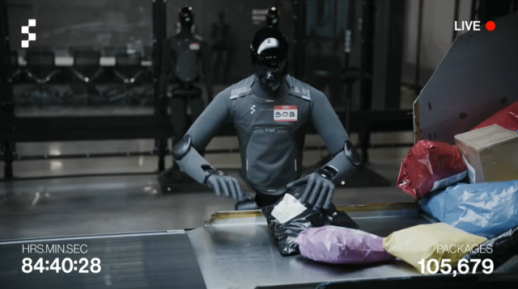 K-Physical AI: Concerns Grow Over South Korea's Position in US-China Tech Race Global attention is focused on an experiment by a prominent physical artificial intelligence (AI) startup, which aims to demonstrate that humanoid robots can replace human labor in manufacturing and logistics. As competition in physical AI technology intensifies among major countries, experts warn that South Korea has limited time to secure a leading position. According to industry sources, FigureAI, recognized as one of the top three humanoid robot companies alongside Tesla and Boston Dynamics (a Hyundai Motor Group subsidiary), has been conducting an experiment since May 13, 2026, to perform logistics sorting tasks solely with robots, without human intervention. The humanoids at FigureAI have worked continuously for 24 hours, sorting over 100,000 packages in 82 hours. Three robots, named Gary, Bob, and Rose, operated in shifts, working for 8 to 20 hours before undergoing charging and maintenance before returning to work. The duration of the experiment remains uncertain. Brett Adcock, CEO of FigureAI, stated on social media platform X, "We plan to run them until they break down. Watch the robots work autonomously 24/7." Adcock also mentioned plans for a future project comparing efficiency between humans and robots in the same tasks. However, some shortcomings have been noted. The robots achieved only half the efficiency of skilled human workers and occasionally dropped items during sorting. Nevertheless, experts have expressed astonishment at the level of physical AI technology in the U.S., noting that the robots performed naturally in a real working environment, not just in a lab setting. They do not take breaks for meals or smoking, and notably, they do not strike. The implications of this experiment are expected to be significant, comparable to the historic Go match between Lee Sedol and AlphaGo. It confirms the potential for physical AI and humanoid robot technology to replace blue-collar jobs. As the U.S. and China lead the physical AI competition, the need for the South Korean government and businesses to unite in enhancing technological competitiveness and accelerating commercialization has become increasingly urgent.* This article has been translated by AI. 2026-05-17 18:12:31
 -
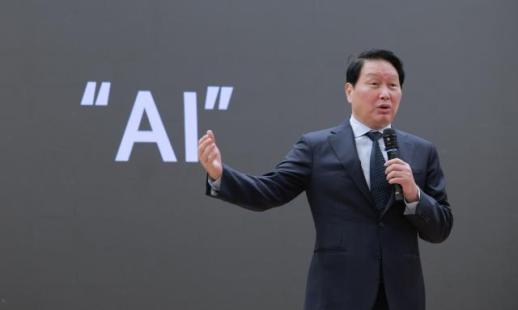 SK Group's Three-Year Rebalancing Efforts Yield Significant Financial Gains SK Group's rebalancing efforts, initiated in 2024, have entered their third year, showing significant results this year with increased operating profits and reduced debt ratios. While the group's overall size has slightly decreased due to the divestment of less profitable businesses, it aims to accelerate its growth into a leading global conglomerate, comparable to big tech firms, by leveraging synergies in semiconductors, artificial intelligence (AI), energy, and telecommunications. On May 17, SK Holdings, the group's holding company, reported a consolidated revenue of 36.75 trillion won and an operating profit of 3.67 trillion won for the first quarter of this year, marking increases of 19% and 760%, respectively, compared to the previous year. The group's borrowing decreased from 63.23 trillion won to 49.55 trillion won, a reduction of about 21%, leading to a drop in the debt ratio from 172.8% to 135.7%. Following concerns raised by Chairman Choi Tae-won about a potential 'sudden death' scenario for the company during a CEO seminar in late 2023, Choi Chang-won, who took office around the same time, has aggressively pursued business restructuring. Choi emphasized that while the focus has been on restructuring and asset efficiency, it is now time to enhance core competitiveness through operational improvements and AI-driven business innovation. Operational improvements aim to optimize key performance indicators (KPIs) such as profit margins and customer satisfaction, maximizing the financial strength and core competitiveness of existing businesses to navigate uncertainties in the market. This strategy has been developed collaboratively by the core management team of SK Group, led by Choi Tae-won and Choi Chang-won. According to a report by Korea Credit Rating, SK Group has achieved approximately 13 trillion won in asset efficiency through restructuring over the past two years. The number of affiliates has decreased from 219 in 2024 to 151 as of May 2026. SK Holdings sold an 85% stake in SK Specialty to Hahn & Company for 2.63 trillion won and disposed of a 14% stake in SK Biopharmaceuticals for 1.25 trillion won. SK Innovation raised over 1 trillion won by selling the Boryeong LNG Terminal and the site of the Cowon Energy Service headquarters, actions taken to secure short-term liquidity amid growing global business uncertainties. The company is also consolidating overlapping businesses. To enhance synergies in its energy sector, SK Innovation is pursuing a merger with SK E&S, which operates in the LNG sector, integrating its refining, petrochemical, and battery businesses. This move aims to improve cost structures for SK On and secure financial strength for future growth. Efforts to strengthen the competitiveness of the semiconductor back-end business, which supports SK Hynix, are also underway. SK Eco Plant has incorporated four semiconductor material companies—Essencore, SK Airplus, SK Trichem, and SK Materials JNC—into its subsidiaries. In the telecommunications sector, SK Telecom, a leader in the industry, is accelerating its AI data center business in collaboration with its affiliate SK Broadband. For instance, the Ulsan AI data center, being built in partnership with tech giant Amazon, is attracting interest from global private equity firms such as KKR and IMM Investment-Stonebridge Capital, which are considering multi-billion won investments.* This article has been translated by AI. 2026-05-17 11:04:28
 -
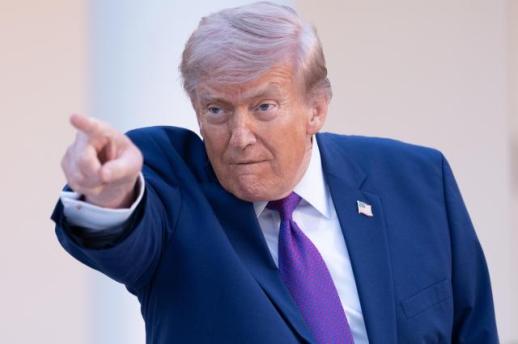 First U.S.-China Summit After Middle East War Raises Hopes for Trade Expansion President Donald Trump and Chinese President Xi Jinping are set to hold their first summit in about six months since their meeting in Busan last October, amid growing expectations that South Korean companies could gain some benefits from expanded trade between the two nations. According to industry sources on May 13, Trump indicated that a key agenda item for the U.S.-China summit on May 14 would be to expand trade between the two countries. He stated via Truth Social that he would ask President Xi to open up China. Trump's delegation for the trip to China includes high-profile CEOs from American companies with significant investments in China, such as Elon Musk of Tesla and SpaceX, Jensen Huang of Nvidia, Tim Cook of Apple, Kelly Ortberg of Boeing, and Larry Fink of BlackRock. Given his social media comments and the composition of his delegation, it is likely that Trump will directly or indirectly request that Xi open the tightly controlled Chinese market to U.S. companies following the imposition of mutual tariffs. For instance, after the U.S. banned exports of Nvidia graphics processing units (GPUs) to China, China responded by offering indirect subsidies that cut electricity costs in half for users of domestically produced AI chips, resulting in a significant drop in Nvidia's market share in China while companies like Huawei saw a surge in their AI chip market share. Experts believe that to partially lift the 'bamboo curtain,' the U.S. will have to offer some concessions, such as easing export restrictions on semiconductor equipment to China. The U.S. has consistently blocked the export of advanced semiconductor manufacturing equipment to China since the Biden and Trump administrations, particularly equipment essential for producing advanced semiconductors below 7 nanometers, such as extreme ultraviolet (EUV) lithography machines. However, the tightening of export regulations has significantly impacted South Korean companies like Samsung Electronics and SK Hynix, which operate semiconductor fabs in China. Restrictions on importing advanced semiconductor manufacturing equipment to Samsung's Xi'an fab and SK Hynix's Wuxi and Dalian fabs have hindered the miniaturization of NAND flash processes and increased business uncertainty. As China is likely to demand the easing of semiconductor equipment import restrictions for companies like CXMT (ChangXin Memory Technologies) and YMTC (Yangtze Memory Technologies) in exchange for allowing imports of U.S. GPUs, there is potential for Samsung and SK Hynix to accelerate the advancement of their Chinese fabs. If negotiations between the two sides are successful, there is a strong possibility that exports of rare earths and battery cathode and anode materials, which companies like Boeing and Tesla are seeking, will increase. Following the export restrictions on semiconductor equipment, China designated rare earths—key materials for advanced industries like semiconductors, automotive, and defense—as subject to an export licensing system, leading to supply chain disruptions as China controls approximately 60-70% of global rare earth production and over 80% of refining and processing. Easing restrictions on rare earth exports could facilitate the procurement of critical minerals needed for domestic semiconductor equipment and defense materials, enhancing the competitiveness of related industries in conjunction with ongoing supply chain diversification efforts. While battery cathode materials have seen some diversification away from reliance on Chinese sources, anode materials are still heavily dependent on China. The U.S. International Trade Commission (ITC) recently determined that Chinese anode materials are of superior quality compared to U.S. products, suggesting that a high tariff of about 160% may not be necessary. If regulations on Chinese anode materials are relaxed, domestic companies like LG Energy Solution, which manufacture batteries in the U.S., could expedite their raw material procurement, boosting their electric vehicle (EV) and energy storage system (ESS) businesses. Professor Kim Tae-hwang of Myongji University’s Department of International Trade stated, "Amid growing global uncertainties due to the Iran war, we hope that the U.S. and Chinese leaders will alleviate volatility and uncertainty in economic and trade areas through this summit. However, similar to last October's meeting, we should not expect significant improvements in bilateral relations from this encounter; rather, it should be viewed as a turning point for reducing uncertainties." 2026-05-13 19:30:00
 -
 HMM Cargo Ship Hit by Drone in Hormuz Strait, Impacting Transformer Exports The South Korean government confirmed that the HMM Namoo, a heavy-lift vessel, was struck by what is believed to be a suicide drone on May 4, resulting in a fire onboard. This incident has raised alarms for domestic companies involved in transformer exports to the Middle East and their subsequent engineering, procurement, and construction (EPC) contracts. As HMM's operations face disruption, there are concerns that Chinese shipping companies like COSCO may benefit from this situation. According to the shipping industry on May 11, HMM Namoo has completed an initial site investigation and will now focus on repairs in the Middle East. The impact area from the unidentified flying object resulted in a breach approximately 5 meters wide and 7 meters deep, with the hull bending inward. A significant fire also occurred inside the vessel, completely destroying the engine room. HMM stated, "We plan to establish a repair schedule in consultation with local shipyards." The main concern now is the cost and duration of repairs. It is currently unclear how extensive the repairs will need to be. Experts predict that since repairs will take place at a shipyard in Dubai rather than at the Chinese CSSC shipyard where the vessel was built, significant additional costs and time will be required. Having launched last September, the latest heavy-lift vessel's departure will inevitably disrupt HMM's future business plans. As HMM has played a crucial role in exporting domestic transformers and plant materials to the Middle East, local transformer and EPC companies are closely monitoring the situation. HMM entered the heavy-lift shipping business in 2007 and, last year, added four vessels, including the Namoo, to its fleet, demonstrating a strong commitment to this sector. This decision was made in response to the rapid growth of domestic transformer and EPC businesses, particularly in the Middle East and U.S. markets. While the market situation remains somewhat fluid, HMM has deployed seven of its eleven heavy-lift vessels on routes to the Americas and four to the Middle East, effectively serving as a bridge for domestic and international companies. In fact, both the Namoo and the Narae are currently stranded in the Hormuz Strait after delivering cargo, while the Naru and Masan are waiting outside the strait to deliver their loads. The transformer and EPC sectors predict that the impact on Middle Eastern exports will be limited due to long-term contracts in place. A representative from a transformer company noted, "Contracts for transformer supplies in the Middle East are long-term, so they are not significantly affected by the closure of the Hormuz Strait or the shortage of heavy-lift vessels. However, we may need to consider securing alternative transport networks." An EPC company representative added, "There have been no reported disruptions to ongoing plant construction projects in the region due to the conflict in the Middle East. We plan to focus all efforts on responding to the reconstruction opportunities that may arise following U.S.-Iran ceasefire negotiations." However, HMM is expected to expedite efforts to secure additional heavy-lift vessels through early returns of the Namoo and long-term charter contracts, as there are concerns about losing major clients. Historically, the heavy-lift shipping market was dominated by European companies from Germany and the Netherlands, but the rapid growth of Chinese transformer and EPC firms has strengthened the influence of COSCO, a state-owned shipping company in China. COSCO operates a fleet of over 20 heavy-lift vessels, focusing on serving as a spearhead for Chinese enterprises. A shipping industry insider remarked, "The Middle East, along with routes to the Americas, is a key route for domestic heavy-lift vessels, and container shipping has only recently recovered after the bankruptcy of Hanjin Shipping. Even if the closure of the Hormuz Strait is lifted, the government needs to work closely with countries related to the strait to ensure the safe operation of domestic container and cargo vessels in the region."* This article has been translated by AI. 2026-05-12 04:05:11
 -
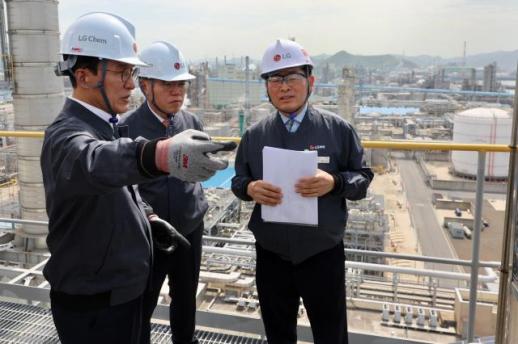 UAE Naphtha Shipment Arrives at Yeosu Port, Boosting Petrochemical Production "Ships carrying naphtha from around the world are arriving one after another. It's a sight we haven't seen in nearly a decade," said a worker at the Yeosu-Gwangyang port. On May 11, the petrochemical and shipping industries reported that major domestic petrochemical companies, which had reduced their operating rates to around 50% in March and April due to a shortage of Middle Eastern naphtha, are now ramping up production after securing alternative supplies from the U.S., Algeria, and Oman. On the afternoon of May 11, the Navigait McAllister, which escaped the Strait of Hormuz with 60,000 tons of naphtha from the United Arab Emirates after the blockade was briefly lifted on April 18, arrived at Yeosu-Gwangyang port. About 40,000 tons are expected to be supplied to Yeocheon NCC, a joint venture between Hanwha Solutions and DL Chemical, while approximately 20,000 tons will go to GS Caltex. GS Caltex operates a mixed feedstock cracking facility (MFC) that refines basic petrochemical components from crude oil instead of naphtha, but experts say a certain amount of light naphtha is still needed to enhance the efficiency of the basic component cracking process. Last weekend, 70,000 tons of naphtha from Algeria were delivered to Yeocheon NCC, and 57,000 tons of naphtha from Oman are currently being unloaded, with LG Chem, Lotte Chemical, and Yeocheon NCC sharing the supply. Additionally, about 160,000 tons of naphtha from the U.S. have reportedly already arrived at Yeosu-Gwangyang port. Notably, the naphtha from Oman is particularly significant as it was secured during a visit by Chief of Staff Kang Hoon-sik to Kazakhstan, Oman, Saudi Arabia, and Qatar in April as a special economic envoy. Industry insiders estimate that the naphtha arriving at Yeosu-Gwangyang port since last weekend could supply enough material for approximately 10 billion plastic bags, which is expected to alleviate the ongoing packaging crisis. The government's support measures have enabled petrochemical and refining companies to accelerate their efforts to secure alternative naphtha supplies. In March, the government announced plans to subsidize 50% of the increase in naphtha import prices for domestic petrochemical companies with naphtha cracking facilities (NCC) through a supplementary budget. On May 7, the Financial Services Commission proposed a financial support plan to stabilize naphtha supply and demand, which includes raising the limit on naphtha import letters of credit (L/C) to $300 million, set to take effect on May 18. By securing naphtha and crude oil, companies in the three major petrochemical complexes in Yeosu, Daesan, and Ulsan are working diligently to raise NCC operating rates and ensure a steady supply of domestic petrochemical products, including packaging materials and clothing. Yeocheon NCC has increased its NCC operating rate from a low of 55% to 65%, while Lotte Chemical has raised its Daesan NCC operating rate from the 70% range to 83%. LG Chem plans to boost the operating rates of its Daesan and Yeosu NCC (Plant 1) to 75% by the end of Q2, and Daehan Oil has adjusted its Ulsan NCC operating rate from 62% to 72%. The naphtha-ethylene spread, a key profitability indicator for the petrochemical sector, has stabilized above the breakeven point of $250, reaching between $300 and $350. Major petrochemical companies are expected to see significant improvements in their Q2 performance compared to Q1. The outlook for Q3 and Q4 is also positive, as the conflict in the Middle East has impacted petrochemical facilities in Kuwait and Qatar, and shortages of ethylene-based packaging materials are likely to persist not only in South Korea but also in China and Japan. An industry official stated, "This conflict has underscored the importance of naphtha and ethylene as strategic national resources, and the oversupply of basic petrochemical components will be partially resolved. The government's restructuring of the petrochemical industry should be reconsidered in light of the changing supply chain situation." 2026-05-11 15:38:34
 -
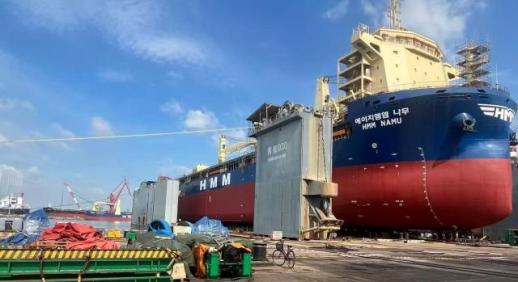 South Korea on alert after fire on HMM cargo ship near Strait of Hormuz raises attack fears A fire aboard a South Korean cargo ship in the Strait of Hormuz has prompted concerns it may have been hit in the Middle East conflict, leading the Lee Jae-myung government and the shipping industry to activate emergency response measures. The cause has not been determined, but officials and the operator said they would respond cautiously, mindful of diplomatic implications, as the possibility of an attack involving an Iranian mine or suicide drone has been raised. According to the government and HMM on Monday, an unexplained fire broke out about 8:40 p.m. Sunday (Korea time) on the HMM NAMU while it was anchored in waters near the United Arab Emirates. The blaze was extinguished about four hours later, around midnight Monday. The ship had six South Korean crew members and 18 foreign crew members aboard, and no casualties were reported. South Korea’s Ministry of Oceans and Fisheries and HMM said the vessel will be towed to the nearby port of Dubai for an investigation into the cause. HMM deployed a contracted tugboat for the operation. The presidential office, the Foreign Ministry and the oceans ministry have been cautious in discussing the cause, noting the fire occurred after the start of a U.S. “Liberation Project” operation to rescue ships trapped in the Strait of Hormuz. With armed clashes underway, officials said they must be careful in assigning responsibility given the potential impact on diplomatic relations. The government said it is communicating in real time with the shipping company and the vessel while weighing follow-up steps. The presidential office held a meeting chaired by presidential chief of staff Kang Hoon-sik to discuss a response. The Foreign Ministry urgently convened a meeting of its Overseas Nationals Protection Countermeasures Headquarters, chaired by Second Vice Foreign Minister Kim Jina, with seven diplomatic missions in the Middle East. The oceans ministry held emergency situation review meetings on May 4 and 5 chaired by Oceans Minister Hwang Jong-woo. HMM said it switched to an emergency posture immediately after the fire and is focusing on assessing the situation and preparing follow-up measures through its integrated ship operations center in Busan, which can monitor vessels in real time. Shipping experts said a routine engine-room fire appears less likely. Crew members reported hearing an unexplained “thump” at the time of the incident, followed by a fire on the port side of the engine room. They also noted the ship is a new vessel launched in September last year, making age-related equipment issues less likely. Some have cautiously raised the possibility the ship struck a mine laid by Iran or was hit by an Iranian suicide drone such as a Shahed. Mines have been used in the past to indiscriminately block the Strait of Hormuz rather than target a specific country’s ships, while a suicide drone attack would more likely imply Iran recognized the vessel as South Korean, they said. The government’s response could vary depending on what weapon, if any, caused the external impact. U.S. President Donald Trump, in a post on his social media platform Truth Social, accused Iran of being behind the incident, saying Iran had fired multiple times at ships from unrelated countries, including a South Korean cargo ship, during vessel movements linked to the “Liberation Project.” As of Monday, South Korean officials said 123 South Korean sailors and 37 South Korean sailors on foreign-flagged ships were believed to be inside the Strait of Hormuz. Domestic shipping companies, including HMM, have begun moving vessels toward what they described as a safer area near Qatar. The incident is expected to intensify demands by crew members who have remained in the strait for an extended period to disembark. A ministry official said, “We will safely bring back to Korea those who exercise their right to request disembarkation, giving them priority.”* This article has been translated by AI. 2026-05-05 18:07:22
 -
 Fire on HMM Namu Ship in Strait of Hormuz Extinguished; Vessel Heads to Dubai for Checks A fire aboard the HMM Namu, a cargo ship that had been stuck in the Strait of Hormuz under Iranian control, has been extinguished, HMM said. No injuries were reported, and the vessel is expected to enter the nearby port of Dubai to assess damage. HMM said May 5 that the fire was fully put out after midnight May 5, Korea time. Because a large amount of carbon dioxide (CO2) was used to fight the fire, the company said it plans to enter the engine room later in the afternoon to confirm the extent of damage and then report the findings to the South Korean government and its headquarters. The HMM Namu is a Panama-flagged 38,000-deadweight-ton bulk carrier operated by HMM. It was launched in September last year at the HPWS shipyard in Guangzhou, China. The fire broke out with an explosion in the port-side section of the engine room at about 8:40 p.m. the previous evening (Korea time) while the ship was anchored in waters near the United Arab Emirates, the company said. Six South Korean crew members and 18 foreign crew members were aboard, and HMM said it has confirmed there were no casualties. The ship is expected to be moved to Dubai port soon. The cause of the fire has not been determined. President Donald Trump, in a post on his social media platform Truth Social, said Iran had fired several times at ships from unrelated countries, including a South Korean cargo vessel, during vessel movements linked to a “liberation project,” and pointed to Iran as being behind the incident. 2026-05-05 07:03:18
 -
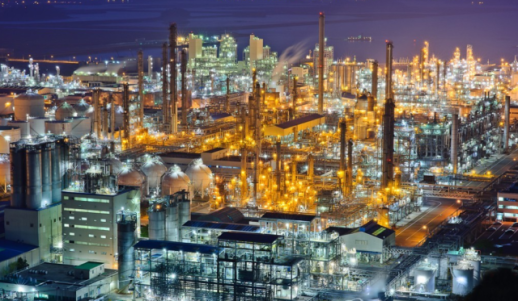 LG Chem narrows Q1 operating loss as petrochemicals rebound; targets 75% NCC run rate LG Chem said Thursday it posted first-quarter consolidated revenue of 12.2468 trillion won and an operating loss of 49.7 billion won. Revenue fell 6.2% from a year earlier, while the operating loss narrowed. By business, the petrochemicals division posted revenue of 4.4723 trillion won and operating profit of 164.8 billion won, which the company linked to the impact of the Middle East war. LG Chem said profitability improved from the previous quarter on a positive inventory lagging effect from higher naphtha prices and one-time income from refunds of European anti-dumping duties. The company said it returned to profit in February, before the outbreak of the war, citing aggressive cost cuts and portfolio improvements pursued since last year. For the second quarter, LG Chem expects lower sales volume and revenue due to a temporary shutdown of its Yeosu naphtha cracker center, or NCC, No. 2 plant. Still, it forecast profitability similar to the first quarter, citing continued naphtha lagging effects and ongoing cost reductions. On a government-led restructuring of commodity petrochemicals, LG Chem said on its first-quarter earnings call that its goal of securing final approval for business reorganization within the year remains unchanged. It said it is continuing detailed talks with partners GS Caltex and Hanwha TotalEnergies on integrating NCC operations at the Yeosu and Daesan industrial complexes. LG Chem said domestic NCC restructuring alone would be unlikely to resolve global oversupply in the short term, but said its partnership model would strengthen its refinery-based feedstock competitiveness while allowing partners to internalize LG Chem's petrochemical capabilities in a short period. To respond to ethylene shortages at home and abroad tied to the Middle East war, LG Chem said it kept average NCC utilization around 60% in March. It said it aims to lift the rate to at least 75% in the second quarter by securing additional feedstocks such as naphtha, though the Yeosu NCC No. 2 shutdown is expected to continue into the quarter. The advanced materials division posted revenue of 843.1 billion won and an operating loss of 43.3 billion won. LG Chem said revenue rose on higher cathode-material volumes for batteries and the launch of new semiconductor materials, and the loss narrowed. It said electronics and engineering materials are expected to remain solid in the second quarter on higher-value products, and it expects the division to return to profit as cathode-material volumes increase. LG Chem said it has completed development of a high-density LFP (lithium iron phosphate) cathode material and is in talks with customers, targeting mass production from late 2027 to early 2028. For sodium-battery cathode materials, it said pilot verification is under way, with mass production targeted for the first half of 2028 for high-output products and 2029 to 2030 for energy storage system use. The life sciences division posted revenue of 312.6 billion won and operating profit of 33.7 billion won. Revenue fell from the previous quarter due to differences in export shipment timing, but profitability improved as research and development and marketing costs declined. LG Chem expects second-quarter revenue growth on higher volumes of key products, while R&D investment is expected to continue for global clinical trials and other work. Subsidiary FarmHannong posted revenue of 266.2 billion won and operating profit of 34.8 billion won. LG Chem said results improved on higher domestic sales of crop protection products and increased demand for fertilizer pre-purchases tied to the Middle East war. For the second quarter, it expects higher crop protection sales but forecasts weaker revenue and profitability due to reduced exports from higher fertilizer raw-material costs and higher R&D spending. LG Chem CFO Cha Dong-seok said that despite uncertainty from unstable raw-material supply, profitability improved from the previous quarter on positive inventory lagging effects from higher petrochemical feedstock prices and recognition of one-time income, narrowing the companywide operating loss. He said external uncertainty, including Middle East geopolitical risks and weak demand in the North American electric vehicle market, is likely to persist, but the company will accelerate a shift toward a higher-value, higher-profit portfolio to build a business structure more resilient to rapid economic cycles.* This article has been translated by AI. 2026-04-30 17:37:01
 -
 POSCO Holdings posts Q1 operating profit of 707 billion won; POSCO Future M turns profitable POSCO Holdings said in a regulatory filing on Wednesday that it posted first-quarter consolidated revenue of 17.876 trillion won, operating profit of 707 billion won and net profit of 543 billion won. The company said revenue and profit rose from a year earlier despite heightened uncertainty in energy supply chains and financial markets stemming from the war between the United States and Iran. It said losses in its lithium business narrowed sharply as POSCO Argentina began full-scale commercial production. In steel, POSCO said profit fell even as sales volume increased, citing higher raw material costs driven by a weaker currency. It said overall steel-segment profit increased on stronger sales at overseas steel units and cost cuts. In battery materials, POSCO Future M returned to profit on expanded sales of cathode materials in new markets and higher sales of value-added products. POSCO Argentina and POSCO Pilbara Lithium Solution also reduced losses on higher output and rising lithium prices, the company said. POSCO Argentina recorded its first monthly profit in March as output and selling prices continued to rise, and the company said it expects its first quarterly profit in the second quarter. POSCO HY Clean Metal posted its first quarterly operating profit on sustained high utilization and cost reductions, it said. In infrastructure, POSCO International maintained solid profit on broadly strong sales across its businesses including gas and energy, the company said. POSCO E&C returned to profit as one-off costs were resolved. POSCO Holdings also announced a midterm shareholder return policy for 2026 through 2028. It said it previously paid dividends based on free cash flow after investments, but will adopt a performance-linked policy based on adjusted controlling net income starting this year, reflecting plans for intensive investment in future growth areas such as steel and energy materials. The company set a shareholder return ratio of 35% to 40% and said it will adjust valuation gains and losses that are unrelated to operating performance or are one-time items to support dividend stability. It said it plans to balance investment for future growth with stable dividends and new share buybacks and cancellations. POSCO Holdings also outlined progress on its “complete localization” strategy for steel and investment tied to its decarbonization transition, which Chairman Chang In-hwa highlighted in a New Year’s address. The company said it signed a joint venture agreement on the 20th with India’s top steelmaker, JSW Steel, and plans to build an integrated production system in India with crude steel capacity of 6 million tons to secure a stable profit base in a growth market. In South Korea, it said a March approval by the Ministry of Land, Infrastructure and Transport to change plans for the Pohang National Industrial Complex made it possible to prepare a site for hydrogen-based steelmaking, known as HyREX. It also said it will start operating a new electric arc furnace in Gwangyang with annual capacity of 2.5 million tons in June, and will use profits generated in global markets to fund domestic decarbonization investments while strengthening mid- to long-term competitiveness.* This article has been translated by AI. 2026-04-30 15:15:21