
Journalist

[번역]시미즈 타케시
-
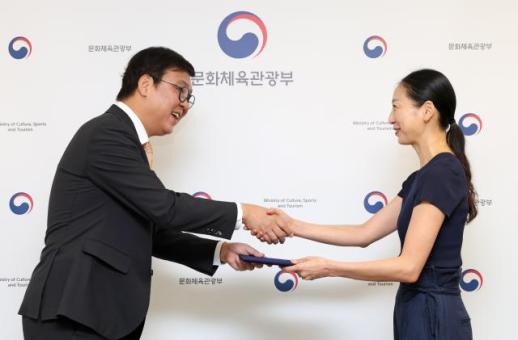 Choi Jin-yeob Appointed Head of the National Contemporary Dance Company Choi Jin-yeob has been appointed as the head and artistic director of the National Contemporary Dance Company. The Ministry of Culture, Sports and Tourism awarded him the appointment certificate on May 19. His term as head will last for three years. Choi graduated from the Korea National University of Arts and the London Contemporary Dance School. He currently serves as the representative and artistic director of Collective A. He has been actively involved in creative projects, including serving as the choreographer for the opening and closing ceremonies of the 2018 PyeongChang Winter Olympics. He has also directed the choreography for the National Dance Company's "Dreaming of the Garden of the Peach Blossoms," acted as the artistic director for the opening and closing ceremonies of the Seoul Urban Architecture Biennale, and served as the chief choreographer for the opening and closing ceremonies of the Incheon Asian Para Games. He has received several awards, including the Isadora Duncan Dance Award and the Young Artist Award. Choi has also contributed to nurturing future talent as an adjunct faculty member at the Korea National University of Arts. His artistic abilities and creative skills have been recognized through various accolades, including the Ministry of Culture's Young Artist Award. Minister Choi Hwi-young expressed confidence in Choi Jin-yeob's leadership, stating, "With his extensive experience as a dancer and choreographer, I expect him to lead the National Contemporary Dance Company stably and contribute to expanding the reach of contemporary dance and enhancing its international competitiveness."* This article has been translated by AI. 2026-05-19 11:21:22
 -
 KOSDAQ Faces Crisis as Major Companies Depart for KOSPI Once a thriving commercial district, a once-bustling area is now filled with vacant storefronts. Initially, businesses flourished, drawing crowds eager to enter shops that often had long lines. However, as time passed, the atmosphere shifted. Empty shops began to dominate the streets, and many restaurants now operate without a single customer all day. The owner of the last successful fish market ultimately decided, "If I stay in this area any longer, I will go bankrupt too." He planned to relocate to a neighboring district with significantly more foot traffic. In response, the local merchants' association urgently pleaded, "What will we do if you leave?" This scenario mirrors the current state of the KOSDAQ market. The fish market owner represents Alteogen, a leading KOSDAQ company with a market capitalization nearing 20 trillion won. As Alteogen announced its official transition to KOSPI, a sense of urgency swept through the KOSDAQ market. Both the KOSDAQ Association and the Venture Business Association publicly urged, "Please stay with KOSDAQ." This issue extends beyond a mere market listing; it reflects a deep-seated fear that the last prominent company may soon depart. This is not the first time such a situation has occurred. Companies like NHN, Kakao, and Celltrion have previously moved to KOSPI. More recently, major firms such as POSCO DX and LG Energy Solution have followed suit. Initially, these transitions were celebrated as "success stories" for KOSDAQ companies. However, as this trend has continued, a sense of cynicism has taken root in the market. Investors now commonly believe that "successful companies ultimately leave for KOSPI." This perception has led to KOSDAQ being viewed as a "second-tier league" or "KOSPI's minor league." From a corporate perspective, moving to KOSPI is a rational choice. KOSPI offers significantly greater access to institutional investors and global passive funds, along with the benefits of inclusion in the KOSPI 200 index. The trust and liquidity from foreign investors are also difficult to compare with KOSDAQ. Particularly in an era where global funds are increasingly focused on AI, semiconductors, and large-cap growth stocks, being part of KOSPI can heavily influence a company's valuation. Consequently, KOSDAQ is becoming a temporary stop rather than a long-term destination for growth companies. The result of this trend raises concerns. What remains in KOSDAQ after the departure of its leading companies? While the number of listed companies exceeds 1,800, the quality of the market is deteriorating. There is an oversupply of penny stocks priced below 1,000 won, alongside many illiquid stocks, long-term loss-making companies, and thematic firms. Critics argue that the market has transformed from an innovative hub into a stage for short-term speculation and thematic trading. The exit of leading stocks weakens ETF investments and institutional demand, shaking market confidence and trading volumes. As a result, volatility remains high. While KOSPI has more than tripled in value over the past year, KOSDAQ has struggled to break free from the 1,100 level. Despite the sluggishness of KOSDAQ, there was a golden era during the dot-com bubble of 1999-2000. At that time, KOSDAQ was home to prominent companies such as Daum Communications, Auction, Hancom, and Saerom Technology, which were seen as representatives of innovation in South Korea. Their stock prices soared above those of large corporations, making them top choices for investors. The peak of the KOSDAQ boom occurred on March 10, 2000, when the index reached 2,925.20. To revive KOSDAQ's golden age, the government has proposed various measures, including the delisting of penny stocks and the introduction of a league system. There is consensus on the need to address underperforming companies to restore market confidence. It is also true that an excessive number of zombie companies undermines overall market trust. However, the question remains whether these measures alone can restore KOSDAQ's competitiveness. The current crisis is not solely due to the presence of underperforming companies. The more fundamental issue lies in breaking the cycle where "successful companies ultimately leave for KOSPI." While KOSDAQ nurtures growth companies, the market's benefits are reaped by KOSPI, making KOSDAQ unsustainable. The departure of leading stocks weakens ETF investments and institutional demand, leading to declines in overall trading volumes and market trust. Ultimately, only highly volatile small and mid-cap thematic stocks remain. Attention must also be paid to changes in the global liquidity environment. Currently, global funds are concentrated on a few large growth stocks, such as those in AI and semiconductors. Foreign investments are flocking to large-cap KOSPI stocks, leaving many KOSDAQ stocks overlooked. If global liquidity begins to waver, the first to feel the impact are typically the volatile growth stock markets. While American companies like NVIDIA and Tesla grow, they remain on NASDAQ, enhancing the market's competitiveness. In contrast, Korea's leading growth companies are moving to KOSPI, diluting KOSDAQ's identity and competitiveness. The market that nurtures growth companies is unable to continuously enjoy the fruits of its labor. Reforming KOSDAQ is an urgent task that can no longer be postponed. However, simply addressing a few penny stocks is insufficient. Without creating an ecosystem where quality companies and long-term investment funds can thrive, KOSDAQ is likely to remain a mere "transit point" before heading to KOSPI, rather than a market for innovative companies. If this continues, the Korean stock market will perpetuate a distorted polarization between the "celebration of 8,000 points" and the "stagnation of 1,000 points." As the Lee Jae-myung administration approaches its one-year mark, KOSPI has surpassed 5,000 points and is now eyeing 8,000. However, KOSDAQ remains at 1,000. Therefore, the current government's goal of revitalizing the Korean capital market has only achieved a 50% success rate. It is now time for the government to strengthen its commitment and act swiftly to achieve the targets of 2,000 and 3,000 points for KOSDAQ.* This article has been translated by AI. 2026-05-19 11:13:30
 -
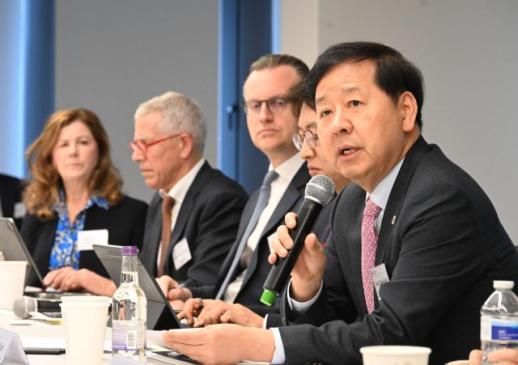 Korea's Investment Opportunities Highlighted at London Economic Briefing Deputy Prime Minister and Minister of Finance and Economy Koo Yun-cheol held a Korean Economic Investment Briefing in London, urging global investors to consider opportunities in South Korea, stating that the term "Korea Discount" is now outdated. The Ministry of Finance and Economy announced on May 19 that the briefing took place at the South Korean Embassy in London on May 18, targeting major global investment institutions. Attendees included representatives from leading asset management firms such as BlackRock, PIMCO, JP Morgan Asset Management, Fidelity, and UBS, as well as European investment banks like BNP Paribas, Barclays, and Standard Chartered. During the briefing, Koo emphasized that South Korea possesses world-class manufacturing capabilities in key supply chain areas such as memory semiconductors, high-bandwidth memory (HBM), power semiconductors, and sensors, particularly in the era of AI transformation. He noted that the country is rapidly transitioning to enhance productivity across all industries by integrating AI. He also highlighted ongoing reforms aimed at improving corporate governance, protecting shareholder interests, and introducing tax incentives for investors, which are part of broader capital market reforms. Koo pointed out that since the new government took office, the KOSPI index has risen by over 170%, elevating South Korea's stock market capitalization ranking from 13th to 7th globally. He mentioned that approximately $10.9 billion in new funds have flowed into South Korean bonds since their inclusion in the World Government Bond Index (WGBI). "The Korea Discount is a thing of the past, and the Korea Premium is becoming a new reality," Koo stated, adding, "Now is the golden time for investment in South Korea." The government plans to strengthen its growth strategy centered on AI and advanced industries, focusing on seven key physical AI sectors, including robotics, automotive, and shipping, as well as 15 ultra-innovative economic projects involving graphene, superconductors, and small modular reactors (SMRs). Reforms in the foreign exchange and capital markets will continue, with plans to enhance foreign investors' access to the market through measures such as 24-hour foreign exchange market operations, the establishment of an offshore won payment system, and the simplification of account opening and payment procedures. Attendees described South Korea's economic growth narrative as a "compelling story," noting that the country's status in the global market and capital markets has significantly improved.* This article has been translated by AI. 2026-05-19 11:11:06
 -
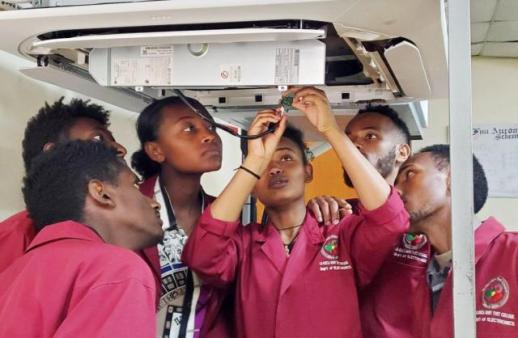 LG Electronics Shares Vocational Training Expertise with Somalia LG Electronics is sharing its experience from over a decade of operating a vocational training school in Ethiopia with youth skills education in Somalia. On May 19, LG Electronics announced that it signed a memorandum of understanding with the United Nations Development Programme (UNDP) and the Korea International Cooperation Agency (KOICA) at the LG-KOICA Hope Vocational Training School in Addis Ababa, Ethiopia. The agreement aims to enhance vocational training for Somali youth. Under this agreement, LG Electronics will provide the curriculum and operational expertise from the LG-KOICA Hope Vocational Training School to a new vocational training school being established in Somalia by UNDP and KOICA. This support includes developing the curriculum and operational manuals, assisting with graduate employment, and selecting educational tools and testing products. Training will also be provided to local instructors in Somalia, who will benchmark the operational system of the LG-KOICA Hope Vocational Training School in Ethiopia and learn vocational training models in electronics and IT. The LG-KOICA Hope Vocational Training School, established in 2014, is a free vocational training facility that LG Electronics operates in Ethiopia, a country that participated in the Korean War. The school offers education in electronics and IT, supporting local youth in achieving self-sufficiency. To date, the school has graduated 611 students, all of whom have entered the workforce or started their own businesses. LG Electronics provides internship opportunities with a conversion to employment for outstanding graduates and offers legal, marketing, and business management training through its on-campus startup support center for those interested in entrepreneurship. The LG-KOICA Hope Vocational Training School was recognized for its achievements when it was selected as a model vocational training school by the Ethiopian government in 2020. Last year, LG Electronics held its ninth graduation ceremony, producing 70 graduates and continuing its support for local youth self-sufficiency. LG Electronics' contributions in Africa extend beyond vocational education. Since 2009, LG has initiated community support activities in Ethiopia, including the establishment of self-sufficient rural villages, cholera vaccine distribution, and scholarship support for descendants of Korean War veterans through the "LG Hope Village" project. Yang Seung-hwan, head of LG Electronics' Ethiopia branch, stated, "By sharing the successful experiences gained from operating the LG-KOICA Hope Vocational Training School in Ethiopia for over ten years, we aim to support the self-sufficiency of African youth and fulfill our social responsibility as a global corporate citizen."* This article has been translated by AI. 2026-05-19 11:03:21
 -
 Shooting at San Diego Islamic Center Leaves Three Dead; Hate Crime Suspected Three men were killed in a shooting at a large Islamic center in San Diego, California, when two teenagers opened fire. The suspects were found dead in a nearby vehicle shortly after the incident, and police are investigating the case as a hate crime. According to reports from AP and CNN, the shooting occurred on May 18 at the San Diego Islamic Center located in the Clairemont area of San Diego County, resulting in the deaths of three adult men, including a security guard. San Diego Police Chief Scott Wahl stated that the suspects are believed to be 17 and 19 years old. They were discovered dead from self-inflicted gunshot wounds in a vehicle that had come to a stop in the middle of a nearby road. While the exact motive for the shooting is still under investigation, police indicated that a note left by one of the suspects and the firearms used contained evidence of "generalized hate expression," leading them to classify the incident as a hate crime. CNN reported that one of the firearms used in the attack had hate messages inscribed on it, and anti-Islam slogans were found in the suspects' vehicle. All children present at the Al Rashid School, which is affiliated with the Islamic center, were confirmed safe during the incident. The San Diego Islamic Center, the largest Islamic worship facility in the county, is located about 14 kilometers north of downtown San Diego and includes a school teaching Arabic, Islamic studies, and the Quran to students aged five and older. Imam Taha Hassan, the religious leader of the center, expressed outrage at the targeting of a place of worship during a press conference, stating, "It is extremely infuriating to target a place of worship. All places of worship in our beautiful city must always be protected." California Governor Gavin Newsom also released a statement expressing shock at the violent attack in a place where families and children gather peacefully to worship, asserting that "hate has no place in California, and we will not tolerate acts of terror or threats against faith communities."* This article has been translated by AI. 2026-05-19 10:59:10
 -
 Lee Jae-hyun and Jeong Yong-jin Face Brand Risks Amid Recent Crises Corporate crises often arise unexpectedly. However, the causes of these crises typically stem from long-standing issues within the organization. Recent controversies involving Starbucks Korea's marketing related to the May 18 Gwangju Uprising and CJ Group's data breach may appear to be separate incidents, but they fundamentally raise the same question: How effectively are companies managing brand risk structurally? Starbucks Korea's promotional wording drew swift criticism online for evoking memories of the Gwangju Uprising and the torture and death of Park Jong-cheol. Some consumers strongly opposed specific phrases, claiming they recalled the violent memories of the military regime. As the controversy escalated, Jeong Yong-jin ordered a thorough response and Shinsegae Group announced the dismissal of the CEO of Starbucks Korea and related executives. Notably, Jeong's rapid response indicated a clear recognition of the crisis at the corporate level. He did not treat the issue as a mere online controversy but assessed it as a matter of trust for the entire brand. However, the essence of this controversy is not merely whether a 'mistake' occurred. The key question is whether the company's internal sensitivity and verification systems functioned properly. In corporate communication, the outcome is more important than the intent. Regardless of the intentions of those involved, if a significant number of consumers associate the content with historical trauma and feel discomfort, brand risk becomes a reality. In today's landscape, brands symbolize corporate values rather than just product names. Consumers consider not only price and quality but also a company's attitude and philosophy. For global brands, sensitivity to historical, human rights, and social issues is a critical evaluation factor. The Starbucks controversy underscores how sensitive historical issues are in Korean society. A more significant issue is that the problematic wording passed through internal verification processes without any checks before being made public. A marketing phrase undergoes several stages, including planning, review, and approval, before reaching consumers. If the organization failed to recognize the problem during this process, it indicates a lack of sensitivity across the organization. If they were aware but did not filter it out, it suggests a failure of the verification system itself. Recently, companies have entered a fierce competition for real-time marketing centered on social media and mobile platforms. There has been an increase in attempts to capture attention with short, provocative phrases. The problem is that speed has begun to overshadow verification. This incident starkly illustrates that content aimed at quick responses can undermine the trust of the entire company. In contrast, the CJ case reveals a different dimension of brand risk. Recently, it was reported that personal information, including the phone numbers, job titles, internal contact details, and photos of female employees at CJ Group, were posted on a Telegram channel. The company is investigating the incident, focusing on the possibility of internal information retrieval and leakage rather than external hacking, and is preparing to report to relevant authorities and request an investigation. The core of this incident is not merely the data breach. It highlights that in the digital age, a company's core assets have shifted to data and trust. Personal information is not just numbers or text; it is sensitive information directly related to individual safety. The combination of phone numbers, photos, and job titles increases the risk of secondary harm. The CJ incident illustrates that many Korean companies' security systems still focus primarily on 'defending against external intrusions.' While significant investments are often made to block external hacking, internal risk management is frequently weaker. The fact that information accessible on internal intranets was leaked externally suggests potential gaps in access control management and anomaly detection systems. Ultimately, while the two incidents may seem entirely different, they share clear commonalities. The Starbucks controversy stems from a failure in content verification, while the CJ incident reflects a failure in internal controls. Both arise not from external attacks but from vulnerabilities within the organization's internal systems. Another point of interest is the differing responses from the leaders of the two groups. Jeong Yong-jin emphasized immediate personnel actions and public responses, while Lee Jae-hyun's CJ Group has maintained a relatively cautious approach, focusing on investigations and requests for inquiries. Despite their different styles, both leaders recognized that the issues are directly tied to brand trust. However, in managing brand risk, speed of response is not the only important factor. Structural improvement is even more critical. Analyzing why problems occurred at an organizational level and changing systems to prevent recurrence is essential. If the focus remains solely on punishing responsible individuals, similar crises are likely to recur. We are now in an era where non-financial risks influence corporate value. In the past, sales, market share, and productivity were the core of corporate competitiveness, but now factors such as data protection, ethical awareness, historical sensitivity, and organizational culture determine brand value. Global investors also consider ESG and internal control systems as important evaluation criteria. In the end, both Lee Jae-hyun and Jeong Yong-jin find themselves on a significant test. How they change their organizations and establish standards following these crises will likely influence future group trust. A one-time apology and personnel changes will not suffice. Only by genuinely strengthening internal controls and organizational sensitivity can these crises become opportunities for systemic improvement. Brands are not built through advertising; they are shaped by how crises are handled. These incidents send a clear message to the Korean corporate sector: brand risk is no longer a secondary issue but a central management agenda.* This article has been translated by AI. 2026-05-19 10:57:00
 -
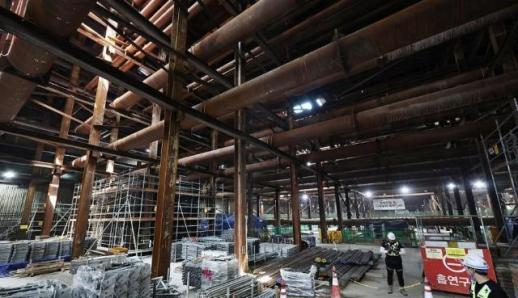 Warning Over Missing Rebar at Samsung Station: Delays Will Increase Costs The missing rebar incident at Samsung Station on the GTX-A line is not merely a construction error. It has been confirmed that 178 tons of main rebar were omitted from the columns of the GTX platform in the third section of the underground complex development on Yeongdong-daero. The previously scheduled non-stop passage through Samsung Station in August is now likely to be delayed. The Seoul Metropolitan Government reported the issue to the Korea National Railway Authority, which countered that the report was not substantial. The Ministry of Land, Infrastructure and Transport has initiated an audit and special site inspection. Before assigning blame, this incident serves as a warning about the vulnerabilities in the safety management system of a key national infrastructure project.Samsung Station is a critical point for the operation of the entire GTX-A line. Currently, the GTX-A operates in two segments: from Unjeong Central to Seoul Station and from Suseo to Dongtan. Without the connection to Samsung Station, the metropolitan railway network cannot function effectively. Moreover, this area features deep underground structures approximately 50 meters below ground. It must withstand vertical loads, soil pressure, water pressure, repeated vibrations from trains, fire safety standards, and long-term maintenance. This is why it cannot be viewed through the same lens as typical construction defects.The omission of rebar signals a breakdown of fundamental practices on site. Hyundai Engineering & Construction explained that it misinterpreted the 'two bundle' notation on the design drawings. However, the main rebar in the columns is crucial for structural safety. If any stage of the rebar placement, quality control by the contractor, or inspection by the supervisory team had functioned properly, it is likely that the issue could have been identified before the concrete was poured. A thorough examination of whether the construction, supervision, and site management systems operated correctly is necessary.Addressing the omission is not a straightforward fix. The method proposed by the contractor involves applying epoxy adhesive to the concrete columns, then adding a steel jacket and fireproof finish. The durability of the adhesive, the bonding strength of the steel, fire resistance, and fatigue resistance against repeated vibrations from trains must all be verified. This is why the government has decided to reassess the reinforcement method from scratch through external expert committees. While a quick opening is important, trains cannot be allowed to pass over unverified reinforcements.Time equates to cost. Delays in the non-stop passage through Samsung Station will not only inconvenience citizens. The GTX-A is linked to a private investment structure. The longer the delay, the more likely it is that compensation for losses, additional construction costs, penalties, and legal disputes will arise. Estimates suggest that if the non-stop passage is delayed by about a year, the additional financial burden could reach around 100 billion won. The costs of safety management failures will ultimately fall back on the citizens and taxpayers.Therefore, accountability cannot be delayed. The key is not the formal exchange of documents but the substance of the reports. It must be determined whether significant safety issues were communicated in a timely, clear, and responsible manner through original documents and internal processing records. The reporting system for large infrastructure projects must be particularly clear. Major construction errors should be managed through separate reporting, immediate sharing, and documentation of follow-up actions.This incident should not be consumed solely as a political battleground. What matters to citizens is whether the underground railway structures are safe, how to reduce the costs of delays, and how to reform the system to prevent similar issues from recurring. Parliamentary inquiries should serve as a platform for fact-finding rather than political strife. The GTX is a vital axis of transportation in the metropolitan area. What is needed now is not a hasty fix but independent verification, accountability, and measures to prevent recurrence. The longer the delay, the greater the costs. However, the price of rushing without verification could be far greater.* This article has been translated by AI. 2026-05-19 10:54:27
 -
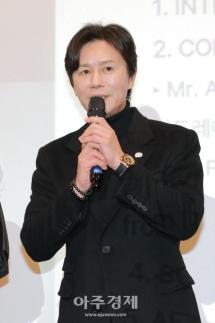 Kim Min-jong Responds to MC Mong's Illegal Gambling Allegations with Legal Action Singer and actor Kim Min-jong has firmly denied allegations of illegal gambling made by MC Mong. On May 19, through his legal representative, the law firm Okims, Kim stated, "I want to make it clear that the claims being discussed about me are not true." He added, "After thoroughly verifying and organizing the facts related to this matter, I plan to hold accountable those responsible through civil and criminal legal actions. I will act cautiously to avoid disappointing those who have supported me for a long time." Kim's team also strongly opposed the recent online rumors. The legal representative stated, "Baseless personal rumors and malicious allegations against Kim Min-jong are spreading indiscriminately, seriously damaging the reputation of an artist who has received great love from the public." They emphasized, "All claims related to Kim Min-jong are clearly false. He will confront these allegations head-on without any compromise to prove his integrity." Previously, on May 18, MC Mong mentioned Kim Min-jong's name during a live broadcast, suggesting the existence of an illegal gambling ring involving celebrities. MC Mong denied allegations of illegal gambling against himself during the broadcast, stating, "Who would use company funds for illegal gambling?" He continued, "The source of the funds can be traced through account tracking, and I would like them to look at my account as well. How could I gamble with company money? I don’t even understand that claim." MC Mong co-founded One Hundred with Chaga Won, chairman of the Piak Group, in 2023 but left the company in July of the previous year. Since then, allegations have emerged that he used company funds for illegal gambling.* This article has been translated by AI. 2026-05-19 10:51:26
 -
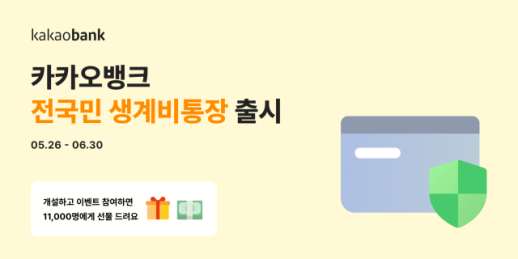 KakaoBank Launches Nationwide Living Expense Account for Vulnerable Groups KakaoBank announced on May 19 that it will launch a "Nationwide Living Expense Account" designed to protect customers' minimum living expenses.The Nationwide Living Expense Account is a policy product aimed at ensuring basic living standards for financially vulnerable groups through seizure prevention features. Anyone aged 14 and older can enroll, but accounts can only be opened at one financial institution. The account allows for flexible deposits up to a monthly limit of 2.5 million won, ensuring the safety of essential living expenses.KakaoBank developed this product in conjunction with the Korea Credit Information Service. The base interest rate is set at 2% annually until the end of this year.To enhance customer convenience, the bank has added unique features. Customers will receive notifications when a new deposit limit is assigned on the first of each month or when the total limit of 2.5 million won is reached. Additionally, users can easily access transaction statements and balance certificates through a dedicated menu in the app.KakaoBank is also expanding inclusive finance by lowering interest rates for its New Hope Seed II and Sunshine Loan products.A KakaoBank representative stated, "This product was designed to help customers facing economic difficulties maintain their daily lives and recover even in seizure situations. We will continue to practice inclusive finance for small business owners and those with low credit ratings."* This article has been translated by AI. 2026-05-19 10:49:11
 -
 Bloomberg Analyzes Four Scenarios for Potential Samsung Strike Bloomberg has analyzed the potential for a strike at Samsung Electronics, viewing the labor dispute as a variable in the global semiconductor supply chain. As demand for artificial intelligence (AI) semiconductors rises, the largest union at Samsung Electronics warns that a strike could escalate domestic labor tensions into a global supply chain risk. According to Bloomberg on May 18, Samsung Electronics and its largest union are negotiating under government mediation to avoid a strike. The company has significantly increased profits due to rising demand for AI semiconductors, but it faces competition from SK Hynix and Micron. Bloomberg noted that this negotiation is crucial for Samsung Electronics at this time. The main issue at stake is the distribution of performance bonuses. The union demands the removal of the cap on bonuses and insists that 15% of operating profit be allocated to employee bonuses in the labor contract. The company has proposed a one-time special compensation package that would allocate 10% of operating profit for bonuses, which it argues exceeds industry standards. Bloomberg outlines four scenarios regarding the potential strike. The first scenario is a last-minute compromise. Even if the union's demands are not fully met, an increase in bonuses or some improvement in compensation conditions could help avoid a strike. In this case, the union could present the compensation improvements as a negotiation success. The second scenario involves a limited strike. Even if negotiations break down, the likelihood of a short strike leading to immediate production halts is low. Semiconductor plants are highly automated and operate around the clock. Bloomberg suggests that even if the union engages in rotating strikes, one-day strikes, or rallies to apply pressure, production disruptions may remain limited. Judicial rulings also play a role in limiting the strike's intensity. According to Bloomberg, a court ruled on May 18 that essential maintenance and security personnel must continue working during a strike. Occupying key production and operational facilities, such as semiconductor production lines, research facilities, and hazardous chemical storage sites, is also prohibited. The third scenario involves government intervention. If a strike prolongs and disrupts semiconductor production, the government could invoke emergency mediation rights. When invoked, the strike would be suspended for 30 days while the Central Labor Relations Commission prepares a mediation plan. Since 1969, emergency mediation rights have been invoked only four times in South Korea, with the last instance occurring during a 2005 strike by Korean Air pilots. The fourth scenario is a long-term stalemate. While Bloomberg considers this possibility relatively low, it warns that if key semiconductor engineers, maintenance staff, and production workers leave for an extended period, the production burden could increase. Even with automation in semiconductor plants, skilled personnel are necessary for advanced process management and equipment maintenance. If a long-term stalemate occurs, the repercussions would extend beyond Samsung Electronics. The semiconductor division accounts for over 90% of the company's profits. Clients may reassess Samsung's supply stability if labor disputes drag on, particularly during a phase of expanding production of advanced semiconductors like high-bandwidth memory (HBM) used in AI servers. The situation also poses a burden on the South Korean economy. Bloomberg reported that semiconductors accounted for 36% of South Korea's total exports in the first quarter of this year. A prolonged strike at Samsung Electronics leading to production disruptions could impact both South Korean exports and the global semiconductor market, highlighting why international media view domestic labor disputes as a global supply chain risk.* This article has been translated by AI. 2026-05-19 10:47:08