

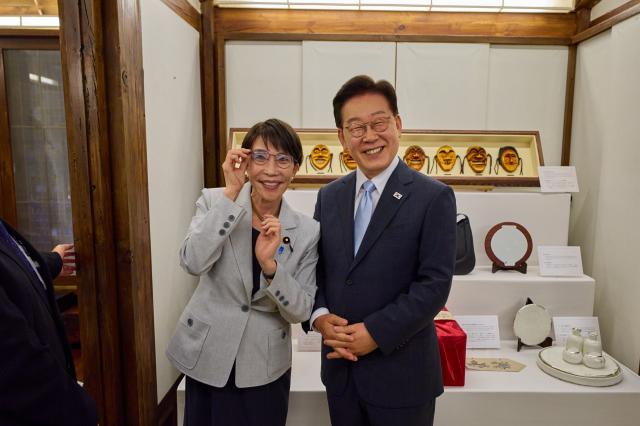
Under the evening winds of Hahoe Village and the cascading sparks of the traditional Seonyu Julbulnori fire ritual, President Lee Jae-myung and Prime Minister Sanae Takaichi sent a message to the world that extended far beyond the formalities of another summit meeting.
It was, in essence, a declaration that relations between South Korea and Japan are beginning to move beyond an era defined primarily by historical grievance and emotional confrontation toward one shaped by strategic coexistence and shared prosperity.
The summit revolved around five central themes: institutionalizing cooperation in supply chains and energy security; firmly establishing shuttle diplomacy; expanding collaboration in artificial intelligence and advanced technologies; deepening civilian-led exchanges in culture and tourism; and managing historical disputes while building a future-oriented partnership.
What made this meeting particularly consequential was the international context in which it unfolded. The Middle East remains unstable. Risks surrounding the Strait of Hormuz continue to threaten global energy markets. Strategic rivalry between the United States and China is intensifying. Russia, China, and North Korea are drawing closer together.
In such a world, Seoul and Tokyo can no longer afford to conduct diplomacy through the lens of historical emotion alone.
The era now emerging is one of overlapping crises, where energy, supply chains, finance, technology, and security are inseparably intertwined.
When President Lee spoke of “a peaceful Korean Peninsula with no need to fight,” and Prime Minister Takaichi emphasized “the free and secure navigation of the Strait of Hormuz,” these were not rhetorical flourishes. They reflected a sober recognition that Northeast Asia and the broader Indo-Pacific are entering a period of profound instability.
The world today is moving into three simultaneous conflicts.
The first is military conflict. The wars in Ukraine and the Middle East have already entered prolonged phases.
The second is technological conflict. Competition over artificial intelligence, semiconductors, quantum computing, and space technology has evolved into a new form of industrial Cold War between Washington and Beijing.
The third is the conflict over supply chains. LNG, crude oil, rare earth minerals, food security, and battery materials are no longer simply economic concerns; they have become pillars of national survival.
In such an environment, South Korea and Japan are too deeply interconnected economically to remain trapped in perpetual confrontation.
South Korea possesses strengths in memory semiconductors, batteries, shipbuilding, and advanced manufacturing. Japan remains dominant in materials, components, precision engineering, and foundational industrial technologies.
The two nations compete fiercely, yet they are also profoundly interdependent. Serious disruption in one economy would inevitably reverberate through the other.
One of the most significant aspects of this summit was the discussion of LNG and crude oil swap arrangements. This was not merely a conversation about energy transactions. It represented the early architecture of a Korea–Japan energy security framework.
Japan possesses one of the world’s most sophisticated LNG storage and strategic reserve systems. South Korea maintains globally competitive refining, petrochemical, and shipbuilding infrastructure. If the two countries institutionalize emergency energy-sharing and joint reserve mechanisms, they could substantially mitigate shocks arising from instability in the Middle East.
More importantly, the summit hinted at the emergence of a broader Asian supply-chain order. Prime Minister Takaichi’s proposal to deepen resource cooperation with other Asian nations was strategically significant. Implicit within it was the vision of a wider economic-security network linking South Korea, Japan, ASEAN, India, and Australia.
At the same time, the geopolitical environment is changing rapidly.
American leadership is no longer as stable or predictable as it once was. The second administration of President Donald Trump has embraced an unapologetically transactional form of nationalism. China continues to expand both its economic and military reach. Russia is deepening strategic coordination with Beijing, while North Korea accelerates its nuclear and missile capabilities.
Under these circumstances, sustained hostility between Seoul and Tokyo would become a strategic burden for both sides.
In this sense, the summit in Andong was diplomacy driven less by idealism than by survival.
Previous Korea–Japan summits were often consumed by emotional confrontation over historical memory. This summit, by contrast, was conducted in the language of energy security, supply chains, artificial intelligence, and regional stability. That distinction matters.
Equally significant was the summit’s emphasis on regional diplomacy.
For decades, Korea–Japan diplomacy revolved almost exclusively around Seoul and Tokyo. This time, however, the diplomatic stage expanded to Andong and Nara, the hometowns of the two leaders. That was more than symbolism. It suggested a transition from capital-centered diplomacy toward diplomacy rooted in local culture, regional identity, and everyday human exchange.
Annual people-to-people exchanges between the two countries have already reached approximately 13 million visits. Younger generations increasingly view the neighboring country not primarily as a historical adversary, but as a space of travel, culture, employment, entrepreneurship, and creativity.
K-pop and Japanese animation, Korean dramas and Japanese hot-spring culture, Korean digital platforms and Japanese craftsmanship are more likely to converge than collide.
That is why Korea–Japan relations must now evolve beyond state-centered diplomacy into a civilian-led community of economy, culture, and tourism.
The possibilities are extensive: a Northeast Asian tourism belt connecting Busan, Fukuoka, Osaka, and Jeju; joint AI startup funds; youth entrepreneurship exchanges; Korea–Japan semiconductor graduate institutes; and even cooperative space-development projects.
Europe overcame centuries of war to build the European Union. Northeast Asia may not replicate that model directly, but it can begin with practical economic and cultural cooperation.
President Lee’s emphasis on artificial intelligence cooperation was particularly important. AI is not simply another industry. It is a foundational technology that will shape the future balance of civilization itself.
The United States dominates platforms and capital. China commands scale and manufacturing capacity. South Korea and Japan, by combining technology, manufacturing precision, culture, and content, could help construct an alternative Northeast Asian model for the AI age.
Korean semiconductor expertise paired with Japanese materials and equipment technologies could become globally competitive at the highest level.
Moreover, the AI era will require new forms of cooperation in digital ethics, privacy protection, and transnational cybercrime prevention.
The summit’s discussion of coordinated responses to cross-border scam crimes reflected the beginning of that transition. Yet formidable obstacles remain.
Historical disputes continue to represent the most volatile fault line in Korea–Japan relations. The issues of wartime labor, the comfort women tragedy, and the Dokdo/Takeshima territorial dispute could easily resurface.
Historical revisionism within segments of the Japanese right also remains a serious concern. At the same time, anti-Japanese sentiment is still periodically exploited within South Korean domestic politics.
But the time has come for both countries to move from the politics of resentment to the politics of survival.
This does not mean forgetting history. On the contrary, genuine remembrance requires the wisdom to build a future beyond endless hostility.
The Confucian principle of yeokjisaji — placing oneself in the position of the other — and the broader East Asian diplomatic tradition of qiú tóng cún yì (“seeking common ground while preserving differences”) offer a more sustainable path forward.
South Korea, too, must engage in honest self-reflection. Conservatives have sometimes minimized historical grievances in the name of security cooperation, while progressives have at times instrumentalized anti-Japanese sentiment for domestic political purposes. A more mature balance is now required.
Historical issues must be addressed with principle, but not transformed into endless cycles of emotional mobilization.
Economic and technological cooperation must be approached as questions of long-term national survival. Youth exchanges should be elevated to the level of national strategy. Local governments and private enterprises must deepen practical collaboration. Shared frameworks for AI governance, digital ethics, and data protection should be institutionalized.
Most importantly, genuine reconciliation cannot be achieved solely through summit diplomacy.
It must emerge gradually through the daily experiences of ordinary citizens — through tourism, food, sports, art, scholarship, and friendship. Over time, such exchanges become the strongest foundations for peace.
There is also a deeper dimension that deserves attention.
The future of Korea–Japan relations cannot be sustained by economics and security alone. It must also engage the spiritual and civilizational traditions of both nations.
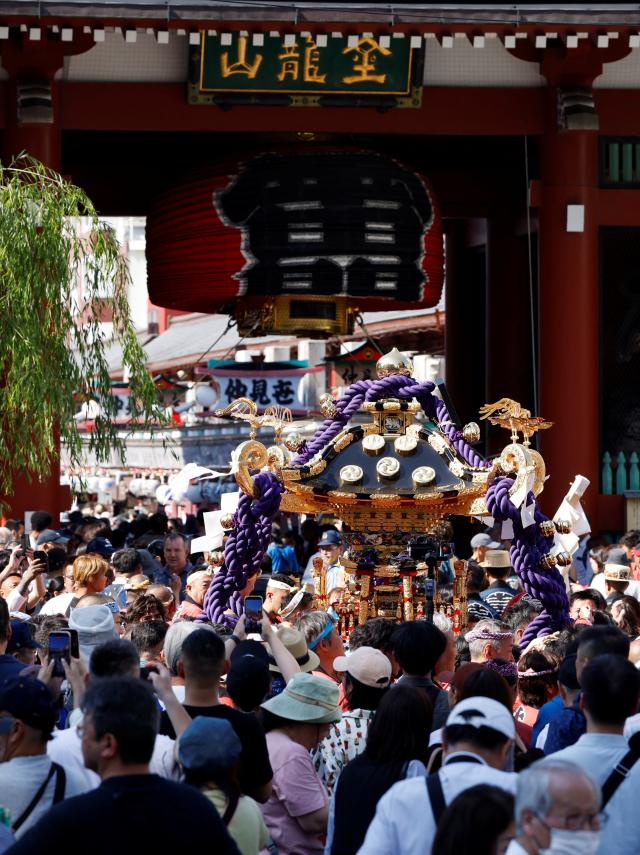
Korea, meanwhile, preserves the philosophical legacy of the Cheonbu-gyeong. Its vision of harmony between heaven, earth, and humanity has deeply influenced Korean ideas of communal ethics and the spirit of Hongik Ingan — the ideal of benefiting humanity broadly.
The spiritual traditions of the two nations are not identical. Yet both ask fundamentally similar questions: How should human beings live in harmony with nature? How should communities coexist without destroying one another?
Historically, Korea and Japan were never connected solely through conflict. The exchanges between Baekje and ancient Japan, the transmission of Buddhism and Chinese characters, architectural influences, ceramics, music, industrial knowledge, and modern cultural interactions all testify to centuries of mutual influence.
The challenge today is not to erase history, but to confront it honestly while refusing to remain imprisoned by it.
Japan must rediscover the Shinto tradition’s respect for nature and communal balance in modern form. Korea must reinterpret the harmonizing philosophy of the Cheonbu-gyeong and the spirit of Hongik Ingan for the AI era.
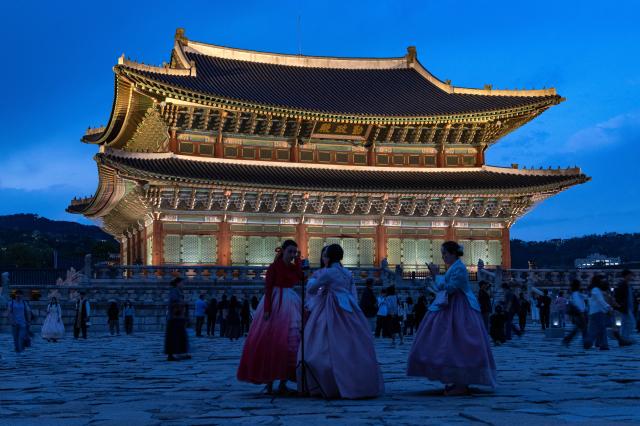
That is why the summit in Andong carried significance far beyond protocol. It posed a larger civilizational question: can Korea and Japan move from the emotional burdens of the past toward the shared construction of a future?
The sparks of Andong’s traditional Julbulnori fire ritual scatter briefly across the river before reconnecting in streams of light. In many ways, that image captures the history of Korea and Japan themselves. The two nations have often drifted apart through conflict and pain, yet geography, history, economics, and culture continue to draw them back together.
The transformations reshaping the world are now too immense for either country to remain trapped in inherited antagonisms.
In the age of AI revolution, supply-chain warfare, energy insecurity, and intensifying great-power rivalry, Seoul and Tokyo face a historic choice: remain prisoners of the past, or become co-architects of a shared future.
The summit in Andong did not fully answer that question. But it began, cautiously yet unmistakably, to move in that direction.
Shuttle diplomacy must now become more than a diplomatic mechanism. It must evolve into a platform for Northeast Asian coexistence and shared prosperity.
And at the center of that transformation must stand not governments alone, but citizens; not ideology, but future generations; not resentment, but the long work of civilization itself.
*The author is a senior columnist of AJP
Copyright ⓒ Aju Press All rights reserved.
