

Journalist

Kim Dae-jong
-
 South Korea posts 2nd-fastest OECD growth on chip boom, but long-term risks mount SEOUL, June 7 (AJP) - South Korea posted the second-fastest economic growth among major economies in the first quarter, driven by a semiconductor boom. According to data released by the Organization for Economic Co-operation and Development (OECD) on Sunday, South Korea's real gross domestic product (GDP) grew 1.7 percent in the first three months of this year, ranking second among 35 member countries. Only Denmark grew faster at 1.9 percent, while the OECD average stood at 0.4 percent. South Korea's strong performance marked a dramatic reversal from the fourth quarter of last year, when its economy contracted 0.2 percent and ranked near the bottom among OECD member countries. The rebound has been fueled largely by strong semiconductor exports as global demand for artificial intelligence (AI)-related technology continues to surge, prompting international organizations and investment banks to raise their growth forecasts for South Korea. Robust exports have also pushed the country's current account surplus to record levels. The cumulative current account surplus reached an all-time high of $102.7 billion in the first four months of this year, more than four times the level recorded a year earlier. Reflecting this trend, the OECD recently raised its growth forecast for South Korea to 2.6 percent from 1.7 percent, while several global investment banks have become even more optimistic, with some projecting economic growth of around 3 percent this year. The OECD expects the surplus to expand further, potentially reaching around 10 percent of GDP by 2027 if exports remain strong. South Korea is "projected to have a sharp increase in its external balance, from 6.6 percent of GDP in 2025 to around 10 percent of GDP in 2027, helped by continued strong IT-related exports," it said. Despite the upbeat outlook, concerns remain over the country's long-term growth potential, as the OECD projects that South Korea's potential growth rate, a measure of how fast the economy can grow without triggering inflation, will fall to 1.52 percent next year and dip below 1.5 percent by late 2027, the lowest level since it began compiling such data. The contrasting outlook suggests that South Korea's short-term economic strength, powered by a historic chip boom, masks longer-term challenges including an aging population, slowing labor productivity, and weak domestic demand. The weakening won also adds to worries, as the currency recently fell to around 1,560 against the greenback, its weakest level in more than 17 years, last seen during the global financial crisis in March 2009 when it hit almost 1,600. Consumer prices also rose 3.1 percent last month from a year earlier, surpassing the 3 percent mark for the first time in more than two years. Financial officials said the economy remains fundamentally sound, pointing to record current account surpluses and strong exports, though they admitted that rising import costs and a weaker currency could weigh on households and businesses in the months ahead. 2026-06-07 12:29:20
 -
 Government Should Address Housing Instability, Not Just Gangnam Home Prices Home prices in Gangnam, Seoul, are once again on the rise. In key areas such as Banpo, Apgujeong, and Daechi-dong, record-high transactions are occurring. Some complexes have seen price increases of tens of millions of won in just a few months. As a result, there is growing interest in the new government's additional real estate measures. President Lee Jae-myung has also hinted at the possibility of further actions, stating, "Real estate prices are excessively high."However, if the government begins to target Gangnam home prices as a policy goal, the market will once again become a political issue. The real problem that the government needs to address is not the prices in Gangnam, but the housing instability felt by the public.First, it is essential to clarify the reality of housing instability. The anxiety that citizens feel today is not solely due to the high prices of apartments in Gangnam. Young people are losing hope of owning their own homes. Newlyweds are struggling with the burden of jeonse (long-term lease) and monthly rent. The middle class is torn between concerns about their children's education and housing issues. Retirees are worried about rising housing costs. Coupled with jeonse fraud and uncertainties in the rental market, housing instability has become one of the biggest burdens in people's lives.Policies should focus on resolving this issue.Of course, this is not to say that we should ignore Gangnam home prices. Real estate in Gangnam still serves as a benchmark for the Seoul housing market. When prices rise in Gangnam, the upward trend spreads to nearby areas, which in turn affects the rental and sales markets across the metropolitan area. There is a certain connection between Gangnam home prices and housing instability.However, making the control of Gangnam home prices the primary policy goal is problematic. The prices in Gangnam are not just simple housing costs; they are the result of decades of accumulated factors such as education, transportation, healthcare, culture, proximity to workplaces, and social preferences. While supply is limited, demand remains steady. Attempts to control such a market solely through taxes or regulations have historically failed.In fact, past governments have employed various policies, including strengthening the comprehensive real estate tax, increasing capital gains tax, and imposing lending and transaction regulations, to suppress Gangnam home prices. While some measures were effective at times, they ultimately resulted in cycles of price increases and decreases without addressing the fundamental issues.That said, it is not necessary to conclude that all regulations have failed. Expanding the supply of public rental housing and supporting vulnerable groups in housing have yielded certain results. The problem lies in the fact that policies focused solely on price suppression have not changed the structural demand of the market.So, what is the solution?First, there needs to be stable supply. However, we should not view supply expansion as a panacea. Easing regulations on reconstruction and redevelopment could stimulate market expectations in the short term, leading to price increases. This could also exacerbate housing instability for existing tenants. Therefore, the direction of supply expansion is more important than the speed. Quality housing supply for actual demand, increased public housing for young people and newlyweds, and the expansion of long-term rental housing should be pursued together.Second, we must restore the housing ladder. The most serious issue now is that young people and the middle class are losing hope of being able to buy homes through their efforts alone. Housing policy should aim not just at price control but at providing citizens with predictability for their future.Third, we need to address the issue of concentration in the metropolitan area. The essence of South Korea's real estate problem is not the houses themselves but the movement of people. Because good jobs, education, culture, and healthcare infrastructure are concentrated in Seoul, people flock there. The rise in Gangnam home prices is more of a result than a cause.While some regions face serious population decline and unsold properties, Seoul worries about a lack of supply. One area has surplus housing while another faces shortages. This is not just a failure of real estate policy but a failure of national balanced development.Ultimately, housing policy must be linked to industrial policy. If we cannot change the structure that concentrates advanced industries like AI, semiconductors, biotechnology, and future mobility in Seoul, it will be difficult to resolve the concentration of housing demand. Regional hub cities like Daejeon, Gwangju, Daegu, Busan, Ulsan, and Jeonbuk must develop quality jobs and innovation ecosystems to disperse both people and businesses.The way to surpass Gangnam is not to suppress it but to create more cities that are as livable as Gangnam.If the government is preparing real estate policies, it should not be trapped by the political symbolism of Gangnam home prices. What the public desires is not a drop in prices in a specific area but a stable life. A society where people can have hope for home ownership, live without worrying about rent, and enjoy good job and educational opportunities in their regions is a true housing stability society.The foundation is housing stability. The principle is to protect actual demand. The common sense is to focus policy efforts not on fighting home prices but on reducing public anxiety.The government should not focus on Gangnam home prices but on the housing instability faced by the public. The solutions lie not only in regulation and taxation but also in supply, balanced development, and regional growth strategies.This approach will not only address real estate issues but also enhance South Korea's future competitiveness.* This article has been translated by AI. 2026-06-07 12:09:00
 -
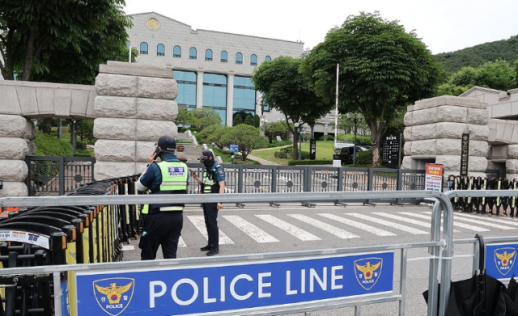 Aftermath of Voting Paper Shortage: Investigation and Protests Continue The shortage of ballots that prevented some voters from casting their votes during the June 3 local elections has entered a phase of investigation. The police have begun looking into allegations against Noh Tae-ak, the chair of the National Election Commission, as calls for constitutional complaints and re-election protests grow. According to legal sources on June 7, the Seoul Metropolitan Police Agency's Special Investigation Unit will conduct an investigation of complainants against Noh and others starting at 9:30 a.m. on June 8. The Citizens' Livelihood Countermeasure Committee (CLCC) has accused Noh and others of dereliction of duty and obstruction of the exercise of rights. The day before, they submitted an amended complaint adding charges of embezzlement and breach of trust. In addition to the CLCC, several civic groups have filed complaints. Six organizations, including the Speculation Monitoring Capital Center, the National Solidarity, the Justice Coalition, and the Mugunghwa Club for Rule of Law and Democracy, submitted complaints to the National Investigation Headquarters through the National Petition Office. They included all eight members of the National Election Commission as targets of their complaints. The police are reportedly focusing on legal reviews. Given the rarity of cases where a failure to predict election demand resulted in a ballot shortage, they are examining relevant precedents and the applicability of the law. The police plan to verify whether the Election Commission adhered to its standards for ballot distribution and the decision-making process through data collection and interviews with involved parties. Justice Minister Jeong Seong-ho also addressed the seriousness of the situation. Minister Jeong stated, "This is a serious issue that severely infringes upon the fundamental democratic right of voting, which is inviolable for the people. I expect that strong and effective measures that the public can accept, including a special investigation or a national inquiry, will be taken promptly." However, he added that he would respond strictly to conspiracy theories regarding fraudulent elections. A constitutional complaint has also been filed, claiming that the mismanagement of ballots by the Election Commission violated voting rights. On June 5, two constitutional complaints were submitted to the Constitutional Court, asserting that the ballot shortage infringed upon voting rights. Both complaints were filed by ordinary citizens, who argue that the Election Commission failed to prepare a sufficient number of ballots, thereby violating their voting rights. Meanwhile, protests demanding a re-election have continued for three days, condemning the ballot shortage. On this day, citizens gathered near the handball stadium in Olympic Park, Songpa District, Seoul, to demand a re-election. Participants shouted slogans calling for a re-election near the entrance of the ballot counting center. This protest is reportedly being conducted spontaneously without a designated organizing group. Participants held placards demanding a re-election and waved national flags. Some citizens have been seen staying overnight since the previous day. Although the number of participants, which unofficial police estimates had reached tens of thousands the previous afternoon, decreased overnight, citizens continued to arrive throughout the day. The protesters had previously blocked the movement of Election Commission staff and some reporters inside the counting center, opposing the opening of ballot boxes. It was reported that the staff inside left the venue early in the morning. Currently, police have set up barricades around the entrance of the counting center to control access. The protests began after some voters were unable to cast their votes due to a shortage of ballots at the Second Polling Station in Jamsil 7-dong on the main voting day, June 3. Citizens gathered at the site to protest, blocking the removal of ballot boxes, and after two days of standoff, police transported the ballot boxes on the morning of June 5. Following this, the protesters moved to the handball stadium in Olympic Park, where they continue to demand a re-election.* This article has been translated by AI. 2026-06-07 12:09:00
 -
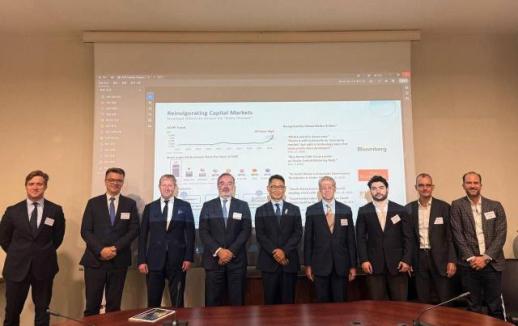 Korean Deputy Finance Minister Huh Jang Attends OECD Council Meeting Huh Jang, Deputy Minister of Finance, stated that "cooperation based on openness and norms, along with innovation and productivity enhancement, is essential for restoring global economic growth." According to the Ministry of Finance, Huh attended the OECD Ministerial Council in Paris on June 3-4. This year marks the 30th anniversary of South Korea's membership in the OECD, and the country served as the vice-chair of the council, leading discussions and agenda-setting. Huh proposed collaborative measures to overcome recent economic crises and restore global economic momentum. He emphasized South Korea's commitment to actively participate in OECD discussions on global issues and strengthen cooperation with member countries to fulfill its responsibilities. "Smooth cooperation requires collaboration based on openness and norms, as well as innovation and productivity enhancement," Huh said. He stressed the need for "inclusive and forward-looking efforts" in the face of rapid changes such as artificial intelligence and climate change. Huh chaired a discussion on improving regulatory frameworks to promote competitiveness. Participating member countries agreed on the need to simplify regulations to ease the burden on businesses, create a fair competitive environment, and establish data governance for the free flow of trustworthy data. They requested the OECD to provide guidelines and develop standards to facilitate these efforts. During the council meeting, Huh also held bilateral discussions with OECD Chief Economist Stefano Scarpetta and officials from the French Ministry of Economy and Finance and the central bank. In his meeting with Scarpetta, Huh explained that the South Korean economy is showing a solid recovery, having recorded a 1.7% GDP growth rate in the first quarter of this year. Scarpetta responded positively, adjusting the forecast for South Korea's economic growth from 1.7% to 2.6% for the year. In subsequent meetings with Bertrand Dufour, Director General of the French Ministry of Economy and Finance, and Agnès Benassi-Kéré, Deputy Governor of the French central bank, both countries expressed their commitment to strengthening economic cooperation. They also agreed to continue collaboration within frameworks such as the G7 and G20, while seeking ongoing financial and economic cooperation between South Korea and France. Additionally, they reached a consensus on the necessity of public development assistance (ODA) and private financing for developing countries, agreeing to expand cooperation in development finance. Meanwhile, Huh conducted an investment briefing on the South Korean economy for major European investment institutions, attended by executives from French investment banks and asset management firms.* This article has been translated by AI. 2026-06-07 12:09:00
 -
 Financial Supervisory Service Targets Illegal Lending Practices Amid Rise in Borrowers The Financial Supervisory Service (FSS) is taking action to eradicate predatory financial practices targeting low-income and vulnerable groups, including illegal debt collection and violations of maximum interest rates. The FSS announced on June 7 that it will conduct on-site inspections of lenders and online lending brokerage sites from June 8 to August 28. Approximately ten companies will be selected for inspection based on complaints, reports, and past inspection records. This initiative comes as the number of borrowers has increased for the first time in five years, driven by low-credit and low-income individuals facing difficulties accessing first-tier financial institutions. The FSS aims to prevent illegal and unfair practices targeting these vulnerable groups. The inspections will focus on malicious practices that exploit borrowers' lack of information or precarious situations, particularly in the areas of illegal debt collection, violations of legal maximum interest rates, and connections to illegal private financing. In the illegal debt collection sector, the FSS will examine cases involving collection efforts on debts that have been discharged through bankruptcy or are under debt adjustment procedures, as well as coercive collection practices involving third parties such as family members or colleagues. Violations of maximum interest rates will also be a key focus. The FSS will investigate instances where lenders execute high-interest loans under the guise of assessing repayment ability or engage in practices like 'bait loans' and 'trick loans' that inflate effective interest rates by deducting upfront fees. Inspections of online lending brokerage sites will be conducted in collaboration with the Gyeonggi Province Special Judicial Police. The FSS plans to verify whether users' personal information is being illegally transferred to private lenders, leading to unsolicited loan offers. An FSS official stated, "If illegal activities are discovered, we will take strict action in accordance with relevant laws. We will prioritize borrower protection by halting illegal debt collection and invalidating interest rates that exceed the maximum limit, while also working with special judicial police to close gaps in the oversight of registered lenders and investigations into illegal financing."* This article has been translated by AI. 2026-06-07 12:03:00
 -
 AI Reduces Work Hours by 1.5 Weekly, But Productivity Gains Lag A recent analysis by the Bank of Korea revealed that while the introduction of artificial intelligence (AI) has reduced work hours by an average of 1.5 hours per week, it has not translated into increased productivity. This phenomenon, termed 'productivity disconnect,' arises because AI implementation has not led to organizational redesign or workforce reallocation. According to the 'BOK Issue Note: Does AI Increase Productivity? An Analysis of Initial Three-Year Effects' released on June 7, AI usage has been shown to shorten work hours by an average of 3.8%. This equates to a savings of approximately 1.5 hours per week. The time-saving effects of AI are particularly pronounced among low-skilled workers and those who heavily utilize AI. The Bank of Korea noted that as proficiency in AI increases, the marginal efficiency gains from technology adoption also rise. Furthermore, AI helps to mitigate productivity gaps among low-skilled workers by compensating for their lack of experience. When translating these reductions in work hours into potential productivity gains, the Bank estimates an increase of about 1.0%. However, the time saved through AI usage has not resulted in actual production increases. The correlation between individual reductions in work hours and increases in work output was estimated to be zero. The Bank explained that while AI has improved efficiency at the individual task level, its benefits have not spread to enhance overall workflow, organizational structure, or workforce reallocation, leading to the observed 'productivity disconnect.' Bottlenecks in production processes and distortions in performance reward systems were also identified as factors hindering productivity transformation. Conversely, groups with strong performance incentives and high job autonomy have seen productivity gains. This includes self-employed individuals, professionals, and intensive AI users. By age group, younger workers (ages 15-39) increased their output by approximately 0.6 percentage points more than those aged 50-64. The Bank interprets this as a result of younger workers' greater adaptability to digital technologies, allowing them to connect AI usage more effectively to productive activities. In terms of occupation, professionals increased their output by 0.7 percentage points more than office workers, while the top 50% of AI users demonstrated a 0.5 percentage point greater improvement in productivity compared to the lower half. This suggests that higher intensity of AI use is likely to overcome initial friction costs, such as learning expenses and validation burdens, leading to tangible productivity enhancements. Oh Sam-il, head of the Bank's Employment Research Team, stated, "Currently, AI has entered the 'efficiency' stage but has not yet fully transitioned to the 'productivity' stage. This can be viewed as a typical transition process in the early stages of adopting a general-purpose technology. Depending on future policy responses and changes in corporate organization and labor market structures, the productivity trajectory could change significantly." He added, "To realize the productivity effects of AI, it is crucial to redesign work processes and organizational structures, reallocate job roles, and establish performance-based incentive systems. Continuous monitoring of changes in the skill development pathways for younger workers is also necessary."* This article has been translated by AI. 2026-06-07 12:03:00
 -
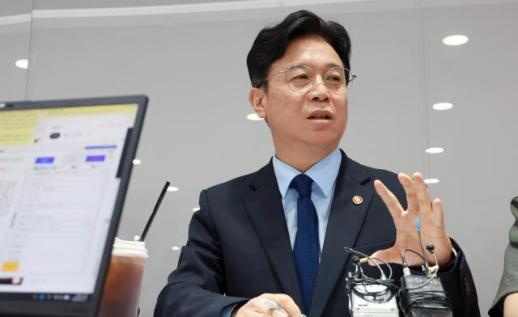 Labor Minister Kim Young-hoon to Discuss AI and Labor Solutions at ILO Conference Minister of Employment and Labor Kim Young-hoon will address global labor standards at the International Labour Organization (ILO) conference, focusing on the theme of "people-centered artificial intelligence (AI) transition." He plans to lead an unprecedented delegation that includes representatives from the National Assembly, the Economic, Social and Labor Council, and labor and management to share South Korea's experiences in labor policy and social dialogue in the AI era.According to the Ministry of Employment and Labor, Minister Kim will attend the 114th ILO Conference in Geneva, Switzerland, from June 8 to 10 as the chief government representative.The ILO Conference is the highest decision-making body of the organization, involving representatives from 187 member countries, including government, labor, and employer representatives, to discuss international labor standards and key labor issues. This year's conference will focus on the impact of AI on the labor market and the creation of quality jobs.In his speech on June 10, Minister Kim will outline the South Korean government's labor policy direction under the theme of "people-centered AI transition." He will emphasize the importance of maintaining human dignity and the value of labor amid rapid advancements in AI technology and changes in industrial structure, while also discussing the protection of workers' rights, strengthening social safety nets, and policies for industrial transition based on social dialogue.Notably, this conference will see participation from the National Assembly and social dialogue organizations. Lawmakers Lee Hak-young, Kim Wi-sang, Kim Joo-young, and Kim Hyung-dong, along with Kim Ji-hyung from the Economic, Social and Labor Council, will share South Korea's interest in global labor issues and experiences in social dialogue regarding AI and industrial transition.During the conference, Minister Kim will also meet with ILO Director-General Gilbert Houngbo to discuss ways to enhance cooperation between South Korea and the ILO. This meeting is expected to further detail discussions held during Houngbo's visit to South Korea last month regarding sharing employment and labor policy experiences and cooperation in the AI sector.Additionally, Minister Kim will present South Korea's ongoing cooperation projects in the employment and labor sector aimed at developing countries. The ministry plans to host a "Korea-ILO Cooperation Project Partnership Reception" during the conference to share project outcomes with delegations from Cambodia, Vietnam, Mongolia, and Paraguay. This initiative supports improvements in vocational training, youth employment, industrial safety, and social economy, with an investment of 16.6 billion won from 2024 to 2026.Minister Kim will also engage in labor diplomacy with major European countries. He is invited by the French government to attend a G7 labor ministers' reception and plans to meet with the Dutch Minister of Social Affairs and Employment and the Spanish Minister of Labor and Social Economy to discuss responses to AI industrial transition, social dialogue, and labor market changes.Following the conference, a delegation including members of the National Assembly, the Economic, Social and Labor Council, the Korean Confederation of Trade Unions, and the Korea Employers Federation will visit Germany. The delegation will examine how Germany has managed conflicts through labor-management-government dialogue during the AI and digital transition and will present South Korea's "Labor-Inclusive Industrial Transition" policy.A ministry official stated, "As the impact of AI and digital transition on the labor market grows, this will be an opportunity to strengthen international cooperation and share South Korea's policy experiences. We plan to actively promote the importance of people-centered principles and social dialogue during the industrial transition process."* This article has been translated by AI. 2026-06-07 12:03:00
 -
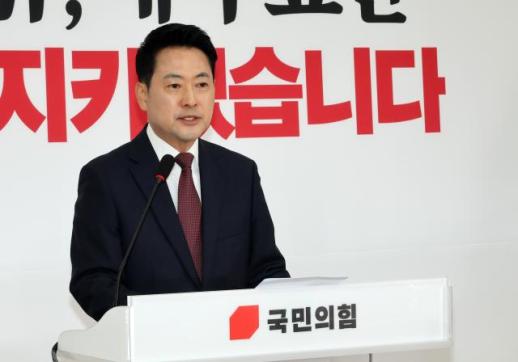 Jang Dong-hyuk Calls for Meeting with President Lee on Election Issues Jang Dong-hyuk, the leader of the People Power Party, publicly proposed a meeting with President Lee Jae-myung on June 7, stating, "Anytime today or in any format would be acceptable." The meeting aims to convey citizens' concerns regarding the ballot shortage during the June 3 local elections and to seek a responsible response from the president. During a press conference at the National Assembly, Jang emphasized the need for the government to provide a satisfactory answer to the youth protecting Olympic Park, demanding an immediate response from President Lee. He criticized President Lee and the Democratic Party for ignoring the growing calls for by-elections across the country. Referring to the gatherings at Olympic Park as a "well-organized civic resistance movement," Jang warned, "If anyone tries to silence the voices of the citizens and trample on legitimate resistance, they will face the judgment of the people." Additionally, Jang urged the ruling party to initiate a national investigation and special prosecution aimed at reforming the National Election Commission and the Public Election Act. He stressed the importance of the National Assembly fulfilling its duty to clarify the situation and hold responsible parties accountable. However, he noted that in the current climate where citizens are demanding by-elections, investigations and special prosecutions alone are not ultimate solutions. He emphasized the need for sufficient and responsible measures to calm public anger and allow citizens to return to their daily lives. Jang stated, "We cannot delay the public demand for reform of the Election Commission and the electoral system. If we dismantled a functioning prosecution, we cannot leave the far more serious Election Commission untouched." He also argued for the elimination of early voting, suggesting that dismissing claims of electoral fraud is not enough; rather, the roots of such claims must be addressed. He proposed that abolishing early voting and extending the voting period to three days could be potential solutions, clarifying that the goal is not to restrict voting rights but to enhance the process while eliminating controversy.* This article has been translated by AI. 2026-06-07 11:51:00
 -
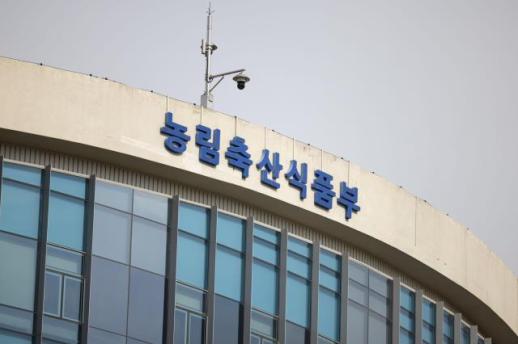 Agriculture Ministry Awards 45 Million Won to 11 Officials for Outstanding Achievements On June 7, the Ministry of Agriculture, Food and Rural Affairs announced that it has awarded a total of 45 million won to 11 officials, including Jeon Han-young, the Director of Rural Policy, for their exceptional achievements.According to the ministry, Minister Song Mi-ryong presented special awards and commendations to employees who delivered outstanding results that the public can feel during a ceremony held at the Government Sejong City Complex on June 5.This award follows President Lee Jae-myung's directive at a Cabinet meeting last year to ensure that civil servants who achieve exceptional results receive significant rewards. The ministry established a plan for special performance awards in February, incorporating both internal recommendations and public nominations through its website for achievements that resonate with citizens.The first round of special performance awards this year considered a total of 17 nominations for exceptional achievements from the first quarter of the year since the new government took office. A rigorous evaluation process involved both internal and external experts, as well as a public evaluation panel, with a strong emphasis on results from an 'online perception evaluation' where citizens participated directly. Ultimately, 11 individuals were selected, including one at the director level, five at the section chief level, and five at the assistant level.The reform of the wholesale market distribution structure was highlighted as the most significant achievement. The ministry awarded 6 million won to Kim Jun-hyun, a senior official, for his contributions to enhancing the public functions of the wholesale market, such as stabilizing price volatility and supporting producers. Additionally, 4 million won was awarded to Song Tae-hung, an assistant official, for establishing a competitive framework among wholesale corporations to protect the interests of producers and consumers.Another notable achievement was the early consumption of some new grains through a grain loan system, which was recognized for alleviating supply burdens during the harvest season and contributing to stable supply management. Jeong Jeong-hee, a senior official, and Park Jeong-gon, an assistant official, received 5.5 million won and 4.5 million won, respectively, for their roles in interpreting relevant laws to create a new rice supply stabilization strategy.Policy promotion was also cited as a key achievement. Jeon Han-young, recognized for maintaining the highest number of subscribers on the central government's YouTube channel through innovative promotional planning, received 5 million won. The ministry praised his passionate efforts in communication, stating that he opened new horizons for policy engagement.The Ministry of Agriculture, Food and Rural Affairs plans to regularly award special performances on a quarterly basis to its headquarters and affiliated institutions, while also providing ad-hoc awards for exceptional achievements to foster a culture of innovative performance across the public sector.Minister Song Mi-ryong stated, "Civil servants who create exceptional results must receive corresponding rewards," adding, "We will continue to generate innovative policy outcomes that citizens can feel through fair evaluations and significant rewards."* This article has been translated by AI. 2026-06-07 11:45:00
 -
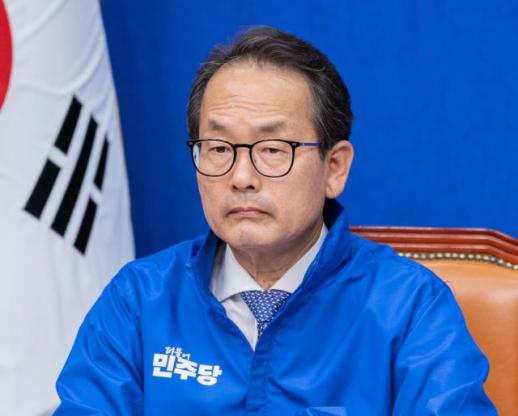 Ruling Party Criticizes Opposition's Handling of Election Management Issues Kang Jun-hyun, the chief spokesperson for the Democratic Party, criticized Jang Dong-hyuk of the People Power Party on June 7 for politicizing the Election Commission's management of ballots, urging him to stop the political theatrics aimed at gaining political leverage. During a press briefing at the National Assembly, Kang noted, "There is a growing sentiment within the People Power Party to blame all causes and responsibilities on President Lee Jae-myung." He expressed concern over the party's tendency to obscure its core issues and engage in relentless attacks, stating, "The fundamental problem lies in the poor election management caused by a shortage of ballots." Kang emphasized that while the Election Commission is an independent body under the Constitution, the government and ruling party have not shied away from addressing the issues. He added, "The Democratic Party has committed to all accountability measures, including a national investigation, and we are also considering reforming the Election Commission." He further pointed out, "President Lee has also declared a firm commitment to holding the Election Commission accountable," and criticized the People Power Party for solely blaming the president while ignoring the real issues at hand. Kang concluded by stating, "One of the significant messages from this election is a warning to the People Power Party, and I hope they take it to heart. If they wish to call for a national investigation or a special prosecutor, they must first cooperate in the formation of the National Assembly's second half of the term." 2026-06-07 11:36:00