

Journalist

Kim Dae-jong
-
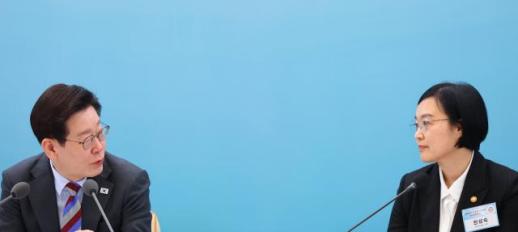 President Lee Names Han Seung-sook as New Prime Minister President Lee Jae-myung has nominated Han Seung-sook, the current Minister of Small and Medium Enterprises and Startups, as the new Prime Minister. Han's appointment comes after she was previously recognized as a surprising choice for the role when she was first appointed as the Minister last June.Initial expectations suggested that the next Prime Minister would likely be a politician with strong leadership skills. However, President Lee's decision to select a private sector leader indicates a shift in focus for the second year of his administration towards revitalizing the economy and advancing artificial intelligence (AI) and digital industries.Han, a graduate of Sookmyung Women's University with a degree in English literature, began her career as a journalist for a computer magazine. She later served as the head of public relations at Nanum Technology and became a founding member of Empas in 1997. In 2007, she joined NHN, the predecessor of Naver, where she transformed the search engine into a content and commerce platform, eventually becoming the first female CEO of Naver in 2017, a position she held until 2022.The Blue House clarified that the decision to appoint a female Prime Minister was not based solely on gender. Chief Presidential Secretary Kang Hoon-sik stated during a briefing that the government's personnel policy is focused on capability and merit, dismissing the notion that gender should be a primary consideration in 2026.Kang described Han as a groundbreaking leader who rose from an ordinary employee to head a major digital company. He emphasized her practical and innovative approach, noting her understanding of the urgent need for AI transformation in society.During her tenure as Naver's CEO, Han led initiatives in AI, cloud computing, and data center growth. From 2017 to 2021, she also served as the president of the Korea Internet Companies Association.After stepping down as CEO in 2022, Han continued her work in Europe as the head of European business development and served as an advisor until her recent nomination.As Minister of SMEs, Han has been credited with shifting the paradigm of small business policy from protection to growth. Last year, small and medium-sized enterprise exports reached a record high of $118.6 billion. In the first quarter of this year, exports continued to break records, marking two consecutive years of peak performance.Her aggressive support for diversified small and venture businesses has helped move away from a large enterprise-centered export structure. Additionally, she initiated the 'Everyone's Startup' campaign, aiming to position South Korea as the leading startup nation. The program revitalized the stagnant self-employment and venture ecosystem, attracting over 63,000 applicants, setting a record for government competitions.In a press conference marking her first anniversary as Minister, Han mentioned the government's declaration of a 'National Startup Era' and stated, "Now is the time to plan for 2045," pledging to create an environment conducive to entrepreneurship over the next 20 years.Han's digital expertise from her private sector background has also enhanced administrative efficiency. She has led efforts to integrate various policy platforms within her ministry and reduced the complexity of application processes by over 50%, easing the administrative burden on small businesses.Real estate holdings are expected to be a contentious issue during her confirmation hearing. Han reported assets worth approximately 22.3 billion won, including four properties: an apartment in Jamsil, Seoul, valued at 2.7398 billion won, an officetel in Yeoksam, Seoul, worth 2.0746 billion won, a house in Samcheong-dong, Jongno, valued at 1.5 billion won, and a house in Yangpyeong, Gyeonggi Province, where she owns about 10% due to inheritance. She recently sold her Jamsil apartment, reducing her holdings to three properties.President Lee previously instructed that individuals with multiple properties should be excluded from housing policy discussions, emphasizing the need for transparency in real estate matters. Kang indicated that Han would provide detailed explanations regarding her property holdings during the confirmation process. 2026-06-07 16:39:00
 -
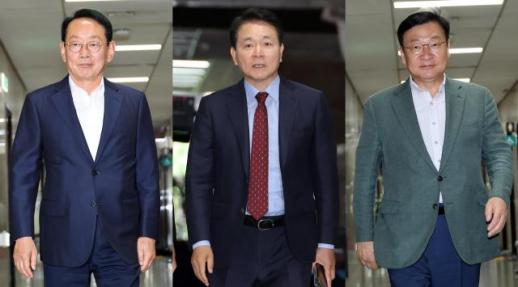 People Power Party Delays Floor Leader Election to June 10 The People Power Party has postponed its floor leader election by one day, now scheduled for June 10. This decision was made during a meeting on June 7 between former floor leader Song Eon-seok and candidates Kim Do-eup, Seong Il-jong, and Jeong Jeom-sik at the National Assembly. After the meeting, Seong told reporters, "We have decided to hold the floor leader election at 10 a.m. on June 10." Originally, the party planned to elect its floor leader on June 9. However, some members raised concerns that the tight schedule did not allow sufficient time for campaigning. In response to these concerns, the candidates held discussions and agreed on the new date. Additionally, the party is considering implementing mobile voting to accommodate lawmakers who may have difficulty casting their votes due to overseas trips. Seong noted, "There is a method used for electing the party leader, so there shouldn't be significant issues with introducing mobile voting." However, there are opinions suggesting that since there has been no precedent for mobile voting in gathering lawmakers' opinions, the feasibility of this option needs to be evaluated. Therefore, it remains to be seen whether mobile voting will actually be implemented in this floor leader election. Meanwhile, the new floor leader will face numerous challenges immediately upon taking office, including negotiations for the composition of the National Assembly's second half and potential conflicts with the ruling Democratic Party over the position of the chair of the Legislation and Judiciary Committee. In addition, there are pressing issues such as the formation of a special committee for a national investigation into the shortage of ballots, indicating that whoever takes the lead will likely encounter difficulties from the outset.* This article has been translated by AI. 2026-06-07 16:30:00
 -
 NVIDIA CEO Jensen Huang Visits Jamsil Stadium for First Pitch Ceremony Jensen Huang, CEO of NVIDIA, and Park Jung-won, chairman of Doosan Group, met on June 7 at Jamsil Baseball Stadium in Seoul.Huang arrived at the Doosan Bears' home field around 4:11 PM to make a surprise appearance as the first pitcher for the game.Park, the owner of the Doosan Bears, personally greeted Huang outside the stadium.As they shook hands, Huang said, "It's great to meet you," to which Park replied, "Thank you for coming."Before entering, Huang spoke with reporters, expressing his focus on the first pitch with a bright smile.Huang is set to take the mound wearing a Doosan jersey with the number '93,' commemorating the year NVIDIA was founded. He will stand before domestic baseball fans.In a nod to the occasion, Park will also step up to bat, donning a jersey with the number '96,' representing the year Doosan was established, to receive the pitch from Huang.* This article has been translated by AI. 2026-06-07 16:24:00
 -
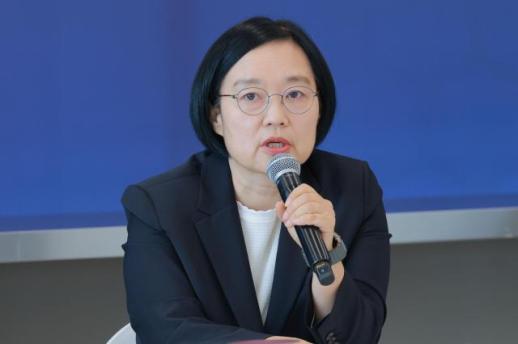 Han Seong-sook Nominated as South Korea's Second Female Prime Minister President Lee Jae-myung nominated Han Seong-sook, the Minister of Small and Medium Enterprises and Startups, as the next Prime Minister on June 7. If confirmed, she will become South Korea's second female Prime Minister, following Han Myung-sook, who served during the Roh Moo-hyun administration. Han's rapid ascent to the role of Prime Minister comes just a year after she was appointed as the inaugural Minister of Small and Medium Enterprises and Startups. Her nomination is attributed to significant policy achievements and her effective problem-solving skills in addressing economic issues over the past year. Han, who was the first female CEO of Naver, South Korea's largest portal site, garnered high expectations upon entering public office. One of her most notable achievements has been leading small and medium enterprises (SMEs) to record export levels despite a global economic slowdown. Last year, SME exports reached a historic high of $118.6 billion, and the first quarter of this year also saw record-breaking figures, marking two consecutive years of peak performance. This success is credited to her aggressive support for diversifying the export structure away from large corporations and facilitating the international expansion of SMEs and venture companies. Additionally, Han has initiated a 'Startup for All' campaign aimed at transforming South Korea into the world's leading startup nation. The 'Startup for All Project' has revitalized the stagnant self-employed and venture ecosystem, attracting over 63,000 applicants, making it the largest government competition to date. Within just 37 days of launching the project, participation surpassed 20,000, indicating a nationwide surge in entrepreneurial activity. During a press conference marking her one-year anniversary in office, Han referenced the Lee administration's declaration of a 'National Startup Era,' stating, "It is now time to plan for 2045," and committed to creating an environment conducive to fostering a startup nation over the next 20 years. Her digital expertise, honed during her tenure at Naver, has also enhanced administrative efficiency. Han has led efforts to gradually integrate various policy platforms within her ministry and has reduced the complexity of application paperwork by over 50%, alleviating the administrative burden on small business owners and companies. Her initiatives to support local businesses have also received positive feedback. In April, she spearheaded the 'Cooperation Festival,' which saw participation from over 33,000 businesses and small enterprises, generating approximately 500 billion won in sales. Han graduated from Uijeongbu Girls' High School and earned a degree in English Literature from Sookmyung Women's University. She began her career as a journalist for an IT magazine and was a founding member of the internet company Empas in 1997 before joining Naver in 2007. President Lee had reportedly been considering Han along with Kang Hoon-sik, the Chief of Staff, and Jeong Seong-ho, the Minister of Justice, as potential candidates for the Prime Minister position.* This article has been translated by AI. 2026-06-07 16:21:00
 -
 Housing Supply Discussions Resume After Local Elections, Diverging Solutions for Seoul and Regions With the conclusion of the June 3 local elections, discussions on housing supply, which had stalled during the electoral period, are expected to gain momentum. As negotiations between the central government and local authorities resume, conflicts surrounding key housing supply sites in the metropolitan area may reignite. According to industry sources on June 7, the areas most likely to see renewed tensions between the government and local authorities are the Gwacheon horse racing track site and the Yongsan district. The government has proposed expanding supply by utilizing prime urban and metropolitan locations, but resistance from local governments and residents remains a significant variable. In Gwacheon, concerns center around the burden of infrastructure such as transportation, education, and water supply. There are fears that adding more supply to an already developing public housing district could reduce local acceptance. In Seoul, the continuation of Mayor Oh Se-hoon’s administration suggests that the existing supply strategy is likely to remain in place. Key elements include revitalizing reconstruction and redevelopment projects, easing regulations on maintenance projects, and enhancing project viability. The approach focuses on increasing supply through private redevelopment initiatives rather than direct public provision. However, the pace of supply in Seoul is uncertain. Maintenance projects must navigate several steps, including establishing associations, obtaining permits, relocating residents, and commencing construction. Rising construction costs and the financial burdens on association members continue to pose challenges. Critics argue that in areas with low project viability, merely easing regulations may not lead to actual construction. In Gyeonggi Province, the redevelopment of first-generation new towns is the top priority. Areas such as Bundang, Ilsan, Pyeongchon, Sanbon, and Jungdong are set to advance following their designation as leading districts. These regions face significant demand for redevelopment due to aging housing, but the speed of supply will depend on relocation measures and infrastructure improvements. Simultaneous large-scale reconstruction could lead to instability in the rental market. If sufficient temporary housing is not secured, project timelines are likely to be delayed. Enhancements to essential infrastructure, including schools, roads, water supply, and parks, must also be coordinated. Simply increasing housing numbers by raising floor area ratios will not adequately meet local demand. Public housing near transit stations and public-led redevelopment in urban centers are also emerging as key components of Gyeonggi's supply policy. However, in areas with low project viability, attracting private investment without public support is challenging. The financial capacity of local governments and the level of resident consent are also critical factors. Supply indicators show mixed results. From January to April this year, housing permits decreased in both metropolitan and non-metropolitan areas. Conversely, construction starts and sales increased. While this may appear to signal a recovery in supply, completions—directly linked to occupancy—have significantly declined, raising concerns about future shortages. The decline in permits could exacerbate long-term supply uncertainties. The increase in construction starts and sales does not guarantee stability. Typically, it takes several years for construction volumes to translate into completions. During this period, fluctuations in construction costs, financing expenses, and market conditions could delay projects. Metropolitan cities require a different approach than the metropolitan area. Cities like Busan, Daegu, Daejeon, and Gwangju face significant demand for redeveloping aging residential areas and developing transit hubs, but they also contend with high unsold inventory. If supply increases solely based on the assumption of shortages, it could worsen market pressures. Particularly in non-metropolitan areas, the increase in construction starts and sales could lead to a rise in unsold inventory. In regions with weak demand or prices exceeding buyers' affordability, new supply is unlikely to stabilize the market. There are calls to adjust supply speeds based on local population trends, industrial foundations, transportation networks, and pricing levels. The construction industry is also adopting a cautious stance on expanding supply. The burden of rising construction costs remains, and the project financing market has not fully recovered. For permit volumes to translate into actual construction and completions, improvements in financial conditions and enhancements to project viability are necessary. An industry insider stated, "The success of housing supply measures post-local elections depends not on the announced volumes but on their execution. In the metropolitan area, key variables include conflict resolution between the central government and local authorities, the pace of Seoul's maintenance projects, and relocation measures for first-generation new towns. In the regions, managing unsold inventory and tailoring supply to demand are crucial."* This article has been translated by AI. 2026-06-07 16:21:00
 -
 U.S. Raises Counterintelligence Threat Level Regarding Israel The U.S. Department of Defense has reportedly elevated the counterintelligence threat level regarding Israel to its highest status. On June 6, The New York Times cited multiple current and former U.S. officials, stating that the Defense Intelligence Agency (DIA) and other military intelligence agencies have prepared a report raising Israel's counterintelligence threat level from "high" to "serious." According to the report, U.S. officials, including Steve Witkoff, a special envoy for Iran negotiations under President Donald Trump, as well as Elbridge Colby, Deputy Assistant Secretary of Defense for Policy, and Michael Dimino, who oversees Middle East policy at the Pentagon, are believed to be among those targeted by Israel's surveillance efforts. NBC News also reported on the same day, citing two U.S. officials and one former official, that the DIA has communicated internally that the counterintelligence threat level regarding Israel has been raised to "serious." NBC explained that this action comes amid rising tensions between the U.S. and Israel regarding future responses to the Iran conflict. U.S. officials expressed growing concerns within the Pentagon that Israel may be monitoring U.S. officials to gain insights into internal discussions and decision-making processes related to Middle Eastern conflicts during the Trump administration. The assessment of the counterintelligence threat posed by Israel is reportedly higher than that of some adversaries, as well as certain allied nations. According to The New York Times, the only country that comes close to Israel's threat level is South Korea, under specific circumstances. The DIA's report was prompted by discoveries made by U.S. military personnel stationed in Israel, who found spyware secretly installed on their mobile phones. The report indicates that Israel's counterintelligence activities began to increase in late 2024, following pressure from the Biden administration for Israel to exercise restraint in its attacks on Gaza, and have continued to rise since the Trump administration considered military action against Iran last year. Last year, Israeli intelligence agency Shin Bet was caught attempting to install surveillance devices on vehicles belonging to the U.S. Secret Service. A senior official expressed concerns that since the start of Trump's second term, Israeli intelligence operations targeting U.S. officials have become "out of control." Israel has strongly denied the allegations. A spokesperson for the Israeli embassy in Washington stated in a message to NBC that claims of Israeli espionage against the U.S. are "completely false." The spokesperson added, "Israel does not collect information on U.S. agencies, and even less so on U.S. government officials. Israel's intelligence efforts are aimed at adversaries, not allies."* This article has been translated by AI. 2026-06-07 16:18:00
 -
 Seoul Establishes New Organization to Promote Hallyu Amid Cultural Development With the confirmation of Oh Se-hoon’s re-election as mayor, the vision for the "Gangbuk Renaissance"—developing the northeastern part of Seoul into a cultural and industrial hub—is expected to gain momentum. The Seoul Arena, set to open in the first half of next year, will be at the center of development projects in the Chang-dong and Sang-gye areas. According to the Seoul City government, a recent legislative notice was issued for amendments to the "Seoul Special City Administrative Organization Installation Ordinance." The proposed changes include the establishment of an organization dedicated to the operation and management of the Seoul Arena and the promotion of the Hallyu industry. Under the amendments, the Economic Affairs Bureau's Creative Industry Division will oversee the operation and management of the Seoul Arena, as well as initiatives to revitalize the surrounding area and support the Hallyu industry. The Seoul Arena will be the country's first K-pop-centered multi-cultural facility, built on a 50,000-square-meter site near Chang-dong Station in Dobong-gu. It will feature a large concert hall with approximately 18,269 seats, a medium-sized venue for up to 7,000 people, a cinema, and commercial spaces, accommodating a maximum of 28,000 visitors simultaneously. Seoul City established a special purpose corporation (SPC) for the Seoul Arena after signing a partnership agreement with Kakao in 2022, with construction expected to begin in 2024. The total project cost is estimated at 312 billion won, with the goal of opening in the first half of next year. City officials anticipate that the opening of the Seoul Arena will attract 2.5 million visitors annually and contribute to job creation in the performance and cultural sectors, while also boosting the local economy in the Chang-dong and Sang-gye areas. In April, the city announced plans for "K-Enter Town, Chang-dong," aimed at developing the Chang-dong area into a global cultural center and entertainment industry hub. Chang-dong will serve as a base for cultural and creative industries, while Sang-gye will focus on future industries centered around the Seoul Digital Bio City (S-DBC), which will be developed on the site of the former Chang-dong vehicle depot. Additionally, the city is working on plans to transform the northeastern region from a residential area into an economic hub with job opportunities and industrial infrastructure, linking it with the Gwangwoon University Station development project. The Gwangwoon University Station development project involves the redevelopment of a 150,000-square-meter site of a former railway logistics base near the station in Nowon-gu. The core of this project, Seoul One, is a large-scale complex city being developed by IPAPK Hyundai Industrial Development, featuring integrated residential, commercial, and cultural functions. The amendments also include transferring urban planning responsibilities for industrial complexes and surrounding areas to the Urban Space Headquarters' Urban Planning Division, and moving the urban regeneration innovation district project around Gimpo Airport to the Balanced Development Headquarters' Western Region Division. Seoul City plans to finalize the amendments after a public feedback period ending on the 8th, with implementation set to begin on the 1st of next month, coinciding with the start of Mayor Oh's new term. With the continuity of policies ensured by Mayor Oh's re-election, key development projects in the northeastern region, including the Seoul Arena, are expected to gain further momentum in realizing the "Gangbuk Renaissance" vision. 2026-06-07 16:15:00
 -
 Singer Seo In-young to Remarry Businessman Choi Ji-hoon This Fall Singer Seo In-young is set to marry Choi Ji-hoon, the CEO of a content creative company, this fall. According to Yonhap News on June 7, Seo and Choi met through mutual acquaintances and have been in a relationship leading up to their upcoming marriage. Choi is six years older than Seo. Seo's representatives stated they are currently organizing their response following the marriage announcement. Seo In-young debuted in 2002 as a member of the girl group Jewelry. She gained popularity with hits like "One More Time" and "Super Star," and later launched her solo career in 2007 with the song "Cinderella." In 2023, she married a non-celebrity businessman but divorced amicably after about a year. Recently, she opened a YouTube channel titled "Turning Over a New Leaf Seo In-young," where she engages with fans and is experiencing a resurgence in popularity.* This article has been translated by AI. 2026-06-07 16:06:00
 -
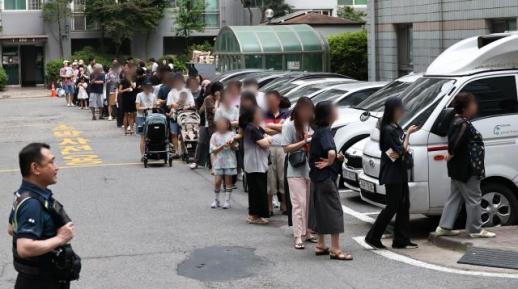 Political Parties Call for National Investigation into Ballot Shortage In an unprecedented situation during the June 3 local elections, some voters were forced to abandon their ballots due to a shortage of voting materials. Both the Democratic Party and the People Power Party have announced plans to submit requests for a national investigation. Jang Dong-hyuk, the leader of the People Power Party, further called for a re-election and the abolition of early voting. On the morning of June 7, Jang held a press conference at the National Assembly, urging the Democratic Party to "immediately form a special committee for the national investigation and expedite the establishment of a special prosecutor's office." He emphasized that the National Assembly must fulfill its duty to uncover the truth and hold those responsible accountable. The People Power Party plans to prepare a national investigation request to submit to the National Assembly on June 8. The ruling Democratic Party is also expected to initiate related procedures on the same day. Currently, both parties are preparing separate requests, indicating that negotiations will be necessary to consolidate them into a single proposal. Han Byeong-do, the Democratic Party's floor leader, stated during a press briefing that "we need to clarify why this incident occurred and whether there are issues within the internal systems of the National Election Commission." He pledged to thoroughly investigate the situation through a swift national inquiry and expressed readiness to negotiate with the People Power Party immediately. Both parties agreed on the necessity of reforming the National Election Commission. Although it operates as an independent body, they acknowledged that external oversight is needed if internal checks are ineffective. The Democratic Party plans to secure measures for improving and overseeing the Election Commission, potentially through a special prosecutor or constitutional amendments, if necessary. Han noted, "As problems continue to arise, allegations of election fraud gain traction," and he vowed to address the root causes. He indicated plans for a comprehensive review of the Public Election Act and to ensure that principles of oversight and accountability are effectively applied to the Election Commission. However, the People Power Party views the national investigation and special prosecutor as merely "minimum measures." They argue that improvements to the election laws and a re-election are also necessary. During the press conference, Jang pointed out, "The public wants a re-election, and if we try to gloss over this with a national investigation or a special prosecutor recommended by the ruling party, we cannot quell the rising anger of the people." He added, "We must abolish early voting, which half of the public distrusts. Instead of dismissing this as a claim from election fraud proponents, we should eliminate the roots of such claims. I cannot understand why there is such a strong insistence on maintaining early voting." 2026-06-07 16:06:00
 -
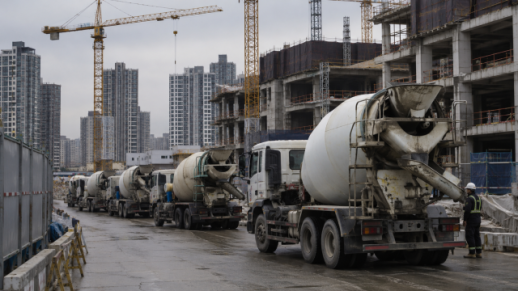 Concrete Transport Costs in Seoul Area Near 80,000 Won After 47% Increase in Five Years Concrete transport costs in the Seoul area are approaching 80,000 won per delivery this year. Over the past five years, transport costs have risen nearly 47%, with short-term work stoppages and price agreements occurring each time negotiations falter. The nationwide transport union's planned full-scale strike on June 8 is part of the ongoing struggle over transport pricing. An increase in transport costs could lead to higher concrete delivery prices, making this year's negotiations a significant factor for the construction industry. The upward trend in costs has been steep. In the Seoul area, transport costs rose from 51,500 won in 2020 to 56,000 won in 2021, then to 63,700 won in 2022, 69,700 won in 2023, 72,430 won in 2024, and 75,730 won in 2025. Compared to 2020, this represents an increase of approximately 47%. Despite a decline in concrete demand due to a sluggish construction market, prices have not stabilized. This year's negotiation baseline has already been set high. In April, Daejeon agreed to raise transport costs from 76,500 won to 81,000 won, marking a 5.88% increase. Currently, the average transport cost in the Seoul area is lower than in Daejeon, leading industry insiders to view 81,000 won as a potential minimum for negotiations in Seoul. If the Daejeon increase is applied, transport costs in the Seoul area would exceed 80,000 won. While specific demands have not been disclosed, the question of whether costs will reach the 80,000 won mark is a key point of interest in this year's negotiations. The negotiation structure adds to the pressure. Traditionally, the Seoul area has set prices by region, but this year, the union is demanding integrated negotiations across the entire Seoul area. Manufacturers are concerned that if integrated negotiations succeed, the price differences between regions will disappear, leading to a standardization of higher transport costs. The union cites the establishment of a nationwide union and court rulings recognizing the employment status of transport workers as the basis for their demand for integrated negotiations. Conflicts over transport costs in the Seoul area have previously led to short-term work stoppages and price agreements. In July 2022, a transport strike in the Seoul area halted operations at 158 concrete plants, resulting in estimated losses of about 30 billion won per day for manufacturers. The conflict was resolved within two days when an agreement was reached to raise transport fees by 24.5% over two years, from 56,000 won to 69,700 won. In July 2024, a three-day work stoppage was also called off, but transport costs subsequently rose again to 75,730 won in 2025. As a result, this year's negotiations are drawing greater attention not just for the potential for a few days of work stoppage, but for the possibility of changing how transport costs in the Seoul area are determined in the future. If regional negotiations continue, some price differences may remain, but if integrated negotiations are enforced, there is a greater chance that transport costs in the Seoul area will be adjusted upward all at once. This is why manufacturers are hesitant about integrated negotiations. A source in the concrete industry stated, "If we move to integrated negotiations, the prices that have been set regionally will inevitably align with the higher rates, and if the union's status is recognized, the balance of negotiations could shift significantly each year."* This article has been translated by AI. 2026-06-07 16:03:00