

Journalist

박선태
-
 Kiwoom Securities Raises Park Systems Target Price Amid Surge in Orders Kiwoom Securities announced on June 5 that it has raised its target price for Park Systems from 300,000 won to 355,000 won, an increase of 18.3%, citing a rapidly growing order backlog that is expected to boost performance in the second half of the year. The investment recommendation remains a 'buy.' Oh Hyun-jin, a researcher at Kiwoom Securities, noted, "Although interest in the semiconductor industry has waned due to the growth potential of existing mass production equipment, Park Systems continues to show solid growth regardless of market conditions." In the first quarter of this year, Park Systems reported revenue of 39.4 billion won, a 23% decrease from the same period last year, while operating profit fell 84% to 2.1 billion won. Analysts attribute the decline to reduced shipments of industrial equipment and increased costs from mergers and acquisitions (M&A) and workforce expansion. In the first quarter, industrial equipment accounted for 64% of total revenue, while research equipment made up 33%. Regionally, sales were distributed with 34% from China, 32% from the United States, and 11% from South Korea. The share from the U.S. continues to grow due to customer diversification. Kiwoom Securities anticipates a significant improvement in performance starting in the second half of the year, forecasting second-quarter revenue of 44.9 billion won and operating profit of 8 billion won. The firm highlighted that the order backlog reached 87.1 billion won at the end of the first quarter and increased to 97.8 billion won by the business report submission date of May 14. Oh stated, "The high order backlog supports a strong performance trend, and the growth in the second half could exceed market expectations." New equipment development and expanded production capacity are also seen as growth drivers. The NX-THS equipment, aimed at advanced packaging, is optimized for large-area sample inspection, with expectations for additional orders from major clients within the year. Recently, Park Systems announced plans to invest 40 billion won in expanding production capacity and 60 billion won in research and development and external technology investments. The company is also continuing its business expansion through M&A, having acquired a digital holographic microscope company earlier this year and recently a probe manufacturer used in semiconductor testing. Kiwoom Securities projects Park Systems' revenue for 2026 to reach 237.9 billion won, with an operating profit of 53.1 billion won, representing increases of 16% and 26%, respectively, from the previous year. Oh remarked, "Due to the nature of its equipment, Park Systems is relatively less affected by the conditions of the upstream industry, and we expect continued solid performance growth and an upward trend in corporate value."* This article has been translated by AI. 2026-06-05 08:57:00
 -
 KB Securities Raises LG Innotek Target Price to 2 Million Won Amid AI PCB Demand KB Securities announced on June 5 that it has raised its target price for LG Innotek from 1.6 million won to 2 million won, citing a structural supply shortage in the artificial intelligence (AI) printed circuit board (PCB) market as a long-term growth driver. The firm maintained its "buy" rating on the stock. Kim Dong-won, head of research at KB Securities, stated, "Currently, major U.S. clients are competing to secure production capacity by offering investment support and long-term supply contracts. LG Innotek's expansion in AI PCBs is likely to lead to full operation and immediate sales upon completion." He added, "We are pushing for new FC-BGA expansions at the request of our clients, with FC-BGA sales expected to grow from 140 billion won in 2026 to over 2 trillion won by 2030, marking a 14-fold increase in just four years." Kim explained that AI data center companies and memory semiconductor firms are strongly requesting new investments and early expansions, noting that memory and PCBs have emerged as the most critical supply bottlenecks in the AI infrastructure development process. The earnings outlook is also positive. Kim projected that the second-quarter operating profit would soar to 178.7 billion won, a 1,469% increase year-on-year, significantly exceeding market expectations. He noted that despite the off-season for the PCB business, the packaging solutions division is operating at full capacity, and strong mobile sales from North American clients are expected to improve optical solutions performance. Looking ahead to the second half of the year, he forecasted that both packaging and optical solutions would enter their peak seasons, leading to an operating profit of 769.5 billion won, a 46% increase from the previous year. He emphasized that LG Innotek will need over 2 trillion won in new investments for AI PCBs over the next two years, stating that the support from client investments and long-term supply contracts will mitigate expansion risks and enable high utilization rates and profitability immediately after expansion.* This article has been translated by AI. 2026-06-05 08:57:00
 -
 Hana Securities Raises PSK Target Price Amid Optimistic Earnings Outlook Hana Securities announced on June 5 that it has raised its target price for PSK to 160,000 won, citing expectations for increased semiconductor investments and improved profitability. The firm maintained its investment rating at "buy." In a report released on the same day, analyst Kim Rok-ho stated, "Investment from memory and foundry companies is expected to ramp up significantly in 2027 compared to this year. In 2027, new fabs from three major domestic and international memory companies are set to open, and Changxin Memory Technologies (CXMT) is likely to pursue aggressive expansion based on public funding." He added, "With new factory investments planned by Samsung Electronics and Intel in the foundry sector, equipment investments are expected to be robust in 2027 and 2028. Over the next three years, we anticipate strong growth visibility, and we continue to favor PSK alongside Tes and VM as our top picks in the front-end equipment sector." Kim also noted, "Investments from Chinese companies are estimated to exceed initial expectations. Sales to U.S. clients have remained steady, and we expect the proportion of sales by client to remain similar to the first quarter." Furthermore, he predicted that Chinese memory firms would show a strong willingness to expand in the second half of the year following the confirmation of their listing dates. He emphasized that overseas clients often have higher average selling prices, which could contribute positively to profit margins.* This article has been translated by AI. 2026-06-05 08:57:00
 -
 Anthropic Reports Claude Writes Over 80% of Its Code, Signaling New Era of AI Self-Improvement The concept of AI improving itself through recursive self-improvement is becoming a reality. Anthropic has issued a warning that this trend is advancing much faster than anticipated, based on its internal data. On June 4, Anthropic released a report titled "When AI Builds Itself," revealing that as of May 2026, over 80% of the code integrated into its codebase is generated by Claude, its AI system. Prior to the launch of Claude's code in February 2025, this figure was in the single digits. The amount of code produced per engineer has increased nearly eightfold compared to the average from 2021 to 2025, and employees using the Mytos Preview reported a fourfold increase in productivity compared to when they worked without AI. Additionally, the length of tasks that AI models can autonomously complete has doubled every seven months, and recently, this acceleration has increased to doubling every four months. Anthropic stated, "While we cannot definitively say that recursive self-improvement is imminent, if this trend continues, it could become a reality for AI systems to design and build their successors." This marks the first time a leading company in the AI sector has officially declared the onset of an era where "AI creates AI," which is expected to have significant implications for future discussions on AI safety. OpenAI Enhances ChatGPT Memory Architecture for Free Users On June 4, OpenAI announced a comprehensive overhaul of ChatGPT's memory architecture based on a system called "Dreaming." Dreaming automatically analyzes past conversations to integrate and maintain user preferences, constraints, and patterns in the background, even without explicit requests for memory. A key aspect of this upgrade is reducing the computational requirements for the Dreaming service by about 80%, allowing it to be expanded to free users. At the same time, the memory storage capacity for Plus and Pro subscribers will double. This change will initially apply to Plus and Pro users in the United States, with plans to extend it to additional countries and free Go users in the coming weeks. However, researchers noted that 96% of the existing ChatGPT memory entries were automatically generated by the system without user consent, raising concerns about potential conflicts with EU AI transparency regulations. * This article has been translated by AI. 2026-06-05 08:48:00
 -
 Bithumb Recognized by Police for Preventing $8 Million in Phishing Scams Bithumb announced on June 5 that it received a certificate of appreciation from the National Police Agency for its contributions to preventing phishing scams involving virtual assets.Since March, Bithumb has been operating a proactive collaboration system that connects information on malicious app installers provided by the police's Integrated Response Team with member data to register users as 'at risk.' This system has enabled Bithumb to notify the police in real-time about 66 suspicious transactions, preventing approximately 800 million won (about $600,000) in phishing losses.One notable case involved a customer who attempted to buy and withdraw virtual assets worth 150 million won (about $112,000) after being deceived by criminals impersonating institutions. Bithumb collaborated with the police to block the transaction. Additionally, the platform detected another suspicious transaction where a user was misled into opening a new account and attempting to transfer 88.9 million won (about $66,000), thus preventing further losses.Bithumb plans to strengthen its data-sharing system with the police regarding phishing crimes while enhancing its security measures and investor protection activities.Currently, Bithumb has implemented a security system that automatically restricts transactions if a remote control app is detected during app operation. The company is also developing a system that automatically issues warnings and limits service use upon detecting malicious apps, while maintaining customer assets at a higher ratio than legal standards to combat fraud effectively.Byun Seung-moo, Bithumb's compliance officer, stated, "Bithumb has continuously enhanced its security system to detect phishing site lure activities and suspicious transactions early, ensuring a safe virtual asset trading environment. In the future, we plan to build a faster and more sophisticated response system through collaboration with the National Police Agency, continuously strengthening our user protection capabilities."* This article has been translated by AI. 2026-06-05 08:45:00
 -
 Market Preview: U.S. Tech Stocks Pause as Jensen Huang Visits South Korea South Korea's stock market is expected to focus on individual stocks amid two key factors: a correction in U.S. semiconductor stocks and the visit of Jensen Huang, CEO of Nvidia. Following a night of profit-taking in U.S. tech stocks, the market is paying close attention to Huang's meetings with local business leaders and discussions on artificial intelligence (AI) collaboration. On June 4, U.S. stock indices closed mixed. The Dow Jones Industrial Average and the S&P 500 rose by 1.73% and 0.41%, respectively, while the tech-heavy Nasdaq Composite fell by 0.09%. The Dow reached a record high, buoyed by strong performances in healthcare and financial sectors. In contrast, the Nasdaq declined, affected by weakness in semiconductor stocks, including Broadcom. Broadcom plummeted by 12.59%, while other memory-related stocks such as Micron Technology (-7.74%), SanDisk (-3.92%), and Western Digital (-3.13%) also experienced significant declines. Han Ji-young, a researcher at Kiwoom Securities, commented on the downturn, stating, "The correction in leading stocks was not due to fundamental or macroeconomic issues like an impending memory down cycle or rising interest rates. Instead, it appears to be a temporary reaction from investors looking to take profits after a series of record highs, leading to a heightened market expectation in the short term." International oil prices fell, with Brent crude futures dropping by 2.8% to $95.03 per barrel, and West Texas Intermediate (WTI) futures declining by 3.1% to $93.04 per barrel. The South Korean market is likely to reflect some impact from the correction in U.S. tech stocks. However, attention is expected to center on Huang's visit and the potential beneficiaries of his discussions. As of 8:23 a.m. on June 5, shares of Samsung Electronics were trading at 340,000 won, down 3.27% from the previous trading day. SK Hynix also saw a decline of 3.92%, trading at 2,208,000 won. LG Electronics fell by 4.57% to 313,000 won, while Naver dropped 3.74% to 257,500 won. Conversely, Doosan Enerbility rose by 2.42% to 101,600 won. Seo Sang-young, a researcher at Mirae Asset Securities, noted, "There are still concerns regarding the dollar-won exchange rate and ongoing foreign selling pressure. However, Huang's visit and the expectations for collaboration with major companies could lead to a concentration of interest in specific stocks, suggesting that the market will focus more on individual stocks rather than overall index changes."* This article has been translated by AI. 2026-06-05 08:39:00
 -
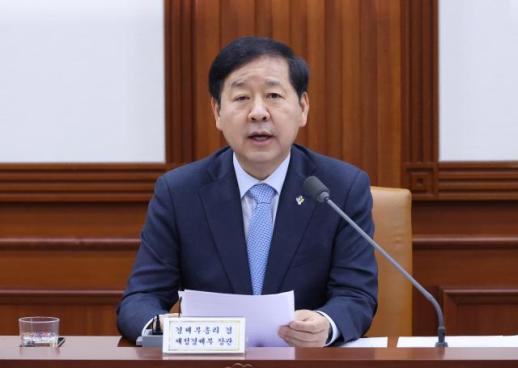 Korea's Economy Shows Signs of Recovery, Says Deputy Prime Minister Deputy Prime Minister and Minister of Finance and Economy Koo Yun-cheol stated that the government has achieved visible results in economic recovery as it marks its first year in office, while emphasizing the need for vigilance regarding the cost of living and volatility in financial and foreign exchange markets. During an emergency economic meeting held at the Government Seoul Complex on June 5, Koo noted, "Despite challenging conditions such as the Middle Eastern conflict, the combined efforts of the public, businesses, and the government have led to tangible results in economic recovery." He highlighted the recent upward revision of South Korea's growth forecast by the Organization for Economic Cooperation and Development (OECD), which increased the projection from 1.7% to 2.6%, while lowering the global growth forecast from 2.9% to 2.8%. Koo attributed this positive outlook to strong exports, particularly in semiconductors, and the effects of the supplementary budget, stating, "The recovery in consumption is expected to continue." Koo also emphasized improvements in fiscal soundness, mentioning that the OECD has revised its forecast for the general government debt-to-GDP ratio down from 52.0% to 48.2% for this year, and from 55.0% to 50.2% for next year. He remarked, "The expansion of productive fiscal policies is creating a virtuous cycle that enhances fiscal sustainability." He reported that South Korea's current account surplus reached $28.29 billion in April, exceeding $20 billion for three consecutive months, and the cumulative current account surplus for January to April hit a record $102.67 billion. However, Koo acknowledged that despite improvements in economic indicators, challenges remain for the public economy. He stated, "We are particularly vigilant in responding to the increased volatility in financial and foreign exchange markets and the difficulties faced by the public regarding living costs," adding that the government will strengthen its support for the economy, which is struggling due to the impact of the Middle Eastern conflict. Koo also announced plans to actively pursue structural innovations for a significant economic leap, stating, "We will accelerate efforts to promote an ultra-innovative economy, expand regional investments, and address structural challenges such as reform and polarization facing our economy." During the meeting, the government discussed comprehensive safety management measures for the agricultural and forestry sectors and expedited plans for the seventh regional revitalization investment fund project. They agreed to swiftly proceed with related procedures, including exempting local financial investment reviews for the construction of an advanced data center in Jangseong, Jeollanam-do, estimated at around 400 billion won.* This article has been translated by AI. 2026-06-05 08:39:00
 -
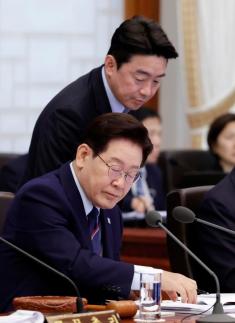 South Korea Proposes Hydrogen Truck Technology Transfer to Canada Linked to Submarine Bid The South Korean government has proposed a hydrogen truck package project to the Canadian government, investing 3.4 trillion won (approximately 3.1 billion Canadian dollars) in connection with the bid for next-generation submarines. According to the Blue House on June 5, Chief of Staff Kang Hoon-sik disclosed the plan, named 'Project Beaver,' during an interview with Canadian CTV on June 3 (local time). Currently, Hanwha Ocean is in final competition with Germany's ThyssenKrupp Marine Systems (TKMS) for the Canadian next-generation submarine project, which is valued at up to 60 trillion won. CTV reported that while some details of this project were included in Hanwha Ocean's bidding documents, specifics had not been previously disclosed. Project Beaver aims to transfer Hyundai Motor's hydrogen vehicle technology to Canada. Hyundai Motor Group, which has a defense sector, is collaborating with Hanwha Ocean on this bid. According to the project plan, the first phase will begin in 2030, focusing on constructing a liquefied hydrogen plant in British Columbia. Thirty-two hydrogen vehicle charging stations will be established in British Columbia and Alberta, with a manufacturing plant for hydrogen vehicles planned in Ontario. An additional 160 charging stations are expected to be installed after 2035. In the interview, Kang explained that through this project, they aim to create a South Korean brand that utilizes Canadian raw materials and components in the manufacturing process. He emphasized that securing the submarine contract would enable Hyundai Motor to assist in building Canada's hydrogen ecosystem. Kang also projected that Project Beaver would foster the hydrogen truck industry, creating 9,000 jobs. He attributed the decision to propose a hydrogen truck project, rather than consumer electric vehicles, to pressure from the United States and China's entry into the Canadian electric vehicle market. Kang cited the example of European automaker Stellantis, stating, "The U.S. suggested it would be more advantageous for Stellantis to come to the U.S.," adding that South Korean companies are facing similar pressures. Stellantis announced last October that it would move production of its Jeep models from Ontario, Canada, to Illinois, U.S. Kang noted that when Canadian Prime Minister Mark Carney visited China, he promised a certain volume of electric vehicle imports from China, stating, "It is difficult for South Korea to compete with China, which leads in the electric vehicle sector." Meanwhile, Kang visited Canada as a special envoy for strategic economic cooperation for President Lee Jae-myung and returned on June 4.* This article has been translated by AI. 2026-06-05 08:39:00
 -
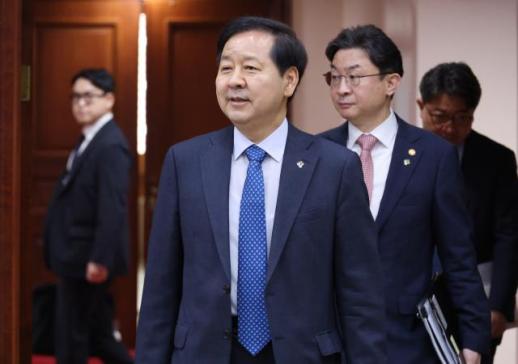 Government Accelerates $395.9 Million Data Center Project in Jangseong The South Korean government is accelerating the development of a high-tech data center project in Jangseong, Jeollanam-do, as part of its seventh Regional Revitalization Investment Fund initiative. The plan includes streamlining local financial investment review processes to expedite contributions from local governments and establish essential AI infrastructure promptly. On June 5, Deputy Prime Minister and Minister of Finance and Economy Koo Yun-cheol chaired a meeting at the Government Seoul Building, where he announced measures to expedite the seventh Regional Revitalization Investment Fund project. This initiative involves the construction and operation of a data center in the Nam-myeon area of Jangseong, located within the Gwangju Research and Development Special Zone. The data center will have a power capacity of 26 megawatts (MW), with an IT load of 16.7 MW, providing server space for cloud service providers and offering ancillary services such as power supply and climate control. This key project, which has been pursued by Jangseong County and private entities since 2023, aims to expand its power capacity to 60 MW in the future, establishing it as a hub for AI development. The total project cost is estimated at 395.9 billion won, funded through 100 billion won in equity and 295.9 billion won in project financing loans. Jeollanam-do and Jangseong County plan to contribute a total of 8 billion won, with Jeollanam-do investing 4.8 billion won and Jangseong County 3.2 billion won. The project was selected for investment by Korea Growth Investment Corporation in November 2022, and construction began in February 2023 following project financing agreements. As of late April, the project was 9.21% complete. It is expected to be completed by December 2027, followed by a three-month stabilization period before commencing full operations in March 2028. To ensure timely completion of the data center, the government has decided to expedite the special purpose corporation (SPC) investment procedures for Jeollanam-do and Jangseong County. This will involve applying a special track that exempts local financial investment reviews, streamlining the related processes following approval from the Economic Relations Ministers' Meeting. The government anticipates that this project will help alleviate the concentration of AI infrastructure in the Seoul metropolitan area and promote the digital transformation of regional industries. Upon completion, it is expected to generate approximately 800 billion won in production effects and create around 3,000 jobs, contributing to the revitalization of the local economy. The Regional Revitalization Investment Fund is a program designed to attract private investment for regional projects, based on a master fund established by the government and policy finance institutions. To date, eight projects have been selected across various regions and sectors, with an estimated total project cost of around 3.6 trillion won.* This article has been translated by AI. 2026-06-05 08:12:00
 -
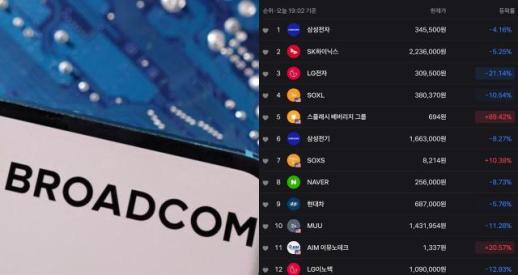 Broadcom Shares Plunge Despite Strong Earnings Report Broadcom, a leading beneficiary in the AI semiconductor sector, is facing investor confusion as its stock plummeted despite exceeding market expectations with its earnings report. Some analysts interpreted comments from Broadcom's CEO as a warning about an AI bubble, but a closer look at the conference call reveals a more optimistic tone. Hock Tan, Broadcom's CEO, stated during the recent earnings call, "We continue to see strong demand for AI infrastructure from hyperscale customers," maintaining a positive outlook on the AI market. He added, "Demand for AI remains very strong," highlighting explosive demand in AI networking equipment and AI accelerators. Broadcom's AI-related business is thriving, with AI revenue surpassing $10 billion this quarter, a 143% increase year-over-year, exceeding market forecasts. The ongoing competition for AI infrastructure has led to increased orders from major tech clients. However, investors were disappointed not by the results but by the expectations. While Broadcom presented a positive outlook for its AI business, it did not provide the aggressive upward guidance Wall Street had anticipated. Investors had hoped for an increase in AI revenue guidance and long-term growth projections, but the company maintained its existing forecasts. Ultimately, the market seemed to demand not just a "good performance" but a "perfect performance." Recently, stocks of AI semiconductor companies like NVIDIA, Broadcom, and AMD surged on expectations of an AI supercycle, leading investors to seek not just growth but a series of surprises that significantly exceed market expectations. Following Broadcom's earnings announcement, some market analysts noted, "The issue lies not with the company but with Wall Street's overly high expectations." In online investment communities, reactions included comments like, "Broadcom stated there are no issues, but the market inflated expectations on its own and was disappointed." This Broadcom shock is interpreted as a reflection of how high market expectations have risen for AI-related stocks, rather than concerns about a slowdown in the AI industry. While demand for AI remains robust, the key variable determining stock prices will be how well companies can meet investors' growth expectations moving forward. 2026-06-05 08:09:00