
Journalist

아마노 유키코 기자/ [번역] 이경
-
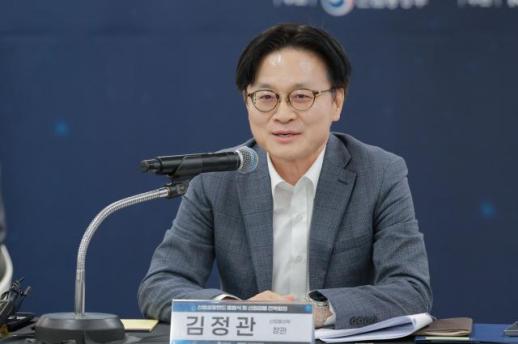 Industry Minister Thanks Gas Stations for Efforts Amid Middle East Crisis Kim Jeong-gwan, the Minister of Industry, Trade and Energy, stated on May 19 that the stability of domestic oil prices is largely due to the efforts of local gas stations. He expressed hope that the government, businesses, and citizens can work together to navigate the ongoing crisis stemming from the Middle East. On this day, Minister Kim visited the "Dae Won Self-Service Gas Station" in Guro-gu, Seoul, where he held a meeting with representatives from gas stations recognized as "good gas stations." The designation of good gas stations was initiated by the citizen group "Energy and Oil Market Monitoring Group" following the implementation of the maximum price system for petroleum products on March 13. To date, a total of 334 gas stations have been recognized as good gas stations across four rounds of selections. These stations sell fuel at prices approximately 14 to 15 won lower per liter than the national average, while 24 stations that have been selected more than twice offer prices 19 to 21 won lower per liter. To encourage the price stabilization efforts of these gas stations, the government is enhancing its promotion and support for good gas stations. A dedicated banner for good gas stations has been established on the Korea National Oil Corporation's Opinet website, and they can also be found on major navigation apps like T-map, Naver Maps, and Kakao Maps. Additionally, gas stations that are selected five times will receive a special designation as "super good gas stations," along with an exclusive offline mark and government awards as incentives. Currently, the average price of gasoline at gas stations nationwide is 2,011 won per liter, while diesel is at 2,006 won. According to the Ministry of Finance and Economy, the implementation of the maximum price system has resulted in a price reduction effect of 0.6 percentage points in March and 1.2 percentage points in April. Minister Kim expressed deep gratitude to the many stakeholders in the gas station industry, stating, "I hope the war in the Middle East ends soon and that all market economies can return to normal." The government is set to decide on the sixth maximum price system for petroleum products on May 21. The Ministry of Industry has been implementing the maximum price system since March 13, as international oil prices have exceeded $100 per barrel, increasing inflationary pressures. The initial maximum prices set for regular gasoline, diesel, and kerosene were 1,724 won, 1,713 won, and 1,320 won per liter, respectively. Following this, the second maximum price was established on March 27, setting regular gasoline at 1,934 won, diesel at 1,923 won, and kerosene at 1,530 won. The third to fifth maximum price systems, implemented at two-week intervals, have remained unchanged.* This article has been translated by AI. 2026-05-19 14:46:59
 -
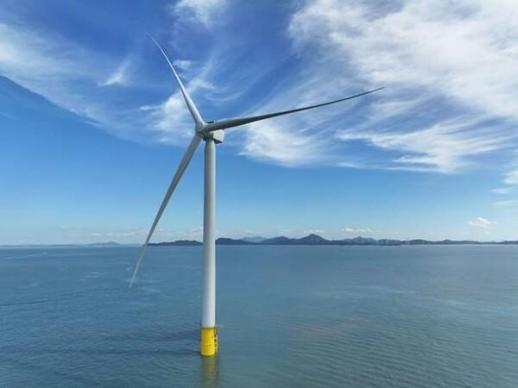 South Korea Aims to Become a Top 10 Renewable Energy Nation by 2030 The South Korean government has officially set a goal to expand its renewable energy capacity to 100 gigawatts (GW) by 2030. This initiative is part of a broader strategy to transition to renewable energy in response to the energy crisis stemming from the Middle East and the tightening of global carbon regulations. The Ministry of Climate, Energy, and Environment announced the "First Basic Plan for Renewable Energy" during the 38th Energy Committee meeting held at the Korea Chamber of Commerce and Industry in Seoul on May 19. The government aims to achieve a renewable energy capacity of 100 GW by 2030 and to ensure that renewable energy accounts for more than 30% of the country's energy generation by 2035. This plan is the first dedicated basic plan for renewable energy established under the revised "Promotion of Development, Use, and Distribution of Renewable Energy Act" enacted this year. The government has outlined five key tasks and ten strategies, promoting the vision of "renewable energy that benefits local communities and revitalizes industries," focusing on expanding distribution, reducing costs, fostering industry, enhancing public engagement, and restructuring governance. The government plans to develop large flagship projects primarily in the Seoul metropolitan area, Chungcheong region, and Gangwon province, while also increasing solar energy deployment by utilizing idle spaces such as factory rooftops, agricultural lands, and water surfaces. This initiative aims to position South Korea among the world's top ten renewable energy nations. Additionally, the government will expand energy storage systems (ESS) and promote a package approach that combines renewable energy, ESS, and heat pumps to facilitate the transition to decentralized power grids at the local level. The Renewable Portfolio Standard (RPS) will be restructured to a long-term fixed-price contract market, and efforts will be made to lower the costs of solar and wind energy to enhance their economic viability. The government also plans to promote solar energy deployment that achieves economic viability comparable to nuclear power. The strategy includes fostering the renewable energy industry as a "second semiconductor and shipbuilding industry," with plans to increase domestic solar module production capacity to 10 GW per year and wind turbine production capacity to over 3 GW per year by 2030. Of the total 100 GW, solar energy is expected to account for 87 GW, offshore wind for 3 GW, and onshore wind for 6 GW. Investments in next-generation solar cells and floating offshore wind technologies will also be strengthened. Minister of Climate, Energy, and Environment Kim Sung-hwan stated, "Based on the discussions of the Energy Committee members, we will accelerate follow-up measures to ensure that our energy policies and plans gain unwavering trust."* This article has been translated by AI. 2026-05-19 14:45:28
 -
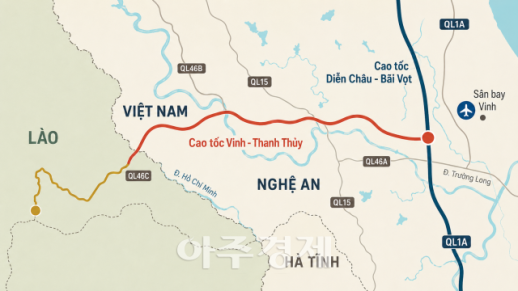 Vietnam Begins Construction of Vinh-Tan Thuy Highway to Connect Northern Region and Laos Vietnam has commenced construction on the Vinh-Tan Thuy Highway, which will connect the northern region with Laos. The project has a total investment of approximately 24 trillion dong (about $1.37 billion) and spans 65 kilometers, with a completion target set for 2029. This highway is a key segment of the Hanoi-Vientiane regional corridor. According to Vietnamese media outlet VnExpress, the groundbreaking ceremony took place on May 18 in Nghe An province, following a previous event in Dai Hue. The highway will begin at the Hung Thuy interchange, connecting to the eastern North-South Expressway's Dien Chau-Bai Bot section, and will end at the Tan Thuy-Nam On border area at the Vietnam-Laos border. The planned route will feature six lanes, with the first phase involving the complete construction of four lanes, while major bridges will be built to accommodate six lanes. The road will have a width of 32.25 meters, with design speeds ranging from 100 to 120 km/h in certain sections, and 60 to 80 km/h in mountainous areas where the width will be 29 meters. The total land area used for the project is approximately 582 hectares, including 98.5 hectares of upstream protection forest, 141 hectares of production forest, 221 hectares of rice fields, and 31 hectares of residential land. The Vinh-Tan Thuy Highway is part of the Hanoi-Vientiane connection corridor, which was agreed upon by the governments of Vietnam and Laos in 2016. The Vietnamese section of the corridor spans approximately 370 kilometers, with about 310 kilometers overlapping with the currently under-construction eastern North-South Expressway. Once completed, travel time from the Tan Thuy border to urban areas and ports within Nghe An province is expected to be significantly reduced. This will enhance connectivity between Vietnam's northern region and Laos, as well as Thailand. It is also anticipated to increase visitor traffic to tourist attractions such as Cua Lo Beach, Kim Liên Historical Site, and Phu Mat National Park. Bui Thanh An, Vice Chairman of the Nghe An Provincial People's Committee, emphasized at the groundbreaking ceremony that "this project is a strategic infrastructure initiative at both regional and national levels," and he called for close cooperation among various agencies, requesting support from the central government and relevant departments. In recent years, the Vietnamese government has prioritized funding for several east-west routes, including the North-South Expressway (eastern section), the Cai Nha-Buon Ma Thuot, the Bien Hoa-Vung Tau, the Chau Doc-Kan Tho-Soc Trang, and the Quy Nhon-Pleiku routes, aiming to complete a total of 5,000 kilometers of highways by 2030. This project is expected to enhance transportation infrastructure through modern and integrated facilities, strengthening economic and trade cooperation between Vietnam and Laos. Additionally, it aims to develop safe and sustainable transportation options, contributing to regional development and reducing traffic accidents.* This article has been translated by AI. 2026-05-19 14:42:16
 -
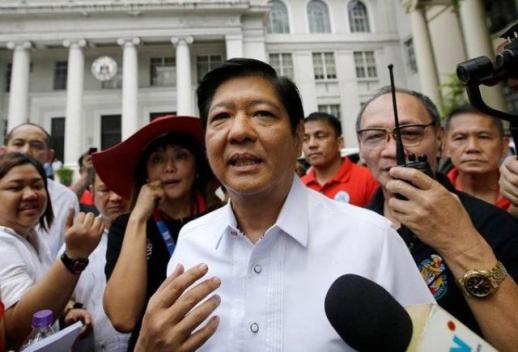 Philippine President: Taiwan Conflict Would Impact Us Ferdinand Marcos Jr., the President of the Philippines, stated that if a military conflict occurs in Taiwan, the Philippines would be unable to avoid its effects. This is due to the country's geographical proximity to Taiwan and the presence of approximately 200,000 Filipinos living there. On May 19, Bloomberg reported that President Marcos made these comments during an interview with Japanese media in Manila the previous day. He emphasized, "The Philippines has no choice," adding, "Taiwan is very close to the Philippines, and nearly 200,000 Filipinos live and work in Taiwan." He clarified that the Philippines does not wish to be drawn into a war over Taiwan. However, he noted, "If an actual conflict occurs, looking at the map, at least northern Philippines would fall within the sphere of influence or feel the repercussions." These remarks come ahead of his state visit to Japan next week, where he is expected to discuss security cooperation with Japanese Prime Minister Sanae Takaichi. Both Japan and the Philippines are experiencing maritime tensions with China in the East China Sea and the South China Sea. The Philippines is also engaging in dialogue with China. President Marcos mentioned, "The foreign ministers of the Philippines and China, along with officials from both countries, are scheduled to meet within a month." He expressed the intention to broaden dialogue channels to maintain peace amid the South China Sea disputes.* This article has been translated by AI. 2026-05-19 14:36:59
 -
 Byun Woo-seok Apologizes for Historical Distortion Controversy in '21st Century Great Lady' Actor Byun Woo-seok has once again apologized regarding the historical distortion controversy surrounding his recently concluded drama, '21st Century Great Lady.'On the morning of May 19, a production presentation for the new Netflix variety show 'Yoo Jae-suk Camp' was held at the Grand Ballroom on the LL floor of the JW Marriott Dongdaemun in Seoul. Attendees included PDs Jung Hyo-min, Lee So-min, and Hwang Yoon-seo, along with broadcaster Yoo Jae-suk, actors Lee Kwang-soo, Byun Woo-seok, and Ji Ye-eun.During the event, Byun addressed the controversy over historical inaccuracies in '21st Century Great Lady.'He stated, "I believe that the best version of myself is to do my best in every moment. Therefore, I put my utmost effort into filming 'Yoo Jae-suk Camp,' and I hope viewers will appreciate that effort in the show alone."He continued, "Regarding the issue (of historical distortion), I want to sincerely apologize for that."Meanwhile, the final episode of '21st Century Great Lady,' which aired on May 16, depicted the coronation ceremony of the character Ian Daegun, played by Byun Woo-seok. This scene sparked controversy due to the use of the term 'Cheonse,' associated with vassal states, and the appearance of a crown representing a vassal instead of the emperor's ten-leaf crown, leading to accusations of historical distortion and the Northeast Project controversy.On May 18, Byun Woo-seok took to social media to express, "During the filming and acting process, I lacked consideration for the historical context and meaning embedded in the work and how it might be perceived by viewers. I sincerely apologize for that."'Yoo Jae-suk Camp' is a variety show where Yoo Jae-suk, along with Lee Kwang-soo, Byun Woo-seok, and Ji Ye-eun, engages with viewers in a 'variety training camp.' The show is set to premiere on May 26.* This article has been translated by AI. 2026-05-19 14:34:44
 -
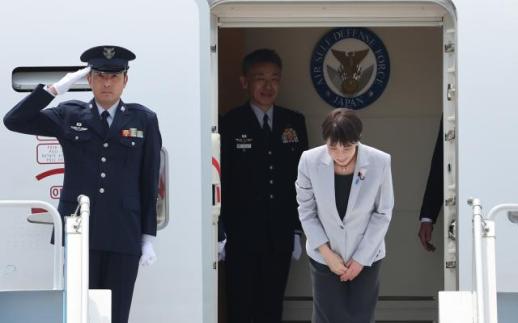 Japanese Prime Minister Takaichi Arrives in Daegu for Korea-Japan Summit Takaichi Sanae, the Prime Minister of Japan, arrived at Daegu International Airport on May 19 for a Korea-Japan summit with President Lee Jae-myung. The meeting is set to take place in Andong, the hometown of President Lee.Takaichi landed at Daegu Airport around 11:53 a.m. on a private jet. Upon exiting the aircraft at 12:09 p.m., she bowed in greeting and waved with a smile. She then shook hands with Kim Jin-ah, the Second Vice Minister of Foreign Affairs, among others.Walking along a red carpet lined with a military honor guard, Takaichi proceeded to her awaiting official vehicle.Her visit marks a two-day, one-night trip, serving as a 'hometown return visit' in response to President Lee's trip to Nara Prefecture, Takaichi's hometown, in January.President Lee is expected to personally greet Takaichi in front of a hotel in Andong, where the summit is scheduled. During President Lee's visit to Japan, Takaichi had also welcomed him outside his accommodation.The Blue House has arranged a reception equivalent to that of a state visit, with a traditional honor guard of 43 members and a military band of 29 members set to escort Takaichi's vehicle to the hotel.Takaichi is scheduled to depart for Japan via Daegu Airport on the morning of May 20 after concluding her two-day visit.* This article has been translated by AI. 2026-05-19 14:31:49
 -
 Think Big, Start Small, Scale Fast: Strategies for AI Adoption As 2025 passed, the questions surrounding AI for South Korean companies fundamentally changed. The focus shifted from "Should we adopt AI?" to "How can we operate it efficiently?" According to the McKinsey Global AI Survey (2025), 88% of companies worldwide are utilizing AI in at least one business function. However, behind these impressive figures lies a harsh reality. Only one-third of companies have scaled AI across their entire organization, while the remaining two-thirds remain stuck in the experimental or pilot phase. Gartner has warned that by the end of 2025, 30% of generative AI projects will be abandoned after the proof of concept (PoC) stage, with actual abandonment rates exceeding this prediction. This phenomenon is referred to as "AI pilot fatigue." The essence of the question has now changed. It is no longer about whether to adopt AI, but rather about how to operate it efficiently to enhance productivity and reduce costs. Many companies fail to implement AI or stop at the PoC stage not due to technological issues, but because of a lack of strategy and execution methodology. Through my experience with various companies' AI transitions, I have identified a clear principle: Think big, start small, and scale fast. The first step in AI transformation should begin not with technology, but with business. The question should be, "Where can we apply AI to create the most value for our business?" rather than "Which AI model should we use?" This involves identifying business outcome-driven areas and conducting feasibility analyses. Companies should first pinpoint AI applications linked to clear performance indicators such as revenue growth, cost reduction, risk mitigation, and enhanced customer experience. Decision-making should start from a return on investment (ROI) perspective, rather than technical curiosity or trends. Thinking big is not merely optimism. It involves strategic thinking about how AI will reshape our business model and operations in three to five years, and then working backward to determine what actions to take now. In a rapidly changing environment, making large upfront investments and following lengthy development cycles is the most dangerous approach in the AI era. Define minimum viable products or minimally operable agents for individual tasks and validate them in real work environments within short cycles. A minimally operable agent is not just a simple demo; it is a functioning AI agent that operates in real work settings and delivers measurable results. Lessons learned from small failures become assets for future expansions. Once performance is proven in individual tasks, the key is to rapidly disseminate these successes throughout the organization. However, many companies fail at this stage by attempting to simply copy and paste successful PoCs. Rapid scaling means building an AI platform that considers common environments, internal work processes, and the organization and its employees simultaneously. According to S&P Global Market Intelligence (2025), the percentage of companies that abandoned AI initiatives surged from 17% in 2024 to 42% by mid-2025. Those companies did not just lose their investments; the real loss was the time gap that occurred while competitors improved productivity through AI. Companies that successfully enter the operational phase of AI will widen their gap in productivity and cost structure compared to competitors. While rivals are stuck in repeating PoCs, those already on the operational track are preparing for the next phase. The conclusion is clear. Think big to envision the overall business outcomes first. Start small to validate minimally operable agents. Then, embed rapid scaling across the organization, focusing on platforms, processes, and employees. The foundation of this journey lies in process definition and AI-ready data, and its execution should be accelerated through strategic collaboration with AI specialists. AI transformation is not a technological issue but a matter of strategy and execution. The clock is ticking even now. Time is money.* This article has been translated by AI. 2026-05-19 14:30:39
 -
 US-China Summit Signals Start of AI and Semiconductor Rivalry The US-China summit held in Beijing in May 2026 appeared calm on the surface. President Donald Trump and Chinese President Xi Jinping projected an image focused on management rather than confrontation. Immediately after the meeting, both nations issued a generic statement expressing their commitment to continue dialogue, which provided some relief to the markets.However, the essence of this summit was far from a mere diplomatic event. It marked the official beginning of a new era of hegemonic competition over artificial intelligence (AI), semiconductors, energy, manufacturing, supply chains, data, and platforms. Just as the United States and the Soviet Union faced off with nuclear weapons during the Cold War, the 21st century has seen the US and China begin to clash over AI and semiconductors.One of the most symbolic moments of the summit was when President Trump unexpectedly invited Jensen Huang, CEO of Nvidia, to board Air Force One on his way to China. This was not just a trivial incident; it symbolized that the US prioritized AI and semiconductors in this meeting. While prominent figures from the US tech industry, such as Elon Musk and Tim Cook, were already part of the economic delegation, the urgent inclusion of Nvidia's CEO highlighted that AI semiconductors have become a national strategy.In reality, the core of the AI hegemonic competition hinges on who can secure more AI chips, build larger AI data centers (AIDCs), and provide more extensive data training and inference services. AI is no longer just a software industry; it has evolved into a massive industrial revolution platform encompassing power, semiconductors, cooling systems, networks, cloud computing, and manufacturing automation.During the summit, President Xi remarked that “the world has reached a new crossroads,” referencing the so-called 'Thucydides Trap.' This was not merely a historical reference but a strategic warning to the US. China suggested that if the US continues to exert military, economic, and technological pressure, both nations could ultimately be drawn into a vortex of significant conflict.At the heart of this is what China refers to as the '3T': Taiwan, Trade, and Technology.First, regarding Taiwan, China reaffirmed its stance of not backing down. The message was clear: if the US deepens its involvement in Taiwan or attempts military intervention, it could serve as a direct trigger for US-China conflict.Second is trade. Since the first Trump administration, the US has pressured China through tariffs and sanctions. However, China is no longer just the 'world's factory.' In sectors such as electric vehicles, batteries, solar energy, drones, telecommunications equipment, and certain AI fields, it has begun to establish world-class competitiveness. The more the US tries to push China out of the market, the more American companies risk losing access to the Chinese market.Third is technology, which is the core of this summit. The US has attempted to slow China's AI development through export restrictions on semiconductor equipment and AI chips. However, China is pursuing self-sufficiency much faster than expected.A prime example is Huawei. Despite strong sanctions aimed at dismantling the company, Huawei has become a symbol of China's technological self-reliance. Currently, Huawei is focusing on building a Chinese-style AI infrastructure with its Ascend chips and CloudMatrix system.While there remains a significant gap in individual chip performance compared to Nvidia's H200 or the next-generation Blackwell system, particularly in memory bandwidth, power efficiency, and software ecosystems, China has chosen a different path. Even if it lags in individual chip competition, it aims to maximize overall system performance by clustering hundreds or thousands of chips together.China's strategy can be summed up as “quantity over quality.” Even if power efficiency is somewhat lower and more space is required, it is pushing forward with massive capital and state support. Importantly, China is not solely targeting conversational AI like ChatGPT.China aims to integrate AI across its entire manufacturing sector, a concept referred to as manufacturing AX (AI Transformation). This includes connecting AI to automotive factories, robotics, logistics, ports, power grids, smart cities, and the defense industry. This is not merely industrial innovation; it represents the construction of a new industrial civilization.Another concerning aspect is cost. Chinese AI models have begun to establish a much lower cost structure than their American counterparts. By combining power, land, data, labor, and state support, China is rapidly reducing the costs of AI token generation. This ultimately means that numerous Chinese startups and manufacturers can adopt AI much more quickly.Conversely, the US remains the world's leading AI nation. Top AI companies, including Nvidia, OpenAI, Google, Microsoft, Amazon, and Meta, are concentrated in the US. The country maintains a dominant advantage in advanced semiconductor design, AI models, cloud computing, operating systems, and global platforms.However, the US faces a dilemma: losing access to the Chinese market. For companies like Nvidia, China represents a market that is hard to forgo. As the US government tightens export regulations, China accelerates its push for self-sufficiency, creating a situation where American companies may find it increasingly difficult to re-enter the Chinese market over time.This scenario is what Jensen Huang fears most. While American GPUs are currently the best in the world, if China builds its own ecosystem, American products could lose their foothold in the Chinese market in a few years. In other words, US regulations could paradoxically promote China's self-reliance.Amid these developments, the world is increasingly moving toward technological decoupling. In the past, during the era of globalization, US technology, Korean memory, Taiwanese foundries, and Chinese assembly factories were interconnected in a single supply chain. However, the likelihood of a split into US and Chinese blocs is growing.Interestingly, ancient classics have long warned of the dangers of excessive power clashes. The Dao De Jing states, “What is too strong does not last long,” and Sun Tzu's Art of War advises, “The best victory is the one that is achieved without fighting.” Today’s US-China technological hegemony competition is likely to culminate in the question of how to create a coexistence order rather than a complete victory for either side.The challenge lies with South Korea. South Korea is a world leader in memory semiconductors, with Samsung Electronics and SK Hynix effectively dominating the HBM market, which is crucial in the AI era. However, unlike the US, South Korea has not mastered platforms and AI models, nor does it possess the vast domestic market and state-led industrial policies like China.Recently, slogans like “AI G3” and “AI Big 3” have emerged in South Korea. However, realistically speaking, becoming the 'third AI hegemon' after the US and China is quite challenging. The US has the world’s best platforms and capital, while China has a massive domestic market and a state mobilization system. South Korea does not have the scale to compete head-on with either country.So, what should South Korea do?First, South Korea must become a key player in AI infrastructure. The country’s real strengths lie in memory and manufacturing. In the AI era, a memory-centric structure may become more important than simple GPUs. Particularly in the inference AI era, power efficiency and resolving memory bottlenecks will be crucial. South Korea should lead the development of next-generation memory and packaging, as well as low-power AI semiconductor structures beyond HBM.Second, it should adopt manufacturing AX as a national strategy. South Korea has a world-class manufacturing base in automobiles, shipbuilding, steel, semiconductors, batteries, and biotechnology. The ability to integrate AI with manufacturing may even give South Korea an advantage over the US. Rather than becoming an “AI platform nation,” South Korea should aim to be an “AI manufacturing innovation nation.”Third, South Korea must maintain a strategic balance between the US and China. The South Korean economy is linked to both US technology and the Chinese market. Choosing one side could destabilize the entire industrial base. Therefore, South Korea needs a complex strategy that cooperates with the US on technological security while also maintaining connections with China in terms of market and industry.Fourth, the direction of a South Korean sovereign AI should be realistically redefined. Competing with the US and China in the race for super-large general models is unlikely to be feasible. Instead, it is far more important to create world-class competitiveness in vertical AI optimized for specific industries such as manufacturing, healthcare, finance, defense, robotics, and logistics.The Beijing summit between the US and China may have seemed quiet on the surface, but beneath it, a massive new Cold War surrounding AI and semiconductors has already begun. The US seeks to contain China, while China aims for self-reliance. In this context, South Korea is entering a period of its most challenging strategic choices in history.The Thucydides Trap is no longer about warships and missiles; it is now about GPUs, HBM, data centers, power grids, AI models, and manufacturing AX. The next decade is likely to be a full-scale battle over who defines the standards of future industrial civilization.Will South Korea remain a mere supplier of components in this turbulent environment, or will it leap forward as a key nation in the manufacturing revolution of the AI era? The time for choice has begun.* This article has been translated by AI. 2026-05-19 14:24:52
 -
 Standard Chartered to Cut Over 7,000 Jobs with AI and Automation Standard Chartered (SC) plans to reduce its back-office and support staff by more than 7,000 by 2030 through the implementation of artificial intelligence (AI) and automation. This restructuring aims to improve cost efficiency and profitability. On May 18, local time, SC announced its strategy to investors, stating it will cut more than 15% of its corporate function workforce by 2030. The 15% reduction pertains specifically to corporate functions, including human resources, risk management, compliance, and operations support, rather than the entire employee base. According to Reuters, the reduction in corporate functions will affect more than 7,000 of the bank's approximately 80,000 employees. The Financial Times reported the figure could be around 7,800. The cuts will be driven by the adoption of AI and automation, with SC aiming to reduce repetitive tasks and enhance productivity. CEO Bill Winters stated, "We will also provide retraining for some employees." This workforce adjustment aligns with SC's goal of improving profitability. The bank aims to increase its return on tangible equity (ROTE) to over 15% by 2028 and plans to raise it to approximately 18% by 2030. SC will focus on enhancing profitability in its wealth management and corporate and investment banking sectors. The bank has set a target to increase revenue per employee by about 20% by 2028, reallocating resources to more profitable areas as it reduces back-office functions.* This article has been translated by AI. 2026-05-19 14:22:00
 -
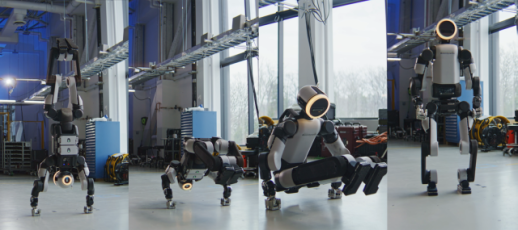 Hyundai and Kia to Deploy 25,000 Atlas Robots in Factories Hyundai Motor Group's robotics subsidiary, Boston Dynamics, is advancing its production plans for the humanoid robot Atlas.On May 18, the group held an investor relations meeting in the United States focused on its robotics strategy, where it announced plans for the mass production of Atlas.The key objective is to introduce over 25,000 Atlas robots into Hyundai and Kia production facilities. The group aims to establish an annual production system for 30,000 robots by 2028, with 83% of these allocated to Hyundai and Kia.In the initial phase of Atlas production, the costs are expected to be high, so the strategy is to leverage Hyundai and Kia's purchasing power to achieve economies of scale.Recently, Kia President Song Ho-sung stated at another investor meeting, "In the first one to two years, we will deploy a large number of robots in U.S. factories to accumulate data and ensure safety. Once the effectiveness of Atlas in specific processes is proven, we can easily expand to other factories due to the similar layouts of global automotive plants."The key component, the actuator, will be produced locally in the U.S. at a rate of 350,000 units per year. A production facility for humanoid actuators, with an annual capacity exceeding 350,000 units, will be established and operational by 2028.Actuators serve as the driving mechanism for robot joints and account for 60% of the total manufacturing cost of the humanoid. Hyundai Mobis is expected to manage the operation of the production facility for Atlas actuators.* This article has been translated by AI. 2026-05-19 14:18:32