
Journalist

오오타니 사토시 기자/ [번역] 이경
-
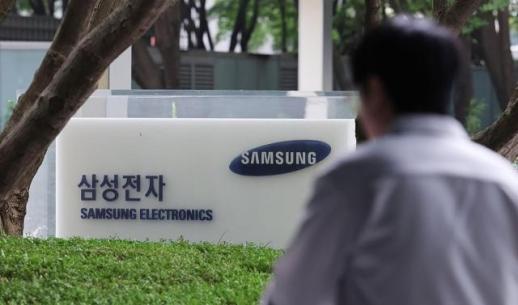 Samsung Electronics Employees' Average Salary Reaches Record 12 Million Won in Q1 Samsung Electronics employees earned an average salary of approximately 36 million won in the first quarter, translating to about 12 million won per month. This figure marks a 25% increase compared to the same period last year, reaching an all-time high. According to an analysis by the Korea CXO Research Institute on Samsung's first-quarter report, total employee compensation is estimated to be between 4.2584 trillion and 4.7907 trillion won. The ratio of salary to total employee compensation has remained consistent, ranging from 76% to 85.5%. This estimate is based on the total salary expenses of 5.0632 trillion won for the first quarter. The average number of employees enrolled in the National Pension Service during the first quarter was 125,580, leading to an estimated average salary of between 33.91 million and 38.15 million won. Monthly salaries are estimated to be between 11.3 million and 12.7 million won. In comparison, the average salary for Samsung employees in the first quarter of last year was between 27.07 million and 30.46 million won, indicating an increase of over 25% year-on-year. This growth rate is more than double the 11.6% increase from 2023 to 2024. In addition to the average salary, the total salary expenses also reached a record high. Last year's first-quarter salary expenses were 4.4547 trillion won, while this year they surpassed 5 trillion won for the first time, totaling 5.6032 trillion won. The Korea CXO Research Institute noted, "The improvement in operating profit in the first quarter has contributed to the highest salary levels for employees. If performance bonuses are included, annual compensation could increase significantly."* This article has been translated by AI. 2026-05-19 12:04:31
 -
 Hancom Offers Up to 50 Million Won for Employees Innovating with AI Hancom has announced a special reward of up to 50 million won for employees who achieve significant work innovations using artificial intelligence (AI). This initiative goes beyond merely distributing generative AI tools; it aims to accelerate the company's overall AI transformation (AX) by providing performance bonuses and additional recognition for employees who successfully integrate AI into their work processes. In an interview with Aju Economy at Hancom's headquarters in Seongnam, CISO Park Sang-hyung stated, "AX is not just about introducing AI tools; it represents a fundamental change in how organizations operate in the AI era. The key is to redefine how much work we delegate to AI and what roles and responsibilities we retain for ourselves." Hancom is currently implementing a growth structure for AX that includes three stages: AI Crew, AX Challenger, and AX Champion. The first stage, AI Crew, allows anyone to freely share their AI experiences. The second stage, AX Challenger, involves executing actual work innovation projects. The final stage, AX Champion, is awarded to employees who demonstrate outstanding AX results. Hancom provides AX Champions with a special bonus of 50 million won and additional recognition in performance evaluations. This approach is considered unusual in the industry as it integrates AI usage experience into the organizational culture and evaluation system rather than treating it as a mere internal event. Park, who joined Hancom in 2013 as an infrastructure architect and later became a cloud architect, took on the role of CISO this year. Previously focused on designing the scalability and connectivity of infrastructure, he now also designs security and control structures suitable for the AI era. He explained, "While the core challenge used to be how to connect systems and make processes flexible, the focus has now shifted to how to securely control those connections. In the AX environment, the priority is not to restrict AI adoption but to create a structure that allows for its safe utilization." At the end of last year, Hancom declared a company-wide AX initiative, signaling a shift from its traditional image as an office software provider to a specialized AX company. This direction aims to redesign the entire organizational workflow and role structure around AI. Park identified the main difference between digital transformation (DX) and AX as the "delegation of roles." He stated, "DX was about digitizing tasks previously handled manually to reduce errors and increase speed, while AX involves negotiating how much authority and responsibility can be safely transferred to AI within that DX environment." He added, "We are currently in a transitional phase. There is still no complete societal consensus on how much decision-making and execution authority we can grant to AI. Ultimately, identifying the points where human intervention is essential is a key challenge for companies." Within Hancom, AI is evolving from a simple assistive tool to a fundamental change in work processes. Initially, all employees were provided with the same AI chatbot environment, but now each department is developing AI agent structures tailored to their specific work characteristics. The implementation process has not been easy. Park noted, "When we began reviewing tools, various departments were already actively using over 100 different AI tools. We believed that enforcing uniform control could lead to backlash from employees and issues with unauthorized external AI services." As a result, Hancom opted for a hybrid strategy centered on actual business needs rather than a top-down approach. This involved first surveying employee demands and then concurrently evaluating functionality, security, cost, and corporate stability. He remarked, "The entire process from survey to actual implementation took only a month, as we recognized the importance of speed in the AI domain and made quick decisions." "Finance Team Also Reviews Code"—AI Innovation Spreads Beyond Development Roles Departments have adopted different approaches. The finance department focused on designing verification structures to reduce errors, prioritizing data accuracy to prevent AI from generating arbitrary outputs. In contrast, the content team approached the task by pre-designing prompts and execution structures to quickly produce desired outcomes. Notably, changes in non-development roles have been significant. Park stated, "Tasks that previously required requests to the IT department are now being implemented directly by operational staff using AI agents. Currently, even employees in the HR and finance teams are considering which APIs to connect and how to structure workflows while reviewing code screens." During Hancom's internal AX presentation event, known as AX Day, a case was shared where an HR team employee implemented an automated seating arrangement system using generative AI. This employee, lacking prior development experience, learned the necessary skills through extensive interaction with AI and completed the implementation without assistance from a separate development team. Hancom is also systematically documenting employees' AX experiences through the "AX Practice Process," which has now accumulated over 750 cases. This documentation goes beyond simply stating, "AI was used"; it details how employees analyzed their work, what data they utilized, and the trials and errors they encountered throughout the process. For instance, the documentation includes how a task that previously took 10 hours was reduced to under one hour after the introduction of an AI agent, along with potential future automation expansions. Park emphasized, "We are not just improving productivity; we are accumulating the experience of utilizing AI as a colleague as an organizational asset. When employees in one team begin to achieve results with AX, it naturally influences other teams. Ultimately, AX is a cultural issue." He concluded, "What matters is not which AI tools we use, but how we redefine work in the AI era. Hancom is experimenting and validating AX internally to create a new organizational culture for the AI age."* This article has been translated by AI. 2026-05-19 11:56:58
 -
 14th Season 'I Am Solo' Star Sunja Marries Actor Choi Joo-won Sunja, a participant from the 14th season of the dating reality show 'I Am Solo', has recently married actor Choi Joo-won. According to entertainment industry sources on May 19, Sunja tied the knot with Choi Joo-won on May 16 at Samcheonggak in Seoul. Prior to the ceremony, Sunja announced her marriage on social media on May 9. On the eve of her wedding, she expressed her affection for her fiancé, stating, "I met a partner who makes me even more wonderful." Choi Joo-won is known for his role as Joo-won, a classmate of the character Sun-oh played by Song Kang in the 2019 Netflix drama 'Love Alarm'. He also appeared as the rising star Hwani in the pre-produced drama 'Absolute Boyfriend' around the same time. Recently, he starred in the film '1 Win'. Sunja publicly supported Choi's film on social media during its release last year, showcasing her affection for him. Sunja gained recognition through her appearance on the 14th season of 'I Am Solo', which featured a special theme of 'Gold Miss & Mister'. At the time of filming, she was 40 years old and introduced herself as the CEO of a biotech cosmetics company, drawing attention for operating her business in Cheongdam-dong. During the show, Sunja revealed that she was a serious injury survivor from a major car accident in Cheongdam Intersection. She shared that she wished to have a partner to rely on during her recovery, which became a compelling part of her story and captured the audience's interest.* This article has been translated by AI. 2026-05-19 11:52:31
 -
 LG Innotek Shares Rise Over 6% Amid Optimism for Substrate Business LG Innotek is experiencing a strong performance in early trading, driven by expectations for growth in its substrate business. According to the Korea Exchange, as of 10:16 a.m. on May 19, LG Innotek shares rose by 51,000 won (6.71%) to 811,000 won. The stock opened at 770,000 won and briefly reached 829,000 won during the session. Market analysts attribute this surge to the substrate business emerging as a new growth driver following the existing optical business, prompting several brokerages to raise their target prices. KB Securities noted in a report that "multiple big tech clients are proposing binding long-term supply contracts for the substrate business, including large upfront payments and penalty clauses similar to those in memory semiconductor agreements, along with support for facility investments." As a result, they raised their target price for LG Innotek by 26% to 1.2 million won. Meritz Securities also increased its target price by 19.1% to 810,000 won, reflecting upward revisions in performance estimates for the package solution division from this year to next year and adjusting the target price-to-book ratio from 2.3 times to 2.6 times. NH Investment & Securities stated that "the deepening substrate shortage is spreading benefits across the industry, leading us to remove the previous 30% multiple discount applied to the package solution division. We expect the benefits from camera specification upgrades for major clients to be greater than previously anticipated, prompting us to revise our performance estimates upward." They raised their target price from 700,000 won to 1 million won while maintaining a 'buy' recommendation.* This article has been translated by AI. 2026-05-19 11:51:00
 -
 TMC Secures $8.3 Million Contract for Fiber Optic Cables with U.S. Data Center TMC shares surged after the company announced a significant contract with a U.S. data center and artificial intelligence (AI) infrastructure firm for fiber optic cables. The news has positively influenced investor sentiment. According to the Korea Exchange, as of 10:14 a.m. on May 19, TMC's stock rose by 6,900 won (29.81%) to 30,050 won compared to the previous trading day. TMC confirmed that it has signed a supply contract worth 11 billion won (approximately $8.3 million) for fiber optic cables intended for data centers. The company stated, "This contract represents the largest single fiber optic cable supply agreement secured in the North American data center market." The supplied product is a single-mode MPO-8 backbone cable designed to enable long-distance, high-speed connections of 400G and above in AI and hyperscale data centers. It serves as a critical infrastructure material for ultra-fast data transmission between servers and switches within data centers, essential for next-generation AI training and inference traffic processing. A TMC representative noted, "The total supply volume amounts to 25,000 kilometers of fiber optic cable," adding that the client is a U.S. data center and AI infrastructure specialist, with the end user confirmed to be a global cloud and data center company.* This article has been translated by AI. 2026-05-19 11:48:22
 -
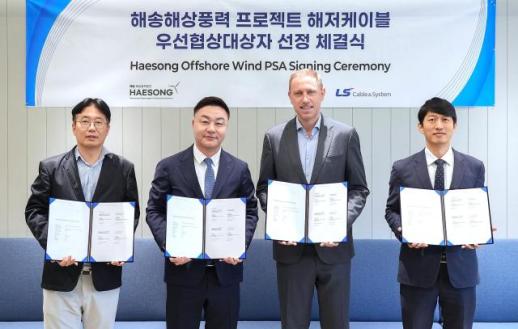 LS Cable & System and LS Marine Solutions Selected for 1GW Offshore Wind Project LS Cable & System and LS Marine Solutions have been chosen as the preferred bidders for the supply and installation of underwater cables for the 1GW Haesong offshore wind project in Jeonnam, South Korea. On May 19, the companies announced their plans to execute the project using a turnkey system that encompasses everything from production to installation. They will supply and install all underwater cables for both external and internal networks, contributing to the establishment of a large-scale offshore wind infrastructure. The Haesong offshore wind project aims to develop two 504MW complexes near Heuksando Island in Jeonnam, totaling 1GW. Copenhagen Infrastructure Partners (CIP), a global green energy investment and development firm, oversees the entire project, while its subsidiary, Copenhagen Offshore Partners (COP), is responsible for development. Industry experts note that collaboration experience with global developers and a proven track record in project execution are critical factors for the stability of large-scale underwater cable projects. LS Cable & System and LS Marine Solutions have built their capabilities in underwater cable supply and installation through various domestic and international projects in partnership with global developers, including CIP. The choice of a domestic supply and installation system by a global developer is seen as significant for the localization of key offshore wind infrastructure and the strengthening of supply chain stability. In offshore wind projects, the ability to connect turbines to the land-based power grid reliably through underwater cables has emerged as a key competitive advantage that affects the overall project credibility. Before the final contract, the two companies plan to detail the supply schedule and technical requirements to ensure a stable supply chain for key materials, enhancing the overall project stability and predictability. This project also represents a practical application of a collaborative model between LS Cable & System's underwater cable technology and Korea Electric Power Technology's power system and EPC design capabilities. LS Cable & System, Korea Electric Power Technology, and CIP will pursue joint research and development for underwater cable operation and maintenance, localization expansion, and supply chain collaboration. Park Seung-ki, head of the domestic sales division at LS Cable & System, stated, "Underwater cables are becoming increasingly important infrastructure for national power grids and energy security. We will leverage our turnkey competitiveness with LS Marine Solutions to ensure stable project execution and enhance the competitiveness of the domestic offshore wind supply chain."* This article has been translated by AI. 2026-05-19 11:45:55
 -
 Hyundai Motor Struggles to Maintain 600,000 Won Amid Three-Day Decline Hyundai Motor's stock price has dropped for three consecutive trading days, falling below the 600,000 won mark. This decline is attributed to a weak robotics theme and growing concerns over labor disputes. On May 19, the Korea Exchange reported that Hyundai Motor's shares were trading at 612,000 won at 10:10 a.m., down 7.69% from the previous trading day. The stock has continued to weaken, with losses of 5.29% and 1.69% in the prior two sessions, marking a rapid decline over the last three days. The stock has plummeted from around 700,000 won to the low 600,000s, indicating increased pressure at its peak. Market analysts suggest that profit-taking following a recent surge in stock prices and the associated price pressures have led to this adjustment. Additionally, labor disputes surrounding the sale of Hyundai Mobis's lamp division are escalating. The Hyundai Motor Group union has labeled the sale as a "destruction of labor relations" and is pushing back against it. Following a joint solidarity declaration from the unions of affiliated companies, the Hyundai Motor and Kia unions have issued a supportive statement, strengthening their collective stance. This has raised concerns about potential strikes, further dampening investor sentiment. Despite these challenges, the securities industry maintains a positive outlook for Hyundai Motor. Hyundai Securities has raised its target price for the company from 660,000 won to 950,000 won, an increase of 47%. Analyst Jang Mun-soo cited the expected visibility of achievements in the robotics sector and advancements in autonomous driving technology, as well as anticipated strategic collaborations with companies like NVIDIA and Google, as reasons for the optimistic forecast.* This article has been translated by AI. 2026-05-19 11:43:43
 -
 Hyundai Mobis hosts Silicon Valley robotics forum with record turnout SEOUL, May 19 (AJP) - Hyundai Mobis held its fifth annual Mobis Mobility Day in Sunnyvale, California, drawing a record crowd of about 400 attendees as the South Korean auto parts maker pushes into robotics and physical AI amid a broader shift away from its traditional mobility focus. The event, held Monday local time, drew more than double the turnout of the previous year, reflecting mounting interest from local startups, automakers, and investors in the company's expanding technology agenda. Robotics and physical AI dominated the agenda, with presentations from staff at Hyundai Mobis' North American research center covering autonomous driving, software-defined vehicles, and electrification. The company also shared its robotics investment and R&D strategy, while holding in-depth discussions with automaker representatives on the back of recent order wins tied to Hyundai Motor Group Metaplant America coming online. The event also served as a barometer of shifting sentiment in Silicon Valley, where investor attention has moved beyond IT and semiconductors toward companies with core technologies in emerging sectors such as robotics and AI hardware. Hyundai Mobis said it plans to host an additional Mobis Mobility Day in Asia in the second half of this year, extending its open innovation program — previously focused on North America and Europe — to scout promising startups in robotics and automotive semiconductors across the region. 2026-05-19 11:43:02
 -
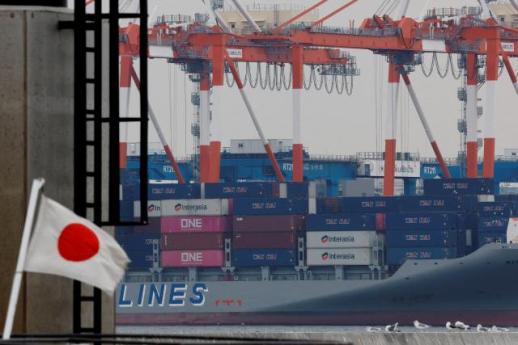 Japan's Q1 Economic Growth Rate Hits 0.5%, Exceeding Expectations Japan's real gross domestic product (GDP) growth rate for the first quarter of this year was 0.5%, marking the second consecutive quarter of growth despite risks from the Middle East. According to Nikkei Asia, the Japanese Cabinet Office announced that real GDP increased by 0.5% from the previous quarter and by an annualized rate of 2.1% from January to March. This figure surpasses the market forecast of 1.6% compiled by QUICK, a subsidiary of the Nikkei Group. Consequently, Japan's economy has continued to expand following a 0.8% annualized growth in the fourth quarter of last year. Private consumption, which accounts for more than half of GDP, led the growth with a 0.3% increase from the previous quarter. Business investment in equipment also rose by 0.3%. Exports grew by 1.7%, while imports increased by 0.5%. However, the larger increase in exports boosted net exports, contributing positively to the growth rate. Private residential investment also saw a 0.5% rise. Nonetheless, the GDP figures reflect only limited impacts from the conflict in the Middle East, which was triggered by the U.S. and Israel's attacks on Iran at the end of February. With rising raw material prices due to instability in the region, there are concerns that inflation and consumer spending may face increasing pressure on the Japanese economy in the future. Other economic indicators are already showing the effects of the conflict. Household consumption in Japan fell by 1.3% in March compared to the previous month, and government surveys indicated weakened consumer sentiment in March and April. Industrial production also decreased by 0.5% in March from the previous month, significantly impacted by concerns over the supply of key raw materials like naphtha, which affected the chemical sector's output. Experts predict that Japan's economic growth is likely to slow in the latter half of this year. A survey conducted by the Japan Economic Research Center among economists projected a growth rate of only 0.45% for the April to June period. The impact of rising raw material prices is expected to be reflected in various product prices after summer, potentially fueling inflation and constraining the growth of real wages, which could hinder consumer recovery. As a result, the Bank of Japan's monetary policy decisions are expected to become more complex. Nikkei Asia reports that the Bank of Japan may consider raising interest rates as early as June, but it faces the challenge of balancing concerns over slowing growth and inflationary pressures.* This article has been translated by AI. 2026-05-19 11:41:03
 -
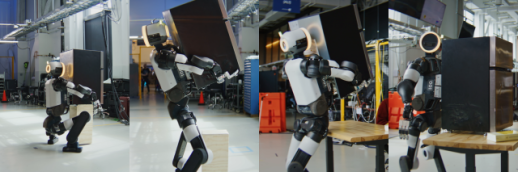 Boston Dynamics' Atlas Robot Successfully Moves 23kg Refrigerator Boston Dynamics' humanoid robot, Atlas, has demonstrated its ability to lift and move a heavy refrigerator. As the company prepares for the robot's deployment at Hyundai Motor Group's new factory in Georgia in 2028, Atlas has showcased both its full-body control capabilities and its ability to handle external objects. In a video released on May 19 on Boston Dynamics' YouTube channel, Atlas is seen bending its knees slightly to lift a 23kg (50lb) refrigerator. While carrying the refrigerator, it maintained its balance as it moved to a table behind it, then executed a 180-degree turn to safely place the refrigerator on the table. Performing this task requires advanced full-body control technology that allows the robot to maintain a balanced posture while lifting objects of varying sizes and weights. This marks a significant milestone, indicating that Atlas is moving beyond laboratory demonstrations to operate in more variable industrial environments. A Boston Dynamics representative stated, "The ability to estimate its state using sensors in the absence of external information and to integrate a continuous series of movements, as shown in the video, proves that Atlas can perform high-level tasks in real industrial settings. Atlas quickly learned these movements through large-scale simulation-based reinforcement learning and implemented them in real environments within weeks." Atlas has successfully transported not only the 23kg refrigerator but also a refrigerator weighing up to 45kg (100lb). The successful movements highlight Atlas's high performance and compatibility as a developmental model. For instance, the actuators used in Atlas are standardized into two types, and both arms and legs are designed with the same structure to facilitate easy parts replacement. This approach is expected to enhance cost efficiency based on economies of scale. Boston Dynamics also released behind-the-scenes training footage of Atlas, showcasing the robot performing a 360-degree turn while lifting one leg and executing backflips. The ability to control the upper and lower body separately requires advanced control technology that minimizes interference between joints while maintaining movement continuity. Movements like handstands and backflips are crucial for assessing Atlas's flexibility and balance, as well as for teaching it how to recover from slips or falls. Meanwhile, Hyundai Motor Group announced its vision at CES 2026 in January, stating its goal to expand robotics in everyday life and industry to drive human progress. The company plans to strengthen strategic partnerships with leading global AI firms and collaborate with Google DeepMind to accelerate the development of future humanoid technologies.* This article has been translated by AI. 2026-05-19 11:39:00