
Journalist

오오타니 사토시 기자/ [번역] 이경
-
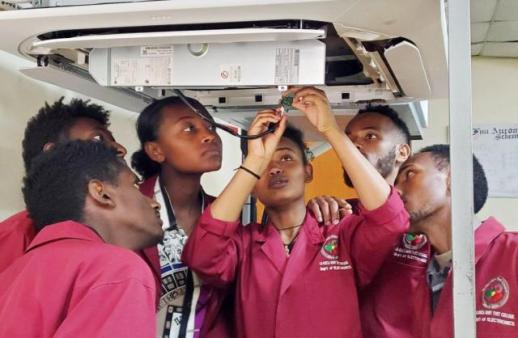 LG Electronics Shares Vocational Training Expertise with Somalia LG Electronics is sharing its experience from over a decade of operating a vocational training school in Ethiopia with youth skills education in Somalia. On May 19, LG Electronics announced that it signed a memorandum of understanding with the United Nations Development Programme (UNDP) and the Korea International Cooperation Agency (KOICA) at the LG-KOICA Hope Vocational Training School in Addis Ababa, Ethiopia. The agreement aims to enhance vocational training for Somali youth. Under this agreement, LG Electronics will provide the curriculum and operational expertise from the LG-KOICA Hope Vocational Training School to a new vocational training school being established in Somalia by UNDP and KOICA. This support includes developing the curriculum and operational manuals, assisting with graduate employment, and selecting educational tools and testing products. Training will also be provided to local instructors in Somalia, who will benchmark the operational system of the LG-KOICA Hope Vocational Training School in Ethiopia and learn vocational training models in electronics and IT. The LG-KOICA Hope Vocational Training School, established in 2014, is a free vocational training facility that LG Electronics operates in Ethiopia, a country that participated in the Korean War. The school offers education in electronics and IT, supporting local youth in achieving self-sufficiency. To date, the school has graduated 611 students, all of whom have entered the workforce or started their own businesses. LG Electronics provides internship opportunities with a conversion to employment for outstanding graduates and offers legal, marketing, and business management training through its on-campus startup support center for those interested in entrepreneurship. The LG-KOICA Hope Vocational Training School was recognized for its achievements when it was selected as a model vocational training school by the Ethiopian government in 2020. Last year, LG Electronics held its ninth graduation ceremony, producing 70 graduates and continuing its support for local youth self-sufficiency. LG Electronics' contributions in Africa extend beyond vocational education. Since 2009, LG has initiated community support activities in Ethiopia, including the establishment of self-sufficient rural villages, cholera vaccine distribution, and scholarship support for descendants of Korean War veterans through the "LG Hope Village" project. Yang Seung-hwan, head of LG Electronics' Ethiopia branch, stated, "By sharing the successful experiences gained from operating the LG-KOICA Hope Vocational Training School in Ethiopia for over ten years, we aim to support the self-sufficiency of African youth and fulfill our social responsibility as a global corporate citizen."* This article has been translated by AI. 2026-05-19 11:03:21
 -
 Shooting at San Diego Islamic Center Leaves Three Dead; Hate Crime Suspected Three men were killed in a shooting at a large Islamic center in San Diego, California, when two teenagers opened fire. The suspects were found dead in a nearby vehicle shortly after the incident, and police are investigating the case as a hate crime. According to reports from AP and CNN, the shooting occurred on May 18 at the San Diego Islamic Center located in the Clairemont area of San Diego County, resulting in the deaths of three adult men, including a security guard. San Diego Police Chief Scott Wahl stated that the suspects are believed to be 17 and 19 years old. They were discovered dead from self-inflicted gunshot wounds in a vehicle that had come to a stop in the middle of a nearby road. While the exact motive for the shooting is still under investigation, police indicated that a note left by one of the suspects and the firearms used contained evidence of "generalized hate expression," leading them to classify the incident as a hate crime. CNN reported that one of the firearms used in the attack had hate messages inscribed on it, and anti-Islam slogans were found in the suspects' vehicle. All children present at the Al Rashid School, which is affiliated with the Islamic center, were confirmed safe during the incident. The San Diego Islamic Center, the largest Islamic worship facility in the county, is located about 14 kilometers north of downtown San Diego and includes a school teaching Arabic, Islamic studies, and the Quran to students aged five and older. Imam Taha Hassan, the religious leader of the center, expressed outrage at the targeting of a place of worship during a press conference, stating, "It is extremely infuriating to target a place of worship. All places of worship in our beautiful city must always be protected." California Governor Gavin Newsom also released a statement expressing shock at the violent attack in a place where families and children gather peacefully to worship, asserting that "hate has no place in California, and we will not tolerate acts of terror or threats against faith communities."* This article has been translated by AI. 2026-05-19 10:59:10
 -
 Lee Jae-hyun and Jeong Yong-jin Face Brand Risks Amid Recent Crises Corporate crises often arise unexpectedly. However, the causes of these crises typically stem from long-standing issues within the organization. Recent controversies involving Starbucks Korea's marketing related to the May 18 Gwangju Uprising and CJ Group's data breach may appear to be separate incidents, but they fundamentally raise the same question: How effectively are companies managing brand risk structurally? Starbucks Korea's promotional wording drew swift criticism online for evoking memories of the Gwangju Uprising and the torture and death of Park Jong-cheol. Some consumers strongly opposed specific phrases, claiming they recalled the violent memories of the military regime. As the controversy escalated, Jeong Yong-jin ordered a thorough response and Shinsegae Group announced the dismissal of the CEO of Starbucks Korea and related executives. Notably, Jeong's rapid response indicated a clear recognition of the crisis at the corporate level. He did not treat the issue as a mere online controversy but assessed it as a matter of trust for the entire brand. However, the essence of this controversy is not merely whether a 'mistake' occurred. The key question is whether the company's internal sensitivity and verification systems functioned properly. In corporate communication, the outcome is more important than the intent. Regardless of the intentions of those involved, if a significant number of consumers associate the content with historical trauma and feel discomfort, brand risk becomes a reality. In today's landscape, brands symbolize corporate values rather than just product names. Consumers consider not only price and quality but also a company's attitude and philosophy. For global brands, sensitivity to historical, human rights, and social issues is a critical evaluation factor. The Starbucks controversy underscores how sensitive historical issues are in Korean society. A more significant issue is that the problematic wording passed through internal verification processes without any checks before being made public. A marketing phrase undergoes several stages, including planning, review, and approval, before reaching consumers. If the organization failed to recognize the problem during this process, it indicates a lack of sensitivity across the organization. If they were aware but did not filter it out, it suggests a failure of the verification system itself. Recently, companies have entered a fierce competition for real-time marketing centered on social media and mobile platforms. There has been an increase in attempts to capture attention with short, provocative phrases. The problem is that speed has begun to overshadow verification. This incident starkly illustrates that content aimed at quick responses can undermine the trust of the entire company. In contrast, the CJ case reveals a different dimension of brand risk. Recently, it was reported that personal information, including the phone numbers, job titles, internal contact details, and photos of female employees at CJ Group, were posted on a Telegram channel. The company is investigating the incident, focusing on the possibility of internal information retrieval and leakage rather than external hacking, and is preparing to report to relevant authorities and request an investigation. The core of this incident is not merely the data breach. It highlights that in the digital age, a company's core assets have shifted to data and trust. Personal information is not just numbers or text; it is sensitive information directly related to individual safety. The combination of phone numbers, photos, and job titles increases the risk of secondary harm. The CJ incident illustrates that many Korean companies' security systems still focus primarily on 'defending against external intrusions.' While significant investments are often made to block external hacking, internal risk management is frequently weaker. The fact that information accessible on internal intranets was leaked externally suggests potential gaps in access control management and anomaly detection systems. Ultimately, while the two incidents may seem entirely different, they share clear commonalities. The Starbucks controversy stems from a failure in content verification, while the CJ incident reflects a failure in internal controls. Both arise not from external attacks but from vulnerabilities within the organization's internal systems. Another point of interest is the differing responses from the leaders of the two groups. Jeong Yong-jin emphasized immediate personnel actions and public responses, while Lee Jae-hyun's CJ Group has maintained a relatively cautious approach, focusing on investigations and requests for inquiries. Despite their different styles, both leaders recognized that the issues are directly tied to brand trust. However, in managing brand risk, speed of response is not the only important factor. Structural improvement is even more critical. Analyzing why problems occurred at an organizational level and changing systems to prevent recurrence is essential. If the focus remains solely on punishing responsible individuals, similar crises are likely to recur. We are now in an era where non-financial risks influence corporate value. In the past, sales, market share, and productivity were the core of corporate competitiveness, but now factors such as data protection, ethical awareness, historical sensitivity, and organizational culture determine brand value. Global investors also consider ESG and internal control systems as important evaluation criteria. In the end, both Lee Jae-hyun and Jeong Yong-jin find themselves on a significant test. How they change their organizations and establish standards following these crises will likely influence future group trust. A one-time apology and personnel changes will not suffice. Only by genuinely strengthening internal controls and organizational sensitivity can these crises become opportunities for systemic improvement. Brands are not built through advertising; they are shaped by how crises are handled. These incidents send a clear message to the Korean corporate sector: brand risk is no longer a secondary issue but a central management agenda.* This article has been translated by AI. 2026-05-19 10:57:00
 -
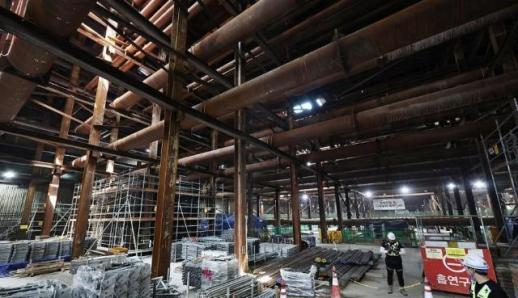 Warning Over Missing Rebar at Samsung Station: Delays Will Increase Costs The missing rebar incident at Samsung Station on the GTX-A line is not merely a construction error. It has been confirmed that 178 tons of main rebar were omitted from the columns of the GTX platform in the third section of the underground complex development on Yeongdong-daero. The previously scheduled non-stop passage through Samsung Station in August is now likely to be delayed. The Seoul Metropolitan Government reported the issue to the Korea National Railway Authority, which countered that the report was not substantial. The Ministry of Land, Infrastructure and Transport has initiated an audit and special site inspection. Before assigning blame, this incident serves as a warning about the vulnerabilities in the safety management system of a key national infrastructure project.Samsung Station is a critical point for the operation of the entire GTX-A line. Currently, the GTX-A operates in two segments: from Unjeong Central to Seoul Station and from Suseo to Dongtan. Without the connection to Samsung Station, the metropolitan railway network cannot function effectively. Moreover, this area features deep underground structures approximately 50 meters below ground. It must withstand vertical loads, soil pressure, water pressure, repeated vibrations from trains, fire safety standards, and long-term maintenance. This is why it cannot be viewed through the same lens as typical construction defects.The omission of rebar signals a breakdown of fundamental practices on site. Hyundai Engineering & Construction explained that it misinterpreted the 'two bundle' notation on the design drawings. However, the main rebar in the columns is crucial for structural safety. If any stage of the rebar placement, quality control by the contractor, or inspection by the supervisory team had functioned properly, it is likely that the issue could have been identified before the concrete was poured. A thorough examination of whether the construction, supervision, and site management systems operated correctly is necessary.Addressing the omission is not a straightforward fix. The method proposed by the contractor involves applying epoxy adhesive to the concrete columns, then adding a steel jacket and fireproof finish. The durability of the adhesive, the bonding strength of the steel, fire resistance, and fatigue resistance against repeated vibrations from trains must all be verified. This is why the government has decided to reassess the reinforcement method from scratch through external expert committees. While a quick opening is important, trains cannot be allowed to pass over unverified reinforcements.Time equates to cost. Delays in the non-stop passage through Samsung Station will not only inconvenience citizens. The GTX-A is linked to a private investment structure. The longer the delay, the more likely it is that compensation for losses, additional construction costs, penalties, and legal disputes will arise. Estimates suggest that if the non-stop passage is delayed by about a year, the additional financial burden could reach around 100 billion won. The costs of safety management failures will ultimately fall back on the citizens and taxpayers.Therefore, accountability cannot be delayed. The key is not the formal exchange of documents but the substance of the reports. It must be determined whether significant safety issues were communicated in a timely, clear, and responsible manner through original documents and internal processing records. The reporting system for large infrastructure projects must be particularly clear. Major construction errors should be managed through separate reporting, immediate sharing, and documentation of follow-up actions.This incident should not be consumed solely as a political battleground. What matters to citizens is whether the underground railway structures are safe, how to reduce the costs of delays, and how to reform the system to prevent similar issues from recurring. Parliamentary inquiries should serve as a platform for fact-finding rather than political strife. The GTX is a vital axis of transportation in the metropolitan area. What is needed now is not a hasty fix but independent verification, accountability, and measures to prevent recurrence. The longer the delay, the greater the costs. However, the price of rushing without verification could be far greater.* This article has been translated by AI. 2026-05-19 10:54:27
 -
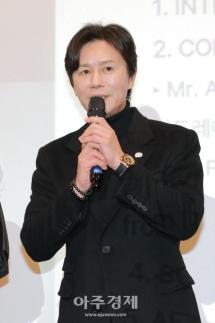 Kim Min-jong Responds to MC Mong's Illegal Gambling Allegations with Legal Action Singer and actor Kim Min-jong has firmly denied allegations of illegal gambling made by MC Mong. On May 19, through his legal representative, the law firm Okims, Kim stated, "I want to make it clear that the claims being discussed about me are not true." He added, "After thoroughly verifying and organizing the facts related to this matter, I plan to hold accountable those responsible through civil and criminal legal actions. I will act cautiously to avoid disappointing those who have supported me for a long time." Kim's team also strongly opposed the recent online rumors. The legal representative stated, "Baseless personal rumors and malicious allegations against Kim Min-jong are spreading indiscriminately, seriously damaging the reputation of an artist who has received great love from the public." They emphasized, "All claims related to Kim Min-jong are clearly false. He will confront these allegations head-on without any compromise to prove his integrity." Previously, on May 18, MC Mong mentioned Kim Min-jong's name during a live broadcast, suggesting the existence of an illegal gambling ring involving celebrities. MC Mong denied allegations of illegal gambling against himself during the broadcast, stating, "Who would use company funds for illegal gambling?" He continued, "The source of the funds can be traced through account tracking, and I would like them to look at my account as well. How could I gamble with company money? I don’t even understand that claim." MC Mong co-founded One Hundred with Chaga Won, chairman of the Piak Group, in 2023 but left the company in July of the previous year. Since then, allegations have emerged that he used company funds for illegal gambling.* This article has been translated by AI. 2026-05-19 10:51:26
 -
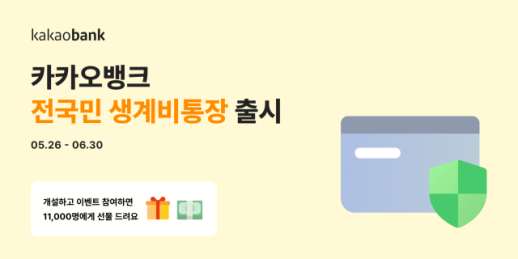 KakaoBank Launches Nationwide Living Expense Account for Vulnerable Groups KakaoBank announced on May 19 that it will launch a "Nationwide Living Expense Account" designed to protect customers' minimum living expenses.The Nationwide Living Expense Account is a policy product aimed at ensuring basic living standards for financially vulnerable groups through seizure prevention features. Anyone aged 14 and older can enroll, but accounts can only be opened at one financial institution. The account allows for flexible deposits up to a monthly limit of 2.5 million won, ensuring the safety of essential living expenses.KakaoBank developed this product in conjunction with the Korea Credit Information Service. The base interest rate is set at 2% annually until the end of this year.To enhance customer convenience, the bank has added unique features. Customers will receive notifications when a new deposit limit is assigned on the first of each month or when the total limit of 2.5 million won is reached. Additionally, users can easily access transaction statements and balance certificates through a dedicated menu in the app.KakaoBank is also expanding inclusive finance by lowering interest rates for its New Hope Seed II and Sunshine Loan products.A KakaoBank representative stated, "This product was designed to help customers facing economic difficulties maintain their daily lives and recover even in seizure situations. We will continue to practice inclusive finance for small business owners and those with low credit ratings."* This article has been translated by AI. 2026-05-19 10:49:11
 -
 Bloomberg Analyzes Four Scenarios for Potential Samsung Strike Bloomberg has analyzed the potential for a strike at Samsung Electronics, viewing the labor dispute as a variable in the global semiconductor supply chain. As demand for artificial intelligence (AI) semiconductors rises, the largest union at Samsung Electronics warns that a strike could escalate domestic labor tensions into a global supply chain risk. According to Bloomberg on May 18, Samsung Electronics and its largest union are negotiating under government mediation to avoid a strike. The company has significantly increased profits due to rising demand for AI semiconductors, but it faces competition from SK Hynix and Micron. Bloomberg noted that this negotiation is crucial for Samsung Electronics at this time. The main issue at stake is the distribution of performance bonuses. The union demands the removal of the cap on bonuses and insists that 15% of operating profit be allocated to employee bonuses in the labor contract. The company has proposed a one-time special compensation package that would allocate 10% of operating profit for bonuses, which it argues exceeds industry standards. Bloomberg outlines four scenarios regarding the potential strike. The first scenario is a last-minute compromise. Even if the union's demands are not fully met, an increase in bonuses or some improvement in compensation conditions could help avoid a strike. In this case, the union could present the compensation improvements as a negotiation success. The second scenario involves a limited strike. Even if negotiations break down, the likelihood of a short strike leading to immediate production halts is low. Semiconductor plants are highly automated and operate around the clock. Bloomberg suggests that even if the union engages in rotating strikes, one-day strikes, or rallies to apply pressure, production disruptions may remain limited. Judicial rulings also play a role in limiting the strike's intensity. According to Bloomberg, a court ruled on May 18 that essential maintenance and security personnel must continue working during a strike. Occupying key production and operational facilities, such as semiconductor production lines, research facilities, and hazardous chemical storage sites, is also prohibited. The third scenario involves government intervention. If a strike prolongs and disrupts semiconductor production, the government could invoke emergency mediation rights. When invoked, the strike would be suspended for 30 days while the Central Labor Relations Commission prepares a mediation plan. Since 1969, emergency mediation rights have been invoked only four times in South Korea, with the last instance occurring during a 2005 strike by Korean Air pilots. The fourth scenario is a long-term stalemate. While Bloomberg considers this possibility relatively low, it warns that if key semiconductor engineers, maintenance staff, and production workers leave for an extended period, the production burden could increase. Even with automation in semiconductor plants, skilled personnel are necessary for advanced process management and equipment maintenance. If a long-term stalemate occurs, the repercussions would extend beyond Samsung Electronics. The semiconductor division accounts for over 90% of the company's profits. Clients may reassess Samsung's supply stability if labor disputes drag on, particularly during a phase of expanding production of advanced semiconductors like high-bandwidth memory (HBM) used in AI servers. The situation also poses a burden on the South Korean economy. Bloomberg reported that semiconductors accounted for 36% of South Korea's total exports in the first quarter of this year. A prolonged strike at Samsung Electronics leading to production disruptions could impact both South Korean exports and the global semiconductor market, highlighting why international media view domestic labor disputes as a global supply chain risk.* This article has been translated by AI. 2026-05-19 10:47:08
 -
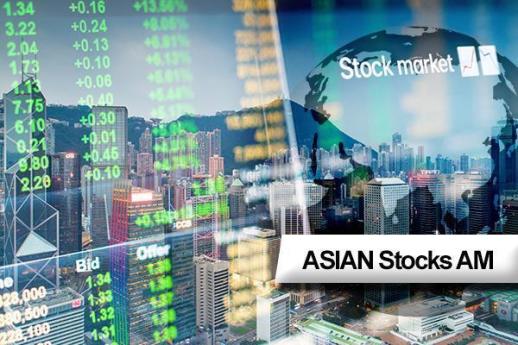 KOSPI opens lower as end-of-chip-rally fears hammer tech shares SEOUL, May 19 (AJP) - South Korean stocks opened lower Tuesday as growing concerns of a peak in the global memory-chip cycle triggered an overnight selloff in U.S. technology shares, dragging down semiconductor and artificial intelligence (AI)-related stocks. The benchmark KOSPI fell 2.47 percent to 7,330.44 about an hour into trading, while the junior KOSDAQ dropped 1.69 percent to 1,092.34. The South Korean won was largely unchanged at 1,500.10 per dollar, from 1,500.30 in the prior session. Technology heavyweights led the decline, with Samsung Electronics falling 2.49 percent to 274,000 won and SK hynix slipping 1.85 percent to 1.81 million won. Automakers and industrial shares also weakened sharply. Hyundai Motor plunged 6.64 percent to 619,000 won, Kia fell 3.75 percent to 156,400 won and Samsung C&T dropped 5.76 percent to 376,500 won. Samsung Electro-Mechanics declined 3.78 percent and Doosan Enerbility fell 3.21 percent. Defense and financial shares, however, outperformed the broader market. Hanwha Aerospace surged 7.74 percent to 1,322,000 won, HD Hyundai Heavy Industries rose 0.81 percent and Samsung Life Insurance gained 1.44 percent. KB Financial Group edged up 0.46 percent. The losses followed a volatile overnight session on Wall Street, where early gains faded and stocks finished mixed as geopolitical uncertainty and weakness in semiconductor shares weighed on investor sentiment. Stocks initially rose on indications that the U.S. could temporarily ease sanctions on Iranian oil exports and extend exemptions for Russian crude, raising hopes of improved global energy supply and lower oil prices. However, sentiment later reversed after the White House dismissed Iran's latest ceasefire proposal as largely symbolic and lacking meaningful concessions, while U.S. President Donald Trump delayed a planned military strike on Iran but warned that military action could still come at any time, reviving concerns over prolonged tensions in the Middle East. Semiconductor stocks came under additional pressure after Seagate Technology’s chief executive warned about capacity constraints in the memory-chip industry and the risk of overinvestment across the sector, fueling renewed concerns that the chip cycle may be nearing a peak. The Philadelphia Semiconductor Index fell 2.47 percent, with Micron plunging 5.95 percent and Nvidia and Sandisk also ending sharply lower. The Dow Jones Industrial Average rose 0.32 percent, while the S&P 500 and Nasdaq Composite fell 0.07 percent and 0.51 percent, respectively. Oil prices remained elevated amid persistent supply concerns. West Texas Intermediate crude traded above $106 a barrel, while Brent crude hovered near $109. The U.S. dollar index stayed in the upper 98 range. U.S. Treasury yields fluctuated during the session before ending lower, though they remained elevated as investors reassessed the outlook for inflation and interest rates. The two-year Treasury yield stood at 4.05 percent, while the benchmark 10-year yield traded at 4.58 percent. The 30-year yield remained above 5 percent at 5.13 percent. Elsewhere in Asia, Japan's Nikkei 225 fell 0.21 percent to 60,689.71, while Hong Kong's Hang Seng Index rose 0.53 percent to 25,811.11 and China's Shanghai Composite Index gained 0.13 percent to 4,136.76. 2026-05-19 10:46:43
 -
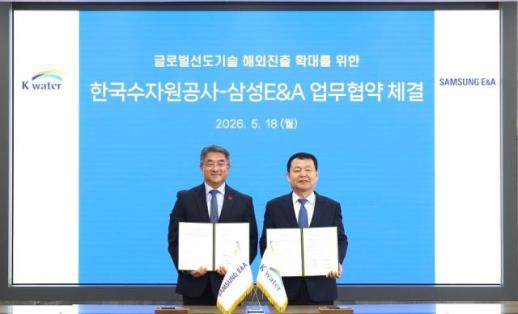 Samsung E&A and K-water Sign MOU to Expand Water Business Samsung E&A is accelerating its expansion into the water business in collaboration with K-water. On May 18, Samsung E&A announced that it signed a memorandum of understanding (MOU) with K-water to expand their water business. The signing ceremony took place at K-water's Han River Headquarters in Gwacheon, attended by top executives from both companies, including Hong Nam-goo, President of Samsung E&A, and Yoon Seok-dae, President of K-water. This agreement aims to combine the core competencies of both companies to seize substantial business opportunities in the domestic and international water markets. The two firms plan to develop optimal business models that integrate Samsung E&A's technology with K-water's operational expertise, marking the beginning of joint development on previously discussed water-related projects. Following the MOU, the companies plan to pursue several initiatives, including: leveraging each company's technological capabilities and networks for water-related project development and information sharing; developing and jointly operating domestic water treatment and reuse projects; and identifying opportunities for overseas water business development, commercialization, and joint operations. They will also establish a 'regular consultation body' to coordinate the direction of ongoing domestic and international water business initiatives and to strengthen their efforts in discovering new global projects. Hong Nam-goo, President of Samsung E&A, stated, "Collaboration with K-water, which possesses world-class operational management expertise, will be the most ideal model for entering the water business. We will successfully complete the upcoming joint projects and fully engage in the global water market." Meanwhile, Samsung E&A is expanding its water-related business as part of its environmentally friendly future growth strategy, accelerating its entry into the global water treatment market. The company has been involved in advanced water treatment projects for semiconductor and chemical plants, focusing on industrial water purification and zero-discharge system implementation. Recently, it has actively participated in large-scale seawater desalination projects and water treatment plant bids in the Middle East, including the United Arab Emirates. Additionally, it is broadening its business scope into areas such as wastewater reuse and environmentally friendly water treatment utilizing biogas, enhancing its high-value environmental projects in line with the carbon-neutral era.* This article has been translated by AI. 2026-05-19 10:45:00
 -
 President Yoon Gifts Traditional Korean Artifacts to Japanese Prime Minister On May 19, President Yoon Suk Yeol prepared a selection of gifts reflecting the local culture for Japanese Prime Minister Sanae Takaichi, who is visiting his hometown of Andong, North Gyeongsang Province.President Yoon is scheduled to hold a summit with Prime Minister Takaichi in Andong later in the afternoon.According to the presidential office, the gifts include a wooden frame featuring nine types of Hahoe masks, which symbolize harmony and express hopes for the development of friendly relations between Korea and Japan.Also included in the gift list are a leather bag made from hanji (traditional Korean paper) and red ginseng, inspired by items that were significant during the Joseon Tongsinsa (Korean envoys to Japan).Additionally, a moon jar frame, representing a symbol of hope in both countries, conveys wishes for friendship and cooperation between Korea and Japan.For the Prime Minister's spouse, a set of traditional Joseon Tongsinsa items will be presented along with a 'snowflake pottery' set. The snowflake pottery features patterns created using zinc glaze and silver, capturing the winter scenery of Fukui Prefecture, the hometown of the Prime Minister's spouse.Furthermore, the Andong Poji Village Preservation Association prepared a single blanket made from Andong po, historically presented to the royal family, wishing for the health and peace of Prime Minister Takaichi.The Andong Hahoe Village clan association also prepared a mini guardian totem set, symbolizing protection from evil spirits and disease, reflecting the roles of the leaders of both countries.* This article has been translated by AI. 2026-05-19 10:42:28