
Journalist

오오타니 사토시 기자/ [번역] 이경
-
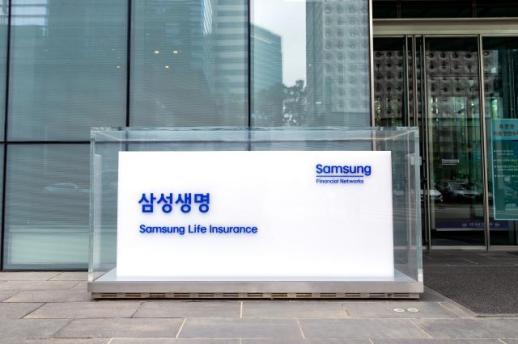 Samsung Life Insurance Eyes Overseas M&A as Thai Profits Surge 63% As the domestic insurance market faces growth limitations due to low birthrates and an aging population, the life insurance industry is increasingly focusing on expanding into overseas markets. Samsung Life Insurance is bolstering its international strategy based on strong performance from its Thai subsidiary. According to data from the Financial Supervisory Service on May 18, Samsung Life's Thai subsidiary reported a net profit of 10.4 billion won in the first quarter of this year, a 63% increase from 6.4 billion won in the same period last year. During this time, assets grew by 11.7% to reach 1.34 trillion won. The K-ICS (Korea Insurance Capital Standard) ratio stood at 323% at the end of the first quarter, significantly exceeding the Thai insurance authority's minimum requirement of 140%. Established in 1997, Samsung Life's Thai subsidiary was the first overseas venture by a domestic life insurer. The company is positioning Thailand as a key hub in Southeast Asia, expanding its business through bancassurance partnerships and local investments. Currently, it operates four branches and 133 sales offices in major regions of Thailand, primarily focusing on a consultant-based sales organization. The Thai insurance market is witnessing a growing demand for health and protection products, driven by an expanding middle class and rising incomes. According to the Organization for Economic Cooperation and Development (OECD), the size of life insurance premiums in Thailand has increased from $3.2 billion in 2000 to an estimated $19 billion by 2024. Buoyed by local business growth, Samsung Life has also indicated the possibility of further overseas investments. During a conference call on May 14 regarding its first-quarter results for 2026, the company stated, "Our businesses in Thailand and China are growing rapidly, and profitability is improving. Based on this experience, we are exploring new merger and acquisition opportunities." Industry experts believe that the structural slowdown in the domestic market, exacerbated by low birthrates and an aging population, is driving the push for overseas expansion. The popularity of whole life insurance, a core product in the life insurance sector, is also waning. Hanwha Life is noted as one of the most aggressive domestic life insurers in expanding its overseas operations. The company is strengthening its local sales in Vietnam and Indonesia and has recently acquired a bank in Indonesia, pursuing a strategy that integrates insurance and finance. An industry insider remarked, "As it becomes increasingly difficult to generate stable profits in the domestic insurance market due to demographic changes, the need for overseas market expansion is growing. However, international operations require a long-term approach due to differences in language, culture, and regulatory environments, which is why this trend is predominantly led by larger firms."* This article has been translated by AI. 2026-05-18 18:49:28
 -
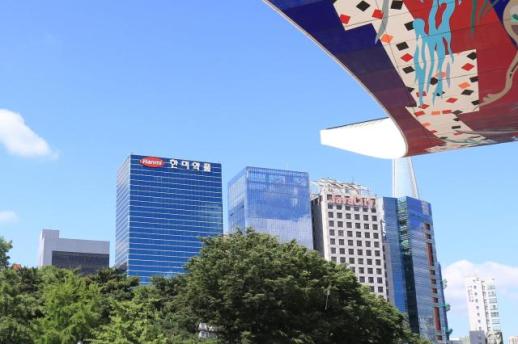 Hanmi Pharmaceutical Expands Obesity Drug to Diabetes Treatment Hanmi Pharmaceutical is expanding the indications for its GLP-1 drug, epeglanatide, to include diabetes treatment. The company views obesity not as a standalone disease but as part of a complex metabolic disorder that includes type 2 diabetes and cardiovascular diseases. To this end, Hanmi is implementing a Life Cycle Management (LCM) strategy to broaden the use of epeglanatide, aiming to develop a 'metabolic disease integrated platform' that connects obesity, diabetes, and cardiovascular conditions.On May 18, Hanmi announced that it has begun dosing participants in a Phase 3 clinical trial in South Korea to expand the drug's indications for diabetes treatment. The trial evaluates the blood sugar control effects of a combination therapy involving epeglanatide, metformin, and SGLT2 inhibitor dapagliflozin in patients with type 2 diabetes, with the first doses administered last month.The Phase 3 trial is being conducted as a multicenter, randomized, double-blind, placebo-controlled study involving domestic patients. The trial is expected to conclude in 2028.Hanmi plans to secure diabetes indications based on its global development experience involving 6,000 type 2 diabetes patients in collaboration with its partners.According to the company, epeglanatide not only shows weight loss and blood sugar control effects but also has potential cardiovascular and kidney protective benefits.Kim Na-young, head of Hanmi's Innovation Growth Division, stated, "Epeglanatide has the potential to expand its treatment area beyond obesity to various metabolic diseases, including diabetes and cardiovascular and kidney diseases."Meanwhile, Hanmi submitted a product approval application for its obesity drug epeglanatide to the Ministry of Food and Drug Safety in December last year. It has been designated for the Global Innovative Fast Track (GIFT) program, which is expected to shorten the review period compared to standard approval processes.The company emphasizes that epeglanatide has been directly tested for efficacy and safety in Koreans, unlike major global products such as 'Wegovy,' and aims to enter not only the domestic market but also the global market, including Asia.The global obesity treatment market is experiencing rapid growth. 'Mounjaro' generated $8.7 billion in sales in the first quarter of this year, surpassing cancer drug 'Keytruda' to become the world's best-selling drug. During the same period, 'Wegovy' recorded sales of 18.235 billion kroner (approximately $4 billion), solidifying the position of obesity and diabetes new drugs as key growth drivers in the global pharmaceutical market.* This article has been translated by AI. 2026-05-18 18:46:14
 -
 Shinhan Bank Provides 7.5 Billion Won in Guaranteed Loans to Incheon SMEs Shinhan Bank announced on May 18 that it will provide a total of 7.5 billion won in guaranteed loans to small and medium-sized enterprises (SMEs) and small businesses in the Incheon area.To support mid- to low-credit companies and e-commerce businesses, Shinhan Bank has signed a 'Specialized Inclusive Finance Guarantee Agreement' with the Incheon Credit Guarantee Foundation.The initiative aims to reduce the financial burdens faced by small businesses with mid- to low-credit ratings and to provide stable operating funds for online sellers experiencing cash flow issues due to delayed settlements.The loan limit for each business is set at a maximum of 50 million won, targeting new operating fund loans offered by Shinhan Bank. The guarantee will cover 100% of the loan amount, with a guarantee fee rate of 0.8% per year. The loans will be structured with a one-year grace period followed by four years of installment repayment or a lump-sum repayment at maturity.Currently, Shinhan Bank serves as the primary bank for Incheon City, with a new primary bank to be designated in August. This financial support for SMEs in Incheon is expected to have a positive impact on the upcoming selection of the primary bank.A Shinhan Bank official stated, "We will continue to collaborate with local credit guarantee institutions to provide financial support that small businesses and SMEs can truly feel in their operations."* This article has been translated by AI. 2026-05-18 18:41:48
 -
 Doosan Construction Secures $733 Million Busan Mangmi 5 Redevelopment Project Doosan Construction has secured the construction rights for the Mangmi 5 District redevelopment project, a major urban renewal initiative in Busan's Suyeong-gu. With this contract, Doosan has surpassed 2 trillion won in new orders for the year. The company announced on May 18 that it was selected as the final contractor after receiving overwhelming support from members at the general assembly of the Mangmi 5 District redevelopment association held on May 16. Doosan had set a record-high order target of 6 trillion won for this year, and this significant project in Busan is expected to accelerate its progress toward that goal. The redevelopment project involves the construction of 13 residential buildings, ranging from five underground floors to 32 above-ground floors, totaling 1,800 housing units and commercial facilities. The total construction cost is approximately 733.4 billion won. Mangmi-dong, where the project will be located, is recognized as a prime residential area in Busan, boasting excellent living infrastructure. It is conveniently situated near Mangmi Station on Busan Subway Line 3 and has strong connectivity to major transportation networks, including the Gwangandaegyo Bridge and the Wondong Interchange, facilitating easy access to nearby districts such as Yeonje-gu and Haeundae-gu. A Doosan Construction representative stated, "We will complete the Mangmi 5 District as a landmark project that reflects the high residential preference in Suyeong-gu, and we will repay the support of our members. In the future, we will maintain a rigorous selection process for new orders while focusing on high-quality projects with proven business viability to sustain our solid growth." Meanwhile, Doosan Construction's quarterly report released on May 14 indicated that the company recorded a consolidated revenue of 359.4 billion won in the first quarter of this year, a 15.3% decrease compared to the same period last year. However, operating profit surged by 263.0% to 29.9 billion won, and net profit increased by 430.7% to 22 billion won. Notably, the operating profit margin improved significantly from 1.9% in the first quarter of last year to 8.3% this year, reflecting a substantial enhancement in profitability.* This article has been translated by AI. 2026-05-18 18:36:25
 -
 AJP Eye: Samsung strike crisis lays bare Korea's dependence on one company SEOUL, May 18 (AJP) -A rare coalition of voices — the government, opposition politicians and even the central bank — has united this week to try to head off a walkout at the world's largest memory chipmaker, underscoring the outsized weight of Samsung Electronics - responsible for roughly one-fifth of South Korea's exports and the benchmark KOSPI index. What began as a labor dispute over bonuses has rapidly become a national economic and political flashpoint, exposing how deeply the country's economy, financial markets and policy stability remain tied to the fortunes of a single corporate giant. Samsung Electronics labor and management resumed talks Monday — a second round of post-mediation negotiations at the Central Labor Relations Commission in Sejong — with three days left before the union's planned 18-day general strike, set to begin May 21. Negotiators remained deadlocked in the backdrop of heavy pressure. "It's a parallel line," commission chairman Park Soo-geun told reporters repeatedly outside the mediation room when asked whether any progress had been made. No compromise proposal had been drafted as of late afternoon. The marathon negotiations, which began at 10 a.m. Monday and were scheduled to continue Tuesday, are widely viewed as the final realistic opportunity to avert the first prolonged large-scale strike in Samsung's semiconductor division. At the heart of the standoff is the union's demand to abolish the existing 50 percent cap on performance bonuses and lock in a formula allocating 15 percent of operating profit to bonus pools. Management has countered with a three-year proposal that would preserve the current Overall Performance Incentive framework while setting aside additional profit-sharing funds only if the Device Solutions division's operating profit surpasses 200 trillion won ($145 billion). An emergency report recently submitted by the Bank of Korea to the presidential office warned that an 18-day strike followed by a prolonged production recovery could shave as much as 0.5 percentage point off South Korea's economic growth this year. The central bank estimated semiconductor production losses at around 30 trillion won if memory chip lines suffer a full shutdown and require three additional weeks to normalize — effectively erasing roughly 15 trillion won in GDP value-added from an economy forecast to grow about 2.5 percent this year. The central bank reportedly modeled multiple scenarios based on shutdown rates, supply chain disruptions and global chip pricing. The concern reflects the uniquely fragile structure of chip fabrication. Unlike conventional manufacturing, semiconductor production flows continuously around the clock, with wafers moving through tightly synchronized processes measured in seconds. Even small delays can ripple across entire facilities. Industry watchers estimate Samsung's memory operations alone could lose nearly 900 billion won per day if wafers miss designated processing windows and must be discarded. Samsung controls more than 40 percent of the global DRAM market, meaning any disruption would reverberate across global electronics supply chains and could trigger sharp price increases in memory chips used in smartphones, AI servers and personal computers. The government's increasingly direct intervention illustrates the scale of concern. Prime Minister Kim Min-seok warned over the weekend that the upcoming talks represented "effectively the last chance" to prevent a strike, while officials openly raised the possibility of invoking emergency arbitration powers — a rarely used measure that can suspend strikes deemed harmful to the national economy. President Lee Jae Myung added further pressure Monday in a lengthy social media post, acknowledging that labor rights are constitutionally protected but arguing they may be limited "for public welfare" so long as their essential substance is not violated. "In a free democratic and capitalist market economy like South Korea, labor must be respected as much as business, and management rights must be respected as much as labor rights," Lee wrote. His remarks were widely interpreted as a warning that the administration remains prepared to escalate intervention if negotiations collapse. The political establishment, business groups and shareholder activists have since joined the pressure campaign. Six major business lobbies — including the Korea Enterprises Federation and the Korea Chamber of Commerce and Industry — issued a joint statement urging the union to stand down and calling on the government to invoke emergency arbitration immediately if a walkout proceeds. A retail shareholder advocacy group warned separately that institutionalizing fixed profit-sharing formulas could infringe on shareholder property rights and conflict with corporate capital principles. The union fired back, accusing the government of acting as Samsung's spokesperson rather than an impartial mediator. The National Samsung Electronics Union argued that official warnings about "months-long paralysis" overstated operational realities, noting that semiconductor facilities routinely undergo temporary shutdowns and maintenance without catastrophic consequences. Adding another dimension to the confrontation, a Suwon court on Monday partially granted Samsung's injunction request to prohibit illegal strike actions. The court barred the union from occupying production and research facilities and ordered workers responsible for critical safety, drainage, ventilation and wafer protection to maintain normal staffing throughout any strike — effectively ensuring roughly 7,000 essential employees remain on site and reducing the likelihood of a complete plant shutdown. Still, industry experts warned that even without a full shutdown, prolonged labor disruption could severely damage productivity, delay equipment maintenance and disrupt high-value process calibration. "Even slight imbalances in one section of the semiconductor flow can trigger a domino effect across upstream and downstream processes," one industry executive said. The confrontation has also become a broader symbol of South Korea's economic concentration risk. For decades, Samsung Electronics has functioned not merely as a corporation but as a pillar of national growth — driving exports, tax revenue, pension returns and market sentiment. That central role has grown more pronounced during the global AI boom, with Samsung and rival SK hynix powering much of Korea's recent stock market rally. A prolonged disruption now threatens not only chip exports but also currency stability, investor confidence and broader perceptions of Korea's economic resilience. As the clock ticks toward a potential disruption in global chip supplies, South Korea this week finds itself confronting an uncomfortable reality: a labor dispute inside Samsung Electronics has become a stress test for the limits of the country’s entire economic model. 2026-05-18 18:35:07
 -
 New Book Chronicles Kim Dae-jung and Lee Hee-ho's Imprisonment Kim Dae-jung Lee Hee-ho Imprisonment Records=Planned by Yonsei University Kim Dae-jung Library, published by Hangilsa. A new book reflecting on the political life of former President Kim Dae-jung has been released. Following Kim Dae-jung's Oral Memoirs and Kim Dae-jung's Exile Diary, this book includes the imprisonment records of Kim Dae-jung and his wife, Lee Hee-ho. The book focuses on the years from 1976 to 1982, during which Kim was imprisoned due to the March 1st Democratic Declaration and the 1980 conspiracy case. It vividly conveys the tense atmosphere of the time through Lee's notes, letters, international rescue efforts, and court records. As Kim's political partner, Lee sent letters to the international community advocating for her husband's human rights and release. Twenty documents, including his prison visitation notes and letters sent to domestic and international figures, are published for the first time in this book. Lee served as a 'window' connecting Kim Dae-jung with the outside world during his imprisonment. During his incarceration, she was allowed only one 10-minute visit per month, during which she summarized international news and current events. Lee provided Kim, who had no access to newspapers or magazines, with crucial information on inflation rates, international oil prices, loan issues, and diplomatic matters, helping him maintain a sense of the era and reality even while imprisoned. Additionally, she worked tirelessly to inform the international community about Kim's situation, seeking ongoing support from foreign political leaders such as U.S. Senator Edward Kennedy and Japanese Prime Minister Takeo Miki, as well as international human rights organizations. Park Myung-rim, director of the Kim Dae-jung Library, stated at a press conference on May 14, "Every time we investigated records from President Kim's imprisonment, Lee Hee-ho's name was always mentioned. Therefore, the title of the book had to be 'Kim Dae-jung and Lee Hee-ho Imprisonment Records.'" He added, "Her regular communication with the U.S. Embassy and her sharp, high-level information and judgment were remarkable. Lee Hee-ho's English skills, deep knowledge of international affairs, and Christian network made this possible." Kim Gi-man, head of external cooperation at the Kim Dae-jung Political School, recounted, "When Lee visited Kim Dae-jung in Gwangju Prison in 1980, she told him, 'If you kneel to Chun Doo-hwan, I will divorce you.' Kim later confessed, 'That statement became my outlook on life.'" "In 1981, the economic situation: 1) GNP grew by 7.1%, per capita income was $1,636 (the same level as 1979) 2) Inflation rate: wholesale 11.8%, retail 12.6% 3) Money supply increased by 25.2% 4) Exports totaled $21 billion, imports $26.3 billion, trade deficit $5.3 billion 5) Total external debt reported at $33 billion. Oil import cost $7 billion (11%), external debt principal and interest repayment $3.5 billion (6.3%), grain imports $2.1 billion (3.3%)." January 20, 1982, Lee Hee-ho's prepared prison visitation notes (page 293) Accumulation and Dissemination=Written by Shin Soo-jung, published by Woongjin Knowledge House. The author, a former vice president of KT, presents 'accumulation and dissemination' as the key to making a difference in work and life. The essence is that one should not only focus on quietly building skills through 'accumulation' but also actively showcase their capabilities to be discovered by others through 'dissemination.' The author emphasizes the need to move away from vague expectations that opportunities will come on their own and instead strategize to create opportunities. Above all, the author advises, 'Start lightly.' By taking some risks and opening oneself to the world, one can discover and address their weaknesses. The cycle of accumulation and dissemination is achieved through small actions and adjustments. This process can elevate potential in both work and life. The book conveys this message along with various books and examples, presenting the mindset and strategies needed in a changing era. "Set your intentions and make plans. However, do not blame yourself if plans go awry. Keep an open mind with curiosity, optimism, perseverance, and flexibility, and take some risks. By continuously learning, experimenting with various possibilities, meeting people, and giving first, the likelihood of unexpected opportunities and connections increases. When opportunities arise, you can adjust your plans accordingly. In the rapidly changing future, a compass that indicates direction is more important than a detailed map." (page 30) 2026-05-18 18:30:00
 -
 EU Moves to Diversify Supply Chains Beyond China, Potentially Benefiting South Korea The European Union (EU) is moving to reduce its dependence on China by mandating the diversification of supply chains for critical components. This shift could present opportunities for South Korean companies in the European market. The Financial Times reported on May 17 that the EU is developing a plan requiring European companies to source critical components from at least three different suppliers. According to EU officials familiar with the matter, the new regulations are being considered for key sectors such as chemicals and industrial machinery. The proposed legislation is expected to include limits on the percentage of components that can be purchased from a single supplier. The limit is projected to be set between 30% and 40%. The remaining components must be sourced from at least three different suppliers, and these suppliers cannot all be from the same country. This initiative is seen as a move to disrupt the China-centric supply chain structure. The EU's push for supply chain diversification follows China's export controls on key components like rare earth magnets last year, which halted some European automotive production lines. Valdis Dombrovskis, the EU's Executive Vice President for Trade, has emphasized the need to address the EU's external trade deficit, which amounts to about 1 billion euros (approximately $1.07 billion) daily, and to respond to China's 'trade weaponization.' Dombrovskis is also reportedly advocating for punitive tariffs to counter the surge in imports of Chinese chemicals and industrial machinery that have harmed European manufacturers. An EU official stated, "In various sectors, we are increasingly dependent on exports from China. This dependence comes with costs, so we must intensify our diversification efforts." However, the EU's supply chain diversification plan is not solely focused on China. Another EU official pointed out that there is excessive reliance on a few countries for certain raw materials and chemical inputs. For instance, helium supplies are concentrated in the U.S. and Qatar, while cobalt comes mainly from the Democratic Republic of Congo and Indonesia. In addition to diversifying supply chains, the EU is also strengthening trade defense measures. Previously, the EU proposed raising steel tariffs to 50% and halving the quota for low-tariff imports to protect its steel industry, which has been severely affected. EU officials are considering allocating more steel quotas to reliable partner countries while significantly reducing quotas for others, aiming to further restrict the influx of Chinese steel. Potential Benefits for South Korean Companies If these measures are implemented, South Korean companies could see increased opportunities. As the EU seeks to expand its sources for critical components beyond China and reduce reliance on single suppliers, demand for alternative supply chains in sectors like chemicals, industrial machinery, and steel may rise. The EU plans to leverage its network of free trade agreements with over 70 countries to establish new investments and supply chains. This could lead to increased collaboration with major manufacturing nations, including South Korea, as European companies look for suppliers outside of China. However, it remains uncertain whether South Korean companies will benefit immediately. EU officials have indicated that the plan is still in its early stages. The proposal is set to be discussed at an EU Commission meeting addressing China on May 29, and if approved by the commissioners, specific recommendations could be ratified at the EU summit at the end of June.* This article has been translated by AI. 2026-05-18 18:28:06
 -
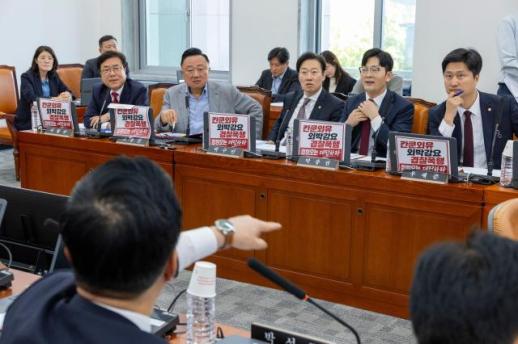 Ruling Party Urges Oh Se-hoon to Address GTX-A Rebar Omission Issue Directly Members of the Democratic Party's Administrative Safety Committee criticized Oh Se-hoon, the People Power Party's candidate for Seoul mayor, on May 18 for allegedly hiding behind attachments regarding the rebar omission during the construction of the GTX-A Samsung Station. This response came after a city official claimed during a committee meeting that they had reported to the Korea Railroad Corporation monthly. During a press conference at the National Assembly, including committee member Yoon Geon-young, the Democratic lawmakers stated, "The People Power Party claims that the Seoul city government has already reported this through official documents, but the evidence presented consists of just a few pages from a 400-500 page monthly construction management report." They further criticized the city for being aware of the issue but failing to adequately share it with relevant agencies for immediate action. "Although the city conducted joint inspections and progress meetings several times after recognizing the problem, there is no evidence that they officially discussed or actively communicated the structural defect that directly impacts citizen safety." They emphasized, "If significant structural issues were managed internally for months, this is not merely a case of administrative negligence. Claiming 'we already reported it' while burying critical safety issues in hundreds of pages of documents is not a responsible administrative stance. Oh must answer directly." In response to the People Power Party's announcement of plans to file complaints against the Ministry of Land, Infrastructure and Transport and MBC, Yoon remarked, "What the People Power Party is trying to do is protect Oh Se-hoon and divert attention. They seem afraid that the public will see Oh's performative administration that disregards the safety of Seoul citizens." Democratic lawmaker Ko Min-jeong also stated, "This is about protecting Oh rather than ensuring the safety of 10 million citizens." When asked whether the Democratic Party would take legal action against Oh, lawmaker Oh Gi-hyung replied, "Legal measures could be taken after confirming the facts." Oh Se-hoon previously attributed the controversy to the construction company, Hyundai Engineering & Construction. At a seminar on the evaluation of the real estate policies of the Lee Jae-myung administration, he remarked, "Isn't it the Democratic Party that feels a sense of crisis as their support rates fluctuate? It seems they are determined to use the rebar incident as a campaign issue." He added, "As mentioned in the committee meeting this morning, this is an absurd situation. We handled it according to the manual and principles, but it turned into a misunderstanding as they tried to frame it as a cover-up."* This article has been translated by AI. 2026-05-18 18:25:29
 -
 Jung Won-oh Proposes Housing Solutions for Youth and Newlyweds Jung Won-oh, the Democratic Party's candidate for Seoul mayor, announced on May 18 that he plans to reduce initial costs for newlywed housing and expand rent support for young people. During a press conference in front of Seoul City Hall in Jung-gu, Jung unveiled his "Three Major Housing Stability Measures for Youth and Newlyweds." According to his proposal, 10,000 affordable homes for newlyweds and 30,000 public rental units will be made available. The affordable homes will include equity accumulation, profit-sharing, and land lease types to lower initial costs. The equity accumulation model allows buyers to pay 15-25% of the equity upfront and then acquire the remaining shares over 20-30 years while adjusting rent and lease terms as needed. An additional budget of 800 billion won will increase the number of youth eligible for rent support from 20,000 to 50,000. This funding will be sourced from cuts to projects initiated by Oh Se-hoon’s administration, such as the Han River Bus and the audit of the city’s workforce. Furthermore, Jung plans to provide 50,000 housing units for young people, including 7,000 university dormitories, 20,000 affordable shared housing units with reduced rent, and 23,000 public rental homes. He stated, "We operate a shared housing facility near Hanyang University in Seongdong-gu, which is well-received by students, landlords, and residents alike. We plan to expand this model throughout Seoul." To address the ongoing rental crisis, Jung aims to accelerate housing supply. By next year, he plans to complete the construction of 67,000 units, including 60,000 from redevelopment projects and 7,000 from public rental housing reconstruction, along with 20,000 new purchase rental homes. After the announcement, Jung spoke to reporters regarding the missing rebar issue in the GTX-A section at Samsung Station, asserting, "There is evidence that Oh Se-hoon, the candidate from the People Power Party, is responsible." He criticized attempts to dismiss the issue as a "rebar myth," stating, "Avoiding and hiding from the problem reflects a lack of safety awareness, which is why accidents occur."* This article has been translated by AI. 2026-05-18 18:20:36
 -
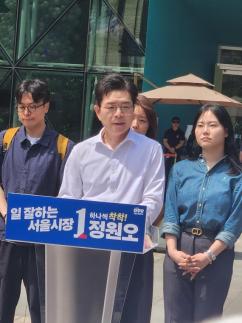 Jung Won-oh Promises 87,000 Housing Units by Next Year Amid Housing Crisis Jung Won-oh, the Democratic Party's candidate for Seoul mayor, unveiled a comprehensive housing stability plan targeting youth and newlyweds on May 18, directly addressing the city's housing challenges. The key components of the plan include expanding rent support for young people, providing tailored public housing for newlyweds, increasing the supply of rental housing for youth, and committing to the early construction of 87,000 housing units by 2027. At a press conference in front of Seoul City Hall, Jung stated, "We will ensure that the youth and newlyweds of Seoul no longer have to postpone their futures due to housing issues," adding that he aims to rectify the housing administration that has faltered under the current mayor, Oh Se-hoon. A notable aspect of this pledge is the emphasis on immediate support for young people and the expansion of public-led housing supply. Jung announced plans to increase the scale of rent support for young people from the current 20,000 beneficiaries per year to 50,000, providing 200,000 won per month for 12 months. This initiative will target a total of 200,000 individuals during his term. For newlyweds, the plan includes the provision of 10,000 affordable homes using shared equity, profit-sharing, and land lease models, along with 30,000 public rental units. The shared equity model allows residents to pay only 15% to 25% of the initial sale price and acquire the remaining equity over time. In terms of housing for youth, Jung outlined plans for 7,000 university dormitory units, 20,000 shared housing units, and 23,000 public rental units, totaling 50,000 units. He also proposed expanding the shared housing model he initiated during his tenure as the head of Seongdong District to all of Seoul. This model involves cost-sharing between the city, schools, and local governments to reduce rental burdens for young people. A significant focus of this pledge is the redefinition of the role of the Seoul Housing and Communities Corporation (SH). Jung remarked, "SH's involvement in projects like the Seoul Ring and Han River Bus has diluted its housing welfare functions. We will restore it as a specialized housing welfare agency." This statement is seen as a clear differentiation from Oh Se-hoon's emphasis on expanding private redevelopment and reconstruction projects. While Oh has prioritized private supply through rapid integrated planning and easing reconstruction regulations, Jung is focusing on expanding public housing and tailored supply for youth and newlyweds. However, there are concerns regarding the feasibility of these policies. Jung has promised to supply 87,000 units by next year, but many of these are based on the commencement of construction rather than completion. The plan includes targeting early construction of 60,000 units from redevelopment projects and 7,000 units from the reconstruction of aging public rental housing, with an additional 20,000 units to be supplied through newly acquired rental housing. The challenge lies in the timeline for actual supply. Redevelopment and reconstruction projects require complex processes, including resident consent, association management, review procedures, relocation, and construction, which typically take several years. The reconstruction of permanent rental complexes also faces challenges related to resident relocation plans and financial issues, making rapid progress difficult. Given that SH is central to this initiative, its financial capacity and project execution ability remain critical variables. SH is already engaged in both public housing supply and urban development projects. Jung's team stated, "We will manage housing administration based on construction commencement to accelerate supply speed," but there are calls for more detailed explanations regarding where, when, and how the supply will occur. While this pledge has clarified the policy direction and distinctiveness aimed at youth and newlyweds, the ambitious target of supplying 87,000 units by next year will likely face scrutiny regarding administrative feasibility and execution capability.* This article has been translated by AI. 2026-05-18 18:18:00