


Latest by
-
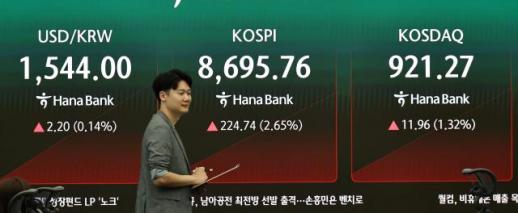 KOSPI Surge Boosts Securities Stocks, Kiwoom Securities Up 9.5% The KOSPI index showed a significant surge in early trading, leading to a broad rally in securities stocks. This increase is attributed to rising trading volumes and improved investor sentiment following the market rebound, resulting in a surge of buying interest in previously underperforming securities stocks. According to the Korea Exchange, as of 10:16 a.m. on June 25, Kiwoom Securities was trading at 344,000 won, up 9.55% from the previous trading day. Other major securities firms also recorded gains, with Korea Financial Group rising 6.60%, Samsung Securities up 6.79%, Mirae Asset Securities increasing by 5.87%, and NH Investment & Securities climbing 5.04%. On this day, the KOSPI opened at 8,703.42, up 232.40 points (2.74%) from the previous day, recovering above the 8,900 mark. The activation of a buying sidecar indicated a renewed preference for risk assets, with the securities sector emerging as a key beneficiary. Earlier this year, securities stocks experienced significant price increases alongside the stock market rally, but they have faced relative underperformance over the past two months. This decline is attributed to a slowdown in trading volume and concerns that the strong performance seen in the first quarter may not continue. An analyst at Kiwoom Securities, Ahn Young-jun, stated, "The recent correction reflects market concerns that trading volume and earnings will slow down after peaking in the first quarter. Despite the expansion of market capitalization, trading turnover has not increased since January of this year." He added, "The slowdown in turnover indicates that the influx of new investors is not as robust as before." However, analysts maintain that the growth prospects for the securities industry remain solid. Ahn noted, "The expansion of retail investment and the increasing demand for corporate financing continue to create structural opportunities for securities firms. The growth focus is shifting from brokerage to wealth management (WM) and investment banking (IB), transforming the industry's landscape."* This article has been translated by AI. 2026-06-25 10:28:00
 -
 Bitcoin Falls Below $60,000 for First Time in 20 Months Amid Market Shifts Bitcoin, the leading cryptocurrency, has dropped to its lowest level in 20 months. The price fell below the crucial $60,000 mark due to the potential for interest rate hikes by the U.S. Federal Reserve, capital outflows from Bitcoin exchange-traded funds (ETFs), and a shift of investor interest toward artificial intelligence (AI) stocks. On June 25, data from Coinbase indicated that Bitcoin briefly fell over 5% to around $59,000, marking the first time it has traded below $60,000 since October 2024. This decline represents more than a 50% drop from its all-time high of approximately $126,000 reached in October 2025. Since the beginning of this year, Bitcoin has decreased by over 30%, continuing a trend of underperformance among risk assets. The primary concern driving this decline is interest rates. As the likelihood of rate hikes by the Federal Reserve increases, volatile cryptocurrencies like Bitcoin often face selling pressure first. Supply and demand dynamics have also weakened. There has been a recent outflow of funds from U.S. Bitcoin spot ETFs, as institutional investors who previously supported the Bitcoin rally have withdrawn their investments, diminishing the price support. Investor interest has shifted toward AI-related stocks, further contributing to Bitcoin's decline. Recently, the market has seen strength in semiconductor and AI infrastructure stocks, while cryptocurrencies have failed to show significant recovery even as the stock market rebounds. The breach of the $60,000 level indicates a weakening of market sentiment. If Bitcoin does not quickly recover this level, additional selling pressure may increase.* This article has been translated by AI. 2026-06-25 10:28:00
 -
 Ministry of SMEs and Startups Seeks Candidates for Small Business Awards by July 21 The Ministry of SMEs and Startups and the Korea Small Business Distribution Center announced on June 25 that they are accepting nominations for the 2026 Small Business Domestic and International Market Development Awards until July 21. The awards will recognize employees of small businesses who have achieved outstanding sales results through government support, as well as public officials and employees of support organizations, including public institutions and distributors, who have contributed to the development of domestic and international markets for small businesses. Candidates must have at least two years of service in the relevant field. Public officials and support organization employees must have worked for at least two years and have been engaged in the field for at least six months as of the nomination date. However, the number of nominees from each organization is limited to three. Nominations can be submitted through the official website. After a review process, approximately 35 awards will be presented by the Minister of SMEs and Startups on November 20. * This article has been translated by AI. 2026-06-25 10:28:00
 -
 Qatar's Mahdoub Suspended for Five Matches After Serious Injury to Canadian Player Qatar midfielder Asim Mahdoub has been suspended for five matches after causing a serious injury to an opposing player during the 2026 FIFA North and Central America World Cup. On June 25, FIFA announced the suspension, which Mahdoub has the right to appeal. The incident occurred on June 19 during a group stage match against Canada at BC Place in Vancouver, where Mahdoub received a red card for a dangerous tackle on Canadian midfielder Ismael Kone in the 53rd minute. Kone suffered a severe fracture to his left leg and was taken off the field on a stretcher before undergoing surgery. As a result of the injury, Kone will miss the remainder of the tournament. After the incident, Mahdoub was seen holding his head in distress upon realizing the extent of Kone's injury and later visited the hospital to apologize in person. Despite his remorse, FIFA decided to impose a disciplinary action. Mahdoub also missed Qatar's final group match against Bosnia and Herzegovina on June 25, where Qatar lost 1-3, finishing last in Group B with one draw and two losses, thus eliminating them from the tournament. The suspension will also apply to future international matches for the Qatar national team following the World Cup.* This article has been translated by AI. 2026-06-25 10:28:00
 -
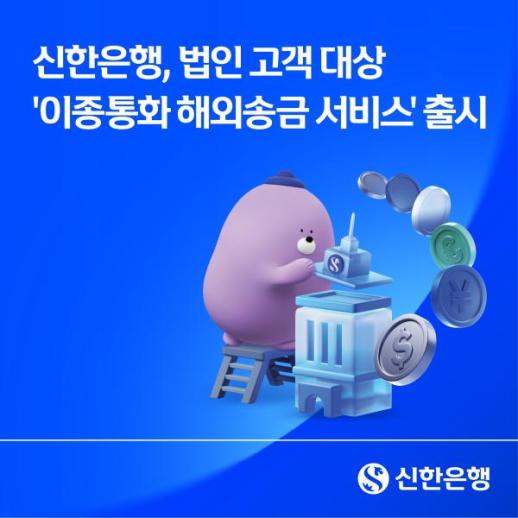 Shinhan Bank Launches Cross-Currency Remittance Service for Corporate Clients Shinhan Bank is enhancing its overseas remittance services for corporate clients. On June 25, the bank announced the launch of its dedicated cross-currency remittance service. The cross-currency remittance service allows for the use of different currencies for the remittance process and the final receipt. Corporate clients can specify the local currency and amount that the overseas recipient will receive. Shinhan Bank will convert this amount into U.S. dollars (USD) and send it to a partner remittance institution. The partner institution will then convert the USD into the local currency for the recipient. This service enables recipients to receive funds in their local currency without the need for additional currency exchange procedures. Shinhan Bank expects this will reduce inconveniences arising from discrepancies between the remittance currency and the actual payment currency. The service is available at Shinhan Bank branches and supports 11 currencies, including the Taiwan Dollar (TWD), Mexican Peso (MXN), Malaysian Ringgit (MYR), and Philippine Peso (PHP). The bank plans to expand the service to a total of 27 currencies by July. A Shinhan Bank representative stated, "As companies expand their overseas operations and trading regions, the demand from corporate clients for remittances in various local currencies is increasing. We will continue to enhance our foreign exchange services to facilitate smoother global financial transactions for our corporate clients."* This article has been translated by AI. 2026-06-25 10:24:00
 -
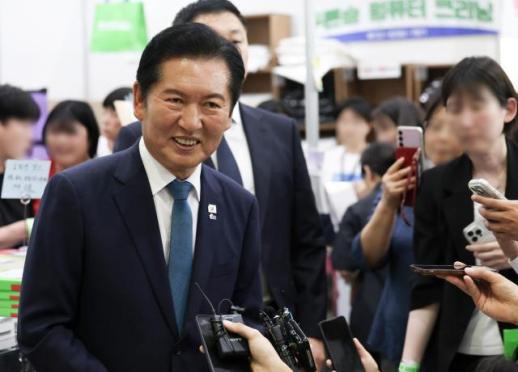 Jung Cheong-rae Calls for Complete Abolition of Investigative Powers Jung Cheong-rae, a member of the Democratic Party, stated on June 25 that "the complete abolition of investigative powers is the true dissolution of the Prosecutor's Office." This statement comes a day after he stepped down from his leadership role, emphasizing the need for the full abolition of these powers as part of ongoing prosecutorial reforms ahead of the party convention scheduled for August 17. In a Facebook post, Jung urged, "We must abolish investigative powers immediately," and called for the government to submit the criminal procedure law to the National Assembly without delay, asserting the need to secure the chairmanship of the Legislation and Judiciary Committee to facilitate voting on the bill. He also expressed the importance of passing the criminal procedure law in the National Assembly before Constitution Day and ensuring the establishment of the Public Prosecution Service and the Serious Crimes Investigation Agency by October. However, there are differing opinions within the party regarding the abolition of investigative powers. The pro-Jung faction advocates a strong stance, while the pro-Lee faction calls for caution. President Lee Jae-myung has previously stated that he would leave the discussion on investigative powers to the National Assembly. The issue of abolishing investigative powers is expected to be a central topic at the upcoming party convention, with potential candidates including Jung Cheong-rae, Prime Minister Kim Min-seok, and lawmaker Song Young-gil being mentioned as contenders.* This article has been translated by AI. 2026-06-25 10:20:00
 -
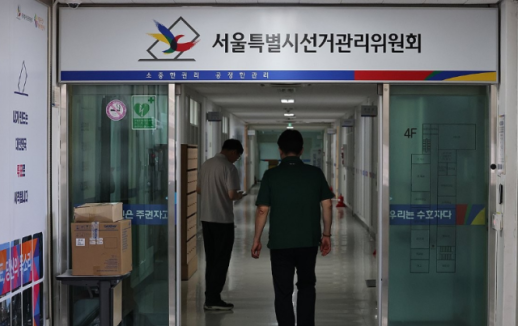 Two Employees of Songpa Election Commission Investigated in Ballot Shortage Case A joint investigation team formed to uncover the circumstances surrounding the ballot shortage during the June 3 local elections has summoned two employees from the Songpa Election Commission for questioning. According to legal sources on June 25, the investigation team is questioning the two Songpa officials as witnesses. They are responsible for managing polling stations in areas like Jamsil 7-dong, where the ballot shortage occurred. The team aims to investigate the reporting channels and response processes related to the ballot shortage. The previous day, the joint investigation team conducted searches at the offices and mobile phones of 12 officials from the Seoul and Songpa Election Commissions. They are trying to determine how officials reported the ballot shortage situation from polling stations and the directives they received in response. The team is analyzing the seized materials and has been summoning election workers who operated in areas like Jamsil 7-dong to reconstruct the events of that day. They also plan to investigate higher-ups, including former Central Election Commission Chairman Noh Tae-ak and former Secretary General Heo Cheol-hoon. Meanwhile, an increase in personnel for the investigation team is anticipated. President Lee Jae-myung mentioned the need for an investigation into the internal operations of the Election Commission during a Cabinet meeting, suggesting that expanding the investigation team may be necessary.* This article has been translated by AI. 2026-06-25 10:20:00
 -
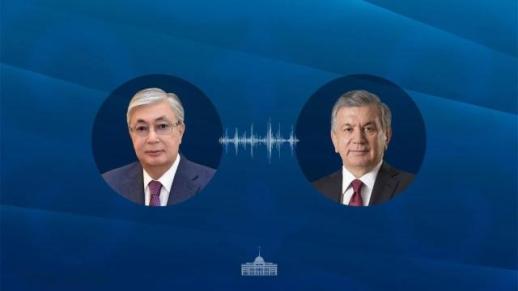 Kazakh and Uzbek leaders discuss strengthening bilateral relations SEOUL, June 25 (AJP) - To strengthen their decades-old close friendship and bilateral relations, the leaders of the two largest countries in Central Asia have engaged in a meeting via a phone call on Wednesday (local time) that extends from their April Bukhara meeting, where strategic cooperation in trade, logistics, and energy sectors was discussed. Kazakhstan's Presidential Office said that the Kazakh President Kassym-Jomart Tokayev and the Uzbek President Shavkat Mirziyoyev spoke on the phone to discuss issues regarding the enhancement of the bilateral cooperation and expressed satisfaction with the development momentum that the Kazakh-Uzbek relations have gained. Built on a shared history and deep mutual trust, the two largest countries in Central Asia are accelerating their partnership to become much closer and stronger. Kazakhstan and Uzbekistan established their modern diplomatic relations in November 1992, and their friendship was fortified by a series of events, including the historic Treaty of State Border Delimitation in 2022. Since 2023, both informal and formal meetings between the leaders have been held frequently, providing opportunities for the Kazakhstan President Kassym-Jomart Topkayev and the Uzbekistan President Shavkat Mirziyoyev to discuss various issues, while working-level engagements also took place on the sidelines of the high-level meetings. Kazakhstan and Uzbekistan, the countries that rely heavily on exports of natural resources such as gas, oil, and mined minerals to make money, are also working fast to transform into modern, technology-driven economies. Astana named 2026 the "Year of Digitalization and Artificial Intelligence," while its neighbor is pushing the "Uzbekistan 2030" plan to bring together online services, digital banking, and tech jobs. In March, Kazakhstan's foreign minister Yermek Kosherbatev met with his Uzbek counterpart Bakhtiyor Saidov in Tashkent and agreed to increase bilateral trade to $ 10 billion by 2030 from last year's $ 5 billion. The two countries also chose cooperation over competition. They have teamed up on big practical projects such as road infrastructure establishment, sharing of water supplies during hot summers, and providing support for businesses that operate across both borders. 2026-06-25 10:14:30
 -
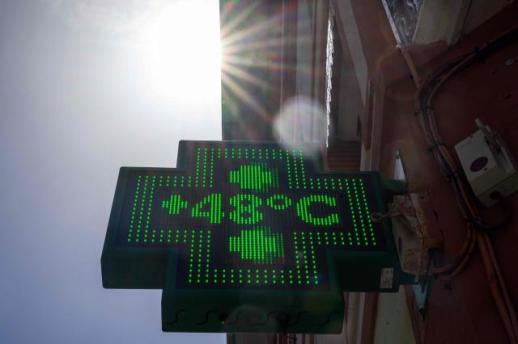 Record Heatwave Hits Europe, Causing Deaths, Power Outages, and School Closures A record heatwave is sweeping across Europe, leading to fatalities, widespread power outages, train cancellations, school closures, and disruptions at tourist sites. According to Reuters and the UK daily Telegraph, the current heatwave is attributed to an "Omega block" phenomenon, which creates a heat dome. This occurs when high pressure is situated in the center, flanked by low pressure, causing jet streams to stagnate and trapping heat from the Sahara Desert over Western Europe. In France, the country has recorded its hottest days since weather observations began in 1947, with average temperatures across 30 monitoring stations reaching 30 degrees Celsius on June 24, surpassing the previous day's record of 29.8 degrees. The southwestern city of Pissos saw temperatures peak at 44.3 degrees on June 23, while Paris recorded 40.9 degrees on June 24, setting a new record for June. Fatalities have also been reported. Reuters cites French authorities stating that at least 48 heat-related deaths, including drownings, have been confirmed. In Spain, where temperatures have soared above 40 degrees since the weekend, two elderly individuals have died from heat-related illnesses. The power grid is under significant strain. On June 23, a substation in northwestern France shut down due to overheating, cutting power to 68,000 households. Authorities estimate that up to 106,000 households nationwide have experienced outages. Additionally, limited cooling water supply to nuclear reactors has led Électricité de France (EDF) to reduce nuclear output by 4.1 gigawatts, which is 7% of midday total power demand. Consequently, France's electricity exports have significantly decreased compared to the previous week. According to AFP, approximately 44 million of France's 67 million residents are under a red heat alert. Data from the German Weather Service and the European Union's Joint Research Centre suggests that 94 million people in Europe are experiencing temperatures above 35 degrees, while over 350 million are exposed to temperatures exceeding 30 degrees. The UK is also experiencing record heat. A heat alert is in effect for much of England and Wales, with temperatures in Hampshire reaching 36.1 degrees on June 24, marking the highest June temperature on record. The previous records were 35.6 degrees set in 1957 and 1976. The all-time highest temperature recorded in the UK was 40.3 degrees in July 2022. Last month, an early heatwave saw temperatures rise to 35.1 degrees, breaking the May record. The heatwave is directly impacting daily life. The BBC reports that 1,100 schools in England and Wales have either closed or shortened their hours. Major rail companies have canceled numerous train services due to speed restrictions imposed to prevent track overheating, advising passengers to avoid non-essential travel. Tourist attractions and cultural sites are also affected. The Eiffel Tower in Paris announced an early closure, while the Changing of the Guard ceremony at Buckingham Palace in London has been scaled back. In Florence, Italy, the Uffizi Gallery halted ticket sales due to a malfunction in its air conditioning system caused by the extreme heat. Demand for cooling devices has surged. French retailer Carrefour reported selling around 30,000 fans and air conditioners in just one day on June 22. Amazon's sales of cooling devices in France last week doubled compared to the same period last year. On June 24, Italy's Health Ministry convened an emergency meeting to address the heatwave. A red heat alert has been issued for 16 cities, including Rome and Milan, with expectations that the alert will expand to 17 cities on June 25. Forecasts predict temperatures could reach 41 degrees in Florence and 38 degrees in Milan. Belgium is also bracing for extreme heat, with temperatures expected to peak at 37 degrees on June 24, prompting an orange heatwave alert across the country. The Belgian Meteorological Institute reported that temperatures in most areas could reach around 35 degrees, marking the highest June 24 temperature since records began in 1833. The Atomium, a landmark in Brussels, has also adjusted its closing times due to the heat. In the Netherlands, outdoor sports events have been canceled, public transport services have been reduced, and schools have moved to shortened hours. Poland has issued a heat alert from June 25 to 27, while Croatia has a red alert from June 26 to 27, and Hungary has a heat alert from June 27 to 30. According to Reuters Climate Monitor, temperatures across Europe are currently up to 18 degrees higher than average. The World Health Organization has emphasized the need for urgent action. WHO Director-General Tedros Adhanom Ghebreyesus stated on X (formerly Twitter), "The data is clear. Temperatures in Europe are rising at about twice the global average, increasing the likelihood and intensity of extreme heat. We can no longer afford to delay; leaders must prioritize investments in climate-resilient health systems, accelerate climate action, and mitigate the causes of the climate crisis."* This article has been translated by AI. 2026-06-25 10:12:00
 -
 LG CNS Launches Agentic AI-Powered ERP Testing Solution to Expand Global Business LG CNS announced on June 25 that it will launch the 'Perfect Twin ERP Edition' equipped with Agentic Artificial Intelligence (AI), aiming to accelerate its global market penetration. The Perfect Twin ERP Edition is an automated testing solution for ERP (Enterprise Resource Planning) systems, specifically designed for SAP ERP software. It enhances system stability and operational efficiency by preemptively checking for defects and errors before transitioning existing ERP systems to SAP's latest ERP, S/4HANA, or before launching new ERP systems. The newly launched Perfect Twin ERP Edition utilizes Agentic AI to automatically generate test scenarios, analyze the causes of identified errors, and prepare reports. Given that ERP systems integrate core business functions such as finance, manufacturing, procurement, logistics, and human resources, the scope of work and scenarios that require pre-validation is extensive. Previously, it took days for staff to manually design test items and scenarios. LG CNS has implemented Agentic AI to analyze processes and actual operational data across various business areas, enabling the automatic generation of test scenarios, which can now be completed in just a few hours. Notably, the AI can independently determine and create optimal test scenarios without direction from staff. This allows clients to significantly reduce the testing period while validating a wide range of scenarios that might be overlooked by humans. The testing process has also been automated with Agentic AI. During testing, the AI automatically identifies anomalies and the causes of errors, providing solutions for any necessary follow-up actions. This enables non-experts to validate ERP systems more easily, enhancing both the stability and completeness of ERP transition projects. Agentic AI also automatically generates various outputs, including testing reports, facilitating more systematic management of test results. LG CNS plans to continuously enhance the Perfect Twin ERP Edition into an autonomous testing solution. This year, the company aims to establish an 'Agent Orchestration' system where AI agents collaborate autonomously, managing the entire lifecycle from test scenario creation to execution, analysis, error correction, and validation. LG CNS is actively promoting the Perfect Twin ERP Edition in global markets. Recently, there has been a growing demand among global companies to transition their existing SAP ERP systems to the latest cloud-based 'SAP S/4HANA.' Large-scale ERP transitions can incur significant costs due to operational disruptions or data errors, leading to a surge in global demand for automated pre-testing solutions that can thoroughly filter out defects before system launches. At the recent SAP Sapphire 2026 event in Orlando, Florida, LG CNS showcased the newly launched Agentic AI-based Perfect Twin ERP Edition at its own booth. In April, the company participated in Japan's largest IT exhibition, 'Japan IT Week,' for the third consecutive year, accelerating its efforts in the Japanese market. LG CNS has also strengthened its local business foundation by signing a reseller partnership for Perfect Twin with Hitachi Solutions Create, an IT subsidiary of the Hitachi Group in Japan. Jeon Han-sin, Senior Vice President of LG CNS's Enterprise Solutions Division, stated, "We plan to actively respond to the demand for SAP cloud ERP transitions based on the Perfect Twin ERP Edition integrated with Agentic AI technology, thereby strengthening our global business. We will continue to provide differentiated AI transformation (AX) services to enable global clients to implement intelligent work environments powered by Agentic AI more swiftly."* This article has been translated by AI. 2026-06-25 10:12:00