
Journalist

AJP
-
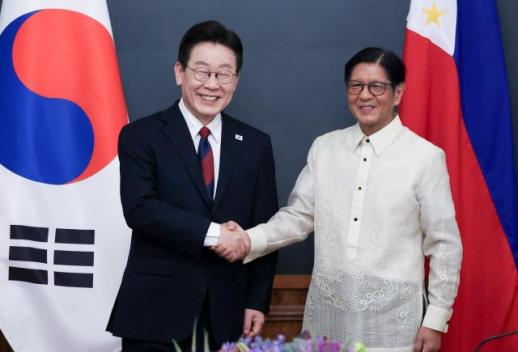 South Korea, Philippines agree to expand cooperation in emerging sectors SEOUL, March 4 (AJP) - South Korea has agreed to expand bilateral cooperation with the Philippines in emerging sectors for future growth, such as artificial intelligence (AI), shipbuilding, and nuclear energy, as part of the two countries' strategic partnership. During a summit between South Korean President Lee Jae Myung and Philippine President Ferdinand Romualdez Marcos Jr. in Manila on Tuesday, the two countries signed about a dozen memorandums of understanding (MOUs) to strengthen cooperation. In a joint statement after the summit, Lee stressed that the partnership would build on existing cooperation in trade, defense, and infrastructure, while expanding into new growth sectors. "We agreed to further strengthen cooperation based on the strategic partnership between the two countries," Lee said. Defense was a key area of cooperation, with South Korea's Defense Acquisition Program Administration signing a revised agreement with the Philippines on defense-related procurement. The agreement covers a broader range of areas, expanding the number of South Korean firms eligible for contracts to modernize the Philippines' military and strengthening financial support. The two leaders also discussed cooperation in nuclear energy, with Lee pointing out that South Korea is reviewing whether the Philippines' decades-long idled power plant in Bataan can be restarted. Lee also emphasized cooperation in shipbuilding, as South Korea and the Philippines rank second and fourth globally in terms of shipbuilding capacity, saying it "holds immense potential." Marcos welcomed Lee's initiative for bilateral cooperation, saying that the two nations continue to strengthen their partnership based on mutual trust, as the Philippines was South Korea's first Southeast Asian country to establish diplomatic relations, marking the 77th anniversary of bilateral ties this year. The two leaders also discussed regional security issues and expressed hope for swift stability in the Middle East after last Saturday's U.S.-led airstrikes on Iran. On Wednesday, Lee is scheduled to visit a Korean War memorial cemetery in Manila, where he will pay tribute to Filipino veterans, before attending other events with South Korean nationals residing there. He then returns home later in the day. 2026-03-04 10:26:46
 -
 Jeju Air Sees Spring Surge in Active Senior Travelers, With Demand Peaking in Q2 Jeju Air said Tuesday that demand among its travelers in their 60s and 70s — so-called “active seniors” — is concentrated in the second quarter. Based on an analysis of the past three years of data (2023-2025), the airline said the average number of passengers in their 60s and 70s in the second quarter was about 420,000, 21.3% higher than the third-quarter average of about 346,000. In March, when temperatures begin to rise, the average monthly passenger count was about 155,000, showing that travel demand picks up from early spring. The airline expects that spring travel demand among active seniors will remain steady this year. As of Tuesday, Jeju Air’s bookings for April and May stood at about 164,000 and 145,000, respectively, exceeding the past three-year monthly average for the second quarter. For overseas travel in the second quarter this year, the most popular route among active seniors was Incheon-Weihai, with about 24,000 passengers. It was followed by Busan-Taipei/Kaohsiung and Incheon-Qingdao, each with about 14,000 passengers, indicating strong demand for travel to Greater China. A Jeju Air official said demand appears to be driven by relatively reasonable second-quarter airfares and the ability to travel on a more relaxed schedule because crowds are typically lighter. 2026-03-04 10:18:38
 -
 Hansung Motor Launches Mercedes-Benz 'Last Golden Bell' March Promotion Hansung Motor, an official Mercedes-Benz dealer, said Tuesday it will run its March “Last Golden Bell” promotion marking the 140th anniversary of Carl Benz’s 1886 invention and patent application for the first automobile. For the first 140 buyers this month of key models including the Mercedes-Benz GLE 450, E 450 and A 220, the company will extend the standard three-year warranty by one year, for a total of four years. The offer is aimed at reducing maintenance and ownership costs and will end once the allotment is filled. Hansung Motor is also offering a weekend-only benefit for customers who sign contracts at showrooms on March 7-8 and March 14-15. Those buyers will receive a Mercedes-Benz mini travel bag. Customers who take delivery within March will be entered into a lucky-draw event, with 140 winners to receive prizes including Rimowa luggage, an LG air purifier and items from the official Mercedes-Benz collection. In addition, existing Hansung Motor customers who repurchase a vehicle will receive an extra 1% discount on all models during March, capped at 1 million won. “We prepared this promotion to provide customers with practical benefits and satisfaction in celebration of the 140th anniversary,” CEO Kim Marco said. “Since it is limited to March, we hope it will be a special opportunity.”* This article has been translated by AI. 2026-03-04 10:12:16
 -
 Lotus Korea Offers Low-Rate Financing Deals on Emira and Eletre Lotus Cars Korea said Tuesday it is launching a special low-interest financing promotion for its flagship models, the Eletre and Emira. The offer is built around 60-month terms, the company said, and is designed to either eliminate upfront costs or cut interest rates to the 0% range, depending on customer needs. Customers who choose a 60-month operating lease with a deposit equal to 30% of the vehicle price and no prepayment will receive an ultra-low rate in the 0% range. For buyers who want no money down, the company said a 60-month operating lease can be set with both prepayment and deposit at 0 won; that option still carries a low rate in the early 2% range. Lotus Cars Korea said its 60-month financial lease and installment plans, aimed at customers seeking eventual ownership, also apply the same 0% range ultra-low rate with a 0 won down payment. The benefits apply to both the mid-engine Emira sports car and the Eletre, the brand’s first all-electric hyper SUV. A Lotus Cars Korea official said Lotus’ “pure driving” feel is realized only when drivers take the wheel on the road, adding that now is a good time to buy as the Emira nears discontinuation and the Eletre represents the brand’s new future. More details are available through Lotus Cars Korea’s flagship showroom. * This article has been translated by AI. 2026-03-04 10:00:19
 -
 T’way Air, Sono Hotels & Resorts Launch Partner Discounts of Up to 30% T’way Air said Tuesday it will run a joint promotion with Sono Hotels & Resorts through March 31, offering reciprocal discounts to customers who book flights or rooms through the companies’ official websites and mobile apps (web). Customers who book airfare on T’way Air’s website will receive coupons for discounts on weekday and weekend stays at Sono Hotels & Resorts’ domestic properties — 30% off weekdays and 20% off weekends. Eligible properties are Sono Calm Jeju, Sono Moon Haeundae, Sono Calm Yeosu, Sono Belle·Sono Calm·Sono Pet Vivaldi Park, and Sono Belle Danyang. The coupons can be used for suite and family room types. Stays booked with the coupons are valid through May 30, excluding certain dates. T’way Air said it will also provide a 30% breakfast discount coupon for Sono Calm Jeju, usable by two people per coupon. Customers who book rooms through Sono Hotels & Resorts’ website or mobile app (web) will receive a 12,000-won discount coupon for T’way Air domestic flights and an international flight coupon worth up to 60,000 won. The travel period is valid through May 31 for domestic routes and through Oct. 24 for international routes, with some blackout dates. Detailed terms and conditions are available on the official websites of T’way Air and Sono Hotels & Resorts. “We structured the promotion around mutual coupon offerings so customers of both companies can access benefits more conveniently through each channel,” a T’way Air official said. “We will continue to put safe operations first while rolling out benefit-focused promotions customers can feel.”* This article has been translated by AI. 2026-03-04 09:55:04
 -
 Hyundai, Kia Set February U.S. Sales Record, Up 5% From a Year Earlier Hyundai Motor Co. and Kia posted their best-ever February sales in the United States, driven by strong demand for midsize and large SUVs such as the Palisade and Telluride and by hybrid models. The results extended the companies’ monthly sales records to three straight months. Hyundai Motor Group said Tuesday it sold 137,412 vehicles in the U.S. in February, up 5% from a year earlier. Hyundai, including its Genesis luxury brand, sold 71,407 vehicles, a 5.7% increase. Kia sold 66,005, up 4.3%. Hyundai set a February record and notched a third consecutive monthly sales high following records in December and January. Hyundai brand sales totaled 65,677 vehicles, up 5.9%. The Palisade rose 28.4% to 10,025 units, and the Santa Fe increased 18.6% to 11,344. Kia also recorded its best February. Telluride sales jumped 68.7% from a year earlier to 13,198 units after the launch of the second-generation model. The K5 posted 6,053 sales, up 60.6%, and Carnival sales rose 65.4% to 5,805. Genesis sales increased 3.3% to 5,730 vehicles, led by the GV70 with 2,628 units sold. Electrified vehicle sales for Hyundai and Kia climbed 34.7% to 34,855 units in February, accounting for 25.6% of total sales. Hybrid sales rose 56.4% to 29,279 units. Hyundai hybrids increased 73.5% to 18,374, and Kia hybrids rose 34% to 10,905. Electric vehicle sales fell 21.9% to 5,576, including 4,030 for Hyundai and 1,546 for Kia. In February U.S. sales rankings, Toyota led with 180,950 vehicles sold. Hyundai and Kia held second place with 137,412. 2026-03-04 09:51:08
 -
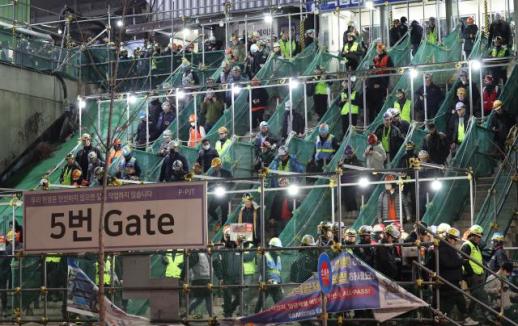 UPDATE: Korea's factory output turns negative in Jan on reduced chip activity **Additional data information added** SEOUL, Mar 04 (AJP) - South Korea’s factory output turned negative for the first time in three months in January on slower semiconductor and construction activity, underlining the fragility of the economic recovery as the year-end base effect faded. Mining and manufacturing output fell 1.3 percent in January from the previous month — the first decline since October, according to data released by the Ministry of Statistics and Data Wednesday. The downturn was driven largely by shipbuilding and semiconductor production. Output from “other transport equipment,” which includes tankers and container ships, shrank 17.8 percent from a month earlier. Semiconductors — a linchpin of the Korean economy — saw production fall 4.4 percent from the previous month and 5.2 percent from a year earlier. Reflecting the slowdown, the average capacity utilization rate for manufacturers slipped 1.4 percentage points to 71.2 percent, while inventories rose 0.2 percent during the same period. Mining and manufacturing shipments also decreased 1.4 percent from the previous month. “The growth trajectory for high-value-added products, such as High Bandwidth Memory (HBM), remains robust,” said Lee Doo-won, director general for economic trend statistics, noting that the pace of semiconductor production growth had already begun to slow since September. Domestic machinery orders edged down 0.1 percent from a year earlier. While private-sector orders rose 4.1 percent, a 53.1 percent plunge in public-sector orders — following a massive 93.2 percent surge the previous month — dragged down the overall figure. “The decline in public machinery orders in January indicates that new large-scale social overhead capital (SOC) projects have entered a lull,” Lee said. The construction sector also swung sharply lower as the year-end spending boost evaporated. Construction investment, which had jumped 12.1 percent in December, plunged 11.3 percent in January, erasing the earlier gains. “A strong base effect was at play following the push-out style of construction completions in December, as both the public and private sectors rushed to exhaust year-end budgets,” Lee added. Despite the current slump, the outlook for construction showed tentative improvement, with total orders rising 35.8 percent from a year earlier. Building orders increased 24.1 percent, while civil engineering orders — including railways — surged 70.5 percent. Still, Lee struck a cautious note, warning that first-quarter performance warrants close monitoring as the January decline came in sharper than expected. A split economic outlook Facility investment provided a bright spot – at least for now, rebounding 6.8 percent from the previous month. The recovery was led by a 41.1 percent surge in semiconductor manufacturing equipment and a 16 percent increase in automotive investment, fueled by a wave of corporate vehicle replacements at the start of the year. While the spillover of export strength into facility investment is a positive signal, the ministry remained cautious. “Uncertainty remains high regarding when the construction sector — which still faces a thin order backlog — will bottom out and rebound,” the ministry said. Economic indicators also showed a notable divergence between current conditions and future expectations. The cyclical component of the coincident composite index, which measures the present economic climate, remained unchanged at 99. In contrast, the cyclical component of the leading composite index — a gauge of future trends — rose 0.7 points to 102.3. A reading of 100 marks the threshold between expansion and contraction. The gap suggests that while optimism about a future recovery is building, the immediate reality remains challenging. “The leading index rose due to a sharp increase in exports, but it is still difficult to say the economy has fully recovered,” the ministry said, pointing to the disconnect between the two indicators. Korea’s exports in January surged 33.9 percent from a year earlier to $65.85 billion, while the monthly trade balance recorded a surplus of $8.7 billion — the 12th consecutive month in the black, according to the Ministry of Trade, Industry and Energy. However, retail sales for food and other non-durable goods — a barometer of household sentiment — plunged 5.4 percent year on year, far steeper than the 0.5 percent decline recorded the previous month. By sector, sales at supermarkets and convenience stores fell 13.8 percent, while those at large hypermarkets tumbled 20.1 percent, reflecting tightening household spending. 2026-03-04 09:48:26
 -
 Mannatech Korea Launches Brain Plus Supplement With Phosphatidylserine and L-Theanine Mannatech Korea said it launched a new product, “Brain Plus,” on Feb. 27, aimed at supporting cognitive function and easing tension. The company said the product was developed with a focus on helping prevent age-related cognitive decline and reducing stress-related tension. The main ingredient, phosphatidylserine, is included at 300 mg. The company said the ingredient provides a functional benefit for cognitive improvement and also supports skin health, including protection from UV-related skin damage and helping maintain moisture. The product also contains 200 mg of L-theanine, which the company noted has been recognized by the Ministry of Food and Drug Safety for its tension-relief function. Mannatech Korea said the formula was systemized based on its technology and combines 16 additional ingredients, including proprietary components such as aloe vera gel powder, tragacanth gum and trehalose, along with ginkgo leaf extract, silk peptide, turmeric and black pepper extracts, and taurine. The product comes in tablet form and is designed to be taken once a day, three tablets per dose. The company said it is targeting older adults who want to manage memory, students preparing for exams who need focus, and office workers who frequently face job-related stress. “We arranged the ingredients so consumers can manage physical cognitive health and psychological tension in combination,” a Mannatech Korea official said. “It will be a suitable option for consumers seeking to maintain a healthy daily life.” The company said the product can be found on Mannatech Korea’s official website. * This article has been translated by AI. 2026-03-04 09:36:00
 -
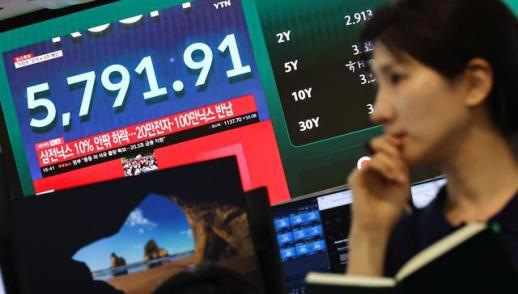 Middle East turmoil pounds Korean stocks and won for second session SEOUL, March 04 (AJP) - South Korean shares extended their downward spiral in the aftermath of the Middle East crisis, losing more than 5 percent at the opening bell Wednesday following Tuesday’s rout. South Korea’s benchmark KOSPI tumbled 6.09 percent to 5,444.51 on panicky retail selling after a 7.24 percent plunge in the previous session. The retreat later eased to around 3 percent by about 9:20 a.m., as foreign and local institutional investors moved to scoop up large-cap stocks that had fallen more than 10 percent. A similar pattern played out on the secondary bourse. The KOSDAQ’s earlier 6 percent drop moderated to about 2.6 percent, also on buying by foreign and domestic institutions. Defense stocks were the sole winners among large-cap names. LIG Nex1 soared 25 percent after surging by the daily limit of 30 percent on Tuesday, amid speculation that the Cheongung-II missile defense system — also known as M-SAM — could see deployment in the Middle East to help defend airspace around Iran. Among heavyweights, Samsung Electronics fell about 7.89 percent, while SK hynix dropped 5.96 percent. Hyundai Motor declined 8.40 percent, and affiliate Kia retreated 8.72 percent in early trading. The dollar — which briefly touched the crisis-level 1,500 won in the overnight offshore market — eased to 1,476.20 won. 2026-03-04 09:35:12
 -
 About 140 South Koreans in Iran and Israel evacuated to neighboring countries SEOUL, March 4 (AJP) - About 140 South Koreans who had been staying in Iran and Israel have been evacuated to neighboring Turkmenistan and Egypt, the Ministry of Foreign Affairs here said on Wednesday. In Iran, about two dozen South Koreans split into two buses arranged by the South Korean Embassy there and left Tehran on Monday and safely arrived in neighboring Turkmenistan the following day amid escalating tensions in the Gulf region following last Saturday's U.S.-led airstrikes on the Middle Eastern country. The evacuees included not only residents but also about 10 embassy staff members and their families, as well as some Iranian nationals who are family members of South Koreans or ethnic Koreans. Also leaving Iran were Lee Do‑hee, head coach of Iran's women's national volleyball team, and Lee Ki‑je, a defender for Iranian professional soccer club Mes Rafsanjan FC. According to the ministry, about 40 South Korean residents still remain in Iran. A ministry official said withdrawing the embassy is "not currently being considered," adding that the government will continue to take responsibility for evacuations while monitoring whether the situation becomes prolonged. In Israel, where about 600 South Korean nationals including around100 short-term visitors are currently staying, some 113 people left Jerusalem and Tel Aviv on Tuesday and arrived in Egypt later that day. Separately, two South Koreans in Bahrain and two in Iraq also evacuated to Saudi Arabia and Turkey, respectively. Meanwhile, Kim Young-bae, a lawmaker of the ruling Democratic Party (DP), on Tuesday urged the government to draw up plans to safely evacuate South Korean residents and travelers in the Middle East to neighboring countries in case the situation worsens. "As many as 21,000 South Koreans are currently residing in some 13 countries in the Middle East. Among them, about 4,000 short-term visitors including travelers are in Dubai, the United Arab Emirates," he said. 2026-03-04 09:31:00