
Journalist

AJP
-
 Middle East Tensions Lift Demand for South Korea’s Cheongung-II Air Defense System U.S. and Israeli strikes on Iran have heightened security concerns across the Middle East, driving up demand for air defense weapons. South Korea’s Cheongung-II, which has expanded its export footprint in the region over the past two to three years, has now been deployed in combat, drawing attention as a lower-cost option with faster delivery. The defense industry said Tuesday that the United Arab Emirates used the South Korean-made medium-range surface-to-air guided weapon system to intercept multiple Iranian missiles. With forecasts that Iran could fire ballistic missiles toward countries near U.S. forces, the UAE fielded Cheongung-II and it was used operationally, the industry said. The UAE’s air defense network is known to include the U.S.-made Patriot, Israel’s Arrow and South Korea’s Cheongung-II. The UAE military said its overall interception rate across its air defense systems was above 90%. Often described as a Korean version of the Patriot, Cheongung-II is a medium-range surface-to-air missile system jointly produced by LIG Nex1, Hanwha Aerospace and Hanwha Systems. If wartime demand accelerates local deployment, related sales are expected to be reflected starting this year. Cheongung-II entered mass production in 2024, and some units have been delivered to the UAE since last year. LIG Nex1, the lead contractor, has signed deals with the UAE (about $3.5 billion in January 2022), Saudi Arabia (about $3.5 billion in November 2023) and Iraq (about $2.5 billion in September 2024), securing a Middle East order backlog of about $9.5 billion (10.2 trillion won) tied to Cheongung-II. The system is a so-called “K-one team” project involving major South Korean defense firms. LIG Nex1 handles system integration and the operations control center; Hanwha Systems supplies the multifunction radar; Hanwha Aerospace provides launchers and munitions. Kia supplies the vehicle platform. Cheongung-II is widely seen as costing about half as much as the U.S. Patriot, helping it gain traction in the Middle East, where demand for guided weapons is high. The push by some countries to reduce reliance on a single supplier has also supported broader interest in South Korean defense exports. Chae Un-saem, an analyst at Hana Securities, said Lockheed Martin’s Patriot PAC-3 surface-to-air missiles have an annual production capacity of about 600 rounds despite plans to increase output. “The unit price is also very high at $4 million, making it more than twice as expensive as Korea’s Cheongung,” Chae said. South Korea recently signed a $35 billion memorandum of understanding on defense cooperation with the UAE, adding to expectations of further exports. Details were not disclosed, but forecasts have pointed to additional contracts for medium- and long-range weapons to build a layered air defense network. Experts said continued instability in the region could keep export momentum going for South Korean defense companies. Nam Myeong-ryeol, head of Korea University’s K-Defense Industry Center, said tensions are rising as Iran attacks not only Israel but also multiple areas where U.S. forces are stationed. “More Middle Eastern countries are likely to seek South Korean weapons that combine performance and price competitiveness, fast delivery, and the ability to operate and sustain the systems,” he said. 2026-03-03 18:04:48
 -
 Tanker Charter Rates Double After Iran Strikes, Raising South Korea Energy Security Fears U.S. and Israeli airstrikes on Iran have sent global oil prices surging, and tanker freight rates have more than doubled, raising alarms over South Korea’s energy security. With heavy reliance on Middle Eastern energy, South Korea could face a shock comparable to the 1970s oil crisis if the conflict drags on, industry officials warned. According to the industry on Tuesday, the attacks pushed up international crude prices and natural gas prices in Asia and Europe. On ICE Futures, Brent crude for May delivery settled at $77.74 a barrel, up 6.7% from the previous session. Brent briefly climbed 13% intraday to $82.37, its highest level in more than a year since January last year. On the New York Mercantile Exchange, WTI for April delivery settled at $71.23 a barrel, up 6.3%. WTI also rose as much as 12% intraday to $75.33, the highest since June last year. Shipping costs jumped alongside crude. A VLCC (very large crude carrier) rate indicator for the Middle East-to-East Asia (MEG–China) route obtained by Ajou Economy showed the Worldscale (WS) index at 410.44 as of March 2. The corresponding daily time charter equivalent (TCE) was calculated at $423,736. That was nearly double the level just before the war on Feb. 27 (WS 224.72; TCE $218,154) and more than five times January’s level (WS 96.12; TCE $78,793) in about a month. Worldscale is the standard benchmark used to settle international tanker freight. A reading below 100 is generally seen as weak and above 100 as strong. Against that yardstick, a move above WS 400 is viewed as an extreme level reflecting war risk, not just a strong market. The market is increasingly concerned that tanker freight could rise more than tenfold from prewar levels as Iran’s closure of the Strait of Hormuz has effectively become a reality. Marine insurance, a major component of shipping costs, has continued to climb sharply, the report said. Experts said the fallout for South Korea could be significant because the country depends on the Middle East — where the Strait of Hormuz is located — for about 70% of its imported crude and up to 30% of its natural gas. If higher crude prices are compounded by rising transport costs, refiners’ import costs would jump, likely feeding into higher prices for petroleum and petrochemical products and higher power-generation costs, squeezing profitability across industries. The government plans to respond by releasing stockpiled oil and securing alternative supplies. It says it holds about 208 days’ worth of crude reserves, enough to manage short-term disruptions. But a prolonged closure of the Strait of Hormuz could change the picture. As the war lengthens, releasing reserves alone may not fully ease supply anxiety. The Korea International Trade Association said using detours instead of the strait could lift shipping costs by an additional 50% to 80% from current levels. Transit time and customs procedures could also add up to five days, and in past conflicts in the region, war-risk insurance premiums have been marked up as much as sevenfold. Oh Hyun-seok, a professor of international trade at Keimyung University, said, “The government says it still has room with its stockpiles, but it is not time to be optimistic.” He added, “If the strait is blocked, South Korea needs to diversify oil imports, and in the short term it needs tax adjustments, such as easing fuel taxes, to reduce the burden on companies and consumers.” 2026-03-03 18:03:25
 -
 South Korea’s 5 Automakers’ February Sales Fall 4.6% From a Year Earlier South Korea’s five automakers posted lower sales in February, returning to a decline as the Lunar New Year holiday reduced the number of business days. Hyundai Motor, Kia, GM Korea, Renault Korea and KG Mobility (KGM) said on Tuesday they sold a combined 602,689 vehicles last month — 95,702 in South Korea and 506,987 overseas. That was down 4.6% from a year earlier. Hyundai’s global sales totaled 306,528 vehicles, down 5.1% year over year. Kia sold 247,401 vehicles, a 2.8% decline. The companies cited fewer selling days during the holiday period, along with weaker electric-vehicle sales in global markets. Combined domestic sales for the five automakers fell 14.8% from a year earlier. KGM was the only company to post growth, up 38.3%, helped by demand for its new Musso pickup. The others reported declines: Hyundai down 17.8%, Kia down 8.6%, GM Korea down 37.4% and Renault Korea down 59.0%. Overseas sales slipped 2.3%; Renault Korea rose 55.4%, while the other four companies posted year-over-year decreases. In South Korea, the best-selling model in February was Kia’s Sorento with 7,693 units. It was followed by Hyundai’s Porter (4,634), Hyundai’s Sonata (4,436), Kia’s PV5 (3,967) and Hyundai’s Grandeur (3,933). 2026-03-03 17:51:47
 -
 Park Bom Deletes Post Alleging Sandara Park Drug Use After Backlash, Citing Health Issues Singer Park Bom raised allegations that Sandara Park, who promoted with her in the same group, used drugs, but later quietly deleted the post after criticism. At about 5:40 p.m. on the 3rd, the post targeting Sandara Park was no longer visible on Park Bom’s social media account. Earlier that day, Park Bom wrote, “Park Sandara got caught for drugs, and to cover that up they made Park Bom into a drug addict,” adding that she only has attention deficit disorder (ADD). She also wrote, “YG Entertainment and Yang Hyun-suk, Teddy Park and Lee Chae-rin (CL), please don’t do the kind of thing where you report to the country that Park Bom used more than the prescribed amount of drugs that none of you have used for nearly 30 years.” A person close to Park Bom told OSEN, “I just became aware of the content,” and said it happened because “Park Bom’s health is unstable.” 2026-03-03 17:51:15
 -
 Elementary school greets new students through spring entrance ceremony SEOUL, March 03 (AJP) - First-grade students wearing paper crowns attend their entrance ceremony for the 2026 academic year at Wonchon Elementary School in Seocho District, Seoul, on Monday. The new students took commemorative photos with their families at a designated photo zone before touring their classrooms and school grounds where they will spend the coming years. Instead of delivering a traditional welcome speech, the school principal read aloud the children’s book “We Are the Most Popular First Graders,” drawing the students’ focused attention as they listened with bright, curious expressions. A total of 186 students enrolled at Wonchon Elementary School this year. Following the ceremony, students gathered in their respective classrooms for their first greetings with homeroom teachers and classmates. As the new semester begins, elementary schools across the city marked another fresh start amid the early signs of spring. 2026-03-03 17:46:03
 -
 Iran Women’s Volleyball Coach Lee Do-hee Returning to South Korea Amid War Fallout Lee Do-hee, who leads Iran’s women’s national volleyball team, is returning to South Korea amid fallout from the war between the United States and Iran. Volleyball officials said Tuesday that Lee is scheduled to arrive via Incheon International Airport on March 5. Lee has coached Iran’s under-23 women’s national team since the summer of 2024. Last month, she guided Iran’s Foolad MS (FMS) to the title at the Central Asian Volleyball Association (CAVA) Women’s Club Championship. This year, she was set to lead the squad at the Asian Volleyball Confederation (AVC) Nations Cup, the Asian Championship and the Aichi-Nagoya Asian Games. Iran’s state broadcaster Al Mayadeen reported Tuesday that an airstrike targeting a gym in Lamerd village in Iran’s southern Fars province killed 20 Iranian women volleyball players. The outlet said most of those killed were young prospects and that children were also inside the gym at the time. In a statement on the war, the International Volleyball Federation said that “a number of Iran’s young volleyball players have died amid the deteriorating security situation in the Middle East and nearby areas.” It said it formed a special task force to work with governments and other relevant bodies, calling it an urgent priority to ensure the safety of all volleyball players, coaches and staff who live in, are visiting, or are now caught up in the conflict.* This article has been translated by AI. 2026-03-03 17:42:00
 -
 Middle East Crisis: Brewing oil shock sparks tantrum across Seoul markets SEOUL, Mar 03 (AJP) - Oil supply disruption following the closure of the Strait of Hormuz — the critical artery through which most Middle Eastern crude flows to Asia — is raising fears of another wave of currency volatility and fuel-driven inflation, analysts warned. Iran’s Revolutionary Guards declared the waterway shut, threatening to “set on fire” vessels entering waters bordering Iran. The strait handles roughly 20 percent of global oil supplies and about 80 percent of crude bound for Asia, including South Korea. East Asia remains heavily dependent on Middle Eastern crude. South Korea, alongside Japan, stands out for its high concentration risk and limited import diversification. According to the Korea International Trade Association (KITA), crude imports from five countries — Saudi Arabia, Kuwait, the United Arab Emirates, Qatar and Iraq — accounted for 69 percent of South Korea’s total oil imports in January. Saudi Arabia alone represented nearly half of that volume. Compounding tensions, Iran launched a drone attack on Saudi Aramco’s largest refinery in Ras Tanura. Although Saudi forces intercepted the drones and prevented severe structural damage, fires in the vicinity forced a temporary suspension of operations. Markets reacted immediately. While the UAE suspended Dubai crude trading, Brent crude futures — the global benchmark substitute — surged 8.11 percent on Sunday to $78.36 per barrel. As of 3 p.m. Tuesday, Brent climbed further to $81.24, nearly 30 percent above the $60 range where prices hovered at the start of the year. Oil prices exert a defining influence on consumer inflation. When Dubai crude surpassed $100 per barrel during the Arab Spring uprisings, South Korea’s inflation rate climbed toward 4 percent. Fuel prices are already responding. Gasoline prices in Seoul, which stood at 1,749.65 won ($1.20) per liter last Saturday, rose to 1,768.38 won by March 2 — an increase of more than 1 percent in just three days. Given the typical lag in retail price adjustments, further increases are widely expected. “A 10 percent rise in international oil prices is estimated to lift South Korea’s CPI growth by approximately 0.22 percentage points,” said Kwon Hee-jin, a researcher at KB Securities. Kwon also warned of prolonged instability, noting that unlike Venezuela’s internal collapse, Iran retains strong hardline political and military backing — raising the risk of sustained conflict. Seoul markets suffered one of their steepest declines in recent years. The KOSPI plunged 452.22 points, or 7.24 percent, to close at 5,791.91 — marking one of its sharpest single-day losses. The stock and bond markets both endured heavy selling despite Financial Services Commission Chairman Lee Eog-weon’s pledge Sunday to deploy more than 100 trillion won in market stabilization funds. The Korean won slid 2.9 percent from Friday’s close to 1,467.50 per U.S. dollar on Tuesday, reflecting intensifying capital outflows. The bond market also turned volatile. The three-year government bond yield surged 13.9 basis points to 3.180 percent, while the 10-year yield climbed 14.8 basis points to 3.594 percent — the largest increase since Jan. 20, when yields spiked following President Lee Jae Myung’s signal of a supplementary budget. The sharper rise in short-term yields relative to long-term rates suggests heightened sensitivity to inflation and exchange-rate risks, while also signaling that expectations for further Bank of Korea rate cuts are fading. Safe-haven dynamics were mixed. Gold prices surged past $5,400 per troy ounce as of Sunday, while the Dollar Index rose for three consecutive sessions to 98.42. Yet U.S. Treasury yields moved higher instead of falling, with the 10-year yield jumping 9.3 basis points to 4.036 percent overnight — reflecting investor bets that surging oil prices will reignite inflation. The Bank of Korea’s New York office noted that the likelihood of a near-term Federal Reserve rate cut has “virtually disappeared,” limiting room for the BOK to pursue its own easing cycle. “With short-term inflation expected to rise, it will be difficult for the Fed to maintain accommodative policies,” the BOK’s New York desk said, pointing to unusual weakness in U.S. Treasuries. Meritz Securities researcher Lee Seung-hoon warned that the upper bound for the U.S. 10-year yield could extend toward 4.5 percent, with Korea’s 10-year yield potentially approaching 4 percent. “Bond investors are selling on inflation sensitivity rather than rotating into safe havens,” Lee said. Some analysts, however, remain skeptical that the crisis will become protracted. “If the Strait of Hormuz remains closed for an extended period, pressure from China — one of Iran’s key economic partners — will intensify,” Lee said, predicting Iran may ultimately de-escalate. Ahn Hyun-kook, a researcher at Hanwha Investment & Securities, drew parallels to last year’s tariff escalation. “During the tariff war, President Trump stepped back when market reactions exceeded expectations,” Ahn said. “While Trump may hold leverage on tariffs, he does not control oil prices in the same way.” The Bank of Korea’s London office also assessed that high-intensity combat could conclude within one to two weeks, citing constraints on ammunition reserves on both sides — shorter than earlier projections of four to five weeks. 2026-03-03 17:34:55
 -
 Middle East Crisis: Is Seoul's market binge over — or will it survive? SEOUL, March 03 (AJP) — Is the two-year bull run in Seoul finally running out of steam, or will the market once again absorb an oil shock and move on? Tuesday’s verdict was brutal. The KOSPI plunged 7.24 percent to 5,791.91, while the tech-heavy KOSDAQ fell 4.62 percent to 1,137.70 — one of the sharpest single-day routs in recent memory. History offers some comfort. In six major Middle East military crises since 2000, the KOSPI was positive one month after each event. The initial reaction varied — often violent — but the pattern was consistent: unless energy supply was materially disrupted, the shock faded. This time, however, investors are not entirely convinced. Hur Joon-young, professor of economics at Sogang University, warned that markets may be underestimating the political dynamics inside Iran. “In previous confrontations, tensions rose but stopped short of prolonged direct war,” Hur said. “If internal pressures within Iran intensify, the conflict could extend beyond the two- to four-week window currently assumed.” He also noted a recurring military lesson: air power alone rarely delivers decisive outcomes. If limited strikes evolve into broader engagement, uncertainty — particularly around energy flows — could persist longer than markets expect. Political calculations in Washington and Jerusalem add another layer of unpredictability. Domestic pressures on leadership could increase escalation risk rather than contain it. In short: the question is not whether there is conflict, but how long it lasts. Markets do not price war; they price oil. The U.S. Energy Information Administration estimates roughly 20.9 million barrels per day transit the Strait of Hormuz — about one-fifth of global petroleum liquids consumption and nearly one-third of seaborne oil trade. History reinforces the point. During the 1990–1991 Gulf War, Brent crude surged toward $40 before easing as supply fears receded. The market reaction depended less on combat itself and more on the durability of supply disruption. If Hormuz flows remain intact, volatility may prove temporary. If they do not, inflation expectations could quickly reprice. The equity response is already bifurcated. Refiners and energy names have rallied on margin expectations. Over the past three months, S-Oil has surged 41.57 percent and SK Innovation 9.71 percent. Defense stocks are in full repricing mode. Hanwha Aerospace jumped nearly 20 percent Tuesday alone, with LIG Nex1 and Hanwha Systems up roughly 30 percent. Brokers cite potential replenishment demand for missile systems in the Gulf, including the Cheongung interceptor and Chunmoo rocket platform. The structural defense bid predates this crisis. Over three months, Hanwha Systems is up 145 percent, Korea Aerospace Industries 75 percent, and Hanwha Aerospace 38 percent. Airlines and travel stocks, by contrast, now face the familiar double hit of fuel costs and demand risk. This is not indiscriminate panic. It is rotation. The counterargument to the selloff is simple: earnings momentum remains intact. Daishin Securities recently lifted its year-end KOSPI target to 7,500 from 5,800, applying forward EPS of 728 and a 12-month PER of 10.32 — broadly in line with post-2021 averages. Forward EPS estimates have already climbed from 555 at end-January to around 610, a 10 percent upward revision. Further sector upgrades could add nearly 14 percent to profits, with semiconductors accounting for the bulk. Kiwoom Securities notes the KOSPI trades just above 10 times forward earnings, with February exports up 29 percent year-on-year, led by chips. If earnings continue to rise, geopolitics may prove noise rather than regime change. The real macro risk lies in second-round effects. If oil prices stay elevated long enough to reignite inflation, expectations for global rate cuts will recede. That would pressure valuation multiples just as earnings optimism peaks. Bond markets are already flashing caution. Short-term yields have risen faster than long-term rates, reflecting inflation sensitivity and diminishing expectations for Bank of Korea easing. A sustained move higher in U.S. Treasury yields would tighten global liquidity — the one variable equities struggle to ignore. Kiwoom’s base case assumes stabilization within a week, even with partial oil disruptions. But sensitivity rises sharply if Hormuz flows are impaired for any sustained period. Markets have historically absorbed geopolitical crises. The S&P 500, for instance, often fell on the first day of Middle East conflicts but recovered within weeks if energy supply remained stable. 2026-03-03 17:31:41
 -
 KOSPI rolls back seven days along with sliding Asian markets SEOUL, March 03 (AJP) - Asian markets extended losses while Korean market took the biggest fall Tuesday as rising tensions between the United States, Israel and Iran pushed oil prices higher and kept regional risk sentiment fragile. Brent crude climbed to $80.35 per barrel, up from $77.7 a day ago, as concerns grew over potential disruptions through the Strait of Hormuz, a vital corridor for global energy shipments. The waterway accounts for roughly one-fifth of global seaborne crude flows, much of which is bound for Asia. Korea Leads Regional Declines Korea bore the brunt of the selloff after reopening from a holiday. The benchmark KOSPI fell 7.24 percent to 5,791.9, swinging between a high of 6,180.5 and a low of 5,791.7 before closing near session lows. The drop marked the first decline of more than 7 percent since Aug. 5, 2024. When the index plunged 8.77 percent on Tuesday, it was pushed back toward levels last seen on Feb. 19, when it closed at 5,677.25. Trading turnover reached 52.5 trillion won ($35.7 billion). Losses were broad-based, with decliners far outnumbering advancers. Foreign investors sold 5.15 trillion won worth of shares, while institutions offloaded 886.3 billion won. Retail investors stepped in with purchases of 5.8 trillion won, partially absorbing the pressure. The tech-heavy KOSDAQ dropped 4.6 percent to 1,137.7, though foreign and institutional buying provided relative support compared with the main board. Heavyweight exporters retreated sharply. Samsung Electronics fell 9.9 percent to 195,100 won, and SK hynix declined 11.5 percent to 939,000 won, reversing part of their recent rally. Automakers were among the steepest decliners, with Hyundai Motor sliding 11.7 percent and Kia losing 11.3 percent. LG Energy Solution fell 8 percent, tracking weakness across growth-oriented names. Industrial and biopharma shares also softened, with Samsung Biologics down 5.5 percent and Doosan Enerbility retreating 8.8 percent. In contrast, defense and shipping names stood out as clear gainers. Hanwha Aerospace surged 19.8 percent, while the broader aerospace and defense sector advanced 17 percent. Shipping shares climbed 15.7 percent, reflecting expectations of tighter freight conditions amid geopolitical uncertainty. The Korean won weakened to 1,469.3 per dollar, underscoring external pressure as energy import costs rise. Japan, China Follow Lower Japan’s Nikkei 225 fell 3.1 percent to 56,279.1, while the broader TOPIX declined 3.24 percent, as export-oriented sectors tracked global risk aversion. Losses were more moderate in Greater China. Hong Kong’s Hang Seng Index slipped 1.1 percent, and the Shanghai Composite eased 1.5 percent, as policy expectations helped temper the broader downturn. Safe-Haven Assets Gain Ground Gold rose 1.2 percent to $5,311.6 per troy ounce, extending gains as investors shifted toward defensive assets. Bitcoin traded around $68,220 after volatile swings earlier in the session. With oil prices holding above $80 and currencies under pressure, markets across Asia remained sensitive to developments in the Middle East, leaving volatility elevated heading into upcoming U.S. economic data releases. 2026-03-03 17:28:31
 -
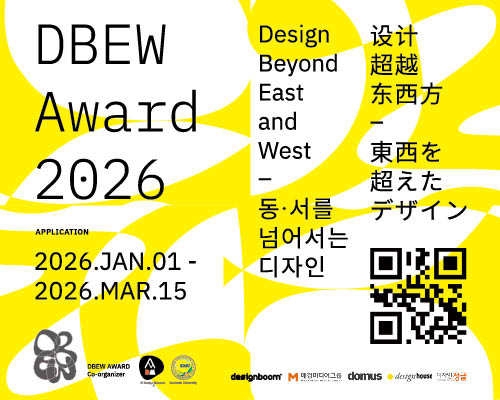 Kookmin University to host international design award in Milan SEOUL, March 03 (AJP) - Kookmin University and the Association for Industrial Design (ADI) will co-host the Design Beyond East and West (DBEW) Award 2026, an international competition aimed at redefining the universal values of contemporary design. The university appointed Paola Antonelli, the senior curator of architecture and design at the Museum of Modern Art (MoMA), to serve as the jury chair for the event. The award seeks to move beyond geographical and cultural divisions to explore how design can integrate human interaction with technology in daily life. The competition marks a significant collaboration between South Korean academia and the Italian design industry to lead global discourse on design education. It is specifically structured to recognize the symbiotic relationship between educators and students, shifting the focus from final products to the creative pedagogical process itself. By honoring both the student's work and the instructor's guidance, the organizers intend to set a new direction for international design leadership and sustainable social impact. The award accepts entries across three main categories: space and architecture; product and fashion; and visual, communication, and service design, which includes artificial intelligence and digital media. To participate, undergraduate or graduate students, or recent graduates within two years of completion, must submit works created within the last two years alongside a faculty mentor. The judging panel includes international experts such as sustainable design theorist John Thackara, industrial designer Stefano Giovannoni, architect Cho Byoung-soo, and Lou Yongqi, president of Shanghai Tech University. "The structure in which professors and students collaborate and submit entries together is a differentiated and meaningful attempt not seen in existing awards," Paola Antonelli said. She noted that the mutual process of teaching and learning between teachers and students maximizes educational achievement. Antonelli further described design as an "act of building bridges," rooted in specific cultural contexts yet connected through abstract principles. Jeong Seung-ryul, president of Kookmin University, stated that the DBEW Award emphasizes the importance of human thinking and collaboration in the era of artificial intelligence. He noted that universities should function as spaces for questioning and debating the creative process rather than just teaching technical skills. President Jeong expressed his hope that the event would serve as a platform for educators and students worldwide to share common problem-solving approaches, reflecting the university's philosophy of building an educational ecosystem without boundaries. The competition has already received hundreds of entries from more than 30 countries since January. Submissions remain open until March 15, 2026, with the final winners to be announced on March 25, 2026. A total prize pool of 25,000 dollars will be awarded during a ceremony and forum scheduled for April 21, 2026, at the ADI Design Museum during Milan Design Week. 2026-03-03 17:14:19