
Journalist

AJP
-
 Director Ryoo Seung-wan on the on-set approach of Park Jeong-min and Zo In-sung in 'Humint' A single scene can hold countless perspectives. Even in the same place and time, a director and actors may experience the moment differently. <Choi Song-hee’s B-Cut> looks past the polished “A-cut” on screen to the behind-the-scenes record that still carries the set’s temperature. By cross-editing interviews with the people who made the work, it reconstructs the “B-cut” moments that were often more intense than the finished frame. <Editor’s note> Vladivostok, where secrets and truths sink into an icy sea, is the setting for the film “Humint.” Against that harsh backdrop, director Ryoo Seung-wan captures characters colliding at close range. Alongside Ryoo’s trademark action and tension, the film’s pull is also the actors’ screen presence. Off camera, however, the mood was lighter, with confessions like “I worried it would feel cringey” and sheepish explanations such as “I just walked.” Park Jeong-min plays Park Geon, a section chief in North Korea’s Ministry of State Security, portrayed as a man of cold judgment and quick movement. Park said he trained by going back and forth between the gym and running routes to narrow the distance between himself and the character. “When the director gave me the script, he said Park Geon is a masculine character with a lot of action, so I needed to prepare,” Park said. “I trained at the gym. I thought he should be someone with a clear purpose, a wild kind of person. Usually, once filming gets going, you start to get self-absorbed — you think no one else can play the role, so you fuse the character with yourself. But with ‘Humint,’ I was scared. Until I saw the finished film, I worried the distance between Park Geon and Park Jeong-min was so big it would make me cringe. Thankfully, after watching it, it didn’t feel that way. I was relieved it wasn’t awkward.” Park said the references Ryoo provided while shaping Park Geon’s sharp image sometimes added welcome pressure. “There were so many films,” Park said. “Director Ryoo would put movies on a USB drive or lend me DVDs. There was ‘Tinker Tailor Soldier Spy’ and Hong Kong films, too. Watching them actually made me more confused. I’m not Chow Yun-fat. Ha.” As Park worked to project a tougher look, crew members also focused on presenting what he called “the coolest Park Geon.” Park said the lighting director studied his face from every angle, down to the height of a single strand of hair, to find the most effective visual design. “Before we started shooting, the lighting director told me to come to the production company office,” Park said. “They filmed my face 360 degrees and tried countless designs — hair up, hair down — to find a masculine look that fit me. The lighting director was under pressure, too. Ha. I had to look good.” Park said he also kept up daily routines to maintain his appearance on camera. “I mostly ran,” he said. “These days people call it ‘trimming the margins.’ Ha. Even after losing weight, I ran every morning to reduce puffiness before filming. It made a big difference.” Ryoo said Park’s preparation stood out to the entire set. “Jeong-min came in after losing a huge amount of weight,” Ryoo said. “I was surprised, and the staff were, too. He looked like a different person. As always, Park Jeong-min is known for thorough preparation and for immersing himself in his role. There are many actors with sculpted faces, but I think the actors we’re drawn to are the ones whose attitude shows on screen. Sometimes you can feel a person’s mind even in a shot of their back. In the end, what’s captured is the actor’s condition. A director can’t manufacture an actor’s charm. You can find an optimal angle and set the lights, but you can’t sustain it for two hours with that alone.” If Park reshaped himself with careful discipline, Zo In-sung, who plays a National Intelligence Service agent known as Manager Jo, began from a different place. Ryoo said he wrote the role with Zo in mind from the start, and described a strong overlap between the character and the actor. “The character’s name is ‘Manager Jo’ because I was thinking of Zo In-sung when I wrote the script,” Ryoo said. “Viewers will be curious about him, but you can think of Manager Jo as Zo In-sung. Ha. He lives alone, he only works, and when his own work (acting) doesn’t go well, he suffers. The sync rate is very high.” A walking scene that some viewers have described as a “runway” moment also drew differing, playful takes from actor and director. “I just walked,” Zo said. “They told me to walk in, so I walked in. Ha. There wasn’t any special direction. I thought it was important to carry over the emotion from the previous scene. I didn’t intend to walk in a cool way.” Ryoo said the scene was not designed to look like a runway, but that it stayed with audiences. “We didn’t deliberately make it like runway walking,” he said. “Zo In-sung is harder to shoot in short takes. There are long walking scenes early on for Park Geon, too — he walks a long way, even to a North Korean restaurant. But no matter how long Park Geon’s scene is, what stays with viewers is Manager Jo’s walk. Ha. I wanted to tell the story of someone who ultimately has to walk alone, someone who ends up alone at some point. In-sung actually stripped away model-like walking and kept it plain. He’s someone from a different world.” Ryoo’s view that an actor’s appeal is not created by a director but captured in the performer’s on-set “condition” runs through “Humint.” The film, he said, was filled by the actors’ hard-won self-proof — Park and Zo aiming for a strong image without losing humility, and bringing energy that contrasted with Vladivostok’s cold landscape.* This article has been translated by AI. 2026-03-03 16:33:30
 -
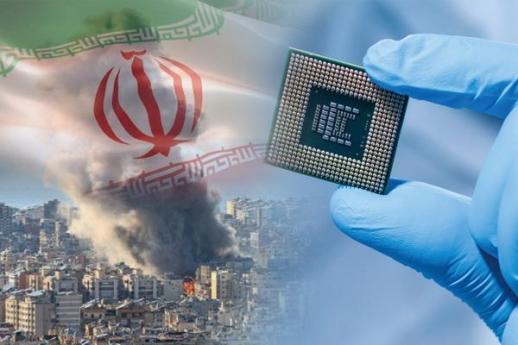 Middle East Crisis: Chipmakers unworried, investors disagree SEOUL, March 03 (AJP) - South Korean memory producers do not expect the flare-up in the Middle East to disrupt their unprecedented upcycle, with DRAM prices projected to nearly double in the first quarter from the prior three-month period that already delivered record chip profits. Market tracker TrendForce recently forecast a 90–95 percent quarter-over-quarter surge in conventional DRAM contract prices for the first quarter, driven by sustained artificial intelligence (AI) demand. As escalating geopolitical tensions unsettle global logistics and energy markets, questions have emerged over whether the conflict could interfere with this upward pricing trajectory. For South Korea’s major semiconductor manufacturers, however, the immediate logistical fallout appears limited. Rather than citing macro shocks as a catalyst for further price adjustments, Samsung Electronics and SK hynix remain focused on the underlying supply-demand imbalance. While rising oil prices and maritime bottlenecks have weighed on other industries, memory chips remain structurally insulated. Lightweight and high in value, they are predominantly transported via air freight, leaving ocean shipping disruptions a secondary concern. An SK hynix official said transportation expenses account for only a small portion of overall manufacturing costs. “The memory industry is not directly linked to the Middle East issue,” the official said. “The market is already facing a severe supply shortage relative to demand, and prices have risen sharply. It is unlikely this geopolitical factor will serve as an additional driver.” Samsung Electronics is not implementing specific countermeasures related to cost burdens but remains cautious. “Semiconductors are mostly shipped by air, though finished consumer electronics move by sea, so the impact is not entirely absent,” an official familiar with the matter said. The company’s immediate priority has been employee safety, strongly recommending remote work for staff stationed in the Middle East. On potential price adjustments, the official added: “If cost burdens materialize, they could influence pricing, but it is difficult to quantify at this stage. We need to assess how the situation evolves.” Investors nevertheless turned jittery. Shares of Samsung Electronics tumbled 11.41 percent to 191,800 won ($130.89) and SK hynix 12.82 percent to end Tuesday at 926,000 won, pushing the main Kospi down 7.24 percent in one of its steepest single-day falls. Logistics experts caution warn secondary effects — particularly energy costs- could prove more consequential than direct shipping disruptions. Kang Kyung-woo, emeritus professor of traffic and logistics engineering at Hanyang University, noted that semiconductor firms had already built substantial inventories in anticipation of supply chain volatility. “In the short term, logistics impact will not be significant,” Kang said. However, he underscored energy and geopolitical realignments as longer-term variables. “Semiconductor production is energy-intensive. While direct shipping effects are minimal, indirect impacts through energy supply disruptions are likely,” he said. Increased demand for defense technologies could also tighten supply chains further, adding sustained pressure to an already constrained market. 2026-03-03 16:30:43
 -
 Renault Korea February Sales Fall 36.2% to 3,893 Vehicles Renault Korea said its combined domestic and overseas sales in February fell 36.2% from a year earlier. The automaker said Tuesday it sold 3,893 vehicles last month, including 2,000 in South Korea and 1,893 for export. Domestic sales fell 59% from 4,881 a year earlier, while exports rose 55.4% from 1,218. Total sales were down from 6,099. In the domestic market, the midsize SUV Grand Koleos led sales with 1,474 units sold in February. Renault Korea’s new E-segment crossover, the Filante, had sold a cumulative roughly 7,000 units through the end of February, with deliveries to begin in phases starting in the second week of this month. The coupe-style SUV Arkana sold 336 units last month. The compact electric SUV Scenic E-Tech 100% Electric, built in France and sold domestically since August with a limited run of 999 units, posted 150 sales in February, exhausting all available inventory. Exports in February included 847 Grand Koleos units (export name: New Renault Koleos) and 546 Arkanas. The company also said it completed shipment of 500 units of Polestar’s electric performance SUV, the Polestar 4, bound for North America. 2026-03-03 16:30:18
 -
 BNK, iM Financial Activate Emergency Response to Middle East Risks, Aid Affected Firms As instability in the Middle East intensifies, BNK Financial Group and iM Financial Group said they have activated emergency response systems to help stabilize markets and support companies affected by the situation. BNK Financial said Tuesday it convened its Group Crisis Management Committee with key executives in attendance. The committee reviewed the potential impact of the Middle East situation on domestic and overseas financial markets and the real economy. It also monitored the risk of higher inflation from rising global oil and raw-material prices and the possibility of increased market volatility. BNK Financial said it will also roll out direct support measures. BNK Busan Bank and BNK Kyongnam Bank will each set up 100 billion won in new recovery financing to help regional companies directly or indirectly affected by the Middle East situation. Eligible firms include small and midsize companies facing cash-flow strain among exporters and importers trading with the Middle East and related partner companies. Support will be capped at 500 million won per company. For existing loans, the banks plan to offer relief such as maturity extensions and deferrals of installment repayments. iM Financial said it has also established an emergency response system to address growing geopolitical risks tied to the Middle East. An emergency-response meeting chaired by iM Financial Chairman Hwang Byung-woo brought together executives and department heads from the holding company and its bank and securities units, among others. The group said it is proactively reviewing risk ratios and foreign-currency liquidity across affiliates including iM Bank, iM Securities, iM Life and iM Capital, and preparing customer-protection response plans by affiliate. It also plans steps such as tighter oversight of oil- and exchange-rate-sensitive industries and management of FX positions for companies linked to the Middle East. iM Financial said that if the situation worsens and its crisis-management level is raised from the current “caution” to “alert,” it will form an emergency response council and expand meetings to all affiliates to share groupwide response updates. “Geopolitical uncertainty in the Middle East is expanding, so we are strengthening groupwide monitoring to prepare thoroughly for volatility in global markets,” Hwang said. “For companies facing difficulties related to the Middle East situation, we will work to reduce real damage through financial support by each affiliate.”* This article has been translated by AI. 2026-03-03 16:24:00
 -
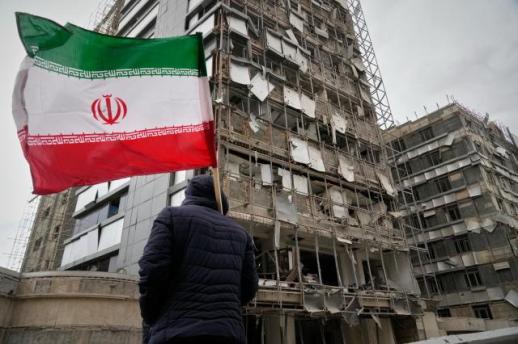 Iranian embassy in South Korea condemns military strikes by US and Israel SEOUL, March 03 (AJP) - The Embassy of Iran in South Korea issued a formal statement on Tuesday strongly denouncing recent military operations by the United States and Israel against Iranian territory. The embassy characterized the air strikes as a criminal act of aggression and a violation of national sovereignty, asserting that Tehran had pursued every available diplomatic avenue to prevent the outbreak of hostilities. The statement follows a large-scale military campaign launched on February 28 by the US and Israel, which targeted various cities across Iran. While the coalition stated the strikes were aimed at military and nuclear infrastructure, the Iranian embassy reported that civilian areas were also hit. According to the embassy, an attack in the city of Minab resulted in the deaths of more than 165 female students. Reports from the Iranian Red Crescent Society and news agencies such as Reuters and The Guardian have corroborated that a girls' elementary school in Minab was struck during the opening salvo of the operation. The embassy emphasized that the military campaign occurred while diplomatic processes between Iran and the US were still underway. The statement noted that Tehran had engaged in negotiations mediated by international partners in early February to fulfill its moral and legal responsibilities and to ensure that no pretext could be used to justify military intervention. In its communication to the South Korean public and media, the embassy stated that the Iranian people have made every possible effort to prevent war. The embassy further noted that because these diplomatic efforts were met with military force, Iran now maintains a firm defensive posture to protect its territorial integrity. The Iranian military is currently invoking Article 51 of the United Nations Charter, which provides for the inherent right of individual or collective self-defense if an armed attack occurs. The embassy stated that Iranian forces are mobilizing all available resources to repel threats and will hold those responsible for the strikes accountable for what it described as war crimes. This stance comes amid reports from the International Institute for Strategic Studies that the initial strikes killed several high-ranking Iranian officials, including Supreme Leader Ali Khamenei. The embassy called on the international community and the South Korean government to condemn the military actions and take effective measures against the participating powers. The statement urged global leaders to uphold the United Nations Charter and ensure that the violation of Iranian sovereignty does not go unpunished. 2026-03-03 16:13:17
 -
 Hyundai Motor February Global Sales Fall 5.1% to 306,528 Vehicles Hyundai Motor Co. said Tuesday its global sales in February totaled 306,528 vehicles, down 5.1% from a year earlier. Domestic sales fell 17.8% to 47,008 units, while overseas sales slipped 2.3% to 259,520, the company said. In South Korea, Hyundai sold 13,568 sedans. The Sonata led the segment with 4,436 units, followed by the Grandeur with 3,933 and the Avante with 3,628. Sales of recreational vehicles totaled 18,756, led by the Palisade (3,081), Tucson (2,972), Kona (2,876), Santa Fe (2,679) and Casper (1,171). The Porter posted sales of 4,634 units and the Staria 1,781. Medium and large buses and trucks totaled 1,122 units. Genesis, Hyundai’s luxury brand, sold 6,942 vehicles, including the G80 (2,247), GV70 (2,206) and GV80 (1,689). A Hyundai official said sales fell because there were fewer selling days due to the Lunar New Year holiday. The company will pursue “optimal sales strategies,” including raising the share of eco-friendly vehicles and strengthening its hybrid lineup, the official said. * This article has been translated by AI. 2026-03-03 16:01:11
 -
 Actress Yang Mi-ra Says Japan Trip Video Controversy Was Not Her Channel A Japan travel video posted by actress Ji So-yeon ahead of March 1 Independence Movement Day has drawn backlash that also spilled over to actress Yang Mi-ra, who said she was being misunderstood. Yang wrote on social media on Monday that many people seemed worried or confused after seeing news reports that used her photo and name. “I only went to film in early February,” she wrote, adding, “It’s not my channel.” She said she struggled to accept the sudden situation and felt she could do nothing as stories poured out. “It made me realize this can happen even when you haven’t done anything,” she wrote, calling it unfair and frustrating. She added that she decided to speak up because staying silent felt like it would make her sick. The controversy began after a video titled “From today I’m a free woman!! (Japan trip with unni Yang Mi-ra)” was uploaded to Ji’s YouTube channel on Feb. 28. Some online commenters criticized the timing, saying it was posted a day before March 1. As criticism grew, Ji posted on social media on Sunday that the video documented a trip taken Feb. 11, but she failed to think deeply enough about what the posting date could mean. She said she felt heavy-hearted that criticism was also being directed at Yang, and said the upload schedule and decision to make it public were entirely her own.* This article has been translated by AI. 2026-03-03 16:00:20
 -
 WAIFF D-3: WAIFF Seoul 2026 seeks to put Korea at the crossroads of AI and cinema SEOUL, March 03 (AJP) - The upcoming World AI Film Festival Seoul 2026 aims to position itself as more than a standard cinematic competition, signaling that artificial intelligence-driven content creation has moved into a formal industrial phase. Organizers intend for the event to serve as a declaration that AI technology is no longer just an experimental tool but a cornerstone of modern media production. While the two-day event on March 6 and 7 will feature awards and screenings, organizers are framing the Seoul edition as a broader platform connecting creators, technologists and media companies at a time when generative AI is rapidly reshaping production workflows. Unlike traditional film festivals focused solely on finished works, WAIFF Seoul combines competition with a full-scale Creative Intelligence Forum, where discussions will address production pipelines, virtual production, copyright governance and the strategic direction of K-content in the AI era. The opening ceremony at Lotte Concert Hall is expected to draw around 1,500 participants, underscoring industry-level interest rather than niche experimentation. A special performance titled “The Symphony of AI & Human” aims to illustrate how artificial intelligence is extending beyond post-production tools into live artistic collaboration. Organizers have also emphasized long-term ecosystem building and ongoing dialogue on ethical standards in AI-assisted filmmaking, highlighting efforts to establish sustainable frameworks for AI-driven content creation. Coinciding with the 140th anniversary of diplomatic relations between France and South Korea, the Seoul launch carries cultural as well as technological symbolism, positioning Korea as a strategic node in WAIFF’s expanding global network. As artificial intelligence continues to transform creative industries worldwide, WAIFF Seoul 2026 is set to serve as a meeting point for artists, innovators and industry leaders seeking to explore new possibilities at the intersection of cinema and technology. 2026-03-03 15:59:06
 -
 ChungjuMan’s Kim Seon-tae Launches New YouTube Channel After Leaving Public Service Kim Seon-tae, known as "ChungjuMan," has opened a new YouTube channel. Kim launched the YouTube channel "Kim Seon-tae" on March 2. The channel description says it will "promote everything in the world." In just one day, subscribers topped 2,000. Kim retired from public service in late February. After that, speculation circulated about his next move, including reports of an offer from Cheong Wa Dae, a possible entry into politics, and recruitment by a major company or an entertainment agency. Kim instead chose to pursue work as a YouTuber. After retiring, he visited Chungju City Hall and told colleagues he planned to work as an independent YouTuber, saying he would live in Chungju and wanted to take on a new challenge in the YouTube field, according to reports. Kim joined the civil service in 2016 as a ninth-grade public official and led Chungju’s official YouTube channel, "ChungTV." ChungTV became the first local government channel nationwide to surpass 900,000 subscribers. After he left, ChungTV’s subscriber count fell sharply.* This article has been translated by AI. 2026-03-03 15:46:46
 -
 K Car Names aespa’s Karina as New Brand Ambassador for 2026 Campaign Used-car platform company K Car said Tuesday it has launched its new 2026 brand campaign, “People Who Put Cars First,” and selected Karina of the K-pop group aespa as its brand model. Through the campaign, K Car said it aims to highlight its expertise as the No. 1 used-car company, emphasizing a message of “professional staff who do not compromise when it comes to cars” and a platform for people who value and care for their vehicles. The company said the campaign reflects its direct-operation model, in which it buys vehicles itself and takes responsibility from inspection and sales through post-sale support, portraying employees as “people who put cars first.” K Car said the campaign uses a simple, witty setup to draw attention. In the video, even as the popular, trend-setting Karina walks by, K Car employees keep their eyes on a car, humorously underscoring an attitude of putting cars ahead of Karina. The campaign will run across TV, YouTube and other digital platforms, as well as K Car’s app and website. To mark the launch, K Car said it will run a promotion through March 31 called “Super Week” with total benefits of 5 billion won, offering discounts, free delivery and free quality-warranty coverage to reduce customers’ purchase burden. The promotion includes: a “Weekly Special Price” discount of up to 5 million won; a nationwide free-delivery “Home Service Time Deal”; a “KW6 Free Special” offering warranty repair benefits of up to 10 million won; and a “KW3 Free Special” offering warranty repair benefits of up to 5 million won. K Car CEO Jeong In-guk said the campaign was designed to help consumers easily relate to the idea that K Car is a company where people who value and love cars come together. “Based on uncompromising expertise, we will work to repay customer trust,” he said. * This article has been translated by AI. 2026-03-03 15:42:17