
Journalist

AJP
-
 Asian markets stay low, KOSPI down nearly 3% but defense stocks fly SEOUL, March 3 (AJP) — Asian markets remained lower Tuesday as the region is expected to bear the collateral damage from the closure of the Strait of Hormuz responsible for 70 to 90 percent of fuel imports from the Middle East. The Seoul bourse was heavily volatile, with the KOSPI swinging between 6,180 and 6,040.60 amid a tug-of-war between retail buying and foreign selling. As of 11:10 a.m., the benchmark index was down 2.89 percent at 6,063.39. On the secondary bourse, the tone diverged. Foreign and institutional investors kept buying while retailers took profits, helping the KOSDAQ edge up 0.31 percent to 1,195.15. Heavyweight chipmakers retreated but remained above the psychological milestones they broke last week. Samsung Electronics fell 2.31 percent to 211,500 won, while SK hynix declined 2.26 percent to 1,037,000 won. Japan’s Nikkei 225 slid 1.27 percent to 57,320.94 in morning trade. Hong Kong’s Hang Seng Index managed a modest 0.45 percent gain, though broader sentiment remained fragile. While losers overwhelmed gainers on the KOSPI by 749 to 160, defense stocks stood out as clear beneficiaries of heightened geopolitical risk. Hanwha Systems surged 23.68 percent to 140,200 won, and Hanwha Aerospace jumped 13 percent to 1,353,000 won. LIG Nex1 soared 28.59 percent, while Hyundai Rotem gained 9.11 percent and Poongsan advanced 10.09 percent, reflecting expectations of widening battles and an accelerating arms race. The Korean won weakened sharply to 1,465.30 per dollar, around 2 percent off from Friday’s close of 1,438.4, highlighting capital outflow pressures. Safe-haven demand lifted gold 1.40 percent to $5,385.91. Bitcoin initially tumbled after the announcement but later rebounded 3.59 percent to $68,934, underscoring volatile risk sentiment. Battery makers came under pressure, with LG Energy Solution down 2.93 percent and Samsung SDI slipping 2.90 percent. Automakers were among the sharpest decliners. Hyundai Motor Company fell 3.71 percent to 649,000 won, while Kia Corporation dropped 5.55 percent to 194,100 won. Financials were mostly lower. KB Financial Group fell 1.95 percent, Shinhan Financial Group edged down 0.10 percent, and Mirae Asset Securities declined 1.94 percent. Industrial and shipbuilding shares were mixed. HD Hyundai Heavy Industries gained 1.66 percent and Hanwha Ocean rose 3.47 percent, while Doosan Enerbility slipped 1.41 percent. Biopharma heavyweights also retreated, with Samsung Biologics down 2.81 percent and Celltrion losing 1.47 percent. Steelmaker POSCO Holdings dropped 3.27 percent. Entertainment stocks were weaker, with HYBE down 3.61 percent, JYP Entertainment falling 1.72 percent and YG Entertainment declining 3.65 percent. 2026-03-03 11:30:17
 -
 Korea Otsuka Pharmaceutical Unveils New SOYJOY Ads Featuring Actor Chae Won-bin Korea Otsuka Pharmaceutical has named actor Chae Won-bin as the new face of its health snack brand SOYJOY and released a new ad campaign titled, “A snack you can feel confident about — in your mouth and in your body.” The company said the ads highlight SOYJOY’s brand identity — “enjoy nutritious soy” — and aim to ease the sense of guilt some consumers feel when eating snacks, encouraging them to choose a healthier option in everyday life. A SOYJOY official at Korea Otsuka Pharmaceutical said Chae’s “trustworthy and healthy image” aligns with the brand’s values and is expected to create “good synergy.” The official added that the company plans to expand consumer touchpoints through a range of brand activities with Chae. SOYJOY, first launched in June 2024, has continued to grow as the “healthy pleasure” trend spreads, the company said. It currently comes in eight flavors. Each bar uses about 35 soybeans, is baked without flour, and is positioned as high in protein and dietary fiber. The product is sold through major online shopping sites and nationwide channels including convenience stores, big-box retailers, supermarkets and Olive Young.* This article has been translated by AI. 2026-03-03 11:15:00
 -
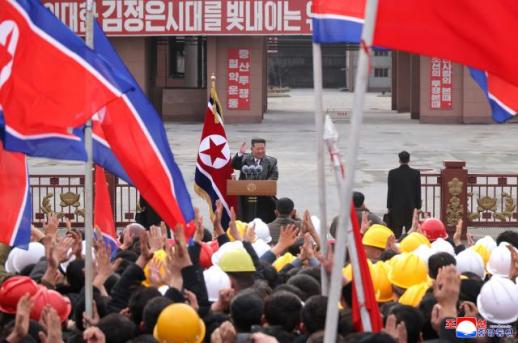 Middle East Crisis – NK condemns attack and likely recalibrate to wage own game SEOUL, March 03 (AJP) - If the U.S.-Israeli strikes that killed Ali Khamenei and the capture of Nicolás Maduro were meant to signal American reach, the leader most coldly calculating their implications would be Kim Jong-un. Pyongyang's Foreign Ministry on Tuesday condemned what it called "illegal aggression" and "hegemonic and gangster-like" behavior by Washington, according to the Korean Central News Agency. The rhetoric was familiar. The strategic takeaway is less so. Unlike Iran or Venezuela, North Korea sits in a different deterrence category. It possesses an operational nuclear arsenal and intercontinental ballistic missiles capable of reaching the U.S. mainland. That reality alone, analysts say, sharply reduces the likelihood that Washington would contemplate a leadership-targeted military option on the peninsula. "North Korea is not like Iran," said Lee Sung-yoon, principal fellow at the Sejong Institute. "North Korea has nuclear weapons and ICBMs, and information about North Korea is so insufficient that it is in a much safer position than Maduro or Khamenei." To Pyongyang, the removal of a non-nuclear state's top leadership through external force assures the United States is willing to use decapitation options if it deems them necessary and Regimes without nuclear deterrence remain vulnerable. The second message is the more powerful one in Pyongyang. Kim has repeatedly declared North Korea's nuclear status "permanent" and "completely and absolutely irreversible," pledging expansion of sea-launched and long-range ballistic systems, AI-enabled unmanned platforms and tactical rocket forces aimed at South Korea. According to the Stockholm International Peace Research Institute, the North is estimated to possess roughly 50 warheads, with fissile material for dozens more. Rather than reopening diplomatic space, the latest strikes could harden Pyongyang's conviction that nuclear capability is the ultimate insurance policy. Yet volatility could broaden the diplomatic theater. Lee argues that the shockwaves from Tehran and Caracas — far from foreclosing talks — could embolden President Donald Trump to pursue a dramatic "grand deal." Trump has previously referred to North Korea as a "nuclear power" during APEC remarks in late 2025 and publicly signaled openness to another meeting. A potential inflection point looms in April, when Trump is scheduled to visit Beijing — a trip that could create space for quiet triangular signaling involving Pyongyang. Kim's recent engagements with Vladimir Putin and Xi Jinping have elevated his diplomatic posture, reinforcing his self-image as a peer rather than a supplicant. "Kim's status has been greatly elevated," Lee said. "By meeting with Trump, he may aim for partial troop withdrawal, arms-control style talks instead of denuclearization, and de facto recognition as a nuclear-armed state." Kim's January address framed the choice starkly: "peaceful coexistence or eternal confrontation." He insisted the future of relations depends "entirely on the attitude of the U.S. side," while leaving open the possibility of talks if Washington ends what Pyongyang calls hostile policies — namely joint U.S.-South Korea military drills and sanctions. 2026-03-03 11:13:37
 -
 Hyundai Mobis Showcases Braking, Steering Tech at Sweden Winter Test Site Hyundai Mobis is using the deep winter conditions of northern Europe to strengthen its push into the global auto market. The company said Tuesday it is holding a technology demonstration for global customers at its winter test site in Arjeplog, Sweden. The event has been under way in stages since Feb. 27 local time. About 100 representatives from more than 10 customers in Europe and North America are expected to visit. European automakers on site are known to be showing interest in Hyundai Mobis’ next-generation braking system, which the company plans to mass-produce this year. Hyundai Mobis is demonstrating new products it is discussing for orders or plans to supply by installing them on demo vehicles, then showcasing performance through driving evaluations. The Sweden facility spans 1.7 million square meters and includes 14 tracks designed to simulate snow-covered and icy roads. It also has a workshop for specialized calibration and repairs, allowing real-time feedback to be reflected in adjustments. Arjeplog, a small city in northern Sweden about 7,000 kilometers from South Korea, is home to winter test operations run mainly by European automakers. Hyundai Mobis said it has dispatched large research and development teams there each year from January to March since 2006 to validate key components and advanced technologies. This year, it has transported more than 80 vehicles to the site and is carrying out more than 60 projects. The company said it uses the site to determine whether components under development meet evaluation standards in extreme cold, and to verify autonomous-driving sensors, controllers and algorithms. It also said joint early development of key components with customers ahead of new vehicle launches is increasing. “Customers visiting the winter test site are expressing satisfaction after riding in demo vehicles equipped with Hyundai Mobis solutions for key components such as braking and steering,” a Hyundai Mobis official said. The official said the company plans to underscore to global customers that its competitiveness in key components is backed by large-scale R&D investment and a rigorous quality verification system. Hyundai Mobis also operates a winter test site in the Heihe area of Heilongjiang province in northern China to validate key components for China-market models. In summer, it leases a test site in Wanaka in southern New Zealand to conduct year-round validation under assumed extreme cold conditions.* This article has been translated by AI. 2026-03-03 11:03:34
 -
 Pirelli Names Dario Marafuschi Head of Motorsport Unit Pirelli has appointed Dario Marafuschi to lead its motorsport business unit, succeeding Mario Isola. Marafuschi began the role on March 1 and will report on business progress to Giovanni Tronchetti Provera, executive vice president in charge of sustainability, new mobility and motorsport, as Isola did. Isola will support the transition through July 1 to ensure a smooth handover, then leave the company for a new professional challenge. Marafuschi joined Pirelli in 2008 and has extensive Formula 1 experience in research and development. In recent years, he has overseen development of the company’s standard road products. Pirelli thanked Isola for his dedication and passion, citing his contribution to the growth of the motorsport unit. * This article has been translated by AI. 2026-03-03 10:51:17
 -
 Tiffany Young Sparks Ring Speculation After Registering Marriage to Byun Yo-han Girls' Generation member Tiffany Young, who has registered her marriage to actor Byun Yo-han, has drawn attention after posting photos that appear to show a ring. Tiffany Young on March 2 uploaded several photos to her social media account with the caption "HMA." She said the post looked back on last month’s Hanteo Music Awards, which she attended. One image focusing on her hand drew particular notice. A flashy ring is visible on her middle finger. Some online commenters speculated it could be a proposal ring. Tiffany Young and Byun completed their marriage registration on Feb. 27. In December, reports said the two were dating with marriage in mind. A wedding date has not been set. 2026-03-03 10:45:14
 -
 Middle East Crisis: BOK to maintain 24/7 monitoring SEOUL, March 3 (AJP) - The Bank of Korea said on Tuesday it will maintain around‑the‑clock monitoring with its overseas offices and discuss potential fallout from the U.S. and Israeli airstrikes on Iran dubbed "Operation Epic Fury." In a meeting chaired by its chief Rhee Chang‑yong, officials discussed global developments since last Saturday's airstrikes, as well as potential volatility in financial markets. With the country's financial and foreign exchange markets resuming trading after a makeup holiday for March 1 Independence Movement Day, the central bank said it will closely monitor the situation and prepare for any possible scenarios including the potential spillover of the conflict into South Korean stock and foreign exchange markets, even though the country is not directly involved in the crisis. It plans to keep a task force in place for the time being to respond promptly as needed. 2026-03-03 10:45:13
 -
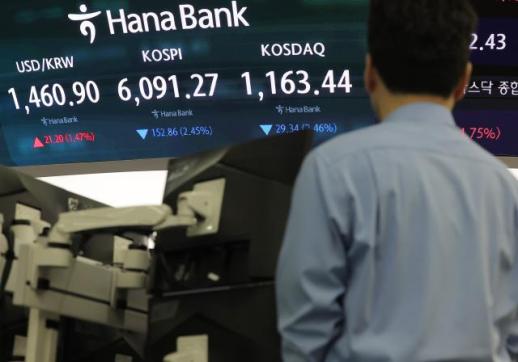 Middle East Crisis: Seoul enters emergency mode, readies contingency plan SEOUL, March 03 (AJP) -South Korea postured itself to an emergency mode Tuesday, launching round-the-clock surveillance and readying financial support for exporters as it braces for protracted conflicts in the Middle East and disruption in the fuel flow that could unsettle the economy heavily dependent on external demand and energy imports. Authorities moved swiftly as geopolitical tensions following U.S.-Israeli strikes on Iran rippled across global energy and financial markets, raising concerns over oil supply stability and capital-market volatility. Vice Finance Minister Lee Hyoung-il chaired an inter-agency emergency response meeting, reviewing developments in the Middle East and assessing spillover risks to domestic and overseas financial markets, energy logistics and the real economy. “Given the high uncertainty surrounding developments in the Middle East, all agencies must keep every possibility open and closely monitor changes,” Lee said, adding that the joint emergency response team will convene daily until tensions stabilize. The Bank of Korea (BOK) installed “Middle East Situation Monitoring Task Force” under Governor Rhee Chang-yong to assess the impact on financial and foreign-exchange markets as domestic trading resumed for the first time since the escalation. The central bank said it will maintain the task force and operate a 24-hour monitoring system in coordination with its overseas offices. “We will closely monitor market developments and respond in a timely manner if necessary,” a BOK official said. The BOK had already held an emergency videoconference on Feb. 28 — the day the strikes began — followed by additional briefings on March 2 based on reports from its overseas branches covering Asian and European markets. Global markets reflected heightened geopolitical stress. West Texas Intermediate crude rose 6.3 percent, gold gained 1.2 percent and the dollar index climbed 0.9 percent. The offshore non-deliverable forward (NDF) won rate jumped 26 won to 1,466 per dollar. Authorities warned that volatility in stock and currency markets could intensify depending on how tensions unfold. If abnormal signals emerge, officials stand ready to deploy the government’s “100 trillion won plus alpha” market stabilization program to support corporate bond and commercial paper markets and ensure a soft landing for real estate project financing (PF). Regulators also pledged a strict zero-tolerance policy against fake news, market manipulation and other unfair trading practices. The Financial Supervisory Service and the Korea Exchange will jointly monitor suspicious transactions. To cushion potential spillovers to the real economy, authorities will provide up to 20.3 trillion won in financial support for companies exposed to Middle Eastern trade. Earlier outlined as a 13.3 trillion won package, the framework was expanded to reflect growing uncertainty. Measures include liquidity support, interest rate reductions and dedicated consultation channels for affected firms. While South Korea’s overall export exposure to the Middle East is limited, officials acknowledged that certain small and mid-sized enterprises remain heavily dependent on the region. Rising tensions around the Strait of Hormuz — a critical global oil chokepoint — have prompted intensified monitoring of maritime logistics. Authorities said no abnormal safety developments involving Korean vessels in the region have been identified. Seoul on Tuesday claimed it held oil and natural gas reverses that could last at least 208 days of consumption. Including private-sector stockpiles, total reserves amount to roughly seven months — well above the International Energy Agency’s 90-day recommendation. For now, officials assess the near-term economic impact as manageable unless oil prices surge above $100 per barrel on a sustained basis. Brent crude has risen to around $77–80 per barrel in offshore trading. According to a National Assembly Budget Office estimate, oil at $100 per barrel would widen Korea’s trade deficit by $40.8 billion and lift consumer inflation by 1.3 percentage points. A 5 percent supply disruption could shave 0.6 percentage point off real GDP growth. The government and the BOK currently project 2026 growth at around 2.0 percent, while the Korea Development Institute forecasts 1.9 percent. Sustained oil above $100 could push growth into the low-1 percent range. 2026-03-03 10:27:32
 -
 Korea Auto Journalists Association Names Ryu Jong-eun of SamproTV as New President The Korea Auto Journalists Association said Tuesday that Ryu Jong-eun, a reporter at SamproTV elected as its 12th president, has begun his term this month. The association said Ryu was the sole candidate during its nomination period, held from Dec. 29 to Jan. 5. He was elected at the association’s annual general meeting on Feb. 5 at the Korea Transportation Safety Authority’s Automobile Safety Research Institute in Hwaseong, Gyeonggi Province. His three-year term runs from March 1, 2026. Ryu began his journalism career in 2011 at News1 and later worked at ETNews and The Korea Herald, covering social affairs, business and industry. Since 2023, he has covered autos, mobility, batteries, robotics and AI at SamproTV. Within the association, he has served as chair of the ethics committee, chair of the Car of the Year selection committee and chair of the academic committee. “In a rapidly changing media and mobility environment, I will work to make the association a practical hub of knowledge that keeps pace with change,” Ryu said. He pledged to strengthen training for new and early-career reporters, expand cooperation with the National Assembly, government and academia, and increase opportunities for global field visits to deliver results members can feel. At the Feb. 5 general meeting, the association also appointed new officers. Kim Ki-beom, editor-in-chief of Roadtest, and Lee Seung-yong, editor-in-chief of Motor Magazine, were named directors. Bae Dong-jin, head of the Seoul bureau of the Busan Ilbo, and Choi Ki-sung, deputy editor at MaeKyung AX, were elected auditors. The executive team was also reshuffled: Lee Yong-sang of the Kukmin Ilbo was named senior vice president; Yang Seong-un of Metro Newspaper, vice president; Won Seon-woong, editor-in-chief of Global Auto News, chair of the Car of the Year committee; Kim Yeon-ji of MediaPen and Choi Jeong-pil, editor-in-chief of Car Magazine, vice chairs of that committee; Cho A-reum of The Korea Herald, ethics committee chair; Chu Dong-hoon of Maeil Business Newspaper, external cooperation committee chair; Park Ki-beom of News1, academic committee chair; Kim Jae-seong of ZDNet Korea and Pyeon Eun-ji of Dailian, vice chairs of the academic committee; and Choi Yu-bin of Donghaeng Media Sidae, secretary. Founded in 2010, the Korea Auto Journalists Association aims to promote responsible automotive journalism, encourage a sound car culture, improve reporters’ professional skills and expand exchanges among members. It has 60 member outlets, including major newspapers, broadcasters, wire services, online media and automotive publications, with about 200 reporters active.* This article has been translated by AI. 2026-03-03 10:25:15
 -
 TV Host Choi Eun-kyung Says She Gave Up on Becoming an English Teacher TV personality Choi Eun-kyung, who began her career as an announcer, has explained why she abandoned her plan to become an English teacher. Choi appeared on the Tuesday guest segment of KBS 1TV’s current affairs and culture program “Morning Forum” on Tuesday. She said she studied English education at Ewha Womans University but ultimately chose a different path, first joining a foreign company and later switching to broadcasting. “I didn’t go to a teachers college because I wanted to be a teacher,” Choi said, adding that she majored in English education at her mother’s suggestion because she needed to find a job. She said her student-teaching assignment at a boys’ middle school made her realize she was not suited to the classroom. “I really couldn’t teach,” she said, recalling that instead of stopping students from fooling around, she would go along with them. She said students asked to dance and sing, and she let them, praising them for doing well. Choi said a principal later reprimanded her, telling her she could not run a class that way. She said the experience made her feel she was not good at teaching and that she even caught herself thinking some students might be fine without studying, leading her to give up on becoming a teacher. Choi said she turned to a foreign company because hiring conditions were better at the time. “Back then it was different from now, and it was easier to get a job,” she said. She said she graduated in 1994 and was hired right away after taking an exam. Although the job offered a favorable five-day workweek, she said she found it boring and quit to prepare for announcer auditions. Choi said she had never imagined appearing on TV, believing only “doll-like” people were on screen. She said she began to consider broadcasting as training academies started to open and she realized that announcers delivered the news. She said she enrolled and began to pursue the goal of becoming an announcer. * This article has been translated by AI. 2026-03-03 10:24:21