
Journalist

AJP
-
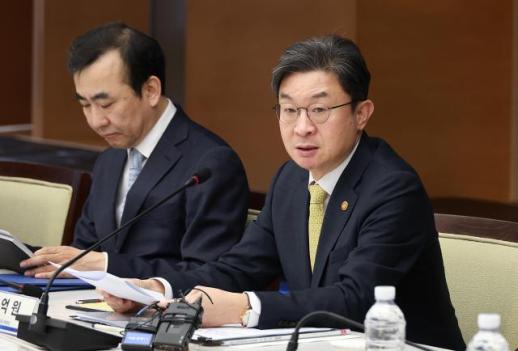 South Korea to offer support program for exporters hit by Middle East conflict SEOUL, March 3 (AJP) - The government will come up with support for small and mid‑sized exporters hit by the Middle East conflict following the U.S.‑led military action against Tehran dubbed "Operation Epic Fury" last week. According to the Financial Services Commission (FSC), a financial support program worth approximately 13.3 trillion won (around US$9.2 billion) will be provided to exporters affected by the conflict. The decision was made at a meeting chaired by FSC Chief Lee Eok‑won on Tuesday at the government complex in Seoul, held to discuss support measures with other financial authorities and agencies including the Ministry of Economy and Finance, the Bank of Korea, the Financial Supervisory Service, Korea Development Bank, and Industrial Bank of Korea. Under the program run by the Korea Development Bank (8 trillion won), Industrial Bank of Korea (2.3 trillion won), and the Korea Credit Guarantee Fund (3 trillion won), financial authorities plan to quickly provide funding and interest-rate reductions to affected firms, while also operating a counseling center to support them. The FSS said South Korea's overall exports to the region are not large, but some vulnerable SMEs that rely heavily on the Middle Eastern market will require tailored assistance. Participants forecast that volatility in stock and foreign exchange markets could increase depending on how the situation develops, with possible spillovers to the real economy. They agreed to closely coordinate across agencies to monitor markets and respond as needed. Lee said South Korea's economy and financial markets have solid fundamentals and sufficient capacity to weather the situation, but he urged the implementation of pre-arranged measures to shore up stability if necessary. He also said authorities will strictly punish unfair trading that takes advantage of market uncertainty, including the spread of fake news and price manipulation, and vowed to inspect suspicious activities. Global markets on the previous day reflected the heightened risk from the Middle East, with international oil prices jumping early before giving back some gains. Major stock markets mostly fell or remained flat, while gold prices and the U.S. dollar rose. West Texas Intermediate (WTI) crude increased 6.3 percent from the prior session. The FSS said a joint financial market task force will maintain a 24-hour monitoring system until markets stabilize and will closely share developments with relevant agencies. 2026-03-03 10:19:18
 -
 Hyundai Motor Group releases video showcasing unmanned firefighting robot Hyundai Motor Group said it released a video on its YouTube channel on Tuesday introducing unmanned firefighting robot technology it developed with the National Fire Agency. Titled “A Safer Way Home,” the video presents the robot as a next-generation firefighting solution designed to be deployed first at high-risk disaster sites where people may struggle to enter because of collapse risks, extreme heat, explosions, smoke and toxic gases. Hyundai and Kia built the robot in collaboration with Hyundai Rotem, Hyundai Mobis and the National Fire Agency. The video shows the robot responding to a large fire to help reduce casualties and protect firefighters. It features working firefighters from the National 119 Rescue Headquarters, including rescue team leader Lim Pal-sun, who also took part in the narration. In the video, the robot carries out missions using what the company described as physical AI technologies, including an advanced autonomous driving assist system, an AI vision-enhancement camera, a high-pressure photoluminescent reel hose and a 6x6 in-wheel motor system. It also includes footage of the robot’s first on-site deployment, at a factory fire in Eumseong, North Chungcheong Province, on Feb. 30. The autonomous driving assist system detects terrain and obstacles to reduce collision risks and help the robot move steadily in uneven or narrow, obstacle-dense areas, the company said. It has a top speed of 50 kph (31 mph), about twice a running person’s speed, and can climb slopes such as underground parking garage or logistics warehouse ramps. It can also clear vertical obstacles up to 300 millimeters. The AI vision-enhancement camera is intended to help operators identify hazards in advance through remote-control monitoring. Using cameras based on short- and long-wavelength thermal imaging sensors, the system sends detailed site information in real time, the company said, including in conditions where smoke and high heat limit visibility. The high-pressure photoluminescent reel hose is designed to glow in the dark. Firefighters typically follow a hose to find an entry direction and an exit route in low-visibility disaster scenes; the company said the hose can emit or reflect light to guide evacuation routes and support safer movement for entry teams. Hyundai Mobis’ 6x6 in-wheel motor-based electrified system powers the robot, the company said. With motors mounted on each wheel, it can rotate 360 degrees in place to maneuver in tight spaces and complex access routes. Hyundai said it plans to use machine learning to train on-site data such as smoke levels, fire scale and temperature. Hyundai Motor Group said it plans, together with the National Fire Agency and the National Fire Research Institute, to advance the system into a fully unmanned firefighting robot that can assess conditions on its own, analyze the fire’s origin point and suppression priorities, calculate the most efficient suppression method and extinguish the fire. “An unmanned firefighting robot is technology that enters dangerous scenes before people to protect firefighters’ lives and safety,” a Hyundai Motor Group official said. “We will continue technology development and support so it can be a reliable assistant for the uniformed heroes who protect members of our society and public safety.”* This article has been translated by AI. 2026-03-03 10:06:33
 -
 Comedian Kim Young-hee Says Husband Turned Down College Coaching Job, Took Secret Loan Comedian Kim Young-hee has spoken publicly about her married life. A March 2 episode of KBS2’s “Malja Show,” a special focused on family breadwinners, featured guests sharing concerns carried by those who have long supported their families. Kim introduced what the program described as a common worry among breadwinners: “As a child, I was a devoted son to my parents, and after marriage, a father to my children. I’ve carried burdens my whole life. When will I be able to put them down and rest?” She said the idea of a breadwinner has changed. “These days, times have changed, so there’s no gender for the head of the household,” she said. She added that her husband, a baseball player who was released, met her while preparing for a career change. Kim said her husband later received an offer to become a university coach but turned it down. “If it were me, I would have learned on the job,” she said, adding that he refused, saying, “It’s not my place,” and that she felt devastated at the time. She also described a dispute tied to a move shortly after giving birth, saying they had to move three days after delivery and nearly lost the contract deposit. Kim said she completed preparations and then went to a postpartum care center. The remaining balance was to be covered by a loan in her husband’s name because his credit was better, she said, but he secretly borrowed 3 million won as a gift for her after the birth of their first child, lowering his credit score. Kim said there is no need to divide who is the breadwinner. “These days, anyone can be the head of the household,” she said, advising breadwinners to ease some of their burden by taking pride in the fact that the money they earn helps feed their families.* This article has been translated by AI. 2026-03-03 09:45:19
 -
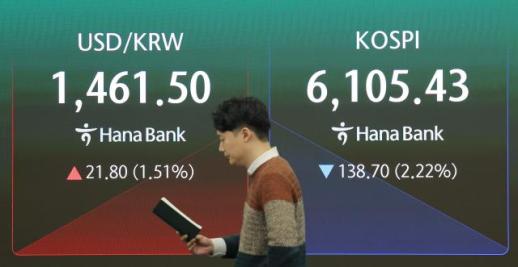 Middle East Crisis: Seoul stocks and currency open 2% lower on fuel jitters SEOUL, March 3 (AJP) — South Korean markets, returning from a long weekend, opened sharply lower Tuesday as investors moved to price in rapidly escalating tensions in the Middle East following U.S.-Israeli strikes on Iran and the growing risk of prolonged disruption to energy supplies. The benchmark KOSPI fell 2.60 percent at the open to 6,081.92, while the tech-heavy KOSDAQ dropped 2.57 percent to 1,162.17. The disruption of the Strait of Hormuz — which handles roughly 20 percent of global seaborne oil shipments — has reignited supply concerns across global energy markets. For Asia’s import-dependent economies, the chokepoint represents a critical vulnerability. Although OPEC+ — including Saudi Arabia, the United Arab Emirates and Russia — agreed to increase output by 206,000 barrels per day starting next month, the planned hike amounts to just 0.2 percent of the roughly 100 million barrels produced globally each day, limiting its capacity to offset potential supply losses should the conflict widen. Oil prices remained volatile. Brent crude for May delivery traded at $77.74 per barrel as of 12:55 a.m. BST, little changed from the previous session. U.S. West Texas Intermediate for April delivery stood at $70.82 per barrel as of 6:56 p.m. EST, down $0.40, or 0.56 percent. Still, traders are increasingly pricing in geopolitical risk premiums. Escalating uncertainty surrounding Iran has fueled speculation that crude could surge above $100 per barrel — a level that would amplify inflationary pressure and weigh on global growth. Seoul sought to calm markets. The government said Sunday that South Korea holds sufficient crude oil and LNG stockpiles to last 208 days, pledging close monitoring of financial and energy markets. U.S. President Donald Trump said the war could last “four weeks,” as Iran launched retaliatory strikes across the region in what analysts describe as the most serious security challenge in the Persian Gulf in decades. The Korean won weakened sharply, falling about 2.5 percent from its Feb. 26 high, reflecting a broader risk-off shift across emerging Asian currencies. 2026-03-03 09:28:19
 -
 Hyundai Glovis to Showcase Physical AI Logistics Automation at AW 2026 Hyundai Glovis said Tuesday it will take part in the 2026 Smart Factory and Automation Industry Expo (AW 2026) to showcase its logistics automation capabilities based on physical artificial intelligence. AW 2026, which opens Wednesday at COEX in Seoul’s Gangnam district, is the country’s largest smart factory and automation industry exhibition. Hyundai Glovis will set up a booth in the event’s smart logistics pavilion and present an automated logistics environment that links the full process from inbound receiving and storage to sorting and picking, and outbound shipping. The company will also unveil a pallet shuttle system, equipment in which pallets fitted with transport robots move along fixed rails to manage inbound and outbound handling. The pallet shuttle is controlled through “Orca,” a warehouse control system (WCS) platform co-developed with its subsidiary Altiol. Hyundai Glovis will demonstrate item transfers using autonomous mobile robots (AMRs) and robot picking at the show. The booth will also display, for the first time to the general public in South Korea, a non-operational model of Boston Dynamics’ humanoid robot Atlas. Atlas has been undergoing a proof-of-concept project for parts sequencing at a Hyundai Glovis site within Meta Plant America (HMGMA) since last year. Starting in 2028, Hyundai Glovis plans to deploy it first in processes at HMGMA where safety and quality benefits have been clearly verified, including sequencing work for parts classification. Hyundai Glovis said it plans to pursue business expansion by highlighting the physical AI-based logistics automation capabilities presented at the exhibition. A Hyundai Glovis official said the company will focus on early-stage research and strengthening its logistics automation competitiveness to respond quickly to rapid changes in the logistics environment driven by advanced technologies such as physical AI.* This article has been translated by AI. 2026-03-03 09:25:44
 -
 Audi Korea Names Lee Gyu-hee as Head of Marketing Communications Audi Korea said Tuesday it has appointed Lee Gyu-hee, an executive director, as its new head of marketing communications. Starting Tuesday, Lee will oversee the company’s overall marketing, including brand strategy, marketing communications, digital and content strategy, and customer experience, Audi Korea said. Audi Korea described Lee as a brand strategy specialist with broad experience across global automotive and performance brands. At Volkswagen Group China, he held key leadership roles including brand management director, marketing director and head of the Brand Innovation Project House, leading initiatives such as brand innovation, market repositioning and building a data-driven marketing system. He also served as marketing and communications director for Asia-Pacific and the Middle East at French high-performance sports car brand Alpine, overseeing marketing strategy in key markets. Lee has also worked in global creative agencies and strategic consulting, and is credited with leading large-scale innovation projects across sectors including automotive, luxury goods and electronics, the company said. Audi Korea is seeking to strengthen its position in the domestic market this year by expanding new model launches and refreshing the brand. The appointment reflects its push to reinforce its premium positioning, upgrade digital marketing capabilities and deliver more customer-centered brand experiences, it said. Audi Korea President Steve Clotty said Lee’s global perspective and strategic expertise will play an important role in taking the Audi brand “to the next level.” He said the company will strengthen touchpoints with customers in South Korea and further solidify Audi’s premium value.* This article has been translated by AI. 2026-03-03 09:18:19
 -
 Trump 'won't rule out deploying US ground troops to Iran' SEOUL, March 3 (AJP) - The U.S. would not rule out sending ground troops into Iran "if they were necessary," U.S. President Donald Trump hinted amid an escalation of hostilities across the Middle East. In an interview with the New York Post on Monday, a day after the U.S.-led military action against Tehran dubbed "Operation Epic Fury," Trump said, "I don't have the yips with respect to boots on the ground — like every president says, 'There will be no boots on the ground.' I don't say it." He added, "I say 'probably don't need them,' ensures our enemies understand we'll go as far as we need to go to advance American interests. But we're not dumb about it," Hegseth told reporters. "You don't have to roll 200,000 people in there and stay for 20 years." "We expect to take additional losses, and as always, we will work to minimize U.S. losses," he added. The confrontations, which began with a surprise joint airstrike by the U.S. and Israel last Saturday that killed Iran's Supreme Leader Ayatollah Ali Khamenei, have expanded into a broader conflict involving countries across the Gulf region. Now in its third day, intense violence continues as Iranian forces retaliate with drone and missile attacks on targets across Israel, U.S. bases and Gulf states. Many analysts assess that the operation could last four to five weeks or longer, depending on developments on the ground. But Trump said, "Right from the beginning, we projected four to five weeks, but we have capability to go far longer than that," adding, "So we're ahead of schedule there by a lot." Meanwhile, six U.S. service members have been killed since the operation against Iran began, according to U.S. Central Command (CENTCOM). "As of , six U.S. service members have been killed in action. U.S. forces recently recovered the remains of two previously unaccounted for service members from a facility that was struck during Iran's initial attacks in the region. Major combat operations continue. The identities of the fallen are being withheld until 24 hours after next of kin notification," CENTCOM said. 2026-03-03 09:16:17
 -
 Actress Ji So-yeon Apologizes for Posting Japan Trip Video Ahead of March 1 Holiday Actress Ji So-yeon has apologized after drawing criticism for uploading a Japan travel video to her personal YouTube channel a day before the March 1 holiday. On March 2, Ji wrote on social media that she was taking “the many opinions” about the Japan trip video posted in late February “very seriously.” She said the video documented a trip taken on Feb. 11, but added, “It was entirely my fault that I did not think deeply enough about the meaning of the timing of the post.” Ji also said she felt heavy-hearted that criticism had extended to Yang Mira, who traveled with her, stressing that the upload schedule and the decision to make it public were “entirely my decision.” She added that the incident made her realize she must act with greater caution and responsibility, and said she would more carefully consider social context and timing in planning and releasing future content. Ji uploaded the video on Feb. 28 under the title, “Starting today, I’m a free woman!! (Japan trip with Yang Mira).” It shows the two traveling in Takamatsu, Japan. Some online commenters criticized the post as inappropriate ahead of the March 1 holiday.* This article has been translated by AI. 2026-03-03 09:15:15
 -
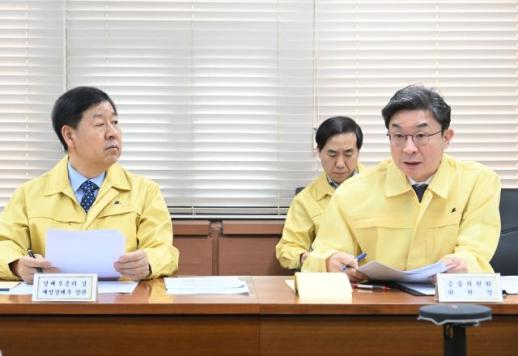 Seoul claims fuel stock enough to last more than 6 months SEOUL, March 03 (AJP) -South Korea moved to calm markets, saying it holds enough crude oil and petroleum products to last at least 208 days, as spiraling fighting in the Middle East escalated into a direct threat to global energy flows and tanker traffic through the Strait of Hormuz, a chokepoint responsible for around 70 percent of fuel imports for Asia's fourth-largest economy. With Iran declaring restrictions in the strategic waterway following U.S.-Israeli strikes and retaliatory drone and missile attacks across the Gulf, Seoul said it is maintaining an emergency posture across energy, finance and security — but stressed there is “no need for excessive concern.” The government said crude oil and petroleum product reserves stand at levels sufficient for more than six months, even if supply disruptions are prolonged. “Oil and petroleum products are stockpiled for 208 days. We are fully prepared even for a long-term disruption,” Vice Industry Minister Moon Shin-hak told reporters after a ministerial meeting on Middle East developments on Sunday. Liquefied natural gas (LNG) exposure is also seen as manageable. Qatar accounts for a portion of Korea’s LNG imports, but the Middle East share in Korea’s total LNG mix has fallen to around 20 percent. With spring approaching and seasonal gas demand easing, authorities said supply risks remain contained even if the situation drags on. The reassurance comes as shipping through the Strait of Hormuz — a chokepoint that handles roughly a fifth of global oil consumption and about 70 percent of Korea’s crude imports — has slowed sharply amid Iranian warnings to commercial vessels. Data providers reported hundreds of tankers anchored outside the strait, unable to transit. Brent crude surged more than 6 percent in Monday trading, briefly approaching $80 a barrel, while European gas prices spiked nearly 40 percent after Qatar halted LNG output at a major facility following intercepted drone threats. Analysts warn that a sustained disruption to Hormuz traffic could push oil above $100 a barrel, reigniting global inflation pressures. Wi Sung-rak, head of the presidential National Security Office, said the government remains in full emergency-response mode following the reported death of Iran’s Supreme Leader Ayatollah Seyyed Ali Khamenei and the widening regional strikes. “As the president has said, there is no need for excessive concern,” Wi told reporters in Singapore, where the president stopped for a state visit. “We are thoroughly prepared in the real economy, financial markets and military security.” The presidential office said it is operating an emergency system, with daily reviews chaired by the prime minister and cross-ministerial monitoring of energy supply, logistics and financial markets. All senior staff reported to work during the alternative holiday to assess developments, prioritizing the safety of South Korean nationals in the region. Officials declined to predict oil-price trajectories or the conflict’s duration, saying contingency measures would be adjusted after “sufficient observation.” Vice Finance Minister Lee Hyeong-il said Asian currencies weakened amid a broader flight to safety, while stock markets showed mixed performance. Safe-haven currencies such as the U.S. dollar and Swiss franc strengthened. Japan’s Nikkei index fell, Australia’s market was little changed and China’s Shanghai Composite edged higher, reflecting uneven investor sentiment. In the United States, equities initially fell but later pared losses, while Treasury yields rose on concerns that higher oil prices could rekindle inflation. The 10-year yield climbed above 4 percent. Lee said a joint emergency task force will monitor domestic financial markets and the real economy around the clock. “If abnormal signs emerge, we will respond swiftly in close coordination with relevant agencies,” he said, adding that the scale of impact will hinge on how long the conflict persists. The government has advised domestic carriers to avoid Middle Eastern waters and urged vessels entering the Strait of Hormuz to wait and take enhanced safety measures. As of Monday, no South Korean-flagged vessels were transiting the strait, officials said. One tanker that had been inside the waterway exited safely a day earlier. HMM, South Korea’s largest container carrier, said its 16,000-TEU vessel HMM Daon is currently docked at Jebel Ali Port in Dubai — the Middle East’s largest port and a key logistics hub linking Asia, Africa and Europe. The company said the vessel is not in a designated high-risk zone and is conducting routine port operations. It is monitoring the situation and will decide whether to relocate to a safer area depending on further developments. Of roughly 20 HMM container ships and tankers operating on Middle East routes, industry officials expect possible rerouting or schedule adjustments if instability persists. The conflict’s expansion to energy infrastructure — including reported drone strikes near Saudi Arabia’s Ras Tanura oil complex and threats to Qatari LNG facilities — has raised the stakes for global supply chains. Saudi Arabia, which exports more than 6 million barrels a day from Ras Tanura alone, is central to global market stability. Any sustained damage to its export capacity would weaken a critical buffer against price spikes. For South Korea, which recently saw the KOSPI break above the 6,000 milestone on strong semiconductor-driven gains, a prolonged oil shock could cloud the outlook. Economists warn that every sustained $10 rise in oil prices can shave 0.1 to 0.2 percentage point off global growth over 12 months. A move toward $100 oil could complicate monetary easing plans worldwide and strengthen the dollar further, adding pressure to emerging-market currencies. 2026-03-03 08:36:19
 -
 BTS’ Jung Kook’s ‘Please Don’t Change’ Tops Worldwide iTunes Song Chart BTS member Jung Kook’s solo track “Please Don’t Change” is gaining traction on global music charts. The song, from his solo album “GOLDEN,” ranked No. 1 on the Worldwide iTunes Song Chart dated Feb. 28. Released in November 2023, it has climbed back up the charts about two years later, holding the top spot for three straight days through the 27th and 28th. On the European iTunes Song Chart, it was No. 1 on the 26th and 27th and No. 2 on the 28th. On Spotify, the track has surpassed 219 million streams. Jung Kook’s cumulative streams stand at 6.79 billion, nearing 6.8 billion. 2026-03-03 08:33:16