
Journalist

AJP
-
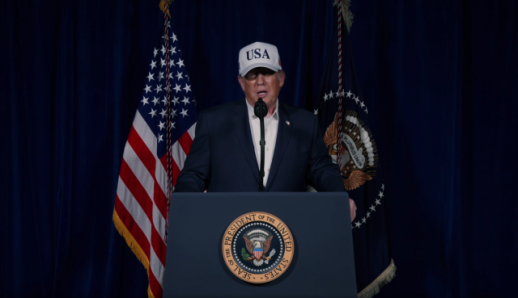 US begins major combat operations against Iran after Israeli strikes on Tehran SEOUL, February 28 (AJP) - United States President Donald Trump announced the start of "major combat operations" against Iran in an eight-minute video posted to Truth Social at approximately 2:30 a.m. Saturday (local time). The move marks a massive military escalation in the Middle East, ending an eight-month period of relative calm following the 12-Day War last June. "The United States military has undertaken a massive and ongoing operation to prevent this very wicked, radical dictatorship from threatening America and our core national security interests," President Trump said in the video speech. He accused the Iranian government of attempting to rebuild its nuclear program and developing long-range missiles. "We are going to destroy their missiles and raze their missile industry to the ground. It will be totally, again, obliterated. We are going to annihilate their navy," he added. The U.S. offensive follows a series of "preventive strikes" launched by the Israeli Ministry of Defense against Tehran. Iranian state television reported explosions and thick smoke rising from the capital's city center, with international media reporting blasts near the office of the 86-year-old Iranian Supreme Leader Ayatollah Seyyed Ali Khamenei. It remains unconfirmed if Khamenei was present, as he has not appeared in public for several days. Following the strikes, Israel ordered a nationwide closure of schools and businesses. President Trump stated the operations also aim to neutralize regional proxies and protect allies. "We are going to ensure that the region's terrorist proxies can no longer destabilize the region or the world, and attack our forces, and no longer use their IEDs—or roadside bombs, as they are sometimes called—to so gravely wound and kill thousands and thousands of people including many Americans," he said. He further emphasized that the mission would "ensure that Iran does not obtain a nuclear weapon." This escalation follows the deployment of the largest assembly of American military assets in the region since the 2003 invasion of Iraq. The buildup includes two aircraft carrier strike groups, led by the USS Abraham Lincoln and the USS Gerald R. Ford, and over 100 fighter jets including F-35s and F-22s. The shift to open combat follows the collapse of diplomatic efforts. Washington had engaged in three rounds of indirect nuclear negotiations with Tehran through intermediaries in Switzerland and Oman, but the talks failed to reach a breakthrough. During the final round in Geneva on February 26, U.S. negotiators reportedly demanded the full dismantling of nuclear facilities at Fordow, Natanz, and Isfahan. The current hostilities follow the 12-Day War of June 2025, which caused significant damage to Iranian nuclear infrastructure and military leadership before a ceasefire was reached on June 24. President Trump characterized the new offensive as a necessary response to renewed Iranian provocations. The Pentagon has not yet released specific details regarding the initial targets of the American strikes. Iranian officials have previously warned that any military action by the United States would be met with a decisive response. 2026-02-28 17:14:50
 -
 BTS to Hold Free Gwanghwamun Comeback Show; Gyeongbokgung to Close March 21 BTS’ free comeback concert at Seoul’s Gwanghwamun Square is three weeks away, and the group is expected to perform a mix of new tracks and past hits during the roughly one-hour show. According to the music industry on Friday, HYBE is discussing a set list for the March 21 event, a free performance marking the release of BTS’ fifth full-length album, titled “BTS THE COMEBACK LIVE: ARIRANG,” to be held at Gwanghwamun Square. The concert is expected to run about an hour. HYBE said the length was set in consideration of the venue’s location in central Seoul, adding that the decision reflects the challenges of staging an event in an outdoor public space, including overall stage operations, spectator safety management and on-site control plans. Demand has been strong. The 13,000 seats available for general reservation sold out immediately after sales opened on Feb. 23, with 100,000 people placed in an online waiting queue. Police expect about 230,000 people to gather from the area around the stage to the Daehanmun Gate area of Deoksugung, and as many as 260,000 as far as Sungnyemun. With a major event planned in the city center, police are preparing safety measures. The Seoul Metropolitan Police Agency has already asked Seoul Metro to consider having three nearby subway stations — Gwanghwamun, Gyeongbokgung and City Hall — pass through without stopping to help prevent crowding. Traffic controls are also expected. Vehicle access will be restricted on nearby roads including Sejong-daero, the main event site, as well as Saemunan-ro, Jongno, Sajik-ro and Yulgok-ro. Specific control times will be announced in advance through electronic road signs and other channels once finalized. Nearby cultural and tourism sites will also suspend operations. The Korea Heritage Service’s Royal Palaces and Tombs Center said on its website and social media Friday that Gyeongbokgung Palace is scheduled to close temporarily on Saturday, March 21, for safety reasons. The palace is normally closed on Tuesdays. The National Museum of Korean Contemporary History, adjacent to the square, also said it will close temporarily that day for safety reasons. The Sejong Center for the Performing Arts is canceling or adjusting scheduled performances, including musicals, plays and ballet, for that day. The National Palace Museum of Korea, next to Gyeongbokgung, is also reported to be reviewing whether to close. 2026-02-28 15:33:20
 -
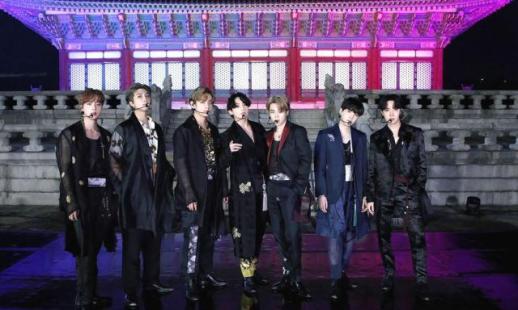 BTS Comeback D-21: BTS to play one-hour comeback set at Gwanghwamun Plaza SEOUL, February 28 (AJP) - BTS will headline a 60-minute performance at Gwanghwamun Plaza next month, featuring a setlist that balances new material with the group's global hits. The free concert, titled "BTS THE COMEBACK LIVE: ARIRANG," is scheduled for Mar. 21 and marks the first time the group will perform tracks from its fifth studio album in nearly four years. HYBE, the agency for BTS, confirmed Saturday that it is finalizing a program to showcase songs from the new album, Arirang, alongside established fan favorites. Agency officials said the one-hour duration was chosen to balance the scale of the production with the logistical demands of a major urban center. The decision aims to prioritize public safety and minimize disruption in the heart of the capital. "The performance time is a matter decided by the company, and we have decided to operate for an appropriate performance time that can be conducted safely and smoothly," HYBE said. The agency added that the Gwanghwamun event is a "performance in a special environment conducted in an outdoor public place, unlike a general concert hall," and that the duration was determined after considering stage operations, visitor safety, and site control plans. The Seoul Metropolitan Government noted that the composition and timing of the performance remain under the sole discretion of HYBE. Demand for the event has already proven historic. The 13,000 reserved seats were claimed instantly when ticketing opened on February 23, with online queues peaking at 100,000 people. Police estimates suggest the actual crowd on the day of the event could reach 260,000 people, potentially filling the corridor from the plaza down to Sungnyemun. To accommodate the expected turnout, organizers are exploring the installation of large screens in the vicinity of Seoul Plaza. The event will also necessitate the closure of Gyeongbokgung Palace, which is set to serve as a backdrop for the global broadcast on Netflix. 2026-02-28 15:00:30
 -
 BTS Comeback D-21: Gyeongbokgung Palace to close for BTS comeback at Gwanghwamun SEOUL, February 28 (AJP) - Gyeongbokgung Palace will deviate from its standard operating schedule and close its gates on a Saturday next month to accommodate a massive live performance by BTS at the adjacent Gwanghwamun Plaza. The Royal Palaces and Tombs Center at the National Heritage Administration announced on February 28 that the landmark will be shuttered on March 21. While the palace typically remains open on weekends and takes its weekly break on Tuesdays, officials cited safety and logistical requirements for the high-profile event. BTS is set to release its fifth studio album, Arirang, on March 20, followed by a televised comeback concert the next evening. The performance, which will be streamed globally on Netflix, is expected to utilize the historic architecture of the palace as a primary backdrop. According to Cultural Heritage Committee minutes, the group's agency plans an opening sequence featuring the members walking through the three arched gates of Gwanghwamun toward a stage installed at the northern end of the plaza. Authorities are bracing for record crowds, with police estimates suggesting up to 260,000 people could descend on the area. Tickets for the performance sold out within minutes of their release on February 23. The scale of the event has prompted a near-total shutdown of cultural activities in the immediate vicinity. The National Museum of Korean Contemporary History will close for the day, while the Sejong Center for the Performing Arts has already canceled or rescheduled several planned musicals, plays, and ballet productions. The National Palace Museum of Korea, located within the palace grounds, is also reviewing a potential closure. National Heritage Administration officials recently met with representatives at the agency for BTS to finalize crowd control and preservation measures for the historic site. 2026-02-28 12:12:23
 -
 Number of single-person households exceed 30% in S. Korea as traditional family structures decline SEOUL, February 28 (AJP) - South Korea's residential landscape has undergone a radical atomization over the last 40 years, with the number of households nearly tripling even as population growth stalled. A report released Saturday by the Korea Institute for Health and Social Affairs reveals that the traditional multi-generational family has been largely replaced by individuals living alone and elderly couples. According to the report, "Trends and Implications of Household Structure Changes Due to Demographic Shifts," South Korea recorded approximately 22.73 million households in 2023. This is a 2.8-fold increase from the 8 million recorded in 1980, far outstripping the 1.4-fold increase in the general population over the same period. This divergence highlights a transition where, despite a shrinking working-age population, the total number of households continues to climb as families fracture into smaller, independent units. The most profound shift is the ascension of the "solo" household. In 1980, people living alone accounted for a mere 4.8 percent of all households. By 2023, that figure surged to 35.47 percent, meaning more than one in three homes is now occupied by a single person. Conversely, the extended family model—once the societal standard—has collapsed, falling to just 11.89 percent of households by 2020. Increasing life expectancy and shifting social norms have also cemented "couple-only" residences as a permanent demographic fixture. While once considered a brief transition before childbirth, these households now frequently consist of aging couples living independently for decades after their children have moved out. The population living in such arrangements skyrocketed from 570,000 in 1980 to 6.36 million in 2020. The report identifies the aging baby boomer generation as the primary engine behind this fragmentation. This trend is further accelerated by an increasing preference for autonomy among young adults in their 20s and rising instances of divorce or widowhood among older women, many of whom choose to maintain separate homes rather than reintegrating into larger family units. This move toward an atomized society has weakened the traditional family safety net, which historically provided a buffer against unemployment, illness, and poverty. The report warns that current housing and welfare systems remain rigidly designed around the nuclear family model of a couple and their children, leaving a policy gap for the growing number of small, isolated households. "South Korea's household changes follow the trends of developed nations, but the speed is unprecedentedly steep," said Woo Hae-bong, a research fellow at the Korea Institute for Health and Social Affairs. "As the fragmentation of households may create new social risks, strategic responses through institutional and policy interventions are necessary beyond simply observing demographic changes." 2026-02-28 10:23:45
 -
 Trump calls for rehearing on tariff ruling as South Korean firms seek massive refunds SEOUL, February 28 (AJP) - U.S. President Donald Trump on Friday (local time) questioned whether the Supreme Court could revisit its decision to strike down his administration's tariff authority, a move that comes as South Korean exporters and other global firms prepare to seek billions of dollars in refunds. Writing on his social media platform Truth Social, Trump expressed frustration with the February 20 ruling, which invalidated reciprocal tariffs he had imposed under the International Emergency Economic Powers Act (IEEPA). He argued the decision would allow countries and companies that have "ripped off" the United States for years to receive an "undeserved windfall" through duty refunds. "Is a Rehearing or Readjudication of this case possible?" Trump wrote, publicly signaling a desire to challenge the 6-3 decision that found the executive branch had exceeded its legal authority. The ruling has sparked immediate interest in South Korea, where industries are assessing the potential for reclaiming duties paid since 2025. According to reports from the South Korean news agency Yonhap and major business outlets, an estimated 6,000 South Korean companies out of 24,000 exporters to the United States could be eligible for refunds. Many of these firms operated under "Delivered Duty Paid" (DDP) terms, meaning the South Korean exporters, rather than the U.S. importers, bore the direct cost of the tariffs. Global media outlets, including Bloomberg and the Wall Street Journal, estimate the total pool of potential refunds to be between 133.5 billion dollars and 175 billion dollars. For South Korean firms, the ruling effectively targets the 15 percent reciprocal tariff previously applied to their goods under the IEEPA. South Korea's Ministry of Trade, Industry and Energy has begun coordinating with local industries to monitor the situation. While the decision increases market uncertainty, the ministry noted that it would provide information regarding refund procedures as they become available. Major South Korean exporters, including Hyundai Motor, Kia, Samsung Electronics, and LG, are expected to review their past tariff payments to determine their eligibility for recovery. Legal experts suggest that a rehearing in the Supreme Court is unlikely under current judicial rules. A petition for a rehearing must be filed within 25 days of a judgment and requires the support of a majority of the justices, including at least one who originally voted with the majority to strike down the tariffs. The Trump administration has already moved to implement replacement measures. These include a 10 percent global tariff under Section 122 of the Trade Act of 1974, which the president has signaled could be raised to 15 percent in the coming months. 2026-02-28 09:28:47
 -
 How MyData Services Are Automating Rate-Cut Requests and Boosting Credit Scores MyData services have taken a step forward. What once mainly gathered scattered personal information in one place is increasingly being used to deliver practical financial benefits. The Financial Services Commission said on the 27th that a service launched on the 26th will automatically file requests for loan rate cuts without requiring customers to visit bank branches each time. Under the system, a MyData-based artificial intelligence agent asks lenders for a rate reduction on behalf of borrowers. Users can sign up through MyData operators such as Naver Pay and Kakao Pay, as well as MyData services offered by banks, insurers and card companies, and then consent to automatic filing. Korea’s rate-cut request right allows borrowers to ask a financial company to lower loan interest when their credit standing improves, such as through higher assets or income. Until now, many consumers failed to use it because they had to track credit changes themselves and apply separately to each lender. With a one-time consent, the right can now be used automatically. Signals of improved credit — including financial assets, income gains, reduced debt and changes in credit scores collected through MyData — are analyzed in real time, and the system submits a request when conditions appear most favorable. Requests can be filed regularly up to once a month, and can also be submitted at other times when there is a clear reason such as higher income or an improved credit score. If a request is rejected, the AI identifies the specific reason and advises what needs to be improved. MyData can also be used to raise credit scores. Fintech firms such as BankSalad and Finda help “thin-file” consumers — those with little financial history or no current income — by reflecting nonfinancial and public data in ways intended to improve scores. Among mid- to low-credit users with scores of 850 or below on the KCB scale who used a credit-score-boosting service over the past three months, one case showed a score rising 226 points, from 692 to 918. The user moved into a prime-credit range, and based on pre-screened loan approval data, the expected interest rate fell to 5.6% from 10.2%, a drop of 4.6 percentage points. On average, mid- to low-credit users saw scores rise by 20 points. BankSalad’s interest-rate prediction model estimates that a 20-point increase can translate into an average rate reduction of 1.3 percentage points. MyData is also being used more broadly for personal finance. Consolidating insurance contracts spread across multiple insurers can help cut unnecessary coverage, such as overlapping benefits or excessive riders, and support policy redesign. Card-optimization tools can recommend cards that offer higher discounts based on an individual’s spending patterns.* This article has been translated by AI. 2026-02-28 07:03:00
 -
 BTS’ V Builds Influence Through Image as Group Nears March Comeback With BTS set to return in March, anticipation is rising again worldwide. News of the comeback and plans for a world tour, shared through “Arirang,” is drawing immediate attention beyond music, with ripple effects expected across tourism and broader economies. BTS is seen as both a force that can affect the global economy and a symbolic name that elevates South Korea’s image. Ahead of the comeback, this outlet is publishing a “BTS Member Profile” series, taking a closer look at each of the group’s seven members in turn. <Editor’s note> BTS’ V is a name that operates both inside and outside music. Within the group, he stands out for a distinct vocal color. In broader pop culture, however, the power that defines him is often closer to “image.” Across fashion, beauty, social media photos, exhibitions and other records, V is consumed not only as a person but as a mood. Commentators often say the atmosphere of a scene changes the moment he appears. In fashion and beauty, V established himself early as an icon. From stage styling to everyday outfits, what he chooses quickly becomes a talking point and is reproduced as a reference. Rather than relying on flashy embellishment or exaggerated staging, he has stuck to tones and textures that suit him — an approach summed up in the phrase “a V-like image.” By using his own taste as the standard instead of following a specific trend, he has been positioned less as a consumer of trends than as a producer of them. That image-making has expanded alongside his music. His first solo album, “Layover,” pushed “simplicity” as a consistent keyword not only in sound but across its visual concept. The tracks, including the title song “Slow Dancing,” emphasized mood and texture over showy devices. The five music videos were also built to focus on V’s face and voice without heavy explanation — a project designed so music and image shared a single tone. V’s influence has also continued through photography and documentation. His photobook “TYPE 非” focused on “non-fixedness,” crossing boundaries of form and genre rather than leaning on a staged concept. By taking part from the planning stage through the shoot and deciding how he wanted to be recorded, the work aimed to show the posture of “artist V,” not simply deliver a glossy photo collection. A related project that expanded into an exhibition also sought to turn the act of consuming images into an experience. His acting experience is another strand in that image narrative. His appearance in the 2016 drama “Hwarang” served as a moment when he stood before the public not only as an idol member but as a character. While his path afterward leaned more toward music and image-based work than full-scale acting, that single experience became a starting point for audiences to picture both “V on stage” and “V in a scene.” His starting point, however, remains music. His husky mid-to-low register and soulful tone create a clear color within BTS’ vocal line. Yet the core of how V is described now goes beyond a vocal position. The article argues he has largely designed for himself how he will be remembered — treating the way he is seen, from fashion and photography to music, documentation and his offstage posture, as part of the work itself. As BTS’ next chapter approaches, the question is what face V will present this time. What is clear, the article says, is that he can no longer be explained by a single genre or position. In an era when image becomes influence, the name V is functioning as a cultural signifier.* This article has been translated by AI. 2026-02-28 06:03:33
 -
 KAI committee recommends Kim Jong-chul as inside director candidate for CEO selection Korea Aerospace Industries (KAI) said its director candidate recommendation committee on Thursday recommended Kim Jong-chul, former director general of the Defense Technology Protection Bureau at the Defense Acquisition Program Administration, as an inside director candidate as part of the process to select a new CEO. KAI held an extraordinary board meeting the same day and approved an agenda item to appoint a director for submission to a shareholders meeting. The company plans to put the item to an extraordinary shareholders meeting on March 18 and then make a final decision on the CEO appointment at a board meeting. KAI said Kim, a founding member of DAPA, is regarded as an export specialist who understands the defense industry market, having served as head of the defense export support team and as director of the offset trade division. He also held key posts including creative innovation officer, deputy head of the strategic planning group and planning and coordination officer, and is seen as having a strong grasp of defense and aviation industry policy and strategy, the company said. It added that his expertise in future businesses and advanced technologies, built during his tenure as head of the unmanned business division and as director general of the Defense Technology Protection Bureau, is considered essential to KAI’s global expansion. The committee said Kim is “a suitable candidate equipped with outstanding expertise across the defense industry and insight into future businesses,” adding it expects him to play a key role in helping KAI grow into a global aerospace company based on his export network and strategic planning capabilities.* This article has been translated by AI. 2026-02-27 18:15:20
 -
 Korea Low-Cost Airlines Post Losses as Weak Won and High Fuel Costs Bite Despite a rebound in passenger demand, South Korea’s low-cost carriers posted a string of losses as a weak won and high oil prices drove up costs, the industry said. Intensifying competition — often described as a “chicken game” — further squeezed margins. Carriers say they will prioritize tighter, efficiency-focused management this year to improve profitability. According to the industry on Feb. 27, T'way Air posted 1.7981 trillion won ($) in revenue last year and an operating loss of 265.4 billion won. Revenue rose 17% from a year earlier to a record high, but the operating loss more than doubled. Other listed low-cost carriers also reported weak results. Jeju Air, the sector leader, was the only listed carrier to post an operating profit in the fourth quarter, but it still recorded an annual operating loss of 110.9 billion won, swinging to a loss. Jin Air and Air Busan also turned to losses, posting operating losses of 16.2 billion won and 4.5 billion won, respectively. The main drivers were the strong dollar and high oil prices. With aircraft lease payments, fuel and maintenance largely settled in U.S. dollars, a higher won-dollar exchange rate directly increases costs. Fuel expenses also rose as global oil-price volatility persisted. T'way Air said profitability deteriorated due to higher investment costs tied to introducing larger aircraft, rising costs from the exchange rate and oil prices, and tougher competition as capacity increased. Competition has also weighed on earnings. As carriers rapidly expanded capacity on routes to Japan and Southeast Asia, fare increases have been limited while price competition to attract passengers has dragged on. A Jin Air official said stagnant domestic travel demand, the weak won and increased LCC supply also hurt profitability. Carriers outlined plans centered on financial discipline. Jeju Air said it will avoid a major expansion in scale while introducing seven next-generation aircraft and reducing older planes, and will manage liquidity and financial ratios through asset sales. Jin Air said it will maximize earnings by adjusting capacity based on route-by-route demand and profitability analysis, while strengthening cost competitiveness through steps including introducing more fuel-efficient aircraft. Air Busan said it will focus on a flexible route strategy and more efficient fleet operations to support a mid- to long-term recovery and competitiveness. T'way Air said it plans to create a turning point through new aircraft, expanded passenger and cargo supply, stabilizing mid- and long-haul routes, and adding new routes from regional airports. An industry official said the number of people entering and leaving South Korea hit a record high last year, but LCC earnings and financial conditions were significantly damaged. If the current operating environment persists, the official said, some carriers could face restructuring. The official added that in 2027, the Korean Air-Asiana Airlines merger and the integration of three LCCs — Jin Air, Air Busan and Air Seoul — could ease oversupply to some extent.* This article has been translated by AI. 2026-02-27 18:03:00