

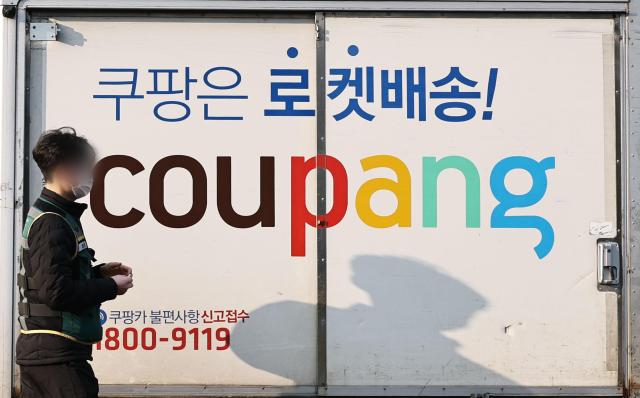
SEOUL, December 29 (AJP) -Already in the hot seat for what many see as a dismissive attitude toward consumers and regulators, Coupang has drawn fresh public backlash in South Korea with its $1.2 billion compensation plan widely seen as marketing tactic to retain customers rather than offering genuine redress.
The e-commerce giant said Monday it would distribute 1.685 trillion won worth of purchase vouchers to 33.7 million current, former and withdrawn users whose personal information was exposed in a data breach disclosed last month.
The package — the largest ever announced in South Korea in response to a data-leak incident — applies to Wow paid members, regular users and even former account holders who received official notification.
Under the plan, customers will receive four one-time vouchers totaling 50,000 won: 5,000 won each for Coupang and Coupang Eats, and 20,000 won each for Coupang Travel and the luxury platform Alux. The vouchers, which can be used only within Coupang’s ecosystem, will be issued starting Jan. 15.
Coupang said the program reflects its determination to “take responsibility and restore customer trust.” Harold Rogers, the company’s interim Korea chief executive, said the firm “deeply reflects on the concern and inconvenience caused” and would make customer trust its top priority.
Despite the scale of the package, public reaction has been largely negative, reflecting lingering distrust toward the company.
"What it says sounds more like a customer-retention campaign,” one commenter wrote on a major online community.
“Even the compensation makes you shop at Coupang in the end,” another widely shared comment read.
One accused the company of “trying to lure back users who already left, using compensation as bait.”
A closer look finds that only 10,000 won of the total compensation applies to Coupang’s most frequently used services, while the remaining 40,000 won is tied to platforms with far lower usage rates.
Because the compensation takes the form of in-platform vouchers rather than cash, it also can forces users to continue spending within Coupang’s ecosystem, blurring the line between restitution and marketing.
In absolute terms, the size of the compensation is striking. At 1.685 trillion won, it is more than three times larger than SK Telecom’s 500 billion won compensation package announced earlier this year following its own data breach. The amount also exceeds Coupang Inc.’s combined net profit for the first three quarters of 2025 by more than four times and is roughly 17 times its full-year profit in 2024.
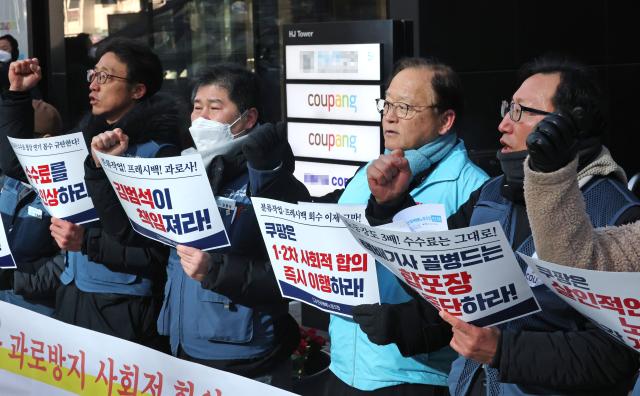
At the heart of the backlash is Coupang's aloofness toward public accountability.
The U.S.-listed company, whose revenues are generated almost entirely in Korea, has faced repeated criticism over labor practices and governance issues, as well as founder and chairman Bom Kim’s refusal to attend National Assembly hearings.
A recent survey by polling firm Realmeter underscores the depth of public dissatisfaction. According to the poll, 69.1 percent of respondents said Kim was avoiding accountability by hiding behind his U.S. citizenship. When asked about appropriate punitive measures, 32 percent supported criminal punishment for those responsible, while 29.4 percent favored business suspension.
The controversy appears to be influencing consumer behavior. Some 60 percent of respondents said the scandal had already affected their use of Coupang services. Of those, 26.1 percent said they were considering deleting their accounts, 18.5 percent said they had reduced usage, and 16.1 percent said they had already stopped using the platform.
Support was also strong for institutional sanctions, with 63.2 percent backing legislation that would restrict or bar entry into Korea for foreign executives who fail to appear before the National Assembly without legitimate justification.
The survey was conducted on Dec. 26 among 512 adults nationwide using an automated response system, with a response rate of 4.4 percent.
Copyright ⓒ Aju Press All rights reserved.
