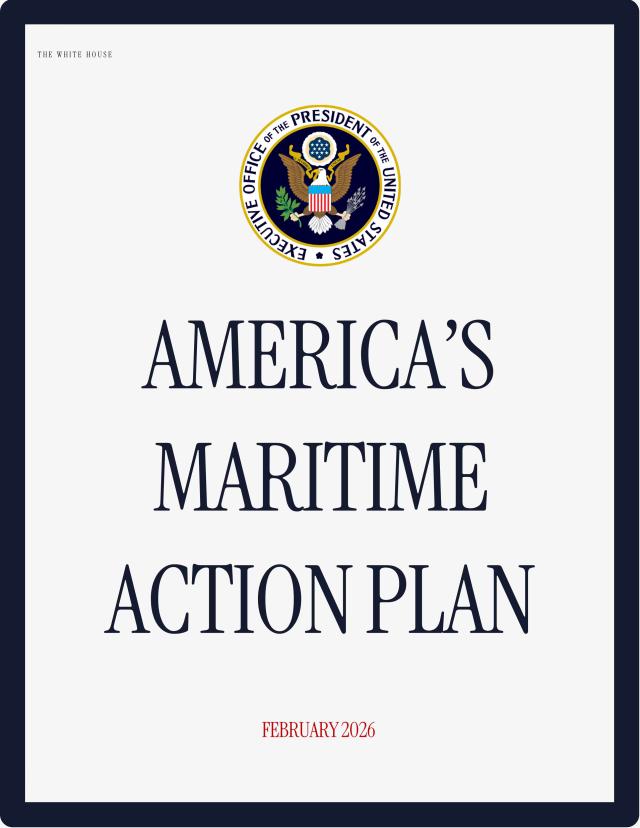
It is widely seen as laying out the blueprint for the so-called MASGA (Make American Shipbuilding Great Again) initiative discussed during Korea-U.S. tariff negotiations.
The U.S. government states in the report published on the White House website that "it will consult with China on shipbuilding capacity issues and continue its historic cooperation with the Republic of Korea and Japan on revitalizing U.S. shipbuilding."
The document makes clear that Washington aims to pursue two goals simultaneously: counter China’s dominance in maritime industries and restore U.S. domestic shipbuilding capabilities, positioning allied cooperation as a strategic pillar in that effort.
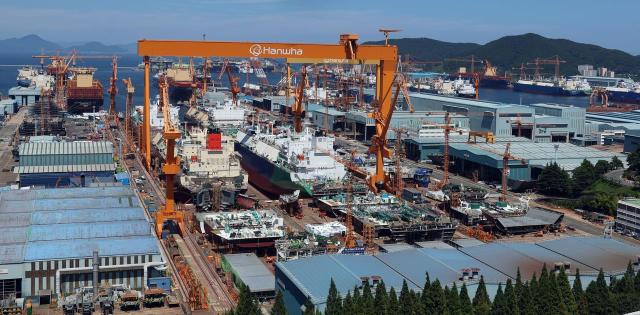
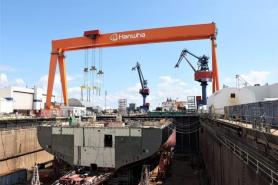
A key component of the plan is a so-called “Bridge Strategy,” under which early vessels in a multi-ship contract may be built at a foreign partner’s shipyard, while concurrent capital investments are made in a U.S. shipyard to eventually onshore construction.
The MAP describes the concept as a “multi-ship buy wherein the first ships in the contract are built in a foreign shipbuilder’s home shipyard while concurrent direct capital investments are made in a U.S. shipyard … to eventually onshore construction.”
Given that the United States currently builds less than one percent of global commercial ships and has limited large-vessel construction capacity, the strategy effectively allows allies such as South Korea and Japan to build initial orders while investing in U.S. facilities, with production gradually shifting to American soil.
For Korean shipbuilders, this could open an exceptional pathway to construct early vessels domestically while securing financial incentives tied to U.S. shipyard investment.
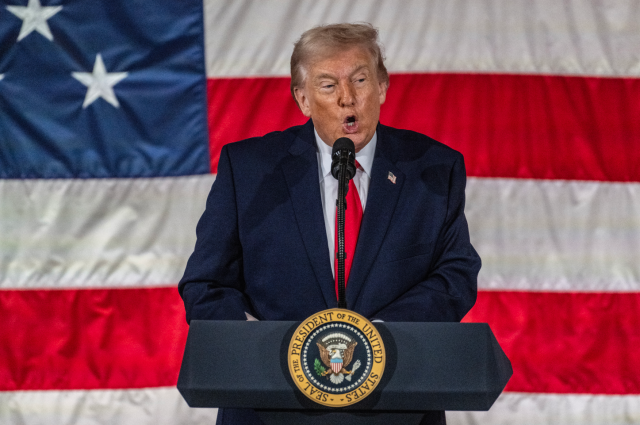
The MAP states that President Donald Trump has secured “at least $150 billion of dedicated investment for America’s shipbuilding industry,” adding that the Department of Commerce “is working to mobilize these funds to achieve the greatest investment in U.S. shipbuilding history.”
The $150 billion figure is widely interpreted as corresponding to the shipbuilding-focused package under the MASGA framework, part of the broader $350 billion investment commitments discussed in last year’s Korea-U.S. trade agreement.
While the plan opens potential avenues for Korean shipbuilders to participate in early-stage production and U.S. yard investment, it also signals a longer-term shift toward onshoring ship construction and strengthening U.S.-flagged shipping capacity.
Industry analysts say the practical impact will depend on how aggressively Washington implements port fees, cargo preference rules and onshore investment requirements in the coming years.
Foreign-built vessels face new fees under MAP
The MAP also includes measures that could significantly raise costs for foreign-built vessels calling at U.S. ports, potentially affecting Korean shipping and export firms.
Under the proposal, Washington would “establish a universal infrastructure or security fee on all foreign-built commercial vessels calling at U.S. ports,” calculated based on the weight of imported cargo.
According to the report, a fee of 1 cent per kilogram could generate approximately $66 billion over a decade, while a 25-cent levy could raise as much as $1.5 trillion. The revenue would be directed toward a newly proposed Maritime Security Trust Fund to support U.S. shipbuilding and port infrastructure.
The administration also plans to impose a 0.125 percent Land Port Maintenance Tax on goods entering through land borders, effectively applying the levy to exports routed via Canada or Mexico, in line with the Harbor Maintenance Tax on maritime imports.
The plan further calls for expanding cargo preference requirements through a new United States Maritime Preference Requirement (USMPR), which would gradually increase the share of U.S.-bound cargo transported on qualifying U.S.-flagged vessels.
Taken together, the measures are designed to reduce reliance on foreign-built and foreign-flagged ships while bolstering domestic maritime capacity. However, industry observers warn that the new framework could pressure Korean shipping lines and raise logistics costs for exporters, particularly given that a large share of vessels serving U.S. routes are built in South Korea, Japan and China.

Copyright ⓒ Aju Press All rights reserved.