
Journalist

AJP
-
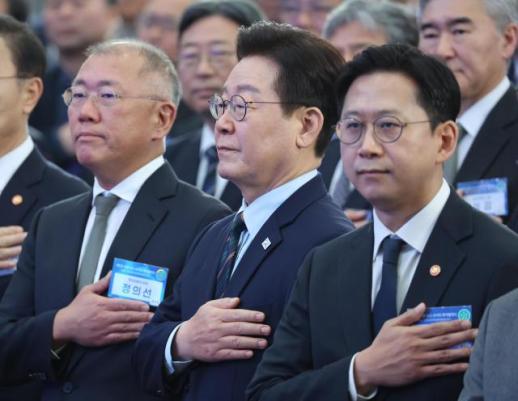 Hyundai Motor pledges $6.3 billion to build data center, robot factory in Saemangeum SEOUL, February 27 (AJP) - Hyundai Motor Group on Friday pledged around 9 trillion won ($6.28 billion) in the Saemangeum reclaimed coastal zone in North Jeolla Province, pledging to erect an AI data center, a robotics manufacturing cluster and hydrogen energy facilities on the country's western seaboard. The sprawling project under central and local government backing is set to break ground from 2027 across a 1.12 million-square-meter site in Gunsan, about 180 kilometers southwest of Seoul. The project is one of the largest private-sector commitments to the Saemangeum zone — a decades-long national land reclamation endeavor spanning 409 square kilometers. The bulk of the outlay — about 5.8 trillion won — will flow into an AI data center equipped with 50,000 graphics processing units, designed to crunch vast volumes of data for autonomous driving, software-defined vehicles and robotics development. A separate 400 billion won robotics manufacturing and parts cluster will house a factory capable of turning out 30,000 robot units per year, including wearable industrial robots and mobile platforms. Hyundai will also pour 1 trillion won into a 200-megawatt water electrolysis plant to produce green hydrogen, and channel 1.3 trillion won into gigawatt-scale solar power generation to feed the data center and hydrogen facilities. An additional 400 billion won is earmarked for a so-called "AI Hydrogen City" within the Saemangeum smart waterfront district. President Lee Jae Myung, who attended the signing ceremony alongside Hyundai Motor Group Chairman Chung Eui-sun, vowed sweeping government backing for the project. "The government will respond to the bold decisions made by businesses with even bolder support," Lee said. "We will dramatically lower regulatory and administrative barriers so that companies can fully unleash their capabilities and grow." Lee said Saemangeum would be reborn as a "city of the future" where robots become part of everyday life, predicting the hub would draw top talent from home and abroad and allow young people in the region to pursue their ambitions without migrating to the capital. Under the deal, South Korea's transport, industry, science and climate ministries will streamline permitting, furnish policy backing for robotics, AI and hydrogen industries, and bolster transportation infrastructure in the region. The AI data center and solar facilities are slated for completion by 2029, while the water electrolysis plant will begin phased operations from 2029 with capacity to expand. The robotics cluster is expected to wrap up construction in 2029 after breaking ground in 2028. The investment forms a centerpiece of Hyundai Motor Group's 125.2 trillion won domestic spending plan for 2026 through 2030, unveiled in November after Seoul finalized a trade agreement that trimmed U.S. tariffs on South Korean automobiles to 15 percent from 25 percent. 2026-02-27 14:32:11
 -
 Hyundai Motor Group Launches 13th Hyundai Jump School Volunteer Program Hyundai Motor Group said it held a launch ceremony for the 13th class of its social contribution program, Hyundai Jump School, over two days starting Feb. 26 at the Mayfield Hotel in Seoul. Started in 2013, Hyundai Jump School pairs university student teachers with youths from underserved communities for tutoring and emotional support. Employee mentors help the student teachers with career planning, the group said. The event included lectures on teaching methods for working with adolescents and sessions where experienced participants shared practical tips. The group said 25 newly selected dedicated employee mentors also took part in team-building activities with the student teachers. The dedicated mentors will be assigned by operating region and plan to provide longer-term, in-depth guidance through in-person exchanges, including visits to child centers where volunteering takes place, tours of Hyundai Motor Group offices and career advice, it said. After the ceremony, 300 university student teachers will volunteer through December for 10 months at child centers and other sites in nine regions nationwide, providing educational support to about 1,200 youths. Hyundai Motor Group said it extended the program from eight months to 10 to better align with school schedules, expecting improved continuity and effectiveness. All student teachers will receive scholarships, and those selected as outstanding teachers will be offered overseas study trips, the group said. Hyundai Jump School has also operated in Vietnam since 2020 and in Indonesia since 2024. Over 13 years, about 3,600 university student teachers have been selected, and about 14,000 youths with limited access to education have received learning opportunities, the group said. “Hyundai Jump School is a talent development program where everyone involved — youths, university students and employee mentors — learns and grows,” a Hyundai Motor Group official said. “We plan to continue efforts to foster healthy future talent.”* This article has been translated by AI. 2026-02-27 13:42:19
 -
 Coupang keeps up sales, but Q4 data shock exposes cash and trust risks SEOUL, February 27 (AJP) - Coupang Inc.’s fourth-quarter numbers told a stark story: revenue rose 11 percent year-on-year to $8.84 billion, yet operating income collapsed 97 percent to just $8 million, and net income swung from a $156 million profit a year earlier to a $26 million loss. The sharp deterioration, driven largely by a massive data breach disclosed in November, undercut profitability, disrupted cash conversion and triggered regulatory scrutiny on both sides of the Pacific — even as the company posted record annual revenue for 2025. According to its filing with the U.S. Securities and Exchange Commission, the South Korean e-commerce giant, headquartered in the United States, generated $34.53 billion in net revenue in 2025, up 14 percent year-on-year and 18 percent on a constant-currency basis. Net income attributable to shareholders reached $208 million, while adjusted EBITDA increased to $1.49 billion from $1.38 billion a year earlier. Gross profit climbed 15 percent to $10.14 billion, with margin improving modestly to 29.4 percent. On the surface, scale and operating leverage appear intact. But free cash flow tells a different story. Free cash flow fell to $527 million in 2025 from $1.02 billion in 2024 — a 48 percent decline, representing $489 million less in cash generation. Management explicitly attributed the drop primarily to “the impact the data incident had on working capital in Q4 2025,” alongside elevated capital expenditures. Operating cash flow slipped to $1.773 billion from $1.886 billion a year earlier. Meanwhile, equipment-related capital expenditures surged to $1.015 billion from $634 million. The working capital shock is particularly revealing. Coupang’s business model depends on rapid cash cycles — collecting from customers quickly while managing payables efficiently. In the fourth quarter, however, cash lingered in refunds, credits, remediation costs and legal provisions rather than converting cleanly into free cash flow. Demand did not collapse. Cash efficiency did. Fourth-quarter profitability cratered The October–December quarter marked a sharp inflection. Revenue rose 11 percent year-on-year to $8.84 billion. However, operating income plunged to $8 million — a 97 percent decline — while net income swung to a $26 million loss. Adjusted EBITDA fell to $267 million from $421 million, with margin compressing from 5.3 percent to 3.0 percent. Sequentially, revenue declined from $9.27 billion in the third quarter to $8.84 billion in the fourth, marking a rare quarter-on-quarter contraction since Coupang’s 2021 New York listing. Gross margin deteriorated by 248 basis points in Q4, underscoring the cost of remediation, security upgrades and customer-related expenses following the breach. The episode illustrates a classic platform dynamic: transaction volumes can remain resilient, but profitability can deteriorate quickly when trust is impaired. Bom Kim: Trust remains central On the earnings conference call, founder and board chairman Bom Kim acknowledged the setback. “Everything Coupang has achieved has been driven by our single goal of delivering a Wow experience to our customers,” he said. “We are doing our utmost to earn customers' trust, as nothing is more serious for us than failing to meet their expectations.” He added, “While we faced challenges this quarter, particularly with the data incident, we remain committed to strengthening our operations and expanding our offerings. Our strong cash position allows us to invest in long-term growth opportunities.” The remarks reflect management’s effort to frame the incident as a temporary disruption rather than a structural impairment. The key question for investors, however, is whether the working capital shock was truly one-off — or whether heightened cybersecurity spending, compliance costs and customer incentives will structurally weigh on margins. Core resilient, expansions magnify volatility Coupang’s Product Commerce segment — including Rocket Delivery and Fresh — generated $29.59 billion in annual revenue, up 11 percent. Adjusted EBITDA improved to $2.5 billion, with margin expanding to 8.4 percent. Active customers rose 8 percent year-on-year to 24.6 million in Q4, suggesting the core ecosystem remains broadly intact despite the breach. By contrast, Developing Offerings — including Coupang Eats, Taiwan operations and newer initiatives — posted revenue growth of 38 percent to $4.94 billion, but adjusted EBITDA losses widened to $995 million. This imbalance amplifies consolidated volatility: while the core produces steady cash flow, expansion businesses increase sensitivity to shocks. The fourth-quarter incident exposed how quickly margin compression in emerging segments can compound pressure from unexpected events. "While its convenience once defined its brand, the recent data breach has shifted consumer perception from a local champion to a detached U.S. corporation, a sentiment now mirrored by similar challenges in Taiwan. Rebuilding this fractured consumer trust will be the defining hurdle for Coupang’s long-term sustainability in 2026," said Lee Hong-joo, professor of Business Administration at Catholic University. Regulatory scrutiny intensifies The breach involved unauthorized access to roughly 34 million customer accounts, exposing names, phone numbers and shipping addresses, though not payment details or login credentials. South Korea’s Personal Information Protection Commission has launched an investigation into whether Coupang’s internal access controls met legal standards. In the United States, members of Congress have sought briefings on the scope of the breach, reflecting the company’s status as a New York–listed firm subject to global governance scrutiny. While management says no secondary misuse has been detected, the scale of the breach presents a significant reputational risk in a subscription-driven model built on loyalty and trust. Coupang shares closed Thursday at $18.71 on the Nasdaq, up 1.91 percent in regular trading. Following the earnings release, the stock fell roughly 3.6–3.7 percent in after-hours trading. 2026-02-27 11:59:46
 -
 Hyundai Motor Group to Invest 9 Trillion Won in Saemangeum Robotics, AI and Hydrogen Hub Hyundai Motor Group is moving ahead with plans to build a domestic innovation hub as it seeks to become a future-technology company centered on robotics, artificial intelligence and energy solutions. The group said it signed an investment memorandum of understanding on the 27th with the government and North Jeolla Province at the Saemangeum Convention Center in Gunsan for fostering advanced robotics and hydrogen industries and developing an AI hydrogen city in the Saemangeum area. Hyundai plans to invest 9 trillion won starting in 2026 on a 1,124,000-square-meter (about 340,000-pyeong) site in Saemangeum, focusing on robotics, AI, hydrogen energy, solar power generation and an AI hydrogen city. The group said the project is aimed at securing future growth engines while contributing to regional balance, job creation and broader economic vitality through innovation in robotics and AI and a major shift in the hydrogen ecosystem. Saemangeum is expanding regional transportation links, including rail, port and airport infrastructure, and can accommodate large-scale development demand with 409 square kilometers (about 120 million pyeong) of land, about two-thirds the size of Seoul, the group said. Hyundai signed a separate MOU in May last year with the Saemangeum Development and Investment Agency on introducing future mobility technologies and building an AI-based smart city. In October that year, the agency joined a hydrogen session at the APEC CEO Summit 2025 hosted by Hyundai to explore ways to deepen cooperation. Attendees at the ceremony included President Lee Jae-myung; Deputy Prime Minister and Minister of Science and ICT Bae Kyung-hoon; Industry Minister Kim Jung-kwan; Climate, Energy and Environment Minister Kim Sung-hwan; Land, Infrastructure and Transport Minister Kim Yoon-deok; Saemangeum Development and Investment Agency chief Kim Eui-kyeom; and North Jeolla Gov. Kim Kwan-young, along with lawmakers Han Byung-do, Chung Dong-young, Cho Bae-sook, Lee Choon-seok, Ahn Ho-young, Yoon Jun-byeong, Lee Won-taek and Park Hee-seung. Hyundai participants included Executive Chair Chung Euisun, Vice Chair Jang Jae-hoon, and senior executives Seo Kang-hyun, Sung Kim, Jung Jun-cheol and Jin Eun-sook, the group said. Kim Eui-kyeom, head of the Saemangeum Development and Investment Agency, said Saemangeum has abundant energy resources and differentiated investment incentives. He said the agency would use a large, regulation-free site to develop Saemangeum into an innovation growth base where people, robots and AI coexist. Jang said the next-generation industrial paradigm beginning in Saemangeum would become a central pillar of a major transformation shaping South Korea’s future beyond North Jeolla. He said Hyundai is ready to help build an advanced industrial ecosystem, citing its manufacturing expertise and capabilities in robotics, AI and hydrogen energy. Under the MOU, the government and North Jeolla Province will support administrative procedures such as permits, as well as policies and infrastructure to develop robotics, AI and hydrogen energy industries. The parties will also build a cooperation network to ensure smooth project implementation, Hyundai said. Hyundai said the Saemangeum investment will focus on building an advanced value chain centered on an AI data center (5.8 trillion won), a robot manufacturing and parts cluster (400 billion won), a water electrolysis plant (1 trillion won), solar power generation (1.3 trillion won) and an AI hydrogen city (400 billion won). The AI data center and solar facilities are scheduled to break ground in 2027 and be completed in 2029, Hyundai said. The water electrolysis plant, also set to start construction in 2027, is to complete its first phase in 2029 and then expand capacity in stages. The robot manufacturing and parts cluster is to begin construction in 2028 and finish in 2029. Hyundai said it will also pursue discussions involving the Korea Development Bank and the National Growth Fund. Hyundai said the Saemangeum project is a core initiative within its previously announced 125.2 trillion won mid- to long-term domestic investment plan. The group said the investment is expected to drive innovation in robotics and AI and accelerate a shift in the hydrogen energy ecosystem, while producing immediate and tangible economic results through new jobs and stronger regional development. Based on input-output tables from the Bank of Korea and other sources, the project’s economic impact is estimated at 16 trillion won, with an analysis projecting about 71,000 jobs created directly and indirectly, Hyundai said. A Hyundai official said the group will draw on its world-class manufacturing and innovation capabilities to help South Korea secure leadership in future industries.* This article has been translated by AI. 2026-02-27 11:42:19
 -
 Seoul and Tokyo take a breather and China-related markets muted SEOUL, February 27 (AJP) — A correction hit Seoul and Tokyo on Friday after this week’s record-setting rally, while Chinese and Hong Kong stocks remained mostly sidelined ahead of next week’s closely watched “Two Sessions,” China’s annual legislative and political advisory meetings. A tech-led pullback on Wall Street overnight weighed on Asian semiconductor shares, reversing part of the strong gains seen earlier in the week. The Dow Jones Industrial Average edged up 0.03 percent to close at 49,499.20, while the S&P 500 fell 0.54 percent to 6,908.86 and the Nasdaq Composite dropped 1.18 percent to 22,878.38. AI bellwether Nvidia slid more than 5 percent to $184.89 — its steepest single-day decline since April last year — despite posting earnings and revenue guidance that beat expectations. The move underscored investor unease over stretched valuations and concerns about AI’s broader impact across industries. Other semiconductor names followed lower. AMD fell 3.4 percent, TSMC declined 2.8 percent, Micron Technology lost 3.1 percent and Broadcom slipped 3.2 percent. The mood carried into Asia. In Seoul, Samsung Electronics fell 1.49 percent and SK hynix dropped 3.46 percent in morning trade, reversing part of the previous session’s roughly 7 percent surge in both stocks. The two chipmakers, key suppliers to Nvidia, had led Thursday’s rally. As of 10:59 a.m., the benchmark KOSPI declined 2.11 percent to 6,170.18, while the tech-heavy KOSDAQ slipped 0.53 percent to 1,181.71. Foreign investors continued to trim positions, posting net sales of 3.5436 trillion won. Individual investors and institutions stepped in as buyers, net purchasing 3.1064 trillion won and 337.7 billion won, respectively. The Korean won weakened against the U.S. dollar for the first time in three sessions, with the greenback rising 4.70 won to 1,437.20 won. In Tokyo, semiconductor-related shares also came under early pressure, adding to the downside. The Nikkei fell 0.84 percent to 58,260.38 in morning trading. Large-cap stocks outside semiconductors showed mixed performance. Hyundai Motor dropped 2.13 percent to 596,000 won and Kia lost 3.40 percent to 199,000 won. SK Square fell 5.60 percent, while Samsung Life Insurance declined 4.18 percent. In biotech and battery plays, Samsung Biologics slipped 0.54 percent and LG Energy Solution edged down 0.12 percent. Defense and shipbuilding names moved in the opposite direction, reflecting selective rotation. Hanwha Aerospace rose 1.76 percent, HD Hyundai Heavy Industries advanced 1.52 percent and Hanwha Ocean gained 1.00 percent. Entertainment shares rebounded after an extended decline, with HYBE up 0.51 percent, JYP Entertainment edging 0.14 percent higher and YG Entertainment surging 6.45 percent. On the KOSDAQ, Samchundang Pharm extended its rally, rising nearly 11 percent after announcing a 5.3 trillion won technology transfer deal for an oral obesity treatment. The stock, which hit the daily upper limit the previous day, climbed to a new 52-week high of 838,000 won. China-related stocks remained relatively muted ahead of the “Two Sessions,” scheduled from March 4 to around March 11. The meetings of the National People’s Congress and the Chinese People’s Political Consultative Conference are expected to unveil China’s annual economic targets and outline the 15th Five-Year Plan for 2026–2030. Investors are watching for signals on growth support, fiscal stance and industrial strategy, particularly amid intensifying trade friction with the United States. Elsewhere in Asia, the Shanghai Composite edged up 0.10 percent to 4,150.96, while Hong Kong’s Hang Seng Index rose 0.57 percent. 2026-02-27 11:32:18
 -
 WAIFF D-7: World AI Film Festival in Seoul for the first time SEOUL, February 27 (AJP) - The World AI Film Festival Seoul 2026 will kick off on March 6 at offline venues including a concert hall and a franchise movie theater, kicking off the annual AI film festival in the Asia region and highlighting South Korea’s growing presence in AI-driven content creation. The two-day event, running through March 7, is part of the World AI Film Festival Seoul 2026 (WAIFF Seoul 2026)’s expanding global network founded by Institut EuropIA under the leadership of former Apple executive Marco Landi. Since its inaugural launch in Nice, France, in 2025, the festival has positioned itself as an international platform dedicated to exploring the artistic and industrial convergence of artificial intelligence and cinema. More than 27 million won ($18,775.4) in prize money will be awarded across six competitive categories. The Best AI Film prize carries 10 million won for first place, 5 million won for second place and 3 million won for third place. Additional honors include Best AI Screenplay, Best AI Soundtrack, Best AI Micro Series and Best AI AD, each accompanied by a 2 million won award, while Best Youth AI Film carries a 1 million won prize. Selected winners may also be invited to screen at the main World AI Film Festival event in Cannes in April 2026. An 11-member jury representing film, animation, media and global cultural industries will evaluate the competition. Daniel Son, founder and chief executive of visual effects studio Westworld, will serve as jury president. A veteran VFX supervisor whose credits include "Exhuma," "All of Us Are Dead" and "Sweet Home Season 1," Son has received major honors at the Asian Film Awards and the Grand Bell Awards. Animation pioneer Nelson Shin, known for his work on "The Pink Panther," "Bugs Bunny," "Daffy Duck," 'The Simpsons" and the original lightsaber effects for Star Wars, joins the panel alongside supervising editor Nayoung Nam, whose credits include Squid Game and Along with the Gods. The jury also features Nigerian producer and cultural entrepreneur Bolanle Austen-Peters; director Jang Hang-jun, known for Forgotten, Rebound and The King’s Warden; and Cine21 chief executive Chang Young-youp, bringing together expertise spanning animation, global streaming production, filmmaking and film journalism. The festival was co-founded by Ngo Thi Bich Hanh and David Defendi. A total of 30 nominations have been confirmed across six prize categories: "Best AI Short Film," "Best AI Youth Film," "Best AI Micro Series," "Best AI AD," "Best AI Screenplay" and "Best AI Soundtrack." Several titles received multiple nominations. "Losing, Dog," "Octopus & Me," "Ticket to Neverland," "Little Wings" and "The Gate of Yokai" earned dual nominations, underscoring their cross-category strength. Beyond the competition, WAIFF Seoul 2026 will host a Pro Talks program addressing generative AI production workflows, intellectual property governance and ethical standards in AI-assisted filmmaking. Organizers say the Seoul edition aims to serve not only as a showcase of emerging AI cinema, but also as a forum shaping the creative and regulatory frameworks of the industry’s future. The festival will open at 6 p.m. (0900 GMT) on March 6 at Lotte Concert Hall. Tickets are currently available through the official ticketing platform Event Us, with sales closing at 1 p.m. on March 2. 2026-02-27 11:28:56
 -
 KGM Holds Dealer Conference in Germany, Previews Musso Pickup Ahead of Europe Launch KG Mobility (KGM) said it held a large-scale dealer conference on Feb. 26 (local time) in Bruehl, a city in northern North Rhine-Westphalia (NRW), Germany’s biggest economic region. About 220 people, including local dealers and reporters, attended. KGM said the event was designed to brief dealers and the media on its brand and marketing strategy for this year, export plans, mid- to long-term product lineup direction and new models. Ahead of its planned launch in Europe, KGM gave dealers an early look at the Musso, which the company said has been well received since its domestic debut in January, to gauge market reaction and build expectations. KGM also displayed existing models such as the Musso EV and Torres EVX, along with tuned versions by trim, including taxi and camper variants, off-road vehicles and fire trucks. Dealers and reporters showed strong interest in the Musso’s styling and multipurpose use, as well as tuned models including a Torres EVX taxi and a Musso EV camper, KGM said. Alongside the conference, KGM said it recognized and awarded top-performing dealers in the German market for last year. Western Europe is KGM’s largest export region, with 22,496 vehicles shipped there last year, accounting for 32% of total exports. Germany ranked as KGM’s third-largest export market with 6,213 vehicles, behind Turkiye (13,337) and Hungary (9,508). A KGM official said exports topped 70,000 vehicles last year, the company’s best performance in 11 years. The official said KGM plans to strengthen its push in Germany and Europe through new-product launches and marketing strategies, citing strong interest from dealers and reporters in the Musso and the tuned lineup. * This article has been translated by AI. 2026-02-27 11:24:18
 -
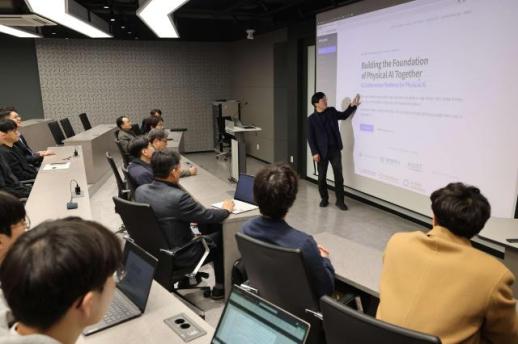 KAIST launches deep tech scale-up valley to drive physical AI implementation SEOUL, February 27 (AJP) - The Korea Advanced Institute of Science and Technology in South Korea announced on February 27 that it held a performance report meeting for the Deep Tech Scale-up Valley project at its main campus in Daejeon. During the event, the university unveiled its implementation strategy for Physical AI, focusing on moving robot technology out of the laboratory and into actual industrial settings. The Deep Tech Scale-up Valley is a joint initiative between South Korea's Ministry of Science and ICT, Daejeon Metropolitan City, and the Korea Advanced Institute of Science and Technology (KAIST). The university has secured 13.65 billion won in funding for a three-year and six-month period starting in 2025. Led by Professor Kim Jung, the project aims to build a robotics innovation ecosystem by commercializing deep tech developed at the institute. A Robot Alliance has been formed to support this goal, including KAIST Holdings, Daejeon Techno Park, the Daejeon Center for Creative Economy and Innovation, Angel Robotics, and YuRobotix. The project operates on a three-pillar system: technology commercialization, deep tech R&D, and commercial scale-up. In its first year, the initiative achieved 23 billion won in technology transfers and investment attraction through Physical AI lectures, startup pitching events, and networking sessions. Physical AI refers to technology that combines robotics with artificial intelligence, allowing machines to perceive, judge, and act autonomously in the real world. While government R&D and corporate investments are increasing, KAIST noted that practical business models remain limited. The report meeting redefined Physical AI as a challenge of industrial structure rather than just a competition of algorithms, emphasizing that commercialization requires the organic integration of research, factories, and the investment ecosystem. Researchers highlighted that applying Physical AI to industry requires meaningful data generated from actual worksites rather than just virtual environments. This involves collaborating with skilled professionals in manufacturing to accumulate data that reflects human physical senses and judgment. Professor Kong Kyoung-chul of the Department of Mechanical Engineering at KAIST emphasized the need for a concrete platform. For AI trained in a virtual environment to function properly in the real world, the accuracy of virtual technology must improve, and physical variables in reality must be managed predictably, Professor Kong Kyoung-chul said. Professor Myung Hyun of the School of Electrical Engineering at KAIST noted that research into Physics-Informed Neural Networks (PINN) is currently active. The completion of Physical AI is possible when hardware researchers who understand physical systems and AI researchers who implement learning structures work together, Professor Myung Hyun said. He added that AI must understand physical laws rather than just processing large volumes of data. KAIST plans to establish a value chain connecting researchers, industrial experts, and corporations to solve actual industrial problems. We must move beyond competing over data volume and consider how to execute AI in the actual physical world, said Professor Kim Jung, Head of the Department of Mechanical Engineering at KAIST. Based on our specific strategies, we will support startups and companies to succeed in commercializing Physical AI. The Deep Tech Scale-up Valley project will proceed with building Physical AI platforms, discovering and investing in startups, establishing testbeds, and expanding cooperation networks with global robotics companies. 2026-02-27 11:07:43
 -
 Lee to visit Singapore and the Philippines next week SEOUL, February 27 (AJP) - President Lee Jae Myung is set to embark on a trip to Singapore and the Philippines next week, Cheong Wa Dae said on Friday. According to presidential spokesperson Kang Yu-jung, Lee is scheduled to depart for Singapore on Sunday for a summit with Prime Minister Lawrence Wong. During his three-day stay there, Lee will also meet with ceremonial head of state Tharman Shanmugaratnam. Lee will then attend a joint event between the two countries to discuss exchanges and expand cooperation in artificial intelligence (AI)-related areas, while meeting with people working in the field. Kang described Singapore as a transportation, logistics and financial hub that leads regional free trade, expressing expectations that Lee's trip will strengthen cooperation in trade, investment and infrastructure while expanding collaboration into "promising future sectors" such as AI and nuclear energy. After wrapping up his itinerary there, Lee will travel to Manila for a summit with Philippine President Ferdinand Romualdez Marcos Jr., and will attend a business forum and other events. Calling the Philippines a longtime partner as South Korea's first Southeast Asian country to establish diplomatic relations, Kang said that the archipelagic country was also the first Asian country to send the largest number of troops to aid South Korea during the Korean War. She added that Lee's summit, slated for March 3, would be even more meaningful as it marks the 77th anniversary of bilateral relations. Kang also expressed hope that the visit will deepen the two countries' cooperation across various sectors including defense, trade, nuclear energy, shipbuilding and critical minerals. She added that the Philippines, which assumed the rotating chair of the Association of Southeast Asian Nations (ASEAN) this year, followed by Singapore next year, will help further foster the visions of the Comprehensive Strategic Partnership (CSP) established in October 2024. 2026-02-27 11:04:19
 -
 Kookmin University research team has two papers accepted for CVPR 2026 SEOUL, February 27 (AJP) - A research team led by Professor Lee Seong-won of the Department of Electronics Engineering at Kookmin University has had two papers accepted for the IEEE/CVF Conference on Computer Vision and Pattern Recognition 2026. The IEEE/CVF Conference on Computer Vision and Pattern Recognition (CVPR) is regarded as a premier international academic event in the fields of artificial intelligence and computer vision. Known for its rigorous review process and low acceptance rates, the conference serves as a global stage where leading universities and research institutions share core technological advancements. The research was conducted through a joint collaboration between the team of Professor Lee Seong-won at Kookmin University and the team of Professor Kim Eun-tae at Yonsei University. The two institutions worked together to develop methods that combine theoretical precision with practical scalability. The first paper, titled Rethinking Pose Refinement in 3D Gaussian Splatting under Pose Prior and Geometric Uncertainty, proposes a new optimization framework to address camera pose errors and geometric uncertainties. These issues are central challenges in 3D Gaussian Splatting, a prominent technique for 3D scene reconstruction. By integrating pose priors and geometric uncertainty analysis, the framework enables more stable and precise three-dimensional reconstruction, with potential applications in digital twins, robotics, and immersive content creation. The second paper, titled HypeVPR: Exploring Hyperbolic Space for Perspective to Equirectangular Visual Place Recognition, introduces a method for visual place recognition using hyperbolic space. This approach is designed to overcome representation differences between standard perspective images and equirectangular (omnidirectional) images. The framework maintains robust recognition performance across different camera formats, providing a foundational technology for autonomous driving, drones, and extended reality (XR). CVPR is a conference where computer vision researchers worldwide aspire to present, as it strictly evaluates the originality and completeness of research, Professor Lee Seong-won said. We will continue to strengthen our global competitiveness through research that possesses both theoretical sophistication and practical application. Professor Lee Seong-won added that Kookmin University (KU) intends to focus on creating leading research results and fostering talent in the fields of artificial intelligence and computer vision. 2026-02-27 10:59:32