
Journalist

AJP
-
 BMW Motorrad to Sell 15-Unit Limited R 12 S Special Edition in South Korea BMW Motorrad said it will sell just 15 units of the BMW R 12 S Special Edition in South Korea through the BMW Motorrad Shop online store starting at 2 p.m. on the 26th. The R 12 S was previously released in limited numbers in April last year to mark the 30th anniversary of BMW Group Korea. The entire allotment sold out within a week. BMW Motorrad decided to bring it back in a 15-unit run after continued purchase inquiries. The model reinterprets the heritage of the legendary 1973 BMW R 90 S sport motorcycle. The R 90 S was BMW’s first mass-produced motorcycle to exceed 200 kph (124 mph). BMW said the R 12 S revives signature R 90 S design cues, including a cockpit fairing mounted to the handlebar, a dark-tinted windscreen and a short seat highlighted by orange stitching. It also debuts “Lava Orange Metallic,” a modern take on the R 90 S signature Daytona Orange. Brushed aluminum on the fuel tank and seat hump, a red double coach line and a dedicated R 12 S badge on the side cover further emphasize the heritage styling. Power comes from an air/oil-cooled 1,170cc two-cylinder boxer engine rated at 109 horsepower and 11.7 kg·m (115 Nm) of torque. BMW said it reaches 100 kph (62 mph) from a standstill in 3.6 seconds and has a top speed of 200 kph (124 mph). The bike uses a lightweight trellis frame, with a 45mm inverted telescopic fork up front and a Paralever swingarm with spring strut in the rear. Front and rear suspension allow preload and damping adjustment. It also comes with BMW Motorrad ABS Pro for stable braking, the company said. Standard features include hill start control, Shift Assistant Pro, heated grips, cruise control and “Headlight Pro” with adaptive cornering. Other equipment includes dual round analog gauges, ConnectedRide Control, a tire pressure monitoring system (TPC) and an anti-theft alarm (DWA). The R 12 S is priced at 33.10 million won in South Korea, including value-added tax.* This article has been translated by AI. 2026-02-26 11:15:51
 -
 K Bank Nominates CEO Choi Woo-hyung for Second Term as Bank President K Bank has nominated its current president, Choi Woo-hyung, as the sole candidate for its next chief executive officer, the bank said Thursday in a regulatory filing. The executive candidate recommendation committee approved Choi unanimously as the candidate for representative director, with final selection to be decided at the bank’s regular shareholders meeting scheduled for March 31. It would be the first time since K Bank’s launch that a president is reappointed for another term. The committee cited Choi’s performance since taking office. During his tenure, the bank expanded its customer base to about 16 million and posted net profit in the 100 billion won range for two consecutive years, it said. The bank also said it diversified its asset portfolio by strategically expanding loans to sole proprietors even as household lending faced tighter regulation. K Bank said Choi has also moved early in blockchain-related businesses, including securing trademarks tied to stablecoins and pursuing domestic and overseas partnerships and remittance services. The committee said those efforts helped support K Bank’s push for a stock market listing and laid groundwork to strengthen its capital base. Born in 1966, Choi graduated from Seoul National University with a degree in economics. He previously worked at Hana Bank, Samsung SDS and IBM Korea, and later led digital and IT operations at BNK Financial Group. He has served as K Bank president since January 2024. 2026-02-26 11:09:00
 -
 South Korea pledges $100,000 in aid to cyclone-hit Madagascar SEOUL, February 26 (AJP) - South Korea will provide US$100,000 in humanitarian aid to Madagascar to help the country recover from damage caused by a recent tropical storm, the Ministry of Foreign Affairs said on Thursday. Madagascar, an island country off the southeastern coast of Africa, was recently struck by a tropical cyclone that left dozens dead and caused widespread damage including collapsed buildings, disrupted communications, and downed power lines. The ministry hopes the assistance will support recovery efforts in affected areas and help residents return to daily life as soon as possible. 2026-02-26 11:06:26
 -
 South Korea issues copyright fair-use guide for generative AI training, including web crawling Generative artificial intelligence developers and copyright holders in South Korea now have a new government guide on when copyrighted works may be used fairly to train AI models. The Ministry of Culture, Sports and Tourism and the Korea Copyright Commission said Thursday they will publish a guide titled “Copyright Law Fair Use Guide for Generative AI Training on Works” (the “fair use guide”). It will be available from 11 a.m. on the commission’s website. The guide explains four factors considered when judging fair use in the context of generative AI training, including the purpose and character of the use and the type and use of the work. It also says AI training is not automatically excluded from fair use even when done for commercial purposes or through web crawling — the automated collection, sorting and storage of website content — and that decisions require an overall assessment of the factors. To help readers understand the concept, the guide presents hypothetical examples of situations where fair use could be recognized and where it would be difficult to recognize. The ministry and the commission stressed the examples are not authoritative interpretations, and that courts will determine fair use based on specific facts. Even similar situations could lead to different rulings. The ministry and the commission said they began preparing the guide after forming a special subcommittee under an AI-copyright system improvement consultative body in September last year. They conducted a survey of AI developers and rights holders from Oct. 13 to Nov. 2, held interagency consultations for about three months starting in November, and released a draft at a public briefing on Dec. 4. They said they reviewed and reflected feedback and expert discussions gathered during the comment process. The government said it will strengthen policy support so rights holders and the AI industry can better anticipate and respond to copyright issues that may arise as generative AI spreads and training data use expands. At a meeting held Thursday morning at the National Museum of Modern and Contemporary Art, Seoul, Culture Minister Choi Hwi-young, Deputy Prime Minister and Minister of Science and ICT Bae Kyung-hoon, and National AI Strategy Committee Vice Chair Lim Moon-young agreed to work together on institutional improvements and support programs aimed at coexistence between the AI and cultural industries. The culture ministry said it plans to build a foundation for providing and distributing rights information so users can verify accurate copyright rights-management information and, when needed, sign licensing agreements. The goal is to reduce transaction costs involved in identifying rights holders for training data. The science ministry said it will link a copyright rights-information system with private data marketplaces through an integrated AI training data supply system. It also plans to promote transactions in works used as training data, including applying research and development tax credits to the cost of purchasing AI training data. The culture ministry also said it will strengthen the basis for expanding the use of public works as AI training data. It added new categories “Type 0” and “AI Type” to the Public Nuri free-use license marking standards and said it will work with relevant ministries to broaden application of the new categories to public works managed by each ministry and agency. Choi said the guide will be updated to reflect new court decisions and technological developments. “We will continue to do our best so that protecting creators’ rights and the lawful use of works by AI models can remain in balance,” he said.* This article has been translated by AI. 2026-02-26 11:03:22
 -
 Audi Korea Names KCC Auto Group as New Authorized Dealer Audi Korea said on Wednesday it has finalized the selection of KCC Auto Group as a new authorized dealer. Starting March 1, KCC Auto Group will operate showrooms in Songpa, Hanam and West Daegu, along with an Audi Approved Plus (AAP) certified used-car showroom in Gimpo. It will also run service centers in Gangdong, Songpa and West Daegu. Audi Korea said the showrooms and service centers will continue operating as they have, allowing customers to consult on purchases and receive after-sales service without any separate procedural changes or service interruptions. KCC Auto Group has operated showrooms and service centers in South Korea’s imported-car market and plans to run the sites in line with Audi’s brand standards. “Audi Korea will strengthen customer-focused service through cooperation with our nationwide dealer network and provide a stable, consistent brand experience,” the company said.* This article has been translated by AI. 2026-02-26 10:54:20
 -
 OPINION: Foreign residents' voting rights stir fresh debate ahead of local elections in June SEOUL, February 26 (AJP) - As an increasing number of foreign residents obtain the right to vote in elections here, calls are growing to implement reciprocal measures when granting voting rights to noncitizens. As of January 2025, approximately 140,000 foreign residents in South Korea were eligible to vote in local elections. With their numbers rising and their potential influence on election outcomes growing, some, particularly those from opposition parties, are voicing concerns ahead of the country's local elections scheduled for early June. The debate dates back to the 1990s, when South Korea urged Japan to grant voting rights to ethnic Koreans living there. In a move intended to encourage Tokyo to follow suit, Seoul granted similar rights to foreigners residing in South Korea. In 2005, revisions to the relevant laws extended local voting rights to foreigners aged 18 and older who had maintained permanent residency in South Korea for at least three years. Japan, however, still does not recognize such rights. In fact, South Korea remains the only country in Asia that allows foreign residents to vote in local elections, and even in the U.S. and Europe, such rights are allowed only in limited cases. The issue is more complicated, as it is not simply a matter of Japan refusing such rights. The more pressing concern is that a growing number of Chinese nationals with permanent residency here are having a say in local elections. But supporters say that such rights are granted only to those meeting strict criteria. Besides, their turnout rates tend to be low, as seen in the 2022 local elections, when only 13.3 percent voted, and voters are spread across the country, making it difficult to influence any single race. They also maintain that any reciprocal measures would need to include permanent residents from all countries, and since few countries grant local voting rights to South Koreans living abroad, such a move would effectively eliminate the right altogether. But opponents argue that the eligibility criteria for foreign voters are too lenient, and that if voters from a particular nationality tend to support one party, they could distort election results. They also stress that South Korea should not extend local voting rights when major countries such as the U.S., Japan, and China offer no equivalent rights to South Koreans living abroad. At the center of the dispute is not the idea of foreign voting rights itself, but the high proportion of Chinese nationals among foreign residents in South Korea. In countries like the U.S., where immigrants come from a diverse range of countries, this may be less of a concern, but in South Korea, where a single nationality can make up a large share of eligible voters, controversy is more likely. China does not grant local voting rights to foreigners residing there. In November 2022, after South Korea's Justice Ministry suggested the need to reform local voting rights for foreign permanent residents, the Chinese ambassador to South Korea promptly summoned a meeting to express objections, an unusual move that some viewed as breaching diplomatic protocols. As there are no explicit residency requirements, some permanent residents could remain abroad after obtaining voting rights and return to South Korea only when it is time to cast their ballots. To address this, two bills currently pending in the National Assembly aim to tighten these rules by requiring permanent residents to have either at least 10 years of residence after obtaining permanent residency, or at least five years, including at least 730 days spent in South Korea during the four years preceding an election. Both proposals also include a clause for reciprocal measures. Strengthening residency requirements appears to be a reasonable step, but a cautious approach is needed on reciprocal measures. The government should take even a single concern seriously, as any election can be decided by a single vote. Even a single concern deserves serious attention, given that any election can be decided by a single vote. * This article, published by Aju Business Daily, was translated by AI and edited by AJP. 2026-02-26 10:45:54
 -
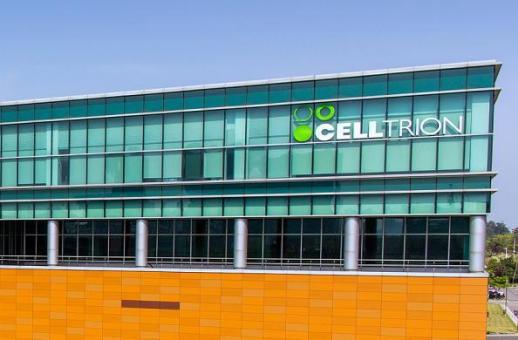 Celltrion Says U.S. Plant Begins Operations, Aiming to Reduce Tariff Risk Celltrion said Feb. 26 it has completed all steps needed to ensure its business operations will not be disrupted regardless of how U.S. tariffs are ultimately settled. In a statement posted on its website titled “Status of U.S. operations and the company’s position on tariff risk,” Celltrion outlined the start-up of its U.S. manufacturing base and its plans to respond to tariff uncertainty. The company acquired U.S. drugmaker Eli Lilly’s plant in Branchburg, New Jersey, late last year. Celltrion said it finished a full facility inspection and preparations for full-scale operations by the end of January, and began contract manufacturing of Lilly products this month. It added that it has also begun validation procedures to produce Celltrion’s own products, and plans to build a system that links local production with its direct sales network to supply U.S.-made products to the U.S. market as soon as possible. The company also disclosed short- and medium- to long-term measures on tariffs. In the near term, it said it will rely on a second-year supply volume already in the U.S. to hedge against tariff uncertainty. After that, it plans to supply the U.S. market with products made at the Branchburg plant to move beyond tariff issues. Celltrion said that while the Trump administration’s tariff policy could change following a U.S. Supreme Court ruling invalidating reciprocal tariffs, it has completed a structural response system to tariff risk by establishing local production and supply capabilities. 2026-02-26 10:27:00
 -
 South Korean researchers use natural sounds to boost brain health SEOUL, February 26 (AJP) - A research team at Kookmin University has developed a new method to deliver cognitive health benefits through everyday sounds by blending therapeutic frequencies with natural environmental recordings. The study focuses on making 40Hz auditory stimulation, which is known to help prevent Alzheimer's disease, more comfortable for long-term listening by integrating it into local South Korean soundscapes. Professor Namkung Ki-chan and his team at the Kookmin University Techno Design Research Institute published two papers on this cognitive wellness research in the international journals Healthcare and Applied Sciences. Both publications are ranked within the top 40 percent of their respective fields, covering health systems and applied sciences. While 40Hz gamma-band sound stimulation has gained attention for its potential to improve brain health, listening to the raw, repetitive tones often causes ear fatigue and discomfort. To solve this, the researchers recorded natural sounds from locations such as Chuncheon and Uljin in South Korea. They then built a protocol to naturally embed the 40Hz frequency into these environmental soundscapes, ensuring the therapeutic effect remains while the listener hears only the calming sounds of nature. The research combined user experience design with brainwave measurements to ensure the system is practical for daily life. By testing various mixing levels and playback structures, the team identified the best way to keep the 40Hz signal effective without it becoming a distraction. The two studies examined how participants accepted these sounds and used electroencephalogram (EEG) tests to confirm that the brain still recognized the 40Hz stimulation even when hidden within a natural soundscape. The results showed that the redesigned sounds were significantly easier to listen to over long periods while successfully triggering the intended brainwave responses. The project originated from a Soundscape Design course at the Kookmin University Graduate School of Techno Design. Graduate students from the Interaction Design Lab participated as co-authors, handling everything from field recording and sound production to conducting the experiments and drafting the research papers. Professor Namkung Ki-chan stated that the core of the research was taking a frequency that is effective for cognitive health but usually unpleasant to hear and turning it into a sustainable auditory experience using local South Korean soundscapes. He noted that the project is a meaningful example of an academic course leading directly to international research achievements. (Paper information) Journal: Healthcare (JCR Q2) Title: User Experience Design and Implementation of 40Hz Auditory Stimulation for Cognitive Wellness DOI: https://doi.org/10.3390/healthcare13010045 Journal: Applied Sciences (JCR Q2) Title: EEG-based Verification of Soundscape-mediated 40Hz Gamma-band Stimulation DOI: https://doi.org/10.3390/app15010123 2026-02-26 10:23:50
 -
 BOK raises growth forecast for next year to 2% SEOUL, Feb 26 (AJP) - The Bank of Korea (BOK) upgraded its growth forecast for 2026 economy to 2 percent next year, projecting a return to a potential growth rate after a year of sluggish performance, helped by chip-led exports strength and a recovery in construction activity. Consumer price inflation is projected to remain around 2 percent, similar to last year's levels, the central bank in its revised economic forecast released on Thursday. The growth for gross domestic product was upped to 2 percent, which would double the 1 percent growth recorded in 2025. Last year's growth was dragged down to 1 percent from an initial forecast of 1.8 percent, following a 0.3 percent contraction in the fourth quarter. The outlook for consumer price inflation remains largely unchanged. The central bank expects consumer prices to rise 2.2 percent in 2026 compared with a year earlier, a marginal increase from the 2.1 percent recorded last year. Looking further ahead, the BOK anticipates that growth will moderate to 1.8 percent in 2027. During the same period, consumer price inflation is forecast to reach 2 percent, reflecting a slight slowdown from this year's projected levels. 2026-02-26 10:17:27
 -
 Hyundai Motor to Add Car Rental Business to Corporate Purpose Hyundai Motor Co. plans to add car rental services to its stated business purposes, a move widely seen as part of an effort to upgrade its in-house subscription service, Hyundai Genesis Selection. Industry officials said Feb. 26 that Hyundai Motor will hold its annual shareholders meeting on March 26 at its headquarters in Seoul’s Seocho district and is expected to approve an agenda item adding “car rental business” to its corporate purpose. A company official said the change reflects consideration of entering the car rental business. Hyundai Motor said it plans to push ahead this year with an upgrade of Hyundai Genesis Selection, a vehicle subscription program it has operated since 2019. Hyundai Genesis Selection allows customers to rent Hyundai and Genesis vehicles by the day or month. Hyundai Motor plans and operates the platform, while partner rental-car companies supply the vehicles. While Hyundai Motor has so far focused on running the subscription platform, it is expected to expand its role to directly renting vehicles alongside partner rental firms. That could significantly broaden the range of models available through the service, industry observers said. Models available for day-by-day subscriptions are reported to total about 10, including the Staria, Palisade, Ioniq 5 N, Ioniq 6, Avante N and Nexo.* This article has been translated by AI. 2026-02-26 10:16:30