
Journalist

AJP
-
 SK hynix okays $16 bn investment into Yongin chip facility to stay ahead in HBM race SEOUL, February 25 (AJP) - SK hynix said Wednesday it will invest more than 21 trillion won ($15.7 billion) in new semiconductor production facilities at the Yongin Semiconductor Cluster, as it moves to expand capacity and stay ahead in the high-bandwidth memory race amid the artificial intelligence boom. According to a regulatory filing with the Financial Supervisory Service, the company plans to invest 21.61 trillion won in the construction of Phases 2 through 6 of its first fabrication plant complex in Yongin, south of Seoul. The investment, classified as new facility spending, amounts to 29.23 percent of SK hynix’s equity capital based on its latest consolidated financial statements. The project will run from March 1, 2026, to Dec. 31, 2030. The board of directors approved the plan on Wednesday, with all five outside directors in attendance. SK hynix shares closed Wednesday at a record high of 1,028,000 won, up 2.29 percent on the day and nearly tenfold from early 2025 levels. The capital spending plan was disclosed after market hours. The world’s leading DRAM maker said the investment aims to build mid- to long-term production infrastructure in response to growing semiconductor demand, particularly for advanced memory chips used in artificial intelligence and data centers. “This investment is intended to strengthen our manufacturing base and ensure stable supply capacity over the long term,” the company said in its disclosure. It cautioned that the total investment amount may change depending on project progress and shifts in the business environment. The start and end dates are also provisional and could be adjusted during implementation. Expanding costs, swelling long-term outlay The latest disclosure comes amid expectations that SK hynix’s overall investment in the Yongin Semiconductor Cluster could eventually approach 600 trillion won, nearly five times its original projection, driven by facility expansion, inflation and rising equipment costs. Industry sources said Yongin City recently approved its ninth revision to the cluster’s development plan, raising the floor area ratio of SK hynix’s main site from 350 percent to 490 percent and easing height limits to 150 meters. The changes are expected to expand cleanroom space by about 50 percent, significantly increasing construction and installation costs. SK hynix initially announced in 2019 that it would invest about 120 trillion won in the Yongin project. However, prolonged delays, a surge in AI-related demand and the growing need for cutting-edge equipment have since pushed costs sharply higher. The Yongin cluster will eventually house four large fabrication plants built in stages. Industry estimates suggest each fab could require more than 120 trillion won, implying total investment of at least 480 trillion won once all facilities are completed, with further increases likely as prices rise. The overall project is planned to extend through 2050. SK hynix plans to begin initial cleanroom operations at the first Yongin fab in 2027. Market watchers expect its production capacity to exceed that of the company’s largest existing facility in Icheon. AI boom and volatility The expansion reflects the rapid transformation of the global semiconductor industry driven by artificial intelligence. Chey Tae-won, chairman of SK Group, said AI demand could push SK hynix’s operating profit beyond $100 billion in the near term, while also increasing volatility. Speaking at the Trans-Pacific Dialogue 2026 held Feb. 20–21 in Washington, Chey said artificial intelligence was fundamentally reshaping industrial structures worldwide. “AI is driving extraordinary opportunities, but also unprecedented uncertainty,” he said. He noted that earnings expectations have risen rapidly in recent months, adding that Morgan Stanley recently projected SK hynix’s operating profit could reach 179 trillion won ($123 billion) this year. Despite the upbeat outlook, Chey warned against excessive optimism. “It sounds like great news, but it could also mean a $100 billion loss,” he said. “Volatility is extremely high.” Meanwhile, rival Samsung Electronics has resumed construction of its fifth plant at the Pyeongtaek campus, targeting operations in 2028. The project is estimated at around 60 trillion won, highlighting intensifying competition among Korean chipmakers in the AI era. 2026-02-25 19:56:16
 -
 Jin Air Extends Add-On Service Purchase and Refund Deadlines to 4 Hours Before Departure Jin Air said Tuesday it is expanding the deadlines for buying and refunding ancillary services to improve customer convenience. Under the changes, effective Tuesday, customers can buy or request refunds for key services — including advance seat selection, excess baggage and fast baggage retrieval — up to four hours before departure, extended from the previous 24-hour cutoff. The airline also adjusted the deadline for preordered in-flight meals and meal-pack products to 48 hours before departure, from 72 hours, to give customers more flexibility. Jin Air said it also improved website usability by adding estimated flight-time information by route and updating the user interface so customers can more easily compare bundle-discount rates with individual purchases. To mark the expanded service, Jin Air will offer two discount coupons through its website and mobile app through March 10. Customers can download a 5,000-won coupon for excess baggage and a 2,000-won coupon for preordered meals and use them for travel between Feb. 25 and March 28. A Jin Air official said the changes follow the start of a codeshare with Air Busan and are intended to further improve customer convenience ahead of integration. The official said the airline will continue to review customer experience and pursue customer-focused service improvements. * This article has been translated by AI. 2026-02-25 18:09:16
 -
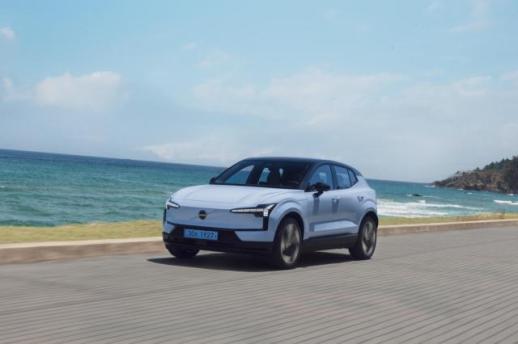 Imported EV Price War Intensifies in South Korea as Models Near 30 Million Won Imported electric-vehicle makers are accelerating their push in South Korea with price cuts and subsidy-focused strategies, aiming to bring more models into the 30 million won range that many consumers view as a key psychological threshold. Industry officials said Feb. 25 that Volvo Car Korea will cut the price of its electric SUV, the EX30, by as much as 7.61 million won starting next month. The base trim will fall to 39.91 million won from 47.52 million won. The discounting has spread among imported brands after Tesla opened the latest round of price cuts earlier this year. Tesla lowered the Model 3 Standard RWD to 41.99 million won. With a 1.68 million won national subsidy and local government subsidies, the purchase price could drop to the high 30 million won range, the report said. BMW, the top-selling imported-car brand in South Korea, is emphasizing a strategy tied to larger EV subsidies. By building more than 3,000 EV chargers nationwide, BMW raised its incentive used in the Transport Ministry’s EV subsidy calculation by 37% from a year earlier, the report said. As a result, the BMW Mini Aceman E, priced at 49.80 million won, can fall to 40.30 million won when combining a 4.00 million won national subsidy and a 5.50 million won local subsidy, based on Haenam in South Jeolla Province. Prices for imported EVs that had largely been in the 40 million to 50 million won range are now moving closer to the 30 million won level seen as a practical buying range for many consumers. The report attributed the aggressive push by imported brands to South Korea’s subsidy policy. As the United States and Europe slow the pace of EV adoption and brands face uncertainty in China, EV supply is shifting toward South Korea, it said. South Korea this year is offering EV subsidies and an additional 1 million won for switching from an internal-combustion vehicle to an EV. The structure of the imported-car market is also changing quickly. Of 307,377 imported vehicles sold last year, 91,253 were battery-electric vehicles, or 29.6%, the report said. Over the same period, sales of internal-combustion vehicles totaled 41,906. EV sales were more than double internal-combustion sales, underscoring a reshaping of the imported-car market. Kim Pil-su, a professor in the Department of Future Automobiles at Daelim University, said the trend toward lower prices is clear. “It’s evident that the trend is to lower prices so consumers can access them more easily,” Kim said. He added that shifting batteries — a major share of EV costs — to Chinese-made LFP batteries appears to have created some room for price cuts. * This article has been translated by AI. 2026-02-25 18:04:50
 -
 T’way Air to Rebrand as Trinity Air, Expanding Beyond Low-Cost Model T’way Air, a low-cost carrier founded in 2010, will be reborn as “Trinity Air” after 16 years, aiming to raise brand value by combining air travel with lodging and travel services in a “three-in-one” offering. According to industry officials on Tuesday, the airline plans a full rebrand starting around September, applying the new name to aircraft liveries, airport check-in counters, and its booking and ticketing systems. The carrier traces its roots to Hansung Airlines, launched in 2004, and changed its name to T’way Air in 2010. It has held the No. 2 spot among South Korea’s low-cost carriers, behind Jeju Air, for about 16 years. Industry data show T’way Air’s total passenger count topped 11 million last year, up about 10% from roughly 9.9 million in 2023 and 5% from about 10.5 million in 2024. As routes expanded to Southeast Asia, Europe, North America, Central Asia and Oceania, the number of scheduled routes rose 26%, from 50 in 2023 to 63 as of February this year. The new name, “TRINITY,” comes from the Latin “Trinitas,” meaning a trinity. The airline said it reflects a plan to go beyond flights by combining lodging and travel to upgrade the customer experience. T’way Air was acquired by Daemyung Sono Group in February last year, and the company plans to use the new name as a starting point to generate synergies. Trinity Air plans to strengthen those ties by linking routes spanning Asia, Europe and the Americas with hotel and resort infrastructure to offer differentiated package products. The airline is also moving to build systems to improve service as it expands long-haul routes to North America and Europe. It said long-haul passengers tend to spend more time at airports and have higher expectations for rest areas, refreshments and baggage-related services. While a single-seat structure centered on low-cost operations has limited value-added revenue, long-haul routes allow lounge operations and more varied seating, supporting both diversified profitability and a better customer experience. A lounge service is expected to be an early step. The airline is reviewing a plan to lease an existing Asiana Airlines lounge in Incheon International Airport’s Terminal 1 and use it as a dedicated lounge, and it has submitted a letter of intent to Korea Airports Corp. It also opened a new “Premium Check-in” Counter A in Terminal 1 for business-class passengers and T’way Plus Platinum members. The company said it plans additional measures to provide a more integrated travel experience, consistent with the new brand concept. “Trinity Air is the starting point signaling a new leap forward for the company,” a T’way Air official said. “Based on customer safety and sustainability, we will open new possibilities in the aviation industry.” * This article has been translated by AI. 2026-02-25 18:03:29
 -
 Volvo Car Korea Expands Toy Hospital Drive, Donates 707 Repaired Toys Volvo Car Korea said Tuesday it expanded its “Volvo Toy Hospital” event to major showrooms nationwide, collecting and donating a total of 707 toys in partnership with the Swedish Embassy in Seoul and Kinis Toy Hospital. The event ran from Nov. 15 to Dec. 14 at Volvo showrooms across the country. During the campaign, visitors donated unused or broken toys as part of year-end giving, the company said. Showrooms also offered hands-on programs for families, including a color-book DIY kit designed to evoke Sweden’s year-end holiday atmosphere. The 707 broken toys collected nationwide were sent to Kinis Toy Hospital’s “toy doctors,” a group that includes retired engineering Ph.D.s, teachers and manufacturing experts, and were repaired, the company said. The restored toys will be delivered in stages through Kinis to organizations that need them, including local care centers and an environmental coalition. Lee Yoon-mo, CEO of Volvo Car Korea, said he hoped families found meaning in donating toys children once cherished and taking part in a resource-circulation effort that gives broken items a new use. He added that the company will continue working toward a sustainable world for future generations. Volvo Car Korea said it continues to carry out social-contribution programs aimed at promoting sustainability based on a people-centered philosophy. It said it has maintained cooperation with the Purme Foundation to support customized assistive devices and rehabilitation for children and teenagers with disabilities. The company also said it previously donated about 15,000 “children’s safety key rings” to childcare support centers and the National Police Agency to help strengthen child safety on the road. * This article has been translated by AI. 2026-02-25 17:54:16
 -
 South Korea, US to stage annual joint drill with scaled-down field training SEOUL, February 25 (AJP) - South Korean and U.S. troops will stage their annual joint military exercise next month to strengthen their combined defense posture, the Joint Chiefs of Staff here said on Wednesday. The exercise, dubbed Freedom Shield (FS), is scheduled to be held from March 9 to 19 under a scenario simulating a full-scale war to prepare for contingencies on the Korean Peninsula. The exercise aims to strengthen combined combat readiness while preparing for the transfer of wartime operational control from Washington to Seoul. "About 18,000 troops will take part in this year's exercise, similar to the levels seen last year," a JCS official said. But some field drills are likely to be scaled down, as the two allies are still in talks over their scope and size, amid Seoul's apparent efforts to avoid provoking North Korea under President Lee Jae myung's conciliatory stance toward Pyongyang as well as growing expectations for the resumption of talks between the U.S and North Korea, which could coincide with U.S. President Donald Trump's visit to China in late March. North Korea, which has condemned the drills as rehearsals for an invasion, is expected to pretest again. 2026-02-25 17:48:47
 -
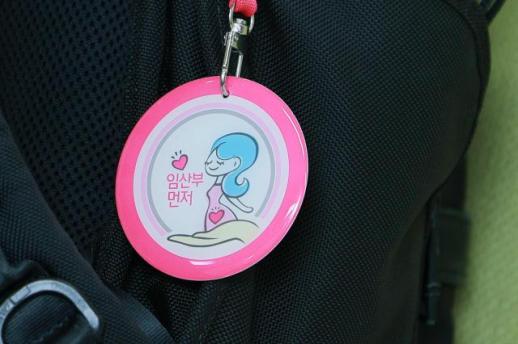 Korea's fertility rate hits four-year high in 2025 SEOUL, February 25 (AJP) - Still a far cry from the replacement-level fertility rate of 2.1, South Korea’s total fertility rate, which bottomed out in 2023, inched above the long-cited 0.70 level last year, data showed. According to the Ministry of Data and Statistics on Wednesday, the number of births in 2025 reached 254,500, up 16,100 from a year earlier, or 6.8 percent — the largest annual increase since 2007. The total fertility rate — the average number of children born to a woman over her lifetime — rose to 0.80, the highest since 2021, from 0.72 in 2023 and 0.75 in 2024. Marriage registrations increased 1 percent in 2023, 14.8 percent in 2024 and 8.9 percent in 2025. In December alone, marriages rose 13.4 percent year on year to 25,527. “Births in Korea are still overwhelmingly tied to marriage,” said Kang Hyun-young, an official in charge of birthrate policy at the ministry. “In our data, increases in marriages typically precede increases in births by one to two years,” she said. “The rise in marriages since 2023 is now being reflected in birth figures.” While declining to provide a numerical forecast for 2026, Kang said the sustained expansion in marriages was “a statistically meaningful positive signal.” Demographic timing: the early~1990s cohort Women aged 30 to 34 recorded 73.2 births per 1,000 women in 2025, the highest among all age groups. Fertility among women aged 35 to 39 rose 13.0 percent from a year earlier, reaching a record level. “Women born between 1991 and 1995 have entered their early 30s, which is the peak childbearing age group,” Kang said. “That cohort expansion has contributed to the increase in total births.” She added that the population of women in their early 30s has been rising since 2021, exerting upward pressure on aggregate birth totals. Survey data suggest shifting social attitudes may also be playing a role. In 2024, 68.4 percent of respondents said couples should have children after marriage, up from 65.3 percent in 2022. The share saying childbirth without marriage is acceptable rose to 37.2 percent from 34.7 percent. “Multiple factors are interacting,” Kang said. “Policy measures cannot be excluded, but their individual effects cannot be statistically isolated.” She emphasized that the recent rebound reflects “overlapping demographic, social and behavioral dynamics,” rather than any single policy intervention. Later childbirth, continued population decline Despite the improvement, structural challenges remain. The average maternal age rose to 33.8 years, while births to women aged 35 and older accounted for 37.3 percent of total births — the highest share since records began in 1981. Deaths totaled 363,400 in 2025, exceeding births by 108,900. South Korea has recorded negative natural population growth every year since 2020. Regional disparities were also evident. Seoul’s fertility rate stood at 0.63, while South Jeolla Province recorded 1.10. Kang said the trend should be monitored closely on a month-by-month basis. “The increase in marriages over the past three years provides a foundation,” she said. “But whether the trend continues depends on demographic structure and ongoing social changes.” For now, the data point to a tentative stabilization after years of decline — but not yet a reversal of South Korea’s long-term depopulation. 2026-02-25 17:46:21
 -
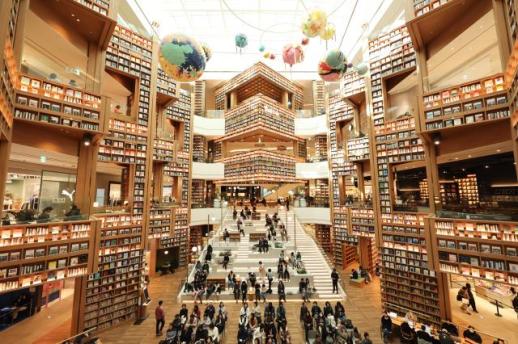 Towers of books: Heaven or hell? SEOUL, February 25 (AJP) -Inside Starfield Suwon, a soaring cathedral of books rises through four floors, blurring the boundary between retail space and reading room. Opened as the second Starfield Library after the flagship at COEX Mall, the Suwon branch features bookshelves stretching nearly 22 meters high, spanning from the fourth to the seventh floors. From almost any angle, visitors can look up into towering rows of spines — or gaze down into a layered landscape of light, steel, and paper. A Library Without Walls Unlike traditional libraries confined to a single level, Starfield’s design dissolves vertical boundaries. Escalators, open balconies, and glass railings connect each floor visually, allowing the space to be experienced as one continuous volume. Whether standing on the upper decks or passing through lower corridors, visitors remain part of the same architectural conversation — one shaped by height, openness, and quiet spectacle. Reading Meets Retail Each floor integrates cafés and lounge-style seating, encouraging visitors to linger rather than simply pass through. Coffee cups and novels coexist. Shoppers pause mid-errand to read. Students settle into armchairs beneath shelves that seem to vanish into the ceiling. The result is a hybrid space: part library, part living room, part social hub. A Cultural Stage Beyond books, the library hosts regular performances, talks, and lectures, positioning itself as a cultural venue as much as a reading space. Weekly and monthly programs bring authors, musicians, and speakers into the atrium, transforming the quiet tower into a communal forum. To some, the vertical library feels like a modern sanctuary — a rare place where reading is celebrated at monumental scale. To others, its location inside a shopping mall raises questions about whether books have become another aesthetic backdrop for consumption. Yet perhaps its appeal lies precisely in that tension. By embedding literature into everyday commercial life, Starfield Library does not isolate reading from modern routines. Instead, it inserts it — boldly and visibly — into them. In Suwon, books no longer whisper from hidden shelves. They rise, unmistakably, toward the sky. 2026-02-25 17:46:01
 -
 Kakao Pay CEO Shin Won-geun Buys 59,055 Shares, Pledges Not to Sell While in Office Kakao Pay CEO Shin Won-geun, who is set to begin a third term on March 3, has bought additional company shares and said he will not sell his stake while serving as CEO. Kakao Pay said in a regulatory filing on the 25th that Shin acquired a total of 59,055 shares. He bought 57,055 shares at 5,000 won per share by exercising stock options and purchased another 2,000 shares on the open market at 67,370 won per share. The total purchase was about 420 million won. The purchases raised Shin’s holdings to 109,055 shares. After taking office in March 2022, Shin declared a commitment to responsible management and bought 50,000 shares in three transactions worth about 3.3 billion won. Kakao Pay said Shin will not sell any of his shares, including his existing holdings and the newly acquired shares, during his tenure as CEO. A Kakao Pay official said Shin’s open-market purchase, in addition to exercising stock options, was meant to signal confidence in the company’s growth to investors, users and employees and to underscore his commitment to responsible management. The official said the company will not be satisfied with posting annual profitability and will continue working to improve business performance and shareholder value.* This article has been translated by AI. 2026-02-25 17:42:24
 -
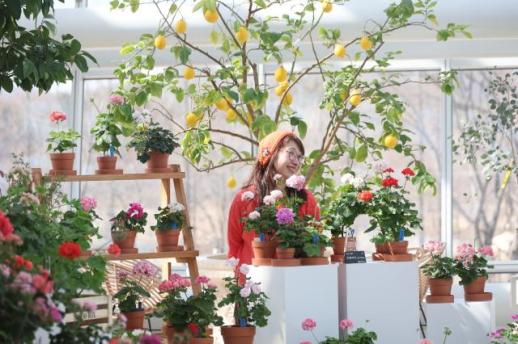 Flowers greet early spring in Suwon SEOUL, February 25 (AJP) - Suwon City, south of Seoul, is holding a special exhibition themed around geraniums titled "We, Spring Starts Now" at Ilwol Arboretum from Feb. 3 to March 15. The exhibition takes place at the Ilwol Arboretum greenhouse and visitor center. It features geraniums, a representative companion plant that allows visitors to enjoy flowers and leaves year-round. The exhibition greenhouse showcases approximately 300 varieties of geraniums, including rare species such as K-geraniums, Russian geraniums, and European geraniums. Explanations of each variety's characteristics and care methods are provided to help visitors understand. The exhibition also displays award-winning entries from the Geranium Love Contest, allowing visitors to appreciate various geraniums cultivated by citizens. 2026-02-25 17:38:28