
Journalist

AJP
-
 Iran Foreign Minister Visits China as U.S.-Iran Tensions Rise in Strait of Hormuz Iranian Foreign Minister Abbas Araghchi traveled to China on May 5 local time as the United States and Iran faced off militarily over the Strait of Hormuz. Iran’s Foreign Ministry said on its Telegram channel that Araghchi would visit Beijing that day, according to Yonhap News Agency. The ministry said Araghchi plans to meet China’s foreign minister to discuss ways to develop bilateral ties and to exchange views on rapidly shifting regional and international conditions. Araghchi and Wang Yi, director of the Chinese Communist Party Central Commission for Foreign Affairs and foreign minister, spoke by phone on April 15 to discuss the war situation, the ministry said. Wang said Iran’s sovereignty, security and legitimate rights as a country on the Strait of Hormuz should be respected and protected, while freedom and safety of navigation through the international waterway must also be ensured. He added that efforts to restore normal passage through the strait reflect a unified voice of the international community. Wang also said China supports maintaining momentum toward a ceasefire and negotiations. The report said U.S. forces used force a day earlier, on the first day of what it called the “Liberation Project,” deploying Apache helicopters to sink Iranian fast boats that were threatening merchant ships in the Strait of Hormuz. Iran, in response, launched missiles and drones toward the United Arab Emirates, continuing a standoff about a month after a ceasefire took effect on April 8, the report said.* This article has been translated by AI. 2026-05-05 20:03:15
 -
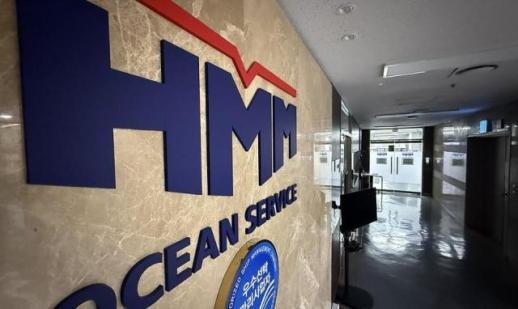 HMM cargo ship that caught fire near Strait of Hormuz awaits tow to Dubai An HMM-operated cargo ship that caught fire while anchored in the Strait of Hormuz is running on an emergency generator and waiting to be towed, the company said. Yonhap reported Tuesday that the HMM NAMU remained in waters near the United Arab Emirates, where the fire broke out a day earlier. The blaze triggered an automatic power shutdown, leaving the vessel unable to move under its own power. Once a tug is secured, it is expected to be taken to Dubai port. Six South Korean crew members plan to return home afterward. HMM said all 24 crew members, including the South Koreans, stayed aboard and reported no injuries or other harm from the fire. An HMM official said the crew could disembark immediately if they chose, but appeared to have decided to remain because the fire had been extinguished and there were no additional risk factors. The company said it was seeking tugboats in the UAE and Saudi Arabia, coordinating from its ship operations situation room in Busan. HMM said it could take several days to begin an investigation into the cause, given towing procedures and the sailing schedule. Crew members have not yet entered the area where the fire occurred, it said. An explosion and fire broke out at about 8:40 p.m. Monday (Korea time) on the HMM NAMU in waters near the UAE within the Strait of Hormuz. No casualties were reported.* This article has been translated by AI. 2026-05-05 19:36:15
 -
 Nvidia CEO Jensen Huang backs U.S. government in dispute with Anthropic Nvidia CEO Jensen Huang has sided with the U.S. government in a dispute between U.S. AI company Anthropic and the Department of Defense. According to Yonhap, Huang said at the Milken Global Conference 2026 economic and finance forum held Sunday afternoon local time at the Beverly Hilton in Los Angeles that he “fully believes the government will use technology in the right way.” He praised Anthropic as “an amazing company with a great culture and a deeply rooted belief system,” but added, “I don’t agree with all of their positions.” Huang said his view is that if the U.S. government decides to use technology to protect the country and families, and that use is legal and for national security, “I would hope they wouldn’t ask me whether they can use that technology in wartime.” Noting that “a CEO is not an elected official,” he said people who disagree can vote or protest as citizens, but he would not “stand in the way when the country is trying to protect our families.” Anthropic has provided its AI model, Claude, to U.S. military classified systems. But it has clashed with the Pentagon by saying its model should not be used for large-scale surveillance of Americans or fully autonomous weapons. The Defense Department, in a rare move involving a U.S. company, designated Anthropic as a “supply chain risk to national security.” Defense Secretary Pete Hegseth and President Donald Trump have also sharply criticized Anthropic. * This article has been translated by AI. 2026-05-05 19:24:28
 -
 South Korea Forecast: Sunny Wednesday With Highs Up to 27C, Big Day-Night Swings Wednesday the 6th is expected to be clear nationwide, with a wide gap between daytime highs and overnight lows. The Korea Meteorological Administration forecast morning lows of 7-16C and daytime highs of 21-27C. Under the influence of a high-pressure system moving east from the southern Yellow Sea, inland areas are expected to see day-night temperature differences of around 15C, the agency said. Forecast morning lows in major cities are: Seoul 11C, Incheon 12C, Chuncheon 7C, Gangneung 16C, Daejeon 10C, Daegu 9C, Jeonju 11C, Gwangju 9C, Busan 12C and Jeju 12C. Forecast highs are: Seoul 23C, Incheon 21C, Chuncheon 24C, Gangneung 25C, Daejeon 25C, Daegu 26C, Jeonju 25C, Gwangju 25C, Busan 22C and Jeju 21C. Fog is expected in parts of the mid-Yellow Sea offshore waters, and mariners are advised to use caution. Some islands in South Jeolla province may see dense fog with visibility under 200 meters and light drizzle through the morning. Waves are forecast at 0.5 to 1.0 meters in nearshore waters of the East and Yellow seas and 0.5 to 1.0 meters in the nearshore South Sea. In offshore waters, wave heights are expected at 0.5-2.5 meters in the East Sea, 0.5-2.0 meters in the Yellow Sea and 0.5-1.5 meters in the South Sea. Fine dust levels are expected to range from "good" to "moderate" nationwide. 2026-05-05 19:15:16
 -
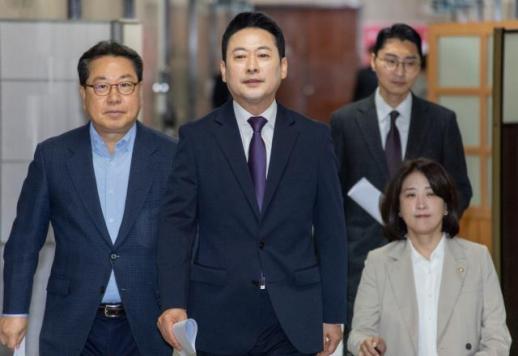 PPP leader warns lawmakers backing independent Han Dong-hoon in Busan by-election People Power Party leader Jang Dong-hyeok said May 5 that lawmakers who entered the National Assembly on a party nomination have “roles and responsibilities” that come with it, in remarks widely seen as a warning to party members backing independent candidate Han Dong-hoon in the Busan Buk-gu Gap by-election. Pro-Han lawmakers pushed back, arguing that conservatives should rally behind strong candidates beyond party lines. The public exchange has raised concerns that factional tensions could flare again ahead of the June 3 local elections and National Assembly by-elections. At a morning news conference at the National Assembly, Jang was asked about Rep. Han Ji-a’s recent actions. He said the party has “principles and standards” and must uphold them to function as a public party. He added that he would clarify the facts behind “various situations” and take necessary steps. The “situations” referred to Han Ji-a’s visit the previous day to Han Dong-hoon’s preliminary candidate registration event. Some in the PPP leadership view support for Han Dong-hoon — who is running as an independent despite the party having its own candidate — as an act of disloyalty. Jang had said on April 23 that the party would take strong action against such conduct. His comments followed remarks a day earlier by floor leader Song Eon-seok that suggested possible disciplinary steps against Han Ji-a. Han Ji-a, however, doubled down at an afternoon news conference, saying she would go to Busan “10 times, 100 times” if it helps rebuild conservatives. She urged the party leadership to stop “attacking from within” and focus on strategy. She said she believes voters will choose those within the conservative camp who “spoke up” and made “the right choice” after the imposition of emergency martial law, adding that conservatives need to unite behind good candidates across party lines. Rep. Bae Hyun-jin, also considered part of the pro-Han faction, weighed in on Facebook. She wrote that Han Dong-hoon, whom she said was pushed out through a forced expulsion, is “a People Power Party person,” and urged the leadership not to interfere with lawmakers’ personal views but to listen to them. With internal divisions deepening, prospects appear dim for a unified conservative candidacy in Busan Buk-gu Gap. Asked about possible cooperation with Han Dong-hoon, Jang drew a line, saying Han is someone the party expelled on principle. Park Min-sik, the former minister of Patriots and Veterans Affairs who was selected that day as the PPP’s candidate for Busan Buk-gu Gap, also dismissed any merger of candidacies. “The possibility is zero,” Park said, adding, “Stop running wishful thinking. If you entered the race, you should face voters’ judgment with confidence.”* This article has been translated by AI. 2026-05-05 19:06:16
 -
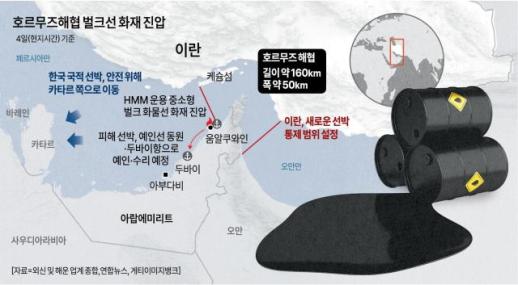 Suspected Iran Attack on Korean Cargo Ship Raises Hormuz Risks, Oil Price Concerns Suspicions that Iran attacked the Korean cargo ship NAMU have sharply raised tensions around the Strait of Hormuz, fueling concerns that South Korea’s crude oil supply strategy could be disrupted if Korean-operated vessels become targets. The renewed Middle East risk is also pushing international oil prices higher, adding another policy variable for Seoul. According to relevant authorities on May 5, a fire broke out in the engine room of the NAMU after an explosion at about 8:40 p.m. the previous day while the ship was anchored in waters north of Sharjah in the United Arab Emirates, inside the Strait of Hormuz. The vessel is Panama-flagged and operated by South Korean shipping company HMM. It had 24 crew members aboard: six South Koreans and 18 foreign nationals. Regional tensions have intensified. Iran has attacked oil export ports and other sites with missiles and drones, and the UAE has warned of retaliation. A ceasefire between the United States and Iran also appeared to be on shaky ground. Iran, strongly opposing the U.S. “Project Freedom,” launched missiles and drones, and U.S. naval vessels have continued intercepting them. As a result, expectations that South Korean tankers could leave the Strait of Hormuz in the near term have largely faded. Seven tankers linked to South Korean refiners — carrying about 14 million barrels — remain stuck in the strait, and rising tensions have further reduced the likelihood they can depart soon. A bigger concern is the possibility of a targeted attack on a Korean shipping operator. If it is confirmed that Iran deliberately targeted a South Korean vessel, disruptions would be difficult to avoid even for crude supplies rerouted via the Red Sea, where the Iran-aligned Houthi rebels remain active, the report said. The situation could also complicate the Industry Ministry’s crude supply planning. Alternative crude secured for this month totals 74.62 million barrels, or 87% of normal import volumes. But if tensions rise simultaneously in the Strait of Hormuz and the Red Sea, bottlenecks could worsen at alternative ports such as Yanbu in Saudi Arabia, making even those volumes harder to bring in. With many tankers already waiting, delays would be hard to avoid, the report said. Higher shipping rates and insurance premiums are another concern. If costs rise as tensions mount, they would likely be passed on to crude prices with a lag. Oil markets reacted immediately. Despite an output increase announced by seven countries in OPEC+, prices kept climbing. At the close, Brent crude futures settled at $114.44 a barrel, up 5.80% from the previous session, while U.S. West Texas Intermediate futures rose 4.39% to $106.42. Still, the impact on spot prices remains unclear. The Dubai crude spot market — a benchmark for South Korea’s Middle East crude imports — has not yet fully reflected the heightened tensions, and the same is true for Singapore’s MOPS oil product prices. With the fifth round of the fuel price-cap system set to take effect May 8, the government’s calculations have become more complicated. A key reason for holding the benchmark steady in the third and fourth rounds was stable international oil prices. But with crude above $100 a barrel and Middle East risks rising, the outlook has become harder to predict, making it difficult to maintain the previous freeze, the report said. Retail prices have continued to rise despite the government’s freeze. As of 2 p.m., Opinet data showed the national average gasoline price at 2,011.42 won per liter and diesel at 2,005.46 won, up 0.38 won and 0.25 won, respectively, from the previous day. * This article has been translated by AI. 2026-05-05 19:03:06
 -
 SK Broadband targets offline ads with B tv On-Ad set-top box signage service SK Broadband is pushing into the offline advertising market with a digital signage service built on IPTV set-top boxes, branded B tv On-Ad (On-Ad). The company is pitching a subscription model priced in the 10,000-won range per month, aiming to lower barriers in a market long dominated by expensive equipment and to tap demand for what it calls space-based marketing. “Digital out-of-home advertising has become part of daily life, but the key now is not simple exposure — it’s how much you raise the value of the time customers stay,” Ryu Jong-in, head of SK Broadband’s channel planning team, said in an interview April 29 at the company’s headquarters in central Seoul. “On-Ad is a service that turns that dwell time into data.” According to the Korea Local Finance Association’s “2025 Outdoor Advertising Statistics,” South Korea’s outdoor advertising market totaled 4.6241 trillion won in 2024, with digital advertising accounting for 1.6634 trillion won. The market, once centered on paper ads and basic video playback, is rapidly shifting toward data-driven models. On-Ad runs on IPTV infrastructure and can be used with a business-to-business set-top box, allowing operations without building separate servers or encoders. “In the past, each store needed computer infrastructure and separate management, but now a single set-top box can centrally manage displays,” Ryu said. He cited the ability to start at about 13,000 won a month without upfront equipment investment of 100,000 to 150,000 won as the service’s biggest differentiator. A key feature is artificial intelligence-based data analysis. Using a webcam, the system analyzes viewing angles and gaze time and includes functions that estimate gender and age group. “We extract statistical values such as the age group of customers looking at the camera — for example, ‘women in their 20s’ — and use them for data analysis,” Ryu said. He added that tailored advertising based on gender and age could become possible. SK Broadband is also considering adding content-optimization tools, including upscaling low-resolution video and automatically adjusting content for special aspect ratios such as 32:9 used in subways and buses, as well as vertical mobile formats. Ryu said development is complete and the company is reviewing applying it to On-Ad. The service has been adopted by a domestic health-and-beauty store chain, which SK Broadband said demonstrated its practicality in retail operations. At Chung-Ang University’s Da Vinci Campus in Anseong, On-Ad was used in a project to digitize department bulletin boards. More recently, the service was installed at Hyundai Motor’s Bluehands repair shops. Ryu said On-Ad has grown by more than twofold each year since launch and that the company is targeting 100% growth this year. Ryu said hospitals and universities are priority areas for expansion. He said the company aims to help hospitals replace paper leaflet point-of-purchase advertising with displays for more efficient operations. SK Broadband is also reviewing generative AI-based content creation. Ryu said the company expects an environment where small business owners can enter prompts to produce ad images or videos and air them immediately, adding that the market structure could change significantly within two to three years. 2026-05-05 18:15:26
 -
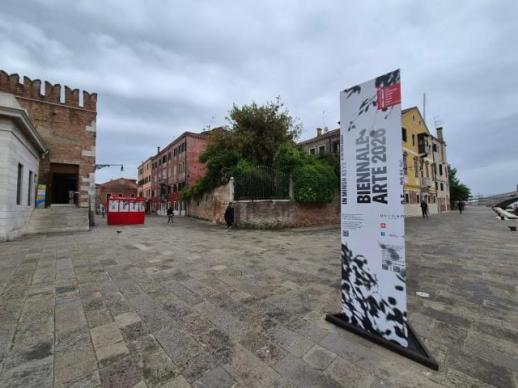 2026 Venice Biennale Opens With Koyo Kouoh’s ‘In Minor Keys’ ‘Art world Olympics’ set to open The Venice Biennale, often called the “Olympics of the art world,” will run from May 9 through Nov. 22, with preview days May 6-8. The world’s oldest art biennale is held every two years. Events span the Giardini and Arsenale, as well as venues across Venice and nearby islands. The international exhibition curated by the late Koyo Kouoh will feature 111 artists and teams. Yo-E Ryou is the only invited Korean artist; Korean diaspora artists including Michael Joo and Gala Porras-Kim are also on the list. The Biennale consists of the international exhibition, titled “In Minor Keys,” and national pavilion shows. More than 100 national pavilions will operate, including 30 permanent pavilions in the Giardini. Qatar, newly added to the permanent pavilions, will exhibit in a tent-like structure on its future building site because construction is not yet complete. Dozens of nonpermanent pavilions — including those of China, India, Argentina, Mexico, Saudi Arabia and Turkey — will be spread across the city. The main exhibition will be staged simultaneously at the Giardini and the Arsenale. Seven countries — Guinea, Equatorial Guinea, Nauru, Qatar, Sierra Leone, Somalia and Vietnam — are participating for the first time. El Salvador is also making its debut with its own venue. Who was the curator? The artistic director of the 61st Venice Biennale was Koyo Kouoh (1967-2025). Born in Cameroon and raised in Zurich, she was appointed in late 2024 as the first African-born woman to lead the Biennale. She served as executive director and chief curator of Zeitz Museum of Contemporary Art Africa (Zeitz MOCAA) from 2019. She died suddenly in May 2025 at age 57, shortly before the opening. Organizers said it was the first time in Biennale history that an artistic director died before the exhibition opened, and decided to proceed as planned. A five-member curatorial team she assembled is carrying out her vision. In Minor Keys The theme, “In Minor Keys,” draws on the musical concept of the minor key. Kouoh urged audiences to “listen to the frequency of the minor key,” writing that amid “uneasy noise and confusion” sweeping the world, music continues — “songs of those who make beauty in tragedy, melodies of those who rise again from ruins, and harmonies of those trying to heal wounds and the world.” The framing signals a shift away from spectacle toward slower, deeper looking, presenting art as a space for reflection, recovery and connection. The main exhibition will avoid rigid sections, linking more than 110 participating artists through loose relationships shaped by different places and contexts, expanding what it calls a “relational geography.” It will unfold around overlapping motifs including Shrines, Procession, Schools, Rest and Performances. Women and performance Women artists are especially prominent. Britain’s pavilion features Lubaina Himid, a Black woman who won the Turner Prize in 2017, while France’s pavilion includes Yto Barrada. Women artists also stand out in pavilions including Austria, Estonia, Finland, Germany, Ireland, Iceland, Cyprus and Denmark. Performance is emphasized in several national presentations, including those of South Korea, Austria, Belgium and the Netherlands. Awards likely moved to November after jury resigns The Biennale’s prizes include the Golden Lion awards (for national pavilions, best artist and lifetime achievement), as well as the Silver Lion and special mentions. The awards ceremony is typically held at the opening. This year, however, all jurors resigned as a group, making it likely the ceremony will be held at the November closing. Reports said the selection process may also shift from a jury decision to a visitor vote. Five jurors, including Solange Oliveira Farkas, were reported to have clashed with organizers over Russia’s and Israel’s participation. The jurors had previously said that, to defend human rights, they would exclude from judging any national pavilion from a country led by a leader indicted by the International Criminal Court for crimes against humanity. Russian President Vladimir Putin is the subject of an ICC arrest warrant over alleged war crimes related to the invasion of Ukraine. For Israeli Prime Minister Benjamin Netanyahu, the ICC prosecutor has sought an arrest warrant over allegations related to Gaza; reports said that because it remained at the request stage, whether Israel would be excluded could depend on the jurors’ judgment. War-related disputes spread across pavilions Russia did not participate in the 2022 and 2024 Venice Biennale after its invasion of Ukraine, but will return in 2026. Russia opened a permanent pavilion in the Giardini in 1914. It is expected to open only during the preview and then close afterward amid opposition from the European Union. During the 2024 preview, Israel’s pavilion was voluntarily closed by artist Ruth Patir and curators, citing the situation in Gaza. Afterward, Israel’s government was reported to have added a contract condition in the artist selection process stating the pavilion cannot be closed. This year, with its Giardini pavilion closed for renovations, Israel will exhibit at the Arsenale. Iran notified organizers it will not attend. South Africa’s pavilion will be empty for the first time in 15 years. The government canceled its participation in January, saying Gabrielle Goliath’s work “Elegy” could “cause division.” The piece mourns victims including Palestinian poet Hiba Abu Nada, who died in an Israeli airstrike in October 2023. The work will be shown at Chiesa di Sant’Antonin, a church built in the 7th century in Venice’s Castello district. Australia’s pavilion drew controversy over Lebanese Australian artist Khaled Sabsabi’s 2007 work “You,” which includes footage of a Hezbollah leader’s speech. Participation by Sabsabi and curator Michael Dagostino was canceled, then later reinstated after backlash from the art community. The United States faced fallout after the Trump administration changed Biennale support conditions, dropping equity-related standards and emphasizing “promoting American values” and the “ability to demonstrate American exceptionalism.” Some selected artists refused to participate. Alma Allen will ultimately lead the U.S. pavilion. Korea Pavilion and Korean artists The Korea Pavilion theme is “Liberation Space: Fortress and Nest.” It revisits the “liberation space” period from 1945 to 1948 — the transition after Japanese colonial rule as a new state was sought — and extends it as an ongoing question, re-sensing and carrying it forward in aesthetic terms. Curator Choi Bitna said at a March news conference that she focused on 1995, when the Korea Pavilion was established. “That was when the Gwangju Biennale first opened and the Korea National University of Arts was founded. Demolition of the former Japanese Government-General building also began. It led into the start of a civilian government. It was a moment of transition,” she said. Artists Choi Go-eun and Cho Hyeri will present a sculptural installation and a durational practice titled “Meridian” and “Bearing,” respectively. Fellows will include creators and activists from cultural and social fields, including novelist Han Kang. The Korea Pavilion is also pursuing a collaboration with the Japan Pavilion, the first such cooperation between the two. Korean artist Yo-E Ryou was invited to the main exhibition. Gala Porras-Kim will carry out a joint project with the Victoria and Albert Museum. Artist Choi Jeong-hwa will participate as a collaborator in the Japan Pavilion, and artist Cho Kuk-hyun was invited to the Tanzania Pavilion. Artist Hong Eunju will take part in the Taiwan Pavilion opening performance. Exhibitions involving Lee Ufan, Yoon Song-yi, Shim Moon-seup and Lotus Kang are also planned. 2026-05-05 18:09:51
 -
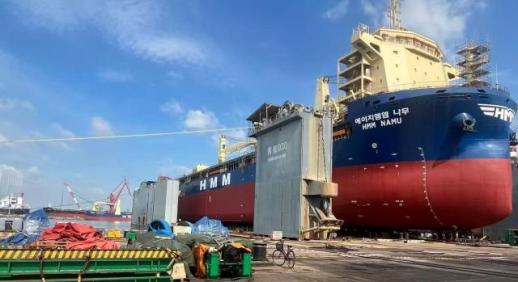 South Korea on alert after fire on HMM cargo ship near Strait of Hormuz raises attack fears A fire aboard a South Korean cargo ship in the Strait of Hormuz has prompted concerns it may have been hit in the Middle East conflict, leading the Lee Jae-myung government and the shipping industry to activate emergency response measures. The cause has not been determined, but officials and the operator said they would respond cautiously, mindful of diplomatic implications, as the possibility of an attack involving an Iranian mine or suicide drone has been raised. According to the government and HMM on Monday, an unexplained fire broke out about 8:40 p.m. Sunday (Korea time) on the HMM NAMU while it was anchored in waters near the United Arab Emirates. The blaze was extinguished about four hours later, around midnight Monday. The ship had six South Korean crew members and 18 foreign crew members aboard, and no casualties were reported. South Korea’s Ministry of Oceans and Fisheries and HMM said the vessel will be towed to the nearby port of Dubai for an investigation into the cause. HMM deployed a contracted tugboat for the operation. The presidential office, the Foreign Ministry and the oceans ministry have been cautious in discussing the cause, noting the fire occurred after the start of a U.S. “Liberation Project” operation to rescue ships trapped in the Strait of Hormuz. With armed clashes underway, officials said they must be careful in assigning responsibility given the potential impact on diplomatic relations. The government said it is communicating in real time with the shipping company and the vessel while weighing follow-up steps. The presidential office held a meeting chaired by presidential chief of staff Kang Hoon-sik to discuss a response. The Foreign Ministry urgently convened a meeting of its Overseas Nationals Protection Countermeasures Headquarters, chaired by Second Vice Foreign Minister Kim Jina, with seven diplomatic missions in the Middle East. The oceans ministry held emergency situation review meetings on May 4 and 5 chaired by Oceans Minister Hwang Jong-woo. HMM said it switched to an emergency posture immediately after the fire and is focusing on assessing the situation and preparing follow-up measures through its integrated ship operations center in Busan, which can monitor vessels in real time. Shipping experts said a routine engine-room fire appears less likely. Crew members reported hearing an unexplained “thump” at the time of the incident, followed by a fire on the port side of the engine room. They also noted the ship is a new vessel launched in September last year, making age-related equipment issues less likely. Some have cautiously raised the possibility the ship struck a mine laid by Iran or was hit by an Iranian suicide drone such as a Shahed. Mines have been used in the past to indiscriminately block the Strait of Hormuz rather than target a specific country’s ships, while a suicide drone attack would more likely imply Iran recognized the vessel as South Korean, they said. The government’s response could vary depending on what weapon, if any, caused the external impact. U.S. President Donald Trump, in a post on his social media platform Truth Social, accused Iran of being behind the incident, saying Iran had fired multiple times at ships from unrelated countries, including a South Korean cargo ship, during vessel movements linked to the “Liberation Project.” As of Monday, South Korean officials said 123 South Korean sailors and 37 South Korean sailors on foreign-flagged ships were believed to be inside the Strait of Hormuz. Domestic shipping companies, including HMM, have begun moving vessels toward what they described as a safer area near Qatar. The incident is expected to intensify demands by crew members who have remained in the strait for an extended period to disembark. A ministry official said, “We will safely bring back to Korea those who exercise their right to request disembarkation, giving them priority.”* This article has been translated by AI. 2026-05-05 18:07:22
 -
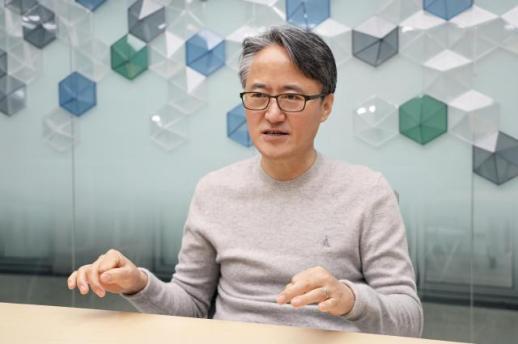 H Energy CEO says AI platform is key to meeting RE100 pressure in South Korea "Apple has declared it will make its entire supply chain carbon-neutral by 2030. If you can’t prove RE100, supply contracts get cut. This won’t be just a big-company issue — it will become a survival requirement for the entire supply chain," Ham Il-han, CEO of H Energy, said in an interview with Aju Business on May 5. Ham pointed to the company’s solution, "SolarShare Baro," a corporate platform that lets businesses buy electricity directly to meet RE100 goals. Using a company’s rooftop, H Energy installs and operates a solar power facility, allowing the business to receive power without upfront investment and at about 28% less than Korea Electric Power Corp. rates, he said. "In South Korea, where dependence on energy imports exceeds 90%, sunlight and wind are the only means of self-reliance," Ham said. He argued that instead of waiting decades for transmission lines needed for large power plants, the fastest approach is producing and using electricity on-site from corporate rooftops — a local production-and-consumption model. Ham also said technology can address structural bottlenecks in South Korea’s renewable energy market. He founded H Energy after leading energy projects for 17 years at LG CNS, aiming to use an artificial intelligence platform to streamline a market he described as fragmented across design, construction and operations. "In the coming era of renewable energy, the ability to integrate distributed resources into data and forecast with AI will become national competitiveness," Ham said. He added that H Energy’s goal is to change how energy capital is owned and distributed so returns circulate within local communities. Founded in 2018, H Energy operates multiple renewable energy platforms using data and AI. In addition to SolarShare Baro, it runs SolarOnCare, an asset management platform for solar power plants; Mohat, a cooperative-based renewable energy investment platform; and SolarShare, a rooftop solar leasing platform, the company said. Ham said the company’s ambitions extend beyond South Korea, with a long-term goal of exporting a "K-energy platform" to global markets, using Japan as a base and expanding to Southeast Asia and beyond. "No matter who installs solar panels or what power plants are built, our role is to build a platform that ensures those resources are operated properly," Ham said. "Changing the ownership and distribution structure of energy capital — that is why H Energy started, and it will not change."* This article has been translated by AI. 2026-05-05 18:05:59