
Journalist

AJP
-
 LG Energy Solution Steps Up Push Into Battery Recycling and Reuse LG Energy Solution said Monday it is focusing on expanding battery recycling and reuse, aiming to build a circular resource system from raw-material production through use and disposal while pursuing future growth through new businesses. In June last year, the company announced it would set up a recycling joint venture, GMBI, with Toyota Tsusho Corp., a Toyota Group company, in North Carolina. The venture will have a maximum annual processing capacity of 13,500 tons, enough to handle used EV batteries and scrap equivalent to more than 40,000 vehicles a year. The new joint venture will be a pretreatment plant specializing in safely dismantling and shredding end-of-life batteries and manufacturing-process scrap to produce “black mass.” The black mass will then go through separate post-processing to be refined into key minerals such as lithium, cobalt and nickel for use in battery production. In April last year, LG Energy Solution also announced a battery recycling joint venture with Derichebourg, France’s top metal recycler, in the Val-d’Oise region, with annual capacity of 20,000 tons. The company said the move is intended to respond proactively to European regulations and help build a sustainable battery ecosystem. For reuse, LG Energy Solution said it has installed and is operating an EV-charging energy storage system using repurposed batteries at Ochang Energy Plant 1. It is also building know-how through efforts including a North America reuse ESS business and development of reuse ESS systems for UPS and backup power applications. Separately, the company said it is working to achieve “zero waste to landfill” across all its sites. It said its Nanjing plant in China received UL’s top Platinum rating after being recognized for a 100% resource-circulation rate. An LG Energy Solution official said the company will “take the lead in realizing a sustainable future and customer value by building a circular system for battery resources.”* This article has been translated by AI. 2026-02-24 18:03:20
 -
 Celltrion Advances Dual-Track Obesity Drug Program; Lunit Starts Direct Sales in Japan Celltrion: Developing dual-track obesity drugs, including four-target injectable Celltrion said on Feb. 24 it is developing obesity drugs on two tracks: a four-target injectable candidate (CT-G32) and a multi-target oral drug. The company said CT-G32 is designed to act on four targets at once, going beyond GLP-1-based dual- and triple-acting drugs that currently lead the obesity treatment market. Celltrion said it aims to reduce differences in effectiveness among patients and side effects such as muscle loss, while maximizing appetite suppression and weight loss. It also plans to expand development toward metabolic disease treatment, including promoting fat breakdown and regulating energy metabolism. Celltrion said it is conducting efficacy tests in disease-model animals for key candidates and plans to submit an investigational new drug application in the first half of next year to begin clinical trials. The company said it is also developing a multi-target oral obesity drug to improve weight-loss effects while reducing side effects. It plans to submit an IND in the second half of 2028. Lunit begins direct sales in Japan Lunit said on Feb. 24 it has started direct sales in Japan through its local unit, Lunit Japan, which it established in May last year. The company has sold in Japan through a partnership with Fujifilm, but said the new direct-sales system is intended to improve profitability. Lunit said the direct-sales approach will complement Fujifilm’s existing channels. It will keep the partnership-led strategy in the hospital market, where Fujifilm is strong, while Lunit will handle sales in health screening and remote reading markets, where demand for artificial intelligence adoption is high. The company said it also plans to strengthen ties with the Japanese government. Fujifilm has previously launched in Japan the latest version of CXR-AID, chest X-ray reading software based on Lunit’s AI technology. Bukwang Pharmaceutical launches epilepsy drug Bukwang Brivifil tablets Bukwang Pharmaceutical said on Feb. 24 it has launched Bukwang Brivifil tablets (brivaracetam) in 10 mg, 25 mg, 50 mg and 100 mg doses. The company said the product received marketing approval from South Korea’s Ministry of Food and Drug Safety in September last year. It is a third-generation epilepsy treatment used as add-on therapy for patients with partial-onset seizures. Bukwang said brivaracetam selectively binds to synaptic vesicle protein 2A, or SV2A, regulating neurotransmitter release to suppress seizures. The company said the drug is characterized by rapid absorption and good tolerability compared with existing treatments, and that multiple dose options allow individualized therapy. Hecto Healthcare revamps Desimone subscription service Hecto Healthcare said on Feb. 24 it will overhaul the subscription service for its Desimone probiotics brand, aiming to reduce the sign-up burden for new customers while extending benefits across the broader brand lineup. The minimum subscription period will be reduced to six deliveries from 12, the company said. Hecto Healthcare said it will also expand benefits by introducing “Subscription Plus,” which provides a 50% discount coupon that can be used on a range of products, including Kim Seok-jin LAB’s Kids Multi-Vitamin Toktok and Kids Omega-3 Smart Chew, as well as the functional formula-based O2 Booster. It also introduced a combined-shipping service that allows Subscription Plus purchases to be delivered together with subscription items to reduce shipping costs.* This article has been translated by AI. 2026-02-24 18:00:00
 -
 OK Records CEO Min Hee-jin to Hold Emergency News Conference After Trial Court Ruling OK Records CEO Min Hee-jin will hold an emergency news conference on the 25th to present her position on a recently issued trial court ruling and outline her next steps. OK Records said on the 24th that Min is convening the event to personally explain the significance of the first-instance decision and her plans for future operations. Earlier, the Seoul Central District Court on the 12th dismissed a lawsuit filed by HYBE against Min and others seeking confirmation that a shareholder agreement had been terminated. The court, however, upheld Min’s lawsuit against HYBE seeking payment for shares tied to her exercise of a put option. The court ordered HYBE to pay Min 25.5 billion won, but HYBE has appealed. The dispute centers on whether the shareholder agreement remained valid. Min notified HYBE in November 2024 that she intended to exercise a put option on her ADOR stake. HYBE has argued the put option was no longer effective because it had already notified Min in July that year that it had terminated the agreement. Min has countered that HYBE’s termination was unjustified, and the trial court sided with her. It will be Min’s first appearance at an official event since the ruling. The news conference is expected to address the 25.5 billion won claim and OK Records’ management direction going forward.* This article has been translated by AI. 2026-02-24 17:57:17
 -
 Hyundai Motor executive urges fast passage of Korea bill backing $350B U.S. investment plan Sung Kim, president of Hyundai Motor Group, urged swift passage of legislation needed to carry out a $350 billion (about 506 trillion won) U.S. investment package. According to Reuters on Monday, Kim made the remarks at a breakfast meeting at the National Assembly on a proposed ruling People Power Party bill related to U.S. investment. He said that even if reciprocal tariffs are nullified, pressure could intensify to raise tariffs on automobiles. “As reciprocal tariffs are rendered invalid, pressure could instead grow to raise sector-specific tariffs on certain industries such as autos,” Kim said. “If a 25% tariff becomes reality at a time of sweeping change across the industry — with the shift to electric vehicles and accelerating competition in autonomous driving — the competitiveness of Korean companies will be weakened.” He added that “the auto industry is already facing a serious crisis due to U.S. tariff measures that began last year,” and said sector-specific tariffs on steel and automobiles are likely to remain in place for a considerable period. Kim said Hyundai Motor and Kia suffered about 7.2 trillion won ($4.98 billion) in financial damage last year due to U.S. tariffs. For South Korea, reciprocal tariffs initially set at 25% under an agreement with the United States were lowered to 15% starting in November last year. However, President Donald Trump on Jan. 26 threatened to raise reciprocal tariffs back to 25% — along with item-specific tariffs on products such as automobiles — citing delays in the National Assembly’s handling of the special U.S. investment bill. If auto tariffs are raised again to 25% as Trump has threatened, the damage to Hyundai and Kia could grow further. Policy uncertainty over tariffs has also increased again after the U.S. Supreme Court ruled reciprocal tariffs illegal and Trump, in response, raised the possibility of additional tariffs on major industries such as automobiles and semiconductors. South Korea’s auto industry has repeatedly asked the government and the National Assembly to resolve the tariff issue to secure equal conditions in the U.S. market with Japanese and European competitors. * This article has been translated by AI. 2026-02-24 17:51:17
 -
 Lee Jae-myung Calls for Reforms to Ensure Public Access to Olympic Broadcasts President Lee Jae-myung said Feb. 24 that South Korea needs institutional reforms to broadly guarantee public access to broadcasts of major international sporting events, including the Olympics and FIFA World Cup, amid ongoing disputes over media rights. Speaking at a Cabinet meeting he chaired at Cheong Wa Dae, Lee cited the results of the 2026 Milan-Cortina Winter Olympics, which ended Feb. 23, saying he regretted that public enthusiasm did not build enough compared with the past despite the determination and performances of South Korean athletes. Lee did not cite a specific cause, but his remarks were widely interpreted as pointing to the debate over JTBC’s exclusive coverage. JTBC previously secured exclusive broadcast rights for the 2026-2032 Summer and Winter Olympics and the 2025-2030 World Cup, then held talks to resell rights to the three terrestrial broadcasters. The negotiations collapsed, and JTBC aired this year’s Winter Olympics exclusively. Lee praised the Olympic delegation, saying their “passionate challenge” gave the public deep inspiration and pride and that there were meaningful achievements in sports diplomacy as well. He also thanked the athletes and support staff for delivering a memorable winter to the public with what he called the “Team Korea spirit,” and led applause.* This article has been translated by AI. 2026-02-24 17:48:00
 -
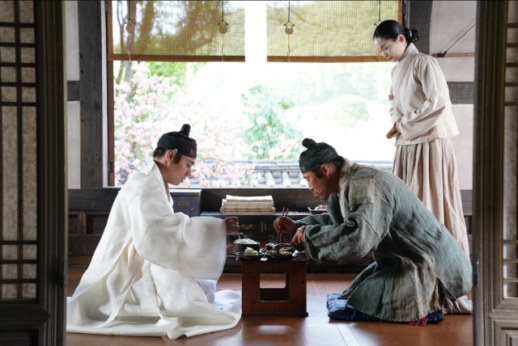 Why The King's Warden reigns over Korea's box office SEOUL, February 24 (AJP) - The mix of tragedy and humor, family and community affection, and grass-roots patriotism has long been a reliable formula for box-office success in South Korea. Audiences have found that combination in unusually polished form in The King’s Warden. Korean box office is no longer built for monopolies. Streaming platforms fragment attention. Mid-budget films struggle for screens. Audience loyalty has grown increasingly fickle. And yet, for three weeks running, The King’s Warden has behaved like a film from another era — one that gathers viewers not through spectacle or algorithms, but through the quiet accumulation of trust. The historical drama has topped the domestic box office for three consecutive weeks and has now surpassed 6 million cumulative viewers. As of its 20th day in theaters on Feb. 23, the film had drawn about 6.02 million moviegoers and generated 58.3 billion won ($43 million) in revenue. Over the Feb. 20–22 weekend alone, more than 1.41 million people visited theaters to see the film, accounting for 73 percent of total box office sales. Even as its screen count declined from more than 2,100 to around 1,700, the film has maintained clear market dominance. On Feb. 23, it captured 73.0 percent of total revenue while occupying just 29.6 percent of screens. In most competitive release cycles, revenue share tends to track screen share. The wide gap points to unusually strong demand consolidation around a single title. This is not a seasonal spike. It is consolidation. What distinguishes The King’s Warden from recent hits is that its success has been built less on marketing saturation than on accumulated credibility. In an industry increasingly driven by opening-weekend numbers and short attention cycles, the film has advanced at an older, steadier pace. Viewers are not rushing in out of fear of missing out, but returning with recommendations. Its dominance reflects not hype, but confidence — the sense that this is a film that can be trusted with time, emotion and attention. “I really enjoyed The Face Reader. In that film, the story revolved mainly around Grand Prince Suyang. This time, the narrative centers on Danjong. It feels connected, yet completely different. After watching the movie, I found myself wanting to learn more about Danjong," said Cho Hyun-chul, a 34-year-old office worker in Seoul. Bae Ji-hoon, a 32-year-old office worker living in Jeju, saw it out of curiosity after the news report about the president praising it. "Honestly? I enjoyed it more than I expected. Historical films often feel repetitive, but this one felt warm like a family movie while still carrying a serious tone.” In a market shaped by streaming algorithms and franchise branding, such patience-driven momentum has become increasingly rare. The film’s commercial trajectory reinforces that reading. After cresting during the Lunar New Year holidays, when daily admissions topped 650,000 on Feb. 17–18, most releases would normally settle into predictable decline. The King’s Warden did not. Weekday attendance stabilized at 200,000 to 260,000 viewers, before rebounding to 581,167 on Feb. 21 and 568,306 on Feb. 22. Even after the holiday period ended, market share remained above 70 percent. Over the Feb. 20–22 weekend, the film generated more than 13.8 billion won in revenue. Its cumulative gross reached 58.3 billion won by its 20th day. Such post-holiday resilience suggests limited substitution toward competing titles — another indicator that audiences are actively choosing the film rather than drifting toward it. Released on Feb. 4, the film reached the 6 million mark in just 20 days and is now widely expected to surpass 10 million viewers in a nation of about 52 million people. On paper, the subject matter looks forbidding. The film revisits the exile and death of King Danjong, dethroned as a teenager after his uncle’s coup in the mid-15th century and sent to remote Yeongwol before being executed. It remains one of the bleakest chapters in Joseon history. Even today, Yeongwol is part of the so-called “BYC” region — Bonghwa, Yeongyang and Yeongwol — regarded as one of the country’s most remote inland areas. Rather than presenting the story as a court thriller, The King’s Warden refuses the usual grammar of palace intrigue. Power remains largely offscreen. The court is distant. Violence is implied rather than staged. Instead, the camera stays in kitchens, fields and small courtyards, where a deposed boy-king learns to live as an anonymous adolescent among villagers. What distinguishes this film from earlier portrayals of Danjong is not new information, but new attention. Rather than presenting him as a national symbol, the screenplay treats him as a teenager navigating isolation, shame and dependence. His relationships with ordinary townspeople form the narrative spine. They feed him. Protect him. Pretend, at times, not to know who he is. In doing so, the film reframes tragedy as intimacy. The drama unfolds through accumulation — shared meals, hesitant conversations, small gestures of loyalty. Humor surfaces quietly, never as release, but as survival. It is this tonal balance — grief without melodrama, warmth without sentimentality — that gives the film its emotional credibility. Cultural critic Kim Heon-sik attributes the film’s success to its cross-generational accessibility and reinterpretation of history. “There have been few films recently that families across generations could watch together,” he said. “During the Lunar New Year, audiences were looking for that kind of option.” Kim noted that the film reshapes Danjong’s image. “He has traditionally symbolized sacrifice and tragedy,” he said. “This film overlays his story with hope and positivity. It adds imagination without distorting historical facts.” He also pointed to the evolution of director Jang Hang-jun. “His trademark wit remains, but this is not merely a comedy,” Kim said. “It is grounded in history and has strong character construction.” With sustained market concentration, post-holiday resilience, broad generational appeal and unusually strong audience loyalty, The King’s Warden has emerged as one of the most closely watched theatrical phenomena of the year that may finally put an end to a yearlong drought in K-movie blockbusters. 2026-02-24 17:42:55
 -
 Chipflation (1): Korean memory makers seize pricing power in AI boom Editor’s note: This is the first installment in AJP’s Chipflation series, which examines how explosive demand for artificial intelligence and South Korea’s dominance in memory chips are triggering a ripple effect of price hikes across the global tech supply chain — from Silicon Valley data centers to everyday consumer electronics. This installment looks at how Korean memory makers have gained the upper hand in price-setting. SEOUL, February 24 (AJP) - South Korea’s semiconductor export prices have more than doubled over the past year, data showed, underscoring the reality of “chipflation” as the country’s memory giants levy what industry insiders call a growing “Korea Tax” on Silicon Valley’s AI boom. According to data released Feb. 13 by the Bank of Korea, export prices for computer, electronic and optical products jumped 34.2 percent on year in January. The surge was overwhelmingly driven by memory chips, with DRAM and flash memory prices soaring 102.7 percent and 115.1 percent, respectively. Behind the headline numbers lies a structural bottleneck known in the industry as the “wafer penalty.” As global technology giants rush to secure High Bandwidth Memory (HBM) for AI servers, production capacity for conventional DRAM is being crowded out. Market tracker TrendForce estimates that manufacturing a single HBM4 wafer consumes capacity equivalent to roughly three standard DRAM wafers. This trade-off has sharply tightened supplies of commodity memory chips, creating a severe supply-demand imbalance across the market. "Building a new semiconductor line takes at least two to three years, and expanding an existing one requires one to two years," said Lee Jong-hwan, a professor of system semiconductor engineering at Sangmyung University. "Since memory makers are already profiting from high-margin HBM, they are unlikely to rush investments for commodity DRAM even as its supply shrinks and prices rise." Contract prices double in 90 days The impact has been swift and dramatic. Standard 64GB RDIMM server memory contract prices have doubled from about $450 to more than $900 in just three months. With inventories at SK hynix reportedly falling below four weeks, Samsung Electronics has effectively regained near-absolute pricing power as the world’s largest DRAM producer. Riding this seller’s market, Samsung is said to be negotiating prices for its next-generation HBM4 chips — which entered mass production this month — at around $700 per unit, a roughly 30 percent increase from the previous generation. The pricing surge is unfolding against the backdrop of an unprecedented AI investment cycle. The four largest U.S. hyperscalers — Amazon, Google, Meta and Microsoft — are projected to spend a combined $650 billion on capital expenditures in 2026. Combined with the Bank of Korea’s inflation data and Samsung’s aggressive pricing strategy, the figures suggest that a sizable portion of that investment will flow directly into the margins of Korean memory makers as an unavoidable “Korea Tax” in the AI era. "With explosive demand, Samsung holds significant pricing power, which will place a heavy financial burden on U.S. Big Tech," said Kim Deok-ki, a professor at Sejong University. "These skyrocketing costs could inevitably delay the buildup of AI infrastructure and eventually be passed down to consumers through higher AI subscription fees." Fierce stockpiling by AI leaders such as Nvidia, which dominates AI accelerators, has further strained supply chains. Cleanroom capacity at front-tier manufacturers — including Samsung, SK hynix and TSMC — is increasingly allocated to high-margin AI products, leaving fewer resources for commodity chips. "U.S. Big Tech companies are software-driven and lack their own fabrication plants," Prof. Lee added. "They can design the chips, but for production, they ultimately depend on the limited foundry and cleanroom capacities of companies like TSMC and Samsung." As inventories thin, shortages are spilling over into components used in smartphones, laptops and household electronics. Apple is reportedly exploring the use of Chinese-made memory chips in place of Korean LPDDR products to offset rising costs. Even Samsung, despite its in-house memory production, has raised smartphone prices in response to higher component expenses. Investors have responded accordingly. Shares of Samsung Electronics and SK hynix have been scaling fresh highs almost daily, underscoring investor confidence that Korean memory makers will remain the primary beneficiaries of the AI-driven supply squeeze. With wafer capacity increasingly locked into high-margin HBM production and hyperscaler demand showing little sign of cooling, industry analysts say chipflation is likely to persist. In equity markets, the narrative is shifting accordingly — from the long-cited “Korea discount” to what some now describe as a rising “Korean premium” attached to Seoul-listed semiconductor stocks. 2026-02-24 17:38:17
 -
 Kim Tae-heon Elected Head of Korea Publishers Association, Pledges Book Fair Transparency Kim Tae-heon, CEO of Hanbit Media Co., was elected the 52nd president of the Korean Publishers Association. The association held its 82nd regular general meeting at 2 p.m. on Feb. 24 at the Korea Press Center International Conference Hall and elected Kim to a three-year term. Kim won the most votes among 351 member companies that cast ballots, out of 519 eligible voting members. His pledges include strengthening publisher-led policy capacity, rebuilding cooperation with the public sector, boosting the public nature and transparency of the Seoul International Book Fair while improving its business performance, and establishing the fixed book price system and a fair publishing distribution order. “I will restore policy consultations with the government so the association can again play a central role in talks,” Kim said. He also pledged to build a joint response system against illegal copying. “We will strengthen the public nature and transparency of the Seoul International Book Fair and create a consultative structure involving multiple groups and publishers,” he added. Kim serves as CEO of Hanbit Media. He has also served as president of the Korea Publishers Association of Korea, a director of the Korea Publishing Industry Promotion Agency, vice president of the Korean Publishers Association, and head of the SBI program at the Korea Publishers Association of Korea. The nine members of the selection committee were Na Young-chan (Gijeon Research Co.), Kwon Hyuk-jae (Hakyeon Munhwasa), Joo Yeon-seon (EunHaengNamu Publishing), Kim Han-cheong (Dareun), Kang Il-woo (Pentacle), Lee Mi-rae (Cmas), Cho Hyung-joon (Saemulgyul), Ryu Won-sik (Kyomunsa) and Hong Young-tae (Business Books). * This article has been translated by AI. 2026-02-24 17:37:06
 -
 New Musical 'Jeokto' Recasts Romance of the Three Kingdoms Through a Warhorse’s Eyes “It’s not a familiar hero tale. It’s the story of the warhorses that carried those heroes,” lyricist and playwright Han Areum said Monday at a news conference at Daehakro Arts Theater in Seoul. “It starts with Jeokto’s birth, follows its life as a warhorse on the battlefield, and shows it growing through brutal reality and coming to understand life.” The original musical ‘Jeokto_History of the Reins and Saddle’ (3.7.~3.29. SH Art Hall) reinterprets the classic ‘Romance of the Three Kingdoms’ from the viewpoint of a warhorse rather than a hero. Through the stories of horses that went unrecorded and were used up, it looks back on human life as something not unlike war. The production is one of the March premieres in the 18th Performing Arts Creative Stage Lab’s “New Works of the Year,” which opened in January and has reached its midpoint. Han said the reins and saddle in the work symbolize “power, the era and personal choice.” Citing “Lu Bu’s charge, Cao Cao’s power and Guan Yu’s loyalty,” she said the musical argues that “it’s not the strongest who survive, but those who endure to the end.” Asked why audiences should see it, Han said she hopes it prompts people to think about what they are running toward. “We, too, got here riding on someone else’s back,” she said. “I wanted to stage this piece so we could reflect on that humility.” The fourth lineup announced for the Creative Stage Lab includes ‘Jeokto_History of the Reins and Saddle’ as well as the plays ‘Tulip’ and ‘In the House Where I Lived,’ the original musicals ‘Joker’ and ‘ROGER,’ the dance work ‘I Have Been Bitten by a Dog,’ and the music program ‘An Old Man Who Lends Romance.’ The works will open sequentially between March 1 and 13 at major venues around Seoul’s Daehakro theater district, including Arko Arts Theater and Daehakro Arts Theater. ‘Tulip’ (3.1.~3.8. Daehakro Arts Theater Grand Theater) is set in a Tokyo household in the late 1920s and traces the marks war leaves on life and relationships through a character who has lost even family and name and lives under someone else’s identity. Director Jeon In-cheol said the play centers on a man who comes to an upper-class Tokyo mansion in the 1920s to find his missing son. He said it portrays how imperial violence destroys individual lives through a father who, instead of seeking revenge, must sacrifice himself for his child. ‘In the House Where I Lived’ (3.7.~3.15. Daehakro Arts Theater Small Theater) is set in the late 1970s and the present and tells the stories of women who did not fit into their era or society. Writer Ma Jeong-hwa said the story follows four women who do not belong in their respective societies — women who struggle to escape their circumstances, run away, cannot run away, or believe they now must run. Performance details for the 18th Creative Stage Lab are available on its official website and social media channels. Tickets can be booked through the Arko and Daehakro Arts Theater websites and NOL Ticket. 2026-02-24 17:30:57
 -
 Lee Kang-in Named KFA Men’s Player of the Year, Beating Son Heung-min for First Win South Korea midfielder Lee Kang-in of Paris Saint-Germain was named the Korea Football Association’s men’s Player of the Year, edging Son Heung-min of Los Angeles FC for his first win of the honor. Lee was announced as the men’s winner at the 2025 KFA Awards held Feb. 24 at Korea Football Park in Cheonan. The Player of the Year award recognizes Korean men’s and women’s players for standout performances with both their clubs and the national teams. Winners are determined by a combined vote: 50% from the press and 50% from KFA experts, including members of the National Team Strengthening Committee and the Technical Development Committee, as well as full-time women’s football coaches. Lee topped the men’s vote with 31.4 points, ahead of last year’s winner Son, the award’s most frequent recipient, who had 29.2. The award has been presented since 2010, and this was Lee’s first time winning it. With PSG, Lee helped deliver a treble last year, winning the 2024-2025 UEFA Champions League along with Ligue 1 and the French Cup. He also contributed to the club’s runner-up finish at the FIFA Club World Cup. For the South Korea national team coached by Hong Myung-bo, Lee had one goal and five assists in nine A matches, helping the team qualify for the 2026 FIFA World Cup in North America. In the women’s category, Jang Seul-ki of Gyeongju KHNP won Player of the Year with 18.4 points. The men’s and women’s Young Player awards went to Kang Sang-yoon of Jeonbuk Hyundai and Kim Min-ji of Seoul City Hall. Coach of the Year honors went to Lee Jung-hyo of Suwon Samsung on the men’s side and Kang Sun-mi of Hwacheon KSPO on the women’s side. Referee of the Year awards went to Kim Dae-yong, Bang Gi-yeol and Jung Eun-ju. Club of the Year went to Seoul Yangcheon-gu TNTFC, the 2025 season K5 League Championship winner.* This article has been translated by AI. 2026-02-24 17:25:05