
Journalist

AJP
-
 IVE’s Leeseo Says All Members Are Adults This Year as Group Returns With ‘REVIVE+’ IVE’s youngest member, Leeseo, shared her thoughts on turning 20. On the afternoon of the 23rd, IVE held a comeback showcase for its second full-length album, “REVIVE+,” at YES24 Live Hall in Seoul’s Gwangjin District. “The biggest change is that, starting this year, all IVE members are adults,” Leeseo said, adding that fans can expect a wider range of sides from the group. Leeseo, born Feb. 21, 2007, said returning with a second full-length album after becoming an adult makes “each day feel like a dream.” “But honestly, I don’t think much has changed,” she said. “I want to stay happy as the youngest in IVE forever. Since this is my first comeback as an adult, I really want to do well.” Member Rei said she noticed a shift during the group’s second world tour last year. “It was the same songs, but compared with debut, Leeseo’s vibe, expressions and gestures naturally changed,” Rei said. “As an older member, it felt amazing to see.” IVE’s second full-length album, “REVIVE+,” is set for release at 6 p.m. on the 23rd. * This article has been translated by AI. 2026-02-23 17:33:16
 -
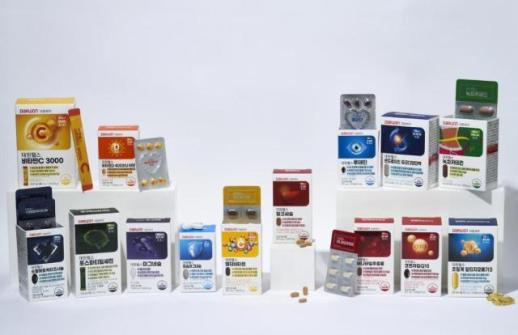 Daewon, Yuhan, Kolon and Samsung Medical Center roll out supplements, gene therapy and AI tools Daewon Pharmaceutical teams with E-Land’s Kim’s Club to launch 14 health supplements Daewon Health said Feb. 23 it will launch 14 premium health functional foods in collaboration with Kim’s Club, a supermarket brand operated by E-Land Retail. The lineup includes a multivitamin, milk thistle, lutein, calcium and coenzyme Q10. The products are designed by age, gender and health goal, and the packaging includes suggested uses tied to common health concerns to help shoppers choose. Daewon Health said all products are formulated to meet at least 100% of Korean nutrient intake standards. It said it combined key ingredients with complementary ingredients to improve nutritional balance and priced the products at 5,000 won or less for a one-month supply to reduce the burden on consumers. Yuhan launches ‘Becompl’ daily vitamin shots in three versions Yuhan said Feb. 23 it launched three products under its premium daily care brand Becompl, designed to help manage daily condition by time of day. The company said the products use a dual format that combines a tablet and liquid in one bottle, allowing consumers to take them without water and improving portability and convenience. Becompl Morning Shot is aimed at liver health. Yuhan said the 30 mL portable product contains milk thistle and Rhodiola rosea extract for easy use on the way to work. Becompl All Day Shot is a premium multivitamin that includes 20 functional ingredients in one bottle. Centered on high-dose B vitamins needed for energy metabolism, it also combines vitamins C and E with minerals and may help with antioxidant support, the company said. Becompl Good Night is designed to improve sleep quality and is intended for nighttime use. Yuhan said it contains lime peel extract, a citrus-derived ingredient that may help support sleep health. Kolon Life Science to broaden indications for next-generation gene therapy candidates Kolon Life Science said Feb. 23 it plans to add new indications for drug candidates KLS-3021 and KLS-2031 and strengthen the foundation for global commercialization. KLS-3021 is a next-generation anticancer gene therapy candidate that loads therapeutic genes (PH-20, IL-12 and sPD1-Fc) onto a recombinant vaccinia virus engineered for greater selectivity toward cancer cells. The company said it is designed to combine the virus’ direct tumor-killing mechanism with breakdown of tumor stroma to help immune cells penetrate cancer tissue, while also inducing an anticancer immune response. To diversify indications for KLS-3021, Kolon Life Science said it is expanding research to include head and neck squamous cell carcinoma and triple-negative breast cancer. Another pipeline candidate, KLS-2031, is a recombinant adeno-associated virus (rAAV)-based gene therapy designed to express the genes GAD65, GDNF and IL-10, which are involved in suppressing neuroinflammation and regulating overexcited pain signaling pathways. The company said it is continuing to submit papers on preclinical results related to diabetic peripheral neuropathy and is also pursuing additional indications. AI may enable earlier detection of Parkinson’s disease, Samsung Medical Center says Samsung Medical Center’s AI Research Center said Feb. 23 it has confirmed the potential for earlier diagnosis of neurodegenerative diseases, including Parkinson’s disease and Parkinson-plus syndromes, using multimodal AI that analyzes clinical data such as gait, voice and brain imaging together. Parkinson’s disease is often diagnosed late because early symptoms are not clear. By the time tremors or gait problems appear, the disease may already be significantly advanced. A research team led by neurologist Cho Jin-hwan and radiologist Jeong Myeong-jin collected and standardized clinical information — including gait, voice and brain imaging — from about 500 patients over four years: 363 with Parkinson’s disease, 67 with progressive supranuclear palsy and 61 with multiple system atrophy. The team built an integrated database and developed a gait-based fall-risk prediction model, a voice-test-based Parkinson’s classification system, and an MRI-based automated brain-structure analysis model. In clinical evaluations, the hospital said the voice-based severity classification model, the MRI-based disease differentiation model, and a fall prediction model that analyzes gait and brain imaging together all showed high accuracy. Samsung Medical Center added that the models can also present the basis for their decisions. Cho said, “The earlier Parkinson’s disease is detected, the better the effect of drug treatment, and rehabilitation can slow progression,” adding that AI will help early diagnosis by quickly integrating results from multiple tests.* This article has been translated by AI. 2026-02-23 17:15:00
 -
 KBO Suspends Four Lotte Giants Players Over Gambling During Taiwan Training Trip Four Lotte Giants players embroiled in a gambling controversy have been handed heavy discipline by the Korea Baseball Organization (KBO). The KBO said it held a disciplinary committee meeting on Feb. 23 in its conference room for Kim Dong-hyeok, Ko Seung-min, Na Seung-yeop and Kim Se-min. The league confirmed that on Feb. 12, the players visited a gambling-style arcade near their hotel in Tainan, Taiwan, where Lotte was holding its first spring training camp, and used electronic betting games. Lotte reported the matter to the Clean Baseball Center on Feb. 14 after learning of it. Citing Article 151 of its rules on conduct unbecoming, the committee suspended Kim for 50 games and suspended the other three players for 30 games each. Kim was punished more severely because he was reported to have visited the venue three times, while the others visited once, according to the report. The KBO said a police investigation is underway, but it imposed sanctions in advance given the seriousness of the incident, the public backlash and damage to the league’s image. It said additional discipline could follow depending on the outcome of the police investigation. * This article has been translated by AI. 2026-02-23 17:06:00
 -
 BTS to Open Ticketing for Free Gwanghwamun Square Comeback Live at 8 p.m. 그룹 방탄소년단(BTS)이 오는 3월 21일 서울 광화문 광장에서 여는 무료 공연 ‘BTS 컴백 라이브: 아리랑(BTS THE COMEBACK LIVE: ARIRANG)’의 예매가 23일 시작된다. 소속사 빅히트뮤직은 예매가 23일 오후 8시부터 온라인 예매처 ‘놀(NOL) 티켓’에서 진행된다고 밝혔다. 약 1시간 동안 열리는 이번 공연은 방탄소년단이 3년 9개월 만에 선보이는 새 앨범 무대다. 예매 대상은 메인 무대 오른쪽 스탠딩석과 이순신 장군 동상 앞까지 배치된 지정석이다. 돌출 무대 주변의 핵심 스탠딩석은 정규 5집 ‘아리랑’ 예약 구매자 중 이벤트 응모로 선정된 2000명에게 우선 배정된다. 티켓은 1인 1매로 제한되며, 예매 수수료는 관객이 부담한다. 주최 측은 일부 지정석은 무대 연출과 안전 구조물로 시야가 제한될 수 있지만, 현장 대형 스크린으로 관람할 수 있다고 밝혔다. 이번 공연은 온라인동영상서비스(OTT) 넷플릭스를 통해 전 세계에 생중계될 예정이다. 주최 측은 “매크로 등 자동 프로그램을 이용한 부정 예매는 관련 법령에 따라 엄격히 처벌될 수 있다”며 주의를 당부했다.* This article has been translated by AI. 2026-02-23 17:03:44
 -
 South Korea ends 17-day campaign across ice and snow as Winter Olympics close SEOUL, February 23 (AJP) - The 2026 Milan-Cortina d’Ampezzo Winter Olympics concluded Sunday (KST), bringing down the curtain on a 17-day celebration of winter sports across northern Italy. The Games officially ended with a closing ceremony held at the Verona Arena early Sunday morning Korea time. South Korea, which sent a 130-member delegation including 71 athletes, collected a total of 10 medals — three gold, four silver and three bronze — to finish 13th overall. The team achieved its target of winning at least three gold medals, one more than at the 2022 Beijing Games, but fell short of its other goal of breaking into the top 10 in the medal standings. Short track speed skating once again proved to be the backbone of Korea’s medal haul. Two-time gold medalist Kim Gil-li led the charge, helping the team secure two golds, three silvers and two bronzes in the sport. Snowboarding, long considered a weak point for Korea, delivered one of the Games' most notable breakthroughs. Choi Ga-on captured gold in the women’s halfpipe, marking a milestone for the country’s snow events. In men’s snowboard competitions, Yoo Seung-eun earned a medal in big air, while Kim Sang-gyeom added another in parallel giant slalom, underscoring Korea’s growing competitiveness on snow. Overall, snowboarders claimed one gold, one silver and one bronze, exceeding expectations. Built on the traditional strength of ice events and bolstered by emerging success on snow, the Milan-Cortina Games signaled an expanding horizon for Korean winter sports. The next Winter Olympics will be held in the French Alps in 2030. 2026-02-23 16:51:04
 -
 For 2026 rematch with Apple, Samsung fields AI photo studio for short-form gen SEOUL, February 23 (AJP) - Familiar scenes were repeated at the 2026 Milan–Cortina Winter Olympics: medalists capturing once-in-a-lifetime moments by flipping open pocket-sized Samsung phones. Despite strong sales of its foldable fleet, Samsung Electronics lost its decade-long position as the world’s top smartphone vendor last year to Apple, buoyed by the popularity of the iPhone 17 lineup. Samsung readies a rematch with the unveiling of its flagship Galaxy S26 series in San Francisco on Thursday. Moving away from traditional hardware specification battles, Samsung is repositioning its top-tier Ultra model — expected to approach 2 million won (about $1,500) — as a fully autonomous “AI Studio” aimed at short-form video creators on platforms such as TikTok and YouTube Shorts. Rather than competing solely on camera sensors, display resolution and processing speed, the company is shifting its focus to software-driven creativity, automation and personalization. The move reflects a long-standing challenge in the domestic market. According to Gallup Korea, more than 60 percent of South Koreans in their 20s use iPhones, while older generations remain more loyal to Galaxy devices. “For younger demographics, a smartphone is a status symbol that must be instantly recognizable,” said Lee Eun-hee, professor emeritus of consumer science at Inha University. “Samsung has historically struggled to match Apple’s strong design identity that creates this sense of pride.” To loosen Apple’s grip on young users, Samsung is positioning the Galaxy S26 as a mobile production suite. Powered by an upgraded neural processing unit (NPU) with a claimed 113 percent performance increase, the device introduces “EdgeFusion,” an on-device generative AI model that allows users to generate images and perform professional-level edits through simple text prompts — without requiring an internet connection. The system enables automatic background generation, lighting adjustment, object removal and style conversion, reducing the need for external editing apps. The Ultra model is also expected to feature an industry-first “Privacy Display,” using Samsung Display’s Flex Magic Pixel technology to restrict side viewing angles. The feature targets young users who frequently consume and produce content in public spaces such as subways, cafés and campuses. Additional upgrades include an improved f/1.4 aperture for low-light photography and a first-ever 60-watt fast-charging system, allowing creators to shoot, edit and upload content throughout the day. “Younger consumers are highly responsive to AI,” Lee said. “Having an autonomous AI agent feels like carrying a personal assistant — or even a digital companion — in your pocket. That appeal could be decisive.” The central question is whether younger consumers are willing to pay the premium. Amid rising global semiconductor and component costs, all S26 models are expected to see price increases of about 99,000 won ($75). Industry estimates suggest the base model will start at around 1.25 million won ($940), with the Plus and Ultra versions beginning at roughly 1.45 million won ($1,090) and 1.8 million won ($1,350), respectively. The top 512GB Ultra model could approach the 2 million won threshold. For many Gen Z consumers, already facing high living costs and stagnant income growth, the higher price point may pose a hurdle. Yet Samsung is betting that advanced AI features will justify the increase by transforming smartphones from communication devices into portable studios. In K-pop, gaming and short-form video culture, smartphones increasingly function as tools for self-branding and content production. Samsung’s strategy reflects an effort to align its flagship devices with this shift. If successful, the Galaxy S26 could help the company reclaim relevance among younger users and narrow the gap with Apple in key markets. If not, higher prices and software-heavy features may struggle to overcome entrenched brand preferences. As the industry watches the San Francisco launch, the Galaxy S26 will serve as an early test of whether consumers are ready to accept higher prices — and what some analysts call a “chipflation tax” — in exchange for next-generation AI capabilities. 2026-02-23 16:50:58
 -
 BTS Comeback D-26: Jimin — from charts to cultural reference Editor’s Note — As BTS prepares to return as a full seven-member act with a new album set for March 20 and an open-stage performance at Gwanghwamun on March 21, following a near four-year hiatus for rotational military service, AJP revisits the group’s 13-year trajectory. This series reexamines BTS’s history, music, performance identity and enduring appeal. The sixth installment traces the roots and growth of Jimin. SEOUL, February 23 (AJP) - BTS member Jimin has surpassed 2.3 billion cumulative streams on Spotify with his solo track “Who,” according to the platform’s chart dated Feb. 19. The milestone came 581 days after the song’s release on July 19, 2024, making him the first Asian solo artist without a Western collaboration to reach the figure. Even 19 months after release, “Who” continues to chart — ranking No. 54 on Spotify’s Daily Top Songs Global chart and No. 1 in South Korea. His second solo album “Muse” has also crossed 3.8 billion cumulative streams, becoming the fastest Korean-language album to do so and the first Korean solo album to exceed that threshold. In the United States, “Who” spent 33 weeks on the Billboard Hot 100, the longest run for a K-pop male soloist, while “Muse” remained on the Billboard 200 for 34 weeks. The numbers suggest durability. The backstory suggests design. Born in 1995, Jimin (Park Jimin) entered Busan Arts High School as the top-ranked student in its modern dance department despite having trained in contemporary dance for less than a year. In 2012, he passed Big Hit Entertainment’s regional audition as its sole successful candidate from Busan and moved to Seoul. After a six-month trainee period — the shortest among BTS members — he debuted as the group’s final addition. Dance remains foundational to his identity. His control of line, balance and breath — visible in solo stages such as “Lie,” “Filter” and major award-show performances — reflects formal training rarely emphasized in idol narratives. His 2019 solo performance at the Melon Music Awards later inspired visual artworks exhibited at the Seoul Arts Center, while international figure skaters incorporated his choreography into competitive and touring programs. From performance to authorship Jimin participated in writing and composing every track on his first solo album “Face,” released in March 2023. For “Muse,” released in July 2024, he contributed to the majority of the tracks. His 2018 self-composed song “Promise” set a Guinness World Record for the most-streamed track within 24 hours on SoundCloud at the time, and he later became the fastest Korean solo artist to surpass one billion Spotify streams. Beyond charts and credits, his influence has extended outside music. Filmmaker Gus Van Sant once cited Jimin as a potential collaborator, noting his “peaceful” presence. His impact has also reached professional sport. Japanese Olympic champion Yuzuru Hanyu referenced Jimin’s movements from BTS’s “Dynamite” during a 2021 ice show and later said he studied his choreography. At the international Star on Ice tour, ice dancers Misato Komatsubara and Tim Koleto performed to “Filter,” incorporating elements of his styling and gestures. Fashion media have highlighted his gender-neutral styling and blend of traditionally masculine and soft aesthetics as reflective of shifting global beauty standards. Luxury houses have also taken notice. Jimin was named a global ambassador for Dior, while The Business of Fashion included him in its “BoF 500” list in 2019. Jimin enlisted for mandatory military service in December 2023 and was discharged in June 2025. Yet his streaming figures did not decline during his absence. Instead, they largely stabilized. Behind his 2.3 billion Spotify streams lies a path that runs from a dance studio in Busan to global arenas, competitive ice rinks and algorithm-driven charts. As BTS approaches reunion activities, his solo career appears less like a side project and more like a parallel axis — built on technique, authorship and a presence that moves fluidly across disciplines. The next installment will focus on V. 2026-02-23 16:36:44
 -
 Lee Jaeyong declines to host concert organized by conservative YouTuber Jeon Han-gil Former announcer Lee Jaeyong said he turned down a request to emcee a concert hosted by Jeon Han-gil, a hard-line conservative YouTuber and former Korean history instructor. Lee told Yonhap on the 23rd, “As soon as I recognized the nature of the event yesterday, I contacted the organizer and said I couldn’t host it, and asked to be removed from the poster.” He said that when he first received the request, he was told it was a conservative March 1 Independence Movement commemoration concert and that he would only handle the music portion, “so I heard there would be no problem.” He added, “There was no mention at all that it was an event connected to Jeon Han-gil.” Lee said he generally accepts requests to host concerts or book launch events regardless of political leanings, but added, “Events on the far right or far left are outside my scope, so I don’t do them at all.” He said he would not have accepted if he had been told it had a far-right character or that Jeon was involved. Lee said he has no intention of taking legal action. Earlier, Jung Chan-hee said on social media the previous day, “I hadn’t said anything separately because I decided not to appear in this performance, but I’m posting because so many people have contacted me. I will not appear in this performance.” Jung said he had verbally agreed to appear at a March 1 music event, but learned about the poster when an acquaintance sent it to him two days earlier. “I contacted them and decided not to appear,” he added.* This article has been translated by AI. 2026-02-23 16:30:16
 -
 Samsung Electronics launches high-capacity, AI-powered ice water purifier SEOUL, February 23 (AJP) - Samsung Electronics announced the release of its new "Bespoke AI Ice Water Purifier" for the domestic market, integrating voice recognition and high-capacity ice production into its home appliance lineup. Priced at 2.39 million won ($1,780), the countertop appliance is designed to produce up to 8 kilograms of ice per day—equivalent to approximately 1,000 ice cubes—and can store about 100 cubes simultaneously. The new model focuses heavily on automated hygiene and water safety. It features a four-stage filtration system certified by NSF International, which Samsung states can remove 82 types of harmful substances, including microplastics, heavy metals, and microcystin. To address maintenance, the purifier employs an AI-based sterilization system that learns users' drinking patterns to automatically sanitize its stainless-steel water pipes and ice trays during non-use hours. It also utilizes UV sterilization at the ice dispenser. In a push to expand its smart home ecosystem, Samsung has integrated its voice assistant, Bixby, with a new "Voice ID" feature. The system can distinguish between different family members' voices and automatically dispense water based on their pre-set volume and temperature preferences. Users can save up to 20 custom presets, adjusting water volume in 10-milliliter increments and temperature up to 90 degrees Celsius. The premium water purifier market in South Korea is highly competitive, traditionally dominated by rental-based companies like Coway, alongside archrival LG Electronics. Samsung's integration of voice-recognition AI and heavy-duty ice making in a single countertop unit is a strategic move to capture the growing segment of consumers willing to purchase high-end, smart kitchen appliances outright rather than opting for traditional rental services. 2026-02-23 16:15:10
 -
 Korean Financial Holding Shares Surge as Employees and CEOs Cash In on Stock Gains As bank stocks climb sharply amid a broader rally that has pushed the Kospi to the 5,800 level this year, more bank employees are selling company shares. Workers who bought employee stock for loyalty reasons or to claim up to 4 million won in annual income deductions are taking profits as prices hit levels they have not seen since joining their firms. Paper gains have also grown for chief executives who bought shares as part of efforts to show management accountability. According to the financial industry on the 23rd, Woori Financial Group’s employee-shareholding ratio fell to 7.78% in December from 7.88% in the third quarter of last year. The ratio is expected to edge down again in the first quarter. Employee shares can be sold after being withdrawn from the employee stock ownership association into an individual brokerage account, and the withdrawn shares are typically sold on the market. The selling is widely attributed to a recent surge in prices as bank stocks have been cited as beneficiaries of the Kospi’s rise to the 5,800 range. KB Financial Group shares rose to 168,700 won on the day from 82,000 won on Feb. 24 last year. Over the same period, Shinhan Financial Group climbed 116% to 101,800 won from 47,200 won, and Hana Financial Group jumped 107% to 129,100 won from 62,500 won. Woori Financial Group advanced to 40,300 won from 17,420 won. Many bank employees buy about 300,000 to 400,000 won worth of company shares each month, often for tax-deduction purposes. With prices soaring, sales have increased, contributing to a decline in employee-shareholding ratios at major financial holding firms, including Woori Financial. “Employee shares are usually intended for long-term holding, and selling at a peak can be treated as income and may mean paying more tax,” a financial industry official said. “Taking that into account, there is movement to sell at an appropriate level.” CEOs who bought shares to underscore accountability have also seen their paper gains swell. Shinhan Bank CEO Jeong Sang-hyeok holds 15,551 shares of Shinhan Financial. He bought 2,000 shares in January last year at 48,400 won per share, for a gain of 106.8 million won compared with the price at the time of purchase. KB Financial Chairman Yang Jong-hee bought 5,000 shares in March 2024 at 77,000 won per share. With the stock topping 160,000 won on the day, his paper gain reached 458.5 million won. Hana Financial Chairman Ham Young-joo bought 5,000 shares in December 2024 at 58,862 won, for a gain of 351.19 million won. Woori Financial Chairman Lim Jong-ryong, who bought 10,000 shares in September 2023 at 11,880 won, posted a gain of 284.2 million won. Financial holding firms expect shares to rise further and plan to step up outreach to overseas investors. Working-level staff at major groups are expected to meet with JPMorgan staff visiting South Korea in early March to present value-up policies and strategies for new businesses such as stablecoins. 2026-02-23 16:15:00