
Journalist

AJP
-
 Iran and US reach preliminary agreement on negotiation principles in Geneva SEOUL, February 19 (AJP) - Iran and the United States have reached a comprehensive agreement on the basic principles for future negotiations following indirect talks held at the Omani Embassy in Geneva, the Embassy of the Islamic Republic of Iran in South Korea said Thursday. Seyed Abbas Araghchi, the Iranian Foreign Minister, described this second round of discussions as more serious than previous sessions, noting they took place within a constructive and practical atmosphere. The meetings serve as a critical step in addressing long-standing friction between the two nations regarding nuclear and diplomatic issues. The talks were facilitated by Omani mediation to provide a neutral ground for the two delegations to communicate. Both parties have started drafting a transition agreement and agreed to coordinate the schedule for the next round of meetings following a formal exchange of texts. Despite the progress, officials emphasized that additional efforts are required to resolve remaining points of contention. The diplomatic track was further detailed in a telephone conversation between Professor Seyed Abbas Araghchi and Rafael Grossi, the Director General of the International Atomic Energy Agency (IAEA). The two officials reviewed the status of the indirect negotiations and exchanged views on the essential requirements for establishing a consistent negotiating framework. Director General Grossi provided a positive assessment of the Geneva talks and affirmed the agency's readiness to support ongoing diplomatic initiatives. During a keynote speech at the United Nations Conference on Disarmament in Geneva, Professor Seyed Abbas Araghchi reaffirmed that nuclear weapons represent the most significant threat to humanity. He clarified that the nuclear program of Iran is based entirely on peaceful objectives and stated that nuclear weapons hold no place in the national security doctrine of the country. The foreign minister further stressed the importance of maintaining the technical and neutral character of the IAEA. He committed to continued constructive cooperation with the agency within the framework of legal obligations to ensure a sustainable and balanced agreement that secures the rights of the Iranian people. Iran maintains that it will pursue goal-oriented and result-driven diplomacy to achieve practical outcomes through these sustained diplomatic efforts. 2026-02-19 19:38:31
 -
 Men’s Ski Halfpipe Qualifying at Milan 2026 Postponed by Heavy Snow The men’s freestyle ski halfpipe qualifying was postponed because of heavy snow. Olympic organizers said the qualifying round, originally scheduled for 6:30 p.m. (Korea time) on Thursday, was pushed back 24 hours to 6:30 p.m. Friday. South Korea’s Lee Seung-hoon and Moon Hee-sung, both of Korea National Sport University, were set to compete. Halfpipe is judged on aerial tricks performed on a semicylindrical course. In the women’s event, Choi Ga-on of Sehwa High School previously won South Korea’s first gold medal in a snow sport. Ski halfpipe uses skis rather than a snowboard on the same type of pipe. The men’s halfpipe final had been set for 3:30 a.m. (Korea time) on Feb. 21, meaning qualifying and the final would be held on the same day if the schedule otherwise holds. The men’s freestyle ski aerials qualifying and final, scheduled at the aerials moguls park near Livigno Snow Park, were also postponed. No South Korean athletes are entered in that event. Earlier, heavy snow in Livigno on Feb. 17 forced postponements including the women’s snowboard slopestyle final and a ski aerials qualifying round. 2026-02-19 19:36:00
 -
 Choi Min-jeong, Kim Gil-li and Noh Do-hee draw 1,500 quarterfinal heats at Milan Olympics South Korea’s women’s short track team will return to the ice in the 1,500 meters, aiming for another gold at the 2026 Milan-Cortina d’Ampezzo Winter Olympics. The quarterfinal heat draws were announced on Feb. 19 (Korea time). Kim Gil-li, who won bronze in the women’s 1,000 and gold in the 3,000 relay, was placed in Heat 1. She will race Canada’s veteran Kim Boutin, the Netherlands’ Michelle Velzeboer, China’s Zhang Chutong, Croatia’s Valentina Aščić and Poland’s Natalia Maliszewska. The main rival in the heat is the 31-year-old Boutin, who took bronze in the 3,000 relay final and will face Kim for a second straight event. Choi Min-jeong, who won gold in the women’s 3,000 relay to claim her fourth career Olympic gold and draw level with short track great Jeon I-kyeong, will skate in Heat 3. The heat includes Italy’s Arianna Sighel, who won silver in the relay a day earlier, and Belgium’s Tineke Den Dulk, a mixed relay bronze medalist. Noh Do-hee was drawn into Heat 6, which includes Italian star Arianna Fontana. Fontana added relay silver a day earlier, bringing her Olympic total to 14 medals (three gold, six silver and five bronze) across her sixth Games, making her Italy’s most decorated Olympian. Belgium’s Hanne Desmet and American Kristen Santos-Griswold were also listed as key skaters in the heat. South Korea’s women’s 1,500 races are scheduled for early Feb. 21 (Korea time). * This article has been translated by AI. 2026-02-19 19:03:00
 -
 Hyundai Motor speeds up robotaxi push as it expands physical AI strategy Hyundai Motor Group, which has drawn attention in the AI race with its humanoid robot Atlas, is also accelerating its robotaxi business as it pushes to commercialize “physical AI.” After demonstrating the potential of humanoid robots in factories and logistics sites, the group is expanding into autonomous driving to speed up its vision of AI that operates in the real world. Industry officials said Feb. 19 that Hyundai is developing autonomous driving on two tracks rather than merging everything into a single architecture. It is pursuing a certification-friendly modular approach through Motional, prioritizing safety validation and regulatory approvals, while also developing a more general end-to-end (E2E) approach through 42dot. Motional, which is building the modular system, aims to commercialize a Level 4 driverless robotaxi service in Las Vegas later this year, signaling commercial operations for the general public in a real urban environment. Motional is currently running test operations based on Hyundai’s Ioniq 5 robotaxi. At a media briefing in Las Vegas last month, Motional CEO Laura Major said, “Given that the market is still in its early stages, I don’t think there is any company that has a cost-efficient Level 4 autonomous driving system yet,” adding, “Motional wants to focus not only on a safe driving experience but also on developing a profitable business model.” Hyundai’s robotaxi push is the other pillar of its physical AI strategy alongside humanoid robots. The group sees Atlas’ data from physical work environments and robotaxi driving data from city roads as inputs that can help AI understand and adapt to the real world. Hyundai plans to use its hardware-software integration capabilities to expand practical uses of physical AI more quickly. Hyundai also plans to build a domestic physical AI ecosystem, including AI data centers, to strengthen future technologies such as in-vehicle AI, autonomous driving, manufacturing efficiency and robotics. To that end, it is stepping up collaboration with global AI companies. Hyundai has been pursuing cooperation with Waymo, Alphabet’s autonomous driving unit, to adopt the Ioniq 5 as an autonomous vehicle platform. Boston Dynamics has also signed a strategic partnership with Google’s AI research organization DeepMind to accelerate development of future humanoid technologies. At CES 2026 in Las Vegas last month, Hyundai Motor Group Executive Chairman Chung Euisun drew attention when he met again with Nvidia CEO Jensen Huang, a reunion that became a talking point in the industry. Some in the industry have speculated Hyundai could adopt Nvidia’s autonomous vehicle platform, “Alpamayo.” Hyundai also plans to expand cooperation among its Advanced Vehicle Platform (AVP) division, 42dot and Motional to speed development. It is reviewing ways to combine Level 4 operational know-how and safety validation systems accumulated through the Las Vegas robotaxi rollout with 42dot’s roadmap to advance software-defined vehicles (SDVs). An industry official said Park Min-woo, a president recruited from Nvidia who runs both AVP and 42dot, is expected to move quickly on upgrading 42dot’s autonomous driving technology, Atria AI, and deciding whether to use Nvidia’s Alpamayo. Separately, Chung visited 42dot’s Pangyo headquarters late last year to review Atria AI, a Level 2+ E2E autonomous driving system based on the Ioniq 6, and stressed that “safety and completeness must come first to secure global competitiveness.”* This article has been translated by AI. 2026-02-19 18:05:12
 -
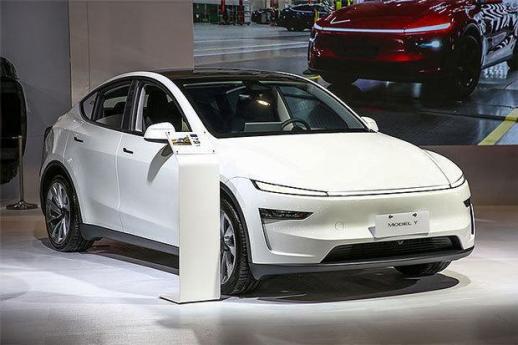 Mercedes-Benz Korea to Launch Direct Online Sales as Imported Brands Expand Fixed-Price Model Imported carmakers are moving away from dealer-led sales toward online direct-to-consumer models. Following Tesla, brands such as Polestar, Honda and Volvo (for new vehicles) have expanded direct sales, and industry No. 2 Mercedes-Benz is set to introduce its own system in the first half of this year. Supporters say cutting distribution margins and price markups could expand the overall market, while critics warn it could weaken dealer-built service networks and hurt consumers. According to industry officials on the 19th, Mercedes-Benz Korea will begin fully implementing its direct-sales model, “Retail of the Future” (RoF), starting in April. Under RoF, the Korean unit distributes vehicles directly and runs pricing closer to a fixed-price system. The key feature is that headquarters will manage vehicle prices, inventory and delivery dates, allowing customers to buy at the same price nationwide. To integrate systems, the company has significantly increased staff based in South Korea, while dealers will focus on showroom operations, after-sales service and specialized repairs. A Mercedes-Benz Korea official said the company communicated steadily with dealers for about two years to address misunderstandings and distrust that could arise early in the rollout, and now believes the groundwork is in place for stable adoption. The official said consumers can expect benefits from removing distribution margins and moving toward fixed pricing, while dealers, as official partners, can concentrate on improving service quality, calling it a win-win. More imported brands have adopted direct sales in recent years. Tesla Korea has used direct sales since entering the market, and Volvo Korea, Polestar Korea, Honda Korea, Toyota Korea, Stellantis Korea and Cadillac Korea have expanded direct-sales programs over the past five years. These brands allow customers to buy vehicles online and check inventory and delivery timing in real time. An industry official said the traditional dealer system often forced consumers to shop around because prices, delivery dates and service benefits varied by importer, but direct sales unify pricing and channels, making management easier for headquarters and purchases more convenient for customers. Dealers, however, say wider adoption of direct sales could limit competition, raise imported-car prices over the long term and lead to negative effects such as fewer service centers. Tesla, which has maintained direct sales, sells about 60,000 vehicles a year in South Korea but has only 16 service locations nationwide. A dealer official said dealers have helped expand the imported-car ecosystem despite low margins of about 3% to 5% of vehicle prices, taking on inventory purchases, financing interest, large showroom openings and building after-sales networks. The official said that as direct sales expand and sales margins shrink, dealers could face disruptions in operating the large service centers they currently run. 2026-02-19 18:04:20
 -
 Hyundai to Supply 20 More Ioniq 5 Robotaxis in U.S., Expanding Physical AI Push Hyundai Motor Group is expanding robotaxi supply in the United States, accelerating its autonomous-driving business built around what it calls “physical AI.” The automaker is supplying vehicles not only to its self-driving unit Motional, which is preparing to commercialize robotaxis this year, but also to Google-owned Waymo as it seeks a bigger role in the U.S. autonomous-driving ecosystem. After drawing attention at CES 2026 in Las Vegas last month with the humanoid robot “Atlas,” Hyundai is now seeing its push into autonomous-driving commercialization take clearer shape, with robotics and self-driving technology at the center of its physical AI strategy. According to industry sources on Feb. 19, Hyundai sold 20 Ioniq 5 robotaxis in the United States in January alone, exceeding its total U.S. robotaxi sales for all of last year, which stood at 16 vehicles. The vehicles are believed to have been supplied to robotaxi operators such as Waymo and Motional. Waymo, widely viewed as a leading player in autonomous driving, is running commercial services in five major U.S. cities and plans to offer services in more than 20 cities, including in Texas and Florida, by the end of this year. Hyundai said in October 2024 that it had signed a strategic partnership with Waymo to integrate Waymo’s sixth-generation fully autonomous technology, the Waymo Driver, into the Hyundai Ioniq 5. At the time, Hyundai President Jose Munoz said, “Hyundai and Waymo share a vision of making the way people move safer, more efficient and more convenient,” adding that “Waymo’s innovative technology is improving road safety in the regions where it operates, and the Ioniq 5 is an ideal vehicle to help expand that vision.” Ioniq 5 vehicles for Waymo are assembled at Hyundai Motor Group Metaplant America, the company’s EV production facility in Georgia. Initial road tests of the Ioniq 5 equipped with Waymo technology are reported to have begun late last year. Hyundai’s autonomous-driving joint venture Motional has also announced plans to commercialize a Level 4 driverless service in Las Vegas within this year, suggesting Ioniq 5 robotaxi supply will continue to rise. Hyundai aims to use Ioniq 5 supply to Waymo and Motional to secure positions in the U.S. autonomous-driving market as both a robotaxi hardware platform supplier and a software player. Kim Dong-young, a senior researcher at the Korea Development Institute, said Hyundai is working to raise its software competitiveness to match its hardware strength. “Collaboration with AI companies is likely to go beyond simply supplying hardware and could be linked to software development as well,” he said. Hyundai Motor Group is also investing in humanoid robots, another pillar of its physical AI strategy. Hyundai plans to invest 50.5 trillion won in AI robotics by 2030 and is building a robot-dedicated factory in the United States with annual capacity of 30,000 units.* This article has been translated by AI. 2026-02-19 18:03:30
 -
 Volvo S90 and XC90 Sales Jump in South Korea After New Models Begin Deliveries Volvo’s flagship S90 sedan and XC90 SUV are posting rising sales in South Korea. Volvo Car Korea said on the 19th that since full-scale deliveries of the new S90 and XC90 began in July last year, sales have increased 57.5% and 95.5%, respectively, compared with the first half of the year. The S90 is the brand’s flagship sedan, combining Volvo technology with the lifestyle the company says it aims to deliver. It measures 5,090 millimeters in length with a 3,060-millimeter wheelbase, which Volvo said provides roomy comfort beyond its class. The interior reflects a “Swedish living room” concept, using a mix of high-quality materials. Rear air suspension, previously limited to the top trim, is now standard on the B5 Ultra trim. Volvo said the system automatically adjusts ride height and damping based on road conditions and load. The plug-in hybrid T8 model was named “Hybrid Sedan of the Year” by the Korea Automobile Writers Association (AWAK), which cited both the electrified powertrain’s completeness and the sedan’s quietness and driving quality. The XC90 is Volvo’s representative SUV, showcasing the company’s technology and product competitiveness. Exterior updates focus on new matrix LED headlights and changes to the front bumper, fenders and hood details. Like the S90, the cabin follows the “Swedish living room” theme, combining recycled polyester textile, wood trim and upgraded ambient lighting. The XC90 is offered with a plug-in hybrid T8 and a mild-hybrid B6 powertrain, which Volvo said deliver efficiency and performance suited to the electrification era. Both vehicles come standard with Volvo’s next-generation user experience system, “Volvo Car UX.”* This article has been translated by AI. 2026-02-19 18:03:00
 -
 Samsung's historic surge lifts KOSPI to record close SEOUL, February 19 (AJP) - South Korea's benchmark KOSPI set a fresh record on Thursday as trading resumed following the Lunar New Year break, led by Samsung Electronics' historic close above 190,000 won. A buy-side sidecar was triggered on the KOSDAQ at 10:41 a.m. amid an aggressive rally in mid- and small-cap shares. The KOSPI jumped 3.1 percent to close at 5,677.3 points, marking a fresh all-time high after hitting an intraday peak of 5,681.7. The strong upward momentum was broad-based across large-cap stocks, with the KOSPI 200 climbing 3.2 percent to 840.2. The rally was symbolically anchored by Samsung Electronics, which settled at 190,000 won, up 5.9 percent, marking the first-ever close above the 190,000 level. The stock briefly touched 190,900 won within the market, setting a new record high. Gains followed overnight strength in U.S. technology shares, with continued enthusiasm surrounding artificial intelligence and semiconductor demand. SK hynix added 1.6 percent to 894,000 won, while semiconductor equipment makers in the KOSDAQ market posted double-digit gains, reflecting renewed expectations for memory supply tightness and high-bandwidth memory pricing momentum. The KOSDAQ soared 4.9 percent to 1,160.7, significantly outperforming the main board. A buy-side sidecar was triggered at 10:40 a.m., signaling an exceptional surge in futures-linked buying. The measure marked heightened volatility on the upside, underscoring strong speculative momentum in growth stocks. Institutional investors led buying on the KOSPI with purchases of 1.64 trillion won, while foreigners were modest sellers of 923.2 billion won. Retail investors offloaded 860.5 billion won, reflecting profit-taking at elevated levels. On the KOSDAQ, both foreign and institutional investors turned strong buyers. Beyond semiconductors, policy-driven themes gained traction. Shares of Hanwha Solutions surged 27.5 percent to 58,500 won, while Samsung SDI advanced 9 percent to 408,000 won, leading gains in the energy equipment and services sector, which rose more than 16 percent. Investor attention also shifted to shipbuilding stocks after the U.S. administration unveiled its "America's Maritime Action Plan," which calls for cooperation with allied shipyards, including those in South Korea, under a so-called bridge strategy. Under the proposal, initial vessel construction would take place in allied countries before production gradually transitions to U.S. facilities. The framework is seen as opening potential early-stage contract opportunities for Korean shipbuilders, given their established infrastructure and technical competitiveness. However, uncertainties remain over how existing regulatory frameworks, such as the Jones Act, would be addressed or circumvented. Despite these unresolved questions, market participants broadly viewed the announcement as structurally supportive for Korea's globally competitive shipbuilding sector. Korean won strengthened to 1,447.3 per dollar, down 5.7 won from the previous session, easing pressure on foreign flows. Precious metals advanced, with gold rising 2.1 percent to $5,009.5 per troy ounce and silver climbing 5.5 percent to $77.6. Across Asia, Japan's Nikkei 225 rose 0.6 percent to 57,467.8, while China's Shanghai Composite fell 1.3 percent to 4,082.1. Wednesday's session underscored a powerful convergence of semiconductor momentum, policy-driven industrial optimism and liquidity-driven small-cap strength, with Samsung's 190,000-won milestone serving as the defining symbol of the rally. 2026-02-19 18:00:34
 -
 When Seoul becomes the screen: From neon signs to BTS's digital stage SEOUL, February 19 (AJP) - On March 21, Gwanghwamun will not need to be transformed into a concert venue. It already is one. Along the 12-lane, 512-meter boulevard leading to the historic gate, walls of massive digital displays are permanently embedded into the cityscape. Office towers, commercial buildings and transit hubs double as screens. When BTS stages its comeback there, livestreamed on Netflix, the infrastructure will simply shift mode — from advertising and public messaging to performance. The streets will not be rebuilt. They will be activated. For several hours, Seoul’s everyday screens will operate as a single, synchronized stage. That ability — to reorganize public space around light and data at a moment’s notice — did not emerge by chance. It is the result of more than a century of technological accumulation, industrial policy and visual experimentation. Korea’s outdoor advertising began modestly. During the Joseon Dynasty, shopkeepers relied on wooden signboards and tavern markers. In 1886, commercial notices appeared in Hanseong Jubo, the country’s first modern newspaper. Advertising was informational, functional and limited in scale. After the Korean War armistice in 1953, hand-painted storefront signs spread across a devastated capital. In a city rebuilding from rubble, a sign meant survival. Visibility meant existence. The skyline changed in the late 1960s. When restrictions on neon signage were lifted in 1967, red and blue lights spread across Myeong-dong and Jongno. Rooftops began to glow. Commercial districts acquired night identities. Neon became the visual language of industrial ambition. It mirrored South Korea’s rapid economic ascent. Factories multiplied. Exports surged. Cities learned to shine. For the first time, Seoul advertised itself after dark. The next transformation arrived in the late 1980s. Around the 1988 Seoul Olympics, full-color electronic billboards appeared. Static signs gave way to motion. Images began to circulate. Advertising became cinematic. In the 2000s, LED technology and media facades accelerated that shift. Screens were no longer attached to buildings. They became part of them. Architecture and media fused. Few places capture this evolution better than COEX K-POP Square in Samseong-dong. Its 81-by-20-meter display dominates the district like an urban theater. By 2020, monthly advertising slots cost about 70 million won. Full-day exclusivity commanded similar prices. What began as neon craftsmanship had become premium digital real estate. The market followed the technology. South Korea’s outdoor advertising sector has grown by about 7 percent annually since 2017. It surpassed 4 trillion won in 2022 and reached an estimated 4.3 trillion won in 2024. Digital out-of-home advertising has driven most of that growth. Revenue from digital formats jumped nearly 34 percent in 2022 and rose again in 2023. Globally, the sector is projected to double from 2020 levels by 2027. Once grouped with print and broadcast as “legacy media,” outdoor advertising has been rebuilt as data infrastructure. Today, screens are traded through automated platforms. Campaigns are adjusted by time, traffic flow, weather and demographics. Exposure is measured, priced and optimized in real time. The city itself has become a marketplace of attention. Seen in that context, broadcasting a BTS concert across Gwanghwamun’s urban screens is not merely a fan-oriented experiment. It is the visible outcome of decades of industrial strategy and technological layering. On March 21, as BTS performs and Gwanghwamun’s screens light up in unison, Seoul will not simply host a show. It will function as one. In that glow, projected across glass and stone, will be the story of how Seoul made the night its stage. 2026-02-19 17:59:32
 -
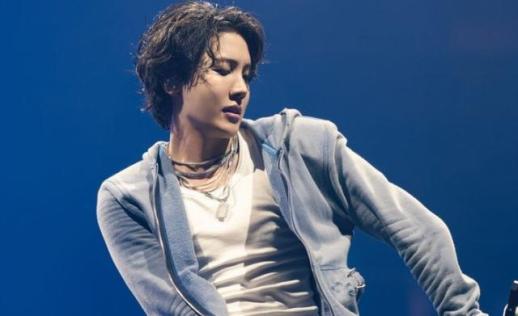 BTS Comeback D-30: J-Hope, a messenger of hope through lyrics, rap, and giving *Editor’s Note — As BTS prepares to return as a full seven-member act with a new album set for March 20 and an open-stage performance at Gwanghwamun on March 21, following a near four-year hiatus for rotational military service, AJP revisits the group’s 13-year trajectory. This series reexamines BTS’s history, music, performance identity and enduring appeal. The fourth installment traces the roots and growth of J-Hope. SEOUL, February 19 (AJP) - By the time BTS gathers again on stage this spring, the distance between where J-Hope began and where he now stands will be measured not only in chart rankings and stadium crowds, but also in quiet acts of continuity. J-Hope celebrated his 32nd birthday on Feb. 18 not with spectacle, but with another donation. Child welfare agency Green Umbrella announced that he had contributed 100 million won to support students at his alma mater. From 2019 to 2023, he provided scholarships to students at Gwangju International High School and Jeonnam Girls’ Commercial High School facing financial hardship — a pattern of giving that reflects his enduring ties to his hometown. With the latest contribution, he became the 14th member of the Green Noble Trinity Club, reserved for donors whose cumulative giving exceeds 1 billion won. His philanthropy extends beyond education. Proceeds from the “Human Hope: A Joopiter Special” auction, linked to his Human Made collaboration, were donated to animal welfare groups. The birthday boy separately contributed 200 million won to Asan Medical Center to support pediatric treatment, home medical care and psychological services for critically ill children. Such gestures have become a steady undercurrent in his public life. But they are, in many ways, an extension of the discipline and responsibility that have defined his career. From street dancer to center of gravity “I’m your HOPE, you’re my HOPE, I’m J-Hope.” Since BTS’s debut in 2013, the greeting has served as both signature and promise. Born Jeong Hoseok on Feb. 18, 1994, he joined Big Hit Entertainment in 2010 and debuted as the group’s main dancer and lead rapper. Before entering the idol system, he trained in popping at Joy Dance Academy in Gwangju and performed with the street crew Neuron under the nickname “Smile Hoya.” The street dancer never disappeared. His foundation in popping, wave techniques and freestyle remains visible in his stage work, lending BTS performances a sense of elasticity and rhythm that is difficult to replicate. Choreographer Son Sung-deuk and fellow members have repeatedly cited him as the group’s technical anchor — the performer who stabilizes timing, spacing and transitions when live stages become unpredictable. In a group built on precision, J-Hope has long functioned as its internal metronome. Building a solo identity His solo career unfolded alongside his group role, not in competition with it, but in dialogue. In 2018, his mixtape Hope World entered the Billboard 200, signaling that his appeal could stand independently. The following year, “Chicken Noodle Soup” revived a classic dance track for a new generation. With Jack In The Box in 2022, he pivoted sharply. The album replaced brightness with tension, playfulness with self-examination. Tracks such as “MORE” and “Arson” presented an artist willing to interrogate ambition, exhaustion and identity. In March 2023, “On the Street” returned to quieter ground, blending lo-fi hip-hop with reflections on his beginnings. His most commercially successful single to date, “Killin’ It Girl” featuring GloRilla, arrived in 2025, marking his strongest solo chart showing and reinforcing his growing international footprint. Projects such as HOPE ON THE STREET VOL.1 in 2024 and “Sweet Dreams” in 2025 further expanded his stylistic range, reconnecting him with street dance while exploring R&B and melodic hip-hop. The pattern is consistent: experimentation anchored by craft. Service, return and continuity J-Hope completed his mandatory military service in June 2025 and formally resumed public activities soon afterward, rejoining a group preparing for its first full reunion in years. On stage, his defining elements remain intact — wave sequences, popping accents, controlled improvisation, and signature openings such as those in “MIC DROP.” Yet the performances now carry added weight: the assurance of an artist who has tested himself outside the group and returned with clearer intent. Within BTS, he continues to drive energy and cohesion. As a solo artist, he has built a catalog marked by steady growth rather than abrupt reinvention. And beyond music, his philanthropy has reinforced an image of responsibility that resonates quietly but persistently. In K-pop, optimism is often packaged as concept. For J-Hope, it has functioned more as practice. It appears in the discipline of rehearsal rooms, in the consistency of donations, in the willingness to take creative risks without abandoning fundamentals. It is visible in how he balances spectacle with substance, popularity with accountability. As BTS approaches its long-awaited return, J-Hope stands not as a symbol of nostalgia, but as evidence of maturation — an artist who has learned how to sustain momentum across changing eras. The greeting still opens performances. But after thirteen years, it sounds less like a slogan and more like a record of work done. The next installment will focus on RM. 2026-02-19 17:49:46