
Journalist

AJP
-
 South Korea Surveys Public on Raising Palace and Royal Tomb Admission Fees The government is moving to review raising admission fees for royal palaces and tombs, which have been frozen for 20 years. Before deciding whether to raise prices and by how much, it is seeking public input to reduce potential controversy. The Korea Heritage Service said Thursday it is conducting a public survey titled “Public Perception Survey on Realizing Palace and Royal Tomb Admission Fees.” The survey is being run through the Sotong24 website and closes Friday. The survey has six questions, including what respondents consider an appropriate fee level, whether they would still visit if prices rise, and views on the current system that applies the same admission fee to Koreans and foreigners. It also asks whether to keep a differentiated pricing system or adopt a single-fee structure. The questionnaire lays out specific price ranges. For Gyeongbokgung and Changdeokgung, which currently charge 3,000 won, it asks respondents to choose among: 3,000 won (no change); more than 3,000 won to less than 5,000 won; 5,000 won to less than 8,000 won; 8,000 won to less than 10,000 won; or 10,000 won or more. For Deoksugung, Changgyeonggung, Jongmyo Shrine and the Joseon royal tombs, which currently charge 1,000 won, the ranges are: 1,000 won (no change); more than 1,000 won to less than 3,000 won; 3,000 won to less than 5,000 won; 5,000 won to less than 8,000 won; or 8,000 won or more. The survey follows a view that current fees do not reflect inflation and rising maintenance costs. Admission is 3,000 won for Gyeongbokgung and Changdeokgung; 1,000 won each for Deoksugung, Changgyeonggung, Jongmyo and the Joseon royal tombs; and 500 won for Sejong relic sites. By comparison, Buckingham Palace charges 65.7 pounds (about 120,000 won) and the Palace of Versailles charges 25 to 35 euros (about 43,000 to 60,000 won). Calls to raise fees have circulated inside and outside the government. President Lee Jae-myung, in a December briefing on the Korea Heritage Service’s 2026 work plan, noted that taxpayer money is used to manage the sites and said, “It is not substantively fair for a small number of visitors to enjoy the benefits.” While repeatedly stressing the need to adjust fees, he added, “If you just (raise them), people feel upset and disappointed, so it needs to be adjusted after good explanations and a process of persuasion.” Based on the survey results, the government is expected to gauge social consensus on the need for changes and an appropriate level, then draft specific improvements. A recent study suggests some support for fees near 10,000 won. According to public hearing materials for a policy study titled “Policy Research on Measures to Realize Service Admission Fees for Palaces and Tombs,” published by the Korea Heritage Service’s Royal Palaces and Tombs Center and the CST-affiliated Cultural Administration Research Institute, a survey of 2,341 visitors found respondents said they could pay an average of 9,730 won for palaces and Jongmyo Shrine and 8,458 won for the Joseon royal tombs. Separately, as the National Museum of Modern and Contemporary Art has raised admission for some special exhibitions by 60%, the National Museum of Korea — facing a surge in visitors — is also reviewing charging for its permanent exhibition. The museum is developing online reservation and ticketing, on-site ticketing, contactless electronic ticket checks, and mobile tickets using QR codes.* This article has been translated by AI. 2026-02-19 14:21:27
 -
 North Korea hails deployment of multiple rocket launchers ahead of party congress SEOUL, February 19 (AJP) - North Korea deployed some 50 multiple rocket launchers, the state-run Korean Central News Agency (KCNA) reported on Thursday. According to KCNA, a ceremony for the deployment of a 600-mm large-caliber multiple launch rocket system (MLRS) "took place with splendor" in Pyongyang the previous day, with Kim Jong-un in attendance, accompanied by Workers' Party officials, munitions industry workers and other military personnel. In a speech, Kim said, "It can be said to be a weapon that has virtually no difference from a high-precision ballistic missile in terms of precision and power," hailing it as "the one and only weapon in the world, has completely changed the role and conception of artillery accepted by modern warfare." He described it as incorporating artificial intelligence-based technology and a compound guidance system, making it "appropriate for a special attack" to carry out a "strategic mission." He added, "I am sure that no other countries in the world would be able to attain the technology that can match this class of weapon system within several years to come." "Self-reliant defense capability is our lifeline and a source of our strength, and uninterrupted upgrading and rapid reinforcement of the means is our invariable target," he stressed. He also hinted that plans to further strengthen the country's defense capabilities including the development of new weapons, will be announced at the upcoming party congress, which is expected to be held later this month. 2026-02-19 14:13:16
 -
 Naver Pay Reports Payment Failures, Says Emergency Fix Underway Naver Pay said a service outage disrupted payments and the use of points. In a notice posted on the 19th, the company said errors were affecting some services and it was conducting an emergency check, adding it was working to restore service as quickly as possible. The problems began around noon and included failures to view and apply points on order forms, errors when checking payment and event histories, the inability to use points and money for in-store payments, and failed Pay Money Card transactions. Naver Pay said it would issue another notice once service is fully restored. A company official said services related to Naver Pay points and money were experiencing errors and that the company was making an all-out effort to normalize operations.* This article has been translated by AI. 2026-02-19 14:09:00
 -
 Stray Kids’ ‘S-Class’ music video tops 300 million YouTube views Stray Kids’ music video for “S-Class” has surpassed 300 million views on YouTube. The video for “S-Class,” the title track from the group’s third full-length album “5-STAR,” released June 2, 2023, reached 300 million views on the morning of Feb. 19. The milestone gives Stray Kids six music videos with more than 300 million views, following “God’s Menu,” “Back Door,” “Thunderous,” “MANIAC” and “Rock.” “S-Class,” the title track from “5-STAR” — Stray Kids’ third No. 1 album on Billboard’s main albums chart, the Billboard 200 — was written and composed by Bang Chan, Changbin and Han of the group’s producing unit 3RACHA. The song carries a message about standing out and shining among the unusual and the special. Set in Seoul, the music video highlights the eight members’ performance and polished visuals, drawing favorable responses from fans in South Korea and abroad. Stray Kids have added more milestones since the start of this year. They recently ranked No. 2 on the International Federation of the Phonographic Industry’s Global Artist Chart, the only K-pop act in the top 10. On Spotify, the group’s first full-length repackage album “IN生” surpassed 1.5 billion cumulative streams, and “God’s Menu,” the title track from its first full-length album “GO生,” topped 500 million plays — a first for a fourth-generation K-pop boy group. Their world tour concert film “Stray Kids: The DominATE Experience,” released on Feb. 6 local time, also led the global box office for the first weekend of February. Stray Kids will hold their sixth official fan meeting, “Stay in Our Little House,” four times at Inspire Arena in Incheon on March 28-29 and April 4-5. In June and September, they are set to headline major music festivals, including New York’s The Governors Ball Music Festival and Rock in Rio in Brazil.* This article has been translated by AI. 2026-02-19 14:03:00
 -
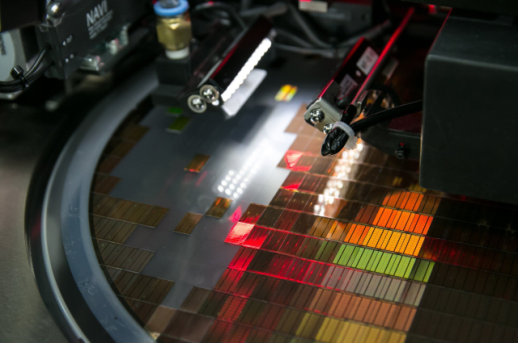 Hiring plans reflect chip boom vs weak consumption in Korea SEOUL, February 19 (AJP) -Electronics and semiconductor manufacturers enjoying an exceptional, record-setting second year from the artificial intelligence boom are set to lead hiring among South Korean employers in 2026, according to a new survey by HR technology company Incruit released Thursday. Incruit’s survey of 873 companies — including 102 large corporations, 122 mid-sized firms and 649 small and medium-sized enterprises — found that 84.4 percent of electronics and semiconductor companies plan to hire new university graduates this year, the highest among all industries. The survey was conducted between Jan. 5 and 27 through email questionnaires and telephone interviews with HR managers. The figure marks a 23.8 percentage-point increase from a year earlier, reflecting strong business conditions driven by surging demand for high-value chips used in artificial intelligence servers and data centers and competition over chipmaking engineers. Not just memory makers like Micron, U.S. big-tech names including Nvidia, Google and Tesla are aggressively chasing Korean engineers due to Korea's edge in chipmaking. Nvidia, the world’s leading supplier of AI accelerators and the largest buyer of HBM chips, is currently advertising senior memory system engineer positions at its Santa Clara headquarters, with base salaries of up to $356,500. The roles require more than a decade of experience in DRAM design and deep knowledge of HBM, a profile that closely matches engineers at Korea’s two dominant memory producers. HBM-dominant SK hynix’s revenue and operating income rose 47 percent and 101 percent to $68 billion and $33 billion, respectively. Its annual operating profit reached a record 47.2 trillion won, surpassing Samsung Electronics’ 43.6 trillion won. Google and Broadcom, which jointly develop tensor processing units for Google’s AI infrastructure, are also hiring HBM engineers in Silicon Valley. Google has posted openings for silicon validation engineers focused on characterizing HBM performance, while Broadcom is seeking specialists in design-for-test verification across HBM, DDR and high-speed interface technologies. Tesla has taken a more direct approach in Korea. Tesla Korea posted a job listing on Feb. 15 for AI chip design engineers as part of a project to develop proprietary AI processors for mass production. The recruitment drive was amplified by Chief Executive Elon Musk, who reposted the opening on his X account earlier this week. Industry analysts say the global competition for Korean chip engineers reflects the strategic importance of memory technology in the AI race. Reviving construction sector Following semiconductors, the construction, civil engineering, real estate and leasing sector ranked second in Incruit’s survey, with 83.3 percent of firms planning to hire, up sharply from 57.9 percent a year earlier. The IT, telecommunications and gaming sector followed at 80.5 percent. Media, advertising, education and publishing, and healthcare and pharmaceuticals also recorded relatively high hiring intentions, each approaching or exceeding 75 percent. Underscoring the prolonged slump in consumption, travel, accommodation and aviation sector posted the lowest hiring rate at 56.7 percent. Apparel, footwear and other manufacturing firms followed at 63.3 percent, while distribution and logistics companies stood at 64.0 percent. “These sectors are closely tied to household consumption and the broader real economy, which remains under pressure,” Incruit said. In terms of year-on-year changes, construction-related industries and electronics and semiconductors showed the largest gains in hiring plans, rising by 25.4 and 23.8 percentage points, respectively.Transportation recorded the steepest decline, with hiring intentions falling 4.5 percentage points to 64.3 percent. Automobile and auto parts manufacturers also saw a drop of 4.1 points to 66.7 percent. 2026-02-19 13:49:51
 -
 Pulmuone's U.S. tofu sales hit record high on protein demand, market expansion SEOUL, February 19 (AJP) - South Korean food company Pulmuone posted record tofu sales in the United States last year, driven by surging demand for plant-based protein and a broadening retail footprint. Pulmuone's U.S. tofu revenue rose 12.2 percent year-on-year to about 224.2 billion won ($154.4 million) in 2025, the company said Thursday. Tofu accounts for roughly half of the U.S. unit's total revenue, and the company has held the top market share position in the American tofu segment for 11 consecutive years. The fastest-growing product was its High Protein Tofu line, which nearly tripled in sales from 15.6 billion won in 2021 to 41.5 billion won in 2024. Delivering 14 grams of protein per 85-gram serving, the product has found resonance among consumers looking to replace meat with cleaner protein sources. "The demand for tofu in the U.S. is steadily increasing as the flexitarian population grows and the trend of consuming high-protein, plant-based foods instead of meat spreads," said KS Cho, CEO of Pulmuone Foods USA. "By expanding our supply and actively targeting new channels alongside existing retail growth, we plan to further solidify our leadership in the U.S. tofu market." Pulmuone entered the U.S. tofu market in earnest after acquiring the country's leading tofu brand Nasoya in 2016. The company now operates three tofu manufacturing plants — two in Ayer, Massachusetts, and one in Fullerton, California — and sells its products across about 15,000 retail locations, including Walmart, Target, Publix, and Kroger. The company said it secured major new retail accounts in the third quarter of last year and plans to complete a production line expansion at its Ayer facility during the first quarter of this year. It is also pursuing additional capacity at the Fullerton plant and eyeing foodservice, school cafeterias, and B2B food ingredient channels as avenues for further growth. 2026-02-19 13:45:30
 -
 Cho Seong-ha, Shim Eun-kyung cast as leads in National Theater Company’s 'Banya Ajae' Actors Cho Seong-ha and Shim Eun-kyung will star in the National Theater Company of Korea’s play “Banya Ajae,” which opens in May, the company said on the 19th. “Banya Ajae” is a Korean adaptation of Anton Chekhov’s classic play “Uncle Vanya.” Cho will play Park I-bo (Vanya), a man who devoted his life to supporting his late sister’s husband, only to realize his brother-in-law is an incompetent intellectual, leaving him overwhelmed by the sense that his life has been denied. Shim will play Seo Eun-hee (Sonya), Park’s niece, who is kind and diligent but lives with the pain of a failed unrequited love and insecurity about her appearance. Lim Kang-hee will play Oh Young-ran (Yelena), and Kim Seung-dae will play the doctor Ahn Hae-il (Astrov). The cast also includes Son Sook (Yang Mal-rye), Nam Myeong-ryeol (Seo Byeong-hu), Ki Ju-bong (Lee Ki-jin) and Jeong Gyeong-sun (Ma Jeom-jeom). The production runs May 22-31 at the Haeoreum Theater at the National Theater of Korea. Tickets are available through the National Theater Company of Korea, the National Theater of Korea and the NOL Ticket websites. 2026-02-19 12:24:00
 -
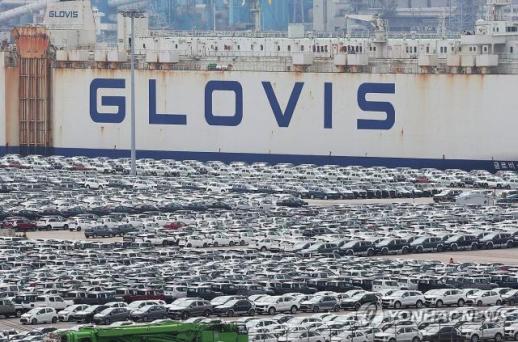 Korea's auto exports jump 21.7% to $6.07b, second-highest on record for Jan SEOUL, February 19 (AJP) -South Korea’s auto exports opened the year on a strong footing, extending momentum from a record 2025, as a weak won and resilient demand from Europe and other markets for hybrid and secondhand vehicles helped offset lingering tariff pressures in the United States. Outbound shipments in January rose 21.7 percent from a year earlier to $6.07 billion, the second-highest export total ever recorded for the month, according to data released by the Ministry of Trade, Industry and Energy Thursday. The solid start follows a record $72 billion in auto exports in 2025, marking three consecutive years above the $70 billion threshold, driven by environmentally friendly vehicles and used-car exports. Hybrid vehicle exports reached $1.71 billion in January, up 85.5 percent on year, while electric vehicle exports increased 21.2 percent to $780 million. Eco-friendly models accounted for 42 percent of total auto export value during the month. By region, shipments to the United States rose 19.2 percent to $2.66 billion as tariff rate was lowered 15 percent from 25 part as a part of a trade deal reached in November. Exports to the European Union climbed 34.4 percent to $871 million, with other European markets surging 44.8 percent. Shipments also expanded to Latin America, Oceania and Africa. Exports to Asia, however, fell 30.1 percent, while those to the Middle East edged down 0.4 percent. In volume terms, auto exports increased 23.4 percent on year to 247,000 units. Eco-friendly vehicles accounted for 92,000 units, up 51.5 percent, representing 37.4 percent of total export volume. Domestic sales also strengthened. January auto sales rose 14 percent to 121,000 units, led by a 48.3 percent surge in eco-friendly vehicle sales to 58,000 units. Electric vehicle sales more than quintupled from a year earlier to 10,098 units. Production climbed 24.1 percent to 361,000 units, supported by both export and domestic demand. All five major automakers increased output from a year earlier, with Renault Korea posting a sharp rebound after temporary factory suspensions in early 2025 for electric vehicle facility upgrades. The ministry attributed the January gains partly to more working days compared with a year earlier, as this year’s Lunar New Year holiday fell in February rather than January. 2026-02-19 11:45:30
 -
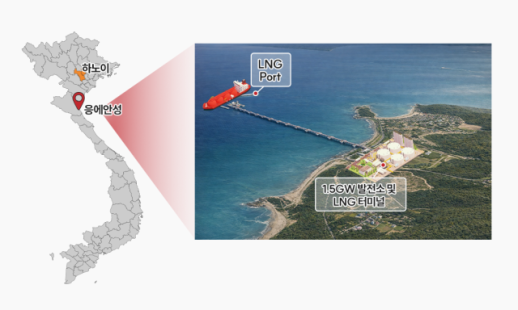 SK Innovation selected to develop $2.3 bln LNG power project in Vietnam SEOUL, February 19 (AJP) - SK Innovation has been selected as the developer of a $2.3 billion liquefied natural gas power project in northern Vietnam, marking a significant step in the South Korean energy company's push to expand its global LNG footprint. The project, located in the Quynh Lap area of Nghe An province, about 220 kilometers south of Hanoi, calls for the construction of a 1,500-megawatt combined-cycle gas power plant, a 250,000-cubic-meter LNG terminal, and a dedicated seaport. SK Innovation is developing the project through a consortium with Vietnamese state-owned power producer PV Power and local firm NASU. Construction is slated to begin in 2027, with the terminal and power plant targeted for completion by 2030. The Quynh Lap project drew competitive interest from the outset — companies from South Korea, Japan, and Qatar cleared preliminary screening when the project was first tendered in 2024, with the formal developer selection process launched in January this year. "This selection proves that SK's unrivaled LNG value chain competitiveness resonates in the global market," an SK Innovation official said, adding that the company aims to address Vietnam's chronic power shortages while spurring regional economic growth in Nghe An province. Vietnam has long grappled with electricity deficits driven by rapid industrialization and population growth, with its grid heavily reliant on coal and hydropower. SK Innovation said it plans to use LNG as a bridging fuel before transitioning to carbon-free power sources over the long term. The company aims to leverage the Quynh Lap project as a springboard to replicate its model across Vietnam, building what it calls an "energy-industry cluster" network. SK Innovation is targeting a global LNG portfolio of 10 million tons per year by 2030, up from its current annual volume of about 6 million tons. The deal comes amid sluggish last year results. SK Innovation disclosed last month that its consolidated revenue rose 8.2 percent year-on-year to 80.29 trillion won ($55.32 billion) in 2025, while operating profit climbed 25.8 percent to 448.1 billion won. However, the company swung to a net loss of 5.41 trillion won, a 127.9 percent deterioration from the prior year, prompting the company to forgo dividend payments. The company attributed the bottom-line weakness to sluggish off-season performance at its E&S unit and softening profitability in its battery business, which offset the benefits of firm refining margins and solid results from its lubricants segment. Stocks of SK Innovation traded at 116,900 won ($80.55) on 11:30 a.m., 2.72 percent higher from the previous session. 2026-02-19 11:38:15
 -
 South Korean citizens proposed for Nobel Peace Prize for defending democracy SEOUL, February 19 (AJP) - South Korean citizens have been proposed for the Nobel Peace Prize for defending democracy by stopping former disgraced President Yoon Suk Yeol's martial law debacle in 2024. A group of professors led by Kim Eui-young at Seoul National University submitted a recommendation to the Norwegian Nobel Committee last month, proposing the citizens collectively as a candidate for the Nobel Peace Prize. The group includes Pablo Oñate, a professor at the University of Valencia and former president of the International Political Science Association (IPSA); David Farrell, a professor at the University College Dublin and former president of the European Political Science Association (EPSA); and Azul Aguiar, a professor at the University of Guadalajara and president of the Latin American Political Science Association. Sharing the news on X, formerly Twitter, earlier this week, Lee said, "get it done." He added, "It was possible because this is , a great nation of great people that will stand as a model in human history." The committee, which oversees the annual prize, accepted nominations by the end of last month, with its shortlisted candidates to be announced in early March. The final winner will be decided in October. On Dec. 3 last year, marking the first anniversary of Yoon's botched declaration of martial law, Lee said in an address to the nation that South Koreans deserved the prize. He added that such a recognition would be a "major turning point" for countries shaken by conflict and division, while demonstrating the strength of democracy and promoting peace. 2026-02-19 11:20:59