
Journalist

AJP
-
 Korean Films Win Top Honors at Italy’s Udine Far East Film Festival Korean films “Seoul at Night” and “My Name Is” won awards at Italy’s Udine Far East Film Festival (FEFF), Europe’s largest Asian film festival. Both works drew attention for confronting painful chapters of modern Korean history and earning support from audiences and critics. At the 28th FEFF, which ended on May 2 (local time), the MBC-produced documentary film “Seoul at Night,” directed by Kim Jong-woo, Kim Shin-wan and Jo Cheol-young, received the Black Dragon Audience Award, selected by critics and the media. The award is given by festival officials to only one film; this year it was shared with the Japanese film “Fujiko.” “Seoul at Night” also won the Silver Mulberry Audience Award, which corresponds to second place in the general audience vote, and received a jury special mention for the White Mulberry Award for new directors, making it a triple winner. The film covers the tense situation at the National Assembly immediately after the declaration of martial law on Dec. 3, 2024. It was the first documentary to enter the festival’s competition section and went on to take major honors. It previously won the Bill Nemtin Award at Hot Docs in Toronto, North America’s largest documentary film festival, which recognizes works credited with spurring social change. Director Jeong Ji-young’s new film “My Name Is” won an Audience Mulberry Award, drawing a strong response from local viewers. The film directly addresses the Jeju April 3 incident, a tragedy in modern Korean history, and was praised for building emotional resonance across language and cultural barriers. Executive Director Sabrina Baracetti said the film “kept a balanced tone based on real events and drew empathy from audiences worldwide,” and also praised the performances of actors Yeom Hye-ran and Shin Woo-bin. In the competition section, six Korean films were invited, including “Seoul at Night” and “My Name Is,” as well as Jang Hang-jun’s “The Man Who Lives With the King,” Kim Tae-yong’s “Number One,” Kim Do-young’s “If We,” and Yoon Ga-eun’s “Owner of the World.”* This article has been translated by AI. 2026-05-05 16:09:21
 -
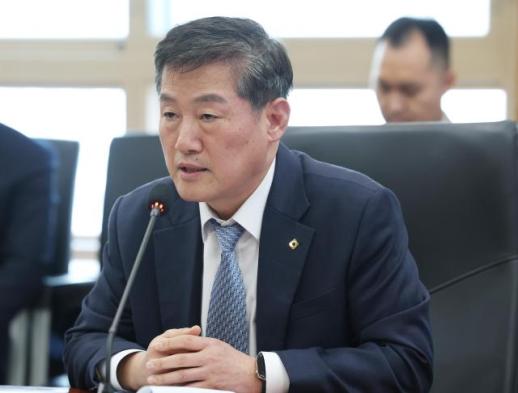 Credit Finance Association to Open Applications for Next Chair Starting May 6 The Credit Finance Association will begin recruiting candidates on May 6 as it moves into full-scale preparations to select its next chair, financial industry officials said. The appointment could be finalized as early as June. According to the financial sector on May 5, the association held a board meeting the previous day and approved in writing a plan to form its chair nomination committee. The committee will have 15 members: 14 representatives from member companies — seven from card issuers and seven from capital companies — plus one auditor. The committee will be chaired by Seong Young-su, CEO of Hana Card. The association plans to post the election notice on May 6 and accept applications through May 19. It will narrow the field through a document review on May 27. On June 4, candidates will be interviewed and committee members will hold a secret ballot. If the vote produces a single nominee, the nominee will be confirmed through a general meeting and must win a majority vote to be formally appointed chair. If the nominee comes from the private sector, the process is expected to conclude at a general meeting in June. If the nominee is a public official, the association is expected to hold a general meeting in July because the candidate must undergo an employment review under the Public Service Ethics Act. The association has been led by an acting chair for more than seven months since the term of Chair Jeong Wan-gyu ended in October last year. The delay is attributed to uncertainty in senior government personnel schedules amid discussions on reorganizing financial authorities, along with the expiration of terms for some member company CEOs, officials said. Industry officials say the sector needs a leader who can convey to the government and the National Assembly the challenges facing the industry amid fee and lending regulations. Names mentioned include Seo Tae-jong, former head of the Korea Financial Training Institute, and Kim Geun-ik, former chief of the Korea Exchange market surveillance committee. Private-sector names include Lee Dong-cheol, former vice chairman of KB Financial Group, and Woo Sang-hyeon, former vice president of BC Card. In academia, Kim Sang-bong, an economics professor at Hansung University, has also been cited.* This article has been translated by AI. 2026-05-05 16:05:31
 -
 KOSPI Nears 7,000 as Short-Selling Balances Top 20 Trillion Won, Up 36% in a Month As South Korea’s benchmark KOSPI pushes toward the 7,000 mark, short-selling balances have climbed rapidly, adding to investor caution. Short positions have stayed above 20 trillion won for three consecutive trading sessions, holding near record levels. According to the Korea Exchange on Monday, net short-selling balances in the KOSPI market totaled 20.1086 trillion won as of April 29. That was up 36.5% from 14.7313 trillion won at the end of March. The balance first topped 20 trillion won on April 27 at 20.5083 trillion won, then remained above that level on April 28 (20.3887 trillion won) and April 29. While slightly below the peak, it remains elevated. As of April 29, Hyundai Motor had the largest net short position at 1.9531 trillion won. It was followed by Hanmi Semiconductor (1.9276 trillion won), HD Hyundai Heavy Industries (1.6839 trillion won), Mirae Asset Securities (936.6 billion won), POSCO Future M (758.7 billion won), Korea Aerospace Industries (537.2 billion won), Samyang Foods (453.4 billion won), Hanwha Systems (449.8 billion won), Daewoo Engineering & Construction (374.5 billion won) and Hyundai Engineering & Construction (334.2 billion won). Short selling is a strategy in which investors borrow shares and sell them, then buy them back later to return the shares, aiming to profit if the price falls. A rise in short-selling balances is often read as reflecting expectations of a decline or increased hedging demand. The latest surge is widely seen as a move to brace for a short-term pullback after the KOSPI’s steady rally. The index on the previous trading day rose above 6,800 intraday for the first time and climbed as high as 6,900, leaving it 63.01 points short of 7,000. Still, brokerages have continued to emphasize further upside. Samsung Securities raised its year-end KOSPI ceiling to 8,400 points. Daishin Securities set a first-half target of 7,500, and Kiwoom Securities projected an upper range of 7,200 for this month. Lee Kyung-min, a researcher at Daishin Securities, said valuation pressure remains limited even as the market hits fresh highs. He said the KOSPI’s 12-month forward price-to-earnings ratio stood at 7.12 as of April 30, “still in undervalued territory.” He added that 12-month forward earnings per share rose to 926.8 points at the end of April from 666.6 points at the end of March, and said that given upward revisions to earnings forecasts, “there is still ample room for further gains.”* This article has been translated by AI. 2026-05-05 16:04:40
 -
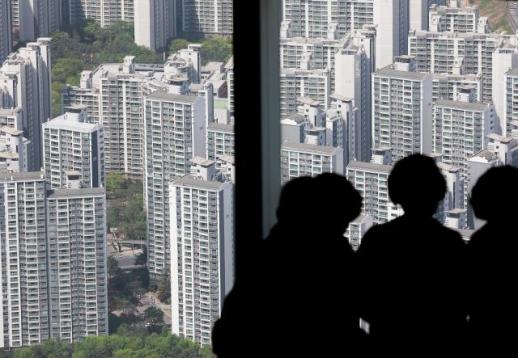 Seoul Area Jeonse Supply-Demand Imbalance Hits Worst Level in Five Years The jeonse rental market in the Seoul metropolitan area is showing a supply-demand imbalance approaching the level seen during the 2020 jeonse crisis. With Seoul’s jeonse supply-demand index at its worst level in five years, more households unable to secure leases are shifting to buying midpriced homes in Seoul or apartments in nearby Gyeonggi Province. According to KB Real Estate statistics released on the 5th, the monthly jeonse supply-demand index for the capital area (Seoul, Gyeonggi and Incheon) stood at 176.8 last month, the highest since August 2021 (179.1). Incheon posted 181.4, its highest since October 2021, while Gyeonggi came in at 175.1, reaching a critical level for the first time in 56 months since August 2021. In Seoul, the index for the city’s 14 northern districts rose to 187.2 last month, the highest since November 2020 (190.7), a 65-month high. The shortage is also visible in listings. Asil data show that the Boram Apartments complex in Sanggye-dong, Nowon-gu, with about 3,315 households, had zero jeonse listings as of that day. A local broker said the remaining listings — fewer than five — were all taken by the end of last month. SK Bukhansan City in Gangbuk-gu, a 3,830-household complex, had only two registered jeonse listings. The article attributes the decline in rental supply to tighter owner-occupancy requirements after the Oct. 15 measures, which designated all of Seoul as a land transaction permit zone. Jeonse prices are rising quickly. KB Real Estate data show the average jeonse deposit for Seoul apartments reached 681.47 million won last month, the highest since the series began. Gangbuk-gu’s jeonse price increase in April was 3.86%, a record. Seongbuk-gu (1.86%), Seongdong-gu (1.32%) and Gwanak-gu (1.31%) also posted monthly gains of more than 1%. The squeeze is accelerating a shift from jeonse demand to homebuying in nearby Gyeonggi cities. In March, sale prices jumped in Anyang’s Dongan-gu (up 2.73%), Gwangmyeong (up 2.65%) and Hanam (up 2.40%). The article says the dominant view is that the surge reflects “survival buying” by end users fleeing the rental crunch, rather than pure investment demand. Despite concerns in the market, the government struck an optimistic tone. Kim Yong-beom, the presidential office’s policy chief, said at a briefing on the 4th that it was “highly unusual” to see prices falling in the so-called “warm spots” such as Seoul’s three Gangnam districts and Yongsan, calling it evidence the market is moving toward normalization. He added that rising prices in outlying areas were not a major concern because apartments priced under 1.5 billion won are seeing substantial purchases by younger end users. The government also said it would maintain the long-term holding special deduction while considering a redesign focused on actual occupancy, a move intended to reduce benefits for periods when owners do not live in the home. Some observers warned it could further reduce rental listings. Nam Hyeok-woo of Woori Bank’s Real Estate Research Center said supply conditions, including the availability of jeonse and monthly-rent listings, have an outsized impact on the midpriced market. “The price strength now seen in Seoul’s lower- and mid-tier areas will spread to nearby Gyeonggi areas where rental listings are also scarce,” he said, urging policymakers to consider measures to expand non-apartment supply, including increased purchases of non-apartment housing.* This article has been translated by AI. 2026-05-05 16:03:15
 -
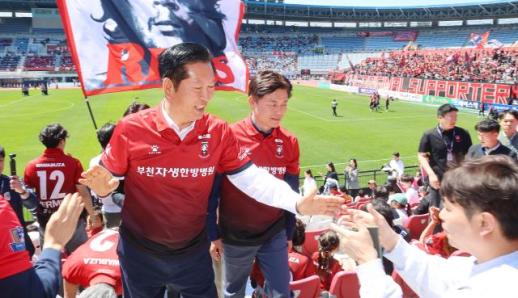 Jung Cheong-rae says timing of special counsel bill will follow public, party input Jung Cheong-rae, leader of the Democratic Party, said Monday the party will decide when to move a bill calling for a special counsel to probe alleged manipulated investigations and indictments under the Yoon Suk Yeol government after gathering views from the public, party members and lawmakers. Jung spoke to reporters after a visit to Dongducheon Big Market in Dongducheon, Gyeonggi Province. He said the party should coordinate with the presidential office, noting that on May 4 President Lee Jae-myung asked the party to determine the timing after collecting public opinion and holding deliberations. “Since the presidential office has stated its position, the party will also decide what to do by collecting lawmakers’ views through a caucus meeting and asking party members,” Jung said. At the same time, Jung reiterated his push to hold what he called “political prosecutors” accountable for actions taken under the Yoon administration and said Lee should be relieved through a special counsel probe. “If, under the Yoon Suk Yeol government, they were obsessed with taking down political opponents and suppressing the opposition and tried to indict and punish people with falsehoods or fabrication, that itself is a crime,” Jung said. He added that the Ssangbangwool remittances-to-North-Korea case and the Daejang-dong case involving Lee were “clearly” fabricated indictments and said “the victim should, of course, be given relief.”* This article has been translated by AI. 2026-05-05 16:00:13
 -
 Samsung Biologics union to shift from strike to open-ended work-to-rule campaign The Samsung Biologics labor union is ending a five-day, full-scale strike that began May 1 and will return to worksites on May 6, shifting to an open-ended work-to-rule campaign. The union is also said to be weighing an extension of the strike, raising the possibility of a prolonged dispute if an agreement is not reached soon. Industry officials said May 5 that labor and management plan to resume talks with a one-on-one meeting on May 6 between a human resources executive and the union chair, followed by a tripartite meeting on May 8 with the Labor Ministry participating. With the sides far apart, however, many in the industry say a deal remains uncertain, fueling concerns that production disruptions and losses totaling several hundred billion won could become reality. The two sides held their first tripartite meeting at 10:15 a.m. the previous day for about two hours but only confirmed their differences. They later met separately with the Labor Ministry, but did not produce additional agenda items or a concrete path forward. In a statement, the union said management asked both sides to halt all forms of labor action and to mutually withdraw legal disputes, including allegations of unfair labor practices. The union said it refused, arguing it would only lower the level of action without gaining anything in return. The union launched the company’s first full-scale strike since Samsung Biologics was founded in 2011, starting on Labor Day, May 1. Estimated losses so far are about 150 billion won to 300 billion won. If the stoppage continues, projected losses from production disruptions could reach about 640 billion won, according to estimates cited in the industry. Ahead of the planned May 1 strike, the union also abruptly halted work in some processes starting April 28. That stoppage reportedly froze a key aliquoting process, triggering knock-on disruptions across production lines and disrupting process flow. The company has reportedly selected which products to keep producing and discarded some products that were deemed likely to deteriorate. As a result, production has already been disrupted for products including cancer drugs, medicines related to human immunodeficiency virus, or HIV, and treatments for atopic dermatitis, according to the report. An industry official said biologic drugs can require an entire batch to be discarded if even one step is delayed, amplifying losses. A major sticking point is the union’s demand that the collective bargaining agreement require prior union consent for key management matters such as hiring, performance evaluations and mergers and acquisitions. The company has maintained that such provisions are difficult to accept because they directly affect management and personnel authority, viewing them as an infringement on management rights. A business community official warned that requiring prior union consent for M&A or major staffing decisions could undermine management’s ability to make decisions for future growth and could ultimately leave the company less competitive. The union plans to return to work starting the afternoon of May 6 but begin an open-ended work-to-rule campaign by refusing overtime and holiday work. It has also signaled it could launch a second strike if no agreement is reached. An industry official said the risks extend beyond direct losses from halted production, citing potential penalties for contract nonperformance, heightened scrutiny from regulators and customers switching to alternatives. The official added that in the global contract development and manufacturing organization, or CDMO, market, fast-following competitors are closing in, and delayed decision-making could cost orders. The official also said the strike risk, emerging amid an international environment of strengthening U.S. protectionism, could increase the chance of competitors benefiting at Samsung Biologics’ expense. 2026-05-05 15:49:14
 -
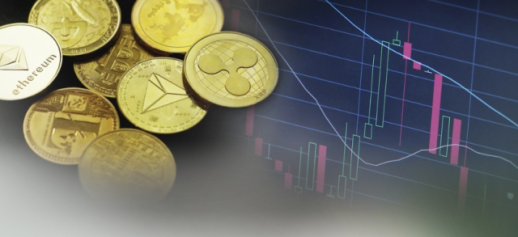 South Koreans’ Crypto Holdings Halve in a Year as Stablecoin Holdings Double South Korean investors’ crypto holdings and trading volume have dropped by more than 60 trillion won over about a year, while stablecoin holdings moved in the opposite direction, more than doubling. The shift is widely attributed to money moving into a strong stock market and to a preference for dollar-linked assets amid a weak won. Data the Bank of Korea submitted on Monday to Rep. Cha Gyu-geun of the Rebuilding Korea Party, a member of the National Assembly’s Planning and Finance Committee, showed domestic crypto holdings totaled 60.6 trillion won as of the end of February. The figure sums investors’ assets at month-end market prices across the country’s five major crypto exchanges: Upbit, Bithumb, Korbit, Coinone and Gopax. Holdings surged from 50.6 trillion won in August 2024 to a peak of 121.8 trillion won in January last year, when U.S. President Donald Trump took office. They have since fallen to less than half that level in 1 year and 1 month. Average daily trading value also declined. It rose from 2.7 trillion won in August 2024 to 17.1 trillion won at the end of December that year, but stood at about 4.5 trillion won in February. Won-denominated deposits on exchanges, often seen as funds waiting to be invested, fell to 7.8 trillion won in February from 10.7 trillion won at the end of December 2024. The decline was attributed to a combination of a buoyant domestic stock market drawing investment funds and falling crypto prices. Stablecoin holdings, however, increased. They rose from 88.5 billion won at the end of July 2024 to a peak of 872.3 billion won at the end of December last year. The total eased to 607.1 billion won in February, but was still about 2.2 times the level in January last year (278.2 billion won). Industry officials pointed to stronger demand for dollar-based assets amid a high exchange rate. Kim Min-seung, head of Korbit’s research center, said fluctuations in the won-dollar exchange rate appeared to have influenced demand for stablecoin investments. He added that with most coins weakening on overseas exchanges, funds that had moved abroad may also have returned to the domestic market. * This article has been translated by AI. 2026-05-05 15:48:17
 -
 CJ Cup Byron Nelson Opens May 21 in Texas With Scheffler, K-Culture Showcase CJ Group-sponsored PGA Tour event The CJ Cup Byron Nelson will be played May 21-24 at TPC Craig Ranch in McKinney, Texas. The tournament will offer a $10.3 million purse (about 15.16 billion won) and is a full-field regular-season PGA Tour event with 144 players. The winner earns 500 FedExCup points and a two-year tour exemption, along with entry into that year’s signature events and next season’s Players Championship, plus spots in the major championships. First held in 2017, The CJ Cup has positioned itself as a global sports-and-culture platform promoting Korean food and culture. Last year, the PGA Tour honored it with a “Best Title Sponsor Award,” citing how effectively the sponsor’s brand identity and philosophy were integrated into the event. Last year’s tournament also drew attention when Kai Trump, granddaughter of U.S. President Donald Trump, visited the venue at CJ Group’s invitation. She watched play featuring Scottie Scheffler, Jordan Spieth and Si Woo Kim, then toured the “House of CJ,” a promotional complex near the 18th-hole fairway designed to showcase K-lifestyle experiences. CJ said she showed strong interest in Korean food and cosmetics. Building on that response, organizers will expand the House of CJ this year. Located in the gallery plaza, it will cover 750 square meters (about 227 pyeong), about 20% larger than last year, and will add interactive features such as augmented-reality experiences and digital challenges. On-site attractions will include a CJ Olive Young K-beauty experience zone, CJ ENM music content, ScreenX screenings, K-cocktail tastings and Tous Les Jours bakery samples. CJ will also debut a new brand, “Durumi,” to gauge global reaction to Korean street food. The bibigo concessions, another signature feature, will operate at the seventh and 17th holes. The seventh hole will follow a “chef’s dining” concept with menus developed with star chefs, while the 17th will highlight spicy special items and events. Defending champion and world No. 1 Scheffler drew notice last year when he said, “It was raining and it was a tough day, but Korean food helped me keep going.” CJ will also continue its corporate social responsibility programs. Its “Bridge Kids” junior golf development initiative, launched in 2017, will run again this year, with 16 selected junior golfers receiving mentoring such as one-point lessons from PGA Tour players and trying bibigo lunch boxes. In addition, a “Birdie Charity Program” will donate $1,000 for each birdie at the 17th hole to support mental health programs for local children and teenagers. The tournament’s distinctive winner’s trophy is also a focal point. Inspired by the metal-type book “Jikji,” the trophy is made in Hangul, with past champions’ names — including Tiger Woods and Jack Nicklaus — engraved in Korean.* This article has been translated by AI. 2026-05-05 15:45:16
 -
 NXT to Start Charging for Market Data as KRX Raises Prices, Expands Services Nextrade (NXT) is moving to charge for market data it has provided for free. With the Korea Exchange (KRX) also revamping prices and services, South Korea’s stock-market data business is entering a more direct monetization phase. According to the financial investment industry on May 5, Nextrade plans to begin charging for market data starting next March. A Nextrade official said, “NXT has provided data free of charge since launching in March last year, but we plan to switch to a paid system starting next March.” Nextrade has already signed data-supply contracts with major market-information providers in and outside South Korea and is pushing to convert previously free data into paid products. The company is expected to set its rates at about half the Korea Exchange level and expects data-business revenue to grow to 10% to 20% of total sales. It is also preparing internally, including by tightening accounting procedures. The exchange is also accelerating efforts to reorganize and expand the business through pricing adjustments and service changes, including raising prices in March for “historical data,” which provides past figures. Brokerages said it was effectively the first price increase since commercial sales of historical data began in 2017. A KRX official said revenue in the segment was 1.9 billion won in 2024, but “after the Kospi enjoyed a boom last year, including ranking first in returns among major countries’ indexes, it jumped to 4.2 billion won, up 121% in a year.” The official added, “By understanding customer preferences and offering standardized products, we improved convenience in selecting and using data by market unit.” KRX is focusing on improving delivery speed by adopting cloud-based infrastructure. It is continuing cloud upgrades this year and has also reorganized product structures. Since last year, the exchange has expanded subscription models to meet demand from customers who want daily data delivery. It has also built a system to automatically supply large-volume datasets, including order-book quotes and trade execution data, widening its service scope. To improve overseas investors’ access to data, KRX is upgrading services centered on the Korea Data Marketplace (KDM). It is also reviewing a data business based on disclosure filings and plans to introduce an XBRL-based disclosure system next year to explore ways to turn disclosures into data products. * This article has been translated by AI. 2026-05-05 15:39:14
 -
 White House: No Trump-Kim Meeting Planned During Mid-May China Trip President Donald Trump has no meeting planned with North Korean leader Kim Jong Un during his mid-May trip to China, the White House said May 4 local time. A White House official, responding to a question, said, “There is no such meeting on the schedule at this time,” Yonhap News Agency reported. The White House said Trump’s China visit is set for May 14-15, with a U.S.-China summit planned with Chinese President Xi Jinping. The White House’s use of the qualifier “at this time” indicates a North Korea-U.S. summit is not part of the official itinerary, though it does not completely rule out a separate meeting if the two sides later coordinate one. Earlier, Prime Minister Kim Min-seok said he held a roughly 20-minute surprise meeting with Trump at the White House during a U.S. visit on April 13. Kim told a meeting with South Korean correspondents that Trump said, “It would be great to meet (Kim Jong Un). But it could be when I go to China this time, or it might not be, or it could be after that,” Kim recounted. * This article has been translated by AI. 2026-05-05 15:33:13