
Journalist

AJP
-
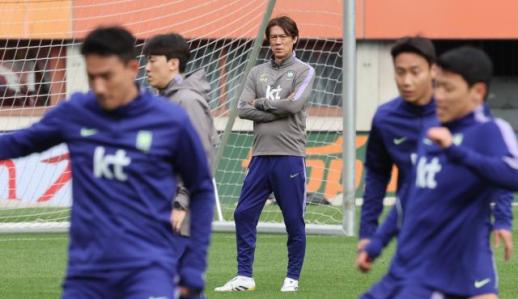 South Korea to Face El Salvador in Final World Cup Warmup at 1,356-Meter Altitude South Korea’s national soccer team, coached by Hong Myung-bo, will play El Salvador in its final tuneup ahead of the 2026 FIFA World Cup in North America. The El Salvador Football Federation said on its official social media on May 5 (Korea time) that the teams will meet June 3 at 5 p.m. local time at America First Field in Sandy, Utah. El Salvador is ranked 100th by FIFA, well behind South Korea at 25th, and failed to qualify for the World Cup finals. South Korea last played El Salvador in June 2023 in Daejeon, finishing in a 1-1 draw. The main objective of the match is altitude acclimatization. America First Field sits 1,356 meters above sea level, similar to Guadalajara, Mexico, at 1,571 meters, where South Korea plans to play its first two group-stage matches and set up its base camp. The team aims to use the Utah match to help players adjust physically to high-altitude conditions expected at the World Cup. Hong’s squad will announce its final World Cup roster on May 16 at a fan festival site in Gwanghwamun. The team is to depart May 18 for Salt Lake City to begin a pre-tournament camp. During the roughly 20-day camp, South Korea plans to sharpen tactics while conducting altitude training, then move to Guadalajara on June 5.* This article has been translated by AI. 2026-05-05 14:49:35
 -
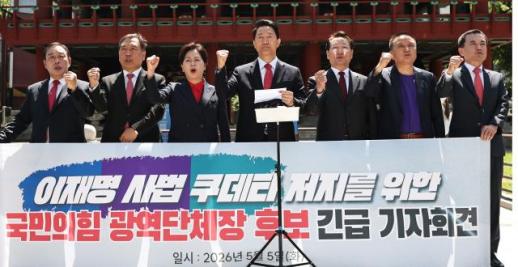 People Power Party Local Candidates Demand Withdrawal of Special Counsel Bill Candidates from the People Power Party running for metropolitan and provincial governor posts in the June 3 local elections demanded on May 5 that the Democratic Party withdraw what it calls a special counsel bill to investigate alleged “fabricated indictments.” They said the measure amounts to an unconstitutional attempt to cancel prosecutions to benefit President Lee Jae-myung and would undermine the constitutional order and the rule of law. Oh Se-hoon, the PPP’s Seoul mayoral candidate, and nine other PPP candidates held an emergency news conference in front of Bosingak in central Seoul and released a resolution titled “PPP metropolitan and provincial candidates’ statement to stop Lee Jae-myung’s judicial coup attempt.” Also attending were Incheon mayoral candidate Yoo Jeong-bok, Sejong mayoral candidate Choi Min-ho, Gyeonggi gubernatorial candidate Yang Hyang-ja, Gangwon gubernatorial candidate Kim Jin-tae, North Chungcheong gubernatorial candidate Kim Young-hwan and North Jeolla gubernatorial candidate Yang Jeong-mu. PPP candidates Lee Jeong-hyeon, running for the Jeonnam-Gwangju integrated mayor post, and Moon Seong-yu, running for Jeju governor, did not attend but joined the statement. The candidates said the bill is “a clear attempt at a judicial coup” that would shake the national justice system “for the sake of one person,” Lee, and warned it would face “harsh public judgment.” They said they would not stand by and pledged to fight “to the end” alongside political parties, civic groups and citizens who share the goal of defending the constitutional order. They urged the Democratic Party to withdraw the bill and called on Lee to pledge that he will not seek cancellation of prosecutions during his term. “The Democratic Party must immediately halt the push for a special counsel bill aimed at an unconstitutional cancellation of prosecutions for Lee Jae-myung’s self-exoneration, and it must withdraw the bill already introduced,” they said. They also called on Lee to “clearly state before the public” that there will be no cancellation of prosecutions related to his own allegations during his term and that he will stand trial according to law and principle. They also demanded that ruling-party candidates for metropolitan and provincial posts “immediately disclose to the public” whether they support or oppose the special counsel bill. Before the statement was read, Yang Jeong-mu said, “You can’t cover the sky with your hand,” adding that no one in South Korea can be above the law and that everyone is equal before it. Kim Jin-tae, who led the news conference, cited what he called an old principle of Roman law — that no one can be a judge in their own case — and said denying that principle would amount to a collapse of the rule of law and “insurrection.” The PPP candidates said they plan to rally public opinion to block the bill, including through a nationwide online petition. Oh said the party is working to flesh out ways to cooperate with opposition forces and would announce details once they are set. Oh, Yoo and Yang Hyang-ja met the previous day at the National Assembly with New Reform Party candidates Kim Jeong-cheol, running for Seoul mayor, and Cho Eung-cheon, running for Gyeonggi governor, and agreed to work together to stop the bill.* This article has been translated by AI. 2026-05-05 14:48:14
 -
 Rising Exchange Rate and Oil Prices Push Up Meat and Egg Costs in South Korea Rising exchange rates and higher global oil prices are pushing up livestock product prices across the board in South Korea, hitting both domestic and imported meat. Analysts say the usual role of imported meat as a buffer against food inflation is weakening, adding pressure on household grocery bills. According to the Korea Institute for Animal Products Quality Evaluation, as of May 4, Grade 1 hanwoo tenderloin averaged 14,663 won per 100 grams, up 19.3% from the seasonal norm of 12,294 won. Grade 1 hanwoo sirloin averaged 10,443 won per 100 grams, a 13.5% increase from normal levels. Pork belly, a staple for dining out, averaged 2,828 won per 100 grams, up 12.4% from the typical 2,516 won. On a monthly basis, the price rose from 2,601 won in March to 2,644 won in April, and averaged about 2,812 won in May. Pork shoulder averaged 2,637 won per 100 grams, up 13.1% from the norm of 2,331 won. Broiler chicken averaged 6,566 won per kilogram, up 11.0% from the typical 5,914 won. Egg prices also climbed: a 30-egg tray of extra-large eggs averaged 7,273 won, up 6.3% from the norm of 6,843 won. Imported meat, long seen as a cheaper alternative, also rose. U.S. chilled chuck eye roll averaged 4,091 won per 100 grams, up 31.4% from the typical 3,114 won. U.S. chilled rib finger meat averaged 4,804 won, up 14.8% from 4,185 won, and U.S. frozen beef short ribs averaged 4,452 won, up 10.7% from 4,020 won. Imported pork averaged 1,522 won, above the typical 1,448 won. The broad rise is being attributed to overlapping global headwinds, including higher international oil prices amid instability in the Middle East, greater exchange-rate volatility, and rising feed and logistics costs. Higher energy and raw-material prices are being reflected in production and distribution costs with a lag, adding to upward pressure on retail prices. In response, the government plans to provide 10 billion won in discount support for agricultural and livestock products in May and June. It will offer discounts of up to 40% on items including rice, eggs and chicken, and will expand the list to include onions, napa cabbage, cabbage, tomatoes, Korean melons, zucchini and bell peppers. It also plans to support discounts of up to 50% for hanwoo and pork in cooperation with industry-funded promotion groups. Major supermarket chains also plan to continue special promotions this month to ease the burden on shoppers. Earlier, leading retailers including E-Mart and Lotte Mart ran large discount events on key agricultural and livestock products through May 6. E-Mart is also reported to be planning an additional discount event around May 9-11 in cooperation with the Korean Pork Producers Association. 2026-05-05 14:45:15
 -
 Incheon Port Authority to Subsidize K-Beauty SMEs’ Costs for 2026 Beauty & Healthcare Show Incheon Port Authority is offering support to help small and midsize K-beauty companies expand overseas, including subsidies to participate in a major local beauty and health expo and opportunities to meet foreign buyers. The authority, known as IPA, said on May 5 it is recruiting companies for its support program tied to the 2026 Beauty & Healthcare Show expo. Demand for K-beauty products has been rising. The Ministry of Food and Drug Safety said Korea’s cosmetics exports totaled $3.1 billion in the first quarter of this year. IPA said it will select 20 small and midsize companies and cover 50% of their booth costs, while setting up a joint IPA exhibition hall. The program is designed to promote products from smaller firms that have struggled to enter overseas markets and to support market development through activities such as one-on-one export consultations with foreign buyers. Companies seeking to participate can apply through the Win-Win Nuri website from May 6 to 19. Final selections will be announced after a document review. Now in its 11th year, the Beauty & Healthcare Show is Incheon’s flagship beauty and health exhibition. It will be held July 23-25 at Songdo Convensia in Incheon. IPA said it has supported small and midsize K-beauty companies’ participation in the show for four years to strengthen their global competitiveness. Shin Jae-wan, head of IPA’s ESG Management Office, said the project is a signature shared-growth program aimed at boosting exports by small and midsize companies and revitalizing the local economy. He said IPA will continue to support their entry into global markets based around Incheon Port. 2026-05-05 14:36:26
 -
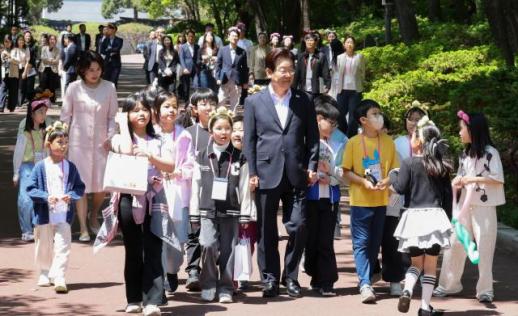 President Lee Jae-myung vows to build a society where every day feels like Children’s Day President Lee Jae-myung marked the 104th Children’s Day on May 5 by pledging to do more to build a society where “every day, 365 days a year, can feel like Children’s Day,” not just a single holiday. Lee made the remarks in a Facebook post titled “Marking the 104th Children’s Day.” “Though we now live in our own places as adults, we were all once children learning about the world under someone’s care,” he wrote, recalling how children can be excited by small things and cry and laugh over everyday moments. He said childhood is a time when everything feels unfamiliar yet new, and when people believe they can become anything and focus on possibilities before limits. Looking back, Lee wrote, children are not lacking or immature, but people who simply need more time than adults. “They learn and grow at their own pace and come to understand the world in their own way,” he said. Lee said much depends on how adults view and treat children, adding that if adults watch with warmth and wait long enough, children will grow into adults with broader hearts and deeper consideration for others. “I, too, pledge not to see children only as those to be protected or as simply cute, but to respect them as individuals with dignity and character,” he wrote. “I will keep working to be a dignified adult who protects children’s dignity.” He closed by saying he sincerely hopes South Korea’s children, “the future of the Republic of Korea,” will always be healthy. * This article has been translated by AI. 2026-05-05 14:34:26
 -
 Foreign Investors Chase Korea’s Rally, Pouring Money Into Surging Stocks Foreign investors are increasingly concentrating money in stocks that are already rising, rather than in undervalued names, reinforcing a trend-following approach. Despite the run-up, they have continued buying on expectations of improving earnings and relatively low valuations. Brokerages said foreign flows could be key to whether the Kospi breaks above 7,000. According to the Korea Exchange on May 5, the 10 most heavily net-bought stocks by foreign investors on the main Kospi market at the end of last month all posted gains compared with the end of March. Samsung Electronics was the top foreign buy on the Kospi, with net purchases of 1.3231 trillion won. Over the same period, its shares jumped 32% to 220,500 won from 167,200 won. SK hynix, the No. 2 net buy, rose 59%. The gains followed record first-quarter results from Samsung Electronics and SK hynix, fueling expectations that a semiconductor earnings recovery will continue. Other strong performers backed by foreign buying included Samsung SDI (up 70%), Doosan Enerbility (39%), Samsung Electro-Mechanics (104%) and Daehan Electric Wire (111%), with some stocks more than doubling as demand clustered in a few names. On the Kosdaq, foreign money flowed into growth stocks, including semiconductor equipment, AI chip and biotech names, many of which surged. Jusung Engineering climbed 107.58%, while FADU rose 70.18% and Koh Young jumped 64.62%. Jeju Semiconductor (49.29%), Hana Micron (42.81%) and HPSP (28.61%) also advanced. Many of the top net-bought Kosdaq names have shifted toward semiconductor equipment, materials and AI infrastructure, highlighting a growing focus on what investors see as core supply-chain plays within growth industries. Analysts said foreign flows have been moving around two main themes: AI and semiconductors, and power infrastructure. They cited expanding data centers and rising demand for high-bandwidth memory, or HBM, as drivers lifting related shares. They added that concentrated buying in tech growth stocks has been evident on the Kosdaq, while the Kospi has seen steadier gains led by large-cap growth names. Foreign investors net bought about 3 trillion won on May 4, the first trading day of the month. Many in the securities industry expect them to be the main force behind a potential Kospi move above 7,000. “Foreign investors continued net buying in May, following April, considering the Korean market’s earnings momentum advantage and relatively low valuation burden,” said Han Ji-young, a researcher at Kiwoom Securities. “They will be the supply-and-demand driver that brings the Kospi into the 7,000 range.” Meanwhile, the average return for the 10 stocks most heavily net bought by individual investors was 18.3%. Of the top 10 net-bought names by individuals last month, eight posted gains from the end of March, while two declined. * This article has been translated by AI. 2026-05-05 14:33:06
 -
 Korean Drugmakers Expand Into Hospital Digital Health Systems Beyond Prescriptions Pharmaceutical companies in South Korea are accelerating moves into hospital-based digital health care, expanding beyond drug sales into patient monitoring and hospital systems. According to the Korea Digital Industry Association, the domestic digital health market in 2024 grew 18.7% from a year earlier to 7.7409 trillion won, marking a second straight year of double-digit growth. The shift is being driven by faster commercialization than new drug development and pressure from lower prices for generic medicines, prompting drugmakers to seek new growth engines. Daewoong Pharmaceutical, which set up a dedicated digital health care marketing division in 2024, is widening hospital adoption of its artificial intelligence solutions. Its flagship product is the bedside monitoring system thynC, which collects and analyzes key vital signs — including electrocardiograms, oxygen saturation and respiratory rate — around the clock and sends real-time alerts to medical staff when abnormalities are detected. ThynC has sped up deployment after becoming the first in South Korea to secure reimbursement under long-term care benefits. The number of installed beds jumped from 90 in 2023 to a cumulative total of about 20,000 last year. The revenue model is usage-based. Daewoong collects payments from hospitals and then pays the developer, Seers Technology, about 3 million won per bed. Contracts are signed by ward, and once installed, the system can generate recurring revenue. Daewoong said revenue from its digital health care business totaled 50.9 billion won last year, and it aims to expand that to about 300 billion won this year. Industry officials say that once such systems become embedded in hospital operations, they are difficult to replace, potentially creating a long-term business base. Yuhan is also moving quickly into digital health care. The company recently partnered with digital health firm Huino to commercialize MemoCue, an AI-based patient monitoring system, and began supplying it to H Plus Yangji Hospital. MemoCue analyzes hospitalized patients’ ECG data in real time to detect warning signs early. It extends monitoring beyond intensive care units to general wards and is expected to be applied to about 100 beds. The system can use a hospital’s existing communications infrastructure, which the company says reduces the burden of adoption. Yuhan has previously built up hospital data through MemoPatch, a long-term ECG monitoring system. At Severance Hospital, cumulative tests have surpassed 10,000, providing real-world use cases. With strengths in major treatment areas such as cancer and cardiovascular disease, the accumulated data could also be used for new drug development and marketing strategies. “As the range of use inside hospitals expands, the pace of data accumulation also speeds up,” an industry official said. “That can widen long-term gaps in business competitiveness between companies.”* This article has been translated by AI. 2026-05-05 14:27:16
 -
 Samsung Electronics Tops Stock Gifts to Minors in April as Youth Accounts Rise Ahead of Children’s Day, Samsung Electronics ranked No. 1 last month among domestic stocks gifted to minors, measured by number of transactions. The trend comes as more accounts are being opened in minors’ names this year, expanding investing under children’s accounts. KB Securities said on May 5 that Samsung Electronics accounted for 56.3% of stocks its customers gifted to children age 18 and under through the firm’s “stock gifting” service. The service allows users to transfer shares they hold to another person through a brokerage’s home trading system (HTS) or mobile trading system (MTS) by entering the recipient’s name and mobile phone number. Samsung’s dominance is widely seen as reflecting expectations for a semiconductor upturn driven by expanding artificial intelligence demand. Seo Seung-yeon, an analyst at DB Securities, said, “At this earnings briefing, Samsung Electronics said it is pursuing or has completed multi-year memory contracts with some customers due to strong AI demand,” adding that the company “said it plans to supply samples of next-generation high-bandwidth memory (HBM4E) starting in the second quarter this year, demonstrating leadership in the HBM market.” After Samsung Electronics, the most-gifted stocks were Kia (6.5%), Kakao (6.1%), HLB (3.7%), EcoPro BM (3.6%), Deoksan Techopia (3.0%), DS Dansuk (2.5%) and POSCO Holdings (2.1%). SK hynix was about 1.5%, which was attributed to its higher share price. Account openings by minors are also rising. Daishin Securities said new accounts for children ages 0 to 9 increased 119.2% as of last month compared with January. That was the fourth-highest growth rate, following people in their 30s (352.6%), 20s (308.4%) and 40s (220.8%). New accounts among teenagers also rose 101.1%. Growth was more modest among older age groups. New accounts rose 45.6% for people in their 50s and 14.7% for those in their 60s, while the 70s and 80s increased 29.7% and 31.9%, respectively. For those 90 and older, new accounts fell 25.0%. Despite the increase in accounts, investment balances declined across most age groups: ages 0 to 9 (-6.0%), teens (-28.1%), 20s (-21.5%), 30s (-39.2%), 50s (-78.2%), 60s (-82.3%), 70s (-42.5%) and 80s (-74.1%). The figures suggest the rise in new accounts is being driven more by small investments than by large inflows of funds.* This article has been translated by AI. 2026-05-05 14:04:54
 -
 Japan’s Takaichi Makes First Australia Trip as Leaders Move Ties Toward ‘Quasi-Allies’ Japanese Prime Minister Sanae Takaichi met Australian Prime Minister Anthony Albanese in Canberra on May 4 (local time) and agreed to broaden cooperation across defense, economic security, energy and cyber issues, Japanese media reported. It was Takaichi’s first trip to Australia since taking office and came in the 50th year since the two countries signed the Japan-Australia Basic Treaty of Friendship and Cooperation. Takaichi said the two nations were building ties that could be described as “quasi-allies.” Japanese outlets highlighted defense cooperation. Australia in April selected an upgraded version of Japan’s Maritime Self-Defense Force Mogami-class destroyer escort as its next navy frigate. The Yomiuri Shimbun reported that of 11 ships to be deployed, three will be built in Japan and eight in Australia. The arrangement would expand production and maintenance hubs to Australia and strengthen the two countries’ ability to sustain operations. Quoting a Japanese Defense Ministry official, the paper said operating the same ships would allow joint crew training and enable operations on a shared foundation of unit practices. The Nikkei said the deal is tied to Japan’s shift in defense exports. In April, the Japanese government abolished “five-category” restrictions that had limited exports of lethal defense equipment. If the upgraded Mogami-class ships are produced in Australia, it could also support future supply to allies and partners. Yomiuri quoted Australian Defense Minister Richard Marles as saying, “There is no country in the world that is as strategically aligned as Japan.” After the talks, the leaders issued a “leaders’ statement on enhanced defense and security cooperation,” listing seven priority areas including intelligence collection and analysis, joint development of defense equipment, cooperation to maintain supply chains, and securing sea lanes. With Australia a member of the Five Eyes intelligence-sharing group with the United States and Britain, Japanese media said closer intelligence ties could also aid Takaichi’s push to create a “National Intelligence Agency.” The leaders also agreed to establish a “strategic cyber partnership.” On economic security, the two signed a “Japan-Australia joint declaration on economic security cooperation” and released two joint statements on critical minerals and energy security. The declaration cited “strong concern” about export restrictions, particularly on critical minerals, and said critical minerals would be elevated as a “core pillar” of the bilateral economic security relationship, in a move aimed squarely at China’s rare earth export controls. Japanese media linked the summit to shifting U.S.-China dynamics. The Asahi Shimbun reported that the Trump administration has promoted a Western Hemisphere-first “Monroe Doctrine” approach and that some U.S. forces previously deployed to the Indo-Pacific moved to the Middle East, raising concerns about a “power vacuum.” Yomiuri reported that an amphibious assault ship from the Sasebo base and Marines stationed in Okinawa were dispatched to the Middle East, quoting a Japanese government official as saying cooperation among friendly nations is important to avoid making China think “now is the chance.” Takaichi told the meeting that cooperation with the United States, a shared ally, is indispensable amid a severe international environment, while also making clear Japan would strengthen multilateral coordination such as Japan-U.S.-Australia and Japan-U.S.-Australia-India frameworks, based on ties with Australia. Australia is also grappling with uncertainty over the United States, Yomiuri said. Australia announced in April it would raise defense spending as a share of gross domestic product to 3% by 2033 from about 2.8%, but that remains below the 3.5% sought by the United States. The paper said the Trump administration at one point signaled it would review AUKUS plans for Australia to deploy nuclear-powered submarines, stirring concern in Australia. China is another pressure point. Nikkei reported that after experiencing economic coercion such as China’s restrictions on coal imports during the early 2020s COVID-19 period, Australia shifted policy toward reducing dependence on China. In 2025, a Chinese naval flotilla conducted live-fire drills in the Tasman Sea between Australia and New Zealand, raising regional tensions, the paper said. Australia’s national defense strategy released in April said China’s growing national power and military buildup are major drivers reshaping the regional security environment. Michael Green, head of the United States Studies Centre at the University of Sydney, told Asahi that Australia’s Labor government is trying to redefine the United States from a partner that “shares common values” to one that “shares interests.” He urged strengthening Japan-U.S.-Australia security cooperation to boost deterrence and diversifying supply chains to reduce risks from dependence on China.* This article has been translated by AI. 2026-05-05 14:03:20
 -
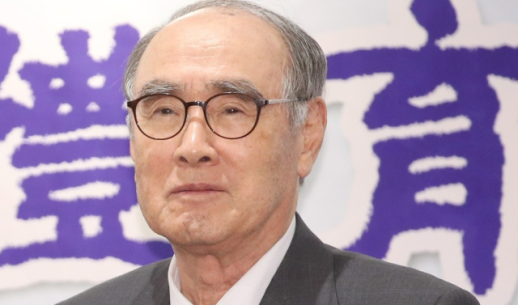 Former South Korean Prime Minister Lee Hong-koo Dies at 92 Former Prime Minister Lee Hong-koo died on May 5. He was 92. Born in 1934, Lee was a professor of political science at Seoul National University and a leading senior figure in South Korea’s political science community. After attending Kyunggi High School and studying at Seoul National University, he continued his academic work at Emory University and Yale University in the United States. He published numerous papers and columns in academic journals and major media outlets, offering theoretical and practical analysis of modern Korean politics. He also served as president of the Korean Political Science Association. Lee entered public service in 1988 under the Roh Tae-woo administration as minister of the National Unification Board. He later served as a special political adviser to the president and as ambassador to the United Kingdom, building experience in diplomacy and inter-Korean affairs. Under the Kim Young-sam administration, he served as senior vice chairman of the National Unification Advisory Council and as deputy prime minister and minister of the Unification Board. In 1994, he was appointed the 28th prime minister, overseeing state affairs. He was credited with involvement in early reform efforts of the civilian government and in coordinating domestic and foreign policy. After leaving the premiership, Lee returned to frontline politics in 1996 as chief representative of the then-ruling New Korea Party. That year, he won a proportional representation seat in the 15th National Assembly. With the launch of the Kim Dae-jung administration, he was appointed the first ambassador to the United States in early 1998 and played a role in strengthening South Korea-U.S. economic and diplomatic cooperation during efforts to overcome the foreign exchange crisis. After retiring from public office, Lee remained active as chairman of the Seoul International Forum, an adviser to the JoongAng Ilbo, chairman of the Yumin Cultural Foundation, an adviser to the Korea Volleyball Association, and a board member of the Asan Foundation, among other roles. Survivors include his wife, Park Han-ok; a son, Lee Hyun-woo, EIG Asia representative; daughters Lee So-young and Lee Min-young, a professor at Dongduk Women’s University; a daughter-in-law, Hwang Ji-young, head of the Hong Kong Korean Women’s Association; and a son-in-law, Lee Kang-ho, a professor at the Korea National University of Arts. A memorial altar has been set up in Room 20 of the funeral hall at Seoul Asan Medical Center. A funeral ceremony will be held at 8 a.m. on May 8, with the coffin to be carried out at 9 a.m. Burial will be at Cheonan Park Cemetery. 2026-05-05 13:57:50