
Journalist

AJP
-
 Peugeot Launches All-New 5008 Smart Hybrid Seven-Seat SUV Peugeot said Wednesday it has launched the seven-seat family SUV “All New 5008 Smart Hybrid” and has begun full-scale sales. The All New 5008 is billed as a “real French SUV,” with planning, engineering, design and production completed in France. Peugeot said it emphasizes family-focused space and practicality, along with the brand’s distinctive design. Peugeot said the model combines a 2,900mm wheelbase with a seven-seat layout and a smart-hybrid system, positioning it for both daily driving and travel. Buyers are offered a special extended-warranty promotion: 990,000 won for the Allure trim and 1.09 million won for the GT trim. The program extends coverage beyond the basic warranty period (36 months or 100,000 kilometers). Based on the new-vehicle registration date, coverage can be extended up to five years or 130,000 kilometers. Customers can enroll within six months of registration or 5,000 kilometers, whichever comes first. Separately, Peugeot is offering a five-year free maintenance program. Consumables such as engine oil, the engine oil filter and the air-cleaner filter can be replaced free of charge five times over five years. The All New 5008 is sold in two trims, Allure and GT. The Allure is priced at 48.9 million won. The GT is priced at 55.9 million won, limited to 300 vehicles as a launch promotion. With individual consumption tax cuts applied, the Allure costs 48.14 million won and the GT costs 54,999,000 won. Peugeot said buyers can also apply benefits for families with multiple children. Test drives are available starting Wednesday at Peugeot showrooms nationwide.* This article has been translated by AI. 2026-02-05 10:24:00
 -
 7th-Century Baekje Bamboo Flute Found in Palace Latrine Pit, Officials Say A 7th-century transverse wind instrument believed to be a Baekje “hoengjeok” (side-blown flute) has been unearthed at the Gwanbuk-ri site in Buyeo, South Korea, officials said. Researchers called it the first confirmed physical wind instrument from the Three Kingdoms period, a find they said could provide a key clue for reconstructing Baekje-era music. The Korea Heritage Service’s National Research Institute of Cultural Heritage and its Buyeo research center on Wednesday 공개했다 the artifacts recovered during the site’s 16th excavation campaign. The institute has excavated the Gwanbuk-ri area since 1982 to identify the remains of the royal palace from the Sabi period. The area is regarded as a Sabi palace site based on discoveries including large hall buildings, waterways, roads and extensive building platforms. The two-year, 16th excavation produced 329 wooden tablets and one hoengjeok, the institute said. The flute was found in a rectangular pit near a 7th-century building site identified as a Baekje “jodang,” or state council hall, officials said. The pit measured about 2 meters (6.6 feet) wide, 1 meter (3.3 feet) long and 2 meters (6.6 feet) deep. Made of bamboo, the instrument had four holes in a line and was found flattened, with parts missing. Analysis of organic material from inside the pit detected human parasite eggs, leading researchers to conclude the pit was likely part of a toilet facility attached to the council hall. Researchers said the bamboo shows deliberately made holes, and X-ray analysis indicated one end was sealed while the other had a hole for blowing. Based on those features, they said it appears to be a side-blown flute rather than a vertical wind instrument like those depicted on the Baekje gilt-bronze incense burner known as the Geumdong Daehyangno. Because the instrument was recovered from a core area of the Sabi Baekje palace, the institute said it is expected to be important for research on Baekje court music and instruments, and for evidence-based reconstruction of Baekje sound and performance. Comparative study with examples from China and Japan found the hoengjeok is similar to today’s sogeum, a small transverse flute, the institute said. It called the discovery the first identification of a Baekje hoengjeok and the first and only case of a physical wind instrument found from the Three Kingdoms period (7th century). The wooden tablets were described as the largest number confirmed at a single site in South Korea and as some of the earliest materials from Baekje’s Sabi period. Many were concentrated in waterways from the early stage of the capital’s move to Sabi, officials said. Some tablets include sexagenary year notations that help date their production. The institute said “Gyeongsin year” corresponds to 540 and “Gyhae year” to 543, shortly after Baekje moved its capital from Gongju (Ungjin) to Buyeo (Sabi) in 538. Other finds include wooden tablets used as state administrative documents: personnel records, financial ledgers, and tablets listing official ranks and posts, along with many “sakseol” fragments. Researchers said the material indicates the area was linked to Baekje’s central administrative offices known as the 22 busa. Among the sakseol fragments were not only personnel documents but also ledger tablets tied to state finances that record monthly grain. The institute also said many tablets show the reorganization of the capital’s central administrative districts — the five “bu” — and a local administrative system of bang, gun and seong. Tablets bearing terms such as “Ipdong,” “Insimcho,” “Hyeongokgae,” and the character “畑,” believed to have been created in Japan, were cited as evidence of Baekje’s advanced culture and active exchanges across East Asia. The institute said the newly released results are significant because they document how Baekje ran the state through written administration about 1,500 years ago and provide physical evidence that could aid reconstruction of the period’s musical culture and sound. * This article has been translated by AI. 2026-02-05 10:06:00
 -
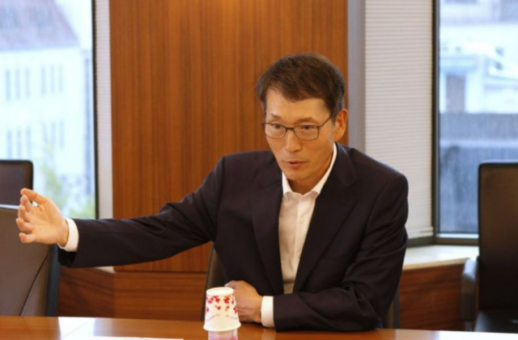 KAMA warns strict auto rules could open South Korea market to low-cost Chinese EVs South Korea’s auto industry, in the midst of a shift to electrification, could see its domestic market eroded by Chinese electric vehicles if regulations become excessive, industry officials warned. The Korea Automobile & Mobility Association, known as KAMA, said it held a meeting of its eco-friendly vehicle committee on Wednesday under the theme “Trends and implications of major countries’ auto environmental regulations and policy changes.” KAMA said the session compared and analyzed regulatory and policy shifts in major markets to assess their impact on the competitiveness of South Korea’s auto industry and to draw lessons for more effective vehicle greenhouse-gas reduction policies. Kang Nam Hoon, KAMA’s chairman, said major countries are “adjusting the pace of electrification” as EV demand weakens and governments move to protect domestic industry. He said the United States has reduced regulatory burdens on its auto industry, including scrapping EV mandates after the launch of the Trump administration. He added that the European Union, after running strict vehicle greenhouse-gas rules, has moved to adjust targets, expand flexibility for carrying over compliance and reflect preferential treatment for European-made EVs in its regulations to protect the auto ecosystem. Kang said Japan, whose export structure is similar to South Korea’s, is keeping environmental rules relatively low and encouraging companies to transition voluntarily, even though it is the world’s No. 2 auto exporter and No. 3 producer. By contrast, he said, South Korean companies are already facing significant difficulties under current regulations. He warned that moves to tighten rules further — to what he called the world’s highest level, linked to national emissions-reduction targets — would impose an “unbearable” burden on industry. “Excessive regulation could accelerate dependence on price-competitive Chinese EVs and their inflow into the domestic market, raising concerns that the domestic market could be eroded,” he said. To cut greenhouse gases effectively, Kang said, policymakers should “boldly” reduce reliance on new-vehicle rules that pressure companies and instead focus on measures that create demand, including expanded support for scrapping aging vehicles, more charging infrastructure and stronger incentives to buy eco-friendly vehicles. He also called for urgent, broad support to maintain and strengthen domestic production during the transition, including expanding production tax credits so EVs made in South Korea can secure real competitiveness. Kim Cheol Hwan, a managing director at InnoThink Consulting, said global climate policy, once focused on carbon cuts, is being reshaped into an “industrial security and supply chain strategy” centered on protecting domestic industry and countering China. He said U.S. and EU tariffs and policy changes do not mean abandoning electrification, but show a commitment to watch market conditions while prioritizing keeping manufacturing bases within their regions. Kim said the rapid shift to battery electric vehicles is running into practical barriers, including reduced purchasing power due to high interest rates and a lack of charging infrastructure, widening the gap between regulatory targets and what markets can absorb. He said consumers’ preference for hybrids will likely persist in the short to medium term. He said major countries are increasingly diversifying realistic emissions-cutting options rather than locking in a single technology path to minimize industrial friction, adding that punitive regulation alone has limits in driving demand. Kim urged South Korea to secure long-term stability by operating rules more flexibly, including institutionalizing conditional buffers if external variables that hurt electrification emerge, such as sudden market shifts or trade-related problems. He said the overall direction of targets should remain, but the role of hybrids should be recognized quantitatively based on their real contribution to carbon reductions, and flexibility in emissions-reduction pathways should be ensured. Experts at the meeting agreed that, amid changes in the global regulatory environment, South Korea needs regulatory policies that fully consider auto industry competitiveness. They also said EV adoption should be paired with support measures that keep the domestic production base solid while meaningfully creating demand. * This article has been translated by AI. 2026-02-05 10:03:24
 -
 Celltrion tops 4 trillion won in annual sales, posts record operating profit Celltrion said it surpassed 4 trillion won in annual revenue and 1 trillion won in operating profit for the first time. In a regulatory filing on Wednesday, the company said 2025 revenue rose 17% from a year earlier to 4.1625 trillion won, while operating profit surged 137.5% to 1.1685 trillion won on a consolidated basis. Operating margin climbed 14.3 percentage points to 28.1%. Celltrion attributed the results to steady growth in established products and rapid expansion of higher-margin newer drugs. Global biopharmaceutical sales rose 24% to 3.8638 trillion won as products including Remsima SC, Yuflyma, Vegzelma, Zymfentra, Stekima, Omliclo and Stoboclo-Osenvelt gained traction alongside Remsima, Truxima and Herzuma. New products accounted for 54% of sales. Remsima held a 59% market share in Europe and 30% in the United States, the company said. Truxima posted market shares in the 30% range in the U.S. and Europe. Herzuma ranked No. 1 in Europe and had a 75% share in Japan. Yuflyma and Vegzelma also ranked No. 1 in Europe. Five products — Stekima, Stoboclo-Osenvelt, Omliclo, Aptozma and Idencelt — were launched in the second half of last year but still generated more than 300 billion won in annual sales, Celltrion said. For 2026, Celltrion set a revenue target of 5.3 trillion won. It said it will pursue a “selection and concentration” strategy by reducing the share of high-cost products and focusing bids on newer, higher-net-profit products, aiming to lift the new-product sales share to about 70%. The company also said its Branchburg, New Jersey, manufacturing facility, whose acquisition was completed at the end of last year, will begin generating contract manufacturing (CMO) revenue this year. Celltrion said it signed a deal with Eli Lilly to supply biopharmaceutical products worth 678.7 billion won over three years through 2029. A Celltrion official said the company expects strong growth to continue this year as structural cost improvements take hold and the impact of new product launches becomes more pronounced. The official said Celltrion will work to expand its biosimilar pipeline and secure new growth engines, including new drugs and CMO, to become a global big pharma company.* This article has been translated by AI. 2026-02-05 10:03:00
 -
 Actor Kim Seon Ho Says He Paid Additional Income Tax After One-Person Company Questions South Korean actor Kim Seon Ho acknowledged he previously received payments through a one-person corporation amid allegations it was used to avoid taxes, and said he has paid additional personal income tax. His agency, Fantagio, said in a statement on Tuesday that Kim established the company in January 2024 for acting work and theater production. It said he received settlement payments through the corporation for activities up to before a new contract with Fantagio began in February 2025. Fantagio said Kim stopped operating the corporation after recognizing it could be misunderstood, adding that there has been virtually no activity through it for more than a year. Since the exclusive contract was signed in February 2025, the agency has paid him directly as an individual, it said, stressing the corporation has no connection to Fantagio’s contract process or his activities with the agency. Regarding the shutdown, Fantagio said Kim returned corporate card records, family salaries and a corporate vehicle as a preemptive step to correct what it described as his earlier lack of understanding about running a corporation. It said he has completed additional personal income tax payments on amounts previously settled through the company, on top of corporate taxes already paid. The agency said the company is in the process of being closed and the administrative steps are expected to be finished soon. Kim had previously said the family corporation, registered at his home address, was created for theater-related work after allegations of tax evasion surfaced. Fantagio issued the new statement after it became known that he temporarily received settlement payments through the corporation during his time with a previous agency. Fantagio said Kim is “deeply reflecting” on establishing and maintaining the corporation for about a year without sufficient understanding, and apologized. The agency also apologized for causing confusion and concern and said it will more closely manage its artists’ overall activities going forward. * This article has been translated by AI. 2026-02-05 09:54:00
 -
 T’way Air Holds 2025 Aviation Security Awards Ceremony T’way Air said Wednesday it held its “2025 Aviation Security Awards Ceremony” and recognized departments and employees for contributions to aviation security. The company said the event was aimed at preventing security incidents through active employee participation and strengthening on-site security capabilities. Awards were presented in two categories: the Aviation Security Excellence Award and the Aviation Security Contribution Award. The Excellence Award went to departments and employees credited with identifying and preventing potential security threats in advance or reducing risks through new, decisive ideas. The Contribution Award recognized departments and employees for supporting aviation security work through strict compliance with procedures. The Paris branch received the Excellence Award, and Cabin Crew 4 received the Contribution Award. In the individual category, Tokyo branch manager Seok Da Mi won the Excellence Award, while Kim Jae Cheol, a senior captain with B737 Flight Crew 3, and cabin crew manager Kim Gi Rang of Cabin Crew 1 received Contribution Awards. “A small amount of attention in the field and strict adherence to procedures are the starting point for preventing aviation security incidents,” a T’way Air official said. The official said the airline will continue the awards program to build an advanced aviation security culture with participation from employees, worksites and partner companies across the industry. * This article has been translated by AI. 2026-02-05 09:45:00
 -
 Renault Korea’s Filante Crossover Arrives at 175 Showrooms Nationwide Renault Korea said Wednesday that display vehicles of its E-segment crossover, the Renault Filante (FILANTE), have begun arriving at showrooms ahead of customer deliveries scheduled to start in March. Since its world premiere event in January, the Filante had been shown only at select locations including Renault Seongsu, COEX Mall and Starfield City Myeongji in Busan. The company said Filante display vehicles are expected to be in place at 175 Renault Korea showrooms nationwide, including SS locations, by the end of this week. Renault introduced the Filante as a new global flagship model, featuring a crossover design that blends sedan and sport utility vehicle characteristics. Its hybrid E-Tech powertrain delivers a maximum system output of 250 horsepower. All trims come standard with active noise cancellation (ANC). The Filante is now available for order at showrooms nationwide. Prices range from 43,319,000 won to 49,719,000 won depending on trim, based on a reduced individual consumption tax and eco-friendly vehicle tax benefits. The Esprit Alpine 1955, a launch edition limited to 1,955 units, is offered at 52,189,000 won.* This article has been translated by AI. 2026-02-05 09:39:00
 -
 Hyundai Motor expands hydrogen truck push in Europe SEOUL, February 05 (AJP) - Hyundai Motor is stepping up promotion of hydrogen-powered commercial vehicles in Europe and North America, as its hydrogen-electric truck fleet in Europe surpassed 20 million kilometers in cumulative driving, the company said Thursday. The milestone underscores Hyundai’s push to expand hydrogen mobility overseas as governments and logistics companies seek to cut transport emissions. Hyundai’s XCIENT Fuel Cell trucks first entered service in Switzerland in October 2020 and have since expanded across Europe. A total of 165 trucks are now operating in Switzerland, Germany, France, the Netherlands and Austria, serving roles ranging from refrigerated and freezer transport to street sweepers, hook-lift container trucks and cranes. In Germany, hydrogen-related firms have deployed about 110 trucks, mainly supporting logistics operations for supermarket chains, Hyundai said. In France, the vehicles are used in supermarket logistics as well as municipal and industrial services, including street cleaning and heavy-duty transport in regions such as Paris, Lyon, Pays de la Loire and Burgundy. In Switzerland, the Netherlands and Austria, the trucks are mainly used to transport food, beverages and industrial textiles. Hyundai said the trucks produce no carbon dioxide emissions while driving. Citing guidelines from the U.N. Intergovernmental Panel on Climate Change, the company estimated that diesel trucks covering the same 20 million kilometers would emit roughly 13,000 metric tons more carbon dioxide — equivalent to the annual carbon absorption of about 1.5 million pine trees. Hyundai plans to use operational data collected from the fleet — including driving distance, hydrogen consumption and fuel cell performance — to improve future hydrogen fuel cell technologies. * This article, published by Aju Business Daily, was translated by AI and edited by AJP. 2026-02-05 09:36:38
 -
 Ham So Won Says She Lived With Ex-Husband Jin Hua for a Year After Divorce Actress Ham So Won said she continued living with Jin Hua for a year after their divorce. A video titled “Ham So Won lived for a year after divorce in one home with her mother, Jin Hua and daughter Hyejeong?!” was posted Tuesday on the MBN “Dongchimi” YouTube channel. Ham said she finalized the divorce in December 2022, and that when she went to Vietnam in 2023, Jin Hua came and the four of them lived together — Ham, Jin Hua, her mother and their daughter, Hyejeong. A doctor on the program reacted with surprise. Ham said that after she completed the divorce process and left for Vietnam, Jin Hua asked, “So we’re divorced now?” She said she replied, “How many times do I have to say it? It’s over.” She said he then asked, “But where am I supposed to live?” After that, she said, the four ended up sharing a home. Ham said that when it was just the two of them, they would argue, but they would stop when her mother was around. Living together in Vietnam, she said, made it hard to know what to do when she got angry because her mother could see their fights. She said she would raise her voice and then say, “My mom can hear.” She said the stress built up and “it was so hard.” Ham debuted in entertainment after winning Miss Korea Pacific in 1997. She drew attention after registering her marriage to Jin Hua in early 2018, and they had a daughter in December that year. * This article has been translated by AI. 2026-02-05 09:36:00
 -
 Striker Oh Hyeon-gyu signs with Turkish club SEOUL, February 5 (AJP) - Striker Oh Hyeon-gyu has transferred from Belgium's KRC Genk to Turkey's Beşiktaş JK. According to the Turkish club, he signed a deal running through June 2029 for a transfer fee of 14 million euros. Beşiktaş JK, based in Istanbul, are one of Turkey's most decorated clubs with 16 Turkish Süper Lig titles and 11 Turkish Cup trophies. Oh began his European career in January 2023 with Scottish powerhouse Celtic FC after leaving Suwon Samsung, then moved to Genk in the summer of 2024, where he scored 10 goals along with three assists in 32 appearances this season, including in the UEFA Europa League. 2026-02-05 09:30:19