
Journalist

AJP
-
 Japan’s Takaichi Makes First Australia Trip as Leaders Move Ties Toward ‘Quasi-Allies’ Japanese Prime Minister Sanae Takaichi met Australian Prime Minister Anthony Albanese in Canberra on May 4 (local time) and agreed to broaden cooperation across defense, economic security, energy and cyber issues, Japanese media reported. It was Takaichi’s first trip to Australia since taking office and came in the 50th year since the two countries signed the Japan-Australia Basic Treaty of Friendship and Cooperation. Takaichi said the two nations were building ties that could be described as “quasi-allies.” Japanese outlets highlighted defense cooperation. Australia in April selected an upgraded version of Japan’s Maritime Self-Defense Force Mogami-class destroyer escort as its next navy frigate. The Yomiuri Shimbun reported that of 11 ships to be deployed, three will be built in Japan and eight in Australia. The arrangement would expand production and maintenance hubs to Australia and strengthen the two countries’ ability to sustain operations. Quoting a Japanese Defense Ministry official, the paper said operating the same ships would allow joint crew training and enable operations on a shared foundation of unit practices. The Nikkei said the deal is tied to Japan’s shift in defense exports. In April, the Japanese government abolished “five-category” restrictions that had limited exports of lethal defense equipment. If the upgraded Mogami-class ships are produced in Australia, it could also support future supply to allies and partners. Yomiuri quoted Australian Defense Minister Richard Marles as saying, “There is no country in the world that is as strategically aligned as Japan.” After the talks, the leaders issued a “leaders’ statement on enhanced defense and security cooperation,” listing seven priority areas including intelligence collection and analysis, joint development of defense equipment, cooperation to maintain supply chains, and securing sea lanes. With Australia a member of the Five Eyes intelligence-sharing group with the United States and Britain, Japanese media said closer intelligence ties could also aid Takaichi’s push to create a “National Intelligence Agency.” The leaders also agreed to establish a “strategic cyber partnership.” On economic security, the two signed a “Japan-Australia joint declaration on economic security cooperation” and released two joint statements on critical minerals and energy security. The declaration cited “strong concern” about export restrictions, particularly on critical minerals, and said critical minerals would be elevated as a “core pillar” of the bilateral economic security relationship, in a move aimed squarely at China’s rare earth export controls. Japanese media linked the summit to shifting U.S.-China dynamics. The Asahi Shimbun reported that the Trump administration has promoted a Western Hemisphere-first “Monroe Doctrine” approach and that some U.S. forces previously deployed to the Indo-Pacific moved to the Middle East, raising concerns about a “power vacuum.” Yomiuri reported that an amphibious assault ship from the Sasebo base and Marines stationed in Okinawa were dispatched to the Middle East, quoting a Japanese government official as saying cooperation among friendly nations is important to avoid making China think “now is the chance.” Takaichi told the meeting that cooperation with the United States, a shared ally, is indispensable amid a severe international environment, while also making clear Japan would strengthen multilateral coordination such as Japan-U.S.-Australia and Japan-U.S.-Australia-India frameworks, based on ties with Australia. Australia is also grappling with uncertainty over the United States, Yomiuri said. Australia announced in April it would raise defense spending as a share of gross domestic product to 3% by 2033 from about 2.8%, but that remains below the 3.5% sought by the United States. The paper said the Trump administration at one point signaled it would review AUKUS plans for Australia to deploy nuclear-powered submarines, stirring concern in Australia. China is another pressure point. Nikkei reported that after experiencing economic coercion such as China’s restrictions on coal imports during the early 2020s COVID-19 period, Australia shifted policy toward reducing dependence on China. In 2025, a Chinese naval flotilla conducted live-fire drills in the Tasman Sea between Australia and New Zealand, raising regional tensions, the paper said. Australia’s national defense strategy released in April said China’s growing national power and military buildup are major drivers reshaping the regional security environment. Michael Green, head of the United States Studies Centre at the University of Sydney, told Asahi that Australia’s Labor government is trying to redefine the United States from a partner that “shares common values” to one that “shares interests.” He urged strengthening Japan-U.S.-Australia security cooperation to boost deterrence and diversifying supply chains to reduce risks from dependence on China.* This article has been translated by AI. 2026-05-05 14:03:20
 -
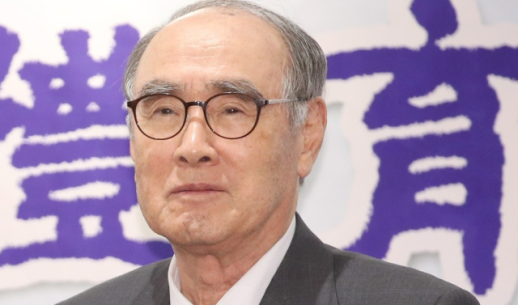 Former South Korean Prime Minister Lee Hong-koo Dies at 92 Former Prime Minister Lee Hong-koo died on May 5. He was 92. Born in 1934, Lee was a professor of political science at Seoul National University and a leading senior figure in South Korea’s political science community. After attending Kyunggi High School and studying at Seoul National University, he continued his academic work at Emory University and Yale University in the United States. He published numerous papers and columns in academic journals and major media outlets, offering theoretical and practical analysis of modern Korean politics. He also served as president of the Korean Political Science Association. Lee entered public service in 1988 under the Roh Tae-woo administration as minister of the National Unification Board. He later served as a special political adviser to the president and as ambassador to the United Kingdom, building experience in diplomacy and inter-Korean affairs. Under the Kim Young-sam administration, he served as senior vice chairman of the National Unification Advisory Council and as deputy prime minister and minister of the Unification Board. In 1994, he was appointed the 28th prime minister, overseeing state affairs. He was credited with involvement in early reform efforts of the civilian government and in coordinating domestic and foreign policy. After leaving the premiership, Lee returned to frontline politics in 1996 as chief representative of the then-ruling New Korea Party. That year, he won a proportional representation seat in the 15th National Assembly. With the launch of the Kim Dae-jung administration, he was appointed the first ambassador to the United States in early 1998 and played a role in strengthening South Korea-U.S. economic and diplomatic cooperation during efforts to overcome the foreign exchange crisis. After retiring from public office, Lee remained active as chairman of the Seoul International Forum, an adviser to the JoongAng Ilbo, chairman of the Yumin Cultural Foundation, an adviser to the Korea Volleyball Association, and a board member of the Asan Foundation, among other roles. Survivors include his wife, Park Han-ok; a son, Lee Hyun-woo, EIG Asia representative; daughters Lee So-young and Lee Min-young, a professor at Dongduk Women’s University; a daughter-in-law, Hwang Ji-young, head of the Hong Kong Korean Women’s Association; and a son-in-law, Lee Kang-ho, a professor at the Korea National University of Arts. A memorial altar has been set up in Room 20 of the funeral hall at Seoul Asan Medical Center. A funeral ceremony will be held at 8 a.m. on May 8, with the coffin to be carried out at 9 a.m. Burial will be at Cheonan Park Cemetery. 2026-05-05 13:57:50
 -
 21 Dead, 61 Hurt in Explosion at China Fireworks Factory Ahead of Trump Visit A major explosion at a fireworks manufacturer in China killed 21 people and injured 61 as U.S. President Donald Trump prepares to visit the country, according to Chinese state media. Chinese President Xi Jinping ordered a swift investigation and strict accountability for those responsible. China’s state-run Xinhua News Agency reported that the blast occurred at about 4:43 p.m. the previous day at a fireworks company in Liuyang, Changsha, in Hunan province. Authorities initially reported three deaths and 25 injuries, but the toll rose as rescue work continued. As of 8 a.m., 21 people were confirmed dead and 61 injured. The injured were taken to nearby hospitals for treatment. Xi directed officials to intensify the search for missing people and treatment for the wounded, while quickly determining the cause and holding those involved to account. Premier Li Qiang ordered officials to promptly assess casualties and conduct scientifically guided rescue operations to prevent secondary accidents. A command center was set up at the site and large numbers of personnel were deployed. A second, detailed search is underway. Public security authorities have placed the company’s responsible person under control as the investigation and follow-up measures continue. Separately, preparations appeared to be accelerating ahead of a U.S.-China summit planned for next week. China’s Pengpai and Hong Kong’s Ming Pao reported that a U.S. Air Force C-17 transport aircraft landed at Beijing Capital International Airport on May 1, followed by three more C-17s arriving on May 2 and May 3, bringing the total to at least four. Neither government has issued an official statement on the arrivals, but Chinese media have pointed to the possibility the flights carried equipment and supplies for summit preparations. U.S. presidential overseas trips typically involve advance transport of the armored limousine known as “The Beast,” along with communications and security gear. In addition, a bipartisan U.S. congressional delegation led by Sen. Steve Daines, described as a close Trump ally, recently visited China for advance coordination. Pengpai reported the group visited Beijing and Shanghai starting May 1 and focused discussions on economic and trade cooperation and technology issues. Daines previously said U.S.-China competition would be a key topic. Chinese experts said the trip appeared aimed at laying groundwork for the summit. Diao Daming, a professor at Renmin University of China’s School of International Studies, said, “Sen. Daines is seen as an important figure for communication with China within the Republican Party and takes a relatively pragmatic stance,” adding, “This visit will contribute to stabilizing bilateral relations.” He added, “At a time when a possible visit to China by senior U.S. officials is being discussed, the two sides can create a positive atmosphere for high-level interaction by exchanging positions in advance,” and said the inclusion of Democratic lawmakers showed “both U.S. parties” were willing to strengthen communication with China. The U.S. side has said Trump plans to visit China on May 14-15 for a summit with Xi, but the Chinese government has not officially confirmed it. U.S. Treasury Secretary Scott Bessent said Trump’s China trip would not change despite ongoing military tensions between the United States and Iran. In a May 3 interview with Fox News, he said, “As far as I know, President Trump is not trying to change the schedule.”* This article has been translated by AI. 2026-05-05 13:53:04
 -
 Korea Aerospace Administration chief meets U.S. space firms after satellite launch Oh Tae-seok, administrator of the Korea Aerospace Administration, met with major U.S. space companies in the United States after the successful launch of South Korea’s Next-Generation Mid-Sized Satellite No. 2, seeking cooperation to strengthen the competitiveness of the country’s private space industry. The agency said Tuesday that Oh on May 3 (local time) successfully completed his duties as head of the launch management team at Vandenberg Space Force Base. The satellite was launched at 4 p.m. Korea time aboard a Falcon 9 rocket and, about 60 minutes later, was placed into a 498-kilometer sun-synchronous orbit. At 5:15 p.m. the same day, communications with the Svalbard ground station in Norway confirmed normal operation of the spacecraft and key systems. The agency described it as the first mid-sized satellite independently developed by a private company based on 500-kilogram-class standard platform technology, calling it a symbolic result showing a shift in space development from government-led to private-led efforts. Oh continued what the agency described as on-site outreach the next day, May 4, visiting key space companies near California. He first went to Umbra Space to review the company’s development and use of synthetic aperture radar-based small satellites. With Umbra Space, which has been rapidly expanding commercial satellite data services for disaster response and security, he discussed cooperation on private-led small-satellite development and ways to use satellite data. Oh then met with SpaceX officials and formally requested coordination on the schedule for Next-Generation Mid-Sized Satellite No. 4, which is set for launch in the second half of the year. The agency said the meeting focused on schedule management after a previous delay, when a planned joint launch of satellites No. 2 and No. 4 was changed to separate launches due to SpaceX circumstances. The sides also discussed launch plans for follow-on satellites the agency is pursuing, including GEO-KOMPSAT-3, and exchanged views on the global launch market and the direction of technological development. “Building on the successful launch of the private-led Next-Generation Mid-Sized Satellite No. 2, Korea’s space industry also needs a rapid transition to a private-led approach,” Oh said. He said the agency would actively pursue expanded cooperation with major space powers and companies to strengthen the space-technology competitiveness of South Korean private firms. * This article has been translated by AI. 2026-05-05 13:52:12
 -
 Spirit Airlines Shuts Down, Sparking Consumer Backlash and a Buyout Push Spirit Airlines, the U.S. ultra-low-cost carrier known for charging extra for nearly everything, abruptly announced it was shutting down on May 2 (local time), drawing mixed reactions from consumers. Some supporters have even launched a website to raise money in a public buyout effort. According to USA Today and other outlets, Spirit said it would end operations at 3 a.m. on May 2 and close. The airline had planned to operate more than 4,000 domestic flights through May 15, but all future flights were canceled. Most tickets were refunded the day the shutdown was announced, the newspaper reported. Passengers who bought tickets using vouchers or miles, however, must wait while bankruptcy proceedings continue. Spirit’s collapse had been widely anticipated in the industry. The airline sought bankruptcy protection twice, in 2024 and last year. Reuters reported that the Donald Trump administration recently held talks to provide Spirit with $500 million (about 739 billion won) in exchange for 90% of its shares, but the effort failed. A creditor-side official told Reuters, “The Trump administration tried hard to save Spirit, but you can’t bring a dead body back to life.” Spirit was founded in 1983 as Charter One Airlines, operating charter flights, and renamed itself Spirit in 1992 after introducing jet aircraft. Beginning in 2007, it shifted to an ultra-low-cost strategy, charging separately for services such as seat selection, baggage, onboard drinks and counter service. That model worked for years. Spirit posted annual profits through 2020, even as the travel industry was hit by COVID-19, and other budget carriers — including Frontier, Sun Country, Avelo and Allegiant — adopted similar approaches. Major U.S. airlines such as Delta and American have also introduced comparable tactics, including basic economy fares and fees for seat selection. After the pandemic, Spirit’s losses mounted. The airline ultimately said it could not withstand a surge in fuel prices tied to the Iran war. Spirit had built its recovery plan on jet fuel forecasts of about $2.24 a gallon this year and $2.14 next year, but prices jumped to $4.24 a gallon after the war began. Consumers have long criticized Spirit for frequent schedule changes and cancellations with little compensation, and for charging for nearly all add-ons. Online, bags are even marketed to fit Spirit’s allowed “personal item” size. One consumer told Fox News that while the ticket itself cost $75 (about 110,000 won), adding baggage and a seat brought the total to $300 (about 440,000 won). “Spirit is good only when you’re traveling with just a backpack and no luggage,” the consumer said. Korean online travel communities have echoed the complaints, with posts saying the airline “takes even your spirit” through fees and that “everything is paid except the staff’s smile.” The shutdown has also raised concerns about mass job losses and consumer harm. The U.S. airline industry is running hiring programs for Spirit employees and offering discounted tickets to customers holding canceled Spirit bookings. In Washington, blame has become a political issue. Transportation Secretary Sean Duffy criticized the Biden administration, saying then-Secretary Pete Buttigieg blocked a Spirit-JetBlue merger and contributed to the crisis. Buttigieg responded that Spirit went bankrupt after jet fuel prices doubled during Trump’s term because of the Iran war. A grassroots effort to buy the airline has also emerged. A site called “Spirit 2.0,” set up by internet users, is raising funds with a minimum contribution of $45 (about 66,000 won). The New York Post reported that 120,000 people have visited the site so far and that $88 million (about 130 billion won) has been pledged.* This article has been translated by AI. 2026-05-05 13:51:15
 -
 Hyundai Department Store’s Mokdong Branch Revamps Living Floor in Biggest Renovation Since 2002 Hyundai Department Store’s Mokdong branch has overhauled its living floor, targeting strong local demand for premium home goods. It is the store’s largest renovation since it opened in 2002. Hyundai Department Store said Tuesday it has reopened the living floor on the B1 level after a full renovation of about 500 pyeong (1,652 square meters), redesigning it as a curated space tailored to customers’ lifestyles. The most prominent addition is a sleep-focused experience zone called the “sleep fitting room.” Customers can lie down in a cozy, private room with dimmed lighting to try high-end mattresses from brands including Simmons and Tempur. The merchandise mix was also adjusted for shoppers seeking both premium products and practicality. The store strengthened its lineup of Nordic-style living brands, a trend that has taken hold in the interior market, adding brands including Fritz Hansen, &Tradition, Stay H, BD and Radof. The branch will also run pop-up stores aimed at consumers in their 30s and 40s, a key customer group. Participants include sink specialist Baekjo Sink, custom chair brand Size of, and lifestyle furniture brand Ceres Home, the company said. A Hyundai Department Store official said the company will continue to build “distinctive content and a premium shopping experience” to position the Mokdong branch as a leading living destination in western Seoul. Department stores have been accelerating renovations at major locations as they seek to offer experiences that differ from online shopping. Shinsegae Department Store’s Hanam branch recently renovated 10 young fashion brands and 18 children’s brands on the first floor, opening new stores including young fashion labels Rave and Duelring and children’s brand Apricot Studio, the first in the Hanam area. The branch reduced the number of brands while expanding individual store size and walkways by about 1.5 times to create a more comfortable shopping environment. Lotte Department Store’s Incheon branch completed a reorganization of its first-floor luxury section, reopening it on the first of this month with hands-on content.* This article has been translated by AI. 2026-05-05 13:47:59
 -
 U.S. to Start Reciprocal Tariff Refunds as Soon as May 12, Total Seen at $166 Billion U.S. tax refund procedures tied to the Supreme Court’s ruling invalidating reciprocal tariffs are expected to begin as soon as May 12 (local time), according to reports. Reuters reported on May 4 (local time), citing a statement from U.S. Customs and Border Protection, that the refund process had been set to start May 11 but was delayed by one day to May 12. Even after the process begins, it is expected to take 60 to 90 days for refunds to be deposited to importers. The move follows a Feb. 20 U.S. Supreme Court decision, by a 6-3 vote, striking down tariffs imposed by the Trump administration under the International Emergency Economic Powers Act, including reciprocal tariffs. The refund process is set to start about three months after the ruling. CBP is estimated to have collected about $166 billion (about 245 trillion won) in tariffs from 330,000 importers under IEEPA, and refunds are expected to be comparable. CBS, citing CBP data, reported that as of April 26 more than 11 million refund claims had been filed. The refunds will go to U.S. importers that brought goods in from overseas, not directly to American consumers. However, major U.S. logistics companies including FedEx and UPS said they plan to pass refunded amounts back to consumers. 2026-05-05 13:47:26
 -
 OpenAI Faces Rising Cost Pressures as AI Spending Surges and Rivals Gain Ground Even after big U.S. tech companies posted first-quarter earnings surprises, market attention shifted to privately held OpenAI. As a “capex shock” — capital spending rising far faster than revenue — ripples across the AI industry, some investors are even discussing bankruptcy scenarios for OpenAI. According to the IT industry on May 3, Evercore and Bank of America raised their forecast for total AI capital spending in 2027 to more than $1 trillion after big tech companies reported first-quarter results. While major U.S. tech companies posted revenue growth of 17% to 33%, their capex growth ran at more than twice the pace. In after-hours trading following earnings, shares of Meta and Microsoft fell sharply. The concern is that it remains unclear when the surge in spending will translate into profits, reinforcing fears of an AI bubble. After those earnings reports, attention focused on OpenAI. The company has signed capital spending commitments totaling $1.4 trillion for 2025 to 2032, including investments by partners such as Azure, AWS, Oracle and CoreWeave. Over the same period, its AI operating and training costs — computing spending — are estimated at $600 billion. Market analysts say OpenAI’s revenue growth is likely to lag that of big tech. Major tech companies can lean on steady income from advertising, cloud services and commerce to support AI investment, but OpenAI lacks that kind of cushion, increasing its risk. Sebastian Mallaby, an economist at the Council on Foreign Relations, wrote in a New York Times opinion piece that OpenAI’s annual losses are widening rapidly and that cumulative cash burn could reach $115 billion by 2029. If current trends continue, he warned, the company could face a liquidity crunch by mid-2027. The argument is that OpenAI’s computing infrastructure is expanding much faster than revenue, and cash could run out before that gap narrows. Similar concerns have been reported inside the company. The Wall Street Journal reported that Chief Financial Officer Sarah Friar formally raised with executives that actual revenue is not keeping pace with the scale of data center computing contracts already signed. Altman and Friar quickly issued a joint statement disputing the report, but the fallout spread beyond OpenAI. Oracle shares fell 7%, and CoreWeave and SoftBank also declined. Bloomberg Intelligence said, “OpenAI missing its revenue targets is a direct risk factor for Oracle’s financial targets.” The episode underscored how dependent the broader ecosystem has become on OpenAI, with even reports of internal friction moving publicly traded tech stocks. Shifts in competition are also adding to OpenAI’s financial pressure. Anthropic has rapidly absorbed enterprise demand since launching its coding agent “Claude Code,” and as of April 7 it had surpassed OpenAI in annualized revenue. Google’s Gemini is gaining share in the consumer market by linking to its search and Android ecosystem. As rivals push into a market OpenAI helped create, OpenAI faces a dilemma: spending more just to hold its position. Some observers say OpenAI has bought time by raising money. In March, OpenAI raised $122 billion from investors including Amazon, Nvidia and SoftBank, securing a valuation of $852 billion. That has led to assessments that near-term bankruptcy risk is limited. Still, if much of that funding has already been committed upfront through data center and computing contracts, the key question is whether revenue can catch up with the pace of expanding capital spending before the next funding round.* This article has been translated by AI. 2026-05-05 13:40:59
 -
 Big Tech Earnings Beat Expectations, but AI Bubble Fears Persist; OpenAI Faces Financial Scrutiny Global Big Tech companies posted strong first-quarter results that underscored the potential to make money from artificial intelligence, but concerns about an AI bubble have not eased. With massive capital spending far outpacing revenue growth, stock-market reactions were mixed, and financial worries surrounding OpenAI — a symbolic name in the AI industry — have intensified. According to the IT industry on May 3, four major Big Tech companies — Alphabet, Meta, Microsoft and Amazon — released their first-quarter results after the market close late last month. The numbers beat expectations. Alphabet reported revenue of $109.9 billion, up 22% from a year earlier and above the market estimate of $107.2 billion. Google Cloud revenue rose 63% to $20.0 billion. Microsoft posted revenue of $82.9 billion, up 18%, with Azure growth reaching 40%. Meta’s revenue climbed 33% to $56.3 billion. Amazon reported revenue of $181.5 billion, up 17%, while AWS revenue grew 28% to $37.6 billion, its fastest growth rate in 15 quarters. Even with the earnings surprise, some stocks fell after companies raised capital spending plans alongside their results. Meta lifted its annual capital expenditure guidance to $125 billion to $145 billion, sending its shares down more than 8% in after-hours trading. Microsoft’s shares slipped about 4% after it reported first-quarter capital spending of $34.9 billion, a 74% jump from a year earlier. Alphabet raised its annual capital spending guidance to $180 billion to $190 billion, and Amazon pledged AI infrastructure investment totaling $200 billion. Estimated AI capital spending this year by the five largest hyperscalers combined is expected to exceed $650 billion. The sharpest focus is on privately held OpenAI. Analysts have said it is losing share to Anthropic in the coding market and to Google’s Gemini in the broader consumer market. Reports of missing revenue targets and internal conflict have added to unease. In particular, OpenAI’s unusually high share of capital spending compared with rivals has emerged as a key variable as it approaches a public listing.* This article has been translated by AI. 2026-05-05 13:40:07
 -
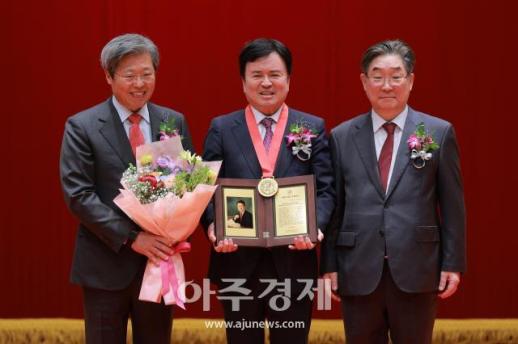 Aju News Corp. Chairman Kwak Young-gil Wins Korea University Alumni Award Kwak Young-gil, chairman of Aju News Corp., received Korea University’s “Proud Korea University Alumni Award” in recognition of raising the honor of his alma mater and contributing to social development. Korea University, led by President Kim Dong-won, presented the award to Kwak (English Language and Literature, class of ’74) during its 121st anniversary ceremony and anniversary events held May 5 morning at the Inchon Memorial Hall in Seongbuk-gu, Seoul. Also honored were Samyang International Chairman Heo Kwang-soo (Business, ’65) and Ace Bed CEO Ahn Sung-ho (Geology, ’87). The university said Kwak has “always looked at the world with a clear and upright eye” and devoted himself to delivering the truth, calling his work “a true guide” for society. It also cited his pioneering spirit, strong support for his alma mater and commitment to nurturing younger generations. In his remarks, Kwak said he learned not just language but a “humanities mindset” after entering the English department “without even knowing the difference between ‘camp’ and ‘English.’” He added, “For me, English literature was a ‘door to spirituality’ beyond language.” Kwak said that over the past five years he studied humanity’s classics and artificial intelligence and concluded that the essence of spirituality connects to the university’s motto of “freedom, justice and truth.” He said he reached the view that altruism — “public good first, private interest later” — is the door to spirituality. Calling spirituality a key driver in the AI era, Kwak said, “Ten years ago I thought about ‘human-centered AI,’ but now we must pursue ‘spirit-centered AI.’” He added, “If spirituality cannot govern AI, humans will inevitably be ruled by technology.” As a manager leading a global news media organization, Kwak said his company is using a multilingual news system to promote the global rise of “K-series,” including K-defense. He added, “If South Korea was once the ‘light of the East,’ now Korea University must become the ‘light of humanity’ in the AI era,” and said he hopes his efforts will help advance his alma mater. The event also honored K-Net Investment Partners CEO Kim Dae-young (Public Administration, ’81) and Eugene Investment & Securities CEO Yoo Chang-soo (Sociology, ’81) with the “Community Service and Development Merit Award.” 2026-05-05 13:39:14