
Journalist

AJP
-
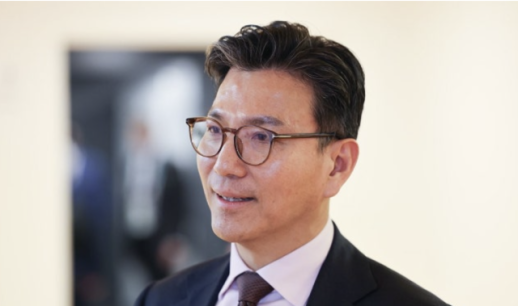 Kim Jae-youl elected to IOC executive board, second Korean to serve on the body SEOUL, February 05 (AJP) -Kim Jae-youl, president of the International Skating Union and a member of the International Olympic Committee, has been elected to the IOC Executive Board, becoming only the second South Korean to serve on the body. Kim was chosen Tuesday (Korea time) during the 145th IOC Session in Milan, host city of the 2026 Milan-Cortina Winter Olympics. He received 84 votes in favor out of 100 valid ballots, with 10 against and six abstentions. He joins the late Kim Un-yong, a former IOC vice president, as the only South Koreans to have served on the IOC’s top decision-making body. Founded in 1921, the Executive Board consists of the IOC president, four vice presidents and 10 other members. It oversees the organization’s administration and finances and manages procedures for selecting Olympic host cities. Members serve four-year terms. Four candidates competed for three open seats in the election. Along with Kim, Ingmar De Vos of Belgium and Neven Ilic of Chile were also elected. President Lee Jae Myung congratulated Kim in a Facebook post, calling the election a significant step for South Korea’s international standing in sports governance. “This great accomplishment transcends individual glory,” Lee wrote. “It carries tremendous significance in that South Korea will now take on an even greater leadership role at the center of international sports governance.” Lee added that Kim’s experience and leadership would help shape the future of the Olympic Movement. “Kim’s wealth of experience and brilliant leadership will lay a strong foundation for leading the future of the Olympic Movement,” he said, expressing hope that Kim would further expand international cooperation based on Olympic values of fairness, transparency, peace and solidarity. The president also pledged the government’s full support for sports diplomacy, vowing to strengthen South Korea’s role as “a responsible partner” in the global community. Kim became an IOC member in October 2023 in his capacity as head of an Olympic sport’s international governing body. He has served as ISU president since June 2022. He previously served as president of the Korea Skating Union from 2011 to 2016, vice president of the Korean Sport & Olympic Committee, and South Korea’s chef de mission at the 2014 Sochi Winter Olympics. He was also executive vice president of international relations for the 2018 PyeongChang Winter Olympics. Kim remains the only South Korean member of the IOC. Former Olympic bobsleigh silver medalist Won Yun-jong is seeking election this month to the IOC Athletes’ Commission. Kim, 57, is the brother-in-law of Samsung Group Chairman Lee Jae-yong. Meanwhile, former U.N. under-secretary-general Kim Won-soo was elected to the IOC’s Ethics Commission.Kim Won-soo, a career diplomat and close associate of former U.N. Secretary-General Ban Ki-moon, will serve a four-year term and may be re-elected twice. The commission is responsible for updating the IOC’s Code of Ethics, reviewing potential violations and advising on ethical governance. 2026-02-05 07:43:23
 -
 South Korea curling mixed doubles team routed by Sweden in Olympic opener South Korea’s first athletes to compete at the Milan-Cortina d’Ampezzo Winter Olympics opened with a lopsided loss in curling mixed doubles. Kim Seon Yeong (Gangneung City Hall) and Jeong Yeong Seok (Gangwon Province Office) lost 10-3 to Sweden’s Isabella and Rasmus Wranå on Feb. 5 (Korea time) in their first round-robin game at the Cortina Curling Olympic Stadium in Cortina d’Ampezzo. The Milan-Cortina d’Ampezzo Winter Olympics are set to begin with an opening ceremony at 4:30 a.m. on Feb. 7 at the San Siro Olympic Stadium in Milan. Mixed doubles began round-robin play ahead of the ceremony, making Kim and Jeong the first South Korean competitors to take the ice. Ten teams are competing in mixed doubles, with each nation playing a round-robin schedule. The top four advance to the semifinals and final to determine the medals. South Korea’s round-robin opponents are Italy, Switzerland, Britain, the Czech Republic, the United States, Estonia, Canada and Norway, in addition to Sweden. Kim and Jeong secured the final of the 10 Olympic mixed doubles berths through the Olympic Qualification Event. It is the second time South Korean curling has entered the Olympic mixed doubles field, following Pyeongchang 2018 (Jang Hye Ji and Lee Gi Jeong). Sweden’s Wranå siblings are the 2024 world champions. South Korea could not close the gap against Sweden’s precise shotmaking and dropped its opener. Kim and Jeong are scheduled to play host Italy’s Stefania Constantini and Amos Mosaner at 6:05 p.m. at the same venue. The Italian pair won gold at the 2022 Beijing Winter Olympics. The game was briefly interrupted when the arena lost power during the first end, darkening the venue and shutting off the scoreboard. Play resumed after about 10 minutes once electricity was restored. 2026-02-05 06:06:00
 -
Kim Jae Yeol Elected to IOC Executive Board, Second South Korean to Serve Kim Jae Yeol, president of the International Skating Union and an International Olympic Committee member, was elected to the IOC Executive Board. Kim was chosen in a vote held Tuesday (Korea time) at the 145th IOC Session at the Milano Cortina 2026 Winter Olympics Main Media Center in Milan, Italy. He received 84 votes in favor out of 100 valid ballots, with 10 against and six abstentions. He is the second South Korean to serve as an IOC executive board member, following the late Kim Un Yong, a former IOC vice president.* This article has been translated by AI. 2026-02-04 20:03:00
-
 Lotte Chemical Targets 2026 Turnaround With Portfolio Shift to Specialty, Clean Energy Lotte Chemical said it will complete a restructuring of its Daesan industrial complex operations within the year and begin building a new growth base, including expanding higher value-added products using its Yulchon compounding plant. On Tuesday’s earnings conference call, the company said it is aiming for a turnaround in 2026 centered on two strategies: reducing the share of commodity petrochemicals in its portfolio and strengthening foundations for future growth. On efforts to cut capacity at its naphtha cracker operations, which it said have been slow to progress, the company said it will do its best to successfully wrap up the ongoing Daesan complex reorganization within the year. Explaining the expected impact, Lotte Chemical said it will hold a 50% stake in the merged entity and that two crackers at each company are running at 80% to 85% utilization. It said shutting down one cracker entirely would deliver a portfolio improvement effect comparable to the volume reduction from that shutdown. The company also laid out a roadmap for shifting toward specialty businesses. It said it will strengthen competitiveness in higher value-added products such as functional materials, as well as in the eco-friendly energy sector. It plans to expand high value-added products such as Super EP, centered on the Yulchon compounding plant being built as South Korea’s largest single compounding facility. The plant, scheduled for completion this year, is currently operating 11 lines: five newly installed in October and six relocated in January. Lotte Chemical added that it plans to complete construction of its U.S. cathode foil plant within the year and gradually expand its battery materials business, including functional copper foil products such as circuit foil for AI use. It also plans to expand capacity in stages for products including semiconductor process materials and green materials for food and pharmaceutical uses. The company said it will additionally bring online a 60-megawatt hydrogen fuel cell power plant in Ulsan to strengthen competitiveness in its eco-friendly energy business. Lotte Chemical said it plans to expand high-performance materials this year and push ahead with its eco-friendly energy business at a faster pace. 2026-02-04 18:12:00
 -
 PharmaResearch Annual Sales Top 500 Billion Won for First Time PharmaResearch said its annual sales topped 500 billion won for the first time in 2025, driven by growth in its medical device and cosmetics businesses. In a regulatory filing on Tuesday, the company said 2025 revenue rose 53% from a year earlier to 535.7 billion won on a consolidated basis. Operating profit increased 70% to 214.2 billion won. The company said it posted broad-based growth across all business segments, with medical devices and cosmetics leading results. “An increase in domestic demand tied to an inflow of foreign tourists and rising exports centered on medical devices and cosmetics worked together,” the company said. Medical device sales grew 62% from a year earlier, and cosmetics sales surged 69%, led by major overseas markets including the United States and Japan, the company said. PharmaResearch said it plans to accelerate its mid- to long-term global expansion. It will begin European sales of “Rejuran,” which drew attention at the world’s largest aesthetic plastic surgery conference, IMCAS, held last month in Paris. The company also plans to enter the Middle East and South America to diversify markets. It said it will start with Chile, Peru, Argentina and Mexico, and will seek approval in Brazil, the region’s largest market, to expand further in Latin America. The company said it will continue investing in research and development to diversify its portfolio, including expanding its product lineup to cancer treatments and beginning clinical trials aimed at securing approval in Japan, in addition to its pharmaceuticals, medical devices, cosmetics and health functional foods. A PharmaResearch official said 2025 was “a year in which we laid the foundation for a global leap through meaningful growth,” adding that the company maintained steady growth even before results from Europe were fully reflected in earnings. The official said the company plans to invest in facilities to stabilize its global supply chain and strengthen R&D to speed entry into countries where it has not yet received approvals, while reinforcing leadership in the skin booster market.* This article has been translated by AI. 2026-02-04 18:09:00
 -
 Polestar’s Rise: From Swedish Racing Roots to a Fast-Growing EV Brand What happens when Volvo’s belief that “safety can’t be an option” meets a racing mindset built on pushing performance to the limit? In an EV market dominated by established names such as Tesla, Volkswagen and Hyundai, Sweden-born Polestar has positioned itself as a performance-focused electric brand with an unusual origin story: a European automaker’s safety-first DNA combined with China-based manufacturing and ownership ties. With competition expected to intensify amid concerns about oversupply of Chinese EVs, Polestar says it aims to set a new benchmark between the legacy internal-combustion world and the shift to electric vehicles. ◆From a 1996 launch to a “star” in EVs; up 296.6% in South Korea in a year Polestar traces its roots to Flash Engineering, a Swedish racing team founded in 1996 by STCC champion Jan “Flash” Nilsson. The team developed by tuning Volvo cars for performance, blending Volvo’s “safety can’t be an option” philosophy with racing’s goal of maximizing output. It later rebranded as Polestar Racing and, in 2009, became Volvo’s official performance partner. After Volvo’s acquisition, Polestar debuted as an independent brand in 2015. In 2017, it was absorbed with Volvo into China’s Geely Holding Group and was remade as an electric performance brand. Polestar’s lineup uses simple numbering from 1 to 6. Its first model, the Polestar 1, was a plug-in hybrid rated at 600 horsepower and up to 150 kilometers (93 miles) of electric-only range, drawing attention in the late 2010s as EVs gained momentum. The first sedan, the Polestar 2, competed with Tesla’s Model 3 and helped establish the brand globally. Polestar 4 became a strong seller in the premium EV segment, and Polestar 5 and 6 are scheduled to be unveiled this year. In South Korea, Polestar Automotive Korea sold 2,957 vehicles in 2025, up 296.6% from 800 in 2024, according to the Korea Automobile Importers & Distributors Association. The Polestar 4 accounted for about 90% of sales and led the 60 million won-and-above premium EV import segment last year, beating models including the BMW i5 and Audi Q4 e-tron. The company attributed the result to product quality and brand image rather than heavy promotions or discounting. The Polestar 4’s design removes the rear window to create a more open second-row feel, and it is rated for more than 511 kilometers (318 miles) of range per charge in the long-range single-motor version. It is also rated at up to 544 horsepower and 0-100 kph (0-62 mph) in 3.8 seconds. A Polestar Korea official said the company will “provide Swedish premium value through a differentiated customer experience” and strengthen leadership in the luxury EV market by launching the Polestar 3 and Polestar 5. ◆Not a “Chinese brand wearing a European mask,” Polestar says; aiming to be an EV “dream car” Polestar’s identity reflects how global the auto industry has become. It markets itself with Swedish design and engineering, relies on China for much of its production infrastructure, and has raised capital through a Nasdaq listing. That mix has led some to label it a “Chinese brand wearing a European mask.” Polestar rejects that framing and says it is building a “dream car” identity in the EV era, similar to how Porsche used racing to become a symbol of performance. The company has also promoted a vision of a “climate-neutral car in 2030.” One example is a campaign tied to Climate Week NYC, using outdoor ads across New York and social media to highlight the impact of internal-combustion vehicles on consumers and society, focusing on what it called a hard-to-break dependence between gasoline cars and drivers. Polestar has also pointed to a moonshot project aimed at a fully climate-neutral vehicle without carbon offsets, and a GT Polestar 5 linked to a renewable-energy smelter. Fredrika Klarén, Polestar’s head of sustainability, said, “As many traditional automakers are rolling back climate pledges, we are going the other way,” adding that EVs are “the most efficient and scalable alternative” for responding to climate change. Polestar says its cross-border structure shows how manufacturing ecosystems are being reshaped beyond traditional “national brand” labels. Its push in the EV transition is ongoing as the broader auto industry moves through a period of change. <Editor’s note> As times change, choices about where people live, what they wear and what they eat have become more important than simply making a living. A similar leather bag can cost 100,000 won under one label but sell for 100 million won if made by Hermès. This series looks at the forces behind brands that can sway consumer decisions and determine corporate fortunes, and at the intense competition companies face to build them. * This article has been translated by AI. 2026-02-04 18:03:00
 -
 Ryoo Seung-wan, Zo In-sung lead spy action film “Humint” ahead of Lunar New Year Director Ryoo Seung-wan of “Veteran” and “Smugglers” is returning with the spy action film “Humint,” starring Zo In-sung, Park Jeong-min, Shin Se-kyung and Park Hae-joon, aiming for the Lunar New Year holiday box office. A press screening and news conference for the film were held Tuesday afternoon at CGV Yongsan I’Park Mall in Seoul. Ryoo and cast members Zo, Park Jeong-min, Shin and Park Hae-joon attended. “Humint” refers to intelligence work using human networks — informants. Set in Vladivostok, the film follows people with different aims who collide in a place where secrets and truth sink into an icy sea. The movie highlights tightly coordinated shootouts and a suspense-driven plot. Park Hae-joon, who plays Hwang Chi-seong, North Korea’s consul general in Vladivostok, said Ryoo creates “creative action.” He added, “When I read the script, I thought it was absurd. I wondered, ‘How are they going to shoot this?’ But watching the process, I thought, ‘This really fits action.’ I was surprised to see action I’d never seen before.” Park Jeong-min, who shares action scenes with Zo, said, “Action scenes are dangerous. If you lose focus, you can get hurt, but (Zo) is so skilled that it felt like I was being protected.” He added that he practiced hard to match Zo’s energy “in every scene, every cut.” Ryoo said the production sought realism in its gunplay by consulting a military affairs journalist from the planning stage. “Instead of working only with the usual stunt team, we talked with a military journalist about how gunfire would work based on where characters are positioned,” he said. “These days, many viewers watch gun scenes with an expert’s eye, so we paid extra attention.” He said the crew counted bullets, tracked when characters could not fire more rounds, and noted when magazines had to be changed. Special effects staff also counted rounds “cut by cut,” he said. Zo, who plays a South Korean National Intelligence Service agent known as Manager Jo, said he visited the agency for shooting practice and basic training. “It was only one day, but I learned a lot by asking questions,” he said, adding he was taught details such as one-handed firing, shooting while moving and footwork. Park Jeong-min, who plays Park Geon, a section chief in North Korea’s Ministry of State Security, said even moments that might pass quickly on screen were mapped out in detail, including where a gun should point when held or not held. He said he practiced at home with a BB gun, including inserting magazines, and learned details down to eye direction when staying alert. Park Hae-joon said his character handled weapons more freely than NIS agents and that he studied North Korean-style grips to fit the role. Beyond gunfights, the film also centers on emotional acting between characters. A key thread is the relationship between Park Geon and Chae Seon-hwa, a North Korean restaurant worker played by Shin. Park Jeong-min said, “I think Park Geon’s purpose in this film is only Seon-hwa.” He said Shin opened up quickly despite it being their first time meeting on set, allowing them to discuss the project in depth. “I’m glad and grateful that Shin Se-kyung played Seon-hwa,” he said. Shin said the film felt different from the romance projects she has done. She added she was excited to work with Park Jeong-min and focused on making sure their emotional arc supported the film’s overall balance. Several South Korean films are set to open during the Lunar New Year holiday, including Jang Hang-jun’s “The Man Who Lives With the King” and Kim Tae-yong’s “Number One.” Ryoo said he is close with the directors and actors of the holiday releases and hopes audiences will support South Korean films during the long break. Focusing on “Humint,” Ryoo said he tried to create a stage where the cast’s appeal could come through on screen. “We did our best, within our abilities, to make a film that feels great to watch in a theater,” he said, asking viewers to look on it kindly. “Humint” opens Feb. 11.* This article has been translated by AI. 2026-02-04 17:54:00
 -
 South Korea Pharma-Bio Brief: Dong-A Launches Pureka; Yuhan Marks 100 Years; Celltrion, Samsung Biologics Updates Dong-A Pharm launches Pureka, a stick-pack salad with 41 fruits and vegetables Dong-A Pharm said Tuesday it has launched Pureka, a single-serve stick pack that contains 41 fruits and vegetables for convenient consumption. The company said the product targets consumers seeking to improve eating habits for health management. It is positioned around the “reverse eating” trend — eating vegetables, then protein, then carbohydrates — aimed at moderating post-meal blood sugar spikes, offering a way to consume vegetables before a meal. The brand name combines “Pure” and “Eureka,” the company said, to convey the idea of discovering a simple, “pure” daily health routine. Each stick pack is designed for easy use without washing or prep, and includes a dual blend of soluble and insoluble dietary fiber, plus probiotics and digestive enzymes, the company said. Pureka comes in two versions: “Pureka Greens Watermix,” a powder mixed with water, and “Pureka Greens Crunch,” an ultra-small tablet meant to be chewed. Yuhan marks 100th anniversary with campaign to collect company historical materials Yuhan said Tuesday it will run a campaign to collect historical materials tied to the company as it marks its 100th anniversary. The campaign aims to help restore the history of founder Dr. Yu Ilhan and Yuhan’s 100 years, the company said, by gathering a wide range of records, including items held by individuals. Eligible materials include items produced or used before 2000, such as photos and documents related to Dr. Yu and Yuhan, books, and museum-type items including products and souvenirs. The company said it will accept submissions ranging from personal daily records to materials with historical significance. Submissions will be accepted through Feb. 27 via online or text message, with a brief description and photos attached, the company said. Yuhan said it will review submissions based on archival value, preservation condition and potential use before selecting items. Selected materials will be used for Yuhan’s 100th anniversary archive, exhibitions and content production, it said. Celltrion says Omliclo gains traction in Spain, a key European market Celltrion said Tuesday that Omliclo (omalizumab), a treatment for chronic spontaneous urticaria and allergic asthma, is accelerating its market expansion in Spain. Celltrion’s Spain unit was selected late last year as the top-ranked supplier in a public tender in Catalonia, a major region, the company said. It was also chosen as the top-ranked bidder in a tender to supply all public medical institutions in the Basque Country and completed a supply contract last month, it said. Omliclo is now prescribed across about 260 public and private hospitals in Spain, Celltrion said. The company said it plans to use its Spain strategy and results to expand prescriptions across Europe. Samsung Biologics signs vaccine manufacturing partnership with CEPI Samsung Biologics said Tuesday it signed a partnership agreement with the Coalition for Epidemic Preparedness Innovations, or CEPI, on Monday at the Conrad Seoul hotel in Yeouido, Seoul, to join a vaccine manufacturing facility network. Under the partnership, Samsung Biologics will be designated a “preferred” manufacturer for vaccines CEPI is supporting, the company said. In the event of a pandemic, Samsung Biologics said it will produce up to 50 million doses of vaccine and drug substance that can be converted into up to 1 billion doses of drug product vaccine, at CEPI’s request. Vaccines produced by Samsung Biologics would be supplied to South Korea first upon CEPI’s request, it said. The company said the partners will also conduct simulation exercises for rapid response, using a scenario involving an outbreak of wild-type H5 influenza. The drills are intended to verify the speed and stability of end-to-end capabilities from antigen development through manufacturing and supply, it said. Samsung Biologics said the two sides also plan to work together to strengthen chemistry, manufacturing and controls process development for recombinant protein vaccines and to expand standby production capacity.* This article has been translated by AI. 2026-02-04 17:48:00
 -
 KOSPI and Samsung Elec tower over Asian bourses SEOUL, February 04 (AJP) - Korean stocks continued to dominate regional markets on Wednesday, extending their record-setting streak and reinforcing South Korea’s growing influence in Asian equities. Samsung Electronics powered the rally, becoming the first Korean company to surpass 1,000 trillion won ($688 billion) in market capitalization based solely on common shares. The milestone cemented the chipmaking giant’s role as the anchor behind the KOSPI’s push into uncharted territory. Shares of Samsung Electronics rose 0.8 percent to 168,800 won, lifting its market value to 1,001 trillion won. The achievement was widely viewed as symbolic, marking not only a new chapter for the company but also underscoring a broader re-rating of Korea’s equity market led by heavyweight blue chips. Samsung’s advance helped drive the KOSPI up 1.6 percent to 5,371.1, marking the first close above the 5,300 level. The benchmark opened lower at 5,260.7, tracking overnight weakness in U.S. equities, but quickly reversed course and extended gains through the afternoon. The KOSPI 200 climbed 1.4 percent to 790.4, reflecting renewed institutional appetite for large-cap stocks. Institutions remained the primary driver, buying a net 1.78 trillion won, while foreign investors and retail investors sold 940 billion won and 1.01 trillion won, respectively. Beyond Samsung, gains spread selectively across cyclical and policy-sensitive names. Hyundai Motor rose 2.5 percent, while Doosan Enerbility jumped 5.8 percent, reinforcing strength in energy and infrastructure-related stocks. Sector performance pointed to a clear rotation into energy-linked names. Energy equipment and services stocks surged 16.02 percent, leading the market. Hanwha Solutions soared 30 percent to 36,450 won, while HD Hyundai Energy Solutions jumped 29.8 percent to 70,500 won, driven by expectations of sustained demand for energy infrastructure and storage solutions. EcoPro gained 3.5 percent, and Hanwha Ocean advanced 1.8 percent, extending gains across the broader industrial complex. The KOSDAQ lagged the main board but still closed higher, rising 0.5 percent to 1,149.4. The tech-heavy index underperformed as investors remained cautious toward growth stocks following recent volatility. On the secondary market, individual investors bought a net 234.5 billion won, while foreigners and institutions sold 53.9 billion won and 144.4 billion won, respectively. Some pockets of weakness persisted. SK hynix slipped 0.8 percent to 900,000 won, while NAVER fell 1.7 percent to 264,500 won. Healthcare technology was the weakest sector, down 2.5 percent, reflecting continued profit-taking. The won weakened further, with the dollar rising 2.1 won to 1,453.1. Global developments remained a key overhang. U.S. President Donald Trump announced new tariffs of 25 percent on imports from Canada and Mexico and 10 percent on Chinese goods. Although he later granted a one-month delay for Canada and Mexico after the two countries pledged stronger border controls, Trump warned that tariffs on China could be raised further if negotiations fail. European markets slid sharply on fears that similar measures could be extended to the European Union. Elsewhere in Asia, markets were mixed. Japan’s Nikkei 225 fell 0.8 percent to 54,293.4 amid trade jitters, while China’s Shanghai Composite rose 0.9 percent to 4,102.2, supported by selective buying in industrial and energy-linked stocks. 2026-02-04 17:42:54
 -
 Seoul's FX battle costs $4 bn over the last two months SEOUL, February 04 (AJP) - South Korea has deployed nearly every tool in its policy playbook to defend the won, which authorities say has weakened “excessively” beyond its fundamentals — a view shared even by the U.S. Treasury secretary. Measures have ranged from pressuring public and private institutions to sell dollar holdings to offering tax incentives aimed at drawing capital back home. Yet despite these efforts, the national coffers have paid a heavy price. As of the end of January 2026, foreign exchange reserves stood at $425.91 billion, down $2.15 billion from the previous month, following a decline of more than $2 billion in December, according to the Bank of Korea (BOK) on Wednesday. Nearly $4.2 billion has been depleted in just two months. The central bank attributed the decline primarily to its FX swap arrangement with the National Pension Service (NPS). Under the program, the BOK supplies dollars to the NPS for overseas equity purchases, temporarily limiting capital outflows that typically weaken the won. The BOK has said the swap would temporarily dent reserves but be reversed once the dollars are returned. However, whether the strategy is producing meaningful results remains uncertain. The average exchange rate rose to 1,467.35 won per dollar in December, up from 1,461 in November. Despite continued intervention, the rate remained weak at around 1,451 won as of Feb. 4. In late January, the won posted the sharpest decline among major currencies, briefly approaching the 1,470 level. Private dollar hoarding offsets intervention A broader look at the private sector highlights a structural challenge. According to BOK data released on Jan. 26, resident foreign currency deposits reached a record $119.43 billion in December, up $15.88 billion from November. Both the balance and the monthly increase marked all-time highs. The central bank is well aware of the trend. At a press conference following the January Monetary Policy Board meeting, BOK Governor Rhee Chang-yong noted that individuals and corporations already hold ample dollar liquidity. Rhee explained that many market participants, betting on continued dollar strength, prefer lending their dollars in financial markets rather than selling them in the spot market. “The issue lies in circulation structure, not in total supply,” he said. Meanwhile, growing preference for overseas assets reflects persistent skepticism over corporate earnings growth and long-term prospects for “Korea Inc.” Data from the Korea Securities Depository show that Korean investors’ holdings of U.S. stocks reached a record $171.8 billion, rising 5 percent between Dec. 31 and Jan. 16. The BOK also reported that outward securities investment surged by $12.26 billion in November, led by equities, while foreign inflows remained below $6 billion and were concentrated largely in bonds. Policy efforts face structural limits Authorities are rolling out measures to attract capital back home, including Reshoring Investment Accounts and the National Growth Fund. The Financial Supervisory Service is also considering incentives such as higher interest rates for converting dollars into won. South Korea’s gradual inclusion in the World Government Bond Index through November is also raising hopes for stronger foreign inflows. Still, analysts stress that sustained currency stability ultimately depends on economic fundamentals. Shinhan Securities expects the exchange rate to remain around 1,400 won per dollar, citing weak growth and slowing potential output. South Korea’s economy contracted 0.3 percent in the fourth quarter of 2025, while full-year growth barely reached 1 percent. “The reason many people are investing in ‘Gobbuss’ (KODEX 200 Futures Inverse 2X) even as the KOSPI hits record highs is anxiety over the real economy,” said an investment banking official, speaking on condition of anonymity. “The psychology behind refusing to sell dollars is essentially the same.” Stocks surge despite currency weakness Despite the won’s fragility, equity markets continued to rally. The KOSPI closed Wednesday at a record 5,371.10, up 1.57 percent. Institutional investors posted net purchases of 1.4 trillion won ($964.2 million), while retail investors sold a net 1 trillion won. In January, institutions were net buyers of 34 trillion won, while retail and foreign investors were net sellers of 2.7 trillion won and 3.7 trillion won, respectively. Meanwhile, the dollar rose 1.30 won to close at 1,452.30. 2026-02-04 17:42:43