
Journalist

AJP
-
 Satellite images suggest North Korean troops rehearse military parade SEOUL, February 3 (AJP) - Hundreds of North Korean soldiers were seen "practicing marching formations" in Pyongyang, in what appeared to be preparations for a military parade, according to 38 North, a website formerly run by Johns Hopkins University's School of Advanced International Studies (SAIS). Based on an analysis of Planet Labs' commercial satellite images showing "formations of the hammer, sickle, and brush symbol" of the isolated country's Workers' Party, the website said on Tuesday that the activity at a training field near Mirim Airport, east of Pyongyang, appeared to be "preparatory drills" for the parade ahead of a key party congress expected to be held this month. North Korean troops have conducted drills at the site when preparing military parades for major events, including the party gathering, which is held roughly once every five years to outline the country's five-year plan for domestic and foreign policies. The North has not disclosed the exact date of the congress, but government authorities here predict that it is expected to convene within the coming weeks. With its leader Kim Jong-un making frequent appearances at a series of events celebrating the completion of various projects as well as conducting on-site inspections to highlight his achievements since late last year, the congress appears imminent. But 38 North said the scheduled gathering could be delayed "if there are more economic projects to showcase or weapons to test." 2026-02-03 14:36:07
 -
 Koo Jun-yup Wore Coat Gifted by Late Wife Barbie Hsu 27 Years Ago, Singer Says Koo Jun-yup, a member of the group Clon, attended the first anniversary of the death of actor Barbie Hsu (Seo Hee-won), and the coat he wore drew attention. On Sunday, Taiwanese singer Tao Ching-ying wrote on social media, “Early in the morning, we left Taipei for Jinshan,” adding that wind and rain battered the route and the sea was rough. She said it was hard to imagine “how Hsu’s husband, Koo Jun-yup, traveled this lonely and difficult road every day.” She said family and friends gathered to see a statue, describing it as “a pure young girl” looking toward Taipei. Tao also said the coat Koo wore for Hsu’s first anniversary was one Hsu gave him 27 years ago, and that Hsu’s mother showed off shoes her daughter had given her. Koo previously mentioned the coat on tvN’s “You Quiz on the Block” in 2022, saying it was hanging at home and that Hsu had given it to him for an awards ceremony. “I couldn’t throw away anything she gave me,” he said. Koo and Hsu dated in the late 1990s, broke up, then reunited more than 20 years later and married in 2022.* This article has been translated by AI. 2026-02-03 14:36:00
 -
 Korean millionaire exodus doubles on mounting tax burden SEOUL, February 03 (AJP) -South Korea saw the number of millionaires leaving the country double to 2,400 in 2025 from a year earlier, making it the world’s fourth-largest source of wealthy outflows, claimed a business lobby group to reiterate call for an overhaul of the notoriously-high inheritance tax payment system. The Korea Chamber of Commerce and Industry (KCCI) released a study Tuesday projecting that inheritance tax revenue would surge from 9.6 trillion won ($6.63 billion) in 2024 to 35.8 trillion won by 2072 if the current tax regime remains unchanged. The sharp rise is attributed to an aging population, the KCCI projected, with the number of deaths among those aged 70 and above expected to increase by 2.6 times from 264,000 in 2025 to 687,000 in 2072. Following the growth in elderly numbers, those subject to inheritance tax in Korea jumped roughly 13-fold to 21,193 in 2024 from 1,661 in 2002, while the tax share of total government revenue rose to 2.14 percent from 0.29 percent during the same period. The KCCI said this trend is transforming inheritance tax from a levy on the ultra-wealthy into one increasingly felt by middle-class households. The chamber cited data from British immigration consultancy Henley & Partners showing Korea's net outflow of wealthy individuals trailing only the United Kingdom, China and India. The United States and Canada are the most favored destinations among Korean millionaires seeking to relocate, according to the consultancy. "Inheritance tax rates reaching 50 to 60 percent could be a primary factor accelerating capital flight overseas," the KCCI said in its report. While ranking as the top 13th largest economy in the world by nominal GDP, South Korea's top rate of 50 percent is the second-highest after Japan's 55 percent, and can reach 60 percent when a surcharge on controlling stakes is applied. The chamber's analysis of domestic economic data from 1970 to 2024 found a negative correlation between the ratio of inheritance tax revenue to gross domestic product and economic growth rates. Under the current system, heirs of small and medium-sized enterprises engaged in family business succession can pay inheritance tax over a maximum of 20 years or defer payment for 10 years before beginning a 10-year installment plan. Individual taxpayers and large corporations, however, are limited to 10-year installments with no grace period. The KCCI characterized this disparity as creating unreasonable discrimination against ordinary citizens and most businesses, calling for diversified payment methods as a realistic alternative to minimize revenue losses while facilitating smoother business succession. To ease the burden on taxpayers without significantly reducing government revenue, the KCCI proposed extending the installment payment period for general inherited assets from the current 10 years to 20 years, or introducing a minimum five-year grace period. It also called for allowing in-kind tax payments using listed shares and extending the stock valuation period from two months to two or three years around the inheritance date. "Mounting inheritance tax obligations are dampening corporate investment, creating upward pressure on stock prices during succession and forcing some business owners to sell their management stakes," said Kang Seok-gu, head of the KCCI's research division "Flexible payment options for inheritance tax could boost business investment and revitalize the economy," Kang added. 2026-02-03 14:18:04
 -
 Upbit operator probed over unlisted share trading practices SEOUL, February 03 (AJP) - Dunamu, operator of South Korea’s largest cryptocurrency exchange Upbit, is under investigation by the country’s antitrust regulator over suspected unfair practices in the unlisted-share trading market. The Fair Trade Commission (FTC) said Tuesday it recently conducted an on-site inspection at Dunamu’s headquarters in Seoul to examine allegations that the company restricted trading of its own shares to a single platform while denying similar access to a rival operator, potentially limiting competition. Regulators are reviewing whether Dunamu unfairly refused cooperation requested by a competing platform, for trading support involving Dunamu shares. Dunamu operates an unlisted-share platform, where its own shares are actively traded. Dunamu is regarded as one of the most valuable companies in South Korea’s over-the-counter (OTC) market, with a valuation estimated in the trillions of won. Industry sources said the rival trading platform sought cooperation and information sharing to enable trading of Dunamu shares but filed a complaint with the FTC after its request was rejected. Market observers say Dunamu’s own shares are among the most sought-after assets in Korea’s OTC market. The FTC plans to review internal documents and transaction data secured during the inspection to determine whether Dunamu’s refusal materially harmed market competition. If regulators conclude the refusal constituted an unfair trade practice, Dunamu could face corrective orders or financial penalties. The company has not provided detailed public comment but said it would cooperate with the investigation. * This article, published by Aju Business Daily, was translated by AI and edited by AJP. 2026-02-03 13:56:27
 -
 The birth of humanoid robots (3): the calculus of steel and flesh Editor's Note: This is the third installment in AJP's series on humanoid robotics, examining the anatomy, technologies and economic logic behind one of the most hyped industries of the decade. SEOUL, February 03 (AJP) - Humanoid robots are designed for work that is tedious, costly or dangerous for humans. To meet that purpose, their architecture does not merely imitate the human body — it often stretches beyond it, with joints capable of rotating 360 degrees to exceed natural human limits. Boston Dynamics captured the innovative mind from South Korea's DRC-HUBO robot — first showcased at the DARPA Robotics Challenge — into its Atlas humanoid. The machine features mechanical joints with 56 degrees of freedom, allowing a full range of motion that far surpasses human flexibility. As if to underscore its machine origins, Atlas's ocular head glows with light. The supply chain gap Beneath the gleaming promise of Korea's humanoid push, however, lies a structural vulnerability. A Jan. 26 report by the Korea International Trade Association estimates South Korea's localization rate for robot components at around 40 percent, underscoring the industry's heavy reliance on foreign parts. Nearly 88.8 percent of permanent magnets used in Korean robot motors are sourced from China, while precision reducers and servo motors are supplied largely by Japanese manufacturers. Japan, by contrast, has internalized rare-earth processing and core component production, exporting more than 70 percent of its robot output. Korea — despite leading the world in robot density at 1,012 units per 10,000 workers — exports just 28.8 percent. As Hyundai Motor Group moves to deploy Atlas, many of the actuators and sensors powering the machines may still bear Japanese and Chinese stamps. Building robots, it turns out, is not the same as building an industry. The price of progress Analysts say Atlas will not come cheap. Boston Dynamics has said pricing will be based on "investment recovery within two years," effectively placing the robot below roughly 200 million won ($130,000) — nearly equivalent to the labor cost of two U.S. auto workers earning $80,000 annually over that period. The figure is steep compared with rivals. Tesla has promised its Optimus humanoid for $20,000 to $30,000, while China's Unitree offers its H2 model starting at $29,900. Hyundai is betting that Atlas's superior specifications justify the premium: 56 degrees of freedom, a lifting capacity of 90 kilograms, and the ability to swap its own batteries — capabilities cheaper competitors have yet to match. The speed question Price alone, however, does not determine whether robots can replace workers. Speed and precision matter just as much. For now, humanoid deployments remain concentrated in logistics, simple handling and repetitive tasks — not high-precision assembly or work requiring human-level dexterity. Fine-motor control and tactile sensitivity remain in early stages, with significant gaps still evident, according to Bain & Company. So why pursue humanoids when industrial robots already dominate factory floors? "These bipedal robots can replace humans directly," said Kim Dong-wan, a project director at the Korea Planning & Evaluation Institute of Industrial Technology. "Most mobile robots rely on wheels, which are poorly suited to uneven terrain such as steel plants. Humanoids can walk over obstacles, press buttons — essentially performing the same tasks as human workers." Echoes of the Luddites The announcement of Atlas roaming factory grounds sent Hyundai's stock to an all-time high of 590,000 won on Jan. 22 — but also triggered resistance from an unexpected quarter: its own workers. That same day, Hyundai Motor's labor union declared that "not a single robot" would enter workplaces without labor-management agreement, warning of potential "employment shocks." "The introduction of AI robots aimed at cutting labor costs is becoming visible," the union said. "If you want to destroy labor-management relations, we will show you how it ends." The tidal wave approaches President Lee Jae Myung weighed in on Jan. 29, invoking the industrial upheavals of two centuries ago. "You cannot dodge an oncoming cart," Lee told senior aides. "If this world is coming anyway, we must prepare and brace for it." Lee compared the union's stance to the Luddite movement of early 19th-century Britain, when workers destroyed machines they feared would render them obsolete. "It's probably not serious — more a negotiating tactic," he said. "But ultimately, we need to adapt quickly." Both major umbrella unions told AJP that Hyundai's labor group may have gone too far in declaring opposition to "a single robot." "Robot integration into workplaces is nearly irreversible," said a spokesperson for the Federation of Korean Trade Unions. "Government, companies and labor all need to discuss how to coexist." The Korean Confederation of Trade Unions echoed that view but stressed concerns over unequal distribution of the benefits of humanoid technology. "This is a transitional moment," it said. "Shorter working hours and improved welfare are possible. But humanoids must benefit society broadly — not simply enrich executives while workers are laid off." The human factor Hyundai has sought to reassure employees, saying robots will focus on repetitive and dangerous tasks. Vice Chair Chang Jae-hoon said at CES 2026 that human workers will remain essential for maintaining and training robots. Yet the union's statement reflects a deeper anxiety: the surge in Hyundai's stock — fueled by investor expectations of reduced labor costs, though now slightly dampened — highlights precisely the threat workers perceive. "We estimate it will take many years before humanoids meet the standards required for high-precision tasks," Kim said. "Korea is pushing hard for that transition, but we cannot promise when bipedal robots will perform truly difficult work." The question is no longer whether humanoids will work alongside humans, but how soon — and on whose terms. The robots that stumbled at the DARPA challenge a decade ago are now walking factory floors. The workers who once cheered their failures now face them across the assembly line. 2026-02-03 13:01:06
 -
 KCC’s Heo Ung Hits 14 3-Pointers in One Game, Surpassing Stephen Curry’s Mark This series takes a closer look at players and the issues around them, using interviews, records and career context. <Editor’s note> Busan KCC guard Heo Ung topped a single-game 3-point record associated with Stephen Curry, the NBA’s best-known long-range shooter. Heo made 14 3-pointers on Monday against Seoul SK at Jamsil Students Gymnasium, leading KCC to a 120-77 road win in the fifth round of the 2025-2026 LG Electronics Pro Basketball season. He finished 16 of 26 from the field and 5 of 6 at the free-throw line. A 50-point game in the KBL had not been recorded in 22 years. In the 2003-2004 season finale, Woo Ji Won and Moon Kyung Eun — now the head coach of Suwon KT — scored 70 and 66, respectively. Those performances were later criticized as the product of a “record-pushing” game with standings already decided, which has drawn more attention to Heo’s outburst. Heo’s 14 made 3s also stood out in comparison with NBA marks. According to the NBA statistics site Basketball-Reference, Curry’s single-game high is 13, set against the New Orleans Pelicans in November 2016. Heo’s total matched the 14 made by Klay Thompson — part of Golden State’s “Splash Brothers” duo with Curry — against the Chicago Bulls in 2018. The article noted that direct comparisons are difficult because the NBA and KBL differ in court specifications and overall level of play. Heo is the eldest son of Heo Jae, often called the “president of Korean basketball.” He and his younger brother, Heo Hoon, are central figures for KCC. This season, KCC are fifth at 19-18 (0.514), and the team have won two straight. The article said KCC are viewed as capable of making a title run if they secure a spot in the six-team playoff tournament. The performance also recalled Heo Jae’s 62-point game against Egypt at the 1990 FIBA World Championship, the article said. This season, Heo Ung is averaging 16.4 points in 31 games — second among domestic players — and 2.7 made 3-pointers per game, the best mark among all players. The article asked whether the two brothers can deliver KCC a championship for the first time in three seasons, with Heo Hoon setting up plays and Heo Ung finishing with jumpers. 2026-02-03 11:24:00
 -
 South Korea to Hold Sixth Korean Sign Language Day Ceremony The Ministry of Culture, Sports and Tourism said it will hold a ceremony Tuesday afternoon at the Modu Art Theater to mark Korean Sign Language Day and promote the value and importance of Korean Sign Language. The sixth annual event will be held under the theme, “Today Connected by Language, Tomorrow Continued Through Culture!” The ministry said it was planned to highlight Korean Sign Language not only as the first language of Deaf people but also as a valuable linguistic and cultural asset for South Korean society as a whole. During the ceremony, the ministry will present the culture minister’s commendations to people and groups recognized for expanding and developing Korean Sign Language. Honorees include Pyo Min Ae, head of the Dangjin branch of the Chungnam Association of the Deaf, cited for work including early-childhood sign language education and efforts to strengthen Deaf people’s right to know and language rights for Deaf people without formal schooling. The ministry will also honor “Sueo Mindulle,” described as the country’s only organization specializing in sign language literature. An awards ceremony will also be held for the Korean Sign Language Day sign language design contest, launched for the first time to mark the 10th anniversary of the enactment of the Korean Sign Language Act. Organizers reviewed 65 teams and selected 11 winners: one grand prize, two top excellence awards, three excellence awards and five encouragement awards. Winners will receive the Korea Association of the Deaf president’s award and prize money. The grand prize design will be used for event souvenirs. * This article has been translated by AI. 2026-02-03 11:12:27
 -
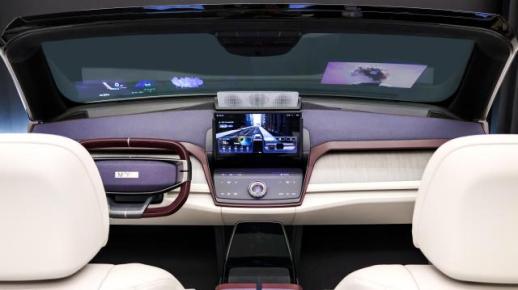 Hyundai Mobis Targets 2029 Mass Production of Holographic Windshield Display With European Partners Hyundai Mobis said Tuesday it is teaming up with global industry leaders to pursue mass production of a holographic windshield display by 2029. The South Korean auto parts maker said it has launched a “Quad Alliance” with three European specialists: German optics company Zeiss, German adhesive tape maker Tesa and French automotive glass company Saint-Gobain Sekurit. The holographic windshield display, or HWD, uses a vehicle’s front windshield as a large display without a separate physical screen, allowing drivers to check driving information while keeping their eyes forward. Hyundai Mobis began developing the HWD through an exclusive collaboration with Zeiss in 2024. It said it will expand that partnership ecosystem starting this year, aiming to commercialize the technology by 2029. Hyundai Mobis will oversee the overall system, including designing and producing the projector that casts images. Zeiss will design the hologram-based optical element film to improve clarity and visibility. Tesa will handle mass replication of the high-function film, and Sekurit will manage the precision process of bonding the film to windshield glass. Hyundai Mobis said the partnership creates a one-stop supply chain spanning technology design, parts production and assembly. The companies are targeting light transmittance of at least 92% — comparable to clear glass — and brightness of more than 10,000 nits, about twice that of outdoor LED billboards, to keep images clear even in bright daytime conditions. Hyundai Mobis said it plans to use the optical characteristics of the film so the driver cannot see the front passenger’s HWD screen. That would allow passengers to watch video, play games and use other infotainment features while driving. Jung Soo Kyung, head of Hyundai Mobis’ Electronics Business Unit, said the company will provide customers with differentiated value through “a core technology that opens the future of in-vehicle displays.” She said Hyundai Mobis will work closely with global partners through mass production to strengthen competitiveness and reinforce its image as a leader in innovative technology in the global market.* This article has been translated by AI. 2026-02-03 11:12:00
 -
 Hyundai Mobis forms four-way alliance with European firms for holographic windshield display SEOUL, February 03 (AJP) - Hyundai Mobis said Tuesday it has forged a "Quad Alliance" with three European technology leaders to commercialize holographic windshield displays by 2029, marking a significant push into next-generation automotive display technology. The South Korean auto parts maker has joined forces with German optics giant Zeiss, German adhesive specialist Tesa, and France's Saint-Gobain Sekurit, Europe's largest automotive glass manufacturer, to bring the technology to mass production. The holographic windshield display transforms the entire front windshield into a large-format screen, projecting driving information directly into the driver's line of sight without requiring a separate physical display. The system uses a special holographic optical element film to deliver navigation data and infotainment images precisely to the eyes of both drivers and passengers. The technology has light transmittance exceeding 92 percent and brightness surpassing 10,000 nits, about twice that of outdoor LED screens, enabling clear visibility even under direct sunlight. The optical design also prevents drivers from viewing passenger-side content, allowing front-seat occupants to safely enjoy entertainment during travel. Under the alliance, Hyundai Mobis will oversee the overall system architecture and projector production, while Zeiss handles film design for optimal clarity. Tesa will mass-replicate the high-performance film, and Saint-Gobain Sekurit will manage the precision bonding process between film and glass. "We will deliver differentiated value to our customers through this technology that opens the future of automotive displays," said Jung Soo-kyung, head of Hyundai Mobis' automative electronics business unit. 2026-02-03 11:02:41
 -
 Asian markets recover as Warsh shock fades, KOSPI surges above 5,100 SEOUL, February 03 (AJP) -Asian markets recovered Tuesday, led by the Korean market erasing much of the previous session’s steep losses after a brief bout of panic triggered by the nomination of hawkish monetary policy advocate Kevin Warsh as the next U.S. Federal Reserve chair. The benchmark KOSPI surged 4.16 percent to move back above the 5,100 level, after briefly dipping below the 5,000 mark on Monday's slide of 5.26 percent . As of 10 a.m., the index was up 206.07 points at 5,156.74, prompting the activation of a buy-side sidecar. Gains were broad-based across sectors. Securities firms led the rally, jumping more than 9 percent, while electronics and electrical stocks climbed around 5 percent. Construction and financial shares rose over 4 percent, and distribution, machinery and equipment, telecommunications, and medical and precision instrument stocks advanced by roughly 3 percent. Heavyweights also traded firmly higher. SK Square gained 5.84 percent to 535,000 won, while Samsung Electronics and SK hynix each rose over 6 percent to 160,700 won, 898,000 won respectively. Samsung C&T climbed about 4.98 percent to 305,000 won, with Hanwha Aerospace and Doosan Enerbility up more than 4 percent to 1,285,000 won and 89,400 won each. Hanwha Ocean, KB Financial Group and HD Hyundai Heavy Industries posted gains of around 3 percent, trading at 139,500 won, 137,400 won and 574,000 won respectively. The rally extended to the auto sector, Hyundai Motor rose 1.67 percent to 486,000 won, Kia up 0.73 percent to 151,200 won. The tech-heavy KOSDAQ also advanced, rising 2.68 percent, or 29.45 points, to 1,127.81. Among large-cap stocks, Wonik IPS surged more than 12 percent to 114,500 won, while Rainbow Robotics jumped over 9.27 percent to 778,000 won. Samchundang Pharm rose around 13 percent to 527,000 won, Caregen gained 9.13 percent to 116,000 won and Medy-Tox affiliate Mezzion gained about 7.35 percent to percent 169.800 won. In the currency market, the won strengthened as the U.S. dollar slipped 6.1 won to 1,447.40 won. Elsewhere in Asia, Japanese shares were trading higher, with the Nikkei 225 Index gaining 2.96 percent to 54,212.79. The China’s Shanghai Composite rose 0.59 percent to 4,039.34. In Hong Kong, the Hang Seng Index was trading up 0.69 percent to 26,959,76. 2026-02-03 10:51:30