
Journalist

AJP
-
 Celltrion seeks nod from Europe and Korea for Herceptin biosimilar SC formulation SEOUL, February 03 (AJP) -South Korea's biosimilar giant Celltrion said it has successfully completed the pivotal regulatory clinical trial for Herzuma SC (CT-P6 SC), a subcutaneous formulation of its breast cancer biosimilar trastuzumab, and plans to submit marketing authorization applications in Europe and South Korea within the next three months. In a press release on Monday, the company said the trial met its primary endpoint, demonstrating pharmacokinetic equivalence to the reference product’s SC formulation, with comparable safety and immunogenicity. Herzuma SC is expected to reduce administration time to about five minutes, compared with roughly 90 minutes for the intravenous version, including post-infusion monitoring. Following prior consultations with regulators, Celltrion plans to proceed with filings without additional clinical trials. Europe and Korea are currently the company’s largest markets for SC formulation products. Herzuma SC was developed using Celltrion’s in-house hyaluronidase-based SC formulation platform, which temporarily breaks down hyaluronic acid in subcutaneous tissue to allow high-concentration, high-dose drugs to be administered safely and at scale. The company said the technology will be applied to future pipeline candidates and novel drug programs. With Herzuma SC, Celltrion said it has established a fully integrated SC value chain spanning development, regulatory approval, manufacturing and commercialization — a structure it says offers a competitive edge over technology out-licensing models by retaining control across the entire lifecycle. The company also plans to expand into formulation-change contract manufacturing services, offering its SC expertise to external clients. The launch would complement Celltrion’s existing portfolio, which includes Remsima SC (sold in the United States as Zymfentra), the world’s first commercialized infliximab SC. According to IQVIA, the global trastuzumab market was valued at about $3.56 billion in 2024. The regulatory milestone comes as Celltrion posts its strongest financial performance on record. The company in late December projected a consolidated fourth-quarter revenue of 1.28 trillion won ($960 million) and operating profit of 472.2 billion won, up 20.7 percent and 140.4 percent year on year, respectively. The implied operating margin was 36.8 percent. On a full-year basis, Celltrion forecasts 2025 revenue of 4.12 trillion won ($3.1 billion), a 15.7 percent increase from a year earlier, while operating profit is projected to surge 136.9 percent to 1.17 trillion won ($880 million) — the first time the company has surpassed 3 trillion won in annual revenue and 800 billion won in operating profit. The company attributed the gains to steady growth in established products and rapid global expansion of newly launched, higher-margin biosimilars. “Following the world’s first commercialization of infliximab SC, we have now secured hyaluronidase-based SC formulation technology and completed global-level SC capabilities,” a Celltrion official said. “We will accelerate global market share expansion and new growth engines, including CDMO services, by internalizing the full SC development cycle from productization to manufacturing and supply.” 2026-02-03 07:32:10
 -
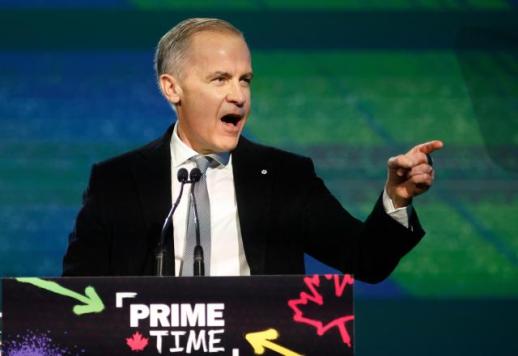 OPINION: Canadian PM's voice against Trump's 'America First' doctrine Recently, one of the most closely watched figures on the international stage has been Canadian Prime Minister Mark Carney. In a speech at the World Economic Forum late last month, Carney sharply criticized what he called the United States’ predatory “America First” policy, saying it has “cracked the world order,” drawing a standing ovation. Arguing that the rules-based international order long led by the United States is breaking down, Carney called for a coalition of middle powers grounded in “value-based realism.” Whatever its feasibility, the message is likely to resonate in South Korea, another middle power facing similar geopolitical uncertainty. Carney’s point was straightforward: With the Trump administration pressing allies in trade and security in a blunt, one-sided way, countries like Canada can no longer rely on the old order and must prepare for U.S. unpredictability. Rather than being pulled along by bilateral talks with a hegemon, middle powers should cooperate. “In a world of great-power competition, countries caught in between have a choice — compete with each other for favor, or combine to create a third path with influence,” Carney said. “Middle powers must act together. If we are not at the table, we are on the menu,” he warned. Carney’s unusually forceful tone toward Canada’s closest ally reflects the past year. Since returning to the White House a year ago, President Donald Trump has treated U.S. partners harshly — at times brutally — in the name of maximizing national interest. He has derided Canada as a weak neighbor and said it should become the 51st U.S. state. Trump has accused allies of exploiting the United States on trade and security, and has openly dismissed the multilateral trading system that has bound countries together for decades. He imposed large tariffs not only on rivals but also on allies such as Canada. Trump’s latest provocation is his demand to take control of Greenland, a Danish territory. Like most European countries, Canada opposes what it sees as Trump’s imperial thinking. Carney lamented that “great powers have begun using economic integration as a weapon, tariffs as leverage, financial infrastructure as coercion, and supply chains as exploitable vulnerabilities.” Carney’s speech drew broad praise. Nobel Prize-winning economist Paul Krugman contrasted “Courageous Carney” with “Demented Donald.” Middle powers such as Sweden and Mexico publicly backed Carney’s call for a middle-power coalition. As expected, Trump attacked the speech, arguing Canada was ungrateful to the United States, which buys nearly 70% of Canadian exports. South Korea’s government, too, has remained silent. It depends heavily on the United States for both security and trade, and with key trade and tariff negotiations underway, it has little room to criticize Washington publicly. Since taking office in June, President Lee Jae Myung has been anxious to avoid provoking Trump. Carney’s idea of building a middle-power coalition against great-power pressure may sound fair and persuasive, but it would be difficult to execute. Such solidarity could quickly be seen as anti-American or anti-Chinese, and participants could be pulled deeper into great-power rivalry. For countries like South Korea, it could invite U.S. suspicion or Chinese retaliation, harming trade or security interests. Middle powers may be easy to define by economic size or population, but their political, economic, social and cultural structures vary widely, making consistent collective action hard. Still, Carney’s speech offers ideas South Korea could weigh. Under the banner of “value-based realism,” Canada aims to build different coalitions issue by issue based on shared values and interests. It also includes a plan to link the Trans-Pacific Partnership with the European Union, potentially creating a new trade bloc of 1.5 billion people. In short, Canada is seeking deeper global engagement through geographic diversification. South Korea has pursued geographic diversification for years with limited results, constrained by its geopolitical vulnerability amid surrounding great powers. But the picture could change if it strengthens cooperation with like-minded middle powers such as Canada, Japan and Australia. A coalition of market-based democracies committed to multilateralism could add weight, especially if it also links with European and Nordic middle powers. Carney’s proposal to connect the TPP — renamed the CPTPP after the United States withdrew — with the EU carries particular implications for South Korea. South Korea is seeking to join the CPTPP, led by Japan and Australia. If it were to join a CPTPP closely linked to the EU as Carney envisions, it could open new opportunities and serve as a safeguard in a dangerous era of great-power competition. In that sense, South Korea’s delegation at Davos may not have applauded openly in front of U.S. representatives, but it likely welcomed the message quietly. *The author is a professor of the Graduate School of Global Service at Sookmyung Women's University. About the author: ▷Ph.D. in journalism and communication, Yonsei University ▷AP correspondent ▷Newsweek Korea bureau chief ▷President, Seoul Foreign Correspondents’ Club * This article, published by Aju Business Daily, was translated by AI and edited by AJP. 2026-02-03 07:21:53
 -
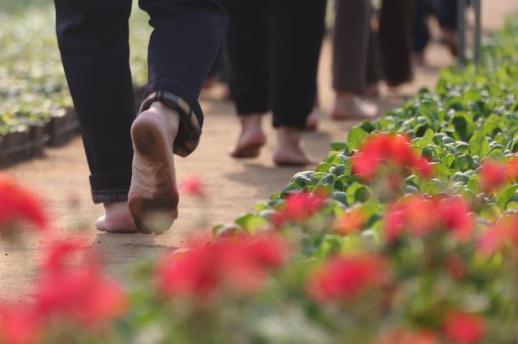 Barefoot, in spite of the cold SEOUL, February 02 (AJP) -In the depth of winter, Anyang has offered residents an unexpected refuge: a barefoot walking path inside a working greenhouse. Opened last month inside a former flower nursery, the 160-meter trail lets visitors shed their shoes and feel the ground underfoot while outside temperatures dip below freezing. Inside, the greenhouse holds steady at around 10 degrees Celsius, creating a mild, earthy contrast to the cold beyond the glass. The path is equipped with practical touches — foot-washing stations, shoe storage and rest areas — underscoring its appeal as both a wellness experiment and a seasonal curiosity. The barefoot greenhouse is open daily from 10 a.m. to 4 p.m. through Feb. 25, inviting winter walkers to slow down, reconnect with their senses and briefly forget the chill outside. 2026-02-02 17:56:48
 -
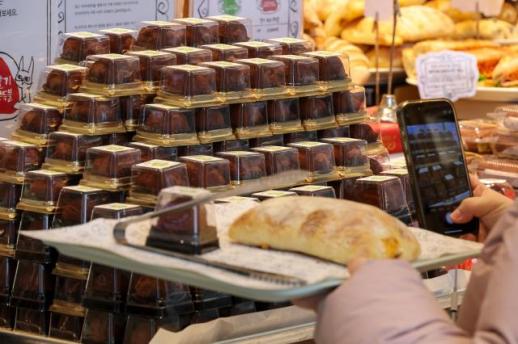 The president has not been joking — and Korea is now part of the global sugar tax debate SEOUL, February 02 (AJP) -The president has not been joking. What first sounded like a provocative aside has evolved into a serious public health proposition, as President Lee Jae Myung pushes South Korea into a widening global debate over whether taxation should be used to curb excessive sugar consumption and its long-term health costs. South Koreans are hardly restrained when it comes to dessert. The recent craze for dujjonku — a sugar-drenched, crunchy cookie inspired by Dubai chocolate — has underscored the country’s growing sweet tooth. But that enthusiasm is now being questioned from an unexpected quarter: health policy. Over the weekend, Lee returned to the idea of a so-called “sugar levy” via social media, pointing to international precedent and rising concern over diet-related disease. On Monday, he shared a report by the World Health Organization titled “The War Against Sweet Addiction — WHO’s Official Sugar Tax Recommendation,” framing the issue as one requiring open, evidence-based national debate. “Proposals such as a sugar charge require open, fact-based national debate precisely because they are complex, easily misunderstood and touch many interests,” Lee wrote. He stressed that excessive sugar intake is a key driver of obesity and metabolic disease, while emphasizing that what is under discussion is not a conventional tax hike. “A health burden fee could be imposed on products where excessive sugar consumption harms health, with the funds directed toward prevention and treatment to reduce pressure on public health insurance,” he said. Lee also drew a distinction between general taxation and earmarked levies designed to serve specific social purposes. “The key is purpose,” he wrote. “A tax without usage restrictions is not the same as a levy dedicated to improving national health outcomes.” The remarks immediately triggered debate among lawmakers and industry groups. Food and beverage companies warned that a sugar charge could raise prices or disproportionately affect lower-income households, while public health advocates said the discussion was long overdue. A broader global shift Korea’s emerging debate mirrors a broader shift underway across Europe, where governments are increasingly turning to fiscal tools to reshape dietary behavior. In January, Slovakia approved a fiscal consolidation package that included a targeted value-added tax increase on sugary and salty foods. Under the plan, which takes effect this year, products such as chocolate, ice cream, confectionery and crisps will be taxed at 23 percent, compared with a standard rate of 19 percent. Slovak authorities said the measure was intended to promote responsible consumption while strengthening public finances. In the United Kingdom, the Labour government has announced plans to expand its Soft Drinks Industry Levy to include milk-based beverages such as bottled milkshakes, sweetened coffee drinks and plant-based dairy alternatives from January 2028. The move closes a long-standing exemption that health officials now argue weakened the policy’s effectiveness. A new “lactose allowance” will exempt naturally occurring milk sugars, ensuring that only added sugars are taxed. Since its introduction in 2018, the UK levy has become one of the most closely watched public health policies in Europe. Officials say it has driven widespread reformulation, with more than 90 percent of soft drinks now containing less sugar than the taxable threshold. Between 2015 and 2022, total sugar sold in soft drinks fell by nearly half. Policy experiments across Europe Across the European Union, nutrition-related taxes have moved from experimental to mainstream. Hungary operates a Public Health Product Tax on sugary drinks, confectionery and salty snacks, generating dedicated revenue for healthcare. France expanded its soft drink tax to include both sugary and artificially sweetened beverages. Portugal applies a tiered tax based on sugar content, while Ireland mirrors the UK approach through its Sugar-Sweetened Drinks Tax. Even Denmark, which repealed its short-lived “fat tax” more than a decade ago, continues to revisit measures aimed specifically at excess sugar intake. These policies, while controversial at inception, are now widely regarded as standard tools of modern public health governance. The WHO formally recommends sugar taxation as one of the most cost-effective ways to reduce obesity and diabetes, alongside education, food labeling reforms and improved access to healthier diets. Korea’s health context South Korea’s public health indicators remain among the strongest in the OECD, but experts warn that dietary shifts toward processed foods and sugar-heavy beverages are eroding that advantage — particularly among younger adults. According to the Korean Diabetes Association’s Diabetes Fact Sheet 2024, an estimated 308,000 people aged 19 to 39 in South Korea are living with diabetes, accounting for 2.2 percent of the country’s total diabetic population. While the proportion may appear small, health authorities caution that early-onset diabetes significantly increases lifetime risks of cardiovascular disease, kidney failure and other complications. More striking is the scale of metabolic risk among young men. The same report found that 37 percent of men in their 30s are in a prediabetic state, meaning their blood sugar levels are already elevated enough to place them at high risk of progressing to full diabetes without intervention. Public health experts say the figures reflect broader lifestyle and dietary changes, including higher consumption of sugary snacks, sweetened beverages and ready-to-drink products, combined with sedentary work patterns and long hours. Marc Diederich, a professor at Seoul National University’s Department of Pharmacy, said the scientific case for preventive action is well established. “Excess added sugar, particularly from sweetened beverages, contributes to obesity, insulin resistance and chronic inflammation,” he told AJP. “These conditions not only undermine metabolic health but also increase cancer risk indirectly through physiological stress and immune dysfunction.” Children and young adults, he added, are especially vulnerable. “High sugar intake is linked to dental disease, unhealthy weight gain and early metabolic abnormalities,” Diederich said. “Fiscal tools can help shift consumption patterns, but they must be paired with education.” He also pointed to Korea’s traditional diet as a preventive asset worth protecting. “Meals centered on grains, vegetables, fermented foods and soups have long supported good health,” he said. “Preserving that food culture should be part of any long-term prevention strategy.” 2026-02-02 17:22:34
 -
 Winter's last stand, caught on a wave SEOUL, February 02 (AJP) -With just two days left until Ipchun, the traditional marker of spring, winter is refusing a quiet exit. Along the coast, biting winds rake the shoreline and whip the sea into whitecaps, turning the water steel-blue and restless. The cold sharpens everything — the air, the waves, the resolve of those who come to watch and those who come to dive in. Some stand bundled at the water’s edge, hands in pockets, eyes fixed on the surf as it crashes and retreats. Others choose immersion over observation, paddling out into the frigid sea to catch winter’s final, defiant waves. Black wetsuits cut through the foam; boards rise and fall against the swell. It is a familiar seasonal ritual: winter showing its teeth just before loosening its grip. In the roar of the surf and the sting of cold spray, spring feels close — but not close enough to stop the sea from having the last word. 입춘을 이틀 앞두고 겨울 추위가 이어지는 가운데, 강한 바람에 해안의 파도가 높게 일었다. 시민들은 해변에 머물며 파도를 지켜보거나 바다에 뛰어들어 서핑을 즐기는 등 겨울 바다를 즐기고 있다. 2026-02-02 17:20:25
 -
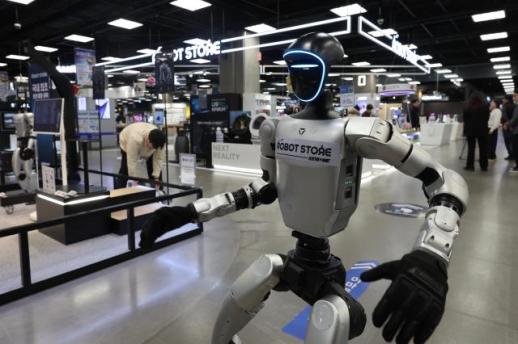 From aisle to android: robots go on sale at E-mart in Korea SEOUL, February 02 (AJP) -Shopping carts aren’t the only things rolling through E-mart anymore. South Korea’s largest retailer has become the first in the country to sell humanoid robots as off-the-shelf products, signaling a moment when robots move from showroom curiosities to items consumers can actually take home. At Electromart Yeongdeungpo in western Seoul, E-mart has opened a robot demonstration zone showcasing 14 different robot models, all available for purchase. The star attraction is a humanoid robot priced at 31 million won(about 21,300 dollars), designed to mimic human movement with striking precision. It can walk, sit, stand, turn from side to side, and move its arms and legs independently — less science fiction prop than early-stage household companion. Nearby, a smaller but livelier quadruped robot, priced at 4.76 million won(about 3,280 dollars), draws crowds with its repertoire of tricks. The robot can jump, stretch, sit, and even offer a mechanical handshake. Equipped with environmental sensors, it recognizes obstacles, navigates its surroundings and responds to voice commands, blurring the line between gadget and pet. By placing robots on the retail floor — complete with price tags — E-mart is testing how ready Korean consumers are to accept machines not just as tools or toys, but as everyday products. What was once confined to labs and tech expos has arrived under fluorescent lights, waiting quietly for its first owner to swipe a card. In Yeongdeungpo, the future isn’t behind glass. It’s on sale. 2026-02-02 17:18:29
 -
 Trump's Warsh pick triggers panic in Korean markets for strong USD bias SEOUL, February 02 (AJP) - Korean markets saw panicky selling on Monday following Donald Trump’s nomination of Kevin Warsh as the next chair of the U.S. Federal Reserve, with equities and the won sliding sharply on concerns that his policy framework could reinforce dollar strength and drain global liquidity. Whether Warsh would ultimately comply with Trump’s long-standing calls for lower borrowing costs remains uncertain. Investors, however, moved quickly to price in a scenario in which rate cuts coexist with tighter underlying liquidity — a mix widely viewed as unfavorable for emerging-market currencies such as the Korean won. Trump announced Warsh’s nomination last Friday. He is set to succeed Jerome Powell, whose term expires on May 15 after a tenure frequently marked by public friction with the White House. The selloff was broad-based. The KOSPI closed down 5.26 percent at 4,949.67, falling below the psychologically important 5,000 level. Intraday volatility triggered a sell-side “sidecar” trading halt, underscoring the disorderly nature of the move. The won weakened to 1,464.3 per dollar, down 24.8 won by late afternoon. Commodity markets echoed the risk-off mood. Gold futures fell 11.4 percent to $4,745.10 per troy ounce, while silver futures plunged 31.4 percent to $78.531, marking their steepest single-day declines since January 1980, when former Fed chair Paul Volcker unleashed aggressive rate hikes to rein in inflation. Hawkish by structure, not by label Warsh is not generally regarded as a traditional monetary hawk. Paradoxically, that nuance has unsettled markets. Investors point to his record as a Fed governor, particularly his clashes with Ben Bernanke over the second round of quantitative easing (QE2). At the time, Warsh openly opposed large-scale asset purchases, warning Bernanke, “If I were in your chair, I would not be leading the Fed in this direction.” That history has reinforced expectations that Warsh, even if willing to lower policy rates, would prioritize balance-sheet discipline — keeping the dollar scarce and underpinning its value. Warsh’s more recent thinking suggests a hybrid approach: cutting rates to support investment while continuing quantitative tightening (QT) through Treasury sales. The goal is to stimulate corporate activity without undermining the dollar. Under such a framework, rate cuts would not necessarily weaken the greenback. Instead, reduced global dollar liquidity could persist, weighing on currencies like the won and making Korean assets less attractive on a currency-adjusted basis. Warsh has defended the apparent contradiction by arguing that productivity gains from artificial intelligence can offset inflationary pressures. In a July interview, he said the AI revolution would be a “significant disinflationary force,” allowing looser policy without destabilizing prices. He has also cited Alan Greenspan as a reference point, praising Greenspan’s decision to refrain from preemptive rate hikes during the 1990s technology boom as productivity gains kept inflation in check. For South Korea, that historical parallel is unsettling. Greenspan’s accommodative stance ultimately preceded the 2000 dot-com collapse, when the Nasdaq plunged 78 percent and the U.S. dollar index weakened sharply. Korea was hit harder still: the KOSDAQ fell nearly 80 percent, while the won depreciated from the 1,100 range to around 1,360 per dollar. Analysts warn that a similar combination of equity volatility and currency weakness could re-emerge if global liquidity tightens more aggressively than markets expect under a Warsh-led Fed. Liquidity stress back on the radar Concerns are also resurfacing over potential liquidity stress as QT drains bank reserves. In September 2019, heavy Treasury issuance combined with corporate tax payments pushed the U.S. repo rate from 2 percent to 10 percent, forcing emergency Fed intervention. Some market participants fear that under Warsh, such stress might be tolerated — or allowed to run longer — as part of balance-sheet normalization. “Unlike in 2019, there is now a broader consensus that normalizing the balance sheet itself is a core policy objective,” a KB Securities official said on condition of anonymity. NH Investment & Securities similarly cautioned that a rapid policy pivot should not be assumed. A tougher outlook for the won Optimism earlier this year that the won could stabilize near 1,400 per dollar, as suggested by Lee Jae Myung, is now being reassessed. For Korean markets, the concern is less about Warsh’s personal ideology than about whether the next Fed chair institutionalizes a framework that favors a strong dollar by design. If that proves to be the case, Monday’s panicky selling may mark the start of a longer adjustment rather than a one-off reaction. 2026-02-02 17:15:04
 -
 Asian equities tumble as Fed leadership shift triggers selloff SEOUL, February 02 (AJP) - Asian equities tumbled on Monday, with South Korean markets suffering steep losses as global risk appetite deteriorated amid renewed uncertainty over U.S. monetary policy, prompting investors to dump risk assets across the region. South Korea’s benchmark KOSPI fell 5.26 percent to close at 4,949.67, the index’s sharpest single-day decline since April 7, 2025. The index opened sharply lower and extended losses through the session as foreign and institutional investors accelerated selling. The KOSPI 200 index, which tracks large-cap stocks, slid 5.6 percent to 725.5. Trading data highlighted the scale of the selloff. Foreign investors sold a net 2.59 trillion won worth of shares on the main board, while institutional investors offloaded 1.99 trillion won. Retail investors moved in the opposite direction, buying a net 4.45 trillion won in an attempt to absorb the market’s decline. Market heavyweights led losses. Samsung Electronics fell 6.3 percent, while SK hynix dropped 8.7 percent, erasing much of their recent gains. Automakers and battery makers also retreated sharply, with Hyundai Motor down 4.4 percent and Samsung SDI losing 8.7 percent, while Hanmi Semiconductor plunged 11.3 percent. The Korea Exchange triggered a program trading sidecar at 12:31 p.m., temporarily halting sell orders linked to index futures after sharp declines. The measure slowed selling momentum but failed to reverse negative sentiment. The tech-heavy KOSDAQ index mirrored the decline, falling 4.44 percent to 1,098.36, its first drop exceeding 4 percent since Aug. 1, 2025. The index briefly slid more than 5 percent during intraday trading as investors reduced exposure to high-growth and high-volatility shares. The downturn followed renewed uncertainty over U.S. monetary policy after former Federal Reserve governor Kevin Warsh was nominated as the next Fed chair, reviving concerns that policy could turn more hawkish. The development triggered repricing across global markets, lifting the dollar and pushing investors away from risk assets. Currency and commodity markets also saw sharp moves. The won weakened by 11 won to 1,463 per dollar. Precious metals also fell sharply, with gold sliding 9.9 percent and silver plunging more than 31 percent as investors liquidated positions across asset classes. The simultaneous selloff in equities, commodities and cryptocurrencies resembled past episodes of risk-off shocks, prompting market participants to label the session a “Black Monday” rout. Elsewhere in Asia, losses were also widespread. Japan’s Nikkei 225 fell 1.3 percent, while China’s Shanghai Composite dropped 2.5 percent, adding to regional market unease. 2026-02-02 16:58:46
 -
 Authorities warn of spread of livestock disease as Lunar New Year migration looms SEOUL, February 2 (AJP) - South Korea is on alert for the potential spread of livestock diseases ahead of the Lunar New Year holiday, when many people travel nationwide to their ancestral hometowns. Agriculture Minister Song Mi-ryeong on Monday convened a meeting at the government complex in Sejong to discuss stricter quarantine measures aimed at preventing outbreaks of highly pathogenic avian influenza, African swine fever and foot-and-mouth disease. Quarantine officials said that highly pathogenic avian influenza has been appearing sporadically this winter with the arrival of migratory birds, prompting authorities to implement preventive culling and impose movement restrictions around affected farms. African swine fever has also shown signs of spreading into some previously unaffected regions. Adding to concerns, foot-and-mouth disease has also returned after roughly nine months, with a case detected at a cattle farm in Ganghwa, Incheon, at the end of last month. Officials said that one to two weeks after the holiday, which begins late next week, will likely determine whether the diseases have spread, given their incubation periods. Government authorities are urging livestock farmers and related workers to step up surveillance and step up disinfection measures. 2026-02-02 16:53:56
 -
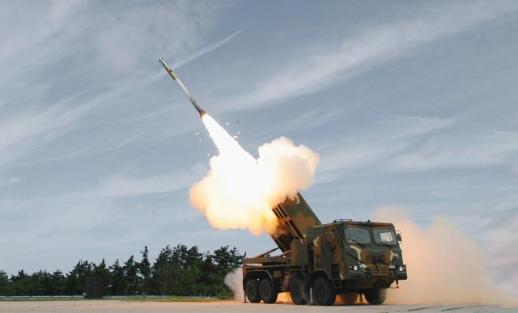 Why Korean rockets are finding buyers on Russia's European doorstep SEOUL, February 02 (AJP) - Norway’s decision to select South Korea’s Chunmoo multiple launch rocket system (MLRS) for its Long Range Precision Fire System (LRPFS) program reflects a broader recalibration under way among European and NATO militaries bordering Russia — one shaped less by brand loyalty than by timelines, industrial resilience and operational flexibility. The contract, signed by the Norwegian Defence Materiel Agency with Hanwha Aerospace, covers 16 Chunmoo launchers, precision-guided munitions, training and logistics support, and is valued at roughly 19 billion Norwegian kroner ($2 billion). Deliveries are set to begin in 2028. For Oslo, the decisive factor was speed. Since Russia’s full-scale invasion of Ukraine, demand for the U.S.-made HIMARS has surged across NATO and allied states, stretching production capacity and pushing delivery schedules years into the future. By contrast, Chunmoo was offered with a clearer delivery timeline and a phased induction plan, allowing Norway to address what it sees as a growing vulnerability in long-range land fires along its northern flank. “Hanwha’s Chunmoo system was the only offer that met all of the requirements in the competition,” the Norwegian government said in its procurement statement. A Hanwha Aerospace official, speaking on background, was more direct. “There is a substantial backlog for HIMARS, with deliveries delayed even for priority customers such as Poland,” the official said. “Norway’s assessment came down to delivery certainty and overall affordability relative to capability.” That calculation extended beyond sticker price. While Norway evaluated proposals from HIMARS and the German-French EURO PULS, Chunmoo was pitched as a turnkey solution — combining multiple rocket types, training, sustainment and future industrial participation under a single framework. Norwegian planners are understood to have placed particular weight on system integration with national command-and-control networks and the possibility of European-based ammunition production. Chunmoo versus HIMARS: flexibility against standardisation The fundamental distinction between Chunmoo and HIMARS lies in design philosophy. HIMARS is optimised around the U.S.-standard 227mm MLRS rocket family, along with ATACMS and the newer PrSM-class tactical missiles. Chunmoo, by contrast, was conceived from the outset as a multi-calibre modular launcher. A single K239 platform can fire 239mm unguided rockets, 239mm precision-guided munitions, or 600mm-class tactical ballistic missiles. In performance terms, the systems are comparable at shorter ranges. HIMARS firing GMLRS munitions reaches about 80 kilometres with a circular error probability (CEP) of under 10 metres. Chunmoo’s CGR-080 guided rockets achieve a similar 80-kilometre reach with a CEP of roughly 15 metres. Where Chunmoo differentiates itself is payload versatility. The same launcher can be configured for area suppression, precision strikes, or deep fires out to nearly 290 kilometres using CTM-series missiles. In effect, it allows a user to consolidate what would otherwise require multiple weapons systems into a single platform — an approach that appeals to militaries facing both budget constraints and manpower limits. Relearning the value of long-range fires Norway’s choice must also be read against its post–Cold War force posture. For decades, Oslo prioritised expeditionary operations and allied airpower, scaling back heavy land forces and allowing medium- and long-range ground fires to atrophy. That strategy left a conspicuous gap once Russia’s war in Ukraine underscored the enduring value of land-based precision strike — particularly in contested environments where air superiority cannot be assumed. In the High North, geography compounds the problem. Vast distances, limited infrastructure and extreme weather complicate air operations, making organic long-range fires a central element of deterrence rather than a niche capability. The LRPFS program is designed to restore that capability as a standing feature of Norway’s Army and to reinforce NATO’s ability to secure sea lanes and reinforcement routes in the Arctic. From Poland to Norway: toward a European ‘K-rocket belt’ Norway’s decision follows a much larger breakthrough for Chunmoo in Poland, which has effectively served as the system’s European test case. In October 2022, Warsaw signed a contract for 288 Chunmoo launchers under its Homar-K program, with deployments beginning in 2023. In late 2025, Poland deepened the partnership with a $4 billion deal to locally produce CGR-080 guided rockets. Those production lines, Polish and Norwegian officials say, will supply not only Poland but other European users, including Norway. The arrangement links Korean system design with Polish manufacturing and Nordic end users — a supply chain that reduces dependence on U.S. production capacity while anchoring key components inside Europe. The trajectory recalls the earlier spread of South Korea’s K9 Thunder howitzer, now in service across Poland, Norway, Finland and the Baltic states. In much of Northern and Eastern Europe, K9 has become the backbone of tube artillery. Chunmoo is positioning itself as its long-range counterpart — extending that firepower deeper into an adversary’s rear. While HIMARS remains the benchmark for NATO-standard long-range fires, Chunmoo’s appeal lies in its pragmatism. It offers faster delivery, greater configurability and a clearer path to local industrial participation — attributes increasingly prized by European states confronting a long-term Russian threat, strained defence supply chains and tighter fiscal limits. The choice also speaks to a broader unease in the High North. Alongside Russia’s militarisation of the Arctic, renewed U.S. attention to Greenland — including Donald Trump’s past and revived suggestions that Washington should assert greater control over the island — has reminded Nordic governments that even allies can become strategic variables. 2026-02-02 16:52:12