
Journalist

AJP
-
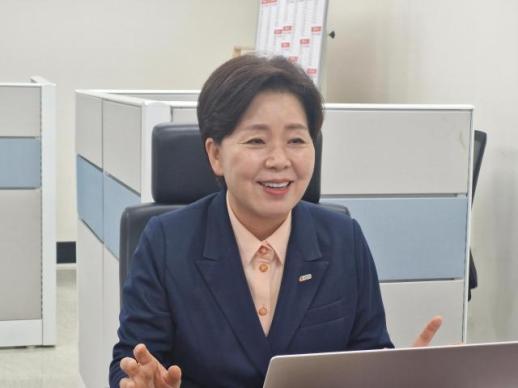 INTERVIEW: Chip czar rides AI chip boom to challenge political Goliath for Gyeonggi governorship SEOUL, May 05 (AJP) - Bidding for the gubernatorial post that birthed the current president — whose approval rating is nearing 60 percent — while facing a ruling-party heavyweight known for colliding head-on with disgraced former president Yoon Suk Yeol would not be an easy race for most politicians. But for Yang Hyang-ja, the determination appears rooted in something deeper than party politics: an almost singular devotion to semiconductors, the industry responsible for roughly a quarter of South Korea’s exports and much of the country’s AI-driven market boom. That commitment to chips also shaped her political realignment. Yang was effectively disowned by the Democratic Party of Korea following a sexual harassment scandal involving her aide, a political rupture that deepened her frustration over what she viewed as the party’s reluctance to aggressively back the semiconductor industry through measures similar to the U.S. CHIPS Act. She later joined the conservative bloc and spearheaded the so-called “K-Chips Act,” aimed at expanding tax credits for facility investments in semiconductors and other national strategic industries. The bill passed the National Assembly in March 2023. “People in semiconductors prepare a future that arrives first,” Yang said in an interview with AJP. “We make things that do not exist in the world. We make possible what others say is impossible.” That obsession has become both her greatest political strength and a potential limitation. Yang, the People Power Party candidate for Gyeonggi governor, built her reputation not through elite legal or activist circles but inside the clean rooms and research culture of Samsung Electronics. Rising from a teenage research assistant who cleaned desks and copied technical papers to become Samsung’s first female executive from a commercial high school background, her life story carries an unusual degree of industrial credibility in South Korean politics. “Gyeonggi Province is the heart of South Korea’s semiconductor industry,” Yang said. “The person who understands semiconductors should be the one to lead Gyeonggi.” Her rise inside Samsung has long bordered on corporate legend. After repeatedly being rejected from Samsung’s internal semiconductor engineering college because there was “no precedent” for a female commercial high school graduate entering the program, Yang reportedly challenged the company’s own rules and insisted she would become the precedent herself. “I have created roads where none existed,” Yang said. “There is no such thing as no road. There is only no will.” The phrase captures the core of Yang’s political identity: relentless self-construction through technical mastery and persistence. Her early years inside Samsung reflected the rigid hierarchies of industrial Korea at the time. She recalled being treated as a replaceable assistant whose role was limited to copying documents and running errands. “At that time, I was like a stone mixed into rice,” Yang said. “I could not even dream of a future. I felt a sense of inferiority.” The turning point came while copying Japanese semiconductor papers. Having studied Japanese at Gwangju Girls’ Commercial High School, Yang began annotating technical documents for engineers who could not read them. The researchers who had once called her “Miss Yang” began addressing her respectfully as “Yang Hyang-ja ssi.” “That was the moment I found my name,” she said. “I learned what it means to be recognized.” Yang later graduated with honors from Samsung’s semiconductor engineering program, accumulated dozens of semiconductor-related patents and climbed through SRAM, DRAM and flash memory divisions over three decades. When Samsung promoted her to executive director in 2013, Yang said the announcement coincided with the anniversary of her father’s death. “It felt as if every condensed part of my life burst open like popcorn,” she said. “I felt that the world’s standard for looking at me had changed.” That persistence — combined with firsthand experience in one of the world’s most strategically important industries — gives Yang a profile rare among South Korean politicians. She speaks less like a conventional campaigner than like a semiconductor executive explaining long-cycle investment logic. That industrial mindset is central to her pitch for Gyeonggi Province, home to the country’s largest semiconductor clusters including Samsung Electronics and SK hynix. Yang argues that the province should be governed not merely as an administrative region but as the command center of South Korea’s next industrial leap. Her strengths are obvious. Few politicians possess comparable understanding of semiconductors, AI infrastructure and manufacturing ecosystems at a time when technological supremacy increasingly overlaps with national security. Her life story also resonates in a country where younger generations often feel trapped by rigid educational and class hierarchies. Yet the same qualities that make Yang distinctive also raise questions about the breadth of her political vision. Nearly every major policy proposal in her campaign eventually returns to semiconductors. Her blueprint for economic growth, AI competitiveness, foreign investment and geopolitical leverage places chips at the center. “Taiwan can stand freely amid U.S.-China rivalry because TSMC influences the whole world,” Yang said. “South Korea has become a hegemonic power in memory semiconductors through Samsung Electronics and SK hynix.” That focus reflects economic reality. But critics may question whether Gyeonggi — a province of more than 14 million residents grappling with housing shortages, transportation congestion, welfare demands and regional inequality — can be governed primarily through the prism of semiconductor expansion. There is also the issue of Samsung’s overwhelming presence in her political identity. Although Yang references broader industrial ecosystems and repeatedly mentions SK hynix, Samsung remains the emotional and symbolic anchor of her worldview. Her personal narrative, political language and conception of national competitiveness are deeply intertwined with the company that shaped her life. Supporters see proof of execution and industrial realism. Critics may see over-identification with chaebol-centered growth at a moment when South Korea is debating economic concentration and overdependence on a handful of conglomerates. Yang rejects the idea that ideology or party affiliation should define provincial governance. “The central value of moderates is the courage to set aside faction, party and ideology for the country and the people,” Yang said. “Gyeonggi has collective intelligence. I trust that collective intelligence.” Her political path itself has been unusually fluid. Recruited into politics by former president Moon Jae-in, later estranged from the Democratic Party, founder of a third party and now standard-bearer for conservatives, Yang has repeatedly crossed ideological boundaries while insisting she belongs above factional politics. Still, Yang’s candidacy reflects a broader shift underway in Korean politics itself. As AI, semiconductors and supply-chain rivalry increasingly define economic survival and geopolitical power, industrial technocrats are beginning to acquire political weight once reserved for prosecutors, activists and career lawmakers. Few embody that transformation more sharply than Yang Hyang-ja. 2026-05-05 10:47:54
 -
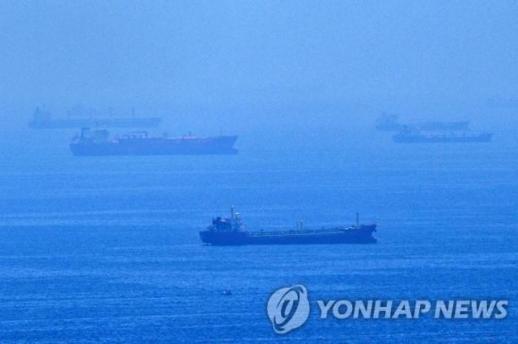
 South Korea Says Fire on HMM Cargo Ship in Strait of Hormuz Is Out South Korea’s Foreign Ministry said Tuesday that a fire on a South Korean-flagged vessel after an explosion in the Strait of Hormuz has been extinguished, and that the exact cause is expected to be determined after the ship is towed. In a notice to reporters, the ministry said all 24 crew members, including six South Korean nationals, were confirmed unharmed. It added that the fire had been put out and no additional damage was reported. The explosion and fire broke out at about 8:40 p.m. Monday (Korea time) on a cargo ship operated by South Korean shipping company HMM, the HMM NAMU, in waters near the United Arab Emirates within the Strait of Hormuz, the ministry said. The ministry said it remains unclear whether the ship can resume normal operations. It said the vessel is to be towed to a nearby port to assess damage and carry out repairs. A tugboat is being arranged, but a specific towing schedule has not been set, it said. The United States on Monday launched an operation dubbed “Project Freedom” to escort civilian ships out of the Gulf region (Persian Gulf) through the Strait of Hormuz using military aircraft and warships. U.S. President Donald Trump wrote on social media platform Truth Social that Iran had fired several times at unrelated countries, including a South Korean cargo ship, over ship movements linked to the operation, adding that it seemed time for South Korea to join. The Foreign Ministry reiterated that the cause of the incident is expected to be identified during the post-towing inspection. Earlier Tuesday at midnight, the ministry convened a meeting of its overseas nationals protection task force, chaired by Second Vice Foreign Minister Kim Jina. Seven diplomatic missions in the Middle East and the Ministry of Oceans and Fisheries attended, it said. South Korea’s embassy in the UAE and its consulate general in Dubai said they contacted the shipping company and relevant agencies immediately after the incident to confirm the safety of the South Korean crew and request needed assistance. The participating missions said they have maintained regular communication with host-country authorities and taken steps to protect and support South Korean ships and sailors. They said they will further strengthen coordination with local authorities to ensure rapid rescue and other safety measures if needed. * This article has been translated by AI. 2026-05-05 10:33:15
 -
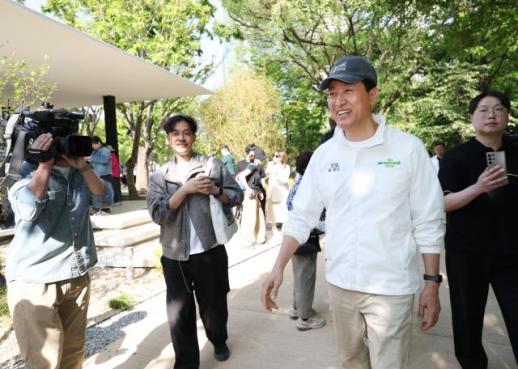 Seoul Mayor Candidate Oh Se-hoon Pledges to Double City Kids Cafes, Build Job-Experience Theme Parks Oh Se-hoon, the People Power Party’s Seoul mayoral candidate, said Tuesday he would double the number of Seoul-style kids cafes and build a new public job-experience theme park called “Seoul Children’s Imagination Land.” Oh announced the plan, billed as “Happy Kids City Seoul,” at the Green Green Kids Cafe inside the Seoul International Garden Show at Seoul Forest in Seongdong-gu on Children’s Day. Oh’s campaign said the pledge aims to redesign the city from children’s perspective while easing parents’ caregiving burden. It also seeks to expand hands-on play facilities across Seoul so children can access them regardless of where they live. The Seoul-style kids cafes — promoted as a budget-friendly option — would expand to 404 locations by 2030, about double the current number. The cafes charge up to 5,000 won per child for two hours, with accompanying parents admitted free. Since the first location opened in May 2022, cumulative users topped 1 million in three years, the campaign said. Oh also pledged to set up at least one infant-only kids cafe in each district and introduce “Green Green Kids Cafes” in all districts, linking them with forests and the Han River. On weekends, the city would operate 30 mobile playground sites under the “Here and There Kids Cafe” program, he said. Oh said the city would also create “Seoul Children’s Imagination Land” at eight hubs across Seoul, including Gangbuk, Seongbuk and Gangseo, offering career exploration and creative activities at fees far lower than private facilities. To reduce families’ private tutoring costs for arts education, he pledged to launch the “Children’s Arts Seed” program, providing eight months of practical training — including vocal music, instrumental music, theater and dance — for students in grades 3 through 6. “Investing in children’s happiness is the surest way to design Seoul’s future,” Oh said. “Building on the changes already underway in Seoul, I will decisively complete an environment where parents can feel secure and children can run and play to their hearts’ content.”* This article has been translated by AI. 2026-05-05 10:30:14
 -
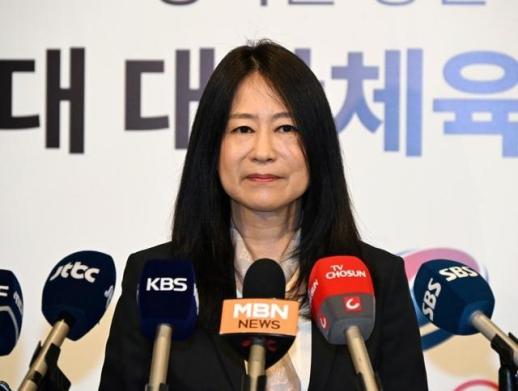 Korea Sports Council Secretary General Kim Nami Resigns After Remarks to Family of Comatose Athlete Kim Nami, secretary general of the Korea Sports Council, has resigned after sparking controversy over remarks she made to the family of a student athlete who collapsed during a match and remains unconscious. The council said May 4 that Kim had offered to step down and take responsibility for the matter raised recently. Her resignation came three days after she was suspended from her duties on May 1. In a statement released through the council, Kim said, “I deeply apologize for causing concern to the public and to members of the sports community,” adding, “As a public official, I feel a heavy sense of responsibility and will step down from my position.” Kim had faced public backlash over comments made to the family of a middle school boxer identified only as A. The student collapsed during a bout at the President’s Cup National City and Provincial Boxing Tournament in Seogwipo, Jeju, in September last year and has not regained consciousness for eight months. According to Mokpo MBC, Kim told the family about the boy’s condition, saying, “The child had no chance from the beginning. He is already brain-dead,” and added, “I really don’t want to compare, but in a marathon accident one person died and the family donated organs,” prompting criticism. She was also reported to have said she felt “very offended” when the parents tried to record their conversation in case of an emergency, adding that it made her think they were trying to “make money” from what happened to their son. The council said it recognized the seriousness of the case and would recheck its systems so athlete protection functions operate without gaps. It also pledged to strengthen public-service ethics and tighten internal discipline to restore public trust. Kim, a former national alpine ski team member, has held posts including vice president of the International Biathlon Union and secretary general of the Sports Talent Development Foundation. She was appointed in March last year as the first woman to serve as secretary general in the council’s 105-year history, but is leaving after about 14 months amid the controversy.* This article has been translated by AI. 2026-05-05 10:21:14
 -
 South Korea Urged to Shift From Punishment to Prevention in Semiconductor Tech Leaks Prosecutors visited Samsung Electronics’ Pyeongtaek campus to inspect semiconductor processes and on-site security systems. Senior officials handling technology-leak investigations checked production lines and heard directly from workers, a notable shift. Technology crimes cannot be addressed with legal knowledge alone. Without understanding manufacturing steps and how data moves, investigators can struggle to identify evidence and measure damage. Even if overdue, the on-site approach is a necessary step. But one point should be clear: preventing technology leaks cannot be solved by tougher investigations alone. Investigations are, by nature, after-the-fact responses that punish offenders once a case occurs. A technology leak, however, is often irreversible. The center of any response must be prevention, not only punishment. Investigations can deter; prevention can stop leaks. They are complementary roles, not substitutes, and policy should be redesigned with that division in mind. The first pillar is stronger internal controls. In practice, many leaks come not from outside hacking but from insiders and partner networks. Information can slip out through job changes after retirement, joint research and contact points with subcontractors. Companies should tighten access controls, track data transfers and manage key personnel more precisely. That is a condition for survival, not a choice. Still, the cost and responsibility should not fall on companies alone. Because protecting technology is tied to national competitiveness, government institutional and financial support should accompany corporate efforts. The second pillar is clearer rules for workforce mobility. In advanced industries, talent movement drives innovation, but it is also a major leak channel. Freedom to choose a job and protection of trade secrets can collide. This cannot be left to vague calls for “balance.” What is needed are concrete standards: noncompete periods should be limited and paired with fair compensation, and the scope of protected technology should be clearly defined. Without a legal line between lawful job changes and illegal leaks, neither companies nor investigators can make consistent judgments. The third pillar is defining the state’s role. Technology leaks are no longer only a corporate problem. In core industries such as semiconductors, they are linked to national security. The government should set rules, provide intelligence and diplomatic capacity, and lead international cooperation. Companies should carry out responsibilities within those rules, and investigative agencies should punish violations. This triangular structure must function. The state cannot control everything, and companies cannot be left to shoulder all responsibility. The fourth pillar is integrating the response system. Today, responses are spread across multiple ministries and agencies, with the industry ministry, prosecutors, police and intelligence services moving separately. That fragmentation can cut off information and slow action. A “control tower” should not mean an all-powerful command body. Its role should be limited to integrating domestic information, sharing it quickly and coordinating cooperation among agencies. It cannot directly block overseas crimes, but it can be decisive in improving the speed and efficiency of domestic responses. The fifth pillar is international cooperation. The final destination of leaked technology is often overseas. Because the semiconductor industry operates in global supply chains, any single country’s response has limits. Countries that hold key technologies should strengthen investigative cooperation, information exchanges and legal response frameworks. Diplomacy is no longer separate from technology security; it is part of it. Across these debates, the key principle is not a simple “balance,” but building a workable structure. Stronger protection can restrain innovation, while broader freedom can raise leak risks. That is why the system must set conditions and standards: what to protect, when to restrict, and who is responsible. Semiconductors are not just another industry. They are a core national asset built on decades of accumulated technology and experience. Once leaked, they cannot be recovered, and the damage can last across generations. What is needed is not a cycle of reacting after each incident, but a system that makes leaks structurally difficult. The prosecutors’ site visit is a starting point. The next step is to turn that start into institutions and a coherent framework. When investigations, companies, government and diplomacy each define their roles and connect them into one system, technology leaks can become a manageable threat. National competitiveness is built through design, not declarations.* This article has been translated by AI. 2026-05-05 10:16:28
 -
 Trump’s Hormuz Pressure Tests South Korea’s ‘Survival Alliance’ With the U.S. Alliances long operated on a simple premise: In a crisis, partners move together. Little explanation was needed, and the choice seemed straightforward. That premise is now under strain. President Donald Trump’s demand that South Korea take part militarily in a crisis involving the Strait of Hormuz is more than routine diplomatic pressure. It signals a structural shift in how alliances are expected to work. Trump’s message is blunt: “Security is not free.” That line carries three calculations. First is burden-sharing; the United States is making clear it does not intend to carry the full security load alone. Second is domestic politics, aimed at voters with the argument that Washington will not accept “one-sided” alliances. Third is negotiating leverage: start with maximal demands, then seek better terms at the bargaining table. Together, those factors push alliances toward something closer to a contract. The change, however, does not apply equally to every country. South Korea is close to an exception. Its security rests on the U.S. military presence on the peninsula, and it faces what the article describes as an existential military threat from North Korea. In that setting, the alliance is not a policy option but a condition of survival, unlike the situation for many European partners. France and the United Kingdom, for example, have their own nuclear deterrents. Germany is not described as facing a direct military threat. Those countries can rely on alliances while still exercising strategic autonomy when needed. South Korea, by contrast, could face an immediate security gap if the alliance weakens. For that reason, calls for Seoul to act “calculatingly like other allies” miss the reality on the ground. South Korea’s alliance is not a discretionary arrangement but a “survival alliance,” the article argues. Without that premise, any strategy becomes hollow. Still, Seoul cannot move without calculation. The issue is not whether to calculate, but how. Past alliances assumed automatic participation; today’s alliances demand predictable behavior. The key question is less “how much to participate” than “by what standards to participate.” That is the shift Trump-style pressure has accelerated. Alliances remain important, but they no longer run on autopilot. Countries are expected to set the scope and conditions of their participation and apply those standards consistently. In this model, trust comes not from sentiment but from predictability. The article lays out four standards South Korea should consider. First is direct national interest. Protecting sea lanes is tied to South Korea’s economy, it says, because much of its oil and raw materials arrive through the Middle East. Maritime security, in that view, is not merely a diplomatic issue but a matter of national survival, making some level of contribution close to essential. Second is managing the level of conflict. Military participation is not simply a yes-or-no choice, the article says, but a question of how far to go. Naval escort missions can raise tensions and carry risk, but the intensity can be managed by limiting rules of engagement, defining the operational area and avoiding offensive operations. Military action, it argues, exists on a spectrum. Third is using multilateral frameworks. Acting alone is different from operating within a coalition. Multilateral operations can spread political burden and reduce the risk of direct confrontation with a specific country. The article notes this is an approach favored by Japan and European states and says South Korea should use such frameworks strategically. Fourth is separating timelines. Diplomacy often requires balancing speed and caution. While military threats may demand quick responses, decisions such as troop deployments require national-level strategic judgment. Treating them as one can distort decision-making, the article says. It argues for phased decisions: begin with limited participation, assess conditions, then expand or adjust gradually. That approach can avoid impulsive choices while preserving responsiveness. The article points to other allies as examples of this approach. Japan contributes through intelligence and rear-area support while avoiding direct combat participation. Germany is cautious about military intervention but pairs that stance with economic and diplomatic support. France may use military force when necessary while maintaining independent judgment. Each, it says, adjusts the method and level of participation to manage both alliance commitments and autonomy. South Korea faces the same questions: How far will it go, and by what standards? The article argues the priority is not a one-time decision but a repeatable set of criteria that can preserve policy consistency under outside pressure. It describes Trump’s pressure as not a one-off event. U.S. strategy, it says, is becoming clearer: demand larger roles from allies and use those demands as bargaining chips. The article argues this pattern is likely to recur and that South Korea must be prepared. The conclusion is that the alliance should be maintained, but the operating method must change: from automatic participation to conditional participation, and from emotional solidarity to structured judgment. Any shift, it adds, must reflect South Korea’s reality as a “survival alliance,” rather than copying other countries’ models. The world, the article says, is moving from “alliances that go together” to alliances that decide “how far to go together.” For South Korea, it argues, the need is not courage but design: how to act matters more than what to do. Pressure may force choices, but clear standards can turn pressure into strategy.* This article has been translated by AI. 2026-05-05 10:12:17
 -
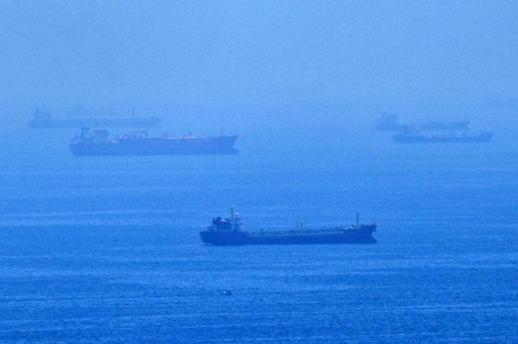 South Korea confirms HMM NAMU crew safety after Hormuz blast SEOUL, May 05 (AJP) - South Korea has confirmed Tuesday that all 24 crew members of the HMM NAMU are safe and the onboard fire has been extinguished following an explosion in the Strait of Hormuz. The confirmation allows the government to transition from an emergency rescue operation to a technical investigation into the cause of the damage. The HMM NAMU, a vessel operated by the flagship carrier HMM, suffered the explosion at 8:40 pm (1140 GMT) on Monday near the United Arab Emirates. The ship is currently stationary and inoperable, requiring a tugboat for transport to a nearby port for a full damage assessment. The Ministry of Foreign Affairs reported at 9:49 am on Tuesday that the crew consists of six South Korean nationals and 18 foreign sailors. While the fire has been suppressed, the ministry noted that the ship cannot navigate under its own power and the exact cause of the blast remains unknown. Government authorities are currently seeking available tugboats to move the vessel to a secure location. A specific towing schedule has not yet been determined as officials evaluate the logistics of the recovery and the current conditions of the regional waterway. Following the blast, Donald Trump claimed on the Truth Social platform that Iran was responsible and urged South Korea to join a military mission called Project Freedom. South Korean officials have maintained a cautious stance, stating that a formal determination will follow a physical inspection at a dock. The Ministry of Foreign Affairs and the Ministry of Oceans and Fisheries remain in constant communication with regional missions in the United Arab Emirates and Dubai. 2026-05-05 10:12:09
 -
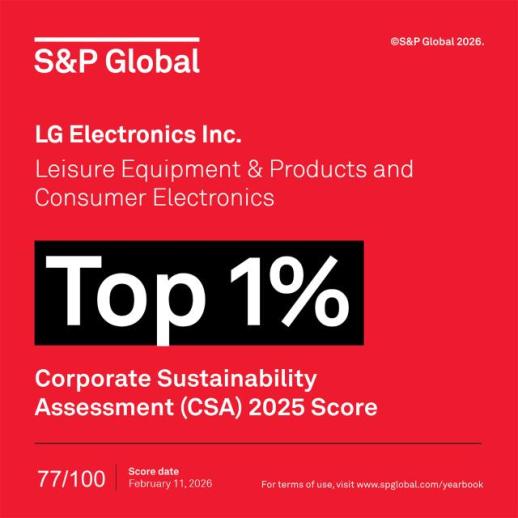 LG Electronics Again Ranks in S&P Global’s Top 1% for ESG, Third Straight Year LG Electronics has again placed near the top of major global ESG assessments, underscoring its sustainability management results. The company said Monday it was named to the “Top 1%” in S&P Global’s Corporate Sustainability Assessment for a third consecutive year. The assessment covered 9,243 companies worldwide, with only the top 1% in each industry group classified separately. LG Electronics scored 77 points in the household durables and leisure equipment category, the highest score in that industry group. Across all industries, only 70 companies made the “Top 1%” list, and just two were South Korean firms, including LG Electronics. S&P Global’s assessment reflects performance across environmental, social and governance factors. LG Electronics received consistently strong marks in key areas including environmental policy, human rights management, supply chain management and board independence, the company said. LG Electronics also said it has been included in the Dow Jones Sustainability Indices World Index for 14 consecutive years, indicating it has maintained sustainability performance in the global top 10%. Other evaluators reported similar results. In MSCI’s ESG rating, LG Electronics moved up one notch to “AA” from “A.” In EcoVadis’ assessment, it maintained a platinum rating for a second straight year, placing it in the top 1%. In Sustainalytics’ ESG risk rating, it received a “low” risk grade. The company said it is accelerating efforts to shift to renewable energy and expand resource circulation. It is pursuing a goal of converting 100% of electricity used at all business sites to renewable energy by 2050, while also improving packaging by increasing recycled plastic use and introducing paper cushioning materials. It is also seeking carbon-reduction certification using high-efficiency heat pumps, it said, as part of broader greenhouse-gas reduction efforts. On governance, LG Electronics said it is working to strengthen independence and transparency by appointing a board chair drawn from outside directors. “Recent ESG assessments are moving beyond image management and are increasingly tied directly to supply chain risk and cost structures,” an industry official said. “LG Electronics’ ability to maintain top-tier ratings is likely to translate into real business competitiveness.”* This article has been translated by AI. 2026-05-05 10:10:17
 -
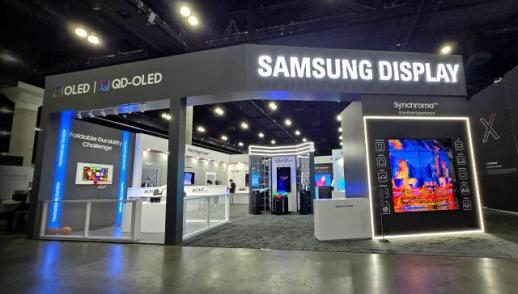 Samsung Display, LG Display unveil next-generation OLED tech at SID 2026 in Los Angeles Samsung Display and LG Display are showcasing next-generation technologies at Display Week 2026 (SID 2026), the world’s largest display event, as they compete for leadership in the global market. Industry officials said Tuesday the companies will present differentiated technology road maps at the exhibition, held May 5-7 (local time) at the Los Angeles Convention Center. Samsung Display is highlighting “display innovation expanded by AI,” while LG Display is focusing on “the evolution of OLED for the AI era.” Samsung Display highlights wide-color-gamut OLED and privacy-focused sensor OLED Samsung Display is emphasizing what it calls a lead in picture quality and “converged” displays. It is unveiling a wide-color-gamut OLED that supports 3,000 nits of peak brightness and 96% of the BT.2020 color space. The company is also showing, for the first time, a product combining 500 PPI organic photodiode (OPD) technology with its Flex Magic Pixel (FMP) privacy feature. The company said the wide-color-gamut performance significantly exceeds the limits of existing smartphone OLEDs, which it said have remained around 70% of BT.2020. It said a low-power structure called LEAD technology, paired with next-generation emissive materials, improves brightness, lifespan and color accuracy at the same time. Samsung Display is also featuring a “sensor OLED” that integrates sensing functions into the display. The 6.8-inch panel delivers 500 PPI resolution and includes functions to measure biometric information such as heart rate and blood pressure. The company said it also applies FMP to selectively block sensitive information from side viewing angles, strengthening privacy protection. Another technology on display is EL-QD, a next-generation emissive approach that directly drives quantum dots with electrical signals. Samsung Display said it achieves 500 nits of brightness and boosts luminance by up to 33% compared with previous levels. It said its research on improving luminous efficiency was selected as an SID “distinguished paper.” The company is also presenting a 200 PPI stretchable display to demonstrate a future vehicle user experience in which an instrument panel can deform in three dimensions. Lee Chang-hee, Samsung Display’s chief technology officer, said, “We are pleased to introduce the company’s latest technologies and R&D achievements to leading scholars and industry experts through SID 2026.” He added, “Samsung Display will continue to lead display innovation through sustained R&D and serve as a technological compass that guides customers and the market.” LG Display debuts third-generation tandem OLED after three years LG Display is promoting an OLED strategy centered on durability and power efficiency, led by what it called the world’s first public showing of its “third-generation tandem OLED.” The company said it is the first unveiling of the next-generation technology in three years, following mass production of second-generation tandem OLED in 2023. LG Display said the stacked-device structure improves both brightness and lifespan, operating stably for more than 15,000 hours at 1,200 nits. It said power consumption is reduced by 18% and lifespan is increased by more than twofold compared with existing technology. The company said it plans to expand tandem OLED applications from automotive displays to IT and mobile devices. It also said it is showing P-OLED for humanoid robots for the first time as it targets the “physical AI” market, emphasizing that flexible, plastic-based displays can support varied robot designs and maintain stable performance in extreme environments. LG Display also showcased premium products, including an OLED TV panel with up to 4,500 nits of brightness, a 720Hz ultra-high-refresh gaming panel, and a 5K2K curved OLED. It also presented a 220 PPI high-resolution OLED and a tandem OLED for AI laptops, aiming at next-generation IT devices through lower power use and lighter designs. The company said the approach reduces thickness and weight while extending battery use by 2.3 hours through low power consumption. In addition, LG Display is exhibiting automotive display solutions optimized for SDVs (software-defined vehicles). In concept-car form, it is showing a 57-inch pillar-to-pillar panel spanning the driver and passenger sides, and a 32-inch slidable OLED that rolls into the ceiling and lowers when in use. Choi Young-seok, LG Display’s chief technology officer, said the company has led “world-first and best” OLED innovation based on its R&D competitiveness. He said it will continue to prioritize customers and strengthen technology leadership as a “technology-driven company” to lead the future display market. 2026-05-05 10:04:43
 -
 South Korea Urged to Pursue Orderly Restructuring as Cable TV Industry Falters South Korea’s cable TV industry is sliding deeper into crisis. As streaming services and internet protocol TV expand, cable subscriptions have fallen and profitability has eroded, leaving a sector that once led the pay-TV market now focused on basic survival. The downturn should not be treated as a simple market fadeout. Cable TV still carries public-service duties, including local news, emergency alerts and community information. That makes it a policy issue, not something the government can leave entirely to the market. What is needed is not open-ended life support, but an orderly restructuring that weighs both public value and efficiency. Total broadcasting revenue for cable system operators fell to about 1.5 trillion won in 2024 from roughly 2.3 trillion won in 2014, a decline of more than 30% over a decade. Operating profit plunged to 14.8 billion won from 450 billion won. The operating margin dropped to about 0.9% from 19.3%, leaving the industry effectively at break-even. With subscriptions still shrinking, independent survival looks increasingly unlikely. Even as the business base weakens, public obligations remain. Cable TV has provided locally focused news and daily-life information and served as a link for local governments and communities. It produces tens of thousands of local programs each year and functions as an emergency broadcast network during disasters — roles large, Seoul-centered platforms struggle to replace. As regional decline and information gaps deepen, the value of those functions could grow. The regulatory system, however, has not kept pace. A key distortion is that cable operators’ required payments to the broadcasting and communications development fund exceed their operating profits. That effectively imposes growth-era burdens on an industry nearing losses. Competition has changed, but rules remain rooted in an older framework. Global streaming platforms and major telecom-backed services are expanding quickly, while cable TV is expected to shoulder both outdated regulation and public mandates, raising fairness concerns. At the same time, unlimited taxpayer support is not a solution. Keeping an uncompetitive business model alive indefinitely would create new inefficiencies. The priority is clear restructuring principles, not temporary fixes. First, policymakers should consider consolidation and service-area realignment as part of broader restructuring. A highly fragmented regional structure limits investment and innovation. Second, public functions such as local channels and disaster broadcasting should be evaluated separately, with necessary costs supported transparently. If private operators are tasked with public services, the system should compensate them accordingly. Third, regulators should redesign oversight in an integrated way rather than treating broadcasting, telecommunications and platforms as separate silos. The government’s role is central. Waiting until the industry collapses and then responding would only raise costs. Rebuilding a local information ecosystem after cable TV disappears would require far greater social spending. A roadmap for structural transition, developed in consultation with stakeholders and implemented in stages, would reduce disruption. The cable TV crisis is not only about one industry’s exit. It is a test of how to protect public-service functions in the digital transition while winding down outdated structures. Neither blanket rescue nor neglect is a workable answer. The need, the article argues, is an orderly exit strategy — and the longer it is delayed, the fewer options remain. 2026-05-05 10:03:15