
Journalist

AJP
-
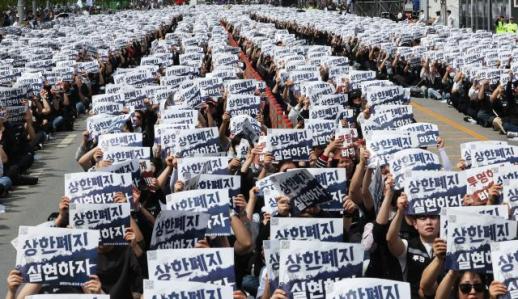 Samsung Electronics Union Rift Deepens as Donghaeng Group Quits Joint Action Samsung Electronics’ labor unions are showing visible cracks, with a joint bargaining and protest front beginning to unravel from within — a development that goes beyond a routine labor-management dispute. Donghaeng, a union centered in the company’s non-semiconductor operations, has formally withdrawn from the joint bargaining group and the joint struggle headquarters. The unified response system was formed for last year’s wage talks and later expanded into a protest organization after negotiations broke down, but it ultimately failed to overcome internal differences. Donghaeng cited dissatisfaction with demands led by the semiconductor division for bigger performance bonuses and with a hard-line protest strategy. Members in the DX division, which handles finished products, have argued that their interests were not reflected in the structure. The group also publicly pointed to a lack of consultation among unions and an erosion of trust. As a result, conflict has widened from labor-management tensions to disputes among unions themselves. With division-by-division interests colliding inside the same company, the episode underscores how difficult it can be to hold those interests together under a single union framework — a reflection of Samsung Electronics’ complex corporate structure. The timing adds to the stakes. With a general strike having been announced, the collapse of the joint front could weaken both the rationale and momentum for collective action. Observers have also raised the possibility that, after Donghaeng’s exit, participation in any strike could splinter into separate decisions. Samsung Electronics’ unions have expanded rapidly in size, but growth does not necessarily translate into broad representation. The more complex the business, the more layered the interests. Semiconductors and finished products differ in profit structures and performance-based compensation systems, and demands can diverge accordingly. This episode suggests those fault lines have reached a breaking point. Union fragmentation also burdens the company. A divided bargaining channel can complicate negotiations and raise the cost of conflict. But responsibility cannot be placed solely on management; unions that cannot coordinate internally are also exposing their own limits. What is needed now is not a higher level of confrontation but a reset of representation. A structure in which one division’s demands effectively speak for the whole workforce is unlikely to last. Without a system that can reconcile competing interests, similar disputes are likely to recur. The challenge facing Samsung Electronics’ unions is not confined to one company. As industries become more complex, labor, too, becomes harder to unify around a single set of interests. The latest split highlights a new task confronting South Korea’s labor movement. 2026-05-05 08:12:06
 -
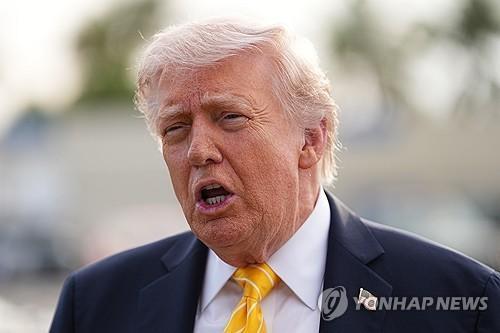 Trump Pressure Puts South Korea’s Hormuz Strait Decision in Focus Tensions around the Strait of Hormuz are rising again. President Donald Trump has publicly pressed South Korea to join a military operation after claiming Iran attacked a South Korean vessel, urging participation in a U.S.-led “liberation project.” With possible damage to a South Korean ship being discussed, public opinion may sway. But in moments like this, the standard for decision-making should be clear: national interest, not emotion. First, the facts must be verified. So far, it has not been confirmed whether Iran was responsible for any damage to the vessel. In conflict situations, early reports are often exaggerated or shaped by political aims. Making a military decision based on a single country’s claim is risky. The government should conduct objective checks through multiple intelligence and information channels. Rushing the process is the biggest risk. Verification, however, should not become an excuse for inaction. What matters is having a response roadmap. Measures to protect South Korean nationals and assets on the ground should be immediate: securing ship safety, adjusting routes and ensuring the military is ready to provide protection. Strategic decisions, including whether to join military action, require caution. Tactics demand speed; strategy demands accuracy. The two should not be confused. The Strait of Hormuz is a vital artery for South Korea’s economy. A large share of the country’s crude oil imports passes through it. Instability there can quickly translate into higher energy prices and rising costs across industry. Still, having a stake does not automatically mean military involvement. Interests require a response, but the form of that response is a matter of choice. South Korea must weigh its national interests in concrete terms, and those interests are not singular. On one side is the U.S.-South Korea alliance, a top security interest. On the other are ties with the Middle East and economic interests such as energy supply. Both matter and can collide. National interest, therefore, is not a slogan but a question of priorities. The standards for South Korea’s choice should be clear: Protecting lives and property comes first. Second, it should act in a way that does not undermine trust in the alliance. Third, it should minimize economic damage. The decision should seek balance within these principles; treating any one as absolute could harm the national interest. Washington’s request also needs a cool-headed assessment. Trump is pressing South Korea while emphasizing allied military contributions. But an alliance is not automatic mobilization; it should rest on shared interests and agreement. South Korea has the sovereign right to decide whether to participate, and its benchmark should be its own national interest. That does not mean ruling out multilateral cooperation. In practice, maritime security in the Strait of Hormuz operates within a U.S.-led multilateral framework. The key is separating independent decision-making from cooperation in execution. South Korea should decide on participation on its own, but if it joins, it can use the multilateral structure. In other words, decisions should be sovereign, implementation realistic. A sober view is also needed on diplomacy. It is structurally difficult for South Korea to serve as a fully neutral mediator between the United States and Iran. But it can play a buffering role that helps reduce tensions. As a country with energy interests at stake, it is more realistic to seek diplomatic space that manages conflict rather than expands it. Military involvement should be a last resort. Once involved, South Korea could become a party to a clash beyond a simple escort mission. That could have long-term effects on relations across the Middle East. Given South Korea’s deep economic ties in the region, a one-track choice carries risks. What is needed now is clear: respond quickly on the ground, judge carefully at the strategic level, and organize national interests by priority. The more U.S. pressure, international urgency and domestic opinion shifts converge, the more disciplined the standard for judgment must be. Tensions in the Strait of Hormuz are unlikely to ease quickly. This decision may not be a one-off, but a test that signals the standards of South Korea’s diplomacy going forward: calculation over emotion, structure over speed, and principles over pressure.* This article has been translated by AI. 2026-05-05 08:00:17
 -
 Fire on HMM Namu Ship in Strait of Hormuz Extinguished; Vessel Heads to Dubai for Checks A fire aboard the HMM Namu, a cargo ship that had been stuck in the Strait of Hormuz under Iranian control, has been extinguished, HMM said. No injuries were reported, and the vessel is expected to enter the nearby port of Dubai to assess damage. HMM said May 5 that the fire was fully put out after midnight May 5, Korea time. Because a large amount of carbon dioxide (CO2) was used to fight the fire, the company said it plans to enter the engine room later in the afternoon to confirm the extent of damage and then report the findings to the South Korean government and its headquarters. The HMM Namu is a Panama-flagged 38,000-deadweight-ton bulk carrier operated by HMM. It was launched in September last year at the HPWS shipyard in Guangzhou, China. The fire broke out with an explosion in the port-side section of the engine room at about 8:40 p.m. the previous evening (Korea time) while the ship was anchored in waters near the United Arab Emirates, the company said. Six South Korean crew members and 18 foreign crew members were aboard, and HMM said it has confirmed there were no casualties. The ship is expected to be moved to Dubai port soon. The cause of the fire has not been determined. President Donald Trump, in a post on his social media platform Truth Social, said Iran had fired several times at ships from unrelated countries, including a South Korean cargo vessel, during vessel movements linked to a “liberation project,” and pointed to Iran as being behind the incident. 2026-05-05 07:03:18
 -
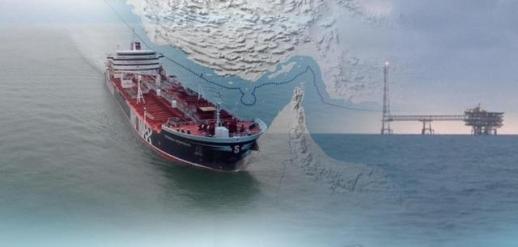 Explosion, Fire Reported on Korean-Operated Ship in Strait of Hormuz; Government Checking if It Was Attacked The South Korean government said it was checking the facts after an explosion and fire broke out on a Korean shipping company’s vessel in the Strait of Hormuz, as the United States launched what it calls the “Project Freedom” operation using warships and military aircraft to help civilian ships transit the area. South Korea’s Foreign Ministry said the incident occurred at about 8:40 p.m. Korean time on May 4 on a vessel operated by a South Korean shipping company that was anchored near the United Arab Emirates in waters around the Strait of Hormuz. The ship was identified as the HMM NAMU, which sails under the Panamanian flag. The ship had 24 crew members on board — six South Koreans and 18 foreign nationals — and no casualties had been reported as of the latest information, the ministry said. The ministry said it was investigating the cause of the explosion and fire and the extent of any damage. “We will take necessary measures to ensure the safety of our ship and crew while communicating closely with relevant countries,” it said. Yonhap News Agency reported that HMM said a fire broke out near the port side of the engine room after an explosion-like sound of unknown cause. Crew members carried out their own firefighting efforts, and no injuries were reported. The incident has raised questions about a possible link to military clashes during the U.S. “Project Freedom” operation. With tensions rising between the United States and Iran, there has been speculation the ship may have been attacked, but the government said it was still confirming whether it was hit. South Korea’s Oceans Ministry said 26 South Korean-flagged ships are currently inside the Strait of Hormuz, including nine oil tankers and car carriers. It said 160 South Korean crew members are staying in the strait area — 123 on South Korean-flagged ships and 37 on foreign-flagged ships. They have been unable to leave the area for the past two months as Iran’s blockade of the Strait of Hormuz has continued. * This article has been translated by AI. 2026-05-05 06:48:13
 -
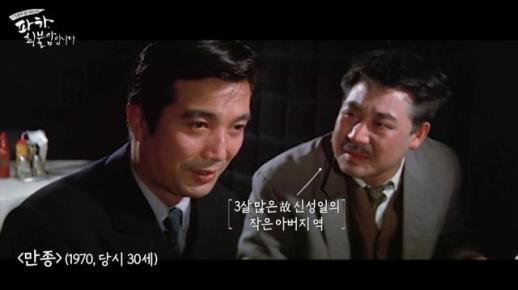 MBC Documentary Revisits Actor Choi Bul-am’s Life and Career MBC will air a two-part Family Month special documentary, 'Paha, This Is Choi Bul-am.' The first episode, airing at 9 p.m. on the 5th, is a radio-style documentary that looks back on actor Choi Bul-am’s life and acting career through music. Actor Park Sang-won, who played Choi’s eldest son in the MBC drama 'You and I,' serves as presenter. Part 1 traces the time of Choi as a person, beyond the label of “national actor.” It introduces moments in which he dreamed, loved and wrestled with concerns, before and beyond his many father roles on screen. One starting point is Myeongdong in the 1950s. As a middle school student, Choi developed artistic sensibilities under the influence of leading figures of the era, including poet Park In-hwan and painter Lee Jung-seob. Their words and lives later became an important foundation for him as an actor. The documentary also highlights Choi’s early drive to act. In one anecdote from his 20s as a stage actor, he asked a colleague with a long monologue to “share a few lines.” When the request was refused, he made his presence felt in an unexpected way during the performance, reflecting a young actor determined to prove himself even with a single line. It also examines his long-running challenge of playing characters far older than his real age. Choi took on the role of the late Shin Sung-il’s uncle even though Shin was three years older than him, and he also played the father of the late Lee Soon-jae, who was five years older. How to bridge the gap between his age and his roles remained a persistent concern, the documentary says. That 고민 continued in 'Chief Inspector.' Choi weighed how to portray a detective and, moving away from a rigid, authoritarian image, created a new kind of police character through Capt. Park — a figure with a warmer gaze. The documentary also revisits his middle-aged romance in 'You and I,' where he showed an emotional range different from his familiar father image. At the time, a middle-aged love triangle in the drama drew enough attention to prompt a public survey, the program says. Overall, it looks back at the many faces Choi showed beyond the nickname “the nation’s father.” MBC said the special was planned as an autobiographical documentary with Choi actively involved from the early stages. Since July last year, he held several long conversations with the production team to shape the stories to be included and the message to deliver to viewers. He emphasized that it should go beyond his personal life to capture the atmosphere of the times he lived through and changes in South Korean society. Producers said they coordinated filming schedules with Choi until recently, but he did not appear on camera after his family asked that he focus on rehabilitation treatment. They said the documentary still reflects the message he wanted to convey, and added that once he completes his rehabilitation process, he plans to greet viewers through MBC. Part 1 of 'Paha, This Is Choi Bul-am' airs at 9 p.m. today (the 5th).* This article has been translated by AI. 2026-05-05 00:06:20
 -
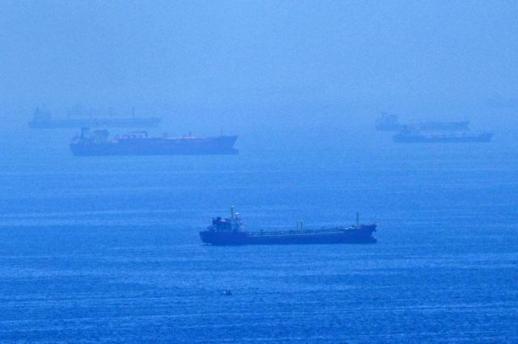 South Korea Says Blast, Fire Hit Korean-Operated Ship in Strait of Hormuz; No Casualties A blast and fire broke out on a Korean-operated ship that had been stuck in the Strait of Hormuz under Iranian control, South Korea’s government said. Officials were checking whether the vessel was attacked and said no casualties had been reported so far. The Foreign Ministry said the explosion and fire occurred at about 8:40 p.m. on the 4th (Korea time) on a vessel anchored in waters near the United Arab Emirates inside the Strait of Hormuz. The ship was the NAMU, operated by South Korean shipping company HMM and registered in Panama, the ministry said. Six South Korean crew members and 18 foreign crew members were aboard, and no injuries had been confirmed as of the latest reports, the ministry said. A ministry official said, “The cause of the explosion and fire and the specific extent of the damage are being confirmed.” The damaged area was the port side of the engine room. The vessel remains at sea awaiting further action. The official added, “The government will stay in close communication with relevant countries and take necessary steps to ensure the safety of our ships and seafarers inside the Strait of Hormuz.” Cheong Wa Dae said it was assessing the cause of the fire and had confirmed there were no injuries among the South Korean crew members. U.S. President Donald Trump said on social media platform Truth Social that he would begin “Project Freedom” to pull out ships trapped in the Strait of Hormuz starting the morning of the 4th, Middle East time. 2026-05-04 23:42:19
 -
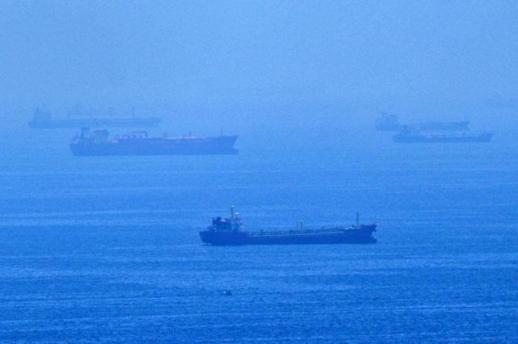 South Korea checks report of Korean ship hit near Strait of Hormuz; no casualties South Korea said it was checking a report that one of its ships anchored inside the Strait of Hormuz was attacked, adding that no South Korean crew members were hurt. A Foreign Ministry official said on the 4th that the consular bureau was confirming whether the vessel was hit. “We have initially confirmed there were no casualties among our nationals,” the official said. Cheong Wa Dae said it was also determining the cause of a fire on the ship and confirmed there were no injuries among the South Korean crew. The Ministry of Oceans and Fisheries said it believed the general cargo ship HMM Namu, anchored in waters outside the harbor limits of Umm Al Quwain port in the Hormuz area, was struck at about 8:40 p.m. The ministry said 24 people were aboard: six South Koreans and 18 foreign nationals. Damage was reported on the port side of the engine room, and the ship was waiting at sea. U.S. President Donald Trump wrote on social media Truth Social that he would begin “Project Freedom” on the morning of the 4th, Middle East time, to pull out ships trapped in the Strait of Hormuz. Cheong Wa Dae said the government hoped global maritime logistics would quickly stabilize and return to normal. It said South Korea and the United States were maintaining close communication on the stable use of major sea lanes, including the Strait of Hormuz. * This article has been translated by AI. 2026-05-04 22:39:18
 -
 Hanwha Aerospace Raises KAI Stake Above 5%, Shifts to Management Participation Hanwha Aerospace raises KAI stake above 5%, shifts to management participation Hanwha Aerospace said in a regulatory filing on the 4th that it bought additional shares of Korea Aerospace Industries (KAI), changing its stated holding purpose from a “simple investment” to “management participation.” According to the filing, Hanwha Aerospace acquired an additional 100,000 KAI shares, or 0.1%, lifting its combined stake including affiliates to 5.09%. With the stake now above 5%, the company changed the purpose of its holding to management participation. It said specific plans are under review. Hanwha Aerospace said it plans to invest a total of 500 billion won by the end of this year to buy more KAI shares. Based on the April 30 closing price of 169,000 won, its stake in Korea Aerospace Industries would rise to 6.4% after the planned purchases. Apgujeong District 5 rebuild nears contractor vote, Hyundai E&C vs. DL E&C Competition is intensifying between Hyundai Engineering & Construction and DL E&C as the selection of a builder for Apgujeong District 5, one of Seoul’s most contested redevelopment projects, approaches. Industry officials said on the 4th that the contractor will be decided at a union members’ general meeting on the 30th. The project rebuilds the Hanyang 1st and 2nd apartment complexes near 490 Apgujeong-dong, Gangnam-gu, into eight buildings ranging from five basement levels to up to 60 stories above ground, totaling 1,397 households. Total project costs are estimated at about 1.5 trillion won. Hyundai E&C is seen by some as having an edge due to the “Apgujeong Hyundai” brand symbolism, while DL E&C is countering with financing terms and changes to the project structure. DL E&C proposed construction costs of 11.39 million won per pyeong (3.3 square meters), more than 1 million won lower than the union’s expected cost estimate. The company said it is focusing on structurally limiting the risk of rising construction costs, not just price competition. Five automakers sell 666,248 vehicles in April, down 3.3% on Middle East risks Uncertainty in export markets tied to the war in the Middle East contributed to mixed results for South Korea’s five automakers in April. Hyundai Motor and Renault Korea posted year-on-year declines amid a lack of new models and weaker exports, while Kia, KG Mobility (KGM) and GM Korea reported growth on steady demand for popular models and more diversified export markets. Industry data released on the 4th showed combined global sales by Hyundai Motor, Kia, KGM, GM Korea and Renault Korea totaled 666,248 vehicles in April, down 3.3% from a year earlier. Domestic sales fell 8.8% to 117,314 vehicles, while overseas sales slipped 2.1% to 548,483. Samsung Electronics union rift widens as Donghaeng union quits joint bargaining group A split among labor unions at Samsung Electronics became official after a union based in the company’s Device eXperience (DX) division decided to leave a joint struggle headquarters. Samsung Electronics Labor Union Donghaeng said on the 4th it issued a formal statement notifying the National Samsung Electronics Labor Union and the Samsung Electronics branch of a cross-company union that the “2026 wage negotiation joint bargaining group” would end. Donghaeng cited serious conflict between unions and a breakdown in mutual trust as the decisive reason for withdrawing. In its statement, Donghaeng said, “Even when our union proposed and requested agenda items for the rights and interests of all members, not just members in a specific area, your unions (the cross-company union and the National Samsung Electronics Labor Union) have not responded to date.” It added that the other unions “did not even show an intention to consult,” leaving Donghaeng’s views “not reflected at all” in matters affecting all members. OTT battle for No. 2 intensifies as Coupang Play gains on HBO new releases The user gap between Tving and Coupang Play widened again in April in South Korea’s online video streaming market. Mobile Index data released on the 4th showed monthly active users (MAU) of 7,708,645 for Tving and 9,101,593 for Coupang Play, a difference of about 1.39 million users. Tving fell 3.95% from the previous month, while Coupang Play rose 0.61%. Among major services, Netflix fell 7.02% to 14,799,836 MAU, while Wavve rose 1.27% to 3,897,570. Disney+ saw its MAU rise by nearly 1 million in February due to a compensation program for customers affected by a KT hacking incident, but in April it fell 8.31% from the previous month to 3,462,195. Big five banks’ mortgage balances post biggest rise in eight months Mortgage loan balances at major commercial banks rose by the most in eight months, driven largely by policy-backed lending such as jeonse deposit loans and Didimdol loans, analysts said. Financial industry data released on the 4th showed mortgage balances at KB Kookmin, Shinhan, Hana, Woori and NH NongHyup banks totaled 612.2443 trillion won at the end of April, up 1.9104 trillion won from the end of March. It marked the biggest monthly increase since August last year, when balances rose 3.7012 trillion won. Overall household lending also increased. The five banks’ household loan balances totaled 767.2960 trillion won at the end of April, up 1.5670 trillion won from the end of March. It was the largest increase since October last year, when balances rose 2.5270 trillion won. Choo Kyung-ho and Lee Cheol-woo visit Park Geun-hye, call to protect conservative base Choo Kyung-ho, the People Power Party’s candidate for Daegu mayor, and Lee Cheol-woo, the party’s candidate for North Gyeongsang governor, visited Park Geun-hye on the 4th as they campaign for the June 3 local elections. The move followed a video congratulatory message from Lee Myung-bak at the opening of Choo’s campaign office the previous day, in what appeared to be an effort to rally conservative voters. The two candidates visited Park’s residence in Dalseong County, Daegu, on Monday afternoon. They were accompanied by Rep. Lee In-seon, head of the Daegu party committee; Koo Ja-geun, head of the North Gyeongsang party committee; and lawmaker Yoo Young-ha. After the visit, Choo told reporters, “President Park is a former president of our party and the biggest elder in conservative politics.” He added, “Since she is staying at her residence in Dalseong County, I thought it was only right to visit and pay my respects, ask after her health, and share various thoughts.”* This article has been translated by AI. 2026-05-04 22:03:34
 -
 U.S. military says two American merchant ships transit Strait of Hormuz safely U.S. Central Command said on May 4 local time that two U.S. merchant ships safely transited the Strait of Hormuz. According to Reuters and other outlets, Central Command said in a post on X that U.S. Navy guided-missile destroyers passed through the strait to support the “Liberation Project” and are now operating in the Arabian Gulf. Central Command said it is taking active steps to help resume commercial shipping. As a first step, it said, two U.S. merchant ships successfully passed through the Strait of Hormuz and are sailing safely. Iranian media earlier reported that a U.S. Navy frigate attempting to transit the strait was hit by two Iranian military missiles in the Gulf of Oman and retreated. The U.S. military immediately denied the claim. President Donald Trump said the “Liberation Project” would begin that day to help third-country vessels stuck in the Strait of Hormuz exit safely. * This article has been translated by AI. 2026-05-04 21:51:18
 -
 UAE Says It Is Discussing Currency Swap Line With U.S. After Leaving OPEC The United Arab Emirates said it is discussing opening a currency swap line with the United States, following its exit from the Organization of the Petroleum Exporting Countries, Yonhap News Agency reported Monday. UAE Minister of State for Foreign Trade Thani Al Zeyoudi said the talks are part of discussions with several countries and would place the UAE in what he called an “elite group” that operates under U.S. swap policy. He made the remarks at an event in Abu Dhabi, according to Yonhap. “The United States currently has currency swaps with only five countries,” Al Zeyoudi said. He added that joining that group would mean bilateral transactions, trade and investment have reached a level where a swap line is essential. He did not disclose the size of any potential swap line or a timeline for an agreement. The U.S. central bank, the Federal Reserve, maintains permanent standing swap lines with five major central banks: the European Central Bank and the central banks of Canada, Japan, the United Kingdom and Switzerland. The UAE sees a swap line with the United States as a possible financial backstop against a foreign-exchange crisis after oil exports — a key source of hard-currency earnings — were hit by the closure of the Strait of Hormuz amid war in the Middle East. The move is also being viewed in connection with the UAE’s departure from OPEC on May 1. By leaving, the UAE signaled an independent course away from the Saudi-led order in global oil markets, increasing the need to draw closer to the U.S. government, which has been at odds with OPEC. Saudi Arabia, while a U.S. ally, has sought to reduce reliance on the dollar, including exploring yuan-denominated oil payments, as it tries to avoid ceding dominance in oil markets to the United States. For Washington, a swap line with a major Middle Eastern oil producer could help reinforce the “petrodollar” at a time when its durability is being questioned. If the UAE establishes a swap line with the United States, the relationship could extend beyond finance to closer coordination on security and military policy in response to Iran, a persistent threat, further widening distance between the UAE and Saudi Arabia.* This article has been translated by AI. 2026-05-04 21:45:18