
Journalist

AJP
-
 PHOTOS:The story of fishing village in Sokcho Gangwon, January 22 (AJP) — The sea off Sokcho was calm. Walking along Cheongcho Lake toward the gaetbae landing, the ferry began to move slowly as people pulled hard on the iron rings attached to the cable. For visitors, the gaetbae is a novel experience. For locals, it was once the only way to get across. Riding the pulley-operated ferry leads to Abai Village, a neighborhood shaped by displacement and time. Abai Village was formed by displaced people who fled south from Hamgyong Province in North Korea during the Korean War. “Abai” is a Hamgyong dialect word referring to an elderly man. Those who escaped the war settled along the sandy shore of Sokcho’s coast, believing they would soon be able to return home. The land was inhospitable—building homes and securing drinking water were difficult—but people from the same hometowns gathered together and formed communal settlements. What began as a temporary refuge became a permanent home over the decades. Walking through the narrow alleys, low fences and weathered signboards come into view. Amid restaurants catering to tourists, traces of everyday life remain. Abai Village is the only remaining collective settlement of displaced people in South Korea and a place where the pain of division and the hope for reunification coexist. Its stories resurface whenever inter-Korean relations shift, whether toward reconciliation or tension. Sokcho is often described as a tourist city where the sea meets Seoraksan, but its roots lie in the settlement history of displaced people. After the war, many who arrived here made their living through fishing, helping drive the city’s growth. The Cheongho-dong area remains the heart of Sokcho’s fishing industry. Fresh catches move through the live fish centers and the Sokcho Fisheries Market, where the sea continues to shape daily life. Food in Abai Village tells this history most directly. Hamheung-style cold noodles, abai sundae, squid sundae, gajami sikhae and various fermented seafood dishes reflect culinary traditions carried from the north. Combined with East Sea specialties such as red snow crab and steamed fish, they form Sokcho’s distinctive food map. For tourists they are local delicacies; for residents, they are tastes preserved in longing for home. From the top of Seorak Geumgang Bridge, the view widens. The East Sea, Cheongcho Lake and the cityscape of Sokcho unfold at once. While it is a popular photo spot for visitors, for displaced residents this sea once stood in for a homeland they could not return to. Where scenic beauty overlaps with painful memory, Sokcho’s tourism moves beyond simple consumption. A walk through Abai Village is a journey between past and present. The brief crossing on the gaetbae, old signboards in the alleys and a plate of sundae on the table connect into a single narrative. Sokcho remains a tourist destination, but its appeal is built upon layers of time shaped by division. To truly travel Sokcho is not only to look at the sea, but to face the lives of those who have lived while gazing toward it. 2026-01-22 17:58:03
 -
 Blunt FX language fuels speculation, but steadies the won — for now SEOUL, January 22 (AJP) - Alongside South Korea’s blistering equity rally, the foreign-exchange market has emerged as the economy’s most sensitive fault line, dominating monetary policy briefings and even the president’s New Year’s press conference. From U.S. Treasury Secretary Scott Bessent’s remark that the won’s level is “not in line with Korea’s strong economic fundamentals,” to Bank of Korea Governor Rhee Chang-yong’s blunt assertion that the currency’s slide has been “excessive,” policymakers have adopted unusually direct language to deter one-sided bets that could distort trade conditions and undermine financial stability. President Lee Jae Myung joined the verbal defense in a televised New Year’s news conference — and went a step further. What stirred markets was a rare attempt to sketch a future trading range for the won. Citing compound external factors behind the currency’s weakness, Lee said that if the won were to track the Japanese yen closely, it would be trading near 1,600 per dollar. He then predicted that the won would stabilize around 1,400 within one or two months, without elaborating on the basis for the forecast. The comment abruptly halted short positions and triggered a reversal, pulling the won back from near 1,480 to below 1,470. As of Thursday, the dollar was quoted at 1,469.30. Earlier on Thursday, Governor Rhee reinforced the message with his own forceful verbal intervention at an AI conference co-hosted with Naver. “By any objective measure, the dollar-won exchange rate is too high and has ample room for adjustment,” he said. Where does the confidence come from? Some point to the roaring stock market, with the KOSPI briefly breaching the 5,000-point threshold — a level increasingly discussed as a symbolic gateway toward eventual MSCI developed-market status. Others focus on the bond market. South Korean sovereign debt is set to enter the World Government Bond Index (WGBI) in stages from April through November. WGBI inclusion requires a minimum maturity of one year, excluding short-term debt entirely. More importantly, the index’s credibility attracts long-duration capital: its average holding period is about 9.6 years, far longer than that of most global bond benchmarks. Longer duration typically translates into lower volatility and higher perceived credit quality. With inclusion beginning in April — precisely one to two months from now — President Lee’s timeline has not gone unnoticed. “As the government expects capital inflows of $50 billion or more from WGBI inclusion, it likely views this as a key catalyst for won appreciation,” said a foreign-exchange trader, speaking on condition of anonymity. Potential inclusion in the MSCI Developed Markets (DM) Index is also viewed as a strategic defensive line. If upgraded, South Korea would likely carry a weight of around 2 percent, potentially drawing between $250 billion and $350 billion in inflows. Crucially, DM capital is “sticky”: funds typically remain invested for five to ten years, compared with roughly three years for emerging-market flows. That durability helps dampen capital flight and stabilize the exchange rate. “DM inclusion would anchor capital flows and enhance Korea’s international credibility, which would be supportive for the won,” said Kim Jong-young, a researcher at NH Investment & Securities. Still, few expect an immediate boost. South Korea must first be placed on MSCI’s watch list this June and maintain that status for at least a year. Realistic inclusion is widely seen as a 2028 story at the earliest. Temporary relief from delayed U.S. investment Another theory circulating in markets is that the government may be implicitly defending the won by slowing the execution of a $350 billion investment package promised to the United States during tariff negotiations. The package includes $200 billion in direct investment and $150 billion in shipbuilding cooperation. Deputy Prime Minister and Finance Minister Koo Yun-cheol hinted at such delays in an interview with Reuters last Friday. “It will be difficult to execute major investments in the U.S. during the first half of this year,” Koo said, adding that “given current foreign-exchange market conditions, it is unlikely that these investments will materialize within the year.” Whether President Lee and Governor Rhee had this specific lever in mind remains unclear. “The remarks likely refer to measures such as Repatriation Incentive Accounts (RIA), but as Minister Koo noted, deploying U.S. investment funds within the first half appears difficult,” a Ministry of Economy and Finance official said, requesting anonymity. The comments follow an earlier signal of “pace adjustment” from Trade Minister Kim Jung-kwan on Nov. 14, when he clarified: “The commitment was to proceed with investments by January 2029 — not necessarily to disburse the full amount by then.” 2026-01-22 17:55:42
 -
 Stocks at record highs, growth at 1%: Korea's market–economy divide widens SEOUL, January 22 (AJP) -Korean stock market pushed deeper into uncharted territory Thursday, with the KOSPI briefly climbing over the 5,000 mark before closing just below the milestone, a historic high unfolding even as economic growth remains stuck near 1 percent, highlighting a widening gap between buoyant asset prices and a fragile real economy. The growth outlook marks the weakest performance since the economy contracted 0.7 percent in 2020 during the height of the COVID-19 pandemic, and the lowest growth rate on record outside the pandemic period since GDP data collection began in 1954. The benchmark KOSPI rose 0.9 percent to finish at 4,952.5 after hitting a historic high of 5,019.54, extending its rally and reinforcing views that the market is entering a higher valuation regime. The KOSPI 200 gained 1.03 percent to 722.3, reflecting renewed demand for heavyweight stocks, even as trading showed clear signs of sector rotation rather than broad-based risk-taking. On the main board, foreign investors and institutions were major sellers, offloading 297.2 billion won ($202 million) and 102.8 billion won, respectively, while retail investors bought in 155.6 billion won. Investors increasingly view the advance toward — and brief move above — 5,000 as more than a liquidity-driven rally. Expectations of improved corporate governance following revisions to commercial law, a recovery in the semiconductor cycle and ample liquidity have helped lift the market’s valuation range. Hopes that long-standing governance concerns could be addressed have also fueled expectations of a narrowing “Korea discount,” drawing sustained interest toward large-cap stocks. Gains were led by technology and electronics shares. Samsung SDI surged 18.7 percent to 384,500 won, lifting the broader electrical equipment sector by 8.4 percent. Semiconductor heavyweights also advanced, with Samsung Electronics rising 1.9 percent to 152,300 won and SK hynix gaining 2.03 percent to 755,000 won. Internet stocks outperformed as well, with NAVER up 2.9 percent at 245,500 won. Not all sectors participated. Automakers and heavy industry shares lagged, with Hyundai Motor falling 3.6 percent to 529,000 won. Energy and shipbuilding names also weakened, as Doosan Enerbility slipped 1.42 percent to 90,000 won and Hanwha Ocean dropped 2.7 percent to 137,700 won. In the secondary market, the KOSDAQ outperformed. The index climbed 2.0 percent to 970.4, supported by individual and selective foreign buying. Foreign investors purchased a net 66.1 billion won worth of shares, while institutions sold 138.6 billion won and retail investors added 104.6 billion won, underscoring continued appetite for growth-oriented names despite elevated volatility. Currency exchange rate and bonds sent mixed signals. The won weakened slightly, with the dollar closing at 1,469.6 won, up 1.9 won, or 0.13 percent. Government bond yields edged lower, with the 10-year yield around 3.06 percent and the 3-year at about 2.98 percent, reflecting lingering expectations for future rate cuts alongside a cautious growth outlook. Elsewhere in Asia, Japan’s Nikkei 225 climbed 1.73 percent after U.S. President Donald Trump said Washington would not proceed with additional tariffs linked to Greenland-related trade disputes, easing risk aversion. 2026-01-22 17:46:33
 -
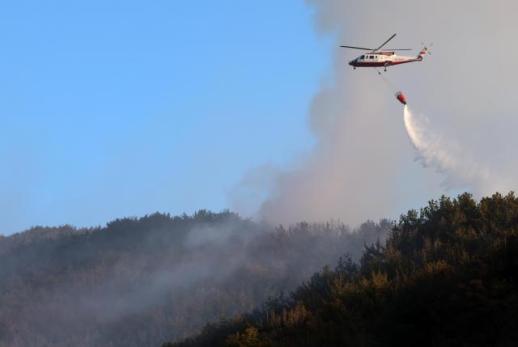 Gwangyang wildfire fully contained after 13-hour operation SEOUL, January 22 (AJP) - Authorities have contained a major wildfire in Gwangyang, South Jeollanam Province, that triggered Level 1 emergency response measures due to rapid spread driven by strong winds. The blaze, which broke out at 3:31 PM on the 21st in the hills of Mukbaek-ri, Okgok-myeon, Gwangyang, reached 100 percent containment as of 10:00 AM today, 13 hours and 37 minutes after ignition. Forest authorities activated nighttime firefighting operations at sunset, deploying Surion helicopters and thermal imaging-equipped drones for fire line monitoring to develop suppression strategies. Specialized wildfire units and high-performance fire trucks were mobilized throughout the night to prevent further spread. The overnight operation involved 997 firefighting personnel and 108 fire trucks. The affected area is estimated to span 49 hectares. The wildfire originated from sparks that spread from a nearby factory fire and rapidly expanded in the strong wind conditions. 2026-01-22 17:32:30
 -
 BTS's V holds photo book exhibition SEOUL, January 22 (AJP) - BTS member V is holding an exhibition to commemorate the release of his photo book from Jan. 20 to Feb. 1 at Frieze Seoul in Jung-gu, Seoul. The exhibition, titled "V TYPE 非: ON-SITE IN SEOUL," features three-dimensional displays of photos from the book along with previously unreleased photos and videos available only at the venue. Meanwhile, V and BTS are set to make a comeback on March 20 with their fifth full-length album "ARIRANG." The album marks the group's first new release in three years and nine months since their anthology album "Proof" in June 2022. It will contain a total of 14 tracks. According to their agency, BTS has captured the group's identity as a Korean act along with themes of longing and deep love in this album. The title "ARIRANG" represents Korea's signature folk song and symbolically embodies the emotions the members wish to express. Additionally, BTS is planning a comeback stage at Gwanghwamun in central Seoul in late March. 2026-01-22 17:32:08
 -
 Prosecutors appeal ex-president's sentence in martial law-related case SEOUL, January 22 (AJP) - Former President Yoon Suk Yeol's case over charges of alleged obstruction of law enforcement will go to an appeals court after Yoon and prosecutors decided to appeal the first ruling. Independent prosecutors said they reached the decision on Thursday, days after Yoon immediately appealed last week's verdict. In the first ruling delivered last Friday, Yoon was sentenced to five years in prison for obstructing investigators and other officials who attempted to detain him over his botched declaration of martial law on Dec. 3, 2024, one of several charges related to the short-lived, late-night debacle. Prosecutors had earlier sought 10 years in prison, but the court handed down a sentence roughly half of that, although it found him guilty on most charges. With both sides presenting differing arguments, the case will be the first to proceed to an appeals court among Yoon's eight different cases related to the debacle. Meanwhile, a verdict on the main charges of insurrection and abuse of power is expected to be handed down next month. 2026-01-22 16:57:47
 -
 In wintry Korea, grandma's vest turn practical warmth into style SEOUL, January 22 (AJP) — What was once dismissed as a purely functional item worn by Korean grandmothers has quietly become a global fashion statement. “Grandmacore” — a trend rooted in nostalgia, domestic hobbies like knitting and baking, and unapologetically cozy silhouettes — has caught on with fashion-forward MZ women worldwide. At the center of this movement is an unlikely hero: the flowery, quilted vest South Korean grandmas wear to stay warm. Popularly known as the “gimjang vest,” the colorful padded body warmer has long been a staple in rural Korea. Villagers traditionally wear it during the annual kimchi-making season or for outdoor chores, valuing warmth and mobility over style. Thick quilting, lightweight fabric and a loose, sleeveless fit allow for easy movement while keeping the torso insulated — practical workwear, plain and simple. Even the name reflects its roots. Closely associated with gimjang, the labor-intensive winter ritual of making kimchi, the vest was never meant to be fashionable. It existed purely to keep the cold out. That perception has flipped. The old-fashioned “granny look” has found new life among MZ consumers, especially as group outfits for parties and highly shareable social-media posts. Young celebrities helped accelerate the shift. Viral photos of K-pop stars such as Karina, Jennie and Taeyeon wearing gimjang vests reframed the garment from rural necessity to playful, ironic chic. As the trend spread, the vest also became a must-buy souvenir for foreign visitors. “This is what Jennie wore!” exclaimed a tourist from Singapore at Seoul’s Namdaemun Market. “We’ve seen it everywhere on Instagram Reels and TikTok.” Similar reactions have surfaced across social media platforms. “I love that these are becoming popular with younger people — it’s funny but cute,” one user wrote. “I don’t think I could wear one though.” Another post read, “They were everywhere and so affordable. I bought one for my daughter and she’s so cute in it! We got ours at Namdaemun — it was 6.50 per vest.” The fashion evolution has been swift. As the garment moved from traditional marketplaces into the mainstream fashion scene, designs expanded beyond floral prints to include check patterns, reversible styles, minimalist quilting and fleece-lined versions. Pet-size gimjang vests have also entered the market, enabling coordinated looks for owners and their dogs. Major sportswear brands have taken note. Adidas, for instance, incorporated floral elements into youth-targeted product lines, with one quilted jacket priced at 150,000 won selling out shortly after release. Search data confirms the momentum. According to Naver Data Lab, searches for “gimjang vest” reached a relative index of 100 — the platform’s highest score — on Nov. 26, 2025, surpassing last winter’s peak. Analysts point out that the surge coincided with a sharp drop in temperatures, underscoring the garment’s enduring practicality. The aesthetic has also found its way into lifestyle spaces. At Café Inju, a hanok-style bakery in South Chungcheong Province, owner Yoo Eun-duk places gimjang vests on display for visitors to wear while taking photos. “The concept fits the bakery’s retro, grandmother-inspired vibe,” Yoo said. “We weren’t chasing trends. We were looking for props that matched the nostalgic atmosphere, and the gimjang vest felt like a natural choice.” The photo zone near the entrance draws interest across age groups, including visitors who do not try on the vest but linger to engage with the surrounding objects. The blend of function and charm has even caught the attention of luxury fashion houses. Valentino released the “Gobelin Après L’Hiver Fiorellini Vest” in 2026, priced at about 6.3 million won, featuring shearling details, floral motifs and branded lining. Moncler has also introduced a reversible floral down vest. What was once winter workwear born of necessity is now being reinterpreted through premium materials and high fashion design. For some, the vest is simply a way to stay warm. For others, it is playful self-expression. Either way, the trend offers a gentle reminder: sometimes the most fashionable thing to do is finally visit your grandmother — and take a closer look inside her closet. 2026-01-22 16:41:58
 -
 KOSPI flirts with 5,000 landmark despite grim GDP SEOUL, January 22 (AJP) - South Korea’s benchmark KOSPI has touched the 5,000 mark for the first time in its history to cause euphoria on Thursday when the country reported a grim economic data, showing the gross domestic product contracting 0.3 percent in the fourth quarter. The KOSPI closed 0.9 percent up at 4,952.53 after rising as high as 5,019.54. The main index has cracked a new four-digit momentum in just two months since passing the 4,000 mark. 2026-01-22 16:33:20
 -
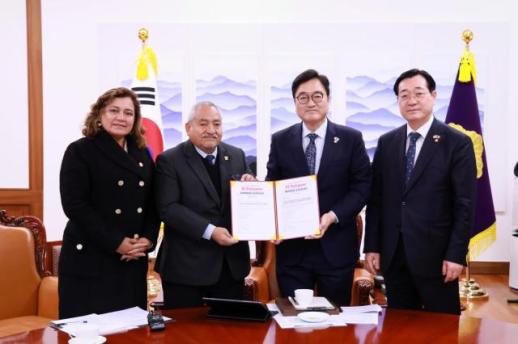 Peru designates April 1 as 'Korea Friendship Day' during parliamentary visit to Seoul SEOUL, January 22 (AJP) - A delegation of Peruvian lawmakers visited Seoul last week to strengthen diplomatic ties, presenting a newly approved law that designates April 1 as "Korea Friendship Day" to recognize the contributions of the South Korean community to Peru. Congressman Víctor Seferino Flores Ruiz, president of the Peru–Korea Parliamentary Friendship League, and Congresswoman Silvia María Monteza Facho led the official visit from January 11 to 17. The trip focused on enhancing the parliamentary relationship between Peru and South Korea. During a meeting with South Korean National Assembly Speaker Woo Won-shik, Flores presented a physical copy of Law No. 32519, which was recently passed by the Peruvian Congress. The law establishes the commemorative day to acknowledge the role South Koreans have played in Peru's sustainable development. Flores also submitted a draft Joint Declaration proposing regular meetings between the parliamentary friendship groups of both nations to institutionalize their cooperation. Speaker Woo expressed appreciation for the designation of the friendship day and noted the South Korean legislature's own efforts to promote the inclusion of migrant populations. The Peruvian delegation also held talks with National Assembly member Min Hong-chul, president of the Korea–Peru Parliamentary Friendship League. The discussions covered legislative cooperation and the broader bilateral relationship, which was elevated to a Comprehensive Strategic Partnership in 2012. Min highlighted the strong cooperation between the two nations, particularly in the defense sector, and recalled his own official visit to Peru in 2025 where the friendship leagues held a joint working meeting. As part of the itinerary, the visiting lawmakers paid tribute at the War Memorial of Korea and visited the United Nations Hall. Peru is recognized there as one of the 39 nations that provided material support to South Korea during the Korean War, demonstrating solidarity before the formal establishment of diplomatic relations in 1963. The visit underscored the commitment of both nations to deepen political dialogue and celebrate more than six decades of diplomatic engagement. 2026-01-22 16:31:22
 -
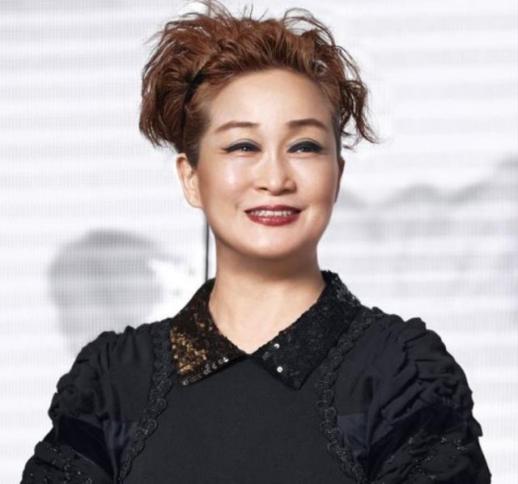 CJ vice chair among Forbes list of world's influential women over 50 SEOUL, January 22 (AJP) - Miky Lee, vice chair of South Korea’s CJ Group, has been named to Forbes’ “50 Over 50 Global 2026” list, becoming the only South Korean included this year. Forbes cited Lee’s role in helping propel Korean films and content onto the global stage, highlighting her long-standing influence on the international expansion of K-content. In its profile of Lee, Forbes described her as a central figure behind South Korea’s rise as a global content powerhouse. It noted her early investment in DreamWorks and her role as an executive producer of “Parasite,” the first non-English-language film to win the Academy Award for best picture. Launched in 2021, the “50 Over 50” list recognizes women aged 50 and older whose achievements have broken barriers across industries. This year’s honorees come from 36 countries and fields ranging from aviation and architecture to finance and entertainment. Other figures named on the list include Japan’s first female Prime Minister Sanae Takaichi, Oscar-winning actor Penelope Cruz, and Rei Kawakubo, founder of fashion label Comme des Garçons. * This article, published by Aju Business Daily, was translated by AI and edited by AJP. 2026-01-22 16:28:23