
Journalist

AJP
-
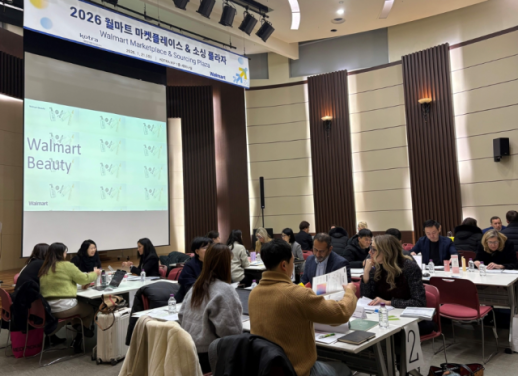 Walmart sends senior delegation to Seoul to expand shelf presence of K-beauty as U.S. demand rises SEOUL, January 22 (AJP) - As Korean beauty products climb U.S. sales rankings, retail giant Walmart is moving to expand their shelf presence, dispatching senior buying executives to Seoul to scout new K-beauty brands. According to the Korea Trade-Investment Promotion Agency (KOTRA) on Thursday, a twelve-member Walmart buying delegation — including six vice presidents and senior purchasing executives — visited Seoul this week to hold one-on-one business consultations with local cosmetics companies. The visit reflects surging demand in the U.S. market. South Korea’s beauty exports rose 12.3 percent last year to a record $11.4 billion, with shipments to the United States accounting for the largest share at nearly 20 percent, or $2.19 billion. For the first time, exports to the U.S. surpassed those to China. The shift is prompting offline retailers to step more aggressively into the U.S. beauty market, traditionally dominated by established specialty chains such as Sephora. CJ Group’s beauty retailer Olive Young is set to open its first U.S. brick-and-mortar store in Pasadena, California, in May 2026, marking its formal entry into the world’s largest beauty market. The company has said the U.S. launch will focus primarily on skincare products, reflecting global demand trends and long-standing consumer perceptions of K-beauty. Walmart has identified K-beauty as a potential growth driver for its beauty division, prompting the retailer to send key decision-makers to assess product competitiveness and market fit, KOTRA said. A total of 57 Korean cosmetics companies, pre-screened and handpicked by KOTRA, participated in the consultations, presenting skincare and functional beauty products tailored to U.S. consumer demand. At Walmart’s request, the list of participating firms was not disclosed due to confidentiality concerns. “This was an exceptional case,” a KOTRA official said. “It was the first time such a large number of senior decision-makers participated in a single program, and we hope to make this a regular initiative and further strengthen it.” The official added that discussions with Walmart began during last year’s Korean Wave Expo in New York. “We previously held talks with Walmart at the New York expo,” the official said. “Given the retailer’s strong interest in K-beauty and consumer products, the needs of both sides aligned particularly well this time.” Walmart plans to first test consumer response through its online platform before considering expansion into physical stores across the U.S. according to KOTRA. Several participating companies said the consultations offered rare access to U.S. retail decision-makers at a time of shifting global trade conditions. Walmart officials, meanwhile, said Korean beauty brands demonstrated strong product quality and competitiveness during the meetings. KOTRA said it aims to build a longer-term cooperation framework with Walmart, supporting Korean firms’ entry into the retailer’s online marketplace and, eventually, its nationwide brick-and-mortar network. 2026-01-22 11:44:04
 -
 KOSPI hits historic 5,000-point milestone, following Trump's tariff relief SEOUL, January 22 (AJP) - South Korea's benchmark KOSPI crossed the historic milestone of 5,000 points, just minutes after the day's trading began on Thursday. The milestone, which came for the first time since the country's stock market began trading some 70 years ago, was followed by gains on the Wall Street after U.S. President Donald Trump said he would not proceed with previously threatened tariffs on European countries, easing global trade uncertainty. The rally expanded beyond semiconductors, with gains spreading to other major sectors. The junior KOSDAQ also rose 1.38 percent, reaching 964.40 by around 11 a.m. Individuals bought a net 127.3 billion won ($86.8 million), joined by institutions with net purchases of 28.5 billion won, while foreign investors sold a net 202 billion won. Among large-cap stocks, Samsung Electronics rose 3.81 percent to 153,200 won, SK hynix advanced 3.38 percent to 765,000 won, and LG Energy Solution gained 4.69 percent to 413,000 won. Samsung Life Insurance rose 1.6 percent to 177,500 won, while Samsung Biologics dropped 4.27 percent to 1,793,000 won. Auto-related stocks were mixed, Hyundai Motor advanced 1.91 percent to 559,500 won, continuing its upward momentum, while Kia down 1.69 percent to 169,200 won in the early trade. Defense and aerospace stocks declined, with Hanwha Aerospace down 0.99 percent at 1,302,000 won. Shipbuilding-related shares weakened, with HD Hyundai Heavy Industries falling 2.54 percent to 615,000 won and Hanwha Ocean sliding 2.05 percent to 138,600 won. Boosted by the KOSPI's historic milestone, the won strengthened, trading at 1,467.30 won per dollar. Elsewhere in Asia, Japanese shares were higher, with the Nikkei 225 Index gaining 1.71 percent to 53,679.48. China's Shanghai Composite rose 0.39 percent to 4,132.97. Hong Kong shares also traded 0.25 percent higher at 26,651.26. 2026-01-22 11:41:12
 -
 Record number of South Koreans reaped handsome profits from overseas stocks SEOUL, January 22 (AJP) - South Koreans who reported taxes on profits from overseas stock investments topped 500,000 for the first time, tax data reveals. According to data submitted by the National Tax Service to Park Sung-hoon of the main opposition People Power Party (PPP) and released on Thursday, some 523,709 people filed tax returns on profits earned in 2024, up from 207,231 a year earlier. Those who invest in overseas stock markets and sell them for profits are required to pay a 22 percent tax here on gains exceeding 2.5 million won (US$1,700). The increase was attributed to a bullish U.S. market that year, with the S&P 500 up 23.3 percent and the Nasdaq up 28.6 percent. Another factor is the growing interest in overseas stock investment among retail investors seeking higher returns, as profitability improved sharply. Total reported capital gains in 2024 reached 14.42 trillion won, up 303.1 percent from 3.58 trillion won the previous year, with average gains per person around 28 million won. U.S. stocks accounted for the largest share of their investment. According to the Korea Securities Depository, the value of U.S. stocks they held rose from US$44.2 billion in 2022 to $68 billion in 2023, $112.1 billion in 2024, and $163.6 billion by the end of last year. To encourage them to return to the domestic market, the Ministry of Economy and Finance is mulling a temporary tax incentive for those who sell overseas stocks and reinvest their profits in domestic assets, under a scheme to be tabled at the National Assembly next month. 2026-01-22 10:45:04
 -
 Editorial: AI Basic Act takes effect, and regulation is not an end but means South Korea’s Artificial Intelligence Basic Act on Thursday went into force. The Act merits attention not simply as the activation of another technology law, but as a civilizational marker. It reflects how a democratic, export-driven society chooses to situate artificial intelligence within the moral, legal and economic order of the twenty-first century. Artificial intelligence has already moved beyond the realm of innovation and into the architecture of everyday life. It now shapes decisions in finance, medicine, education, law and public administration. For years, efficiency and speed surged ahead, while accountability and ethical clarity lagged behind. Seen in this light, the enactment of a comprehensive AI framework is neither premature nor excessive. At its core, it is an attempt to restore balance between technological power and human responsibility. The Act’s greatest strength lies in its clear recognition that AI is no longer a neutral tool. By designating certain systems as “high-risk” and imposing obligations related to oversight, non-discrimination and explainability, the law affirms a foundational democratic principle: technology must serve human dignity, not erode it. For the elderly, persons with disabilities and digitally vulnerable populations, this legal recognition provides a long-overdue safeguard. Equally important, the law clarifies responsibility. The convenient excuse that “the algorithm made the decision” is no longer acceptable. Institutions and professionals that deploy AI systems must now answer for their outcomes. In sectors such as healthcare, finance and law, this shift will inevitably reshape operational practices. Governance of artificial intelligence becomes not optional, but essential. Yet an honest editorial must extend beyond praise. The true challenge lies not in the intention of regulation, but in its design, calibration and proportionality. One concern is the breadth of the “high-risk AI” classification. As currently structured, wide swaths of professional and public-service activity could fall under this category, regardless of actual risk levels. Regulation that fails to distinguish degrees of harm risks becoming blunt rather than precise. When everything is treated as high-risk, regulatory focus is diluted, and innovation is constrained without meaningfully improving safety. Another issue lies in the legal codification of explainability and transparency requirements that do not fully reflect the technical realities of large language models and deep-learning systems. These systems often operate through probabilistic inference rather than traceable causal reasoning. Mandating explanations that technology cannot meaningfully provide risks generating compliance paperwork rather than genuine accountability. Law must rest on technological reality, not aspiration. The Act’s emphasis on ex-ante controls—such as registration, pre-approval and prior inspection—also warrants scrutiny. Artificial intelligence advances through experimentation, iteration and failure. Heavy upfront regulation disproportionately burdens startups and smaller developers, raising barriers to entry and consolidating advantages for firms large enough to absorb compliance costs. This risk becomes more acute in a global context. The European Union, whose regulatory philosophy heavily influenced Korea’s framework, possesses market scale and political cohesion that allow regulation itself to function as leverage. South Korea does not enjoy that advantage. It remains structurally weaker in foundational AI models and global platforms compared with American technology giants. Under these conditions, stringent domestic regulation may weaken local firms while global players adapt, absorb costs or circumvent constraints. Regulation intended to protect technological sovereignty could, paradoxically, erode it. The guiding principle must therefore be simple and rooted in common sense: regulation is a means, not an end. Its purpose is to protect citizens, preserve trust and enable sustainable innovation—not to signal virtue or entrench bureaucratic control. A democratic society grounded in truth, justice and freedom must avoid two extremes. One is technological laissez-faire, which sacrifices human dignity to speed and profit. The other is regulatory overreach, which stifles creativity and shifts advantage to actors least accountable to the public. South Korea’s AI Basic Act points in the right direction, but it must not be treated as a finished monument. In a fast-moving technological era, law must remain living, revisable and humble. Post-hoc accountability, sector-specific calibration, expanded regulatory sandboxes and continuous impact assessments are not concessions—they are necessities. The real test begins after enforcement. Will lawmakers and regulators monitor real-world effects with intellectual honesty? Will they revise provisions that inhibit innovation without enhancing safety? Will they distinguish symbolic regulation from effective governance? History suggests that societies succeed not by choosing between innovation and ethics, but by insisting on both. Artificial intelligence will shape the next generation of economic and social power. How it is governed will determine whether that power expands freedom or diminishes it. On this first day of enforcement, the question is not whether South Korea has regulated AI—but whether it will regulate wisely, courageously and with the confidence to correct itself. That, ultimately, is the measure of a mature democracy in the age of intelligent machines. 2026-01-22 10:44:03
 -
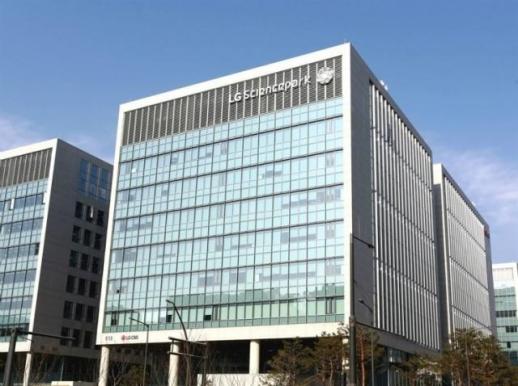 AI that can shop and pay on its own successfully tested in South Korea SEOUL, January 22 (AJP) - South Korean IT services firm LG CNS has completed what it says is the country’s first demonstration of an automatic payment system in which artificial intelligence not only chooses what to buy but also pays for it, using a blockchain-based digital currency platform overseen by the central bank. The test, conducted with the Bank of Korea, linked so-called “agentic AI” — software designed to act autonomously once given a goal — with digital deposit tokens as part of Project Hangang, the central bank’s pilot program for a potential BOK digital currency. The goal, according to LG CNS on Thursday, was to explore whether autonomous AI agents could safely and efficiently handle real-world payments, a step toward a future in which machines increasingly transact with one another with little or no human involvement. To illustrate the concept, the company used a scenario familiar to many freelancers: a digital content creator searching for images or audio clips for a project. Typically, that process involves navigating multiple platforms, comparing prices and quality, and repeatedly logging in to complete payments. In the demonstration, those tasks were handled by two AI programs — a “buyer agent” and a “seller agent.” After a user delegated authority, the buyer agent searched for suitable content, compared options, selected a product and completed payment by transferring digital deposit tokens to the seller’s electronic wallet on the blockchain platform, LG CNS said. Industry officials are watching such experiments closely as interest grows in “agentic commerce,” a model in which AI agents act on behalf of users or companies and increasingly transact directly with each other. Proponents argue that as AI-driven transactions multiply, demand will rise for small-value, high-frequency payments that are inefficient for humans to manage manually. LG CNS said blockchain-based digital currencies could provide an alternative to traditional card payments or bank transfers in such settings, offering lower fees and near-instant settlement. The company serves as the Bank of Korea’s main contractor for Project Hangang, leading blockchain technology development and platform construction. As part of the initiative, LG CNS previously conducted a real-transaction test of deposit tokens from April to June last year involving about 80,000 customers at seven commercial banks. The company said it is preparing a follow-up pilot to distribute government subsidies through a digital-currency platform and is expanding into other blockchain-based finance businesses, including tokenized securities. “We have confirmed the technical feasibility of an automatic payment structure using agentic AI,” said Kim Hong-geun, vice president and head of LG CNS’s digital business division. “We will continue to support the Bank of Korea as a technology partner as it prepares future payment infrastructure.” 2026-01-22 10:40:27
 -
 Korean metals company LS MnM posts record revenue in 2025 SEOUL, January 22 (AJP) - South Korean metals company LS MnM posted record results last year, with revenue approaching 15 trillion won, supported by higher metal prices and the dollar's strength. In a regulatory filing released via parent company LS Corp., Thursday, LS MnM reported revenue of 14.94 trillion won in 2025, up 23.3 percent from a year earlier. Net profit rose 39.9 percent to 106.7 billion won. The company said profitability improved even as fees for refining copper cathodes declined sharply from the previous year, citing a significant rise in metal prices and favorable currency movements. It also pointed to the registration of its flagship copper cathode product on the New York Mercantile Exchange, which marked its entry into the U.S. market. Operating profit, however, fell 29.2 percent from a year earlier to 224.8 billion won. LS MnM attributed the decline to more stable exchange-rate conditions during the year. In 2024, a widening gap between exchange rates applied to raw material purchases and finished product sales had boosted operating profit, the company said. The company said it is operating business systems designed to reduce earnings volatility stemming from fluctuations in exchange rates and metal prices, adding that profit before corporate income tax provides a more appropriate measure of its underlying performance than operating profit. * This article, published by Aju Business Daily, was translated by AI and edited by AJP. 2026-01-22 10:00:51
 -
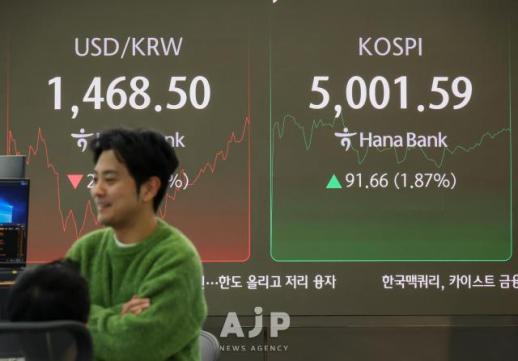 KOSPI touches landmark 5,000 mark SEOUL, January 22 (AJP) - South Korea’s benchmark KOSPI in its 46-year history has touched the 5,000 mark Thursday from strong retail push. The four-digit milestone was reached just two months after the index broke above 4,000, reflecting accelerating momentum fueled by strong domestic participation. After pausing briefly following a 12-day uninterrupted rally, the KOSPI rebounded as easing geopolitical tensions — triggered by U.S. President Donald Trump’s withdrawal of Greenland-related threats — boosted global risk appetite after overnight gains on Wall Street. Retail investors bought more than 300 billion won worth of shares in early trading. Gains were led by heavyweight stocks including Hyundai Motor, Samsung Electronics and SK hynix. The KOSPI opened 1.57 percent higher from the previous session at 4,987.06 and quickly breached the 5,000 threshold in early dealings. As of 9:06 a.m., the index was up 2.06 percent at 5,011.09. The milestone comes roughly two and a half months after the KOSPI first closed above 4,000 in October last year. 2026-01-22 09:52:20
 -
 AI storage demand lifts South Korea's FADU with record contracts SEOUL, January 22 (AJP) - Data center semiconductor firm FADU said on Thursday it has secured a 47 billion won ($35 million) order for finished solid-state drive (SSD) products from Taiwan-based Macnica Galaxy, marking the largest single contract in the company’s history. In a regulatory filing, FADU said the deal revises a previously disclosed 21.5 billion won contract announced on Nov. 5, reflecting a larger supply volume and higher SSD prices. The company said the order exceeds its total annual revenue of 43.5 billion won and underscores rising demand for its data center storage products. Under the contract terms, half of the contract value will be paid in March, with the remaining amount expected to be recognized as revenue in the second half of this year. Earlier this month, FADU disclosed it had signed a separate 20.3 billion won supply contract for enterprise SSD controllers with an overseas NAND flash memory manufacturer, also its largest single controller supply deal to date. Together, the two contracts total 67.3 billion won, close to FADU’s cumulative revenue of 68.5 billion won recorded through the third quarter of last year. The company said it expects to return to profitability from the first quarter, supported by a growing pipeline of large orders. FADU added that it secured five contracts worth 10 billion won or more in the second half of last year. Chief Executive Lee Ji-hyo said performance bottlenecks in artificial intelligence data centers are increasingly concentrated in storage and SSDs. “Our technology and customer trust are starting to deliver results,” Lee said. * This article, published by Aju Business Daily, was translated by AI and edited by AJP. 2026-01-22 09:47:11
 -
 Budget minister nominee likely to face confirmation hearing later this week SEOUL, January 22 (AJP) - A confirmation hearing for Lee Hye-hoon, a nominee to head the newly established Ministry of Planning and Budget, is likely to be held later this week. The hearing, which was supposed to be held earlier this week, could not take place as the main opposition People Power Party (PPP) boycotted it, citing her failure to submit all requested documents. Once she submits them, the hearing could take place on Friday as the ruling and opposition parties tentatively agreed. The three-term lawmaker from the conservative party has faced mounting pressure to step down, as a string of allegations surfaced shortly after President Lee Jae Myung tapped her late last month. The allegations include tantrums against subordinates, exposing her anger management problems, as well as suspicious real estate dealings and alleged special treatment of her son during his mandatory military service. 2026-01-22 09:35:16
 -
 EXCLUSIVE: Korea–India summit under discussion - India's envoy to Seoul SEOUL, January 22 (AJP) - India may be the next state-visit destination for South Korean President Lee Jae Myung, as Seoul looks to build on its back-to-back trips to China and Japan in 2026 by turning a "Special Strategic Partnership" — long cited but not fully realized for more than a decade — into a concrete industrial alliance with the world's most populous country, growing at a pace of more than 7 percent, across shipbuilding, semiconductors, artificial intelligence and renewable energy, according to India's ambassador to South Korea. "I think it is the Korean side's turn to visit. So we would like to have President Lee visit India at early mutual convenience," Ambassador Gourangalal Das told AJP in his first interview with a Korean media outlet. Das said he was optimistic about an "early visit," and when asked whether the summit could take place within the year, replied, "hopefully sooner than that," while declining to provide further details. Working-level discussions are already under way for what he described as "intense exchanges" between the two sides. Das, who formally began his duties after presenting credentials in December, said preparations for outcome-oriented high-level meetings have effectively become his priority. Key pillars under discussion include cooperation in shipbuilding, AI, semiconductors and energy, he said. "Our prime minister has already met President Lee twice, but those were on the sidelines of multilateral events," Das noted. "We hope that very soon we will also have bilateral exchanges at high levels. There have already been several ministerial-level visits as well." Shipbuilding at the top of India's industrial agenda Das framed shipbuilding as the clearest area where India's policy push and Korea's industrial strengths intersect most directly. On the economic front, he said New Delhi has placed shipbuilding near the top of its industrial priorities and recently launched what he described as "a very attractive incentive package." "There is a huge demand for ships in India," Das said. "Korea brings a lot more value in terms of technology and competence, and it is a good, trusted partner." India is backing that ambition with one of its most comprehensive industrial policy drives in decades. In its Union Budget announced last year the government unveiled a multi-layered shipbuilding strategy combining large-scale financing, cost support and cluster-based industrial development, aligned with its long-term road maps — Maritime India Vision 2030 and Amrit Kaal Vision 2047 — which aim to place India among the world’s top 10 shipbuilding nations by 2030 and the top five by 2047. A cornerstone of the initiative is the Maritime Development Fund (MDF), planned with a corpus of Rs 25,000 crore (about $3 billion). The government will contribute 49 percent, with the remainder expected from ports and private investors. The fund is designed to provide long-term, lower-cost financing for shipbuilding and ship repair — a structural bottleneck that Indian yards have long cited. Alongside this, New Delhi is revamping the Shipbuilding Financial Assistance Policy (SBFAP) to offset cost disadvantages faced by domestic yards, including mechanisms such as credit notes linked to shipbreaking at Indian facilities. Large vessels above a certain size are also being reclassified as infrastructure assets, unlocking easier access to financing and signaling a shift in how shipbuilding is positioned within India’s industrial ecosystem. India is also accelerating the development of integrated shipbuilding clusters. Eight maritime clusters — five new and three expanded — are planned across coastal states including Andhra Pradesh, Gujarat and Odisha, combining shipyards with equipment manufacturing, logistics, training and ancillary services to raise productivity and meet global quality standards. "We would like Korean companies to avail of these incentives and opportunities and come out in a big way," Das said. He added that India is already in discussions with all three major Korean shipbuilders — HD Korea Shipbuilding & Offshore Engineering (HD KSOE), Hanwha Ocean and Samsung Heavy Industries (SHI) — ranging from vessel orders to the possibility of hosting a Korean shipyard in India. Korean firms have begun laying groundwork. HD Hyundai Heavy Industries has signed memorandums of understanding with state-owned Cochin Shipyard for technology transfer and joint bidding, and with BEML for crane business cooperation, as it expands shipbuilding and offshore partnerships in India. For Korean shipbuilders facing intensified price competition from China, India offers both an additional manufacturing base and access to a fast-growing market. Indian policymakers, for their part, see foreign partnerships and technology transfer as essential to lifting productivity and moving into higher-value segments. Chips, AI and energy: "the next big potential" Semiconductors form another core pillar. While India's chip ecosystem is still "building," Das stressed that the industry requires "a huge number of ecosystem players," opening space not only for large Korean conglomerates but also for small and medium-sized firms. "Even if not the big semiconductor giants, we see a lot of potential for small and medium-sized Korean players to help make that ecosystem grow," he said, calling semiconductors a high priority for the Indian government. Das repeatedly emphasized the complementarity between the two economies. "Compute capacity can be fully harnessed only if you have data and application potential," he said. "India has all of that. This is a good field for us to work together, and it could become the next big potential in India–Korea relations." High-level exchanges, he noted, typically bring a mass-scale business delegation, and India hopes to use the momentum to broaden cooperation beyond a narrow set of industries. "I do not want to limit my answer to just one or two industries," Das said. "Both our countries are focusing on AI and the different aspects of AI." India is preparing to host the fourth AI Impact Summit next month, following earlier editions in Bletchley Park, Seoul and Paris. Das has argued publicly that India wants AI to deliver "economic growth through social inclusion, rather than social polarization." Asked about Korea's interest in developing a domestic, OpenAI-style model and whether Indian talent could come to Korea, Das linked the issue to India’s sovereign AI initiative. "India is a very diverse country," he said. "We want AI systems that reflect the essence of India, including its diversity, rather than making society very uniform and homogeneous." India's model, he said, is being developed as multimodal, supporting audio and visual interfaces and multiple Indian languages, to reach not only elite engineers but also the roughly 300 million people who still lack easy access to digital tools. Entertainment, students — and the 'paradox' of people-to-people ties Das also pointed to K-content and entertainment as an area of untapped cooperation, noting that both countries bring complementary strengths. On people-to-people ties, he highlighted what he called a "paradox" in Korea–India relations. "Despite Korea being so good in so many areas, there are only about 3,000 Indian students in the country," he said. "Indian students and researchers want to experience life as global citizens." Das said clearer post-study work pathways, broader access to skill-based employment, and stronger incentives for Korean-language learning would be critical to changing that equation. Strategic autonomy, Act East — and why Korea matters On geopolitics, Das stressed India's long-standing commitment to strategic autonomy, including amid fluctuations in U.S. politics. "We don't want to create our foreign policy based on individuals," Das said when asked about frictions with Washington under the Trump administration. "We have, of course, very strong and resilient relations with the United States." "I don't want you to be too focused on headline news," he added. "Irrespective of what might happen on a particular day or what gets people's attention, our relationship with the U.S. remains very strong and very comprehensive." Das said India's foreign policy has consistently prioritized independence. "We have always followed a very independent foreign policy which believes in maintaining our strategic autonomy," he said. "We have not formed any alliance with any country. We try to build good relations with all countries, and whenever differences arise, our approach has always been to deal with them bilaterally, without the intervention of others." Positioning Korea firmly within India's regional strategy, Das underscored the importance of East Asia to India's long-term growth outlook. "We look at the East Asia region as very critical to our own growth prospects," he said. "That is why for the past decade or so we have been promoting the Act East policy — of which Korea is very much at the center." India and Korea, he noted, share interests across maritime security, defense, space cooperation and regional stability, and he described Korea as a core partner in translating India's Act East policy into concrete economic and industrial outcomes. Against that backdrop, Das said the recent momentum in high-level exchanges would offer a chance to expand trade and investment — which he argued remain far below potential — and to push bilateral ties beyond a narrow set of projects into a more durable industrial and strategic partnership. 2026-01-22 08:51:28