
Journalist

AJP
-
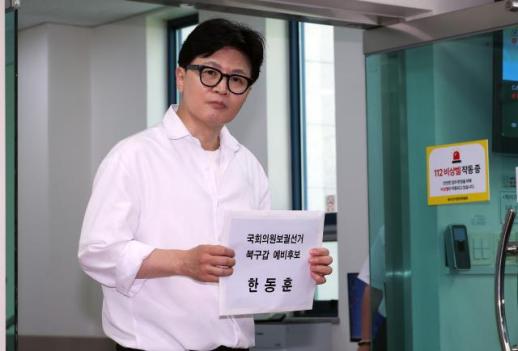 Han Dong-hoon Registers as Preliminary Candidate in Busan Buk-gu Gap By-election, Vows to Win Han Dong-hoon, former leader of the People Power Party, registered on May 4 as a preliminary candidate in the parliamentary by-election in Busan’s Buk-gu Gap district, vowing to win and “check the runaway Lee Jae-myung administration.” After completing his filing at the Buk-gu Election Commission office in Busan that afternoon, Han told reporters he would “win this by-election” and “change Busan’s future and South Korea’s future to the end.” He said he would push Buk-gu Gap to “the next stage” and rebuild a conservative camp he described as having lost its direction. Han said his victory would help restore a conservative bloc capable of properly checking the Lee administration. He also argued it would “normalize” what he called deviations by a People Power Party leadership faction led by Jang Dong-hyeok. He said Buk-gu Gap has ranked low among Busan’s 18 constituencies for 20 years, and pledged to change that, saying he would make the district “Busan’s No. 1 priority” and “South Korea’s No. 1 priority.” Criticizing Democratic Party candidate Ha Jung-woo, Han said Ha talks about physical artificial intelligence and port systems, but “Is there a port in Busan’s Buk-gu?” Han added that introducing physical AI in Buk-gu would cost workers their jobs, and said politicians should tailor policies to residents rather than forcing their own specialties onto a district. On possible unification with the People Power Party candidate, Han said he wanted to question what he called a mindset of trying to block him even if it means losing to the Democratic Party. He said President Lee Jae-myung is pushing to cancel the prosecution in his own case, and accused the Jang-led faction of focusing only on stopping Han instead of checking Lee. “That is not proper politics,” he said. Han added that Lee’s move to cancel the prosecution in his own case is “a clear ground for impeachment,” and said he would work with the public to stop it.* This article has been translated by AI. 2026-05-04 16:31:38
 -
 Samsung Electronics union quits joint labor front, citing internal conflict A rift among labor unions at Samsung Electronics has become official after a union based in the company’s Device Experience (DX) division decided to leave the joint labor front. Samsung Electronics Union Donghaeng, known as the Donghaeng Union, said May 4 it had formally notified the National Samsung Electronics Union and the Samsung Electronics branch of a cross-company union that their joint bargaining group for 2026 wage talks had ended. Donghaeng said the decision was driven by deepening conflict and a breakdown of trust among the unions. “Our union proposed and requested agenda items for the rights and interests of all members, not just those in a specific area, but your unions have not responded at all,” Donghaeng said in a statement. “You have not even shown a willingness to consult, and our views for the benefit of all members have not been reflected.” According to Samsung’s labor unions, the three unions — the cross-company union, the National Samsung Electronics Union and Donghaeng — formed a joint bargaining group in November to negotiate 2026 wages. After final talks broke down, the group shifted in March into a joint struggle headquarters and announced plans for a general strike on the 21st to press demands including improvements to performance bonuses. Donghaeng is the company’s third union, with about 2,300 members, most of them in the DX division, which handles businesses such as home appliances, smartphones and TVs. Donghaeng said it had faced “continuous attacks and disparagement” and that mutual respect and trust had been “seriously damaged,” citing what it called excessive and malicious language, including being labeled a “company-friendly union.” The union said it had repeatedly sought corrections over disparaging remarks and what it described as one-sided decision-making within the joint struggle headquarters, but saw no improvement and chose to end its participation. The withdrawal is expected to open a new phase in labor-management relations at Samsung Electronics. The joint front had aimed to unify union voices to pressure management, but its cohesion has weakened ahead of the planned strike. The joint struggle headquarters has not issued a separate official response and plans to proceed with the general strike on the 21st. Donghaeng said it will formally notify management of its withdrawal on the 6th and then seek separate bargaining.* This article has been translated by AI. 2026-05-04 16:30:12
 -
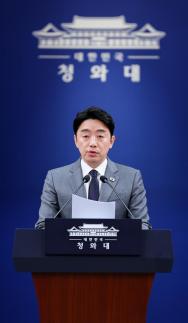 Presidential Chief of Staff Kang Hoon-sik orders steps to curb favoritism in highway rest stops Kang Hoon-sik, the presidential chief of staff, on Monday ordered steps to recover improper gains and refer suspected violations for investigation following controversy over a group of retired Korea Expressway Corp. employees operating highway rest stops. He also instructed the Ministry of Land, Infrastructure and Transport to conduct a comprehensive inspection of all public institutions and draw up measures to prevent preferential treatment for former officials. Kang made the remarks during a senior aides meeting at Cheong Wa Dae on Monday, according to a written briefing by deputy spokesperson Ahn Gwi-ryeong. Citing cases in which the retirees’ group, Doseonghoe, operated highway rest stops unrelated to its founding purpose and distributed what he described as excessive profits, Kang called it “an act that abandoned the responsibilities of a public institution.” He also directed the Ministry of Economy and Finance to check all public institutions for similar cases and prepare measures to prevent a recurrence. Kang separately ordered stronger measures against illegal online gambling by youths. Citing a 2025 survey by the Korea Center on Gambling Problems, he said about 157,000 youths — 4% of all adolescents — had experienced illegal gambling. He warned it was a “threat to social safety” that could go beyond addiction to lead to dropping out of school, family conflict and secondary crimes. Kang said a “youth gambling self-reporting system” being run by eight provincial and metropolitan police agencies, including the Daejeon Metropolitan Police Agency, was judged to significantly reduce repeat gambling. He asked the National Police Agency to actively review expanding the program nationwide. He also instructed the National Police Agency, the Education Ministry and other related agencies to devise specific steps to raise self-reporting, including reduced penalties or lighter school discipline.* This article has been translated by AI. 2026-05-04 16:27:18
 -
 Hyundai Motor April Global Sales Fall 8% to 325,589 Vehicles Hyundai Motor said Sunday that its global vehicle sales in April totaled 325,589 units, down 8% from a year earlier. Domestic sales fell 19.9% to 54,051 vehicles, while overseas sales slipped 5.1% to 271,538, the company said. In South Korea, Hyundai sold 18,326 sedans, including 6,622 Grandeurs, 5,754 Sonatas and 5,475 Avantes. Sales of recreational vehicles totaled 19,284, led by the Santa Fe at 3,902, the Tucson at 3,858, the Palisade at 3,422, the Kona at 2,559 and the Casper at 1,142. The Porter sold 4,843 units and the Staria 3,039. Sales of mid- to large-size buses and trucks totaled 1,562, Hyundai said. Genesis, the company’s luxury brand, sold 6,868 vehicles, including 2,523 G80s, 2,068 GV70s and 1,693 GV80s. A Hyundai official said April sales were hurt by disruptions in parts supplies from partner companies, which reduced production of key models such as the Palisade and G80, and by demand from customers waiting for new models. The official said Hyundai plans to expand sales by rolling out a large number of new models this year, starting with a facelifted Grandeur.* This article has been translated by AI. 2026-05-04 16:26:26
 -
 Jeju Dream Tower tops 60 billion won in April revenue as casino net sales hit record In April, typically a slow month, Jeju Dream Tower posted its strongest monthly performance yet, topping 60 billion won in combined casino and hotel revenue for the first time. The resort extended the momentum seen in the first quarter, with the casino driving results as profitability moved closer to levels seen in Macau, analysts said. ◆ Drop holds above 200 billion won; what a 22.6% hold rate shows Lotte Tour Development said Monday that its casino and hotel businesses generated a combined 63.492 billion won in revenue last month. The casino led the gains: April casino net sales totaled 48.842 billion won, up 48.5% from a year earlier. Key indicators for casino performance include visitor numbers, drop (the amount customers exchange for chips) and the hold rate. The casino logged 58,534 visitors in April, averaging 1,951 a day, underscoring a steady mass-market customer base. Table drop came to 205.339 billion won, remaining firmly in the 200 billion won range. Industry attention has focused on the 22.6% hold rate, which reflects the share of chip exchanges retained as revenue. The figure is approaching the average hold rate of nine large integrated resorts in Macau’s Cotai area (26.1% as of 2025), suggesting improved table efficiency and that VIP marketing is gaining traction. ◆ Foreign guests top 77%; casino-hotel cycle strengthens Casino growth has been supported by the hotel business at Grand Hyatt Jeju. Hotel revenue was 14.65 billion won, and occupancy rose to 87.6%. The share of foreign guests climbed to a record 77.3%, up from 65.7% in April last year. With more flights and more independent travelers, foreign hotel guests have increasingly flowed into the casino, reinforcing the resort’s stay-and-play model. ◆ After losses, operating leverage comes into view Lotte Tour Development opened during the pandemic in late 2020 and faced heavy fixed costs, including interest and operating expenses, as travel routes were restricted. The company has since entered a clearer turnaround, following first-quarter revenue of 156.7 billion won and cumulative revenue of 220.2 billion won from January through April. Casinos and hotels require large upfront investment and carry high fixed costs, but once they pass break-even, much of additional revenue can flow to operating profit through operating leverage. Experts say Jeju Dream Tower has moved into that phase. A company official said demand tied to the Labor Day holiday began to be reflected from late April. During the May Labor Day holiday period, the resort sold as many as 1,550 rooms a day out of 1,600, effectively running near full occupancy, the official said. The official added that the strong run is expected to continue through midmonth even after the golden holidays in South Korea, China and Japan end, raising expectations for another earnings surprise.* This article has been translated by AI. 2026-05-04 16:25:04
 -
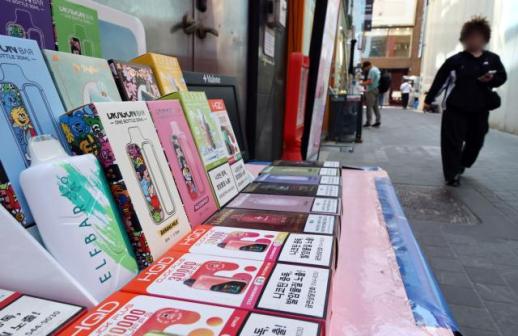 Finance Ministry Refers Three Online Sellers of High-Strength Nicotine Solution for Investigation The Ministry of Economy and Finance said it has identified three companies that sold high-strength nicotine solution online and has asked investigators to look into the cases. The ministry said Monday it requested investigations by the Daejeon Metropolitan Police Agency and the Gyeonggi Nambu Provincial Police Agency into three firms that advertised and sold high-concentration nicotine solution through online sites after the revised Tobacco Business Act took effect April 24. Officials said they confirmed indications the companies sold nicotine solution and flavorings for making e-liquid on the same sites and encouraged customers to mix them for use in e-cigarettes. Under the revised law, the definition of tobacco ingredients was expanded from “tobacco leaves” to “tobacco or nicotine.” As a result, products made for inhalation using nicotine as an ingredient are treated as tobacco, and manufacturers must obtain government approval. The law also makes it punishable to sell tobacco to consumers without being designated as a tobacco retailer, and it bars even authorized retailers from selling tobacco online or by mail. The ministry said the move aims to stop online distribution of high-strength nicotine solution that consumers can easily use for e-cigarettes. It warned that handling high-concentration nicotine solution without protective equipment poses a high risk of accidents, including skin contact or accidental ingestion. The ministry said it will continue to monitor online distribution with relevant agencies and will take strict action, including filing complaints with investigative authorities when violations are suspected.* This article has been translated by AI. 2026-05-04 16:21:09
 -
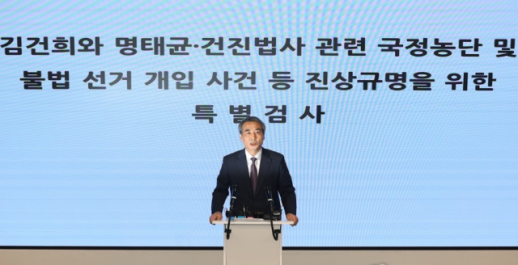 Kim Keon Hee case heads to Supreme Court as special counsel appeals partial acquittals Special Counsel Min Jung-gi’s team has taken to the Supreme Court the case of Kim Keon Hee, who was sentenced on appeal to four years in prison over allegations including Deutsche Motors stock manipulation and receiving valuables tied to the Unification Church. The special counsel said the appeals court misunderstood key legal issues in acquitting Kim on parts of the case. Kim’s side has also appealed, setting up a final round of arguments over guilt and sentencing. According to the legal community on Monday, the special counsel filed its appeal with the Seoul High Court’s Criminal Division 15-2, which heard Kim’s second trial. Kim’s attorneys filed their appeal on April 30. In a separate notice, the special counsel said it is challenging the court’s not-guilty ruling on parts of the Capital Markets Act charge, where the panel said some counts could not be proven because illicit profits could not be calculated. It also disputed the acquittal on the Political Funds Act charge, saying the court erred in its factual and legal assessment of Myung Tae-kyun’s provision of opinion polls. The special counsel said the ruling contained violations that affected the judgment, including a misunderstanding of legal principles and breaches of evidentiary rules and common experience. On April 28, the appeals court sentenced Kim to four years in prison and fined her 50 million won on charges under the Capital Markets Act, the Political Funds Act and influence-peddling bribery under the Act on the Aggravated Punishment of Specific Crimes. The court ordered the forfeiture of one seized Graff diamond necklace and imposed an additional 20.94 million won in collection. The prison term was increased by two years and four months from the first trial’s sentence of one year and eight months. A central point in the appeals ruling was partially overturning the first court’s acquittal on the Deutsche Motors stock-manipulation allegation. The panel found Kim provided Black Pearl Invest with a securities account holding 2 billion won in October and November 2010 and sold 180,000 Deutsche Motors shares, concluding those acts amounted to participation in price manipulation. It also said she had at least accepted the possibility the account could be used for manipulation. The court also expanded the scope of guilt on the Unification Church-related influence-peddling bribery charge. It found Kim guilty of receiving, from April to July 2022, two Chanel bags, a Graff necklace and Cheonsusam concentrated tea along with requests to support church-related issues. However, the court again acquitted Kim of violating the Political Funds Act over allegations she received opinion polls worth 270 million won for free from Myung and used influence over nominations. The panel said it was difficult to conclude she gained a property benefit, noting Myung provided polls to multiple people. That acquittal is expected to be a key issue at the Supreme Court. The special counsel is contesting the Political Funds Act acquittal and the partial acquittal under the Capital Markets Act, while Kim’s side is expected to deny the findings that she took part in stock manipulation and accepted valuables. The appropriateness of the sentence will also be reviewed. The special counsel has also appealed in related cases. An appeal was filed April 30 in the case of Yoon Young-ho, a former Unification Church world headquarters chief, who was indicted on allegations including providing valuables while seeking favors on church issues involving Kim and People Power Party lawmaker Kwon Seong-dong. Yoon was sentenced on appeal to one year and six months in prison. In addition, the case of Kim Ye-seong, described as a key figure in the so-called “butler gate,” will also go to the Supreme Court. The appeals court acquitted Kim and dismissed part of the prosecution, and the special counsel appealed that ruling.* This article has been translated by AI. 2026-05-04 16:19:39
 -
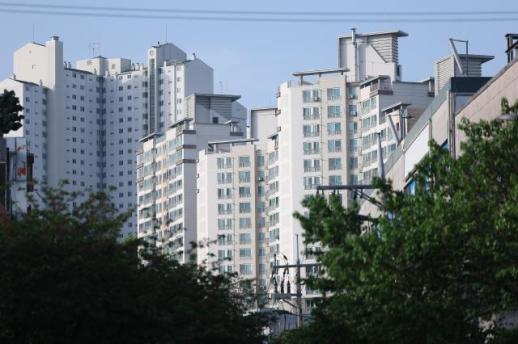 Big 5 Banks’ Mortgage Loans Post Biggest Gain in 8 Months as Household Debt Rises Mortgage loan balances at South Korea’s major commercial banks rose by the most in eight months, driven largely by policy-backed lending such as jeonse deposit loans and Didimdol loans, the financial sector said Monday. As of the end of April, outstanding mortgage loans at the five largest banks — KB Kookmin, Shinhan, Hana, Woori and NH NongHyup — totaled 612.2443 trillion won, up 1.9104 trillion won from the end of March, according to financial industry data released Monday. It was the biggest monthly increase since August last year, when the balance rose 3.7012 trillion won. Overall household lending also increased. The five banks’ household loan balance stood at 767.2960 trillion won at the end of April, up 1.5670 trillion won from a month earlier — the largest rise since October last year, when it increased 2.5270 trillion won. Industry officials said the mortgage loan increase appears to reflect growth in policy-backed loans rather than a broad recovery in housing transactions. “This month, the increase was led by jeonse-related loans and policy-backed products such as Didimdol loans,” a financial industry official said. “It’s hard to say real estate transactions are high overall, but deals have continued, mainly for apartments on the outskirts of Seoul, and that has pushed up policy-backed lending.” Mortgage loan balances have fluctuated this year, falling 1.4836 trillion won in January, rising 596.7 billion won in February, then slipping 387.2 billion won in March before the increase widened in April. Group loans to individuals rose 220.1 billion won, turning higher for the first time since September 2024. Unsecured personal credit loans, however, swung to a 318.2 billion won decline in April after rising 347.5 billion won in March. Loans to individual business owners increased 362.2 billion won, extending gains for a third straight month. Deposit balances were mixed by product. Time deposits totaled 937.1834 trillion won at the end of April, down 273.1 billion won from a month earlier. Installment savings deposits rose 409.5 billion won to 46.5673 trillion won. Demand deposits, often treated as standby funds, fell 3.3557 trillion won to 696.5524 trillion won, turning lower for the first time in three months.* This article has been translated by AI. 2026-05-04 16:18:23
 -
 Renault Korea April Sales Drop 40.5% as Exports Slump on Global Uncertainty Renault Korea said Sunday that its total April sales fell 40.5% from a year earlier to 6,199 vehicles, as exports slumped amid worsening international conditions. Domestic sales dropped 23.4% to 4,025 units, while exports plunged 58% to 2,174, the company said. Cumulative sales for January through April totaled 22,820 vehicles, down 20.2% from the same period a year earlier. Hybrids accounted for 3,527 units of April domestic sales, or 87.6% of the total. The FILANTE HEV and Grand Koleos HEV sold 2,139 and 1,337 units, respectively, representing 100% and 86.3% of their model sales. Arkana HEV sales totaled 1,337 units, or 15.2% of overall domestic sales. A Renault Korea official said April results weakened as economic uncertainty persisted, citing higher oil prices linked to the recent war in the Middle East. The official said the company will expand customer promotions starting in May, pointing to the proven competitiveness of its HEV E-Tech models. In April exports, the Grand Koleos posted 894 units, the Arkana 260 and the Polestar 4 1,020, the company said. Another company official said external uncertainty remains but Renault Korea will work to avoid disruptions in export volumes by optimizing production and shipping schedules.* This article has been translated by AI. 2026-05-04 16:15:00
 -
 KOSPI Hits Record Above 6,900 as Analysts Debate Whether Rally Can Last in May After surging more than 30% in April, South Korea’s benchmark KOSPI kept running in May, setting another record on the first trading day of the month. The move has undercut the market adage “Sell in May,” but investors are watching whether the rally can hold after such outsized gains, which have often been followed by sharp pullbacks. According to the Korea Exchange, the KOSPI on May 4 jumped 338.12 points, or 5.12%, to close at 6,936.99, a record high by closing price. The index rose 30.61% last month, and the latest gain was driven by strong buying from foreign and institutional investors from the start of May trading. In the main board market, foreigners were net buyers of 3.9623 trillion won and institutions bought a net 2.5569 trillion won, lifting the index. Retail investors, meanwhile, sold a net 6.3364 trillion won as they took profits. By stock, chipmakers led: SK hynix rose to a record 1.45 million won, while Samsung Electronics touched 230,000 won and climbed as high as 232,500 won. Even amid the record run, some investors are again discussing a “Sell in May” approach. Historically, May has tended to see returns cool after strong gains from November through April, as institutions rebalance portfolios and lock in profits. Recent market patterns highlight that risk. Last year, the KOSPI posted a historic 165.96% surge in April, but the gain slowed sharply to 5.52% in May. In 2024, a 1.99% drop in April was followed by another decline of 2.06% in May, as concerns about elevated levels weighed on prices. With seasonal volatility often rising as investors digest earnings and the market shows fatigue after sharp moves, some analysts say April’s 30.6% return could again be followed by a pause in early May. Brokerage forecasts are mixed. Choi Bo-won, a researcher at Korea Investment & Securities, said earnings releases by top market-cap companies have largely wrapped up and tariff uncertainty could re-emerge, making a temporary pullback possible. Still, Choi said expectations for medium- to long-term earnings improvement could provide further upside, adding that even if there is a brief early-May correction, investors may consider re-entering large-cap IT and infrastructure shares. Han Ji-young, a researcher at Kiwoom Securities, said investors should focus on macro indicators and fundamentals. Han said weak April employment data could be neutral or better for stocks because it may help cool the rise in the 10-year yield, which recently climbed into the 4.4% range, making the jobs data particularly important for growth-stock investors. Han also pointed to improving earnings expectations, saying the 2026 KOSPI operating profit consensus rose 32% in a month to 850 trillion won. Han added that April export data delivered an earnings surprise led by semiconductors and solid-state drives, and said that with upside factors such as potential further upgrades to profit forecasts, it is appropriate to set a base-case outlook that the KOSPI continues to push to higher highs this week.* This article has been translated by AI. 2026-05-04 16:04:54